These mini cheese and apricot quiches combine ready-made pastry with an egg-and-cream filling, grated cheese and chopped dried apricots. The guide covers preparing the pastry cases, controlling moisture, baking until set, ingredient variations and serving suggestions.
Mini cheese and apricot quiches bring a sweet-and-savoury contrast to a Christmas buffet. Ready-made pastry keeps the preparation manageable, while small portions are easy to share. Allow time for the pastry to chill and the filling to cook through.
Ingredients for mini cheese and apricot quiches
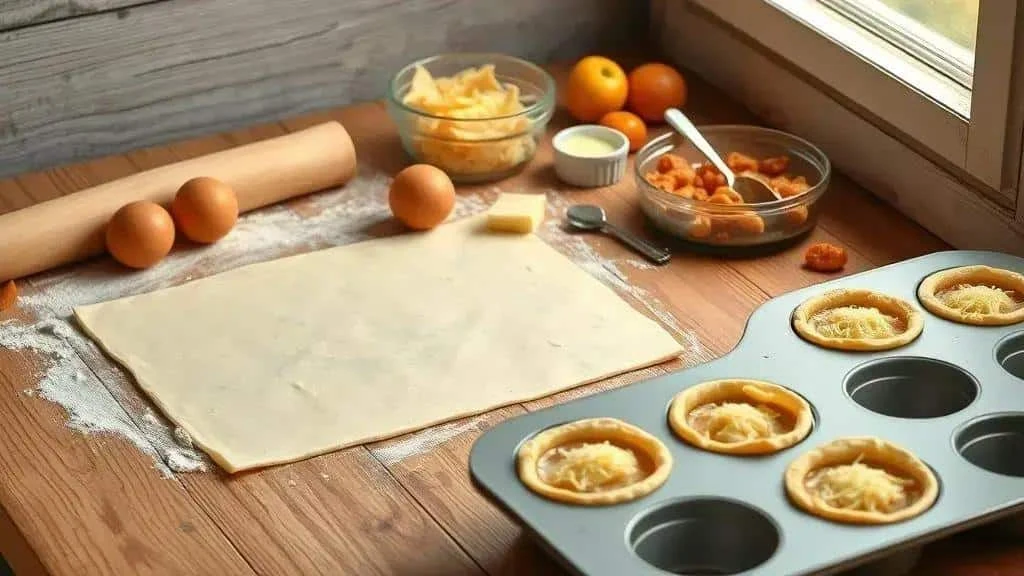
To make approximately 12 mini cheese and apricot quiches, gather the ingredients below. Yield depends on the size and depth of the tin; a shallow bun tin needs less filling than a deep muffin tin.
- About 250–320 g ready-rolled puff pastry – enough to line 12 shallow holes. Shortcrust pastry is another option; follow its own blind-baking guidance. Use more pastry if your tin needs larger circles.
- 4 large eggs for the filling.
- 200 ml double cream, or 150 ml cream plus 50 ml whole milk.
- 100 g grated mild cheese, such as Cheddar, Gruyère or a low-moisture mozzarella. Reserve 20 g of this total for the tops.
- 50 g dried apricots, finely chopped. If very firm, soak in warm water for ten minutes, then drain and pat dry. For fresh fruit, start with the same weight of finely diced, well-drained apricot rather than substituting six whole fruits.
- ½ small onion, finely chopped, optional. A small shallot or chopped chives gives a milder flavour.
- 15 g butter for softening the onion, or 1 tablespoon olive oil.
- Up to ½ teaspoon salt, using less if the cheese is salty.
- ¼ teaspoon ground black pepper, or a smaller amount of white pepper.
- A pinch of ground nutmeg, optional.
- 1 extra egg yolk for brushing the pastry before baking, optional. A little milk is an alternative.
- A little grated hard cheese for the topping, optional; replace some of the reserved cheese with this. Choose a vegetarian-labelled cheese where needed. Finish with chopped parsley or chives after baking.
Ingredient substitutions
Replacing 50 ml of the cream with milk gives a slightly less rich filling. Adding cream cheese is unnecessary. A lactose-free version needs lactose-free cream and suitable cheese as well as attention to the pastry and butter; a dairy-free version requires plant-based replacements for all of them. Dried apricot gives concentrated flavour with less moisture than fresh fruit.
How to make mini cheese and apricot quiches
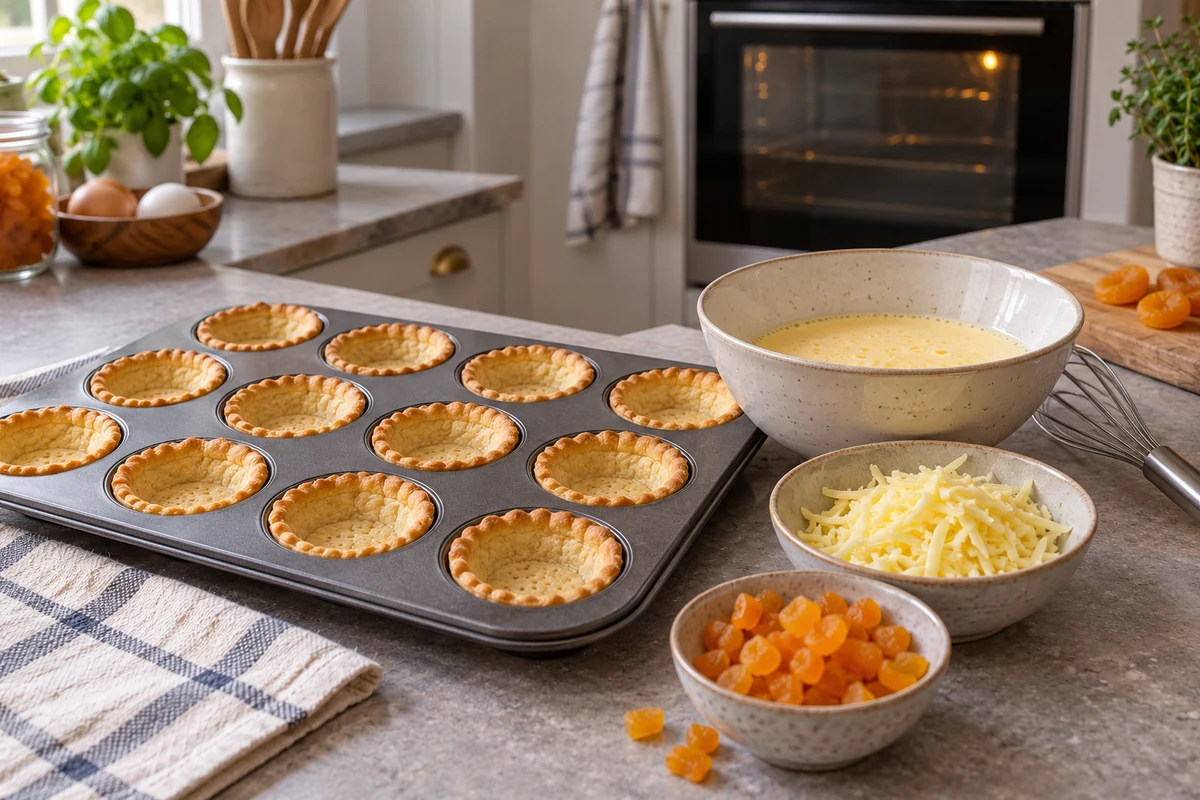
- Preheat the oven: set it to 200°C conventional or 180°C fan, with a shelf in the centre.
- Lightly grease a 12-hole shallow bun tin or suitable muffin tin. Metal usually browns the pastry more readily than silicone.
- Unroll the cold pastry on a lightly floured surface. Cut 12 circles large enough to cover the base and sides of each hole, using the tin as a guide.
- Gently press the circles into the tin without stretching them. Trim any excess and chill for 15–20 minutes if the pastry has softened.
- Blind-bake the cases: line each with baking paper and baking beans. Bake for about 8–10 minutes, remove the paper and beans, then bake for a further 2–3 minutes until the bases look dry. Follow the pastry packet if it specifies a different method.
- Meanwhile, soften the optional onion in the butter or oil over a gentle heat. Allow it to cool slightly.
- Whisk the four eggs with the cream until combined. Add the pepper, optional nutmeg and a modest amount of salt, remembering that the cheese contributes seasoning.
- Stir in the cooled onion, 80 g of the grated cheese and the 50 g of chopped, well-drained apricots. Keep the remaining 20 g cheese for the tops.
- Divide the filling between the pastry cases, stopping at about three-quarters full. If your tin is shallow, bake leftover filling separately in a greased ovenproof ramekin rather than overfilling the cases.
- Scatter the reserved cheese over the quiches. If using the optional egg wash, brush only the exposed pastry edges now, before they return to the oven.
- Bake at 200°C conventional or 180°C fan for about 15–20 minutes, allowing longer for deeper cases. The pastry should be golden and the egg filling set and piping hot in the centre, not liquid beneath a browned surface.
- Rest for five minutes in the tin, then carefully transfer the quiches to a rack. This helps the filling settle without leaving the pastry sitting in trapped steam.
- Finish and serve: scatter with fresh herbs. Do not brush cooked quiches with raw egg yolk; any egg wash must be applied before baking and cooked thoroughly.
Quick tips
- Soften very firm dried apricots in warm water for ten minutes, then drain and pat them dry before adding them.
- Blind-bake the cases and avoid overfilling. Wet ingredients need draining; extra liquid can prevent the pastry base from drying.
- For a slightly lighter filling, use 150 ml cream and 50 ml milk. Gruyère or low-moisture mozzarella can replace the mild Cheddar; use vegetarian-labelled cheese if required.
- For make-ahead quiches, cool and refrigerate promptly. Reheat once until piping hot throughout, rather than relying on a brief warming time.
Variations on mini cheese and apricot quiches

Adapt these mini cheese and apricot quiches with different cheeses, herbs or dietary alternatives. Changes to the filling can affect how firmly it sets, so check the centre rather than assuming every variation takes exactly the same time.
- Cheese and herbs: replace the mild cheese with 100 g Gruyère or Emmental and add 1 tablespoon chopped parsley, chives and thyme. Keep the total cheese quantity and the egg-and-cream proportions unchanged.
- Ham or bacon: add 50 g diced cooked ham or thoroughly cooked, drained bacon. Reduce the cheese to 80 g and use less salt. Ready-to-eat ham does not need frying first.
- A sweeter apricot version: increase the dried apricot to 80 g and replace 80 g of the grated cheese with mascarpone, leaving 20 g grated cheese for the topping. Start with 150 ml cream because the soft cheese adds moisture; an optional teaspoon or two of honey can be drizzled over the cooked quiches.
- Gluten-free: use suitable ready-made gluten-free pastry and follow its baking instructions. Plain gluten-free flour on its own is not a ready-to-use pastry substitute. Check all other ingredients and prevent cross-contact where necessary.
- Vegan: an alternative filling can be made by blending 200 g silken tofu, 100 ml unsweetened plant milk, 2 tablespoons chickpea flour and 3 tablespoons nutritional yeast, then adding 100 g vegan cheese. Also use vegan pastry, oil instead of butter and no egg wash or dairy topping. This is a different filling and needs baking until fully set and hot; the timing may vary.
- Goat’s cheese and walnuts: replace 80 g of the mild cheese with 80 g goat’s cheese, retain 20 g grated cheese for the topping and add 30 g chopped walnuts. A little lemon zest or honey after baking balances the richness. Flag the nuts for guests.
Tips for adapting the filling
- Mascarpone and tofu bring different amounts of moisture. Keep the filling thick enough to hold its ingredients and expect to adjust the cream in the mascarpone version.
- Blind-bake the pastry until the bases look dry, particularly with wetter fillings. Use the pastry manufacturer’s instructions rather than one fixed timing for every pastry type.
- Cook bacon thoroughly and drain the excess fat before adding it. For ham, choose a product that is already cooked and ready to eat.
- Taste the apricots and cheese separately before mixing in raw egg. Adjust sweetness with a small drizzle of honey after baking; do not taste the uncooked egg filling.
Tips for baking and assembling mini quiches
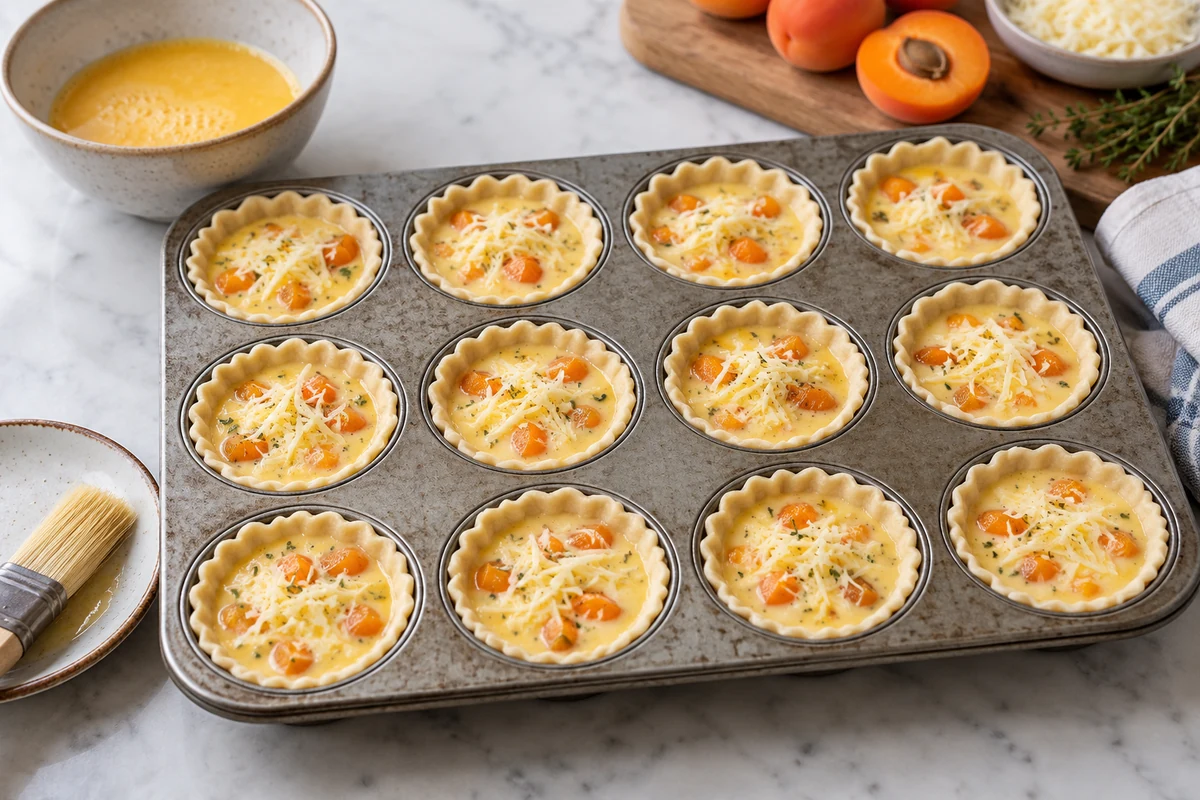
- Temperature and timing: preheat to 200°C conventional or 180°C fan. Filled shallow cases usually take around 15–20 minutes, but deeper quiches can need longer; check that the centre is fully cooked.
- Blind-baking: line the cases with baking paper and beans, bake for about 8–10 minutes, then remove both and bake for another 2–3 minutes until dry-looking, or follow the packet guidance.
- Keep the filling below the rim: fill each case to about three-quarters full. Drain fresh fruit thoroughly and avoid adding its juices.
- Distribute the filling evenly: spread the cheese and apricot pieces between the cases rather than packing them tightly into a few.
- Brush before baking: apply optional beaten yolk to exposed pastry before the final bake. Do not add raw egg wash after cooking.
- Rest briefly: leave the quiches in the tin for five minutes, then transfer to a rack. If saving them for later, refrigerate within two hours of cooking.
- Choose a suitable tin: metal encourages crisp pastry. Silicone may need a different baking time; support it on a firm tray and check the bases and filling.
- Avoid soggy pastry: keep the pastry cold, blind-bake until dry-looking and drain wet ingredients. A mascarpone variation may need less cream.
- Garnish simply: use chopped herbs, a little lemon zest or a small drizzle of honey for the sweeter versions.
Common problems and how to fix them
- Liquid filling in the centre: continue baking until set and piping hot. If the edges are browning too quickly, loosely shield them with foil; deeper cases need longer.
- Pale pastry: check that the oven is fully preheated and the cases are not overcrowded. Egg wash applied before baking helps colour the exposed edges.
- Soggy quiches: blind-bake the cases, avoid too much liquid, dry any soaked fruit and drain cooked bacon. Adding water to dried fruit without draining it can make the problem worse.
Pastry size: choose a cutter larger than the base of the hole so the pastry also reaches up the sides. Work quickly to keep it cold.
Side dishes and presentation ideas
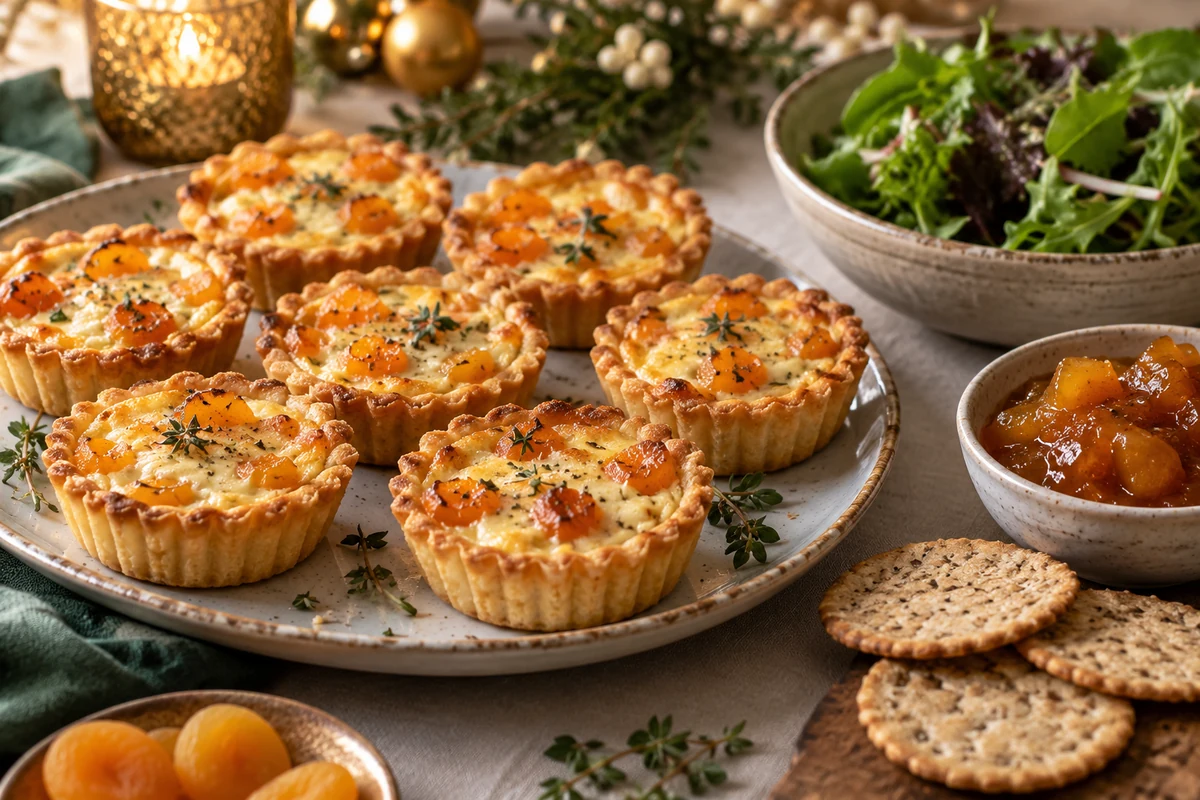
Serve mini cheese and apricot quiches with accompaniments that balance the sweet fruit and rich cheese. A few contrasting textures are enough for an attractive starter platter.
- Fresh salad: rocket and baby leaves with a light lemon dressing offer a fresh contrast. Add a little honey if you enjoy a sweeter dressing.
- Apricot jam or chutney: serve a small pot on the side, or choose chilli jam for a sweet, gently spicy alternative.
- Crackers and bread: thin toasted baguette slices or wholegrain crackers add crunch, although the quiches already provide pastry.
- Fresh fruit: grapes, figs or thin pear slices make a simple accompaniment.
- Nuts: toasted walnuts or almonds pair well with cheese. Keep them separate and make their presence clear to guests.
- Savoury extras: marinated olives, pickles or red onion chutney bring another contrasting flavour.
Arranging the serving platter
Arrange the quiches on a clean food-safe board or pale platter, with a small chutney pot and a modest stack of crackers. Scatter a few herbs for colour and leave room to lift each quiche easily. Provide serving tongs rather than crowding the platter with decorations.
Drinks and serving temperature
Serve freshly baked quiches warm, or serve them cold after safe cooling and refrigeration. Sauvignon Blanc or a dry sparkling wine is an optional pairing; sparkling water with lemon or a lightly flavoured iced tea works well without alcohol. Set out small batches rather than leaving all the quiches on a buffet for a long period.
- Serving made-ahead quiches: reheat once until piping hot throughout. A quick three-minute warm-up is not a reliable reheating method for chilled quiches.
- Portions: allow roughly two to four mini quiches per adult, depending on their size and how many other starters you are serving.
- Individual plates: serve a small quiche or two with salad and a spoonful of chutney for a seated starter.
Finishing touches: try lemon zest with goat’s cheese or a fine drizzle of honey with the sweeter apricot version.
Why apricot and cheese work together

Apricot and cheese create a familiar sweet-and-savoury pairing. The fruit’s gentle acidity cuts through a rich filling, while the cheese keeps the quiches firmly in the savoury-starter category.
What apricot contributes
Apricot contributes fruit flavour, colour and a little fibre to the filling. The amount in each mini quiche is small, so this recipe should not be presented as a treatment or a significant health intervention.
- Colour and flavour: orange apricot pieces stand out against the pale filling without needing a heavily sweetened mixture.
- Texture: finely chopped dried fruit gives small chewy pieces that contrast with the smooth egg filling.
- Practical choice: dried apricot concentrates the flavour; fresh apricot adds more juice and needs careful draining.
What cheese contributes
Cheese brings richness and savoury flavour. Its fat and moisture affect how the filling melts and sets, which is why a measured amount of grated cheese is easier to work with than an unspecified handful.
- Depth of flavour: Gruyère and mild Cheddar give different balances of nuttiness, sharpness and creaminess.
- Texture: low-moisture grated cheese distributes readily through the filling. Very wet fresh cheese can change how firmly it sets.
- Dietary needs: check labels for milk, salt and vegetarian suitability rather than assuming all cheeses meet the same requirements.
Small culinary details
Dried apricots provide sweetness without as much free liquid as fresh fruit. If they need softening, soak briefly and dry well. Goat’s cheese can be balanced with lemon zest or a little honey added after baking.
Balancing substitutions: replacing 50 ml cream with milk makes a less rich filling without adding another ingredient. Mild cheese allows the apricot to stand out; stronger cheese changes the balance, so use it to suit your taste.
Chop the fruit into similar small pieces and spread the cheese evenly so that one quiche does not contain all the apricot while another has none.
Conclusion
These mini cheese and apricot quiches make a useful festive starter with a sweet-and-savoury filling. Cold pastry, a dry blind-baked base and a properly cooked centre matter more than elaborate decoration.
Choose a variation that suits your guests and allow the baking time to follow the depth of your tin. Serve freshly cooked or prepare ahead with careful chilling and reheating.
Thank you for reading. Follow our social channels for more festive cooking ideas, and visit I Love Christmas for further Christmas inspiration.
FAQ – Mini Cheese and Apricot Quiches
How should I store baked mini quiches?
Cool promptly and refrigerate in a covered container within two hours. Eat within 48 hours, or freeze for up to one month for best quality. Defrost in the fridge and use within 24 hours of fully defrosting.
How can I reheat them while keeping the pastry crisp?
Use an oven at about 170°C conventional or 150°C fan and heat until piping hot throughout. The time depends on size and starting temperature; begin checking after around 10–15 minutes. Reheat only once. A microwave softens the pastry more.
How can I prevent a soggy base?
Blind-bake the pastry until the bases look dry, drain soaked or fresh fruit well and fill the cases no more than three-quarters full. Follow the pastry packet if its blind-baking instructions differ.
Can I use another fruit instead of apricot?
Finely chopped dried figs, dates, raisins or dried cranberries can replace the dried apricots by weight. Small apple pieces release more moisture, so use them sparingly and adjust the filling if needed.
How do I make a gluten-free or less rich version?
Use ready-made gluten-free pastry and check the other ingredients and preparation surfaces. For a less rich dairy filling, replace 50 ml of the 200 ml cream with whole milk. Plant-based cream is not automatically lower in fat; compare labels.
Can I prepare the quiches ahead of baking?
For the best pastry, prepare the cases and filling separately, cover and refrigerate them, then assemble the following day within 24 hours. For freezing, it is simpler to bake the quiches fully first, cool them safely and freeze; avoid relying on a fixed extra five minutes to cook an assembled frozen egg filling.
Sources and Further Reading
- Food Standards Agency: cooking food safely
- Food Standards Agency: chilling, freezing and defrosting food safely