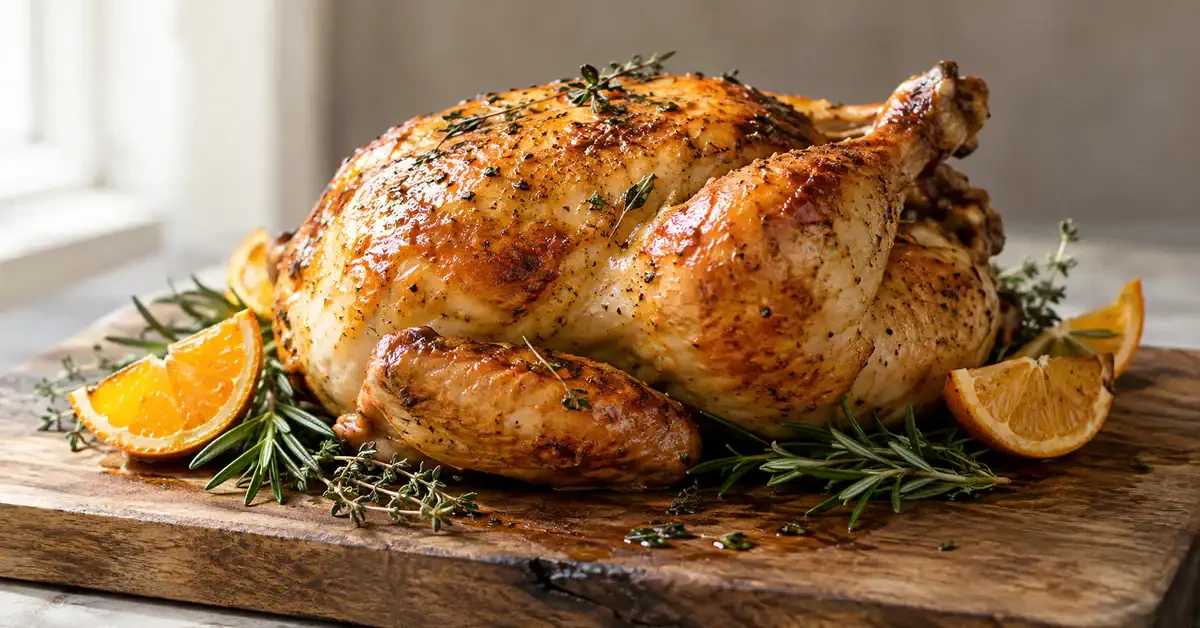
Orange and herb roast chicken combines golden skin with garlic, thyme, rosemary and orange zest. Roast the seasoned bird with orange juice in the tin, baste occasionally and check that the meat is thoroughly cooked before resting and carving. Honey adds an optional finishing glaze.
The aroma of citrus, herbs and roasting chicken makes this a welcoming centrepiece. Orange and herb roast chicken uses a short ingredient list and a straightforward method, with a thermometer check to guide the cooking rather than skin colour alone.
The images illustrate this recipe and its preparation; the appearance of your finished dish may vary.
Ingredients
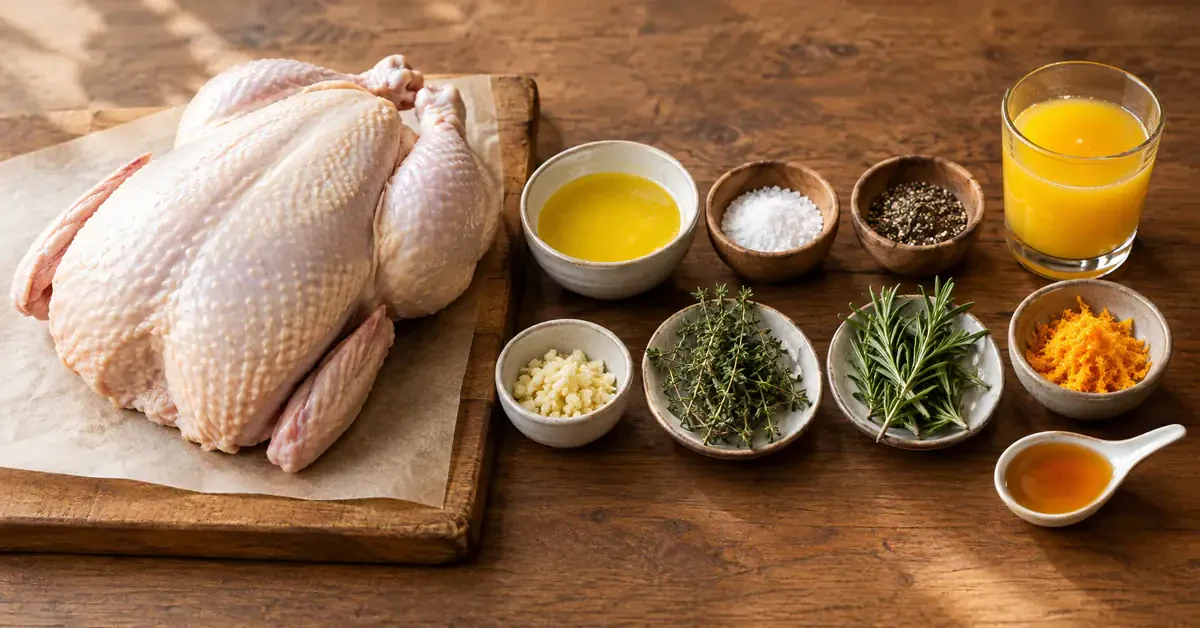
Ingredient list and quantities
- 1 whole chicken, approximately 1.8 kg, ready to cook; pat dry without washing
- 2 tablespoons melted butter, or olive oil if preferred
- 1 teaspoon salt
- ½ teaspoon freshly ground black pepper
- 2 garlic cloves, chopped
- 2 sprigs fresh thyme
- 2 sprigs fresh rosemary
- 1 teaspoon finely grated orange zest, avoiding the white pith
- 120 ml freshly squeezed orange juice; measure it, as fruit yields vary
- 1 tablespoon honey, optional, for the finishing glaze
Method
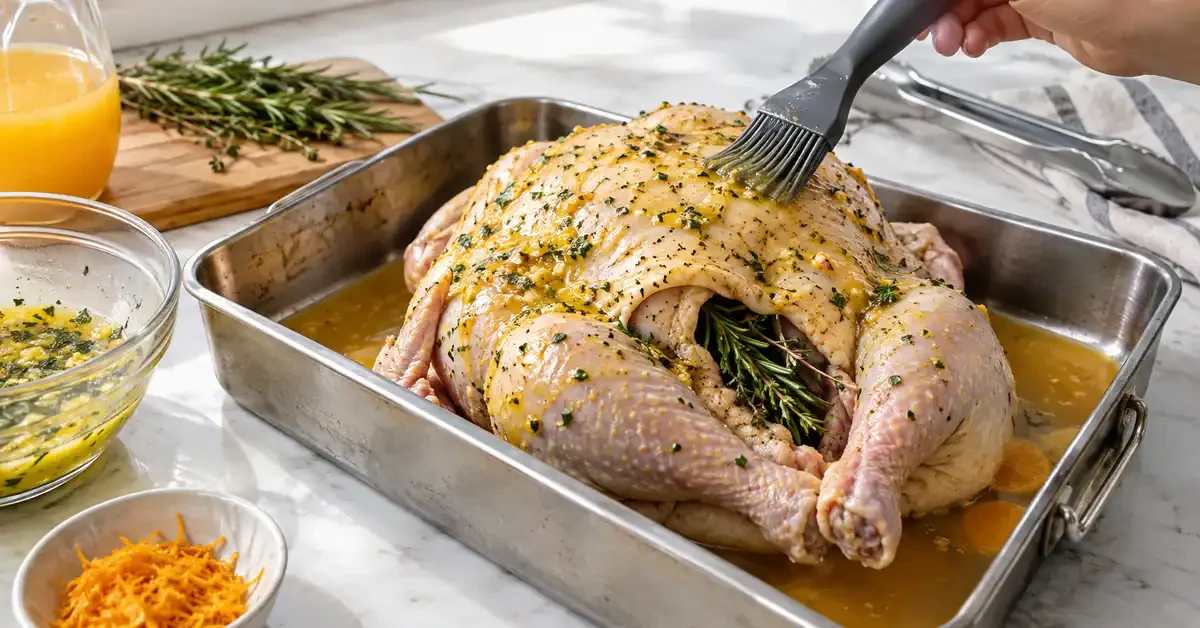
- Heat the oven and prepare the tin: preheat a conventional oven to 200°C, with a shelf in the middle. Use a roasting tin with a rack inside it if available. Otherwise, lightly grease the tin and place the chicken directly in it. Follow your oven guidance if using a fan setting.
- Dry and season: pat the chicken dry with kitchen paper; do not rinse raw chicken. Season the outside and cavity with 1 teaspoon salt and ½ teaspoon freshly ground black pepper. Dispose of the paper and wash your hands and any surfaces that have touched raw poultry.
- Mix the aromatic butter: combine 2 tablespoons melted butter, or olive oil, with 2 chopped garlic cloves, some leaves from the 2 thyme sprigs and 2 rosemary sprigs, and the measured orange zest. Keep the remaining parts of those same sprigs for the cavity.
- Apply the seasoning: spread the mixture over the chicken and carefully under the breast skin where accessible. Put the remaining portions of the 2 thyme sprigs and 2 rosemary sprigs into the cavity. These are the herbs already measured, not an additional quantity.
- Add the orange juice: if using the honey glaze, first set aside a little of the measured 120 ml fresh orange juice in a clean bowl. Pour the rest around the chicken in the tin. If omitting the glaze, use all the juice in the tin.
- Optional glaze: mix 1 tablespoon honey with the small amount of juice set aside before handling the chicken. Brush it over the skin during the final 15–20 minutes of cooking, watching carefully as honey can burn. Omit this step if preferred.
- Roast and check progress: allow approximately 1 hour 30 minutes, basting with the tin juices about every 30 minutes if desired. This is an estimate for the stated bird: its shape and your oven affect timing, and the doneness checks below take priority.
- Check before resting: use a clean food thermometer to confirm the safe temperature and holding time below in the thickest meat, avoiding bone. Once fully cooked, take the chicken out and rest for 10–15 minutes before carving. Golden skin alone is not a doneness test.
Checking doneness
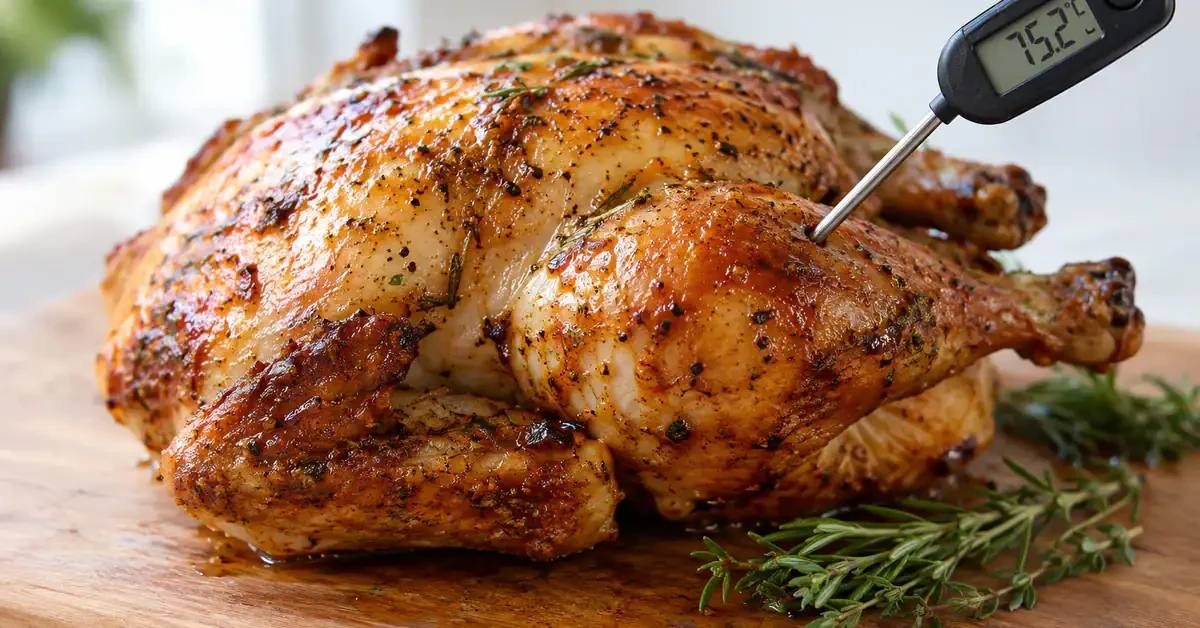
Temperature and texture
Check both the thickest breast meat and the inner thigh with a clean thermometer, keeping the probe away from bone. Clean the probe between checks as needed.
- Safe cooking check: Food Standards Agency guidance gives 70°C for two minutes, or 75°C for 30 seconds, as suitable core temperature-and-time combinations. Check the thickest areas rather than taking a surface reading. Source: Food Standards Agency: safe cooking temperatures and leftovers
- Other signs: the meat should be steaming hot inside, with no raw pink flesh and clear juices. Browned skin cannot establish that the centre is cooked.
- Resting: rest for 10–15 minutes after cooking. Resting improves carving, but should not replace reaching the safe cooking target first.
- Checking the breast: test it as well as the thigh. Do not remove the bird early merely to keep the breast moist; avoid unnecessary extra cooking once all parts meet the safe target.
- Pale skin: a brief finish under the grill can add colour. Watch constantly, particularly with honey, and do not let browning distract from checking the meat itself.
Common problems and solutions
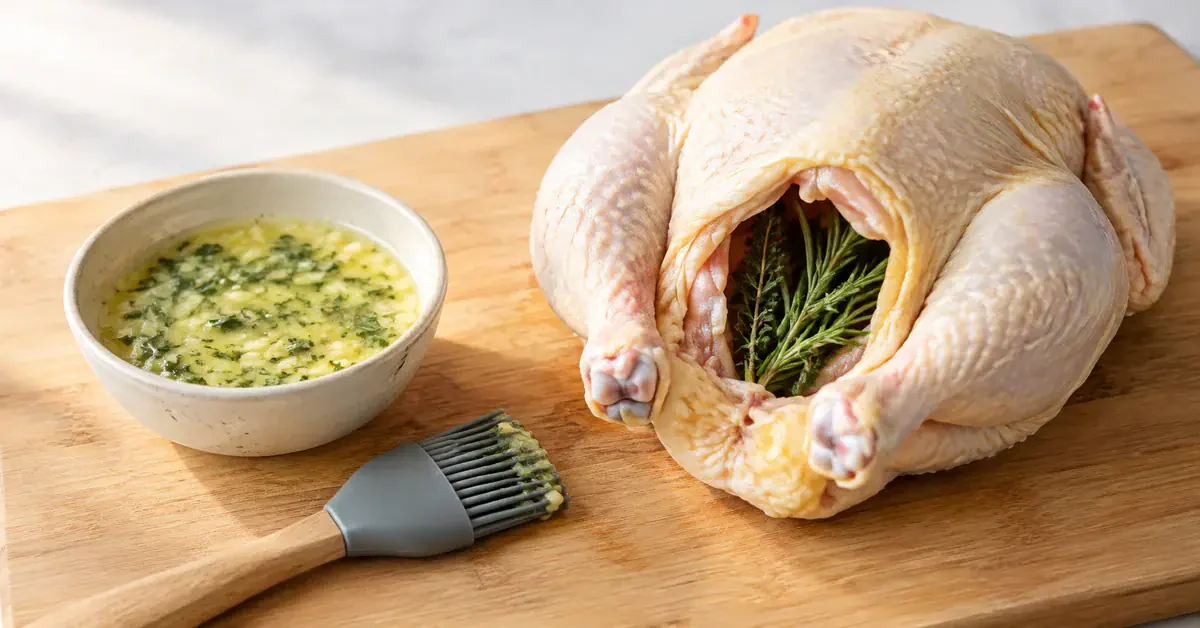
Troubleshooting
- The skin is pale: preheat the oven to 200°C and pat the bird dry before seasoning. If necessary, finish briefly under the grill, watching closely. Extra colour does not mean the centre is ready.
- The meat is dry: excessive cooking can dry the breast. Basting about every 30 minutes is optional, but does not undo overcooking. Use the thermometer checks, avoid cooking longer than needed and rest before carving.
- The flavour is faint: distribute the garlic, herb butter and zest across the bird, including carefully beneath the breast skin. Use the remaining portions of the measured herb sprigs in the cavity.
- The skin sticks to the tin: lightly grease the tin beforehand or use a roasting rack inside it. Basting is not a reliable way to release stuck skin; lift the cooked bird carefully with suitable utensils.
Quick finishing tips
- For more colour: use the grill briefly towards the end, watching throughout. Stop before the honey or herbs scorch.
- For moist meat: check doneness rather than relying on a fixed roasting time, and allow the short rest before carving.
- For a fuller aroma: spread the seasoned butter evenly and use the measured herbs both in the butter and in the cavity, without doubling the listed quantity.
Variations, serving and storage
Variations
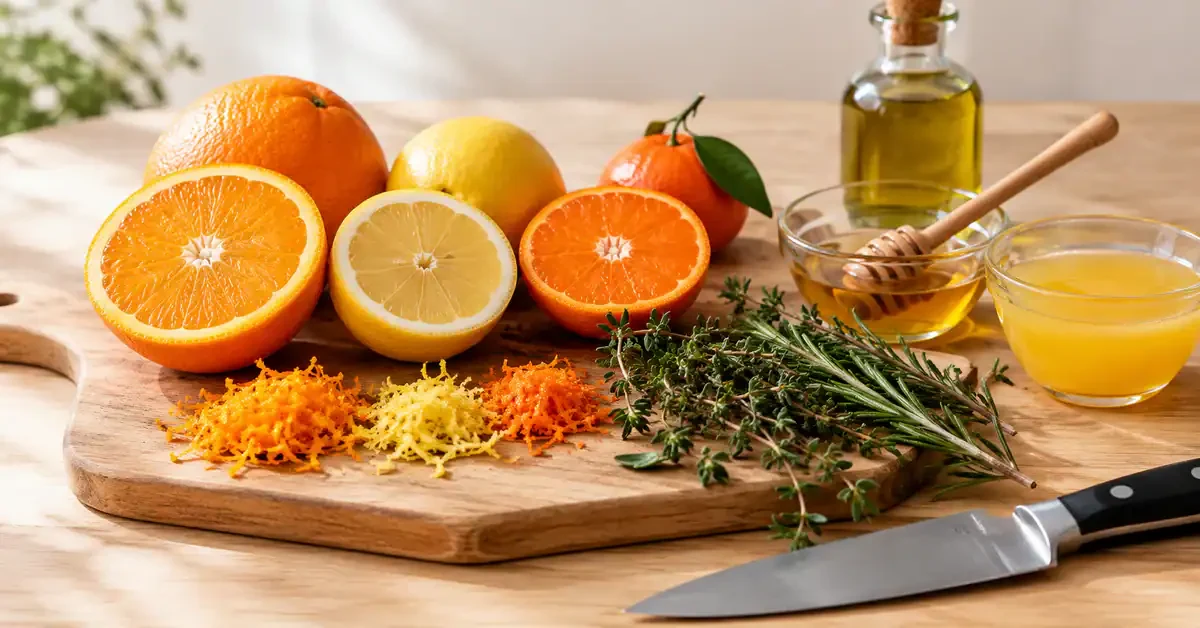
- Other citrus fruit: mandarin or blood orange gives a different flavour. Lemon is considerably sharper and is not a like-for-like sweetness replacement; treat it as a separate variation and adjust cautiously to taste.
- Olive oil instead of butter: use the stated alternative if preferred. It changes the flavour; neither fat guarantees crisp skin on its own.
- Different herbs: sage or basil can provide a different aroma. Thyme and rosemary remain the basic combination; stronger herbs should be used sparingly.
- Glaze variations: maple syrup can replace the honey for a different sweetness. Keep any juice for the glaze within the measured total and avoid drenching the skin.
Serving suggestions
- Carve on a clean board and serve with roast potatoes, herbed rice or roasted vegetables. If serving the roasting juices as a sauce, bring them to a thorough boil first.
- Remove the legs, then carve the breast into slices. Spoon over a little hot sauce if desired; the order of carving does not itself redistribute the juices.
Storage
- Cool leftovers promptly, divide into smaller portions and refrigerate within two hours. Use within 48 hours or freeze. Reheat only once, until steaming hot throughout, rather than just warming gently. Source: Food Standards Agency: cooling and storing food
Bringing it together
Use the thermometer checks in the doneness section before removing the chicken, then rest for 10–15 minutes. Keep raw-poultry utensils separate from the clean board and tools used for carving.
Once you are comfortable with the orange version, try mandarin or blood orange for a different citrus flavour. Treat a sharper lemon version as an adjustment, not an identical swap.
Orange and herb roast chicken: frequently asked questions
How can I get golden, crisp skin?
Pat the bird dry, preheat the oven and avoid soaking the skin with liquid. The roasting time is a guide; a brief grill finish can add colour if needed. Watch the optional honey glaze carefully to prevent burning, and check doneness independently of browning.
How can I stop the breast becoming dry?
Check the thickest breast and thigh with a thermometer, using the safe cooking target above. Avoid unnecessary extra cooking once the bird is fully cooked, then rest for 10–15 minutes. Removing it merely because the skin looks golden could leave it undercooked.
Can I use a different citrus juice?
Mandarin or blood orange can replace the orange for a different flavour. Lemon is more acidic, so treat it cautiously as a separate variation. Keep any juice used in the glaze within the measured total rather than adding an unspecified extra quantity.
Which utensils are useful?
Use a roasting tin, an optional rack that fits inside it, a basting brush or spoon and a clean food thermometer. Keep a separate clean board and carving utensils ready for the cooked chicken.
How should I serve it?
Carve after resting and serve with roast potatoes, herbed rice or roast vegetables. Bring the roasting juices to a thorough boil before serving as a sauce. Store any leftovers promptly as described above.
Sources and Further Reading
- Food Standards Agency: safe cooking temperatures and leftovers
- Food Standards Agency: cooling and storing food