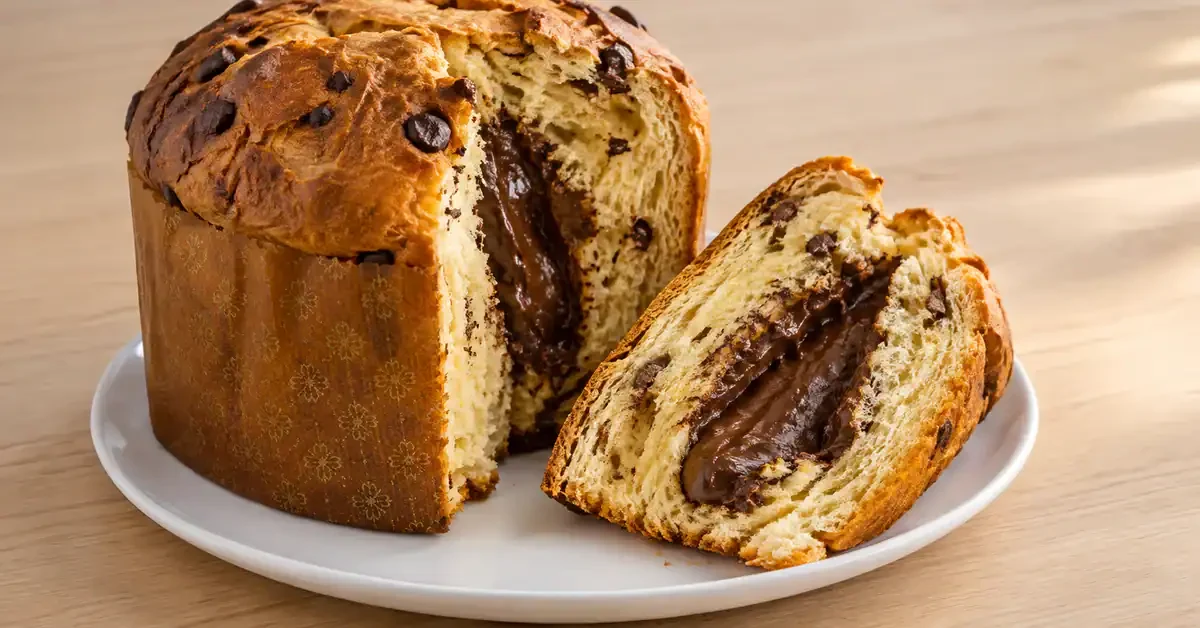
Panettone with brigadeiro filling combines a ready-made festive loaf with a creamy chocolate filling made from condensed milk, chocolate powder and butter. Hollow out the centre carefully, spoon in the cooled, spreadable brigadeiro, and chill before serving.
Panettone with brigadeiro filling brings together soft fruit-studded bread and a rich Brazilian chocolate sweet. This version uses a bought panettone, so the main tasks are cooking the filling to a creamy consistency and assembling it without damaging the loaf.
The images illustrate this recipe and its preparation; the appearance of your finished dish may vary.
Ingredients and quantities
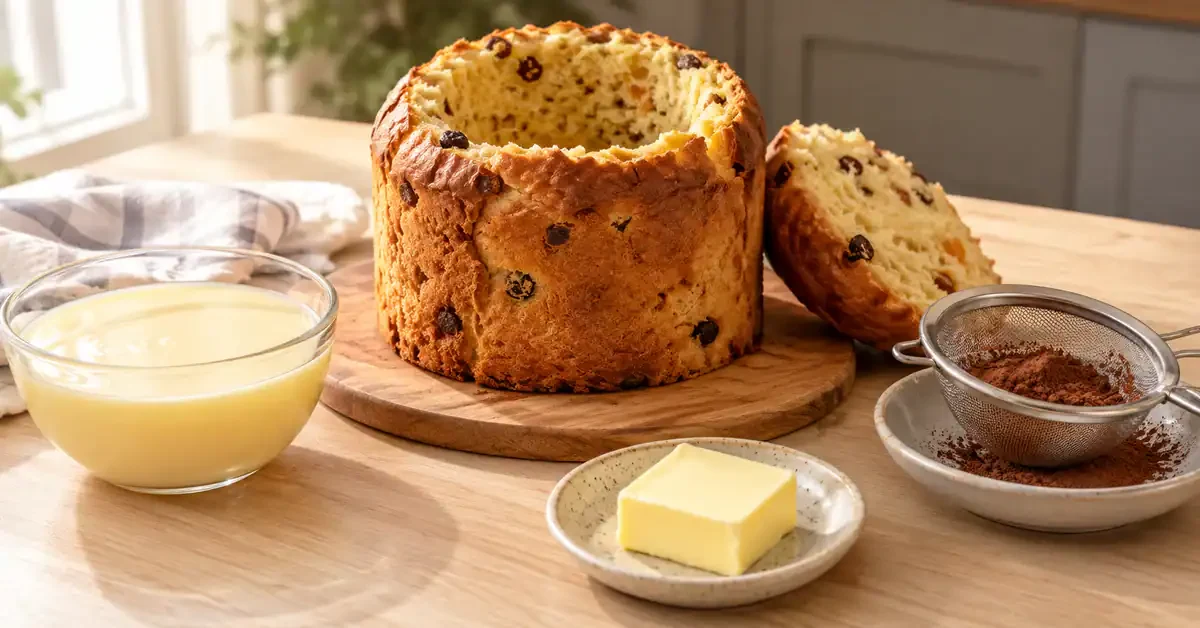
Panettone
- 750 g fresh traditional panettone, with the top sliced off and reserved
Filling
- 395 g full-fat sweetened condensed milk
- 4 tablespoons Brazilian chocolate powder for baking, sifted
- 1 tablespoon unsalted butter, softened
Optional decoration
- 50 g chocolate vermicelli or sprinkles, optional
Method
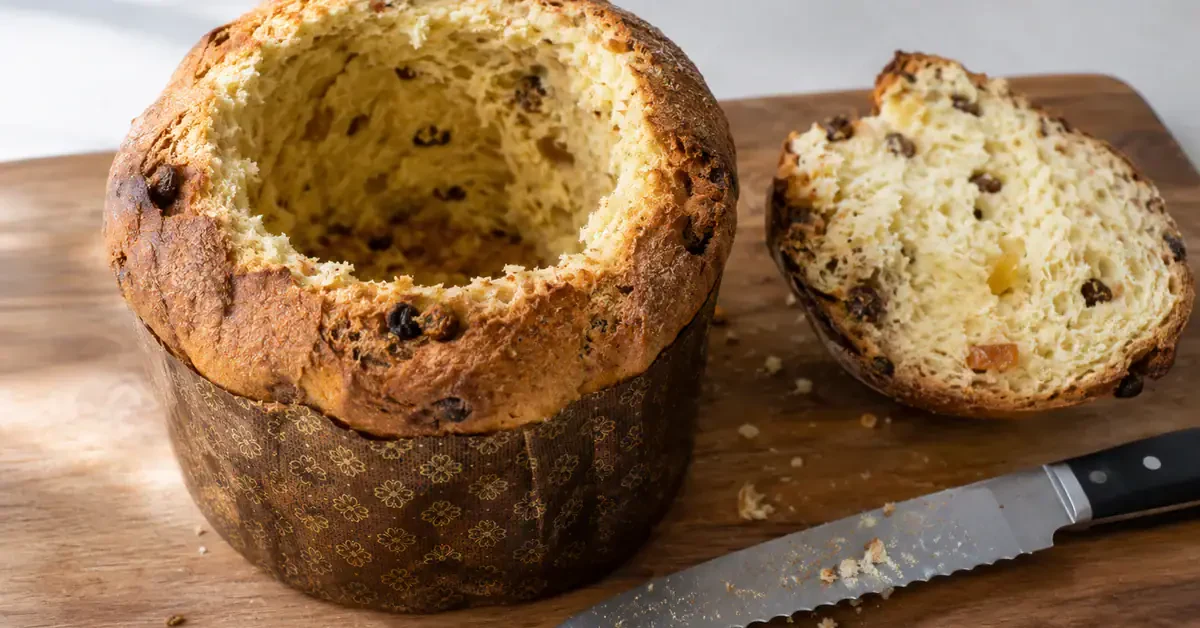
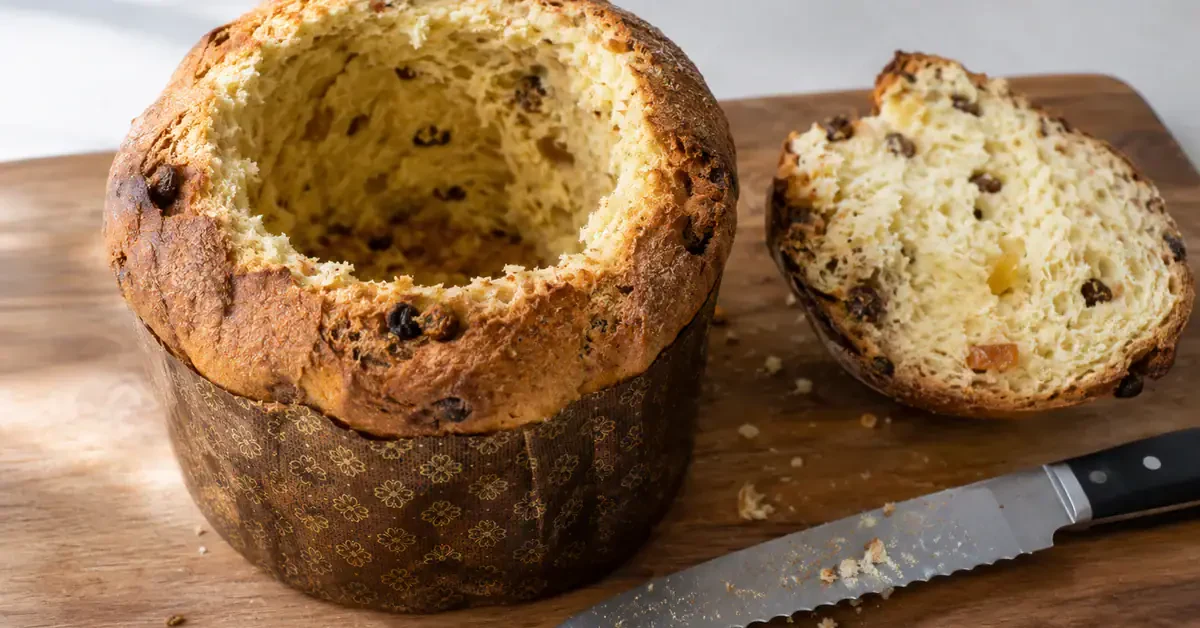
- Hollow out the panettone: use a serrated knife to remove the top, then carefully remove some of the centre crumb. Leave walls about 2 cm thick and an intact base so the filling cannot leak underneath. Reserve the removed crumb and top; you do not need to discard them.
- Cook the brigadeiro: combine the 395 g condensed milk, 4 tablespoons sifted chocolate powder and 1 tablespoon butter in a heavy-based saucepan. Cook over a medium-low heat, stirring continuously with a heatproof silicone spatula, until thick and creamy enough to coat the back of a spoon. Aim for a soft filling, not the very firm mixture used for rolling individual brigadeiro sweets.
- Let it cool slightly: remove from the heat and stir as it cools. Start checking after 2–3 minutes, but wait longer if it is still hot or too runny; it should be warm and comfortably spreadable before assembly.
- Fill the panettone: spoon or pipe the brigadeiro into the hollowed centre without forcing it through the sides. The amount needed depends on the cavity; do not overfill or assume it must reach the rim. You can use some reserved crumb and the top to close the opening, or leave the filling visible. Any spare brigadeiro can decorate the top.
- Decorate and chill: add the optional chocolate sprinkles, then refrigerate for at least 1 hour, until the filling holds well enough to slice. Cover to help prevent the bread from drying out.
The right consistency for the filling
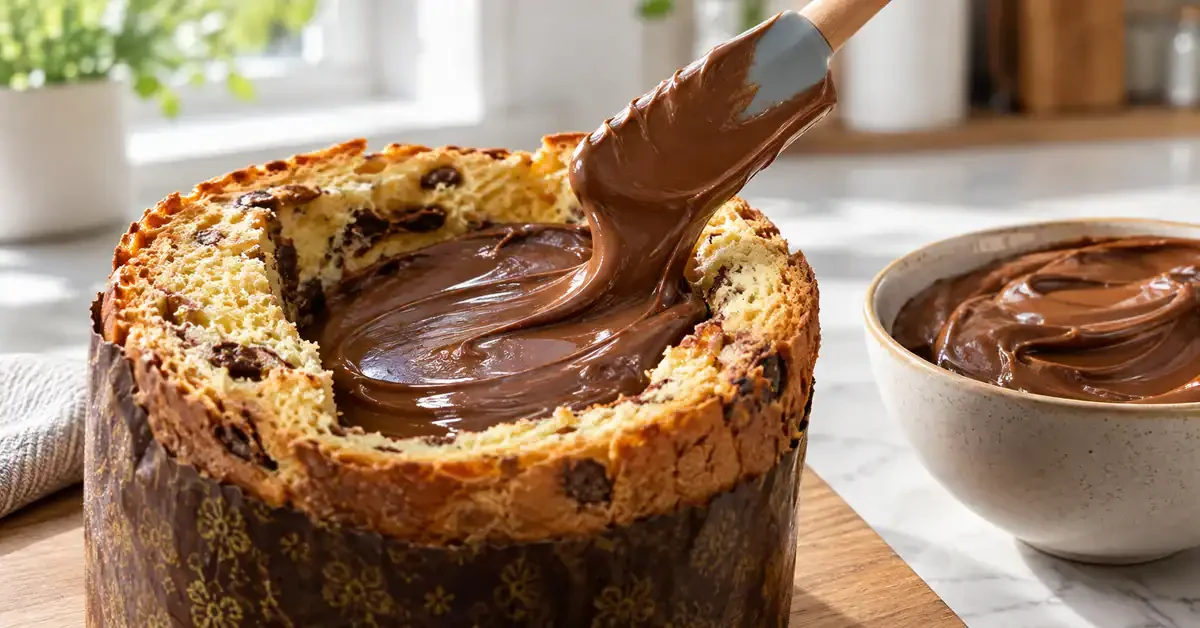
Brigadeiro for this dessert should be thick enough to stay inside the panettone but soft enough to eat with the bread. Check its consistency while cooking and again after a short cooling period. It will become firmer as it chills.
How to check it
- Appearance and thickness: the mixture should be smooth and glossy. A spatula drawn through the pan leaves a trail that closes slowly rather than disappearing immediately into a thin liquid.
- Ease of filling: the warm brigadeiro should spread without flowing through the bread. If it has cooled too firmly before assembly, warm it briefly in 5–10-second microwave bursts, stirring between them. Do not make it hot or runny again.
Cooling and handling
- After assembly, refrigerate for at least 1 hour and check that the filling is stable before slicing. A deep cavity may need longer to chill through.
- If filling starts to overflow, remove the excess with a clean spatula. Do not keep adding it simply to use up the whole batch.
Common mistakes and how to avoid them
Most problems come from overcooking or undercooking the brigadeiro, hollowing out too much bread, or rushing the chilling stage.
- Filling that is too thin or catches on the pan: cook gently and stir continuously, scraping the bottom and corners. Give a runny mixture time to thicken before assembly. If it scorches, do not scrape burnt material into the filling; extra cooking will not remove the burnt taste.
- Thin or uneven walls: leave roughly 2 cm of bread around the cavity and keep the base intact. Work gradually with a serrated knife so you do not accidentally cut through the sides.
- Filling at the wrong temperature: hot brigadeiro can run into the crumb, while very cold filling is difficult to spread. Use it warm and thick, warming only briefly if it has become too firm before assembly.
- Slicing before chilling: give the assembled dessert at least 1 hour in the fridge, and longer if needed. For serving, a brief 10–15-minute rest out of the fridge can soften an overly firm filling.
- Overloading the decoration: a modest layer of sprinkles or chocolate shavings is enough. A heavy topping can make the loaf harder to portion neatly.
Serving, variations and storage
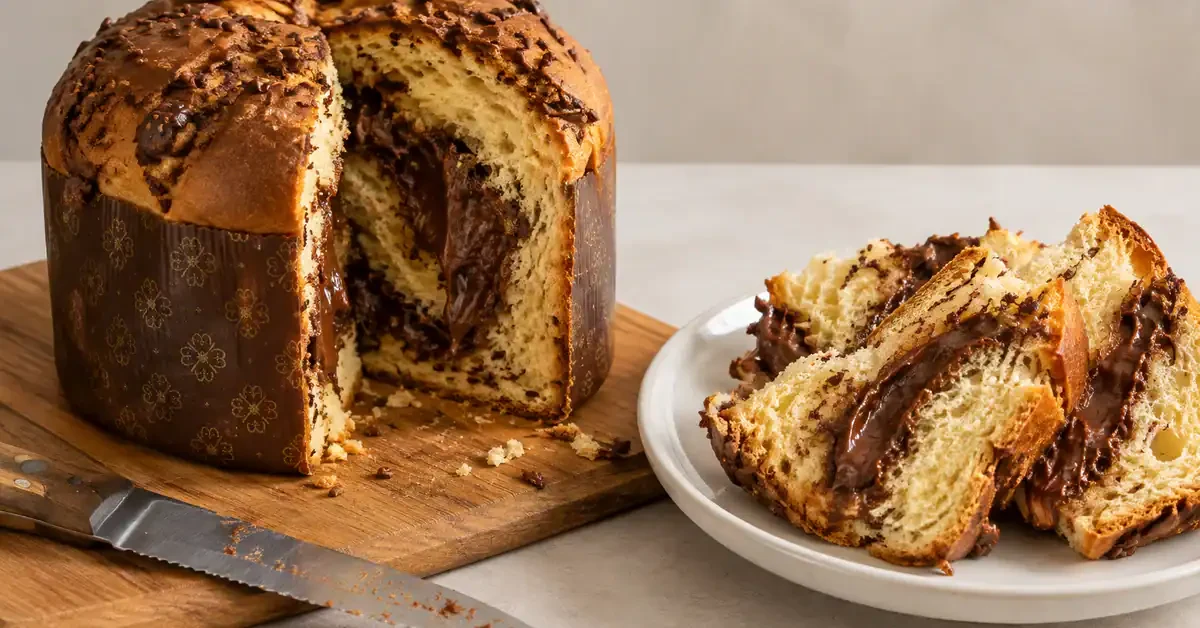
The aim is a slice that shows both soft panettone and creamy brigadeiro, without the filling spilling out as you move it to a plate.
Serving suggestions
- Slicing: use a clean serrated knife and cut slices around 2 cm thick, adjusting to the shape of your panettone. Support the slice from underneath as you lift it.
- Temperature: if the filling is very firm, let the dessert stand for 10–15 minutes before serving. This is a short serving rest, not a reason to leave the filled loaf unrefrigerated for the afternoon.
- Plating: arrange the slices with the filling visible. Add a little of the optional decoration if desired, without burying the bread under more chocolate.
Variations
- Alternative topping: use milk or dark chocolate shavings instead of sprinkles. Dark chocolate can give a stronger cocoa flavour; sweetness depends on the product rather than on the topping’s shape.
- Firmer filling: adjust the cooking consistency gently in the saucepan and allow proper chilling after assembly. Do not leave the filling in a switched-off oven to make it set; that is not a controlled cooking or refrigeration step.
- Individual servings: portion the filled panettone before bringing it to the table. Small panettones would need their filling divided appropriately rather than each receiving the full quantity.
Storage
Keep the filled panettone covered in the fridge. Cool and refrigerate promptly, within 2 hours of preparation, and use within 48 hours or sooner if the panettone’s label requires it. Follow the Food Standards Agency’s guidance on chilling and storing leftovers. Bring out only what you plan to serve. Source: Food Standards Agency: cooking and storing leftovers
Ready to serve
The key is to use brigadeiro that is thick and spreadable, rather than hot and runny. Leave enough bread to support it, then chill the assembled panettone before cutting.
For a simple change next time, use chocolate shavings in place of sprinkles. This changes the finishing flavour without changing the basic filling or assembly.
Brigadeiro-filled panettone: frequently asked questions
How should I hollow out and fill the panettone?
Use a serrated knife, leaving walls about 2 cm thick and an intact base. Add warm, thick, spreadable brigadeiro without overfilling. If the filling has become too cold before assembly, soften it briefly in 5–10-second microwave bursts, stirring between them.
How do I stop the filling spilling over?
Cook the brigadeiro until thick enough to coat a spoon, then cool until spreadable before filling. Add it gradually and leave space rather than forcing in the whole quantity. Remove excess with a clean spatula if necessary.
Can I use chocolate shavings instead of sprinkles?
Yes. Milk or dark chocolate shavings are an optional alternative decoration. Dark chocolate usually gives a stronger cocoa flavour; choose the sweetness you prefer and keep the topping light enough for easy slicing.
Which utensils are useful?
A serrated knife helps remove the top and centre crumb. Use a heavy-based pan and heatproof spatula for the filling, then a spoon or piping bag for assembly. Keep the base and walls intact and avoid overfilling.
How should I serve and store it?
Keep it covered in the fridge, refrigerate promptly and use within 48 hours or sooner if the ingredients require it. Let it stand briefly for 10–15 minutes if too firm to slice, then cut with a serrated knife and return leftovers promptly to the fridge.