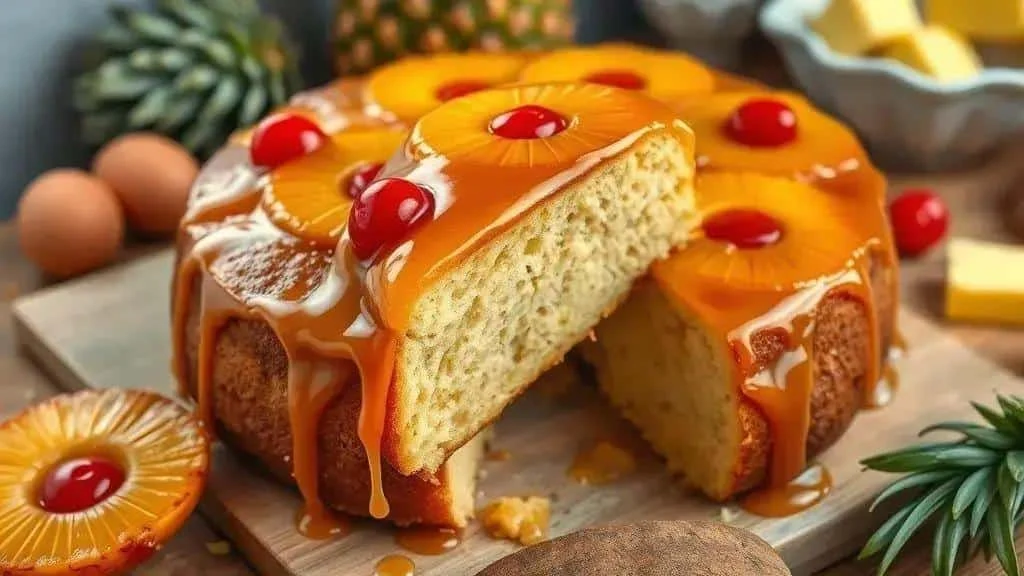
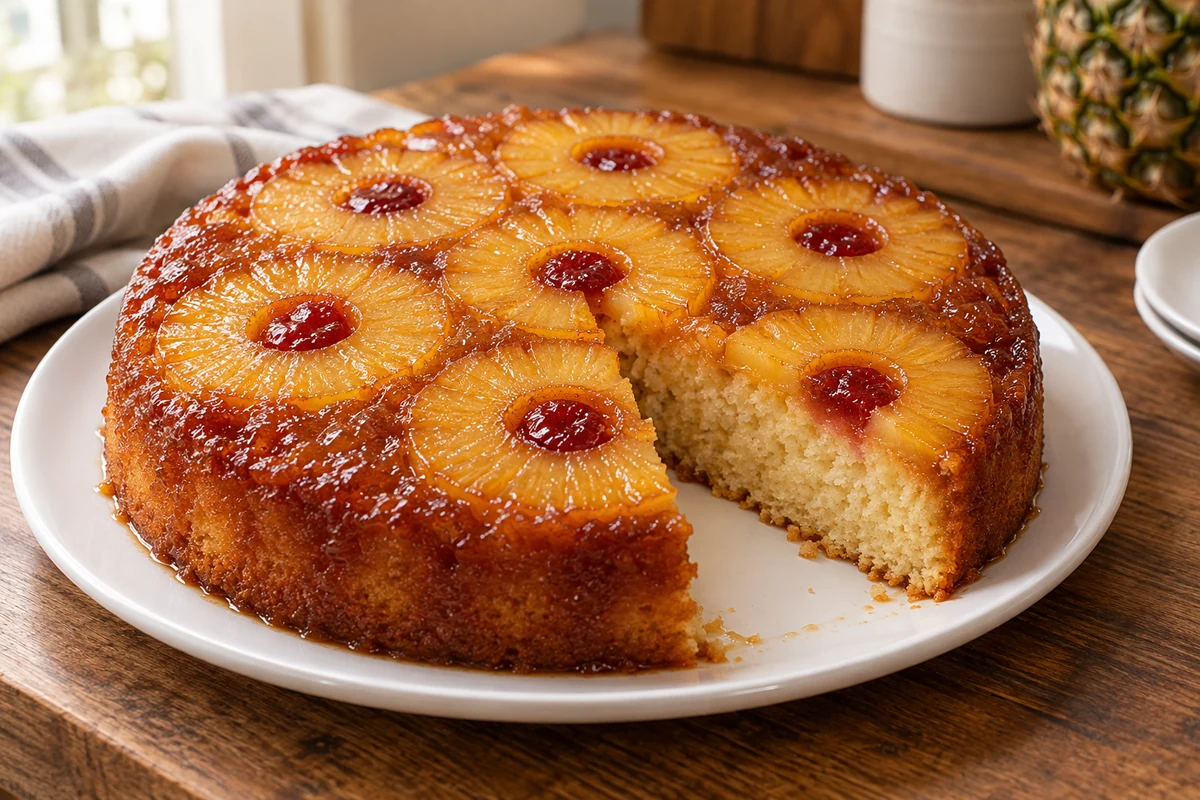
This pineapple upside-down cake combines a soft sponge with pineapple rings and a buttery brown-sugar topping. Follow the steps for preparing the tin, arranging the fruit, baking and turning out the warm cake. The guide also explains the limits of vegan and reduced-sugar substitutions and how to store the finished cake.
A pineapple upside-down cake brings a nostalgic touch to a festive table. The fruit becomes the decoration when the cake is turned out, with a glossy topping that needs no icing.
Pineapple Upside-Down Cake Ingredients
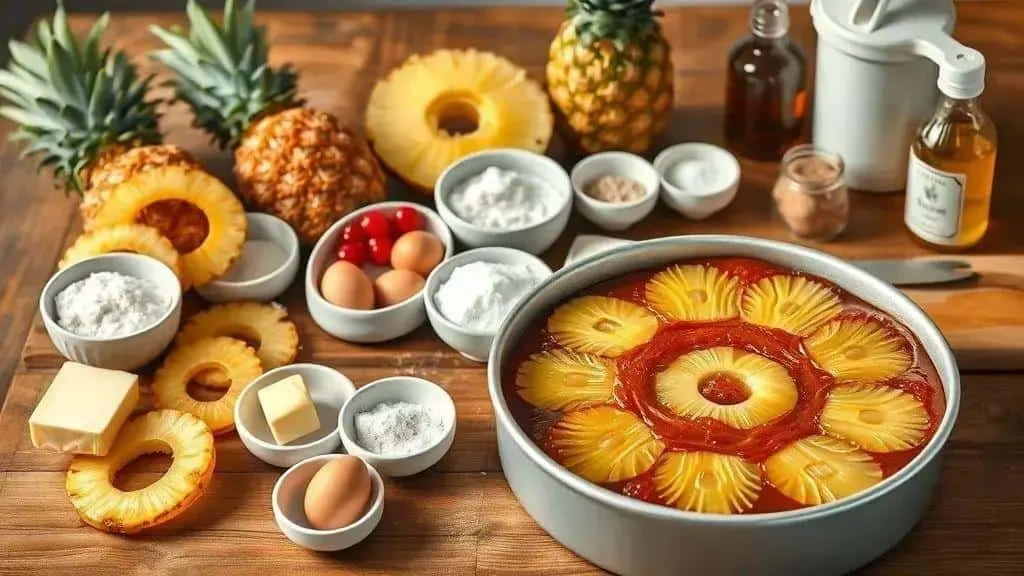
For this pineapple upside-down cake, use the weights and liquid measures below. Weigh the dry ingredients and use a measuring jug for the liquids.
- 1 medium pineapple, peeled, cored and cut into rings – use only enough to cover the tin in one layer and save the remainder. Well-drained tinned pineapple rings are an alternative. The whole fruit’s weight is not the amount of prepared fruit required.
- 120 g butter for the topping, plus a little for greasing the tin.
- 200 g soft brown sugar for the topping.
- 160 g caster sugar for the sponge.
- 3 eggs. Egg-free adaptations need separate testing; see the notes below.
- 120 ml milk. A suitable unsweetened plant-based drink can be used, checking allergens.
- 120 ml vegetable oil for the sponge. Do not replace all of it with yoghurt without using a recipe developed for that substitution.
- 1 tbsp vanilla extract, optional – use less if your product is particularly concentrated.
- 260 g plain flour. For gluten-free baking, use a tested gluten-free cake recipe rather than assuming every blend replaces this flour directly.
- 10 g baking powder.
- A pinch of salt.
- 1–2 tsp lemon juice, optional, to add a little sharpness to the fruit.
- 6–8 glacé or preserved cherries, optional, drained; fresh cherries must be stoned.
Quick Ingredient Tips
Have ingredients ready before mixing. Briefly taking the milk and eggs from the fridge helps them combine, but do not leave perishable ingredients out for hours.
Drain tinned pineapple thoroughly and pat it dry. Pineapple packed in juice is an option if you prefer to avoid extra syrup. Its sweetness varies, so major sugar changes need a separate test bake.
For a different aroma, add a little finely grated lemon zest. A teaspoon of rum is optional for an adult version; omit it when an alcohol-free cake is required.
How to Make Pineapple Upside-Down Cake
- Heat the oven to 180°C/160°C fan, with a shelf in the centre. Grease a deep, solid-bottomed 24 cm cake tin and line the base with baking paper. Avoid a loose-bottomed or springform tin: hot topping can leak through its seams. Leave adequate space for the batter to rise.
- Make the topping: Melt 120 g butter in a small saucepan over a low to medium-low heat, then stir in 200 g brown sugar until evenly combined. This is a buttery sugar topping, not a dry caramel that needs to be cooked dark. Carefully spread it over the lined base; hot sugar can cause serious burns.
- Arrange the pineapple: Put dry pineapple rings over the topping in one layer. Trim pieces to fit without piling them up. Add the optional cherries in the gaps or centres.
- Mix the wet ingredients: Beat the eggs with 160 g caster sugar until lighter in colour. Mix in the oil, milk and optional vanilla.
- Fold in the dry ingredients: Sift in the plain flour, baking powder and salt. Fold gently until combined, without overmixing.
- Add the batter: Spoon it gently over the pineapple and level the surface without moving the rings.
- Bake: Allow about 35–45 minutes, checking the centre with a skewer. It should come out without wet batter; a few moist crumbs are fine. A deeper cake may take longer. Loosely cover the top if it browns before the centre is cooked.
- Rest briefly: Leave the tin on a rack for about 8–12 minutes. The topping should settle slightly but remain warm enough to release.
- Turn out carefully: Loosen the sides with a thin knife. Place a heatproof serving plate with a rim over the tin, hold firmly with oven gloves and turn over in one controlled movement, keeping hot syrup away from your hands. Lift the tin and peel off the paper carefully.
- Replace any stuck topping: Lift loose fruit back into place and spoon any still-soft topping over the cake. Do not put an ordinary cake tin directly on the hob or heat it with baking paper over a flame.
- Allow to settle: Wait at least another 20–30 minutes before slicing. Serve warm, or cool promptly for storage.
- Storage and serving: For a cautious home-storage approach, cool promptly, refrigerate within 1–2 hours, cover and eat within 48 hours. Warm only the slice you want to serve, or eat it chilled; do not repeatedly warm and cool the whole cake.
Quick Tips
- Fresh or tinned fruit: Both can work. Moisture and sweetness vary; draining and drying the rings matters more than assuming one is always less sweet.
- Tin choice: Use a solid-bottomed tin with a lined base to contain the topping.
- Vegan baking: Eggs, milk and butter all need suitable replacements. The flaxseed option below changes the structure and has not been tested as an exact equivalent.
- Texture: Avoid prolonged beating after adding flour.
- Presentation: Use a little lemon zest or toasted coconut if desired. Avoid pineapple crown leaves as an edible garnish.
Topping and Assembly Tips
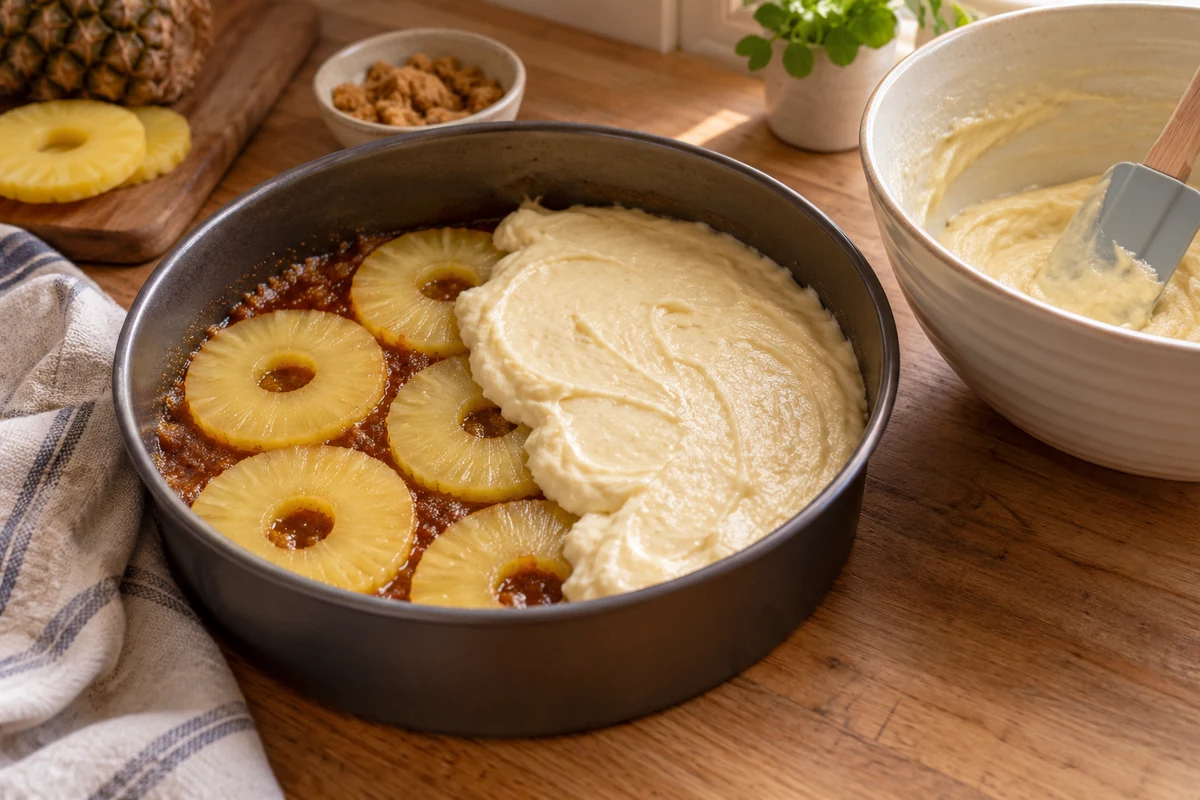
- Use gentle heat: Combine butter and brown sugar over a low to medium-low heat with a heatproof utensil. Keep it away from children and avoid splashes.
- A little graininess is not a disaster: Brown sugar may not dissolve completely in butter before baking. Metal utensils do not inherently cause crystallisation. Do not splash water into very hot fat and sugar to try to fix the mixture.
- Consistency: The warm topping should be spreadable. Gentle warming helps if it has cooled; adding milk or extra water is unnecessary for the main method.
- Avoid scorching: Brown sugar is already coloured, so do not wait for a particular dark caramel shade. Stop heating once the mixture is combined.
- Plant-based topping: A baking-suitable vegan block can replace the butter for a trial batch. Coconut oil has different water content and setting behaviour, so it is not an identical substitute.
Assembling the Cake
- Spread evenly: Cover the base with the warm topping, using a heatproof spatula and taking care around the hot tin.
- Arrange the pineapple: Pat the rings dry and place in one layer.
- Add cherries sparingly: Put them in the ring centres or gaps for decoration; they do not hold the pineapple in place.
- Avoid excess fruit: Do not stack rings. Optional lemon juice adds acidity, but does not remove water from the pineapple.
- Add batter gently: Spoon over the fruit and smooth without dislodging it.
Turning Out and Finishing
- Resting time: Allow about 8–12 minutes before turning out. Leaving it until completely cold may make the topping stick.
- Use a controlled movement: Hold the tin and rimmed heatproof plate together with oven gloves, turn over carefully and lift the tin slowly.
- Stuck fruit or topping: Gently lift it back onto the cake while still warm. Avoid improvised hob heating of a cake tin.
- Storage: Cool promptly, refrigerate within 1–2 hours and use within 48 hours. Cover once chilled.
Common Problems
- Burnt topping: Let it cool safely, discard and start again; extra sugar will not remove a burnt taste.
- Very runny topping: Check the measured butter and sugar and whether the fruit was well drained. The mixture thickens as it cools; do not keep boiling it aggressively.
- Wet batter in the centre: Continue baking in 5–10 minute intervals, testing again. Cover the top loosely if needed.
- Cake breaking during release: Line the base, loosen the edges and allow the brief rest. A loose-bottomed tin is not the solution because the syrup can leak.
Vegan and Less Rich Adaptations
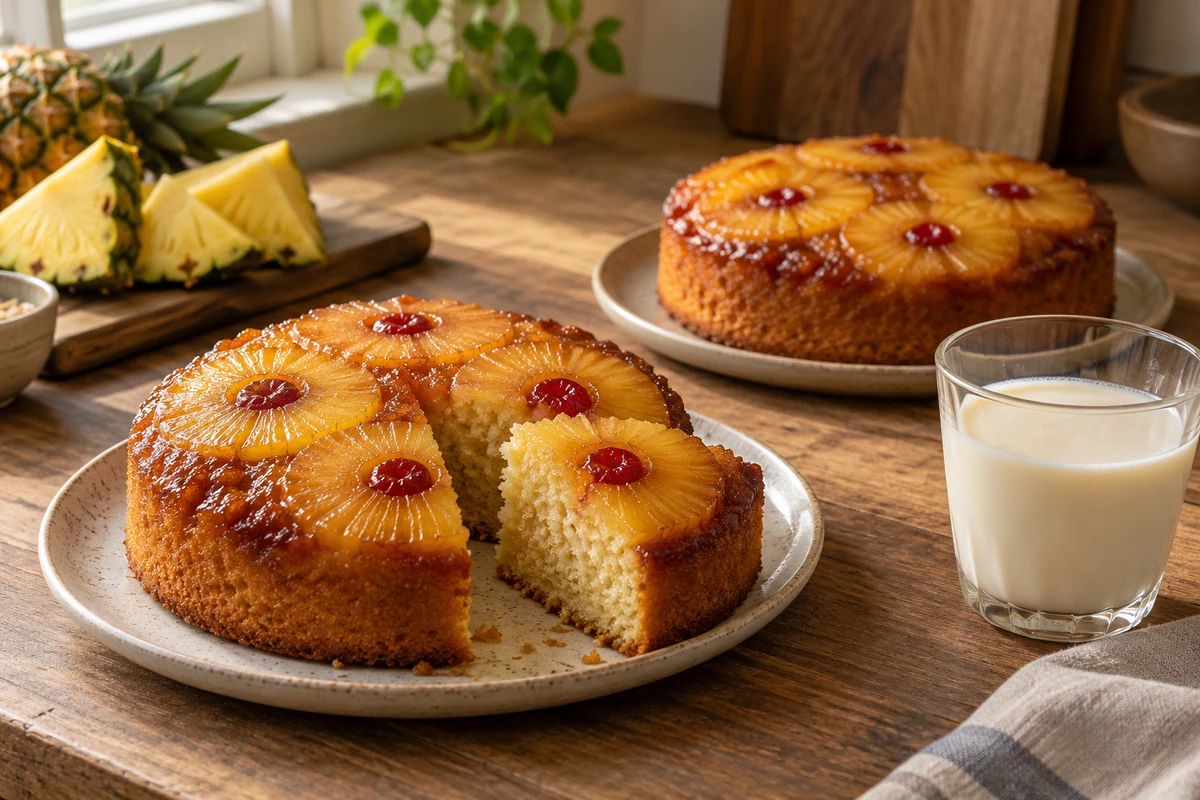
The original suggests vegan and reduced-fat versions of this pineapple upside-down cake. These substitutions change the structure, so treat them as trial adaptations rather than guaranteed equivalents. For a special occasion or strict dietary requirement, a tested recipe designed for that need is more dependable.
Vegan Adaptation
Replace every animal-derived ingredient and check the result with a small trial bake before serving it for an occasion.
- 3 tbsp ground flaxseed plus 9 tbsp water is the original’s suggested egg replacement. It is not structurally identical to three eggs and may make this cake denser.
- 120 ml vegetable oil can remain the sponge fat.
- 120 ml unsweetened plant-based drink replaces the milk; check soya, oat or almond products for relevant allergens.
- 120 g vegan baking block is a possible topping replacement. Do not assume eight spoonfuls of coconut oil have the same weight or baking properties.
- 200 g brown sugar for the topping and 160 g caster sugar for the sponge keep the stated metric amounts consistent.
- 260 g plain flour remains the base for this trial adaptation. Combining egg removal with an untested gluten-free flour swap introduces another major change.
- Hydrate the flaxseed: Mix with the water and allow it to thicken before using; texture varies with the grind.
- Prepare the topping: Combine the vegan baking block and brown sugar gently, then spread in the lined tin.
- Mix the batter: Combine the hydrated flaxseed, oil, plant-based drink and sugar, then fold in flour and baking powder. Do not expect it to aerate like beaten eggs.
- Bake and assess: Use the main recipe’s oven setting as a starting point, but check the centre rather than assuming the same baking time or texture.
Reducing Richness or Sugar
Sugar and fat affect the cake’s structure as well as sweetness. There is no tested low-calorie version or calculated nutrition for these adaptations.
- Unsweetened apple purée can replace some oil in recipes developed for it, but adding a full half-cup here without balancing the other liquids is not a validated swap.
- The original suggests reducing oil to 80 ml; the corresponding apple-purée quantity and texture need testing, so this is not presented as a second complete recipe.
- Skimmed milk or a suitable plant-based drink can change richness, but the full recipe still contains substantial sugar and fat.
- Baking sweeteners are not universally interchangeable with sugar. Erythritol does not behave like brown sugar in a caramel-style topping; use a recipe tested with the specific product.
- A thinner topping is another possible trial, but reducing butter and sugar changes coverage and release. Do not assume a sweetener will caramelise identically.
- For a reduced-sugar topping: Follow a tested recipe with a named sweetener rather than heating an arbitrary product as though it were sugar.
- For an apple-purée sponge: Choose a tested oil-and-purée formula to avoid adding too much moisture.
- Baking time can change: A wetter mixture is not necessarily faster to bake. Check for doneness and avoid relying on a reduced fixed time.
Adapting Carefully
- Moisture balance: Do not automatically add more milk to flaxseed or fruit-purée versions. Assess a trial batch before changing quantities again.
- Pineapple sweetness: Fresh fruit does not automatically require more sugar. Choose well-drained fruit and avoid changing several ingredients at once.
- Plant-based fats: Coconut oil sets differently from butter. Use a suitable baking block for a closer starting point and turn out while the topping is still warm.
- Do not taste raw batter: Raw flour can carry harmful bacteria even when no eggs are present. Bake a small test portion if you need to assess the flavour.
Pineapple and Upside-Down Cake: Background
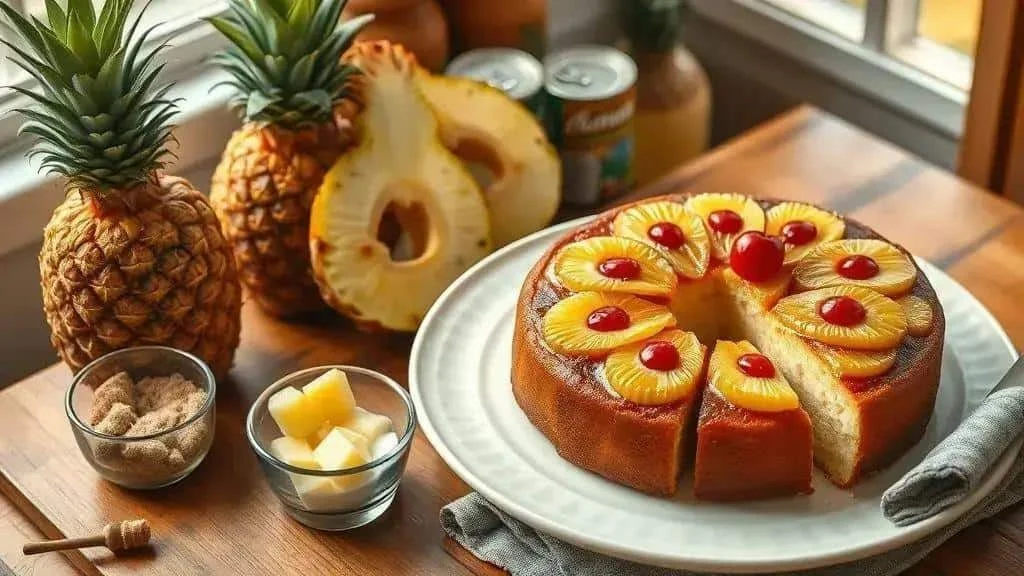
Pineapple gives the cake its recognisable ring pattern and sweet acidity. A few practical and historical notes help explain the appeal of this dessert.
About Pineapple
- Origin: Pineapple is native to South America and was later cultivated widely in tropical regions.
- Hospitality and display: In historical European settings, expensive pineapples could signal wealth and hospitality. This symbolism is not a universal tradition in every culture.
- Bromelain: Fresh pineapple contains protein-digesting enzymes that can interfere with gelatin setting. That is a different issue from baking a flour-based sponge; the main practical concern here is controlling moisture.
- Fresh and tinned: Tinned pineapple is heat-processed, but both types need draining or drying as appropriate before they go into the tin.
- Choosing fruit: Look for a sound pineapple with a pleasant aroma. Avoid mould, leaking juice or badly softened areas; colour alone does not establish quality.
About the Cake
- The upside-down method: Fruit is arranged beneath the batter, then becomes the topping when the baked cake is inverted. It gives decoration without icing.
- Twentieth-century popularity: Dole records a 1925 pineapple recipe contest that helped popularise pineapple upside-down cake. That does not mean the contest invented all upside-down cakes.
- The topping: Brown sugar and butter form a glossy coating as the cake bakes. Avoid scorching them beforehand.
- Preventing excess moisture: Pat pineapple rings dry and use one layer. Lemon juice adds flavour; it does not draw out or remove the water for you.
- After baking: The fruit softens and the sponge sets around it. Drainage, batter balance and sufficient baking remain important even though heat reduces enzyme activity.
Practical Pineapple Tips
- Remove the core: Cut out the fibrous centre for more tender rings.
- Alternative garnish: Try toasted coconut or fine citrus zest if suitable for your guests.
- Rum: A small optional amount adds aroma, but baking does not guarantee that all alcohol disappears. Omit it for an alcohol-free cake.
- Storage: Cool promptly, refrigerate within 1–2 hours and use within 48 hours. Warm individual portions if preferred.
- Other fruits: Peaches, apples and pears can be used in upside-down cakes, but each needs suitable slicing and a recipe that accounts for its moisture.
Flavour Variations
Spices and sweeteners: A little cinnamon or nutmeg can vary the flavour. Honey changes moisture and browning, so do not replace all the brown sugar without testing the recipe.
Enjoy Your Pineapple Cake
This pineapple upside-down cake makes an attractive dessert with a soft sponge and glossy fruit topping. Measure carefully, dry the fruit and take care when turning out the warm tin.
Thank you for reading. Save the recipe, share it with a fellow baker and visit the I Love Christmas blog for more seasonal ideas.
Pineapple Upside-Down Cake: Frequently Asked Questions
Can I use tinned pineapple instead of fresh?
Yes. Drain it thoroughly and pat the rings dry. Use only enough for one layer. Pineapple in juice is an alternative to syrup-packed fruit; major sugar adjustments should be tested separately.
How do I stop the cake becoming soggy?
Dry the fruit, avoid overlapping layers and bake until there is no wet batter in the centre. Use a suitable solid-bottomed tin and avoid opening the oven unnecessarily early.
How can I turn it out without breaking it?
Rest for about 8–12 minutes, loosen the sides and invert onto a rimmed heatproof plate using oven gloves. A lined, solid-bottomed tin helps release without leaking hot topping.
How should I store it?
For a cautious approach, cool promptly, refrigerate within 1–2 hours, cover and use within 48 hours. Warm only the portions you plan to eat.
Can I freeze the cake or individual slices?
Yes. Cool promptly, wrap well and freeze in a suitable container for up to about 2 months for best quality. Defrost in the fridge and use within 24 hours of full defrosting. The fruit topping may soften.
Sources and Further Reading
- King Arthur Baking: pineapple upside-down cake
- Dole: company history
- Food Standards Agency: chilling and leftovers