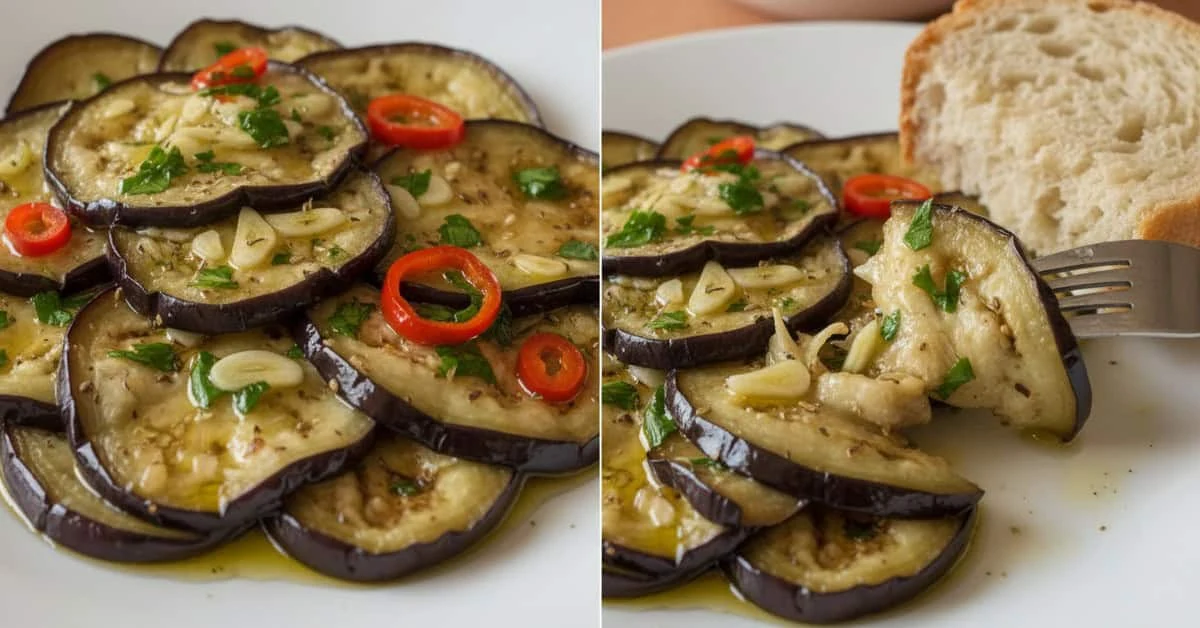
This roasted aubergine antipasto combines tender aubergine with onion, garlic, olive oil, vinegar and herbs, with optional tomatoes, olives and capers. Serve it with bread or crostini, try variations with peppers or tofu, and store it as a freshly prepared chilled dish, not a shelf-stable preserve.
Roasted aubergine antipasto turns a few vegetables and seasonings into a soft, tangy topping for bread. Roasting gives the aubergine browned edges, while a short rest in the fridge lets the flavours come together before serving.
Ingredients for roasted aubergine antipasto
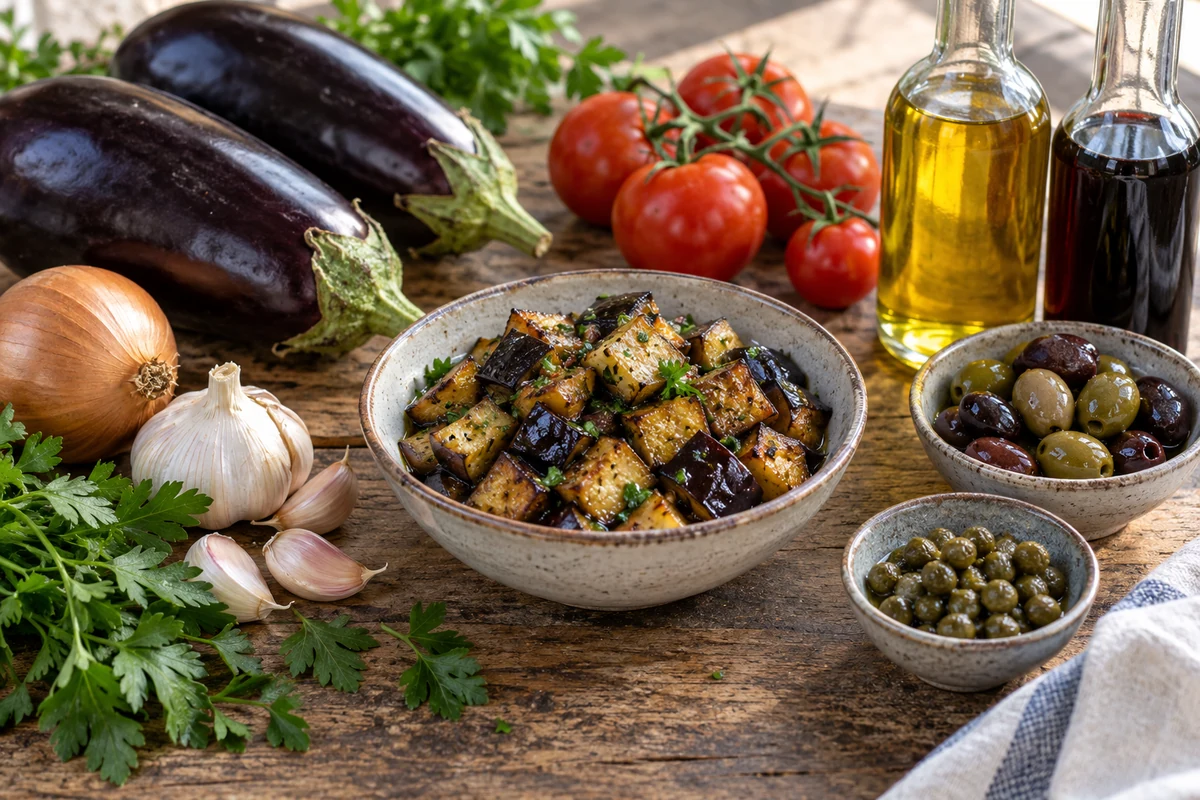
The quantities below make a generous batch of roasted aubergine antipasto for six to eight people as part of a sharing spread. For small starter portions, you may have some left to chill or freeze.
Ingredients for roasted aubergine antipasto
- 1 kg aubergines, approximately three medium aubergines, washed, trimmed and cut into cubes or thick slices. Courgettes make a softer variation and can cook more quickly.
- Up to 120 ml extra virgin olive oil in total, divided between roasting, the onion mixture and finishing. You may not need it all. Sunflower oil is a milder alternative; oil is not a preservation method here.
- 4 garlic cloves, finely chopped, or about 2 tablespoons roasted garlic for a milder flavour.
- 1 medium onion, finely chopped. A red onion is also suitable.
- 2 medium tomatoes, deseeded and chopped, optional, or 200 g drained tinned peeled tomatoes.
- 60 ml white wine vinegar, or lemon juice added gradually to taste. These are flavouring alternatives, not a validated acidification formula for preserving.
- Up to 2 tablespoons sugar, optional, to balance the vinegar. Start with less and taste. Honey is an alternative for a non-vegan version.
- About 40 g sliced olives, green or black, optional.
- 2 tablespoons drained capers, optional.
- Salt and black pepper, to taste. Start with a small pinch because the olives and capers already contribute salt.
- A small handful of chopped fresh parsley, approximately ¼ of a 240 ml cup.
- 2 tablespoons chopped fresh oregano or basil, optional.
Using less oil: roasting makes it easier to control the quantity than frying. Coat the aubergine evenly, then add only as much finishing oil as you enjoy.
How to make roasted aubergine antipasto
- Prepare the aubergines: wash, trim and cut into roughly 2 cm cubes or evenly sized thick slices.
- Optional salting: if desired, sprinkle the cut aubergine with a little salt in a colander and leave for 20–30 minutes, then rinse and dry thoroughly. This is optional and is not a preservation step; many aubergines cook well without it.
- Choose the cooking method: roasting is the main method below. If pan-frying instead, work in batches with some of the measured oil until the pieces are browned and tender, then drain excess oil. Do not assume one crowded pan will cook the whole kilogram evenly.
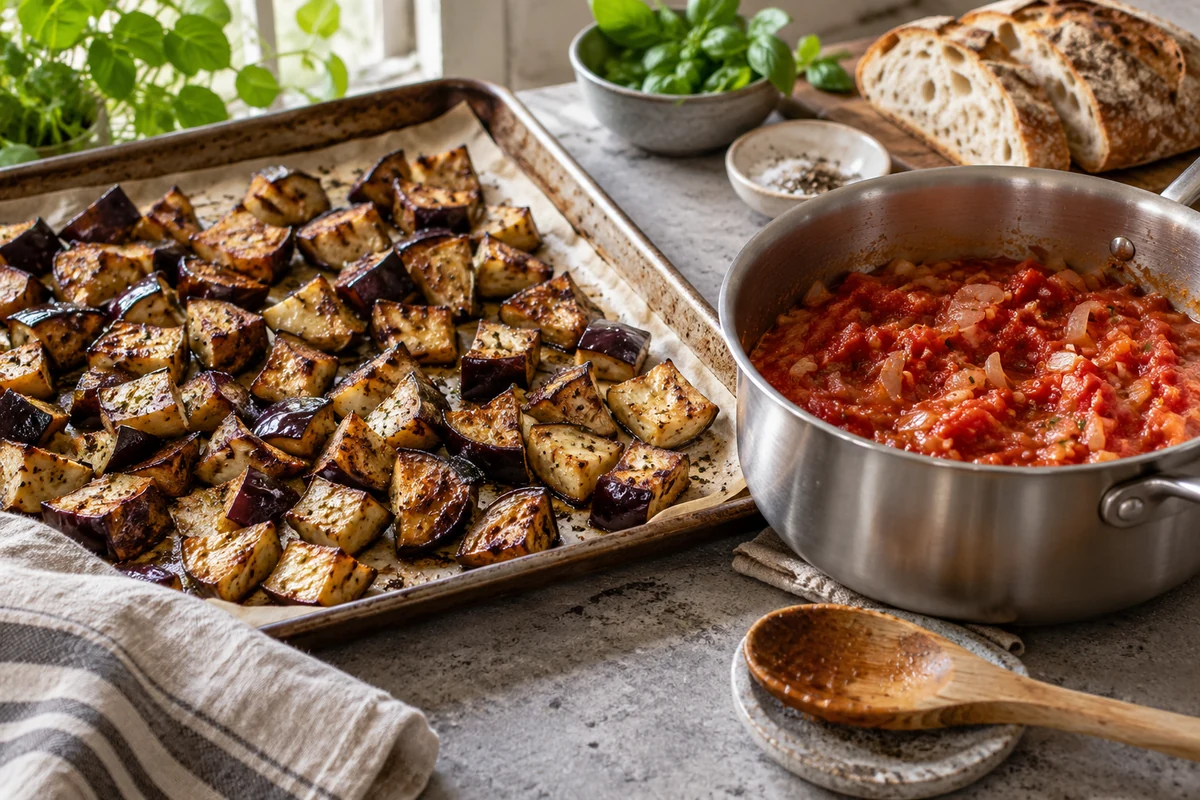
- Roast the aubergine: heat the oven to 220°C conventional or 200°C fan. Toss the pieces with 3 tablespoons of the measured oil, spread across one or two trays without crowding and roast for about 25–35 minutes, turning halfway, until tender and browned at the edges.
- Soften the onion and garlic: heat 2 tablespoons of the measured oil in a saucepan. Cook the onion gently for about 5–7 minutes until softened, then add the chopped garlic and cook for about a minute without burning it.
- Add the tomatoes and seasoning: stir in the optional tomatoes, vinegar and a little of the optional sugar. Cook for 4–5 minutes until the tomato softens. Add black pepper and taste before using the remaining sugar.
- Combine: gently fold in the cooked aubergine, optional olives and capers. Simmer for 3–4 minutes to bring the mixture together without completely breaking up the pieces.
- Finish: stir in the parsley and optional fresh herbs, then taste for salt and acidity. Add a little of the oil remaining from the 120 ml total only if needed; do not add another 120 ml on top of the cooking oil.
Quick tips
For a less oily result: roast the aubergine and measure the oil. For a fuller flavour: cool promptly, refrigerate and leave for a few hours or overnight before serving.
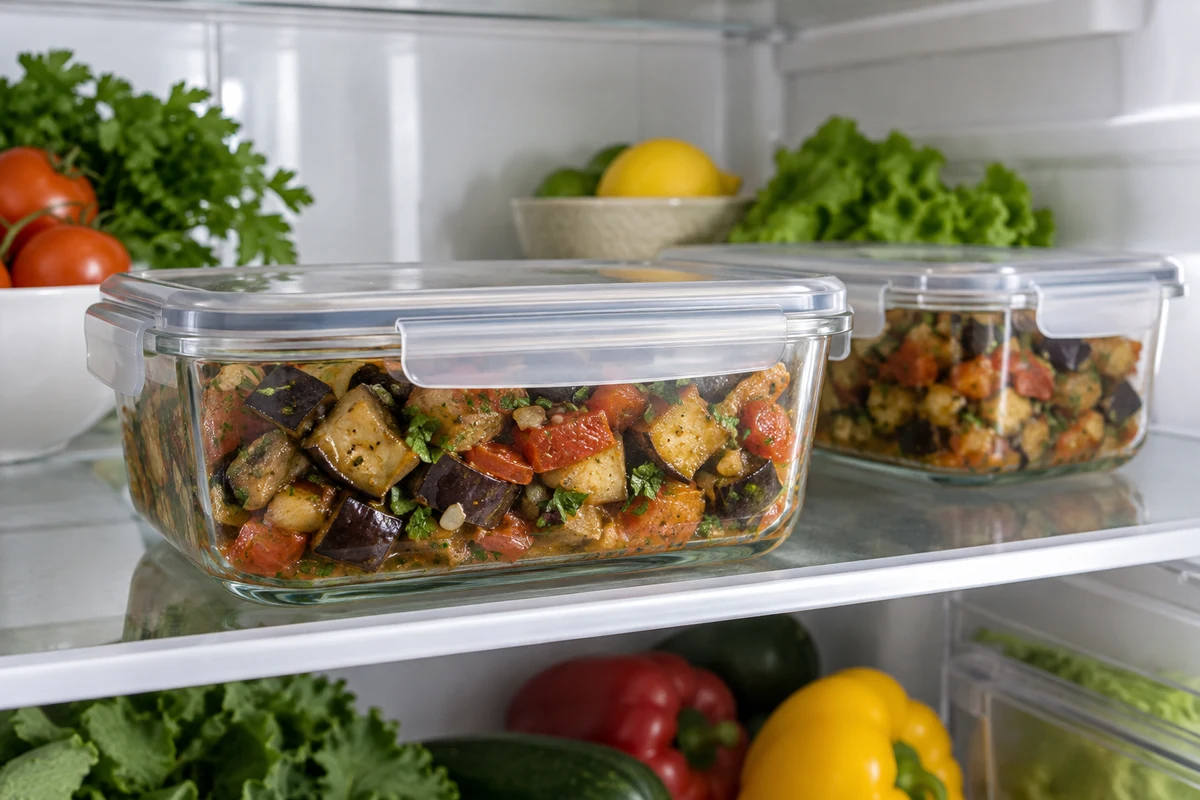
Storage: cool promptly in shallow containers and refrigerate within two hours. Eat within 48 hours or freeze in suitable containers for up to three months for best quality. An oil layer or a clean jar does not make this recipe a long-life preserve.
Aubergine antipasto variations
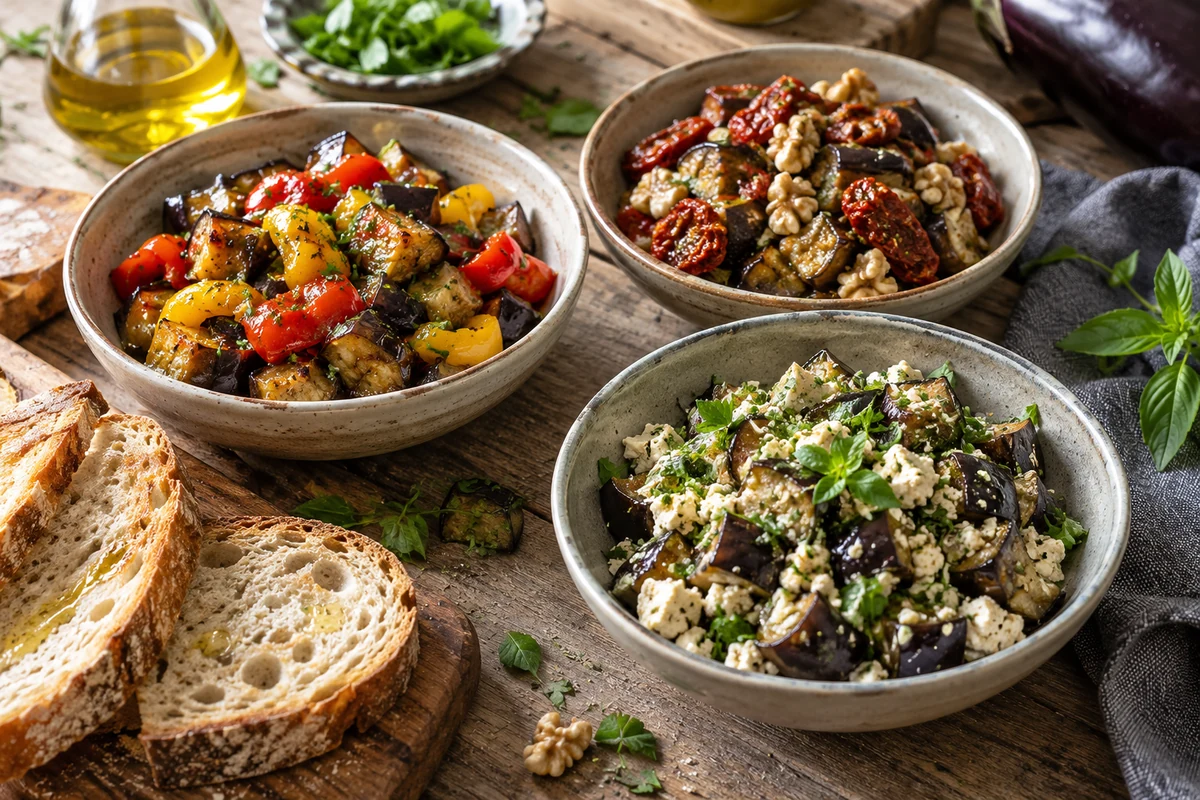
Vary the aubergine antipasto with other vegetables, herbs or toppings. The base recipe is vegan when you use sugar rather than honey and choose suitable accompanying bread.
Roasted peppers and herbs
Roasted red and yellow peppers add colour and sweetness. Combine the cooked aubergine with:
- 1 red pepper, roasted, peeled if preferred and sliced.
- 1 yellow pepper, roasted and sliced.
- 2 tablespoons chopped parsley, using this as part of, or instead of, the base recipe’s herbs.
- 1 teaspoon dried oregano, or 1 tablespoon chopped fresh basil.
Griddled peppers also work. Use the measured oil sparingly rather than adding a separate generous coating at each stage.
Sun-dried tomatoes and walnuts
For a contrast between soft vegetables and crunchy nuts, add:
- 80 g sun-dried tomatoes, chopped and drained if packed in oil. Soften dry-packed tomatoes according to the packet if necessary.
- About 40 g walnuts, toasted and chopped, or another suitable nut if your guests can eat it.
- A little of the reserved olive oil if needed; oil-packed tomatoes may already supply enough.
To avoid nuts, consider toasted sunflower seeds only if they are suitable for the person’s allergies. Check cross-contact information rather than assuming any seed is automatically safe.
Lemon and mint
For a fresh-tasting version to use in sandwiches or on toast, add:
- Finely grated zest of 1 lemon, avoiding the bitter white pith.
- Up to 1 tablespoon lemon juice, tasting first because the base already contains vinegar.
- 2 tablespoons chopped fresh mint.
This variation works well in a simple bread-based lunch or as part of a sharing starter.
Chilli and smoked paprika
For a warmer, smoky flavour, try:
- Up to 1 teaspoon chilli flakes, starting with less if you prefer mild food.
- 1 teaspoon smoked paprika.
- 1 tablespoon red wine vinegar in place of 1 tablespoon of the white wine vinegar, rather than automatically adding more acidity.
For a gentler version, reduce the chilli flakes or use black pepper instead.
Feta or tofu
For a creamy, vegetarian variation, choose a feta labelled suitable for vegetarians and add:
- 100 g feta, crumbled over the cooled aubergine.
For a vegan alternative, use:
- 120 g firm tofu, prepared according to its packet if it is not ready to eat, then crumbled and seasoned with lemon and a little salt.
Taste before adding more oil or salt. The feta version may already be rich and salty enough.
Combining variations
- Resting: a few hours or overnight in the fridge allows flavours to mingle. This time counts towards the 48-hour storage period.
- Salt balance: olives, capers and feta can be used together, but taste before adding extra salt. They are not inherently incompatible ingredients.
- Serving: offer small bowls of different versions with bread, keeping reserve portions refrigerated.
Serving with bread and other nibbles
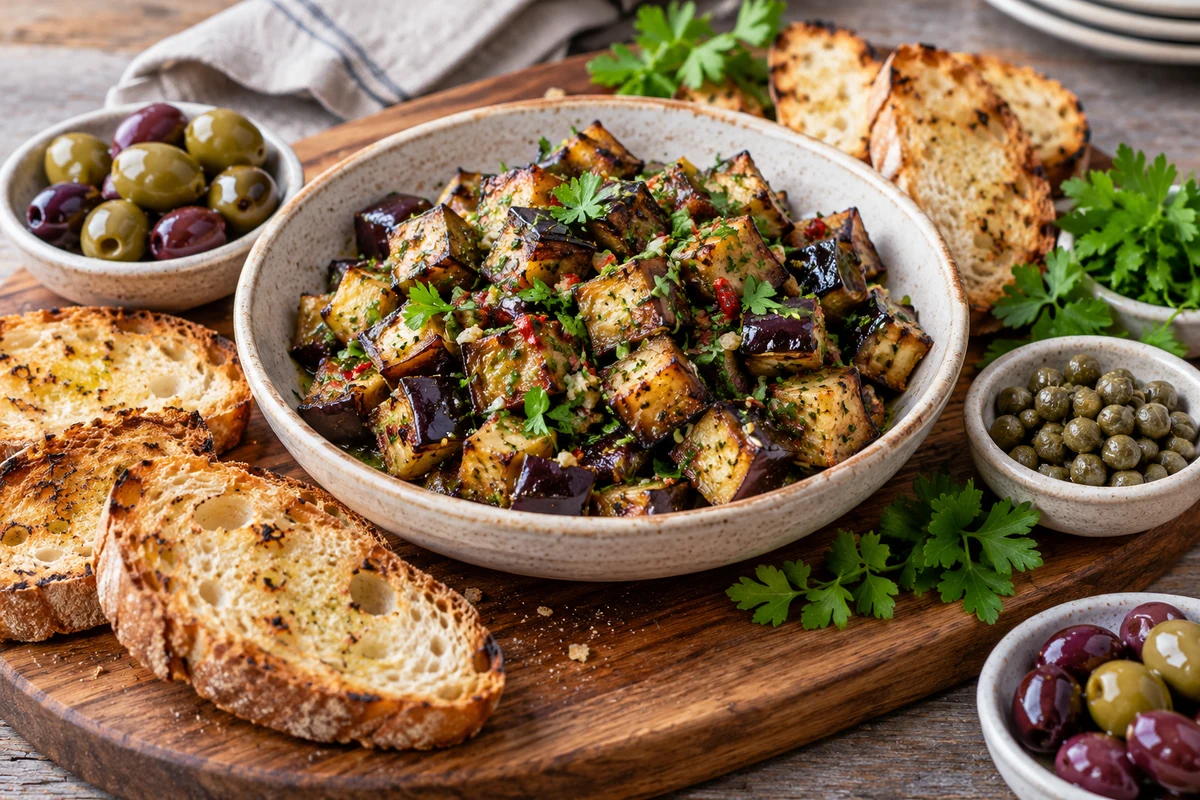
Serve aubergine antipasto freshly cooked, safely chilled or briefly brought out of the fridge just before eating. Stir gently and put out a small serving bowl rather than leaving the whole batch on the table.
Bread pairings
- Ciabatta or rustic bread: lightly toasted slices provide a sturdy base for the soft vegetables.
- Baguette: diagonal slices, toasted if preferred, suit the tangy tomato version.
- Wholemeal or seeded bread: a useful match for variations with nuts or seeds.
- Crostini: small toasted bread slices make convenient individual portions.
- Pitta bread or crispbreads: choose soft pitta wedges or crisp pieces for a different texture.
Other accompaniments
- Cheese: feta, seasoned ricotta or goat’s cheese adds creaminess. Check vegetarian suitability if relevant.
- Olives and capers: serve them separately for guests who want a saltier topping.
- Pickled vegetables: shop-bought gherkins, pickled onions or peppers add crunch. Follow their storage instructions.
- Nuts and seeds: toasted almonds or sunflower seeds pair well with the sun-dried tomato variation; make allergens clear.
- Fresh herbs: scatter a little chopped parsley, basil or mint over the serving bowl.
Arranging a sharing board
- Choose a base: use a clean food-safe board or large platter with room for bread and serving bowls.
- Add the antipasto: place it in a shallow bowl, or use several small bowls for different variations.
- Arrange the bread: fan toasted slices around the bowl, keeping them separate from the moist vegetables until eaten.
- Add accompaniments: put cheese, olives, nuts and pickles in small separate dishes so guests can choose.
- Finish: add herbs and, if desired, a small drizzle of the reserved oil. Provide clean serving spoons.
Portions and storage
Portion size: around 60–80 g per person is a useful starting point for a small starter, with more for a substantial sharing plate. Storage: keep the batch refrigerated and eat within 48 hours of preparation. Covering it with oil does not extend that period.
Practical tips
- Tasting portions: use several small bowls if offering different flavours.
- Texture: fold the mixture gently so some aubergine pieces remain intact rather than turning everything into a purée.
- Salt: add olives and capers gradually. Herbs bring flavour without requiring more salty ingredients.
Aubergines and storing the finished dish
Aubergine softens considerably when cooked and takes up the surrounding flavours. Different varieties vary in size, shape and skin colour; the amount of oil used also makes a noticeable difference to the finished dish.
A few useful details
- Versatility: aubergine works roasted, griddled or pan-fried, making it useful for a range of vegetable dishes.
- Varieties: long slender, round and larger oval aubergines are all available. Cut them into evenly sized pieces rather than relying only on a variety name for cooking time.
- Texture: the flesh absorbs oil and seasoning readily, so measuring the oil helps keep the result balanced.
- The whole dish: vegetables, oil, bread and optional cheese all affect the meal’s nutritional balance. The finished antipasto should not automatically be described as low-calorie.
- Salting: an optional salt-and-rest step changes moisture and texture before cooking; it does not preserve the finished food.
Storing aubergine antipasto
Refrigeration: divide into clean shallow containers, cool promptly and refrigerate within two hours. Eat within 48 hours or freeze. Do not keep this recipe for seven to ten days under a layer of oil.
Clean containers: wash food-safe containers and lids thoroughly, rinse and dry. A cleaned or heat-treated jar does not turn this untested vegetable mixture into a shelf-stable preserve.
Freezing: pack in small freezer-safe portions with room for expansion and label the date. Use within three months for best quality, defrost in the fridge and use within 24 hours of fully defrosting.
Reheating: if serving hot, reheat once until piping hot throughout rather than only lukewarm. Alternatively, eat safely chilled portions cold.
When to discard it
- Discard it if it has an unusual smell, but remember that harmful contamination may have no noticeable odour.
- Discard the whole affected portion if there is visible mould, unexpected discolouration or other deterioration.
- Do not taste food to check whether it is safe. Unexpected bubbling, a swollen container or uncertain storage history are reasons to discard it.
Storage reminders
- Oil is not a safety barrier: covering vegetables or garlic with oil does not make them safe at room temperature. This recipe is for prompt refrigeration or freezing, not home canning.
- Small portions: freeze individual servings so you do not need to repeatedly open and warm the whole batch.
- Labels: record the preparation or freezing date and use the oldest suitable portion first.
To finish
This roasted aubergine antipasto is a flexible accompaniment to bread, with tender vegetables, herbs and a tangy dressing.
Try one variation at a time, adjust the seasoning and allow a short rest in the fridge if convenient. Keep the measured oil and safe storage guidance in mind.
Thank you for reading. Follow our social channels for more cooking ideas and visit I Love Christmas for seasonal inspiration.
Share your own serving ideas with us; there is plenty of room to vary the herbs and accompaniments.
FAQ – Roasted Aubergine Antipasto
How should I keep aubergine antipasto in the fridge?
Cool promptly in shallow containers, refrigerate within two hours and eat within 48 hours. Freeze portions you will not use in that time. An oil layer does not make this recipe a long-life preserve.
Can I use less oil?
Yes. Roast the aubergine with a measured coating rather than frying it, and add only a little finishing oil if needed. The 120 ml listed is the maximum total across all stages, not an extra addition at the end.
Which substitutions work well?
Courgette makes a softer vegetable variation, sunflower oil has a milder flavour, and suitable tofu can replace feta for a vegan version. Check seeds and their packaging carefully before using them as a nut alternative for someone with allergies.
How long should I leave it to rest before serving?
A few hours or overnight in the fridge lets the flavours mingle; one to two hours also makes a difference. Count resting time within the 48-hour refrigerated storage period.
How can I tell whether it should be discarded?
Discard food with mould, unusual smell, unexpected bubbling or uncertain storage history. Do not taste it to test safety, and do not assume it is safe simply because it looks and smells normal.
Sources and Further Reading
- Food Standards Agency: cooking food safely
- Food Standards Agency: chilling, freezing and defrosting food safely
- National Center for Home Food Preservation: garlic in oil