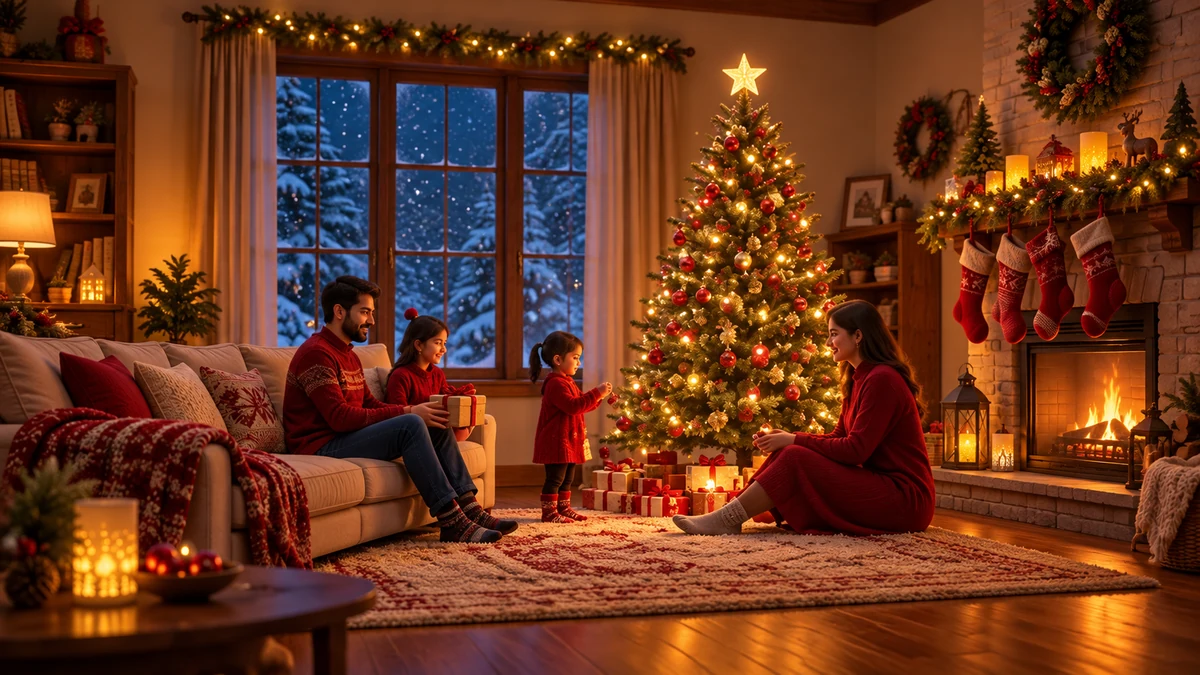
Sharing Christmas memories can preserve family stories and traditions. A photo album, a recorded conversation or a recipe notebook can provide a starting point, with permission from the people involved and room for different recollections.
Sharing Christmas memories can begin with a single photograph or a question about a favourite dish. This guide offers practical ways to collect and discuss those stories privately with family and friends. There is no need for a perfect memory or a polished performance.
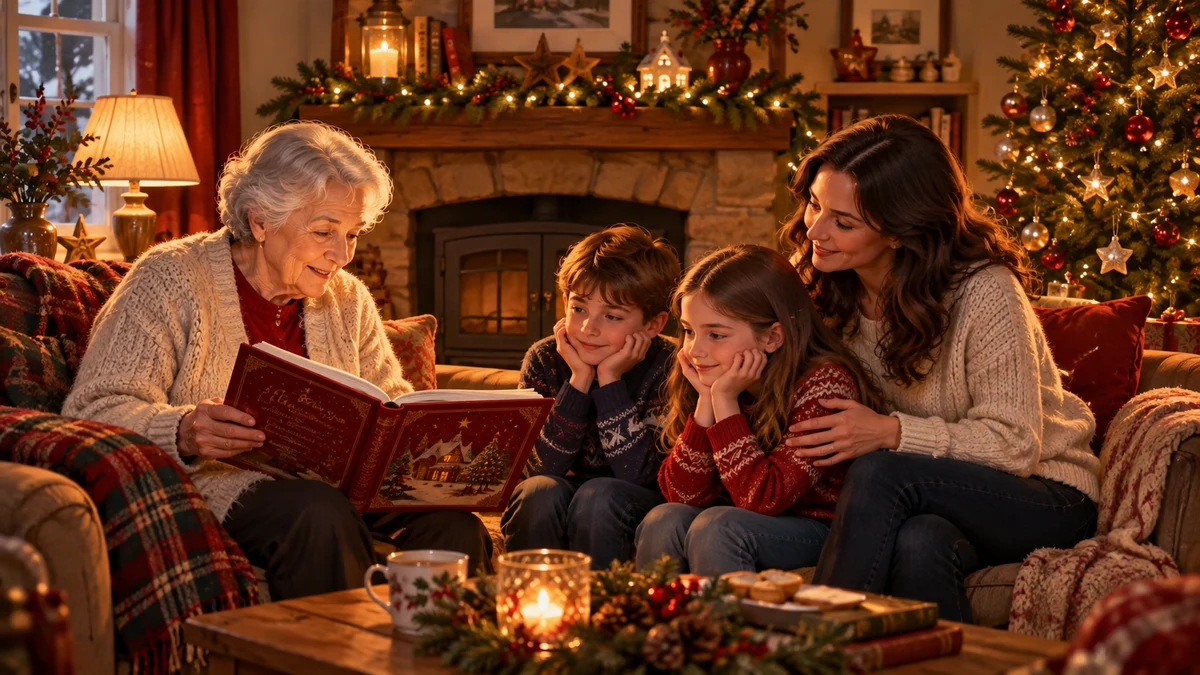
Family stories can explain traditions and support connections between generations. Accounts of particular occasions add context that photographs alone may not provide. They are personal recollections, so details may differ between people.
Connecting generations
Stories about a parent’s or grandparent’s childhood can introduce the background and family history behind a custom. A relaxed conversation can make space for familiarity and affection, without assuming every relationship or memory is straightforward.
Preserving recollections
Writing or recording an account can preserve memories that might otherwise be lost. Note who told the story and when, and mark uncertain dates as approximate. Do not turn a remembered detail into a verified fact simply because it has been written down.
Inviting children to contribute
Share favourite stories and invite children to offer their own recollections or drawings. Encourage participation and curiosity rather than testing their memory. Listening, asking a question or choosing a photograph can be enough.
Ideas for collecting Christmas memories
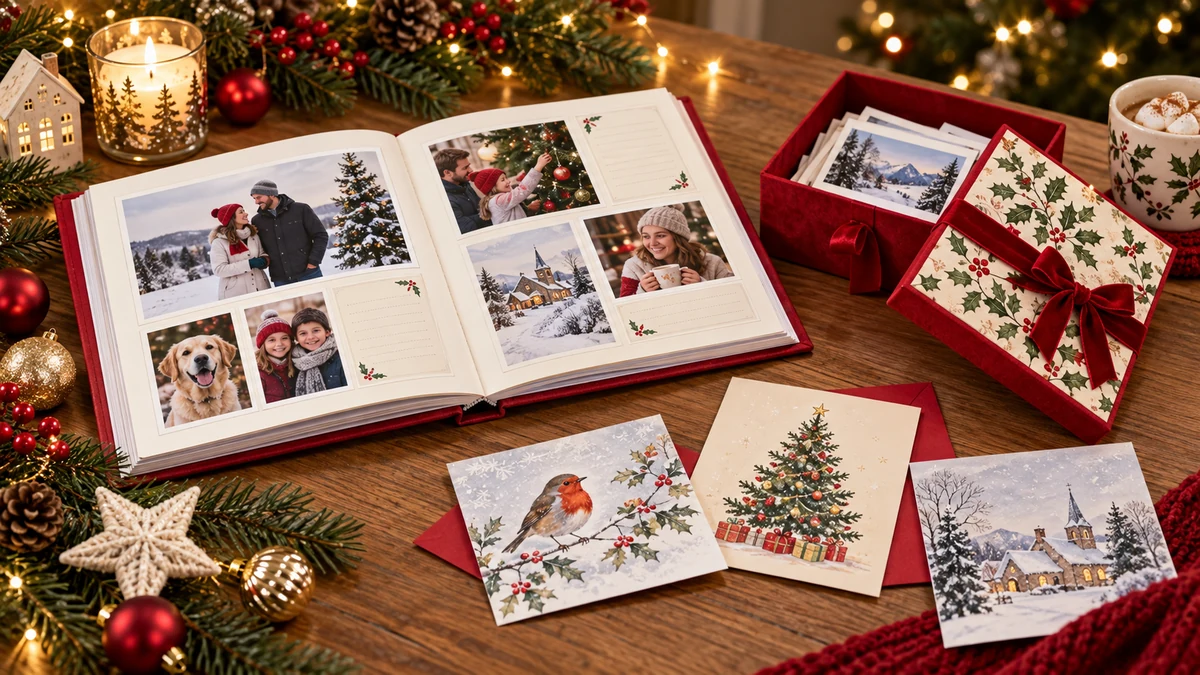
A small collection can keep memories and useful details together. These practical ideas offer different starting points; choose one that suits the material you have and the people taking part.
A Christmas photo album
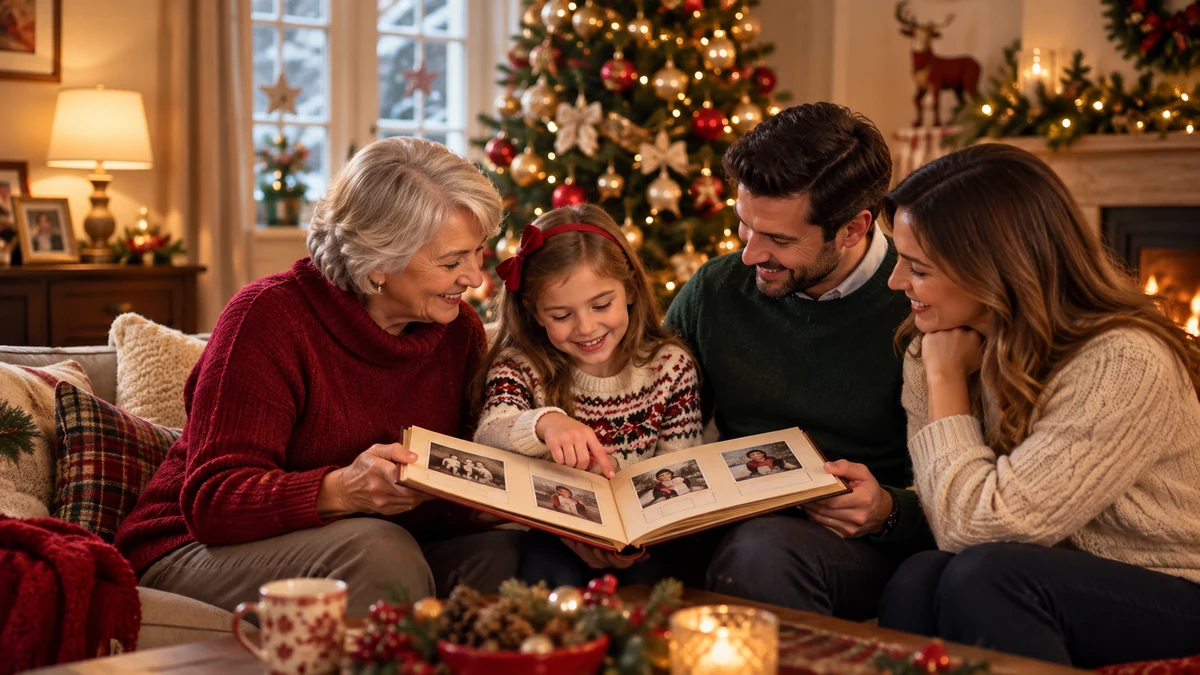
Gather copies of photographs in a photo album, from decorating the tree to preparing a meal. Add notes and dates where known, along with names if the people involved agree. Keep valuable originals separately and work with reproductions for craft projects.
A memory box
A memory box can hold cards, notes and small keepsakes. Label items with their story and date where possible. Store paper items in suitable acid-free materials, away from damp, direct light and objects that could stain or scratch them.
Recorded messages
With permission, record short video messages about a remembered Christmas. Explain who will see them and where they will be stored. Keep a backup and do not publish recordings of relatives or children without appropriate consent.
A Christmas recipe notebook
Create a recipe notebook with measured ingredients and practical instructions, adding the story behind each dish. Ask the cook what can be shared and check food-safety guidance rather than assuming every inherited method remains suitable.
A seasonal memory display
Arrange copies of photographs and cards in a memory display. Keep it away from heat, moisture and direct sunlight. A temporary display can prompt conversation while the originals remain in protected storage.
Making a Christmas memory album
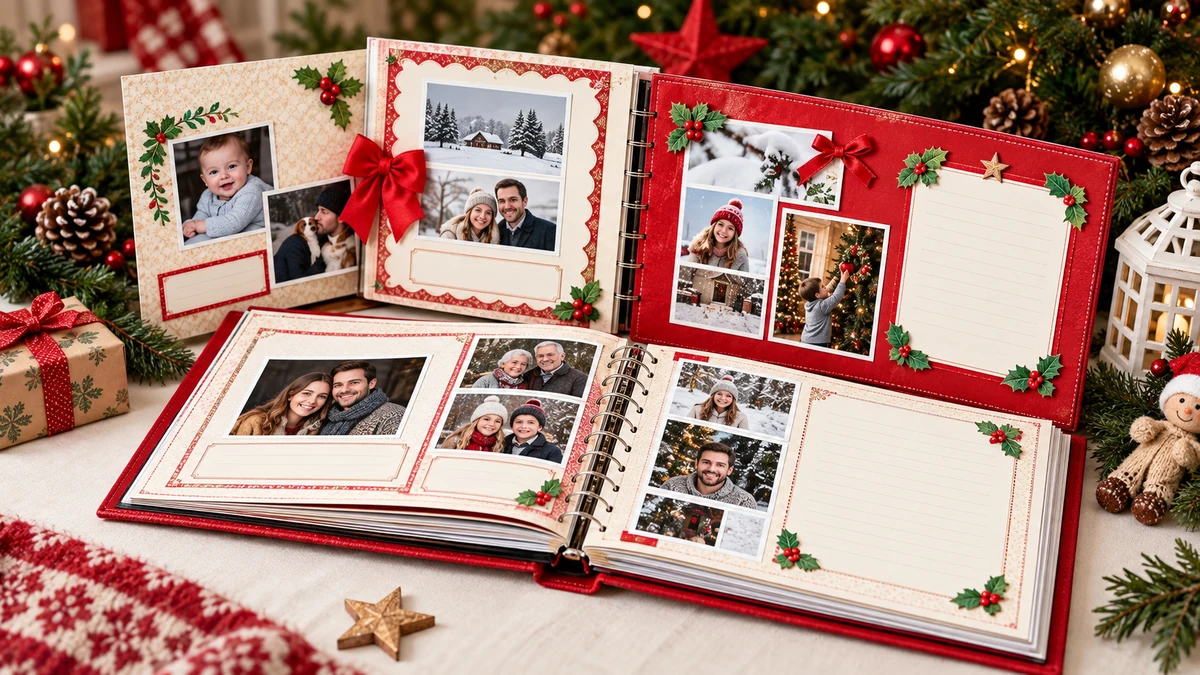
A Christmas memory album becomes more useful when pictures have context. Start with a small selection, add captions and invite corrections before making a final version.
Choose the album format
Decide between a printed or digital album. Printed pages are easy to browse together; digital files can help relatives who live apart. Check privacy and export options before uploading personal material to an online service.
Collect a manageable selection
Include photographs of decorations, the meal or meaningful gifts, alongside ordinary moments. Ask permission before including someone else’s images and leave out pictures that the people shown would prefer to keep private.
Write useful captions
Add notes or captions explaining who, where and when, where known. A short attributed recollection can be more informative than a generic description. Mark uncertainty rather than guessing missing details.
Choose a readable layout
A simple theme or colour palette can connect the pages. Keep text readable and give photographs room to breathe. Red and green are familiar options, but any colours that suit the collection can work.
Invite different perspectives
Give contributors space for their own memories, including brief notes or drawings. Explain how the album will be shared and respect requests to leave out an account. Relatives do not have to agree on every detail.
Add personal details carefully
Stickers, decorative paper and drawings can personalise copies in a craft album. Keep adhesives away from irreplaceable photographs and documents. Decoration should not obscure dates, captions or faces.
Including children in Christmas traditions
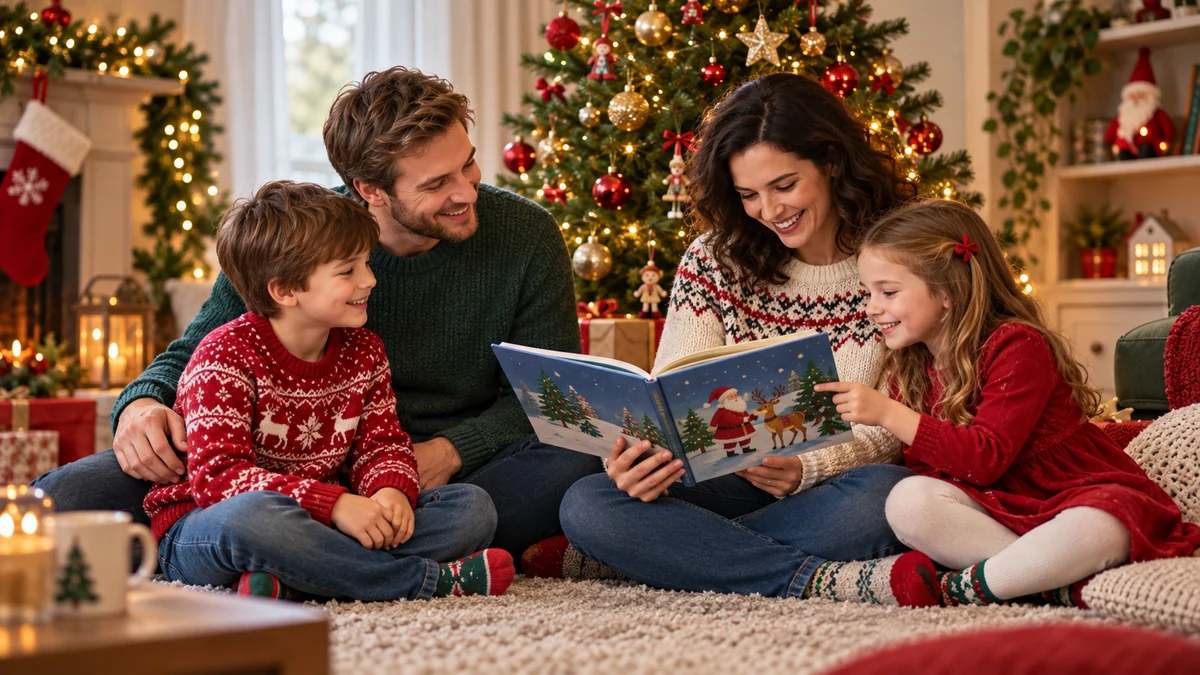
Children can join Christmas traditions through short, age-appropriate activities. Explain what a custom means in your household and make participation optional. Families have different religious and secular approaches to the season.
Decorating the tree
Invite children to choose unbreakable ornaments for the Christmas tree. An adult should secure the tree, handle electrical lights and place fragile decorations. Keep small parts and batteries out of young children’s reach.
Helping with food preparation
Children can take suitable tasks during meal preparation, such as mixing a safe mixture or arranging cooled food. Supervise closely and keep them away from hot oil, sharp knives and raw meat. Check allergens and encourage handwashing.
Telling stories
Set aside time for storytelling. Family recollections, religious stories and tales about Father Christmas can all feature, with their different contexts explained. Present folklore as a story rather than proof of real events, and invite children to ask questions or choose another tale.
Making simple crafts
A short craft activity might involve drawing a card or making a paper ornament. Use materials suited to the children’s ages, supervise scissors and keep hot glue and small fittings under adult control.
Talking about the year
Offer a gentle moment of reflection: what did children enjoy, what would they like to do again, and how might they help someone? Avoid requiring a cheerful answer or treating gifts as a measure of good behaviour.
Sharing recipes and the stories behind them
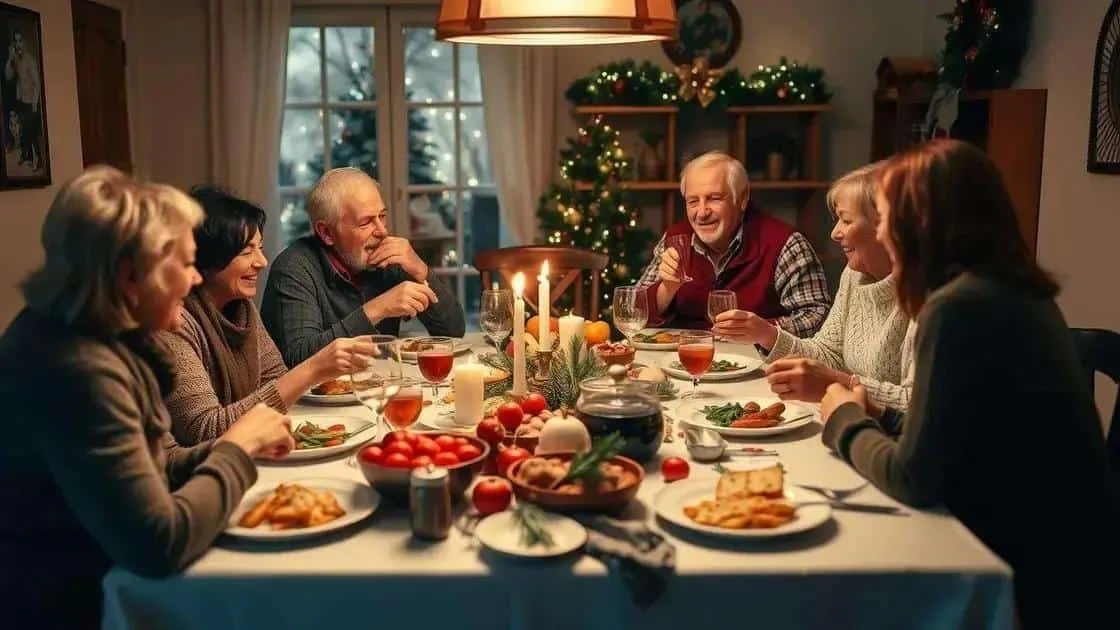
Time together can combine food and conversation. A familiar recipe may introduce traditions from a different generation, while a new dish can become part of the collection too.
Ask about a recipe’s background
A recipe may have a story attached to it. While preparing roast turkey or Christmas biscuits, ask who first made the dish in the family and how it has changed. Record the answer as that person’s recollection, not a verified history unless evidence supports it.
Plan a meal around memories
A meal with a family-history theme can include one dish linked to a memory. That may prompt a conversation without needing an elaborate menu. Check dietary needs and keep the preparation within your budget.
Make space for conversation
After a meal, invite people to share Christmas stories if they wish. A funny detail or a quiet memory can both belong. The aim is connection, not deciding who has the best story or asking anyone to revisit something painful.
Let children choose what to share
Ask children about their own stories: a game, a visitor or the decorated tree may stand out. Drawing or pointing to a photograph can be an alternative to speaking in front of everyone.
Try an optional story game
A simple activity can connect recipes and stories. For example, invite people to suggest a name for a dish or draw a remembered meal. Keep it friendly and optional rather than competitive, and avoid asking children to cook unsupervised.
Keep the traditions that work for your family
Shared stories and activities can offer opportunities to build family connections. A little time for care and companionship may matter more than following every custom. These activities do not guarantee lasting happiness or suit every household.
Children can contribute to family history in their own way, with drawings, questions or small practical tasks. Make room for different interests and stop when an activity is no longer enjoyable.
Start with one photograph, one story or one recipe. Preserve what people want to share, keep private material secure and allow new traditions to develop over time.
Frequently asked questions about Christmas memories and children
Why invite children into Christmas traditions?
It can help them understand customs and contribute their own ideas. Explain the tradition’s meaning in your household and keep participation age-appropriate and optional.
Which activities can children join?
They can choose safe ornaments, draw cards, help with suitable food preparation or listen to stories. Adults should handle electrical lights, hot equipment, sharp tools and other hazards.
How can I encourage children to share memories?
Ask an open question, show a photograph or offer drawing as an alternative. Give them time and accept that they may not want to speak in a group.
Can children help make a memory album?
Yes. They can choose copies of photographs, suggest captions or add drawings. Protect originals, supervise craft tools and ask permission before sharing images of other people.
How can meals become part of a family tradition?
A familiar dish can prompt a story, and children can help with safe tasks. Check dietary needs, follow reliable food-safety guidance and avoid making participation compulsory.
How can I make storytelling more engaging?
Use a photograph, drawing or simple puppet as a prompt. Explain whether the account is a personal memory, a religious story or folklore, and record people only with permission.
Sources and Further Reading
- Care of Photographs — Library of Congress
- Storing Family Papers and Photographs — US National Archives