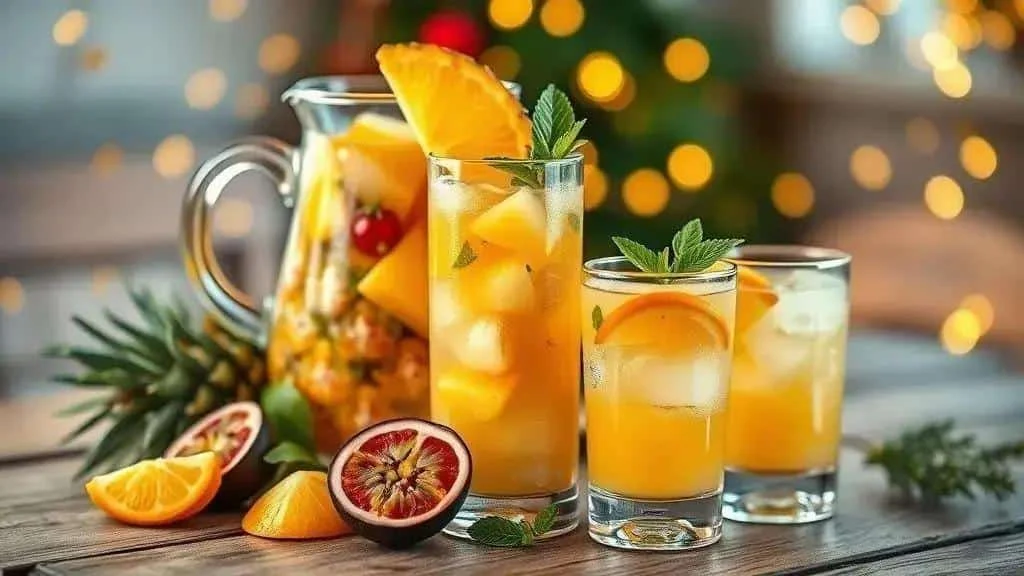
Tropical Christmas juice combines pineapple, passion fruit, mango and orange with coconut water. Blend the fruit in batches, using the measured liquid only once, then chill and adjust to taste. The base is alcohol-free and vegan without honey; sparkling wine is a separate adult-only variation. Yield varies with the fruit and how much pulp you strain out.
Tropical Christmas juice brings bright fruit flavours to a festive table. Pineapple, passion fruit and orange offer a refreshing contrast to a rich meal, while mango gives the drink body. Here is a measured method with optional variations.
Ingredients for Tropical Christmas Fruit Juice
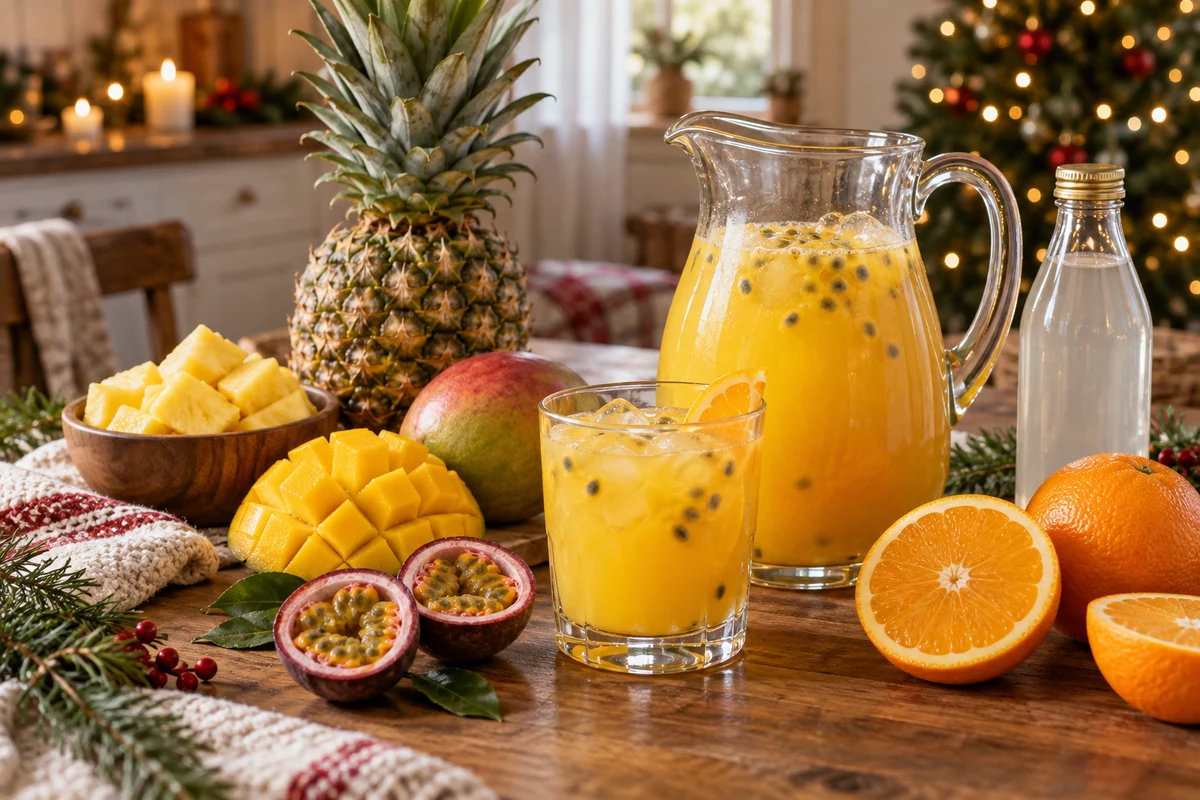
For this tropical Christmas fruit juice, measure the prepared fruit rather than relying entirely on the number of whole fruits. The recipe makes a generous jugful, roughly 2 litres before optional additions, but straining and fruit size affect the final volume. Measure the finished batch when planning portions.
- About 800 g prepared pineapple flesh, peeled, cored and chopped — use the same weight of frozen pineapple if suitable for eating without cooking. A cup and a half is not an equivalent amount.
- About 240 ml passion fruit pulp — the original uses four large fruits, but smaller fruit sold in Britain may require more. Concentrate varies: dilute according to its label before using it, rather than substituting half a cup blindly.
- 500 ml orange juice — squeeze enough oranges to reach this volume; four large oranges are only a guide. Pasteurised juice without added sugar is another option.
- 250 g prepared ripe mango flesh, peeled and stoned — substitute the same weight of suitable frozen mango, not an assumed cup measure.
- 500 ml chilled coconut water in total — still drinking water works too. For a sparkling variation, reserve part of this volume to replace with sparkling water at the end.
- Optional sugar, added gradually to taste — the original suggests 100–150 g, but ripe fruit may need none. Start without it. Honey is not vegan and is unsuitable for children under one; replacing sugar with a sweetener does not make fruit juice sugar-free.
- Juice of up to 1 lime for the whole batch — add only if needed. Lime increases acidity rather than reducing it; omit it if the passion fruit is already sharp. Vinegar is not a necessary substitute.
- A small handful of washed mint leaves — optional for infusing and garnishing. Lemon basil gives a different aroma.
- Ice for serving, if wanted — chilled ingredients reduce the amount needed.
- Optional adult variation: 300 ml sparkling wine — add only to a separately identified adult batch. Sparkling water gives a non-alcoholic alternative.
Quick Tip
Use ripe, sound fruit for flavour and sweetness. Suitable frozen pineapple or mango can help chill the blend; follow any cooking instructions on bought frozen fruit. Taste the finished mixture before adding sugar.
How to Make Tropical Christmas Fruit Juice
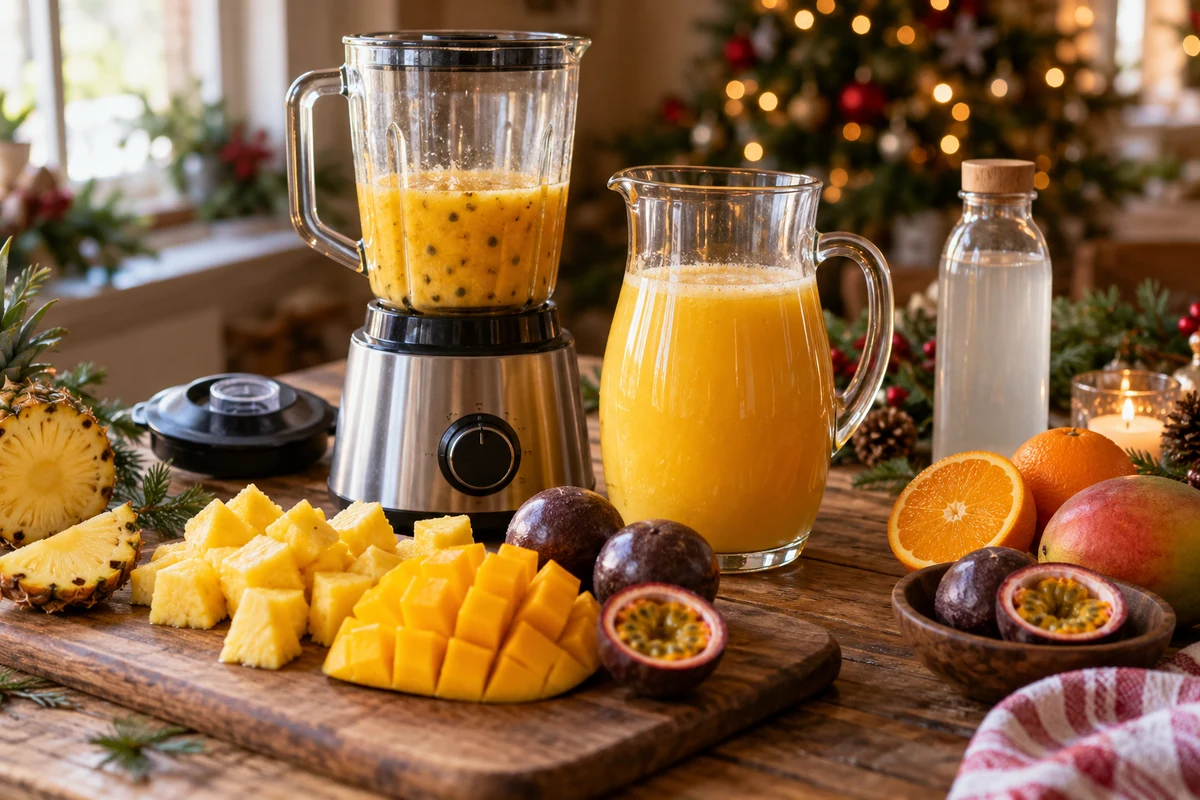
Follow these steps for tropical Christmas fruit juice. Keep the orange juice, coconut water and lime measured separately so they are not accidentally added again with every blender batch.
- Prepare the fruit: wash the fruit before cutting, then peel and core the pineapple and peel and stone the mango. Measure 800 g pineapple flesh, 250 g mango, about 240 ml passion fruit pulp and 500 ml orange juice. Remove orange pips.
- Blend in manageable batches: divide the pineapple, mango and orange juice between batches, adding a little from the measured 500 ml coconut water as needed to help blending. Stay within your blender’s capacity and instructions; do not use carbonated liquid in a sealed blender.
- Keep additions for the combined batch: do not add a whole lime or a fresh measure of sugar to each blender load. Reserve the optional lime and sweetener until all the fruit has been combined.
- Blend until smooth: blend each batch for around 30–45 seconds, or as needed for your appliance. For a less gritty result, pass the passion fruit pulp through a sieve separately rather than crushing all its seeds in the blender.
- Strain if preferred: pass the blend through a fine sieve for a smoother drink, then add the strained passion fruit juice. Alternatively, retain some pulp or seeds for adult servings, accepting a different texture and yield.
- Combine and adjust thickness: pour the batches into a large jug and add only what remains of the original measured 500 ml coconut water. Do not add another 500 ml. If still too thick, add a little extra chilled water and note that this increases the yield.
- Taste and chill: add lime juice a little at a time only if needed, using no more than the juice of one lime as a starting guide for the batch. Add sugar gradually if necessary. Lightly bruise the optional mint, infuse and refrigerate for about 30 minutes.
- Add bubbles separately: for a sparkling-water version, use 200 ml coconut water during blending and stir in the reserved 300 ml sparkling water at serving time. For the adult wine variation, add 300 ml chilled sparkling wine to the completed base instead; it adds volume and alcohol, and must be kept separate.
- Serve: stir, pour modest portions and garnish with washed orange, a small pineapple wedge or mint if appropriate. A little passion fruit pulp can finish an adult serving. Omit loose hard garnishes and ice from young children’s drinks.
- Store: keep the juice covered in the fridge at 5°C or below and use within 24 hours, following any shorter ingredient instructions. Stir before pouring; separation is normal, but stirring does not extend storage time.
Practical Tips
- Choose ripe fruit for good flavour and potentially less added sugar, without using spoiled fruit.
- Use suitable frozen fruit for chilling the blend, following its packet instructions. It changes thickness, so add measured liquid gradually.
- No coconut water? Still drinking water works. Add sparkling water only after blending, never in a sealed blender.
- Taste the whole batch before adding lime or sugar, rather than adjusting each blender load independently.
Tropical Christmas Juice Variations
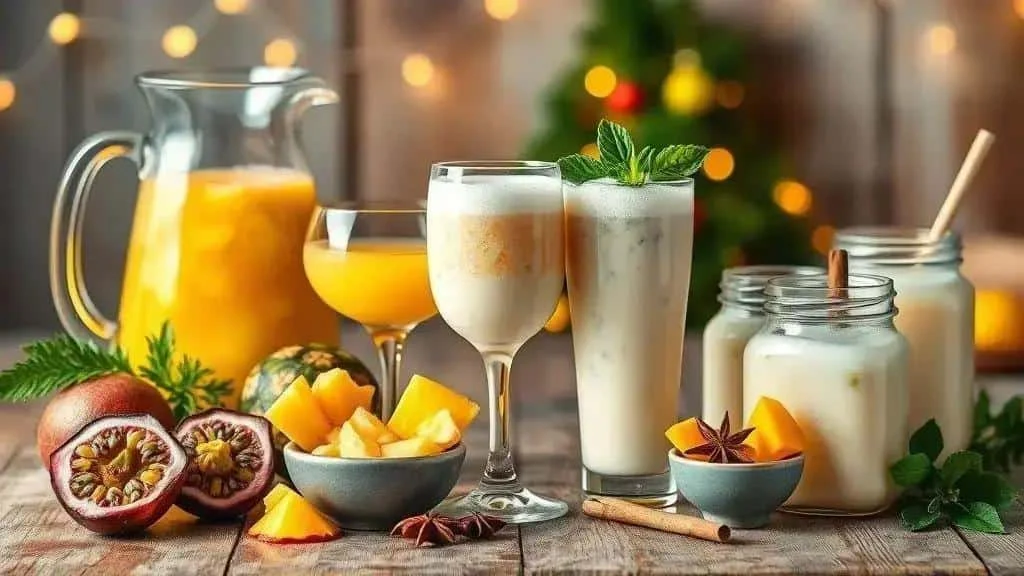
Adapt the tropical Christmas juice one change at a time. These alternatives affect texture, flavour and yield; they are not all intended to be combined in one jug.
Variations to Try
- Alcohol-free sparkling version: the basic recipe contains no alcohol. For bubbles, replace 300 ml of its 500 ml coconut water with sparkling water, stirring that part in just before serving.
- Sparkling wine version: for adults only, add 300 ml chilled sparkling wine to the completed juice at serving time. Reserve alcohol-free portions first and use separate jugs and utensils.
- Yoghurt variation: try 200 g plain yoghurt per litre of juice, first testing a small portion as acidic fruit can cause separation. Keep chilled and serve promptly. Honey is optional, not a healthier requirement.
- Frozen tropical version: use suitable frozen pineapple and mango with less of the measured coconut water, adding it gradually until your blender can process the fruit safely. Serve immediately; do not add fizzy ingredients before blending.
- Coconut milk version: replace 250 ml of the coconut water with 250 ml coconut milk for a richer drink. Coconut milk and coconut water are different products.
- Cucumber and mint version: omit optional sugar and add a little washed cucumber and mint for a fresher flavour. This is a flavour variation, not a detox treatment or a sugar-free drink.
- Christmas spice version: infuse one cinnamon stick and two food-grade star anise pods in 200 ml hot water for about 10 minutes. Strain and cool completely, then use this liquid in place of 200 ml of the coconut water.
- Ginger and lime version: start with up to 1 tsp finely grated ginger in the whole batch. Taste before adding any extra lime; the base may already be acidic enough.
Quick Reminders
- Adjust sweetness last: ripe mango and orange may provide all the sweetness you want.
- Use frozen fruit thoughtfully: it can reduce the need for ice, but check that it is suitable for use without cooking and that your blender can handle it.
- Decorate simply: orange, pineapple, passion fruit and mint provide colour. Adjust garnishes for the age and needs of the drinker.
- Combine only compatible variations: a frozen fruit base can be topped with sparkling wine for adults after blending. Never blend wine or sparkling water in a sealed appliance.
Serving and Decorating the Christmas Table
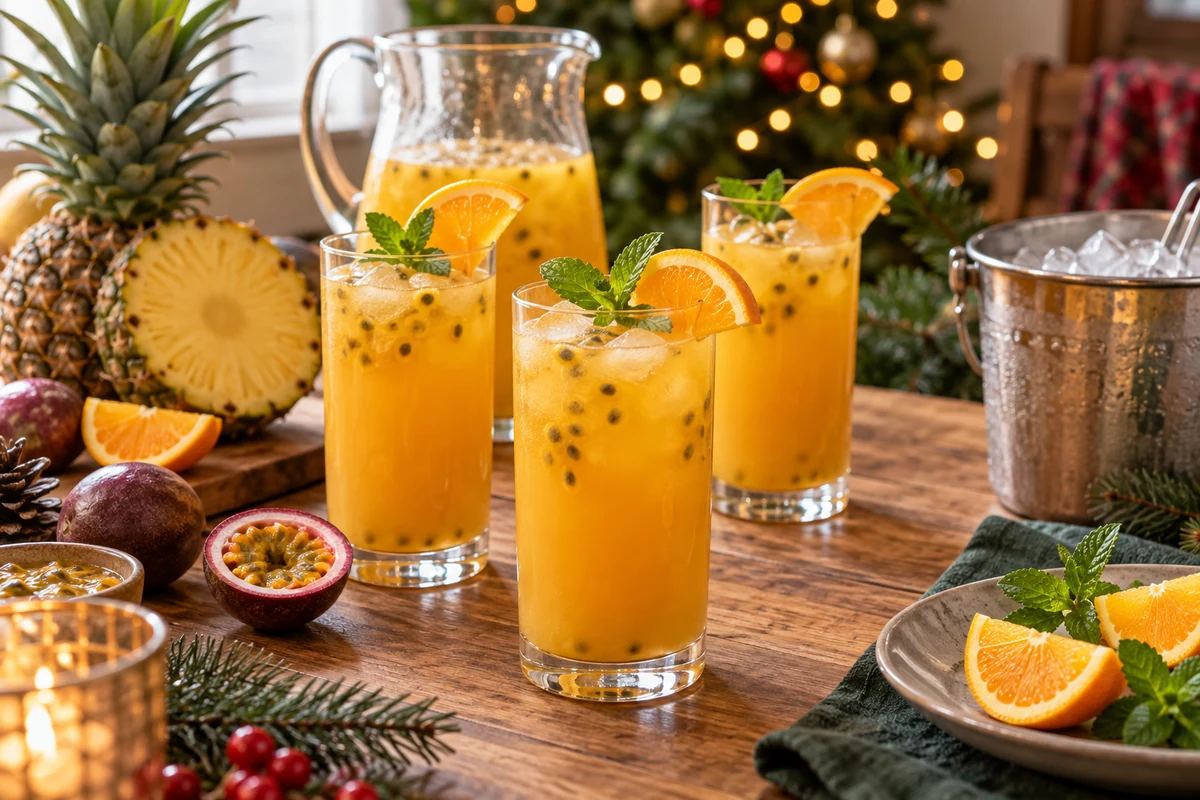
Keep the juice chilled until needed and offer small servings, for example around 150 ml, with the meal. Larger glasses do not need to be filled; juice and smoothies contribute free sugars.
Presentation Ideas
- Glasses: clear jugs show the fruit colour well, while small tumblers suit individual servings. Choose stable, unbreakable cups for children.
- Garnishes: use a small orange slice, pineapple wedge, a little passion fruit pulp or washed mint. Culinary rosemary is another optional aroma for an adult serving, not a substitute for edible ingredients generally.
- Decorated rim: a lime-and-sugar rim is optional and adds sugar. Grated zest on a separate garnish can provide colour without coating the entire rim.
- Fruit picks: decorative skewers are for adult servings only. For children, offer appropriately prepared fruit separately and omit sharp sticks.
Setting Up a Juice Station
- Organise the table: provide clean jugs, glasses and serving utensils. Clearly label alcoholic and alcohol-free versions, and keep their utensils separate.
- Keep the bubbles: add sparkling wine or sparkling water only when serving, gently stirring rather than shaking.
- Keep ice separate: an ice bucket lets adult guests choose how much to add without diluting the whole jug. Use clean tongs rather than hands.
- Chill suitable glasses: a short spell in the fridge can help keep servings cool. Do not freeze delicate glasses or expose them to sudden temperature changes.
Practical Ways to Reduce Waste
- Children’s portions: keep them entirely alcohol-free and do not assume honey or a natural syrup is needed. This concentrated fruit drink is not intended for babies; younger children usually need water or their appropriate milk rather than a festive juice blend.
- Less added sugar: omit optional sweetener and dilute to taste. Neither ripe fruit nor a low-calorie sweetener makes the finished fruit drink sugar-free.
- Reusable items: clean reusable glasses, jugs and cloth napkins can reduce disposable packaging. If using reusable straws, clean them properly and choose an age-appropriate type.
- Prepare ahead: making the juice up to six hours before the meal gives time to chill it. The overall refrigerated limit remains 24 hours, including that preparation time.
Festive display: keep pine cones, non-food greenery, lights and batteries separate from food and drink, out of children’s reach. They should not be floated in the jug or placed where they can fall into glasses.
Ingredient Swaps, Alcohol-Free and Vegan Options
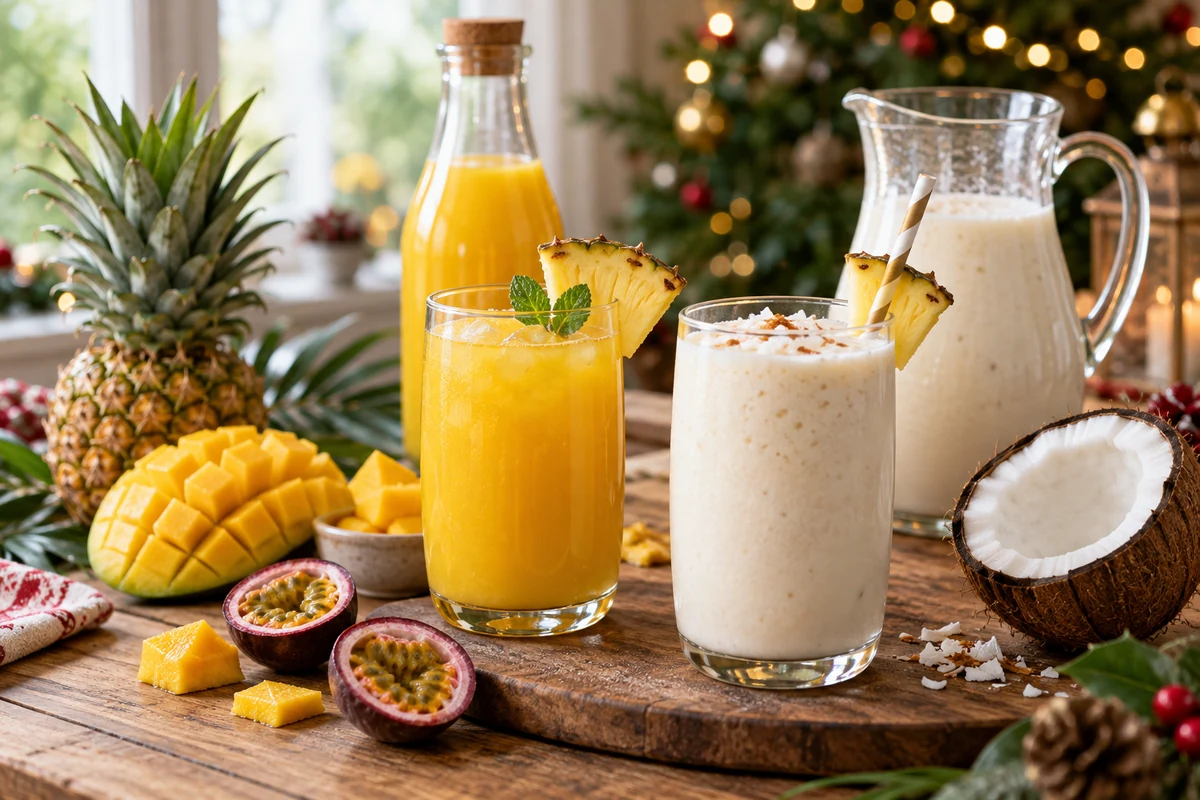
If adapting this Christmas fruit juice, use measured quantities and check the labels of prepared ingredients. Substitutions can change the result, so a small trial is useful.
Fruit and Liquid Substitutions
- Pineapple: use about 800 g prepared fresh or suitable frozen flesh. Concentrated juice is not a direct replacement for that amount of fruit; it gives a thinner result and needs label-directed dilution.
- Mango: use 250 g fresh or suitable frozen flesh. Pear purée is a different-flavoured alternative, best tried by weight in a smaller batch rather than assumed equivalent by cup volume.
- Passion fruit: aim for about 240 ml pulp before straining. Products sold as concentrate or purée vary; follow their dilution instructions and add gradually to taste.
- Coconut water: replace the 500 ml with still water, or use 250 ml coconut milk plus 250 ml water for the richer variation. Replacing all 500 ml with only 250 ml changes the yield and thickness.
Alcohol-Free Choices
- Instead of sparkling wine: use sparkling water. If replacing the optional 300 ml wine addition, add the same volume after blending; this is different from the variation that replaces part of the base liquid.
- Other fizzy ingredients: lemon soft drinks alter the sweetness. Kombucha may contain alcohol and caffeine and should not be assumed suitable for children or people avoiding alcohol; plain sparkling water is the straightforward choice.
- For younger drinkers: use a separate alcohol-free jug and age-appropriate portions without extra honey or syrup. NHS guidance for juice offered to young children uses much greater dilution, one part juice to ten parts water; the main recipe is not a baby drink.
Vegan and Sweetener Options
- Sweetening: the unsweetened base is already vegan. If necessary, sugar, agave or maple syrup can replace honey, but all add sugars. Follow labels for other sweeteners; the fruit still contributes sugars and calories.
- Creamy vegan version: try a suitable plain plant yoghurt at 200 g per litre, first testing a small portion, or use the measured coconut milk variation. Check all ingredients are vegan rather than relying on the product name.
- Extra body: half a ripe banana per litre gives a thicker, differently flavoured drink. Properly hydrated chia is another optional texture for adults, but is not needed and should not be added dry to a drink intended for a small child.
Practical Reminders
- Taste before finishing: add lime and sweetener gradually to the combined batch.
- Preserve fizz: stir sparkling ingredients in only at serving time.
- Avoid excess dilution: chill ingredients in advance or blend suitable frozen fruit. Do not put hard frozen pieces into young children’s servings.
- Label each jug: put a clear sign beside it showing alcohol content and relevant ingredients. Keep signs and non-food decorations outside the drink.
Tropical Ingredients at Christmas
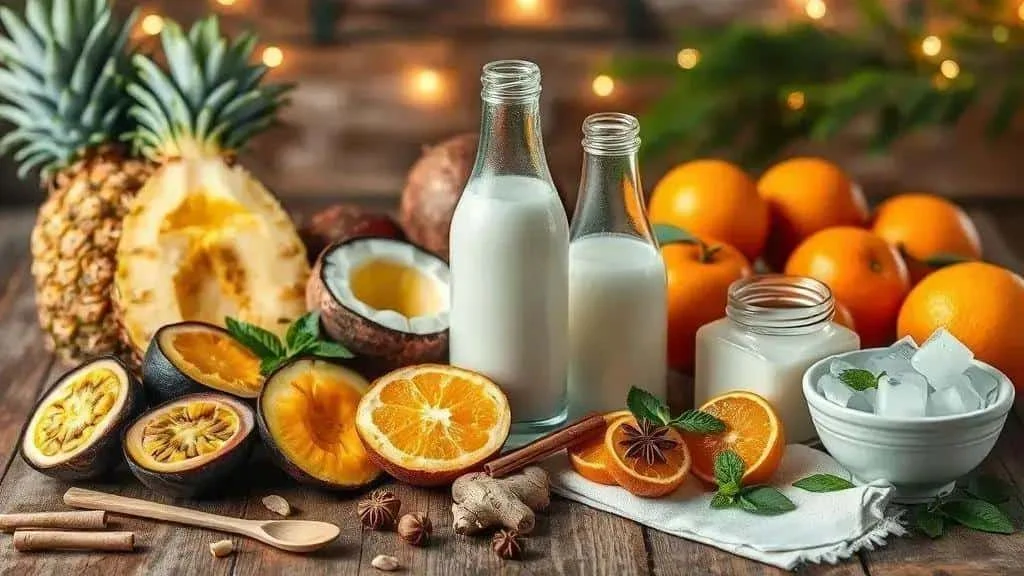
- Pineapple: its sweet-sharp flavour adds freshness and a fibrous texture. Straining produces a smoother drink but removes some pulp.
- Passion fruit: its distinctive aroma and acidity contrast with sweeter mango and orange. Seeds are optional in adult servings, not essential decoration.
- Mango: ripe flesh thickens the blend naturally, giving body without dairy ingredients.
- Coconut water: this clear liquid adds a mild coconut flavour. It is different from coconut milk and is not needed for a drink to be refreshing.
- Orange: juice brings sweetness and acidity, helping combine the stronger tropical flavours. The exact balance varies with the fruit.
- Ginger: a little fresh ginger adds warmth and a peppery note; start small so it does not dominate.
- Coconut milk: the thicker coconut product adds richness to the optional creamy version. It is not interchangeable with coconut water without changing texture.
Why Use Tropical Fruit at Christmas?
Christmas falls in summer in Brazil, where chilled fruit drinks can suit the season. On a British winter table, the same flavours offer a colourful contrast to richer festive dishes rather than trying to reproduce the local climate.
Getting the Best from the Ingredients
- Choose ripe fruit: flavourful fruit often reduces the need for added sugar, but discard anything spoiled.
- Use some frozen fruit: suitable frozen pineapple or mango chills and thickens the blend without adding water from ice.
- Pulp or clear juice: keeping pulp gives a fuller texture; straining changes both mouthfeel and yield. Decide which suits your guests.
- Use spices sparingly: cinnamon and culinary star anise can add a festive aroma. Remove whole spices before serving.
- Taste before serving: sweetness and acidity vary between batches of fruit, so the optional sugar and lime are adjustments rather than fixed requirements.
Seasonal perspective: festive food reflects local weather, availability and family habits. A tropical Christmas drink can keep that Brazilian context while fitting into a celebration elsewhere.
Enjoy a Tropical Touch
With measured ingredients and a simple method, this Christmas fruit juice offers a bright alternative alongside the festive meal.
Thank you for reading. Try a small batch, share your photos and follow our social channels for more seasonal ideas. Visit the I Love Christmas blog for recipes, decorations and Christmas inspiration.
Frequently Asked Questions About Tropical Christmas Juice
How much does this recipe make?
It makes roughly 2 litres before optional additions, but the amount depends on prepared fruit weight, straining and any extra water. Measure the finished juice and plan small servings of around 150 ml; do not rely on a fixed six-to-eight-portion claim for every batch.
Can I prepare the juice in advance?
Yes. Keep it covered in the fridge at 5°C or below for up to 24 hours, following any shorter ingredient instructions. Add sparkling water or adult-only sparkling wine at serving time, and keep alcoholic and alcohol-free batches separate.
How do I make an alcohol-free version for children?
The base already contains no alcohol: simply omit the optional wine. Do not add honey or syrup automatically. This concentrated mixture is not intended for babies; for young children, follow NHS advice on usual drinks and dilute any offered juice one part to ten parts water with a meal. Avoid unsuitable garnishes.
What substitutions can I make?
Use equal prepared weights of suitable frozen pineapple or mango, still water instead of coconut water, and label-directed diluted passion fruit concentrate if needed. These substitutions can change thickness and flavour. Omitting added sugar does not make fruit juice sugar-free.
How should I keep leftovers without watering them down?
Refrigerate promptly in a covered jug at 5°C or below and use within 24 hours. Chill ingredients before mixing and add ice only to individual adult servings if wanted. Frozen fruit used in the blend can reduce the need for ice; it does not extend the storage period.
Sources and Further Reading
- NHS — Drinks and cups for babies and young children
- NHS — Food and drinks to avoid when weaning
- Food Standards Agency — Chilling, freezing and defrosting food safely