
The meaning of Christmas gift-giving combines historical customs, religious symbolism and personal affection. A present can express appreciation and strengthen a relationship, while modern celebrations also reflect commercial pressures. Thoughtful choices help keep attention on the person rather than the price.
The meaning of Christmas gift-giving may seem straightforward, yet a small gesture can carry a great deal of emotion. Here we explore the tradition’s roots, the symbolism behind it and practical ways to make your own gift exchanges more personal and less wasteful.
Illustrations in this article are conceptual images, not documentary photographs or evidence of a particular historical event, destination, venue or access route.
The Historical Roots of Gift-Giving
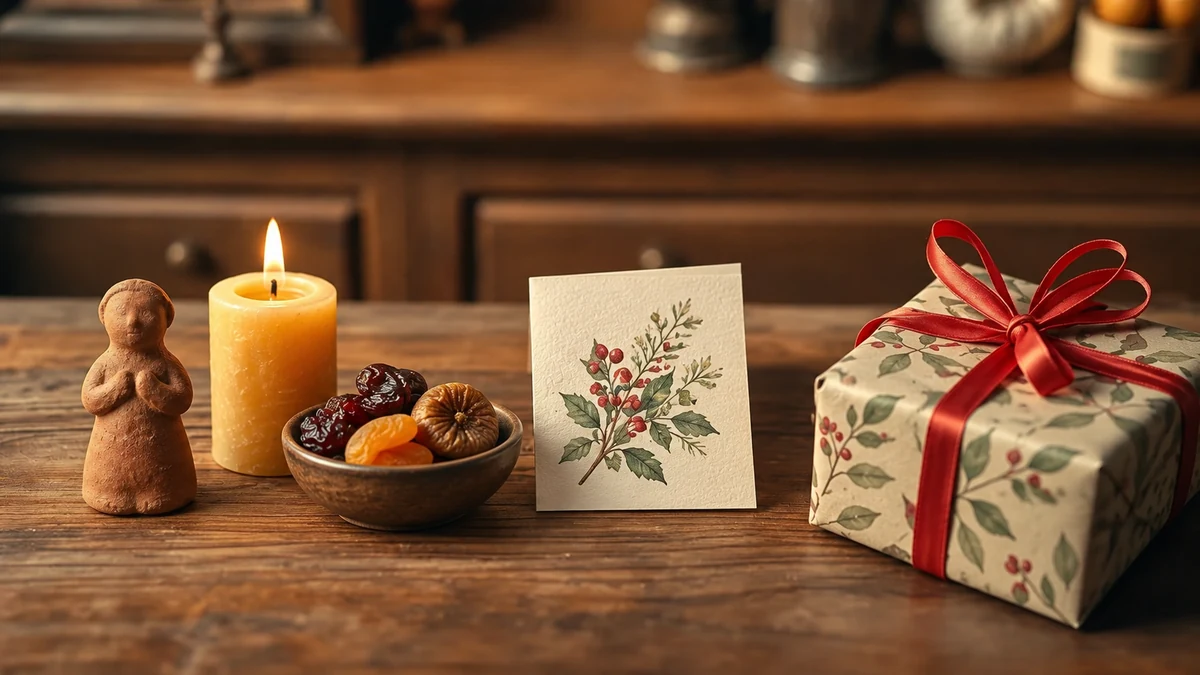
People exchanged gifts and made offerings long before modern Christmas celebrations. These acts could mark festivals, relationships or religious devotion. Christmas gift-giving developed through several influences, rather than following one simple line from a single ancient custom.
Historical Points of Reference
- Ancient societies: gifts and religious offerings served different purposes in different cultures. They provide a broad context for giving, but should not all be described as direct ancestors of Christmas presents.
- Ancient Rome: Saturnalia included gift exchanges, with small wax or pottery figures among the presents associated with the festival. This is an example of older winter gift-giving, not proof that every modern Christmas custom came directly from it. Source: English Heritage — Christmas tradition origins
- Christian traditions: the Gospel account of the Magi’s gifts to Jesus and stories about the generosity of St Nicholas helped connect giving with religious meaning.
- Medieval and early modern customs: gifts could express friendship, loyalty or patronage, as well as charity. Their timing and significance varied; exchanging presents on New Year’s Day was also important in some settings.
- The nineteenth century: in Britain, gift-giving became more closely associated with Christmas as the festival grew in importance during the Victorian period. Industry, shops and expanding transport also changed what people could buy and send. Source: Victoria and Albert Museum — Victorian Christmas
- Modern celebrations: advertising and popular culture have helped shape seasonal shopping, cards and shop-window displays. Families and workplaces also organise their own traditions, including Secret Santa exchanges.
Over time, gift-giving has been adapted and reinterpreted by different communities. Today’s Christmas presents may combine religious meaning, family memories and shopping habits, with the wish to show someone that they matter.
Religious Influences and Symbolism
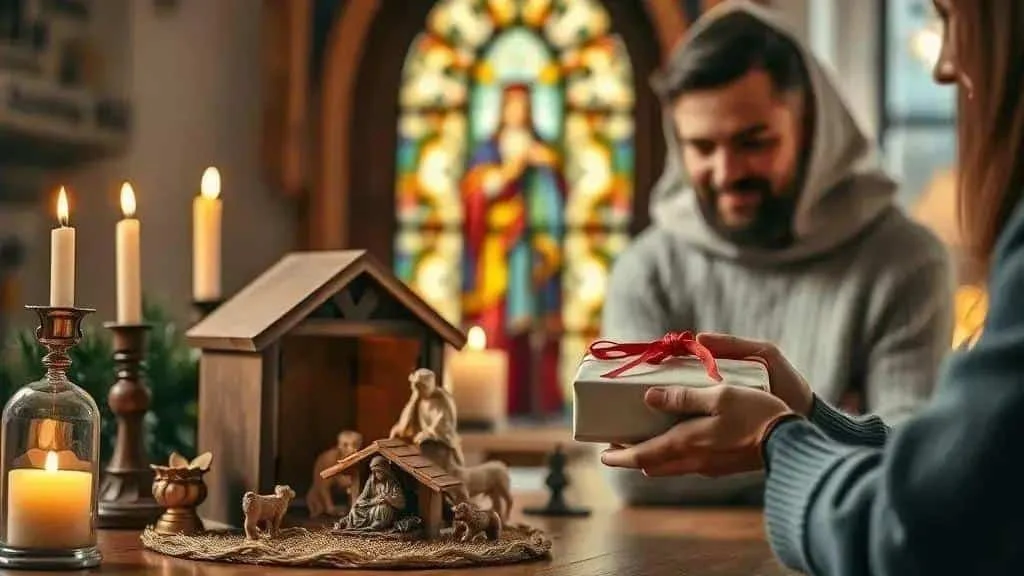
For many Christians, biblical accounts, saints’ traditions and worship give giving a spiritual dimension, connecting an everyday gesture with faith and care for others.
Familiar Symbols and Their Meanings
- The Magi’s gifts — gold, frankincense and myrrh: Christian interpretations commonly associate these with kingship, divinity and Christ’s mortality or death. The symbolism encourages reflection beyond the material value of a gift. Source: Fundação Joaquim Nabuco — Nativity traditions
- St Nicholas: legends of his generosity offer an example of discreet help and care for children. These are religious traditions, not a complete contemporary record of his life.
- The Nativity: Christians may understand the birth of Jesus as God’s gift to humanity, with their own giving as a response of gratitude.
- Advent and sharing: many churches encourage charitable action during preparation for Christmas, linking generosity with hope and concern for neighbours.
Religious Practices
Some Christian communities associate presents with Epiphany, which recalls the visit of the Magi. Gifts and donations can also accompany worship or practical acts of compassion, such as providing food, welcome and support.
Cultural Adaptation
Seasonal customs have changed as communities and beliefs have interacted. Pre-Christian winter celebrations and Christian traditions provide parts of the wider history, but similarities alone do not establish a direct origin for every practice.
More Than the Object
From a religious perspective, giving a present can express gratitude, reconciliation, commitment or hope. Many people, whether religious or not, value that personal connection more than the shopping involved.
Christmas Gift-Giving in Brazil

Brazil’s Christmas celebrations developed in a society shaped by Portuguese colonisation and Christianity, followed by many other influences. Religious festivals and Nativity traditions formed part of that history, but the modern exchange of presents cannot be reduced to one introduction date or one group.
Family celebrations changed alongside migration, urban life and commerce. The Christmas tree joined older Nativity traditions in many homes, while festive meals and gifts took different forms according to community, means and preference.
Cultural Influences and Local Choices
- Portuguese and church traditions: these helped establish the Christian festive calendar and forms of Nativity celebration in colonial Brazil.
- European migration: families brought and adapted their own foods and customs. Trees and panettone are familiar examples of traditions now found in many Brazilian celebrations, without every household following the same pattern.
- Indigenous communities: traditions differ widely between peoples. It would be misleading to assign one shared Indigenous origin or meaning to modern Brazilian Christmas gift-giving without evidence about a specific community.
- Afro-Brazilian communities: their histories and celebrations are equally diverse. Local music, gatherings and religious practices deserve specific description rather than a single generalised account of their influence on Christmas presents.
- Commerce and media: shops, cards and advertising help shape expectations, while families and workplaces decide how to organise exchanges such as amigo secreto, Brazil’s version of Secret Santa.
Regional and family differences are important: decorations, community events, foods and gift exchanges vary throughout the country. Amigo secreto is one familiar option for sharing presents within an agreed group and budget.
Brazilian gift-giving therefore reflects religious life, changing family customs, migration and commerce. It can bring together faith and affection without having one uniform history or meaning for everyone.
How Gifts Express Affection

A present can communicate attention, appreciation and care without a lengthy explanation. Its meaning depends on the relationship and the recipient, not simply on the object itself.
Gifts as a Personal Gesture
A thoughtful choice may show that someone has listened and noticed what matters. It can mark a milestone, offer encouragement or say, “I’m thinking of you.”
Memory and Meaning
An ordinary object can become precious through its story. A letter, a handmade item or something used in a family tradition may carry memories long after Christmas has passed.
Reciprocity and Expectations
Giving can also bring pressure to reciprocate. Talking openly about budgets and preferences helps make clear that affection does not require presents of equal monetary value.
Gifts That Can Strengthen Connections
- Shared experiences: a walk, workshop or meal together can make time and attention the main gift.
- Personalised presents: a photograph, engraving or reference to a shared memory can make an item more meaningful.
- Practical help: an offer to help with a task can be valuable, provided it is welcome and you follow through.
- Symbolic keepsakes: something connected to a family story or shared achievement can carry personal significance.
Making a Gift More Thoughtful
- Notice hobbies, practical needs and things the person mentions casually.
- Focus on the care behind the choice rather than a high price.
- Add a sincere note explaining why you thought of them.
- Consider a shared activity if the recipient particularly values time together.
When chosen with empathy, a present can support a relationship rather than simply add another possession. The thought behind it may be remembered longest.
Shopping, Commercial Pressure and Modern Changes

Modern Christmas celebrations sit alongside a busy retail season. Shop windows, promotions and advertising can influence what we buy and how much we feel expected to spend.
Changes in Shopping
Online shops offer delivery options, reviews and discount codes alongside traditional high-street shopping. These conveniences can help with planning, but may also encourage purchases that were never needed.
Different Ways People Buy Gifts
- Online shopping: apps, marketplaces and shared wish lists provide additional ways to compare and buy presents.
- Seasonal advertising: emotional stories and festive packaging can make products feel more closely connected to Christmas.
- Experiences and services: tickets, outings, subscriptions and vouchers offer alternatives to physical objects.
- Handmade and local options: craft sellers and small businesses can offer distinctive choices for people who prefer something less mass-produced.
- Thoughtful consumption: second-hand items, charitable donations and reusable wrapping are among the options for reducing unnecessary purchases.
Social and Economic Effects
Pressure to buy can strain household budgets and create waste. Seasonal shopping also supports businesses and temporary work. Clear spending limits, useful purchases and an understanding of returns policies help keep the exchange manageable.
Practical Ways to Navigate the Season
- Set a budget and prioritise presents with a clear purpose or personal meaning.
- Consider local makers and small businesses when their products suit the recipient and your budget.
- Reuse wrapping where possible, and check local recycling rules before choosing materials on the assumption that they can be recycled.
- Choose an experience when the recipient would enjoy it, taking account of access, travel and any extra costs.
Useful Conveniences, Thoughtful Choices
Personalisation, delivery services and different wrapping options can make shopping easier. Use them when they help, without allowing speed or presentation to replace the care behind giving a present.
Practical Ideas for Less Wasteful Gift-Giving

A thoughtful present can also avoid unnecessary waste. Look for useful, durable choices, make use of things already available and consider what the recipient will actually enjoy.
Gift Ideas to Consider
- Experiences: a class, local outing or home-cooked dinner can reduce the need for a new object. Experiences still have environmental impacts, including travel, so they are not automatically waste-free.
- Handmade gifts: a suitable item made with materials you already have can be personal and distinctive.
- Second-hand items: books, clothing in good condition or carefully restored furniture may be welcome when they match the person’s needs.
- Subscriptions: consider a service the recipient will use, checking packaging, renewal costs and cancellation terms. A digital option avoids physical delivery but is not impact-free.
- Charitable donations: choose a cause the person supports and explain the gift in a simple card, preferably after checking that this is something they would appreciate.
- Practical care items: suitable toiletries or reusable household items can work well. Check ingredients, allergies and refill or packaging arrangements rather than assuming a natural-looking product is automatically a better choice.
Reducing Wrapping Waste
- Use a scarf or cloth already available, drawing inspiration from Japanese furoshiki wrapping. Reuse is the important part: the fabric can become part of the gift or be kept for another occasion.
- Reuse clean paper, an old map or a sturdy box, and save ribbons for another year. Choose decorations that will not damage or stain the present.
- A handwritten tag can be enough. For paper recycling, check your council’s guidance; foil and glitter paper are generally unsuitable, and tape and decorations need removing. Source: Recycle Now — Wrapping paper
Choosing and Explaining a Gift
- Discuss preferences and limits: some people enjoy surprises, while others would rather choose an experience or receive no present at all.
- Agree a realistic budget and focus on meaning rather than expense.
- Explain why you chose the gift or how you made it. That small detail can make it feel more personal.
Encourage Reuse and Exchanges
Arrange a swap of useful items among willing friends or relatives, or try a reuse-themed Secret Santa with agreed rules about second-hand or handmade presents.
Common Pitfalls to Avoid
- Avoid buying solely because something is discounted; check whether the recipient would want it.
- Steer away from disposable novelty gifts and excessive packaging when a useful alternative would suit better.
- Where practical, combine online orders and choose less packaging, while checking how materials can actually be reused or recycled locally.
Small choices can make Christmas gift-giving more personal and less wasteful, without turning generosity into another set of expensive obligations.
Conclusion
Christmas presents bring together history, religious symbolism and personal relationships. Although shopping habits change, a gift can still be a simple way to show care and create a memory.
Putting intention before price helps preserve that meaning. A suitable experience, a personal keepsake or a useful reused item may be more welcome than something bought under pressure.
Thank you for reading. Follow us on social media and visit the I Love Christmas blog for more seasonal stories and thoughtful ideas.
FAQ — Giving Presents at Christmas
Why do we exchange Christmas presents?
The custom has several historical and religious influences, including Christian stories of generosity and changing seasonal traditions. Today, presents can also express affection and gratitude within families, friendships and communities.
How can I choose a meaningful gift without spending much?
Think about the person’s interests, offer a welcome practical favour, make something suitable or plan time together. A sincere note can explain the thought behind a modest present.
What are some less wasteful Christmas gift ideas?
Useful second-hand items, handmade gifts using existing materials, suitable local experiences and presents with reusable packaging can all work. Consider the person’s preferences and the full impact rather than relying on a sustainable label alone.
How can we avoid disappointment over gifts?
Discuss budgets and expectations, share suggestions if helpful and make it acceptable to opt out. Clear agreements reduce pressure to match someone else’s spending.
What does religious symbolism add to gift-giving?
For Christians, the Magi’s gifts, the Nativity and traditions about St Nicholas can connect giving with faith, generosity and care for others. The meanings are religious interpretations rather than requirements for every celebration.
How can I avoid overspending and waste at Christmas?
Make a realistic plan, buy only what fits it, choose presents the recipient can use and reuse wrapping where possible. Giving time or choosing not to exchange presents can also be a thoughtful agreement.
Sources and Further Reading
- English Heritage — Christmas tradition origins
- Victoria and Albert Museum — Victorian Christmas
- Fundação Joaquim Nabuco — Nativity traditions
- Brazilian National Library — Portuguese roots of Brazilian Christmas pastoral performances
- Recycle Now — Wrapping paper