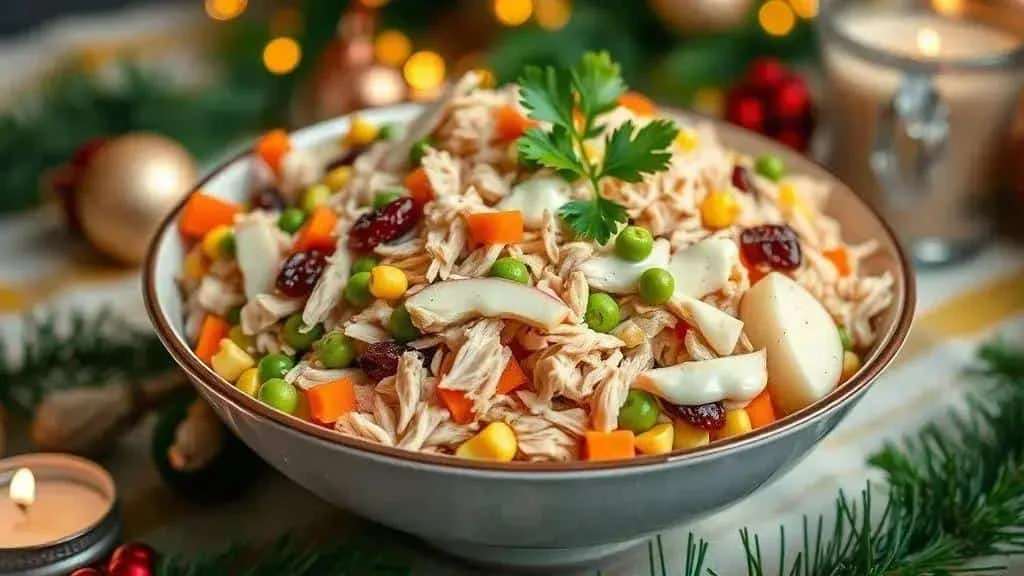
These five Christmas salpicão recipes include traditional chicken salad, a creamier variation, chickpeas, tropical fruit and turkey with yoghurt. Find ingredients, preparation steps, dietary substitutions, portion ideas and storage guidance. Add crisp potato straws just before serving and keep this chilled Brazilian salad refrigerated until needed.
These Christmas salpicão salad recipes offer a Brazilian addition to your festive table. Salpicão is a chilled mixed salad, often made with shredded chicken, vegetables, fruit and a creamy dressing, then topped with crisp potato straws. Choose a familiar chicken version, chickpeas or a tropical variation.
Traditional Salpicão Ingredients
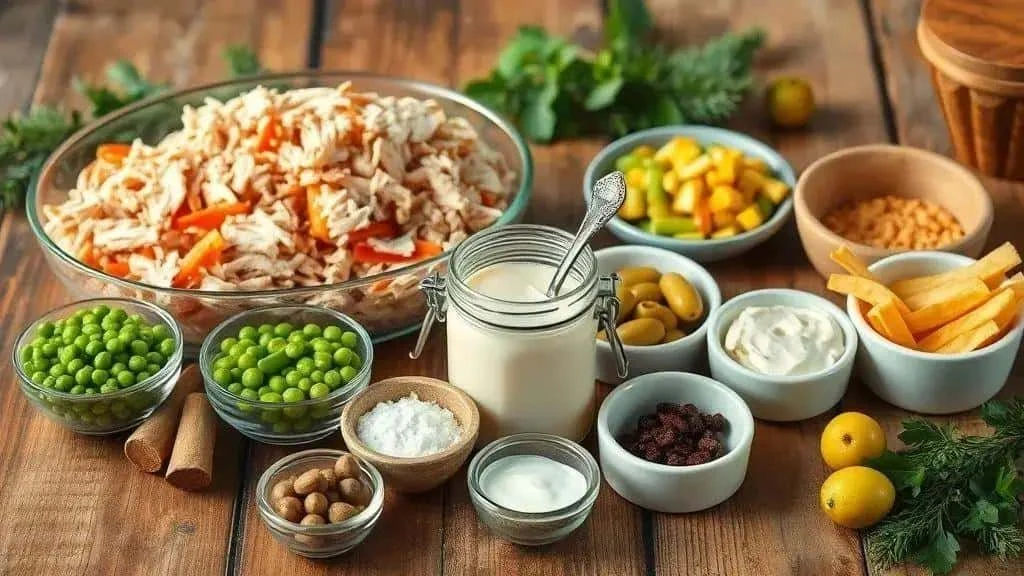
To make traditional Brazilian salpicão, gather the ingredients below. This makes roughly six to eight generous portions, or more small sides. Cup measures throughout this guide use a 240 ml measuring cup; where a weight is given, use that weight rather than assuming all ingredients weigh the same per cup.
- 500 g fully cooked, shredded chicken breast — weighed after cooking; suitable cooked turkey or ready-to-eat smoked chicken can also be used.
- 2 cups finely grated carrot — carrot size varies, so measure after grating.
- 1 cup cooked peas — if frozen, cook according to the packet and cool promptly; thawing alone may not be sufficient.
- 1 cup drained sweetcorn — canned ready-to-eat corn or freshly cooked and cooled corn.
- 1 medium green apple, diced — use Gala or a firm pear for a milder flavour.
- ½ cup raisins, optional — dried cranberries make an alternative.
- 200 g mayonnaise — use a suitable commercially prepared mayonnaise, or try a reduced-fat version or thick plain yoghurt for a different flavour. Vegan mayonnaise does not by itself make the chicken salad vegan.
- ½ cup single cream, optional — 120 ml; plain yoghurt gives a tangier alternative. Add gradually to avoid making the dressing runny.
- ½ cup crisp potato straws — batata palha, added at serving time. Crisp onions or small croutons give different flavours and may introduce wheat or other allergens.
- ¼ cup chopped parsley — or chopped chives.
- Juice of ½ lemon — for the apple, plus a little extra to taste for the dressing if needed. Lemon slows browning but does not preserve the salad safely without refrigeration.
- Salt, to taste — start sparingly because mayonnaise, olives and cooked meat may already be seasoned.
- Freshly ground black pepper — to taste.
- ¼ cup sliced olives, optional — for a savoury contrast.
Tips and Substitutions
Dressing and texture: add enough dressing to coat rather than drown the ingredients. Plain yoghurt can replace part of the mayonnaise, but adding more cream does not necessarily reduce the fat content.
Preparing fruit: toss apple in lemon juice immediately after cutting to slow browning. Well-drained pineapple gives a tropical alternative.
Dietary changes: a vegan version needs chickpeas or a suitable plant-based chicken alternative, vegan mayonnaise and no dairy cream. For fewer starchy ingredients, reduce corn and omit potato straws; this alone does not establish that the dish is ketogenic.
Organisation: cool cooked ingredients promptly and chill them before mixing. Keep the potato straws separate until serving so they remain crisp.
Making Traditional Salpicão
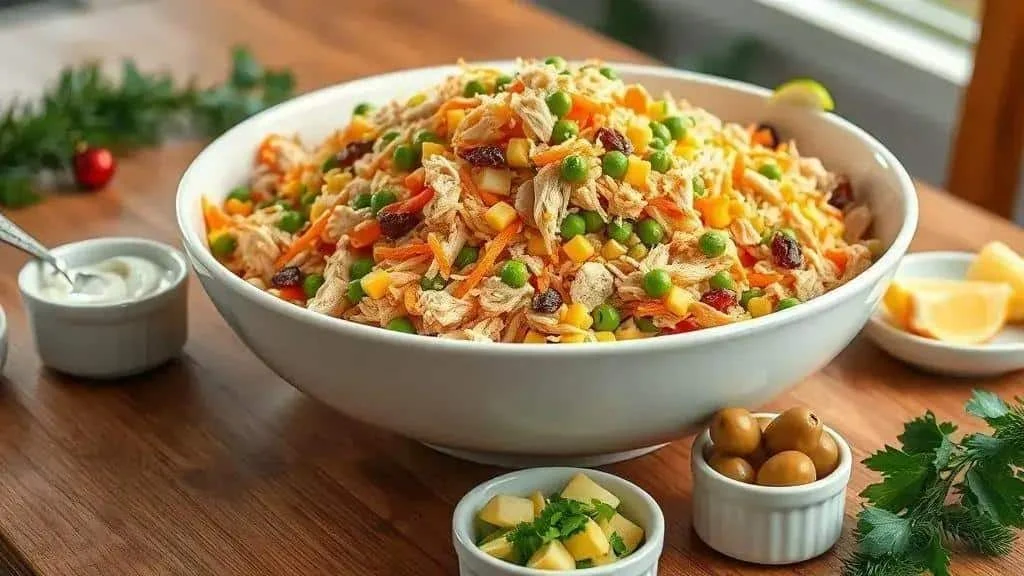
- Prepare the chicken: the recipe needs 500 g cooked meat, so allow for cooking loss if starting with raw chicken. Poach enough chicken in water, optionally with an onion and two garlic cloves, until the thickest parts reach 75°C for 30 seconds, or an equivalent safe time and temperature. Do not rely on a fixed cooking time. Shred with clean forks, cool in shallow portions and refrigerate within one to two hours.
- Prepare the vegetables and fruit: measure two cups grated carrot, drain one cup sweetcorn and cook one cup peas if required by their packet, then cool promptly. Dice the apple and toss with the juice of half a lemon.
- Make the dressing: mix 200 g mayonnaise with up to 120 ml cream or plain yoghurt, adding it gradually. Season with pepper and a little salt if needed; add extra lemon juice to taste without making the mixture watery.
- Combine: in a large bowl, gently mix the chilled chicken, carrot, sweetcorn, cooked chilled peas and apple. Add the optional half-cup of raisins and quarter-cup of olives, then fold in the dressing.
- Chill: cover and refrigerate for at least one hour, or two to three hours if convenient, so the flavours mingle. Keep at 5°C or below.
- Finish: stir in the quarter-cup of parsley and check seasoning. Add the half-cup of potato straws only when serving.
- Quick variations: try reduced-fat mayonnaise or enough thick plain yoghurt to coat the salad, pineapple instead of apple, or three cups cooked drained chickpeas instead of chicken. Chickpeas give a different texture and nutritional profile, rather than an exact equivalent.
- Safe storage: keep covered at 5°C or below and use within 48 hours of cooking the earliest perishable component, or sooner if its label requires. Keep crisp toppings separate. As a cautious home-serving rule, discard salad left out for more than two hours, sooner in very hot conditions.
Practical Tips
- Texture: finely grate the carrot and dice the apple evenly to distribute them through the salad.
- Seasoning: a teaspoon of Dijon mustard adds tang and the mustard allergen. A little honey adds sweetness, but is not vegan and must not be given to babies under one year.
- Individual portions: add potato straws to each small bowl just before it is served.
- Salt: check the finished mixture before adding more, especially when using olives or seasoned canned ingredients.
Five Recipes at a Glance
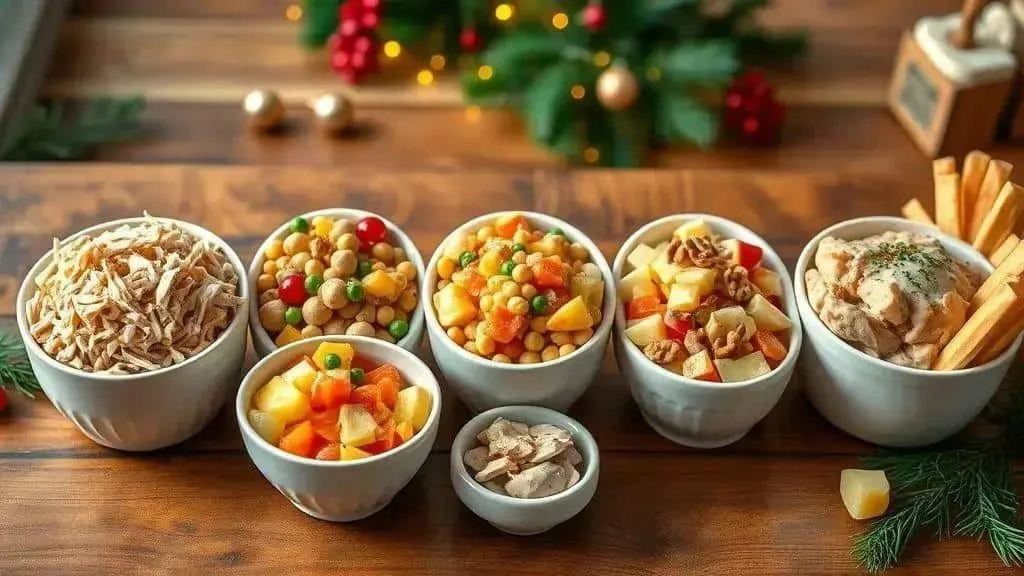
Traditional Salpicão
- 500 g fully cooked, shredded chicken breast — or cooked turkey, weighed after cooking and safely chilled.
- 2 cups grated carrot — measured after grating.
- 1 cup cooked, cooled peas — follow frozen products’ cooking instructions.
- 1 cup sweetcorn — cooked or ready-to-eat canned corn, drained.
- 1 medium green apple — diced and tossed with the juice of half a lemon.
- 200 g mayonnaise — or a suitable alternative, added gradually to taste and texture.
- ½ cup raisins — optional.
- Crisp potato straws to finish, with salt and pepper to taste.
Quick Method:
- Cook and shred the chicken: if starting raw, cook it thoroughly, then shred, cool promptly and chill. Weigh out 500 g cooked meat.
- Prepare vegetables: grate carrot, drain corn and cooked chilled peas, and toss diced apple with lemon.
- Season the dressing: add pepper and a little salt to the mayonnaise if needed.
- Combine: gently fold together chilled chicken, vegetables, apple, optional raisins and dressing.
- Chill and finish: refrigerate for at least one hour and add potato straws at serving time.
Creamy Chicken Salpicão
- 500 g fully cooked, shredded and chilled chicken.
- 1 cup grated carrot.
- ½ cup drained ready-to-eat sweetcorn.
- ½ cup single cream — or thick plain yoghurt, added gradually until the dressing has the consistency you prefer.
- ½ cup mayonnaise — for the creamy dressing.
- ¼ cup sliced olives, optional, with salt and pepper to taste.
Short Method:
- Mix the dressing: combine the mayonnaise with cream or yoghurt until smooth, adding the thinner ingredient gradually.
- Add the chicken and vegetables: fold in the chilled meat, carrot and corn.
- Season: add the optional olives, then check salt and pepper.
- Chill: cover and refrigerate for one to two hours before serving.
Vegetarian Chickpea Salpicão
- 3 cups cooked chickpeas — drained and cooled, or drained ready-to-eat canned chickpeas.
- 2 cups grated carrot.
- 1 cup drained ready-to-eat sweetcorn.
- 1 diced apple, tossed with the juice of half a lemon.
- 1 cup vegan mayonnaise — or plain unsweetened plant-based yoghurt, added gradually to taste and consistency.
- ¼ cup chopped parsley, with salt and pepper to taste.
Simple Steps:
- Prepare the chickpeas: rinse and drain canned chickpeas well; freshly cooked chickpeas must be cooled promptly and chilled.
- Prepare the produce: grate the carrot and dice the apple, tossing it with lemon juice.
- Add the dressing: fold the mayonnaise or yoghurt into the chickpeas, corn, carrot and apple.
- Season: add parsley and check salt and pepper.
- Refrigerate: chill covered for about one hour before serving.
Tropical Fruit Salpicão
- 400 g fully cooked, shredded and chilled chicken.
- 1 cup diced pineapple — fresh, or canned and very well drained.
- 1 apple, diced.
- 1 cup grated carrot.
- 1 cup mayonnaise, mixed with up to a quarter-cup of single cream.
- ¼ cup chopped nuts, optional — for crunch; identify the allergen.
Method:
- Make the dressing: gradually mix cream into the mayonnaise until it has the desired consistency.
- Combine: fold in the pineapple, apple, chilled cooked chicken and carrot.
- Prepare the topping: reserve the optional nuts to add just before serving for better crunch.
- Chill: cover and refrigerate for one to two hours, then finish with the nuts if using.
Turkey and Yoghurt Salpicão
- 400 g fully cooked, shredded turkey breast — or chicken, safely chilled.
- 1 cup grated carrot.
- ½ cup drained ready-to-eat sweetcorn.
- 1 cup plain natural or Greek yoghurt — use a thick variety and add gradually; its fat content depends on the product.
- ¼ cup cooked, cooled peas.
- ¼ cup chopped chives, with salt, pepper and lemon juice to taste.
Quick Method:
- Season the yoghurt: add pepper, a little salt if needed and lemon juice to taste.
- Combine: fold in the chilled turkey, carrot, corn and cooked chilled peas.
- Add herbs: stir in the chives and check seasoning.
- Chill: refrigerate for 30–60 minutes and serve cold.
Creamy Chicken Salpicão with Apple: A Further Variation
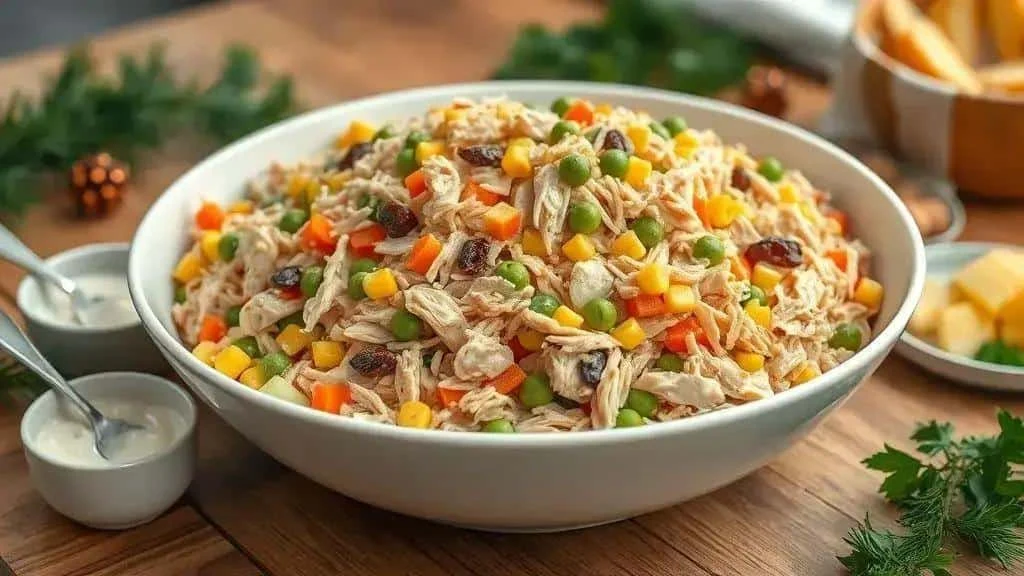
This fuller variation adds apple, peas and optional raisins to the simple creamy recipe above. It makes around six generous portions or more small sides.
- 500 g fully cooked, shredded chicken breast — or suitable cooked turkey or ready-to-eat smoked chicken, weighed after cooking and safely chilled.
- 1 cup finely grated carrot — measure after grating.
- ½ cup drained sweetcorn — ready-to-eat canned corn or freshly cooked and cooled corn.
- ½ cup cooked, cooled peas — follow the packet instructions if frozen.
- 1 medium green apple, diced — tossed with the juice of half a lemon; well-drained pineapple is an alternative.
- ½ cup raisins, optional — or dried cranberries for a different flavour.
- 150 g mayonnaise — use this weight rather than a cup conversion; a suitable reduced-fat product or thick yoghurt changes the flavour and richness.
- 60 ml single cream, optional — a quarter-cup; alternatively add plain yoghurt gradually to taste.
- ¼ cup sliced green olives, optional.
- ¼ cup chopped parsley — or chives.
- ½ cup crisp potato straws — to add when serving.
- Salt and black pepper — to taste.
Method
- Prepare the chicken: if starting raw, cook enough to provide 500 g cooked meat, optionally flavouring the poaching water with half an onion and a garlic clove. Check for 75°C for 30 seconds, or an equivalent safe time and temperature, at the thickest part. Shred, cool in shallow portions and refrigerate within one to two hours.
- Prepare the vegetables and fruit: grate carrot, drain corn and cooked chilled peas, then dice the apple and toss it with lemon juice.
- Make the dressing: mix the mayonnaise with the optional cream or yoghurt, then season with pepper, a little salt and extra lemon juice if needed. Add liquid gradually.
- Assemble: combine the chilled chicken, carrot, corn, peas and apple, plus raisins and olives if using.
- Dress: gently fold in the sauce without crushing the fruit.
- Chill: cover and refrigerate for at least one hour; two hours gives the flavours more time to mingle.
- Finish: add parsley and crisp potato straws just before serving.
- Store: keep covered at 5°C or below, using within 48 hours of cooking the oldest perishable component, or sooner if its label requires. Store potato straws separately.
Variations and Quick Tips
- Yoghurt dressing: replace the mayonnaise and cream with enough thick plain yoghurt to coat the salad. Choose a reduced-fat product if that is your preference; Greek yoghurt is not always lower in fat.
- Vegan variation: use cooked chickpeas or a suitable prepared plant-based chicken alternative, vegan mayonnaise and no dairy cream or yoghurt.
- Tropical flavour: replace some apple with a cup of well-drained diced pineapple and add a quarter-cup of chopped nuts if suitable for your guests.
- Extra crunch: add a quarter-cup of chopped nuts alongside the potato straws at serving time, clearly identifying allergens.
- Seasoning: a teaspoon of Dijon mustard adds tang and mustard as an allergen. A little honey adds sweetness, but is not vegan or suitable for babies under one year.
Chickpea Salpicão: Ingredients and Method
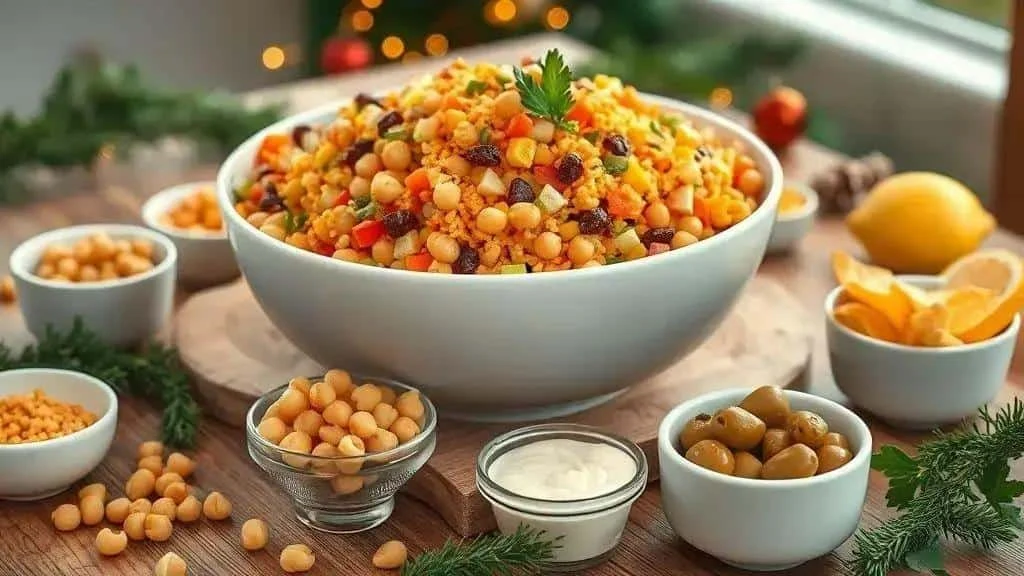
This vegetarian chickpea salpicão makes about six generous portions or more small sides. With suitable plant-based dressing and toppings, it is also vegan.
Ingredients
- 3 cups cooked chickpeas — drained canned chickpeas or dried chickpeas cooked until tender and cooled promptly; cooked white beans give another texture.
- 2 cups finely grated carrot — measured after grating.
- 1 cup drained sweetcorn — ready-to-eat canned corn or freshly cooked and cooled corn.
- 1 medium green apple, diced — toss with some of the lemon juice below; a firm pear gives a milder alternative.
- ½ cup raisins, optional — or dried cranberries.
- 200 g vegan mayonnaise — or plain unsweetened plant-based yoghurt, added gradually until the salad is coated.
- ¼ cup chopped parsley — or chives.
- ¼ cup sliced olives, optional.
- Juice of ½ lemon — divided between the apple and dressing, with extra only if needed.
- Salt and black pepper — to taste.
- ½ cup crisp potato straws — or suitable baked crisps, added when serving. Check that the product meets any vegan or allergy requirements.
Method
- Prepare chickpeas: rinse and drain canned chickpeas. If cooking from dried, follow the packet instructions, then cool promptly and refrigerate before mixing.
- Prepare the produce: grate the carrot and dice the apple, tossing it with a little of the measured lemon juice.
- Mix the base: combine chilled chickpeas, grated carrot and drained corn in a large bowl.
- Add fruit and extras: fold in the apple and optional raisins and olives.
- Make the dressing: mix vegan mayonnaise or plant-based yoghurt with parsley, pepper, a little salt and the remaining lemon juice to taste.
- Combine: gently fold the dressing through without crushing the chickpeas.
- Chill: cover and refrigerate for one to two hours before serving.
- Finish: check seasoning and add the potato straws or suitable crisp topping at the last moment.
Quick Tips
- Consistency: if too dry, add a little more plant-based yoghurt or dressing; one or two tablespoons at a time is easier to control.
- Further additions: suitable cooked, cooled tofu or tempeh adds another texture and introduces soya as an allergen. Follow the product’s preparation instructions.
- Storage: refrigerate covered at 5°C or below and use within 48 hours of cooking or opening the earliest perishable ingredient, unless its label gives a shorter time. Keep crisp toppings separate.
Tropical Salpicão: Fruit and Presentation Ideas
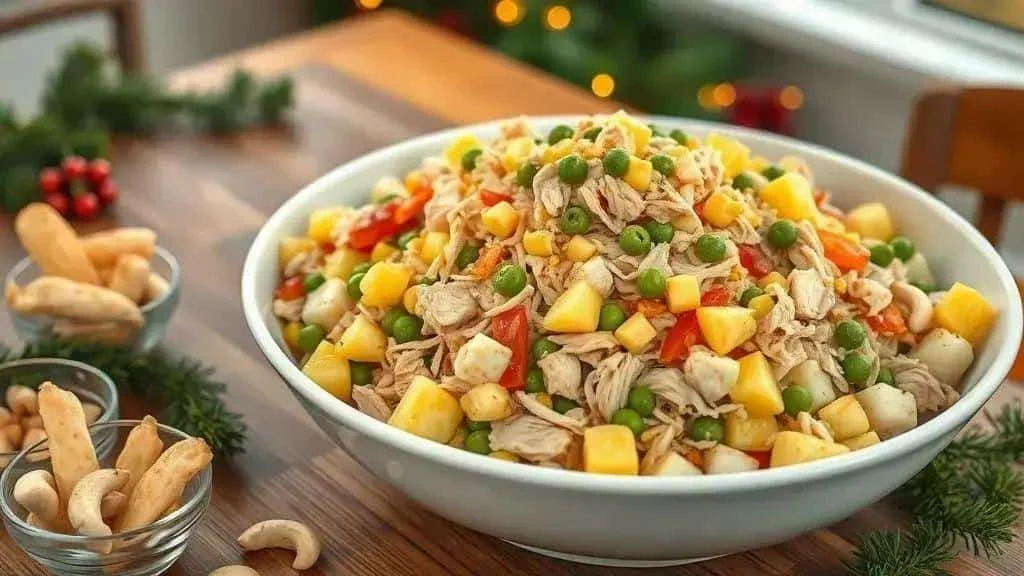
Balance sweet and sharp fruit with the savoury base, choosing firm pieces that will not make the dressing watery.
Flavour Combinations
- Pineapple and green apple: pineapple gives sweetness and juice, while apple adds tartness and crunch.
- Pineapple and mango: a sweeter tropical combination; omit or reduce raisins if the fruit already provides enough sweetness.
- Apple and pear: a gentler combination for those who prefer less acidity.
- Citrus and herbs: a little orange zest adds fragrance without much extra liquid.
- Walnuts or cashews: chopped nuts add richness and crunch; label them clearly for guests with allergies.
Texture and Contrast
- Creamy and crisp: keep potato straws or crisps separate until serving.
- Firm fruit: dice apples and pears evenly so they are distributed through each spoonful.
- Juicy fruit: drain canned pineapple thoroughly and pat very wet fresh fruit dry if necessary.
Assembling and Serving
- Combine in stages: start with the chilled cooked meat and vegetables, fold in fruit, then add dressing gradually.
- Mix gently: use a large spoon so the fruit keeps its shape.
- Refrigerate: chill for one to two hours, leaving crisp toppings separate.
- Finish at serving time: scatter over any suitable nuts and potato straws just before bringing the salad to the table.
- Individual servings: small bowls or glasses can be prepared with washed edible mint or parsley as a garnish and kept chilled until needed.
Presentation Tips
- A shared dish: use a shallow pale-coloured bowl to show the ingredients, serving small batches rather than leaving a large quantity out.
- Edible garnishes: parsley, coriander, lemon zest or chopped nuts add colour and texture.
- Separate toppings: small bowls of potato straws and suitable nuts let guests finish their own portions; provide separate spoons.
Substitutions and Care
- Without nuts: suitable toasted sunflower seeds may provide crunch, but first check individual allergies and cross-contact information. Seeds are not automatically safe for someone with a nut allergy.
- Slowing apple browning: toss the diced apple with lemon juice immediately after cutting.
- Dressing consistency: drain ingredients well and add dressing gradually. A little extra grated carrot can help a loose mixture, but cannot correct unsafe storage.
- Storage time: keep refrigerated and use within the shortest applicable ingredient limit, no more than 48 hours after the earliest cooked component was prepared. Keep toppings separate.
Dietary Variations and Allergies
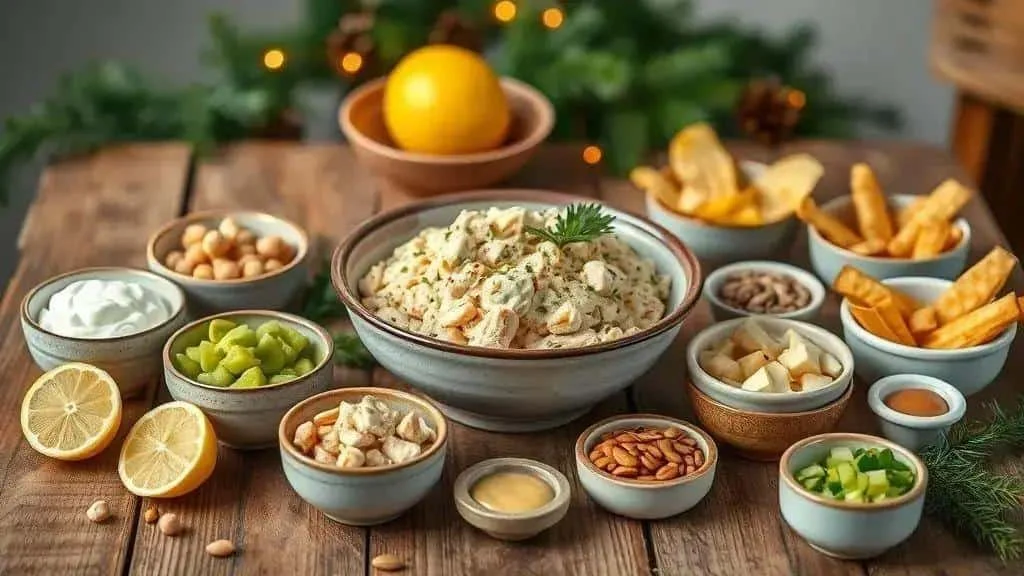
Substitutions can change both flavour and suitability. Check all ingredients and the guest’s requirements rather than relying on a single label such as vegan or gluten-free.
Common Substitutions
- Mayonnaise: thick plain yoghurt gives a tangier dressing, added gradually to the desired consistency. Suitable vegan mayonnaise can replace standard mayonnaise, but check allergens and cross-contact information for an egg allergy.
- Single cream: plain yoghurt or a suitable plant-based alternative can replace it in this cold dressing. Fat content varies by product.
- Shredded chicken: cooked chickpeas, suitable prepared tofu or a plant-based chicken alternative make a meat-free base; also replace dairy ingredients for a vegan version.
- Potato straws: use a suitable crisp topping such as croutons or toasted seeds. For a potato allergy, avoid potato crisps too and check ingredients in any alternative.
- Raisins: dried cranberries or chopped dried apricots vary the sweetness and texture; check labels, including sulphites where relevant.
Dietary Options
- Vegan: combine chickpeas or prepared plant-based chicken with vegan mayonnaise and a dairy-free creamy ingredient, if needed. Check toppings and omit honey.
- Lactose-free: choose suitable products after checking labels. For a milk allergy, use genuinely milk-free ingredients; lactose-free dairy still contains milk proteins.
- Reducing starchy ingredients: omit potato straws, reduce corn and add cucumber or radish. Fruit, raisins and other ingredients still contribute carbohydrate, so do not assume this makes the recipe ketogenic.
- Gluten-free: choose suitable labelled toppings and check every dressing, seasoning and processed ingredient. Use clean preparation equipment.
- Less added salt: compare product labels, choose no-added-salt ingredients where available, drain and rinse suitable canned foods and season sparingly.
Allergies and Food Safety
- Egg allergy: select a suitable egg-free dressing and check all processed ingredients and cross-contact warnings. A vegan label alone does not guarantee suitability for every allergy.
- Nut allergy: omit nuts and choose an alternative only after checking the guest’s specific needs and the product label; seeds can also cause allergies.
- Prevent cross-contact: use clean separate utensils, surfaces and labelled containers, and serve allergy-specific portions separately.
- Identify ingredients: tell guests what is in each version, including egg, milk, mustard, soya, nuts or gluten-containing grains where present.
Adjusting Texture and Flavour
- More creamy: add mayonnaise or a suitable creamy alternative a tablespoon at a time until the ingredients are coated.
- A tangier dressing: replace some mayonnaise with thick plain yoghurt and adjust lemon and seasoning to taste.
- More crunch: add a quarter-cup of suitable chopped nuts when serving, or offer potato straws separately.
- Brighter flavour: add lemon juice gradually or a little Dijon mustard. Mustard may contain salt and is itself an allergen.
Quick Substitution Guide
- Similar quantities: start with a comparable amount of vegan mayonnaise or plain plant-based yoghurt when replacing its conventional counterpart, then adjust for consistency and flavour.
- Changing the base: three cups cooked chickpeas can make a practical alternative to the chicken in this salad, but they are not equivalent in weight, texture or protein content.
- Changing the crunch: chopped nuts are richer and heavier than potato straws, so start with a small amount rather than assuming equal volumes give the same result.
Good Practice When Adapting
- Taste safely: check the ready-to-eat dressing and adjust salt, acidity and sweetness gradually, using a clean spoon.
- Change one thing at a time: this makes it easier to judge flavour and texture.
- Keep it chilled: store covered at 5°C or below and within the shortest applicable ingredient limit, no more than 48 hours from the earliest cooked component. Add crisp toppings only when serving.
Presentation, Storage and Christmas Serving Ideas
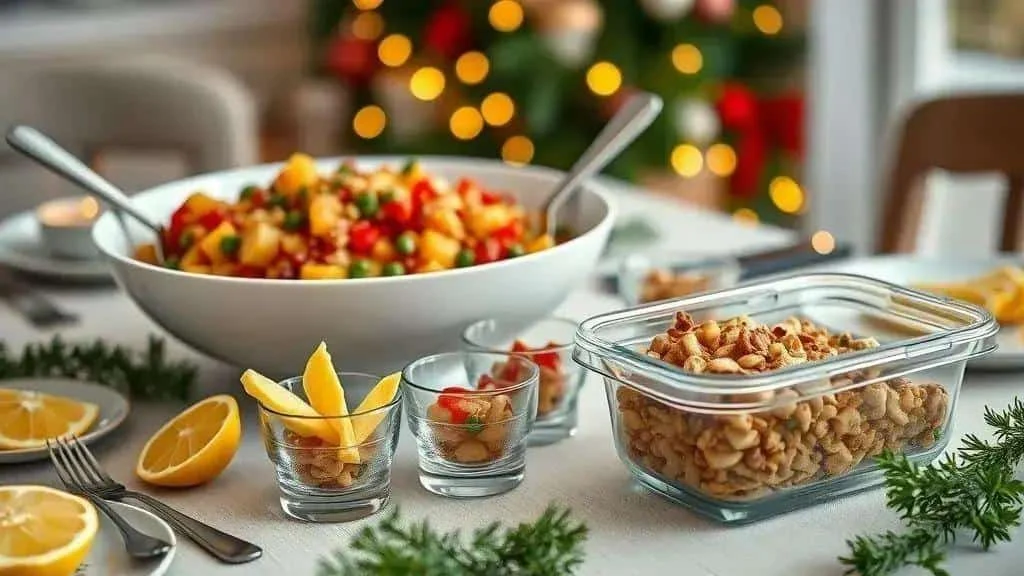
- Use chilled ingredients when mixing. Cool cooked chicken and vegetables in shallow portions and refrigerate within one to two hours; do not leave them out for hours waiting to become completely cold.
- Choose a practical dish — a shallow bowl makes serving easier. Put out small quantities and keep reserves refrigerated.
- Combine gently, starting with the chilled meat or chickpeas and vegetables, then fruit and dressing.
- Check the dressing before mixing and add it gradually so the salad does not become soggy.
- Garnish at the right time with parsley or lemon zest, leaving crisp potato straws and suitable nuts until service.
- Use individual bowls if convenient, keeping them covered and chilled until needed.
- Prepare suitable alternatives separately with clean utensils, clearly identifying vegan or allergy-specific versions rather than relying on their appearance.
- Label flavours and allergens with small cards and tell guests about ingredients such as nuts, eggs, milk, mustard or wheat.
Storage
- Temperature: keep refrigerated at 5°C or below; a fridge setting around 4°C is a useful target.
- Time limit: use within 48 hours of cooking the earliest perishable component, or sooner if any ingredient’s use-by or opened-storage instructions require it. Mixing the salad does not restart the clock.
- Containers: use clean covered food-storage containers. There is no need to compress the salad or create a vacuum.
- Freezing: the assembled salad may separate or lose texture, especially with mayonnaise, yoghurt and fresh fruit. If necessary, freeze suitable cooked components separately before adding dressing, following their storage guidance.
- Before serving: keep chilled until needed and serve small batches. As a cautious home-serving rule, discard salad left out for more than two hours, or sooner in very hot conditions.
- Leftovers: keep only portions that have remained safely chilled or were returned promptly within the serving limit. Do not keep plate leftovers; lemon juice and fresh toppings cannot make poorly stored food safe.
Serving at Christmas
- Portion size: roughly 120–150 g per guest is a useful small-side guide. The larger recipes above provide more than six to eight portions at this size, so scale them to the whole menu.
- Timing: assemble with chilled ingredients, refrigerate for one to two hours and add crunchy toppings just before serving.
- Accompaniments: serve with roast meat, plain rice, green salad or Brazilian farofa, keeping the overall number of dishes manageable.
- Drinks: lemon-and-mint water or another alcohol-free citrus drink complements the creamy dressing. Adults who choose wine may prefer a small serving of dry sparkling or light white wine.
- Festive presentation: use a pale ceramic dish with edible herbs, and offer potato straws in a separate small bowl.
- Individual portions: arrange the salad in small glasses or bowls and add suitable nuts and potato straws only at serving time.
- Practical schedule: cook, shred and safely chill the chicken the day before if useful. Prepare and chill other ingredients on the day, mix one to two hours before serving and add crisp toppings at the last moment. Keep the original cooking time in mind for storage limits.
- Dietary needs: prepare appropriate versions separately, using clean dedicated utensils and verified ingredients for each guest’s requirements.
Conclusion
Salpicão is easy to vary, from a classic chicken salad to chickpeas or tropical fruit. Choose a version that suits your Christmas menu, prepare it with safely chilled ingredients and add the crisp topping at the table.
Thank you for reading! Follow our social channels for more festive recipes, photographs and practical ideas, and share the variations you enjoy.
Explore the I Love Christmas blog for more recipes, decorating ideas and seasonal inspiration.
Frequently Asked Questions About Christmas Salpicão
How do I keep potato straws crisp?
Add them only when serving. Keep the unopened or securely closed packet dry and follow its storage instructions; store it separately from the chilled salad.
Can I prepare salpicão ahead of Christmas dinner?
Yes. Assemble it with safely chilled ingredients and refrigerate for one to two hours before serving. Keep crunchy toppings separate and respect the storage limit of the oldest cooked or opened perishable ingredient.
How long does it keep in the fridge?
Keep covered at 5°C or below and use within 48 hours of cooking the earliest perishable component, or sooner if its label requires. Mixing does not reset that time. Freezing the dressed salad is not recommended for texture.
How can I stop the apple browning?
Toss freshly diced apple with a little lemon juice straight away. This slows browning but does not replace refrigeration or extend the salad’s safe storage time.
Are there vegetarian or lactose-free options?
Use cooked chickpeas or a suitable prepared plant-based chicken alternative for a vegetarian base. Replace dairy with appropriate plant-based products for a milk-free version, checking all labels and toppings. Lactose-free dairy is not suitable for a milk allergy.
Sources and Further Reading
- Food Standards Agency: cooking food safely
- Food Standards Agency: chilling and leftovers
- UK food labelling: allergens
- NHS: foods to avoid for babies and young children