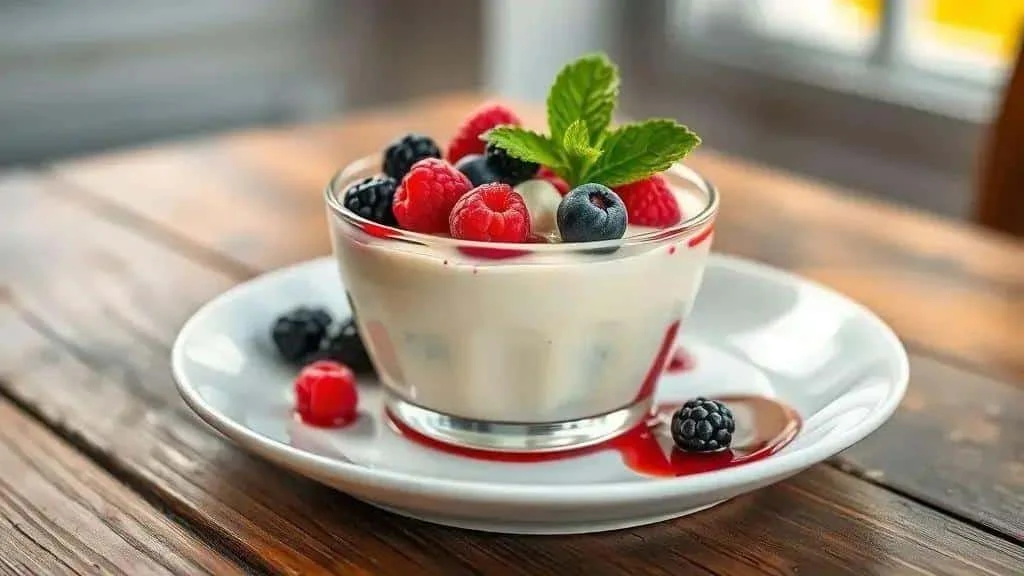
White chocolate mousse with mixed berries combines a smooth chocolate base with whipped cream and a tangy fruit topping. Gelatine can help stabilise the mixture, while optional pasteurised egg whites add air. Dietary adaptations change how the mousse sets, so use suitable products and test small portions rather than expecting every substitution to behave identically.
White chocolate mousse with mixed berries makes a creamy finish to a festive meal. Sharp raspberries and blackberries balance the sweet chocolate, and individual glasses make it easy to prepare ahead.
Ingredients for white chocolate mousse with mixed berries
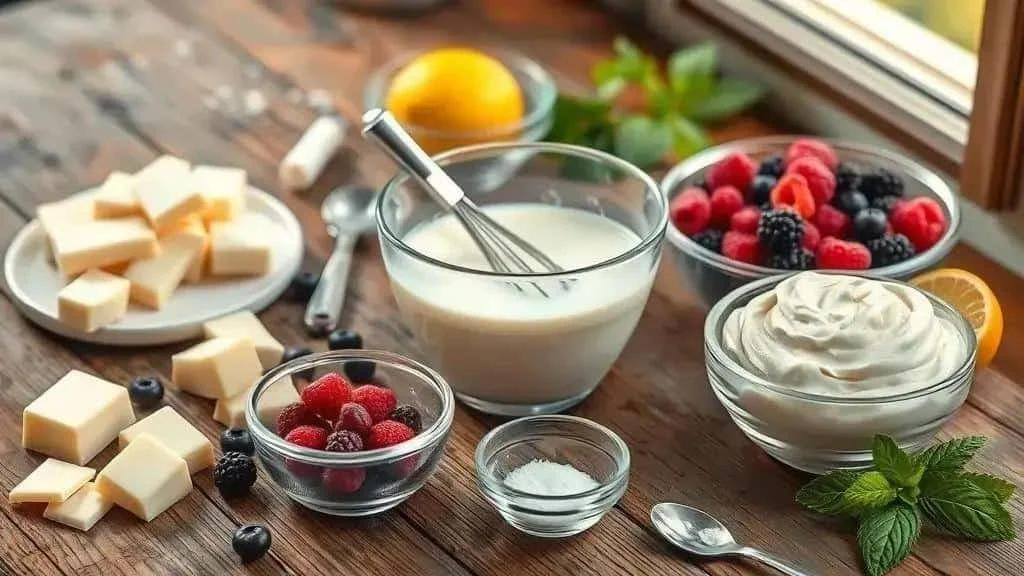
For the white chocolate mousse and berry topping, gather:
- 250 g white chocolate – finely chopped. A dairy-free white chocolate alternative is needed for a milk-free version.
- 400 ml whipping cream – divide into 100 ml for the chocolate base and 300 ml to whip, keeping the latter chilled. Plant-based versions need a product suitable for whipping, not ordinary coconut milk.
- 10 g unflavoured powdered gelatine – the original recipe’s quantity gives a firm set; check your brand’s strength and guidance for the mixture. Agar is not a direct 6 g substitute and requires a separately tested method.
- 3 pasteurised egg whites, optional – use a product suitable for uncooked desserts and whipping. They can be omitted for a denser, egg-free mousse. Aquafaba is a separate variation.
- 300 g mixed berries – raspberries, blueberries and blackberries, with some reserved for decoration. Wash fresh berries; follow any cooking directions on frozen fruit before cooling it for use.
- 1 tbsp lemon juice – for the berries or their sauce, not directly into melted chocolate.
- 1 tsp vanilla extract
- 1–2 tbsp sugar, optional – the chocolate is already sweet, so add only if needed.
- A small pinch of salt – for the chocolate base.
- Small mint leaves, optional – to garnish.
Ingredient notes
- Cream: use a labelled dairy-free whipping cream when needed and follow its chilling instructions. Coconut cream varies and may not whip reliably.
- Setting agent: gelatine and agar have different heating, setting and texture properties. Follow a formulation suitable for the chosen product.
- Egg whites: optional aquafaba from cooked chickpeas can be whipped separately for an egg-free variation; it may give a different stability.
- Chocolate: choose white chocolate intended for melting. Dairy-free alternatives differ in fat content, so test the texture. Lactose-free milk chocolate is not necessarily vegan or safe for milk allergy.
- Sweetness: omit extra sugar if unnecessary. Replacing added sugar alone does not make white chocolate mousse sugar-free or suitable for everyone’s diabetes management.
How to make white chocolate mousse with mixed berries
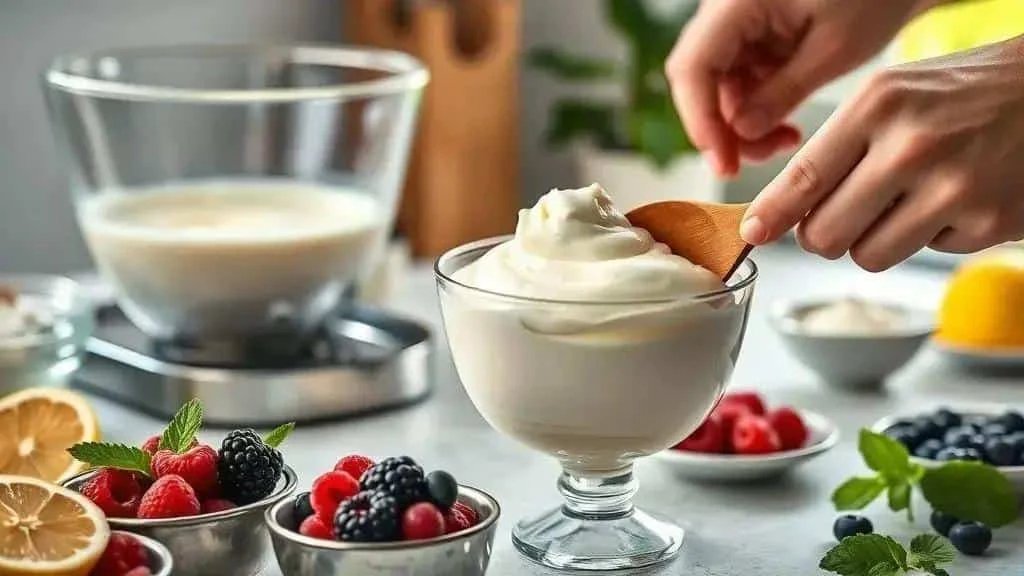
- Prepare the gelatine according to its packet’s cold-water quantity and soaking time, then dissolve gently as directed. For agar or another vegetarian setting agent, use a compatible tested method instead; do not substitute it into these steps gram for gram.
- Make a chocolate base: put the finely chopped chocolate in a heatproof bowl. Warm 100 ml of the cream gently, pour it over the chocolate and stir from the centre until smooth. If pieces remain, use a bowl over barely simmering water briefly, keeping water out of the chocolate.
- Add the dissolved gelatine: stir it into the warm, smooth chocolate-and-cream base, along with vanilla and the pinch of salt. Do not pour small amounts of water-based gelatine straight into plain melted chocolate, which can seize.
- Whip the remaining cream: beat the cold 300 ml whipping cream to soft peaks in a chilled bowl. Avoid overwhipping it into a stiff or grainy mixture.
- Whip the optional egg whites: use pasteurised whites labelled suitable for this use and a clean, grease-free bowl. Whisk to firm peaks. For an aquafaba variation, start with around 90 ml and follow a compatible method; or simply omit the whites.
- Cool the chocolate base slightly: it should be fluid and only gently warm, not hot enough to melt the whipped cream and not so cold that it has set.
- Fold in the cream: stir about one-third into the chocolate base to loosen it, then fold in the rest gently with a spatula.
- Add the optional whipped whites: fold them in in two additions. Skip this step for the egg-free version without whites.
- Add some berries if desired: fold in 100–150 g of washed, well-dried fresh berries or appropriately cooked and cooled fruit. Keep the remaining berries for the topping; excess juice can soften the mousse.
- Portion and chill: divide into dessert glasses, cover and refrigerate for at least 4 hours, preferably 6–8 hours, until set.
- Finish before serving: top with berries, a little mint and optional cooled berry sauce. Use the lemon juice to brighten the fruit or sauce to taste.
- Storage: keep at 5°C or below and use within 48 hours, or sooner if the shortest ingredient instructions require. Plant-based cream does not automatically extend shelf life.
Practical tips
- Temperature: hot chocolate melts whipped cream; cold, setting chocolate can leave lumps. Combine while the base remains fluid and gently warm.
- Folding: use broad, gentle spatula movements to retain air.
- Dietary changes: dairy-free chocolate, plant-based whipping cream and optional aquafaba can form a variation, but a different setting agent requires a tested adjustment.
- Added sugar: taste the chocolate base before deciding whether any extra sweetness is needed. A sweetener substitution does not remove sugar already present in chocolate or fruit.
- Layered glasses: alternate mousse with a small amount of fully cooled, thick berry sauce.
White chocolate mousse variations: vegan and reduced-fat
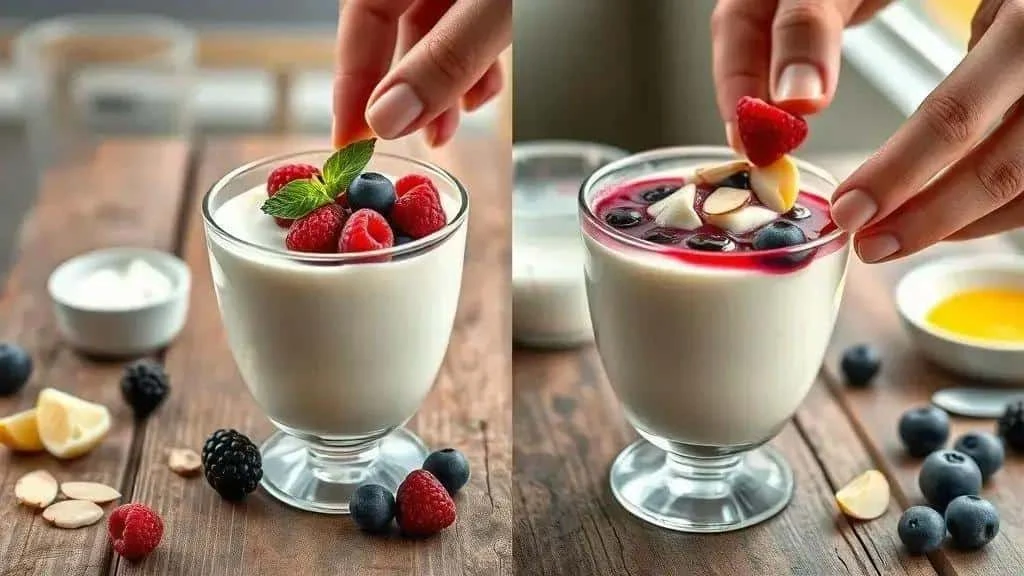
Vegan variation
A vegan version needs all animal-derived ingredients replaced. The result may be firmer or softer than the dairy recipe, depending on the products.
- 250 g vegan white chocolate alternative – lactose-free dairy chocolate alone is not vegan.
- 400 ml plant-based whipping cream – follow its instructions; coconut cream is suitable only if it whips reliably.
- A compatible vegetarian setting agent – calculate and prepare it for the mixture according to a tested method. Do not assume 6 g agar replaces 10 g gelatine.
- Around 90 ml aquafaba, optional – whipped separately instead of egg whites; stability varies.
- 300 g mixed berries – prepared safely, with some reserved for decoration.
- 1 tbsp lemon juice – for the berries or sauce.
- 1 tsp vanilla extract, optional
Method note: agar needs heating as directed and starts setting as it cools; it cannot simply follow the gelatine method. Trial the texture in small dessert glasses before making a large batch.
Reduced-fat variation
Using yoghurt and lower-fat ingredients creates a different dessert, not an identical mousse. Treat these as ideas for a small trial rather than a guaranteed replacement recipe.
- 200 g white chocolate – compare labels if choosing a reduced-fat product; the name alone does not establish the overall calorie content.
- 300 ml fat-free Greek-style yoghurt – changes the moisture, acidity and texture.
- Up to 100 ml skimmed milk – an additional liquid that affects setting; do not add automatically to an already loose mixture.
- Gelatine suited to the actual mixture – the original suggested 8 g, but strengths and products vary, so check its guidance and test.
- 2 pasteurised egg whites, optional – suitable for uncooked desserts, or a separately tested aquafaba version.
- 200 g mixed berries – fresh and washed, or frozen fruit cooked as directed and cooled.
- Optional sweetener – use only the manufacturer’s appropriate quantity if needed, not an automatic tablespoon-for-tablespoon swap.
Serving idea: a smaller portion with extra berries is simpler than replacing major structural ingredients. Fruit sauce does not behave like chocolate in a setting mixture.
Adapting the variations
- Sweetness: taste before adding sugar, as white chocolate is already sweet.
- Airiness: fold whipped ingredients gently rather than beating the finished mixture.
- Substitutions: choose a cream that whips, a setting agent with a suitable method and optional egg-free foam. Test them together.
- Temperature: let the chocolate base cool slightly while remaining fluid before folding in whipped ingredients.
- Fruit topping: a modest unsweetened berry sauce gives a tangy contrast; nutritional claims depend on the full recipe and portions.
Texture adjustments
- Too soft: allow the full chilling time first. If it still does not set, serve as a spoonable dessert where safe to do so and adjust a fresh test batch. Do not stir dry gelatine or agar into finished mousse.
- Too dense: check the whipping and folding technique, chocolate temperature and setting-agent quantity next time.
- Extra flavour: a little citrus zest adds aroma. Fruit liqueur adds alcohol and sugar and changes the mixture; omit it for an alcohol-free dessert.
Serving and decorating with berries
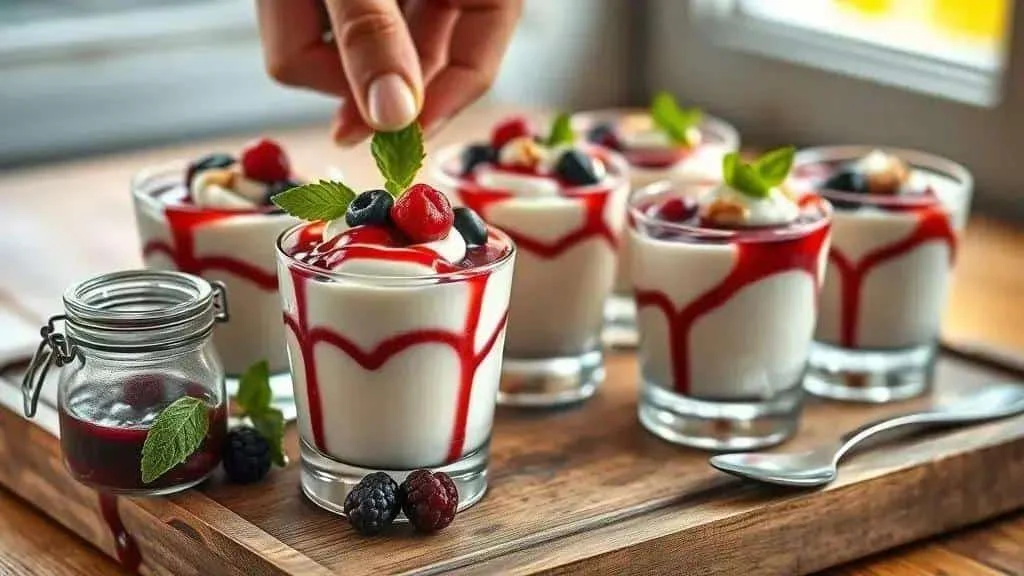
Clear dessert glasses show the mousse and fruit layers, while individual portions simplify serving.
- Portions: around 120–150 ml can suit dessert after dinner; use smaller glasses for a richer or larger menu.
- Serving temperature: keep refrigerated at 5°C or below until needed and serve chilled.
- Utensils: provide small dessert spoons appropriate to the glasses.
A quick berry sauce
Berry sauce adds colour and acidity to white chocolate mousse:
- Combine 150 g berries with the optional sugar and lemon juice in a small saucepan. These can come from the recipe’s 300 g fruit allowance if the remainder is used for garnish.
- Heat gently until the fruit releases juice and softens, often around 4–6 minutes. Follow any longer cooking instruction on frozen fruit.
- Mash and strain through a fine sieve if you prefer a smooth sauce.
- Cool promptly in a clean bowl over cold water or an ice bath, keeping water out. Refrigerate before adding to the mousse.
Decoration ideas
- Layers: use a little thick, cold sauce between mousse layers and finish with berries.
- Piped cream: use a little extra whipped cream for decoration; it is additional to the 400 ml used in the mousse.
- Crunch: add biscuit crumbs, fine granola or toasted flaked almonds just before serving, checking allergens.
- Mint and zest: a small mint leaf and fine citrus zest add fragrance.
Drinks and accompaniments
- Drinks: chilled mint infusion or sparkling water works well; sparkling or dessert wine is optional for adults who drink alcohol.
- A finishing touch: a few flakes of sea salt can contrast with the sweet chocolate, but use sparingly.
Preparing for a party
- Make ahead: prepare the day before, refrigerate and add fresh decoration shortly before serving.
- Transport: cover the glasses and keep upright in an insulated carrier with enough ice packs to maintain a cold temperature.
- Buffet service: bring out small batches, keeping the rest refrigerated. Use chilled trays or reusable ice packs appropriately; dry ice is not needed and should not contact the dessert or guests.
Final checks
- Avoid excess juice: drain fruit before decorating so it does not dilute the mousse.
- Ingredient information: identify milk, eggs, nuts, wheat or soy where present. Also explain animal gelatine for guests avoiding it.
- A simple plated version: if the mousse is firm enough, serve a small spoonful with a little sauce and berries rather than adding many decorations.
Pairing drinks and sides with white chocolate mousse

Good pairings balance the richness and sweetness of white chocolate with acidity, bitterness or a crisp texture. Airy texture does not necessarily mean low calories.
- Brut sparkling wine: an optional dry contrast for adults who drink alcohol.
- Late-harvest wine: choose according to sweetness and acidity, checking the actual alcohol content rather than assuming it is low.
- Moscato d’Asti: an aromatic, lightly sparkling option; it still contains alcohol.
- A small espresso: gives a bitter contrast to the chocolate.
- Chilled mint infusion or white tea: offers a delicate pairing. White tea contains caffeine; mint infusion normally does not.
- An alcohol-free citrus drink: sparkling water with lemon or orange is a simple choice.
Accompaniments
- Crisp biscuits: speculoos or shortbread add a contrasting texture.
- Toasted flaked almonds: give crunch and a nutty aroma when suitable for guests.
- Berry sauce: adds fruit flavour and colour.
- Lemon or raspberry sorbet: a small optional portion adds a cold, sharp contrast.
- Lemon or orange zest: adds fragrance without needing extra syrup.
Temperature and portions
- Chilling: keep the mousse at 5°C or below until serving rather than storing it at 6–8°C.
- Portion size: around 120–150 ml is a serving suggestion, not a nutritional recommendation.
- Last-minute decoration: add berries and mint shortly before serving.
Quick pairing tips
- Sweetness and acidity: a mildly sharp drink can balance a sweet mousse.
- Texture: pair soft mousse with a small crisp accompaniment.
- Taste the combination: try the mousse and drink separately, then together, to judge your preference.
- Dietary needs: offer alcohol-free drinks and clearly identified adapted desserts where needed.
Adapting for dietary requirements
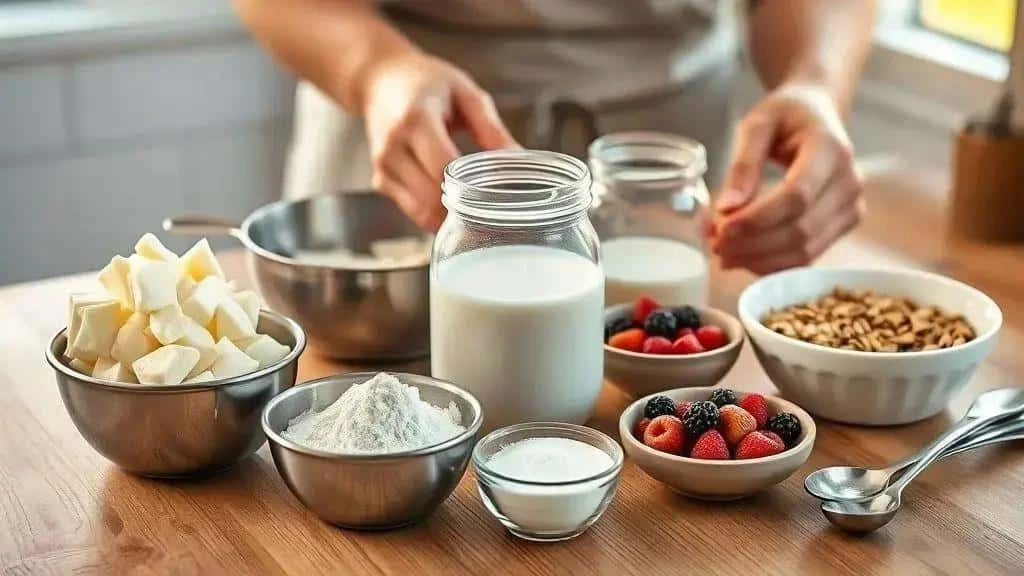
Changes can make white chocolate mousse suitable for different preferences, but check the whole recipe and test the texture.
Lactose intolerance and milk-free versions
- The 400 ml cream can be replaced with a suitable plant-based whipping cream, following its instructions.
- White chocolate must also be suitable. Lactose-free dairy chocolate may suit lactose intolerance but still contains milk proteins.
- Important distinction: for milk allergy, choose genuinely milk-free products with appropriate labelling and prevent cross-contact.
Vegan: without dairy or eggs
- 250 g vegan white chocolate alternative – chopped.
- 400 ml suitable plant-based whipping cream – prepared as directed.
- A suitable vegetarian setting method – use a tested formulation rather than the original fixed 6 g agar suggestion.
- Around 90 ml aquafaba, optional – whipped separately for an adapted version.
- Folding tip: loosen the fluid, gently warm chocolate base with a little whipped cream before folding in the rest.
Without eggs
- The 3 optional whites can simply be omitted for a denser mousse. Aquafaba is another option, but its performance varies and needs testing.
- Gelatine does not contain egg, but is animal-derived. Changing it for a vegetarian product requires a different setting method.
Reducing added sugar
- The optional 1–2 tbsp sugar can be omitted. If using a sweetener, follow its own conversion instructions.
- Check the chocolate too: it normally contains sugar, as does fruit naturally. No-added-sugar is not the same as sugar-free, and suitability for diabetes depends on the complete portion and individual advice.
Gluten and nuts
- Biscuits and toppings: choose suitable gluten-free or nut-free products where required. Seeds are not automatically safe for every allergy.
- Cross-contact: use clean work surfaces, utensils and separate ingredients for allergy-safe preparation.
Texture and storage adjustments
- A soft result: first allow the full chilling time. For the next batch, review the chosen chocolate, cream and setting-agent guidance; do not add powder straight to finished mousse.
- Loss of air: avoid hot chocolate and vigorous mixing after whipping.
- Storage: refrigerate at 5°C or below and use within 48 hours or the shortest ingredient instruction. Decorate close to serving.
Practical reminders
- Taste before sweetening: white chocolate often provides enough sugar.
- Trial a small portion: especially when changing the cream or setting agent.
- Label accurately: identify ingredients and adaptations without claiming vegan, milk-free or sugar-free unless the full recipe supports it.
To finish
White chocolate mousse with mixed berries combines a creamy texture with a fresh, tangy topping. Dietary variations are possible, but they need suitable ingredients and tested setting adjustments.
Keep the dessert refrigerated and decorate near serving time. When trying a different cream or gelling agent, make a small trial before a celebration.
Thank you for reading. Follow our social channels and visit I Love Christmas for more seasonal recipes.
White chocolate mousse with mixed berries: frequently asked questions
Can I make the mousse without lactose?
Use suitable lactose-free or plant-based chocolate and a cream designed for whipping. For milk allergy, lactose-free dairy is not enough: all products must be milk-free and protected from cross-contact. A vegan version also needs the egg whites and animal gelatine replaced.
How can I replace the egg whites?
They are optional, so you can omit them for a denser mousse. Whipped aquafaba is another variation, often starting around 90 ml for this batch, but its stability differs. If using egg whites, choose a pasteurised product suitable for uncooked desserts.
How long does the mousse need to chill?
Allow at least 4 hours, preferably 6–8 hours, at 5°C or below. Different chocolates, creams and setting agents can change the result; extra chilling will not correct every formulation problem.
What if the mousse is too soft?
Give it the full chilling time and check that the cream was whipped and folded correctly. Do not stir extra dry gelatine or agar into finished mousse. Review the product guidance and adjust a fresh small batch; safely chilled soft mousse can be served in glasses.
Can I make it ahead for a party?
Yes. Prepare the day before, keep refrigerated and decorate just before serving. Transport covered in an insulated carrier with ice packs, then return to refrigeration.
Which fruit works well with white chocolate?
Raspberries, blueberries and blackberries provide a tangy contrast. Strawberries, passion fruit or a cooled fruit compote also work. Drain excess juice and follow cooking instructions on frozen fruit.
Sources and Further Reading
- Callebaut: ganache-based white chocolate mousse technique
- Dr. Oetker: vegetarian setting-agent guidance
- NHS: food safety for people who are pregnant
- UK guidance: chilling, freezing and defrosting food