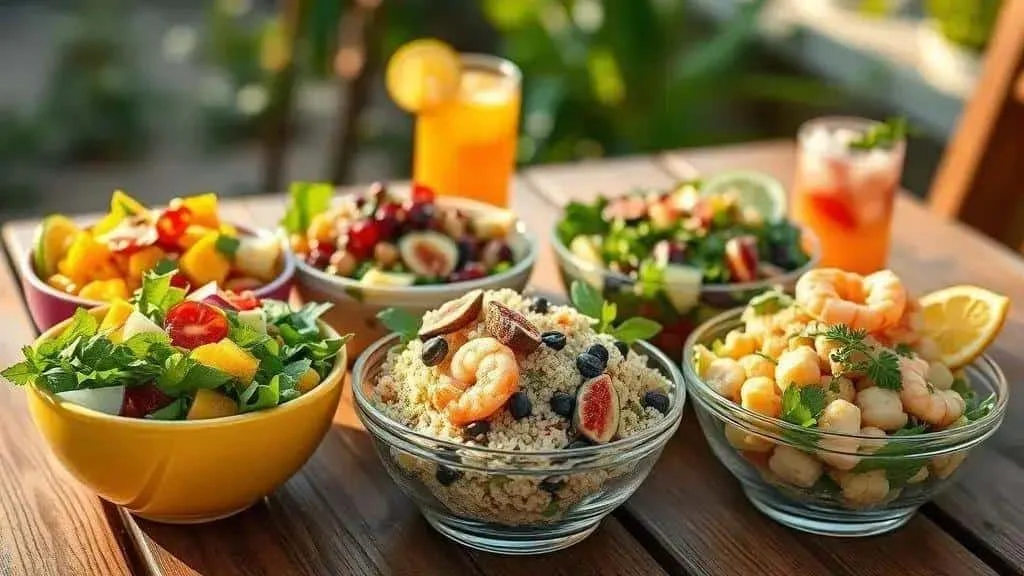
These festive salads combine leaves, fruit, grains and savoury ingredients for Brazil’s warm Christmas and New Year celebrations. Keep dressings separate, plan portions around the rest of the meal and choose produce that offers good value where you shop. Chilled ingredients still need refrigeration, whatever dressing you use.
Festive salads for a Brazilian summer Christmas bring colour and freshness to the table. Although Christmas falls in winter in the UK, these recipes retain their Brazilian summer setting and can also work as colourful sides for a winter buffet or a warm-weather gathering. Try the combinations below and adapt them to your guests.
Why serve festive salads in warm weather?
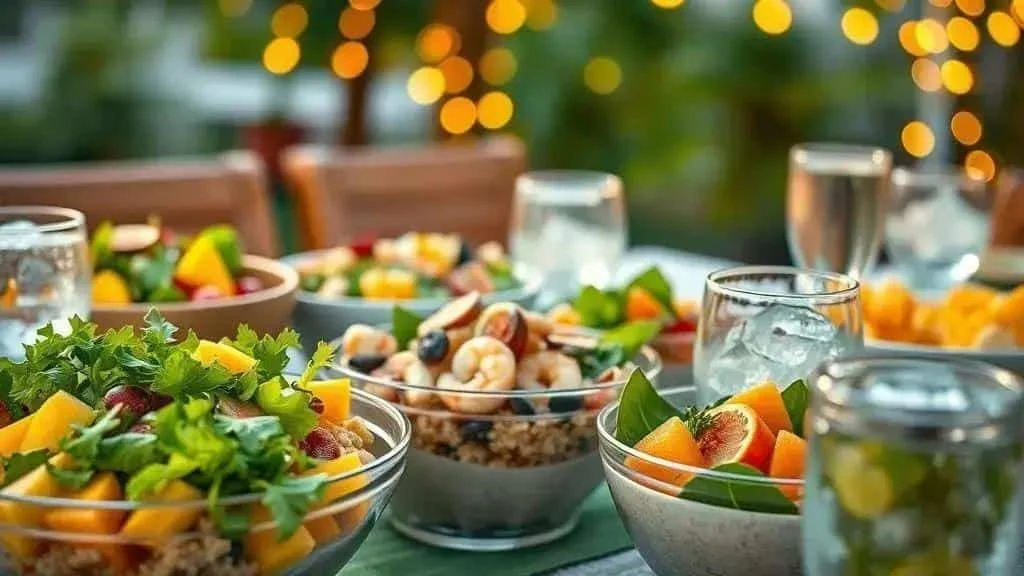
Festive salads add fresh textures and bright colours without requiring every dish to spend hours in the oven.
Practical reasons to choose salads
- A fresh contrast: crisp leaves and fruit can balance richer dishes on the table. Raw ingredients are not automatically easier for everyone to digest, so choose combinations that suit your guests.
- Refreshing ingredients: watermelon, cucumber and lettuce contain plenty of water and can feel refreshing. Offer drinking water too.
- Manageable preparation: many components can be prepared ahead and refrigerated, leaving more time for other dishes and your guests.
- Variety: combine vegetables, fruit and grains with ingredients such as prawns, chickpeas or fresh cheese. The overall balance depends on the recipe and the rest of the meal.
- Dietary options: vegetarian, vegan and gluten-free versions are possible, but check ingredients and preparation methods rather than assuming every salad is suitable.
- Colour at the table: a mix of greens, citrus and other colourful ingredients makes an inviting display.
- Seasonal value: produce in season can offer good flavour and value. Availability in Brazil and the UK differs, especially in December.
Tips for freshness and flavour
- Keep dressing separate: add it shortly before serving so that leaves stay crisp.
- Choose contrasting textures: combine crisp leaves, juicy fruit and crunchy seeds; avoid overripe fruit that collapses when mixed.
- Chill serving dishes: refrigerate them before assembly, while remembering that a cold bowl alone will not keep food safely chilled throughout a party.
- Choose the dressing for its flavour: vinaigrettes and yoghurt dressings offer alternatives to mayonnaise. Yoghurt is not safer to leave in the heat, and an acidic dressing does not make a perishable salad safe at room temperature.
- Serve small batches: put out a smaller dish and replace it with a fresh chilled one as needed.
- Use fresh herbs: mint, basil and parsley add aroma with little preparation.
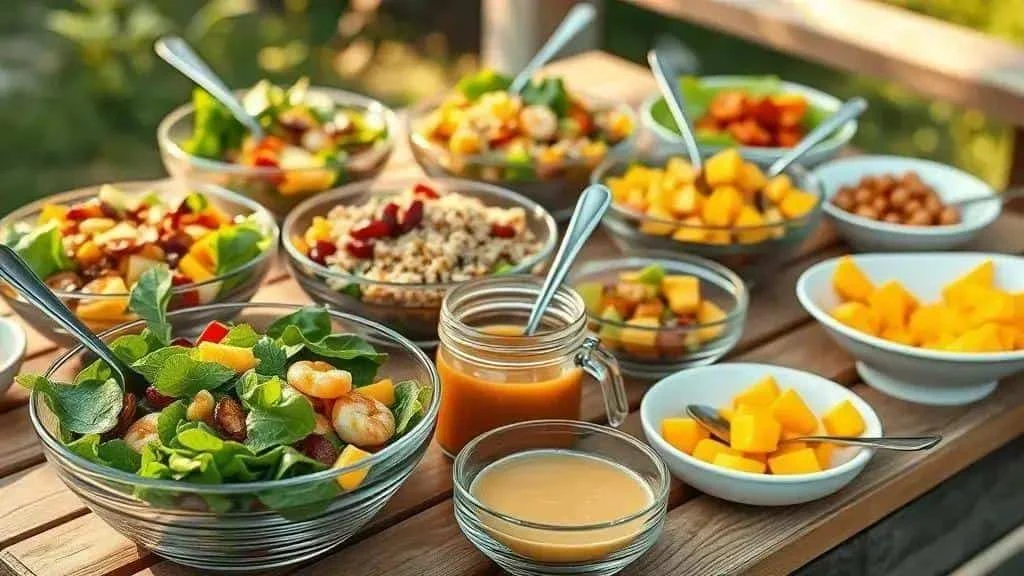
A manageable festive menu leaves time to enjoy the gathering. Choose complementary dishes, realistic quantities and serving arrangements that keep chilled food cold.
Building complementary combinations
- Base, savoury addition and crunch: try green leaves or shredded cabbage with cooked prawns, cooked shredded chicken or chickpeas, finished with nuts or seeds.
- Fruit and cheese: mango, orange or avocado works with fresh cheese or ricotta for contrasting flavours and textures.
- Grains and herbs: quinoa, couscous or brown rice gives a salad substance, with mint, parsley and spring onions for freshness. Ordinary couscous is usually refined wheat; choose wholewheat couscous if that is what you want.
- Vary the texture: combine something crunchy, such as nuts or toast, with creamy avocado or yoghurt dressing and juicy cherry tomatoes or peach slices.
A practical portion guide
- Simple leaf salad: allow roughly 100–150 g of the prepared salad per person, adjusting to the other dishes.
- Grain or pasta salad: roughly 120–180 g of prepared salad per person is a starting point.
- Salad with prawns or chicken: the original planning guide allows 80–120 g cooked meat or seafood per person within the salad. Adjust this if it is only one of several sides.
- Fruit and cheese salad: allow roughly 100–150 g of the prepared salad per person.
- Dressing: allow approximately 25–35 ml per person across the salads being served, with extra available separately. These are catering estimates, not nutritional targets.
Putting the menu together
- Calculate the total: multiply your chosen portions by the number of guests. If serving several salads, divide the overall allowance between them rather than preparing a full portion of every salad for everyone.
- Offer different options: a plant-based salad and, if wanted, a seafood, chicken or cheese option can cover different preferences. Keep separate utensils for each dish.
- Balance the flavours: include a citrus-led option, a fruit-based one and a more savoury combination.
- Plan for the temperature: choose dressings you enjoy, but keep all perishable salads chilled. Switching mayonnaise for yoghurt or vinaigrette does not remove that requirement.
- Plan replenishment: keep spare portions refrigerated and replace serving bowls rather than repeatedly topping up food that has been standing out.
Dressings: ingredients and quantities
- Simple vinaigrette: mix three parts oil with one part vinegar, plus salt and pepper; add mustard or honey to taste. For example, 150 ml oil and 50 ml vinegar make about 200 ml before additions. The ratio alone does not specify a yield.
- Yoghurt dressing: mix 200 g plain yoghurt with the juice of ½ lime, 1 tbsp olive oil, salt, pepper and chopped herbs. Keep refrigerated.
- How much to make: use 25–35 ml dressing per person as a starting allowance, adjusting for your menu. Serve separately where practical.
- Substitutions: extra virgin olive oil adds its own flavour; agave syrup can replace honey in a vegan dressing. Check all other ingredients are vegan too.
Preparation and assembly
- Prepare suitable components ahead: cook grains and any meat or seafood the day before if convenient. Cool promptly in shallow containers and refrigerate within one to two hours at 0–5°C. Use within 48 hours or sooner if ingredient instructions require it. Rice needs faster cooling, ideally within an hour, and use within 24 hours.
- Add leaves near serving time: wash and dry them well, following any ready-to-eat packet instructions, and keep them refrigerated separately from the dressing.
- Layer thoughtfully: sturdier ingredients can go underneath delicate leaves in a serving bowl, with dressing added at the last moment.
- Provide utensils and labels: use a separate serving spoon for each salad and identify relevant ingredients and allergens clearly.
- Keep presentation practical: herbs and thin fruit slices add colour. Individual bowls can make serving easier, but still need to be kept chilled until required.
Five salads: ingredients and methods
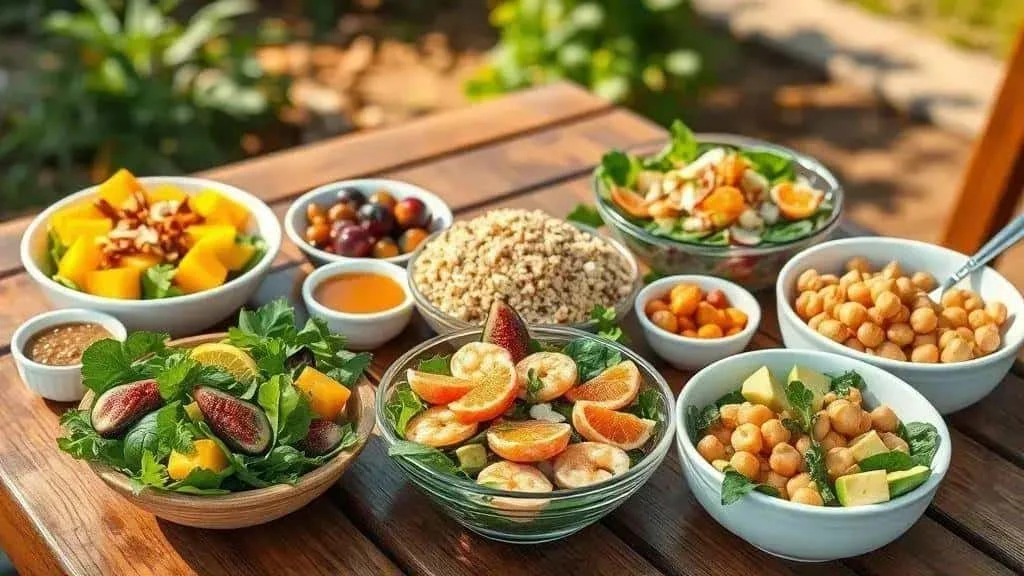
The five recipes below offer different combinations of fruit, leaves, grains and savoury ingredients. Further variations follow for the first four salads. Choose one version where quantities differ, and check dietary suitability for your guests.
Tropical mango salad — ingredients
- 2 medium mangoes, diced; pineapple or firm peaches are alternatives.
- 200 g mixed leaves, such as lettuce and rocket.
- 100 g cherry tomatoes, halved.
- ½ red onion, thinly sliced.
- ¼ cup chopped coriander or mint, optional.
- 50 g cashew nuts, lightly toasted, or walnuts.
- Juice of 1 lime.
- 3 tbsp olive oil.
- 1 tbsp honey, or agave syrup for a vegan version. Do not serve honey to children under one.
- Salt and pepper to taste.
Tropical mango salad — method
- Wash and dry the leaves: use a salad spinner or clean cloth so that they are not waterlogged; follow instructions on ready-to-eat packs.
- Prepare the fruit: dice the mango into pieces that hold their shape and halve the cherry tomatoes.
- Make the dressing: whisk the lime juice, oil, honey or agave, salt and pepper in a small bowl.
- Toast the nuts: stir in a dry frying pan for about two to three minutes until fragrant, without burning; let them cool.
- Assemble: combine the leaves, mango, tomatoes and onion, then add dressing just before serving.
- Finish: scatter over the cooled nuts and optional herbs, and serve promptly.
Quinoa and dried fruit salad — ingredients
- 170 g dry quinoa, approximately 1 cup, rinsed; use the weight for consistency.
- 480 ml water, 2 cups, or the amount directed on your quinoa packet.
- ½ cup dried apricots, chopped, or dried cranberries.
- ¼ cup raisins, or chopped dates.
- 1 medium cucumber, diced.
- ¼ cup chopped red onion.
- ¼ cup chopped parsley or spring onions.
- 60 g chopped almonds, or sunflower seeds.
- 3 tbsp olive oil and the juice of 1 lime.
- 100 g feta, crumbled, optional; choose vegetarian feta if needed, or tofu for a vegan version.
- Salt and pepper to taste.
Quinoa and dried fruit salad — method
- Cook the quinoa: bring the quinoa and water to the boil, cover and simmer until tender and the water is absorbed, usually around 12–15 minutes or as directed on the packet. Cool promptly in a shallow container and refrigerate within one to two hours.
- Prepare the additions: chop the dried fruit, cucumber, onion and herbs.
- Combine the base: mix the cold quinoa with the dried fruit, cucumber and onion in a large bowl.
- Dress: fold in the oil, lime juice, salt, pepper and chopped herbs.
- Add the finishing ingredients: fold in the optional feta or tofu and lightly toasted, cooled almonds or seeds.
- Chill: refrigerate for about 30 minutes before serving and keep chilled until needed.
Leaf, fig and goat’s cheese salad — ingredients
- 150 g mixed leaves, such as rocket and watercress.
- 6 fresh figs, sliced, or 1 cup rehydrated dried figs for a different sweetness and texture.
- 100 g goat’s cheese, crumbled, or Brazilian minas frescal fresh cheese. Check rennet if a vegetarian version is required.
- ¼ cup walnuts or pecans, lightly toasted.
- 2 tbsp honey, or agave syrup; changing the honey alone does not make a cheese salad vegan.
- 2 tbsp balsamic vinegar.
- 3 tbsp olive oil.
- Salt and pepper to taste.
Leaf, fig and goat’s cheese salad — method
- Toast the nuts: warm them in a dry frying pan for about two minutes, watching carefully, then set aside to cool.
- Cut the figs: quarter or thinly slice them so they can be spread through the salad.
- Make the dressing: whisk the honey or agave, balsamic vinegar, oil, salt and pepper together.
- Assemble gently: arrange the prepared leaves and figs in a serving dish, then add a little dressing just before serving.
- Finish: scatter over the cheese and cooled nuts. Serve promptly while the leaves are crisp.
Citrus prawn salad, with a vegan option — ingredients
- 400 g cooked, peeled prawns, chilled; replace with 400 g cooked, drained chickpeas for a vegan version.
- 2 medium oranges, segmented, or 2 mandarins for a smaller fruit portion.
- 1 small grapefruit, segmented, optional.
- ½ red onion, thinly sliced.
- 1 mild red chilli, such as Brazilian dedo-de-moça, deseeded and chopped, optional.
- ¼ cup chopped coriander, or parsley.
- 3 tbsp olive oil and the juice of 1 lime.
- Salt, pepper and 1 tsp paprika; cumin is an alternative for the chickpea version.
Citrus prawn salad — method
- Prepare the prawns: use ready-cooked prawns according to their packet instructions. If starting with raw prawns, cook thoroughly until the flesh is firm and opaque throughout; two to three minutes may suit small prawns, but follow their size and packet guidance rather than colour alone. Cool promptly and keep refrigerated.
- Segment the citrus: carefully remove the peel and membranes from the oranges and optional grapefruit with a sharp knife.
- Dress the cooked prawns: mix with the oil, lime juice, paprika, salt and pepper, then refrigerate for ten minutes. Citrus juice is a flavouring here, not a way to make raw prawns safe.
- Combine: gently mix the dressed prawns, citrus segments, onion, optional chilli and coriander, then check the seasoning.
- Vegan version: season the cooked chickpeas with oil, lime juice, paprika or cumin and salt. If desired, roast lightly for a different texture, cool promptly, then combine with the citrus and other ingredients.
Chickpea, avocado and herb salad — ingredients
- 2 cups cooked, drained chickpeas. If using tins, check the drained quantity: a tin marked 400 g includes liquid and is not automatically two cups or 400 g of chickpeas.
- 1 large ripe avocado, diced.
- 1 large tomato, diced.
- ¼ cup chopped red onion.
- ¼ cup chopped parsley and mint combined.
- 3 tbsp olive oil and the juice of 1 lime.
- 1 tsp ground cumin, optional.
- 2 tbsp sunflower or pumpkin seeds, for crunch.
- Salt and pepper to taste.
Chickpea and avocado salad — method
- Prepare the chickpeas: rinse and drain tinned chickpeas, or use thoroughly cooked and chilled chickpeas. Measure the drained quantity.
- Leave the avocado until last: cut and add it close to serving time to limit browning.
- Mix the base: combine the chickpeas, tomato, onion and herbs. Dress with the oil, lime juice, optional cumin, salt and pepper.
- Finish: add the seeds and gently fold in the avocado without crushing it.
- Serve chilled: keep the salad refrigerated until serving and add the avocado at the last moment if preferred.
Salad 1 — Tropical mango salad: ingredients, method and variations
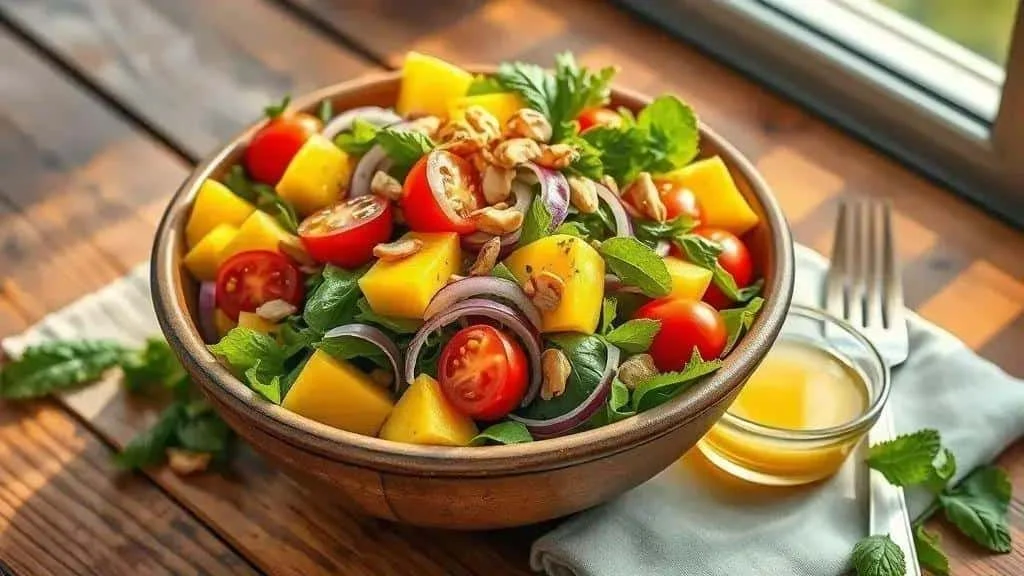
Ingredients for tropical mango salad:
- 2 medium mangoes, diced, or ½ small pineapple or 2 firm peaches for a different fruit variation.
- 200 g mixed leaves, such as lettuce and rocket.
- 100 g cherry tomatoes, halved.
- ½ red onion, very thinly sliced.
- ¼ cup chopped mint or coriander; the original 15 g estimate varies with the herb and how tightly it is packed.
- 50 g cashew nuts, lightly toasted, or walnuts or hazelnuts.
- Juice of 1 lime.
- 3 tbsp olive oil, 45 ml.
- 1 tbsp honey, 15 ml, or agave syrup for a vegan version.
- Salt and pepper to taste.
- Optional: 80 g fresh cheese or feta; use suitable vegetarian cheese if needed, or seasoned tofu for a vegan version.
Method
- Prepare the leaves: wash under running water where required and dry with a salad spinner or clean cloth, following ready-to-eat packet instructions.
- Dice the mango: cut carefully around the stone and dice the flesh into pieces that hold their shape.
- Prepare the tomatoes and onion: halve the cherry tomatoes and slice the onion very finely so it does not dominate the salad.
- Make the dressing: whisk the lime juice, oil, honey or agave, salt and pepper together with a fork.
- Toast the nuts: stir in a dry frying pan for around two to three minutes until fragrant, watching to prevent burning, then cool.
- Assemble: arrange the leaves, mango, tomatoes and onion in a serving dish.
- Dress at serving time: drizzle over the dressing just before serving to keep the leaves crisp.
- Finish: scatter over the cooled nuts, chopped herbs and optional cheese or tofu.
Variations
- With meat or seafood: add 200 g thoroughly cooked, cooled prawns or shredded chicken for a more substantial salad. Main-course portions will depend on the number of diners and other food served.
- Vegan variation: use agave instead of honey and replace any cheese with seasoned tofu or roasted cooked chickpeas, cooled before adding.
- A little heat: add one deseeded mild red chilli to the dressing, adjusting the amount to your preference.
- Different crunch: replace the nuts with pumpkin seeds or wholemeal croutons. Croutons add gluten unless made from suitable gluten-free bread.
- Creamy dressing: mix plain yoghurt with lime juice and herbs. Use a suitable plant-based yoghurt for a vegan version and keep it chilled.
Salad 2 — Quinoa and dried fruit salad: ingredients, method and variations
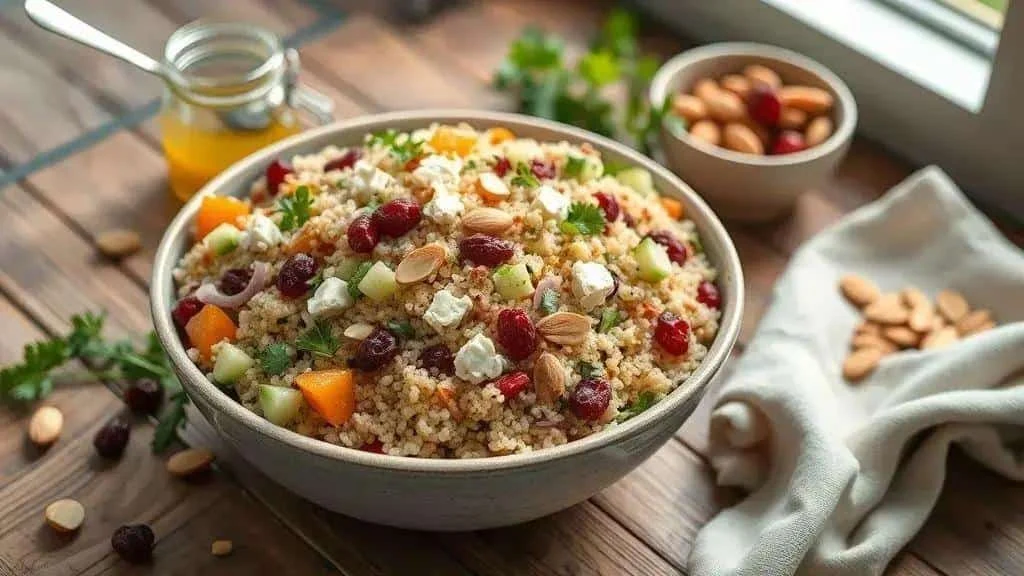
Quinoa and dried fruit salad combines cooked grains, crisp cucumber and sweet dried fruit. This detailed variation uses an optional ½ cup of the second dried fruit, compared with ¼ cup in the overview.
Quinoa and dried fruit salad — ingredients
- 170 g dry quinoa, approximately 1 cup, rinsed well; use the weight for consistency.
- 480 ml water, 2 cups, or as directed on the quinoa packet.
- 70 g dried apricots, approximately ½ cup, chopped; dates or dried figs give a different variation.
- 70 g dried cranberries or raisins, approximately ½ cup, optional. Cup weights differ between dried fruits; use the stated weight for this version.
- 1 medium cucumber, diced; a slim Japanese-style cucumber is another option.
- 40 g red onion, approximately ¼ cup, finely chopped.
- ¼ cup chopped parsley or spring onions; the original 15 g estimate depends on the ingredient and how it is packed.
- 60 g flaked or chopped almonds, or sunflower seeds.
- 100 g feta, crumbled; check for vegetarian rennet if required, or use firm tofu for a vegan version.
- 3 tbsp olive oil, 45 ml, and the juice of 1 lime.
- Salt and pepper to taste.
Method
- Rinse: put the quinoa in a fine sieve and rinse under running water, following any packet preparation instructions.
- Cook: bring the quinoa and water to the boil, then cover and simmer until tender and the water is absorbed, usually around 12–15 minutes or as directed on the packet.
- Cool promptly: fluff with a fork, spread in a shallow container and refrigerate within one to two hours. Fifteen minutes of cooling may be a start, but do not leave a large warm bowl standing out indefinitely.
- Prepare the additions: chop the dried fruit, cucumber, onion and herbs. Lightly toast the almonds in a dry pan for about two minutes, watching closely, then cool.
- Make the dressing: whisk the oil, lime juice, salt and pepper, or shake them in a securely closed jar.
- Combine: gently mix the cold quinoa, dried fruit, cucumber, onion and herbs in a large bowl.
- Add cheese and nuts: fold in the feta or tofu and cooled toasted almonds or seeds.
- Dress: add the dressing gradually, tasting and adjusting the seasoning.
- Chill before serving: refrigerate for 20–30 minutes, then keep chilled until serving. Use within 48 hours of cooking the quinoa or sooner if an ingredient’s instructions require it.
Variations
- Vegan: replace the feta with marinated tofu. Add a little agave to the dressing if you would like a sweeter flavour, checking that any marinade is vegan.
- More crunch: add pumpkin seeds or wholemeal croutons at serving time; use suitable gluten-free croutons if needed.
- Mediterranean-inspired: add sun-dried tomatoes, sliced black olives and oregano.
- With meat or seafood: add 200 g grilled chicken breast strips or 150 g grilled prawns, thoroughly cooked and cooled promptly. Adjust the number of servings if making it a main course.
- Extra citrus: grate a little washed lime zest into the dressing.
Salad 3 — Leaf, fig and goat’s cheese salad: ingredients, method and variations
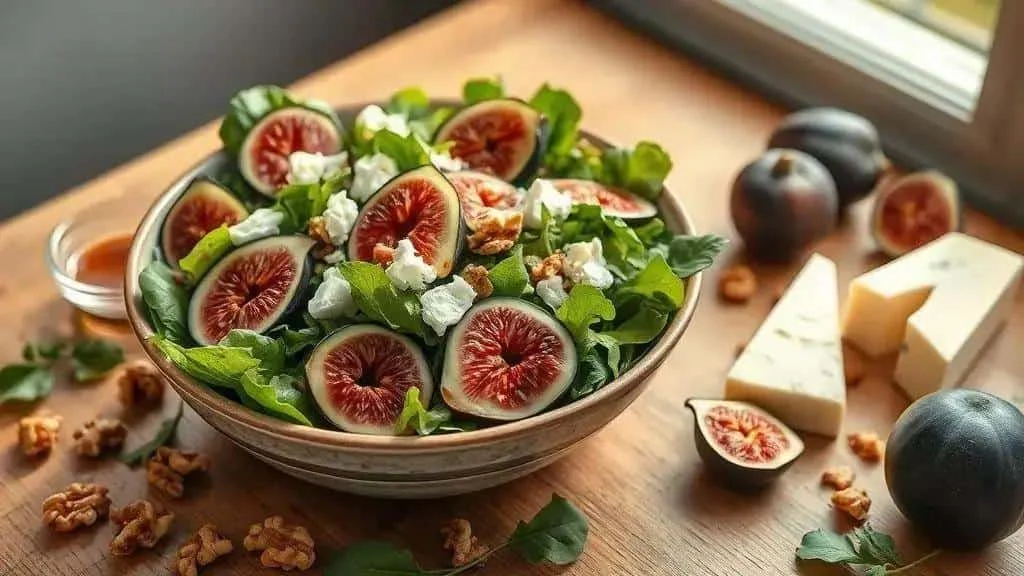
Ingredients for leaf, fig and goat’s cheese salad:
Ingredients
- 150 g mixed leaves, such as rocket and baby lettuce.
- 6 fresh figs, quartered, or 1 cup rehydrated dried figs for a different sweetness and texture.
- 100 g goat’s cheese, crumbled, or 100 g Brazilian minas frescal fresh cheese. Check rennet when serving vegetarians.
- 30 g walnuts, approximately ¼ cup, lightly toasted and broken up, or pecans.
- 2 tbsp honey, 30 ml, or agave syrup. A vegan version also needs the dairy cheese removed or replaced.
- 2 tbsp balsamic vinegar, 30 ml.
- 3 tbsp olive oil, 45 ml.
- Salt and pepper to taste.
- Optional: a handful of fresh herbs to finish. If using sprouts instead, follow their packet’s cooking and food-safety instructions; do not assume all sprouts are ready to eat raw.
Method
- Prepare the leaves: wash where required and dry thoroughly with a salad spinner or clean cloth, following ready-to-eat packet instructions.
- Toast the nuts: stir in a dry pan over a moderate heat for about two to three minutes until fragrant, then cool.
- Slice the figs: quarter or slice them carefully without crushing the flesh.
- Mix the dressing: whisk or shake together the honey or agave, balsamic vinegar, oil, salt and pepper.
- Assemble: arrange the leaves and figs in a dish and crumble the cheese over them.
- Dress just before serving: add the dressing a little at a time and toss very gently.
- Finish: add the cooled nuts and fresh herbs, then serve promptly.
Variations
- A more substantial version: add 150–200 g thoroughly cooked and cooled grilled chicken strips or suitable ready-to-eat smoked salmon. Follow the salmon’s storage instructions and dietary advice relevant to your guests.
- Vegan: replace goat’s cheese with seasoned tofu or a suitable vegan cheese, and use agave instead of honey.
- Extra texture: add pumpkin seeds or thin slices of firm pear.
- Different dressing: replace the balsamic vinegar with cider vinegar and add 1 tsp Dijon mustard for a sharper flavour; mustard is an allergen.
Salad 4 — Citrus prawn salad with a vegan option: ingredients, method and variations
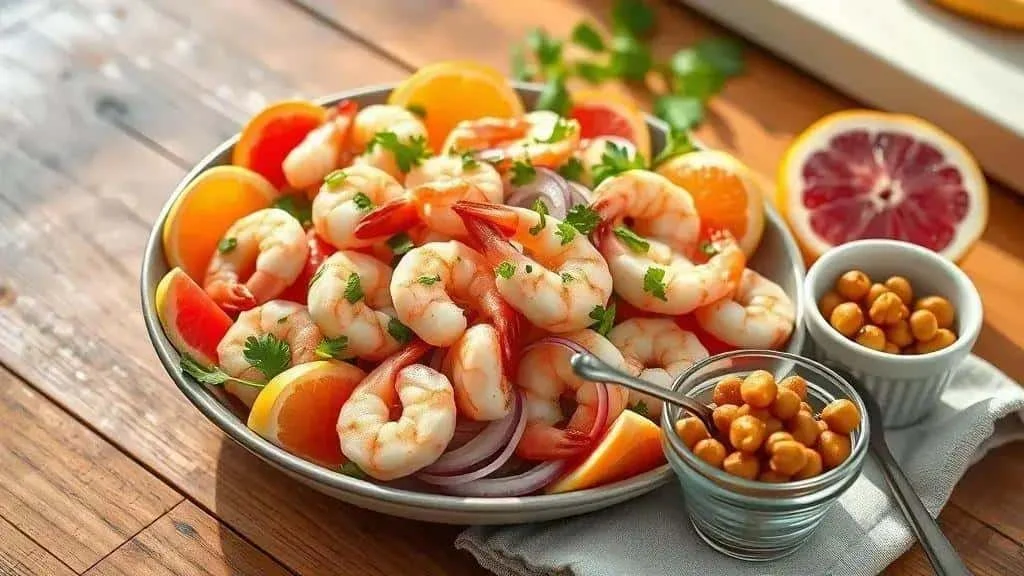
Ingredients for citrus prawn salad, approximately four servings:
Ingredients
- 400 g cooked, peeled prawns. Raw peeled prawns may be cooked first, but 400 g raw will weigh less after cooking, so do not assume the same final portion size.
- 2 medium oranges, segmented, or 2 mandarins for a smaller fruit portion.
- 1 small grapefruit, segmented, optional.
- ½ red onion, very thinly sliced.
- 1 mild red chilli, such as Brazilian dedo-de-moça, deseeded and chopped, optional.
- ¼ cup chopped coriander, or parsley; the original 15 g estimate varies with how it is chopped and packed.
- 3 tbsp olive oil, 45 ml.
- Juice of 1 lime.
- 1 tsp paprika, or cumin in the chickpea version.
- Salt and pepper to taste.
- Vegan alternative: 400 g cooked, drained chickpeas instead of prawns. Check the drained weight of tins; a 400 g tin including liquid does not contain 400 g drained chickpeas.
Method
- If using raw prawns: cook in gently boiling water according to their size and packet instructions until firm and opaque throughout. Two to three minutes is only a guide for smaller prawns, not a universal safe time. Drain and cool promptly in clean ice-cold water, then drain well and refrigerate; use separate clean utensils for the cooked prawns.
- If using cooked prawns: peel if necessary, drain and pat dry with clean kitchen paper. Follow use-by and defrosting instructions and keep chilled.
- Prepare the citrus: carefully remove the peel and membranes from the oranges and optional grapefruit. Keep any juice released if you want to add a little to the dressing.
- Slice the onion: cut it very thinly so its flavour does not overwhelm the salad.
- Make the dressing: whisk together the oil, lime juice, paprika, salt and pepper, or shake in a securely closed jar.
- Marinate briefly: coat the cooked, cold prawns in half the dressing and refrigerate for five to ten minutes. This flavours already-cooked seafood; citrus acid is not a replacement for cooking raw prawns.
- Combine: arrange the citrus, onion, optional chilli and coriander in a bowl. Add the prawns and the remaining dressing.
- Chill before serving: refrigerate for ten to fifteen minutes if desired, then keep chilled until serving. Follow the shortest applicable storage instruction for the ingredients rather than leaving the salad out to warm up.
- Vegan chickpea version: rinse and drain cooked chickpeas, then pat dry. For a lightly roasted variation, toss with some of the recipe’s oil, cumin or paprika and salt. Roast at 200°C, checking after ten to twelve minutes and continuing if needed for light colour. Cool promptly before combining with the citrus, onion, herbs and remaining dressing.
Variations
- With avocado: add one diced avocado just before serving for a creamy texture.
- More crunch: sprinkle over pumpkin seeds or lightly toasted flaked almonds at serving time.
- Smoky and spicy: use smoked paprika and add dried chilli flakes to taste.
- Mediterranean-inspired: add sliced olives and mint, and replace coriander with basil if preferred.
- Creamy dressing: stir 2 tbsp plain yoghurt into the dressing, or suitable plant-based yoghurt for the chickpea vegan version. Keep chilled.
Serving ideas, saving money and cooking with children
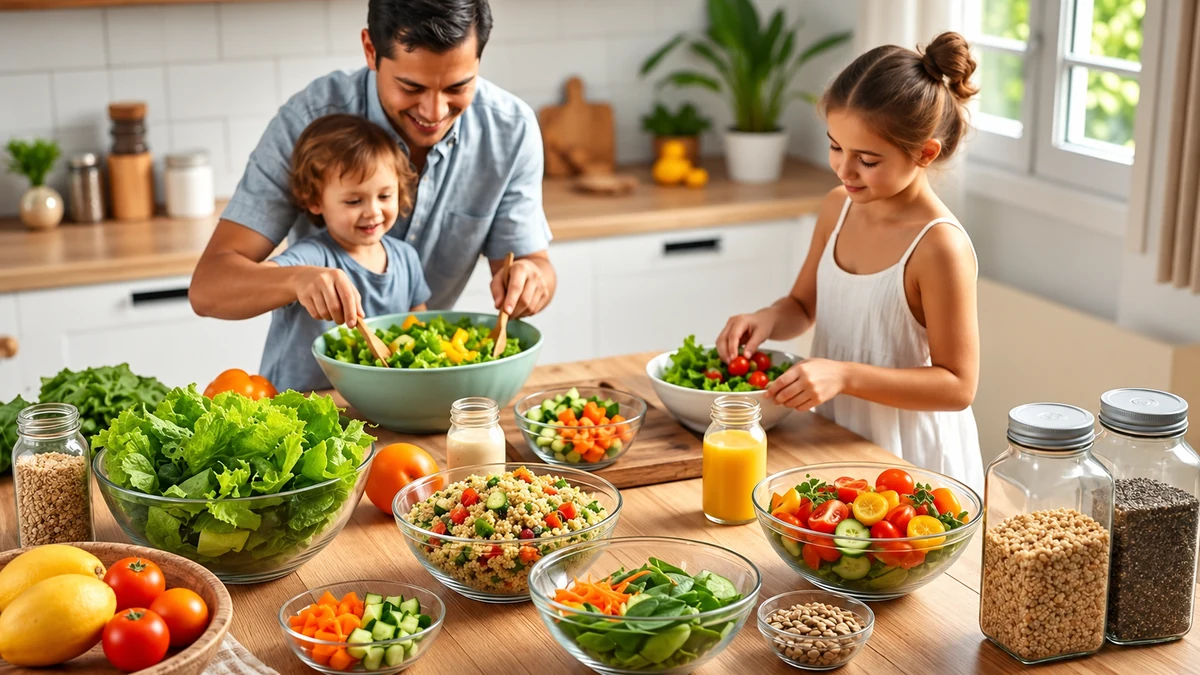
Complementary flavours, a sensible shopping plan and a few supervised tasks for children can make festive preparation more enjoyable.
Simple serving combinations
- Contrast flavours: serve a citrus salad alongside a milder leaf-and-cheese combination.
- Mix textures: combine tender leaves, cooked grains and a little crunch from seeds or nuts.
- Use shared seasonings: olive oil and lime can provide a common thread across two salads without making them identical.
- Offer refreshing drinks: water with slices of citrus or a suitable fruit drink can accompany the salads.
Saving money without losing variety
- Compare seasonal produce: choose fruit and vegetables that offer good value locally rather than assuming Brazilian summer prices or availability apply in the UK.
- Compare cheeses: a suitable local fresh cheese or ricotta can replace a more expensive imported cheese, with a different flavour and texture.
- Check unit prices: larger packs of seeds, nuts or grains may save money if you will use them before they deteriorate. Store them as directed.
- Use suitable leftovers: safely stored fruit can flavour a dressing, and promptly chilled cooked grains can go into a salad within their storage limits.
- Plan portions: adjust the estimates to the whole menu so you buy what you need.
Involving children in preparation
Simple, age-appropriate tasks let children take part under close adult supervision. No kitchen activity is entirely risk-free.
- Washing produce: supervise children gently rinsing suitable leaves and fruit and drying them with a clean cloth.
- Sorting ingredients: ask them to organise safe, prepared ingredients in bowls. Keep whole nuts away from under-fives, and have an adult cut small round foods such as cherry tomatoes into age-appropriate pieces before children eat them.
- Mixing dressing: children can shake a securely closed, unbreakable container while an adult supervises.
- Arranging portions: placing leaves in small bowls is a simple way to help.
- Finishing a platter: let them add prepared herbs or citrus zest. An adult should handle chopping nuts and any toppings that pose a choking risk.
Safety and organisation
- Choose suitable utensils: use age-appropriate tools only under direct supervision. Adults should handle sharp knives, hard ingredients and difficult cutting tasks.
- Separate work areas: keep children’s tasks away from heat, sharp blades and raw meat or seafood.
- Keep tasks short: five to ten minutes can be enough, depending on the child’s age and attention.
- Practise hygiene: wash hands before handling food and use clean utensils and surfaces.
Small activities to try
- Mini chef: invite a child to suggest a fruit combination, with an adult checking ingredients and preparing suitable pieces.
- Colour game: see whether they can arrange three different food colours in their bowl.
- Ingredient stories: talk about where an ingredient grows or how your family uses it while preparing the meal together.
Final checklist
- Choose complementary salads: for example, a leaf salad, a grain-and-fruit salad and one with chicken, prawns or chickpeas, according to your guests.
- Calculate quantities: divide the overall portion allowance between the salads you choose.
- Separate utensils and dressings: keep spare portions refrigerated and have clean serving bowls ready.
- Plan a supervised children’s task: choose something brief and appropriate to their age.
These festive salads bring a colourful Brazilian summer feel to the table. Choose combinations you enjoy, adjust portions to the occasion and try variations that suit the season where you are.
For more recipes and decorating ideas, follow our social channels and visit I Love Christmas. You are welcome to share photos of your festive table.
Tell us which salad you would choose and who you would share it with. Happy holidays!
Frequently asked questions about festive salads
Which salads suit Brazil’s summer festivities?
Citrus, fruit, crisp leaves and cooked grains make refreshing combinations, with cooked prawns, chicken or chickpeas if desired. Suitability depends on your guests and menu; all perishable salads still need to be kept chilled.
Can I prepare the salads in advance?
Yes. Prepare suitable grains, meat or seafood the day before, cool promptly and refrigerate at 0–5°C within one to two hours. Keep leaves, dressings and crunchy toppings separate and assemble near serving time. Use cooked leftovers within 48 hours or sooner if the ingredient instructions require it; rice has a shorter 24-hour refrigerated limit.
How can I adapt the recipes for vegans or other dietary needs?
Replace dairy cheese with suitable tofu or vegan cheese, prawns or chicken with cooked chickpeas, and honey with agave. Check every ingredient, including dressings and marinades. Vegan does not automatically mean gluten-free, nut-free or safe for a milk allergy; use appropriate ingredients and avoid cross-contact.
How should I keep salads fresh during a party?
Keep reserve portions refrigerated and serve small amounts in chilled dishes, using an effective ice bath or chilled serving equipment where needed. Keep dressing separate for texture, but do not treat it as a food-safety measure. Replace bowls with fresh chilled portions and minimise time out of refrigeration, especially in hot weather.
How can I estimate portions without wasting food?
As adjustable starting points, allow around 100–150 g prepared leaf salad or 120–180 g grain or pasta salad per person. Consider the whole meal, appetites and guest ages; if serving several salads, split the total allowance rather than preparing a full portion of each for everyone.
Sources and Further Reading
- Food Standards Agency: cooking and reheating
- Food Standards Agency: chilling, freezing and defrosting
- NHS: foods to avoid for babies and young children