Fresh-tasting party food can include salads, vegetable nibbles, canapés and alcohol-free drinks. These are menu ideas rather than complete recipes or a weight-management plan: choose reliable instructions and adapt the menu to your guests’ requirements.
Looking for fresh-tasting Christmas party food? Here are ideas for salads, nibbles and drinks that can add variety to a festive gathering. ‘Fresh-tasting’ describes the style, not a promise that every option is low in calories or suitable for a particular diet.
Choosing dishes for your gathering

Choose dishes for your gathering around the season, your available time and the people attending. The suggestions below are starting points; use complete recipes for quantities, preparation and storage.
Consider the time of year
Christmas falls in summer in Brazil and winter in Britain. Cold salads may suit a Brazilian outdoor gathering, while a British celebration might pair a smaller salad with warm dishes or soup. Choose around the actual weather and setting.
Ask about guests’ requirements
Discuss food preferences, allergies and dietary requirements before finalising the menu. Check ingredients and agree suitable preparation arrangements, including avoiding cross-contact where necessary. Be clear about any requirement you cannot safely meet.
Compare seasonal options
Seasonal produce can offer good choices, but it is not always the cheapest. Compare prices and consider suitable frozen ingredients too. Choose fruit and vegetables that work in your recipes rather than buying them solely for a particular claim about freshness.
Offer a manageable variety
A few different dishes can provide choice without creating excessive work. Vegetarian, vegan or gluten-free options may be useful, but none is automatically allergen-free. Plan around the guests’ actual needs.
Choose make-ahead dishes carefully
Some ingredients can be prepared ahead, while dressings and delicate toppings are better added near serving. Follow recipe storage instructions, keep perishable dishes refrigerated and allow enough fridge space before committing to a make-ahead menu.
A manageable selection and clear preparation plan can help you enjoy the gathering. There is no need to serve every idea or promise that one menu will suit everyone.
Refreshing salads for warmer days or a winter buffet

These refreshing salad ideas suit warmer-weather celebrations or can add variety to a British winter buffet. Adapt the produce to availability and your guests’ preferences.
Tropical fruit salad
Combine suitable pieces of pineapple, mango, kiwi and watermelon, with a little lime juice and mint if you like. Wash and prepare fruit safely, keep it chilled and cut portions appropriately for the ages of those eating it.
Chickpea salad
Mix properly cooked chickpeas with cherry tomatoes, cucumber, red onion and parsley. Dress with olive oil and lemon to taste. Use a complete recipe for proportions and keep the finished salad refrigerated until serving.
Caprese salad
Combine buffalo mozzarella, ripe tomatoes and basil, finishing with olive oil and optional balsamic vinegar. Check the cheese and other ingredients for guests’ dietary requirements and keep it chilled until needed.
Quinoa salad
Cook quinoa according to the packet, cool it safely and combine with cooked vegetables such as courgettes and peppers. Olive oil, lemon and herbs can provide a dressing. Use suitable storage arrangements if preparing ahead.
Cabbage and carrot salad
Shredded cabbage and carrot can be combined with green apple and a yoghurt dressing. Choose proportions from a reliable recipe, check dairy requirements and refrigerate until serving.
These refreshing salads offer different colours and textures. They need not all appear on the same menu; select the options that complement the rest of the meal.
Practical savoury nibbles

A few practical savoury nibbles can suit a relaxed get-together. Check ingredients and safe serving arrangements, particularly for young children or guests with dietary requirements.
Vegetables with a dip
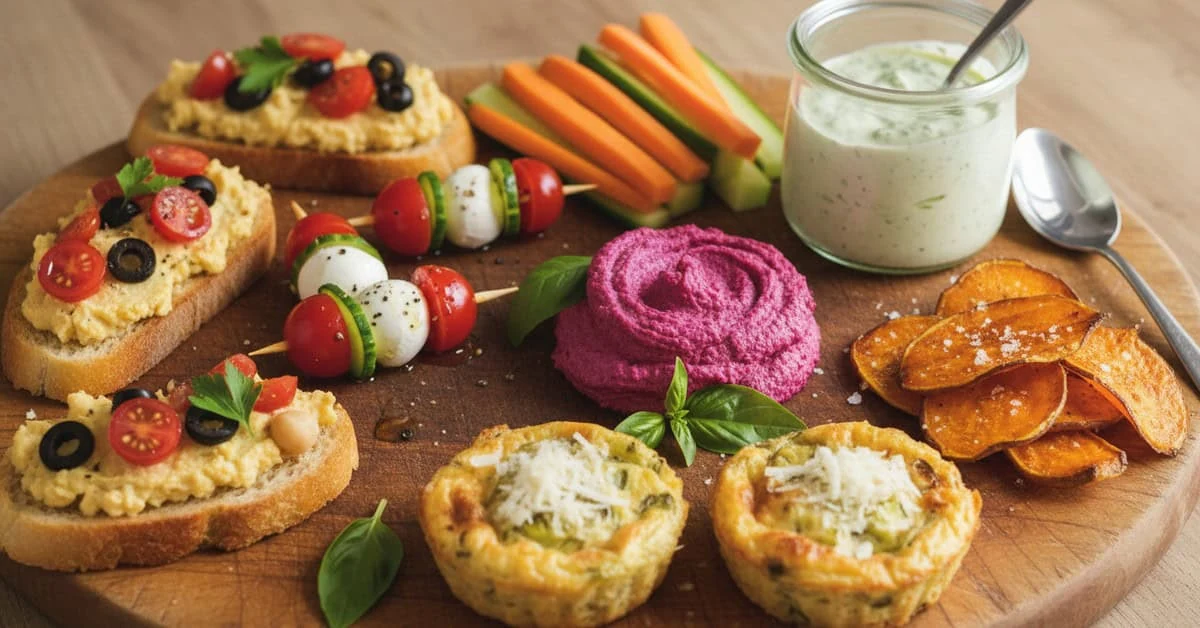
Serve suitable carrot, cucumber and pepper pieces with a yoghurt-and-herb dip. Adapt the shape and texture for young children, and choose another dip where dairy is unsuitable. Keep the dip refrigerated until serving.
Tomato and basil bruschetta
Top toasted bread with chopped tomatoes, basil and olive oil, seasoning to taste. Assemble near serving so the toast stays crisp, and provide a suitable alternative where wheat is a concern.
Cheese and cold meats
A small selection of suitable cheese, salami or cooked ham can be served with fruit such as figs or grapes. Check ingredients and keep perishable food chilled until needed. Prepare fruit and cheese appropriately for children rather than serving whole grapes or firm chunks to young children.
Mini quiches
Use a complete recipe for mini quiches with fillings such as spinach, cheese or mushrooms. Cook thoroughly and follow safe cooling, refrigeration and reheating instructions if preparing ahead; room-temperature serving does not mean they can remain out indefinitely.
Toast with savoury spreads
Offer toast with suitable spreads, such as tuna pâté or an olive spread. Use reliable recipes, check fish and other allergens and keep chilled toppings refrigerated until close to serving.
Choose practical nibbles that fit your kitchen and the length of the gathering. Put out smaller portions of perishable food as needed rather than filling the table long before guests arrive.
Canapé ideas for the table
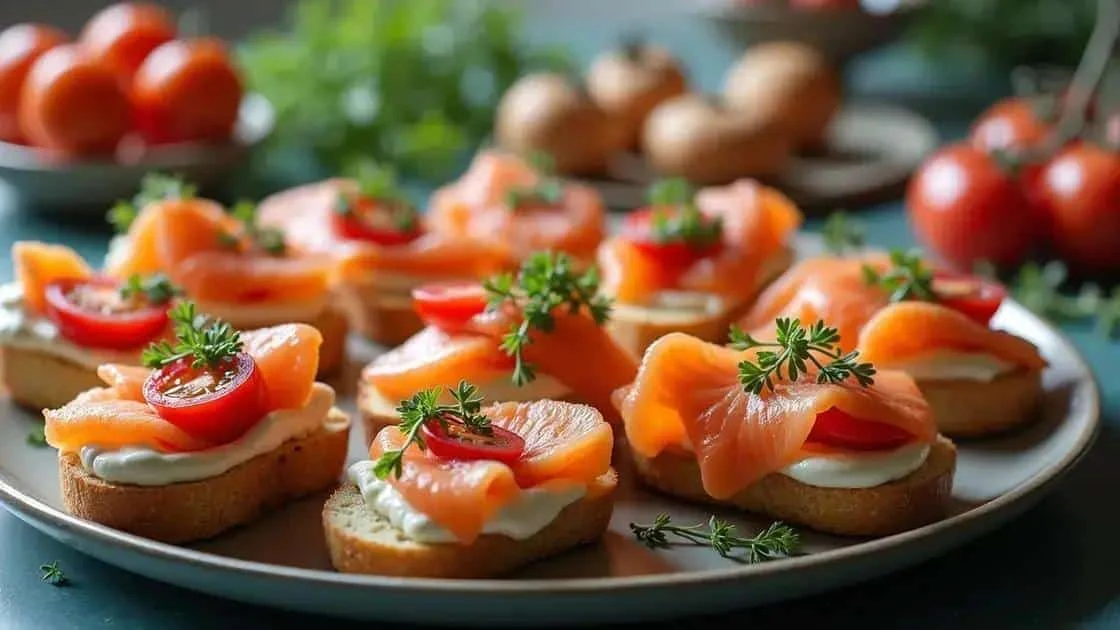
Canapés can offer small portions with varied flavours. A simple presentation is enough; the following ideas still need ingredient checks and suitable preparation.
Salmon canapés
Toast or blinis can hold salmon, cream cheese and dill. Ready-to-eat cold-smoked salmon needs particular care: people who are pregnant or have a weakened immune system should avoid it unless cooked until steaming hot, and older people should be aware of the risk. A properly cooked salmon alternative may be more suitable. Keep ingredients chilled and check fish, dairy, wheat and egg allergens.
Caprese bites
Combine cherry tomatoes, mozzarella and basil with a little olive oil and optional balsamic vinegar. For young children, avoid sharp skewers and whole cherry tomatoes; adapt pieces and textures appropriately. Check dairy requirements.
Goat’s cheese and fig canapés
Top a suitable cracker with goat’s cheese and fig, adding optional honey or balsamic glaze. Check cheese suitability and ingredients for your guests. Do not give honey to babies under one year.
Bruschetta canapés
Spoon a tomato, basil and garlic mixture onto small pieces of toasted bread. Adjust garlic to taste, assemble near serving and provide a suitable base where needed.
Olive spread canapés
Spread a thin layer of suitable olive pâté on chicory leaves or toast. Check the recipe: some olive spreads contain fish or other ingredients that may not suit a vegetarian or allergy-aware menu.
These flavourful canapés can be presented simply on a clear, stable platter. Keep ingredient information available and separate suitable alternatives where agreed with guests.
Creative alcohol-free drinks

Alcohol-free drinks can add variety alongside plain water. Fruit juice, coconut milk and sweeteners still contribute sugar or energy, so ‘refreshing’ does not automatically mean low-calorie.
Fruit-infused water
Add washed, suitably prepared fruit and herbs to a clean jug of drinking water. Lemon with mint or strawberry with basil are possible combinations. Keep refrigerated while infusing and prepare fresh rather than leaving it out for hours.
Watermelon and ginger drink
Blend prepared watermelon with a small amount of ginger, adjusting to taste. Strain if preferred and serve chilled. Make a manageable amount and refrigerate it promptly until serving.
Iced hibiscus tea
Prepare a food-grade hibiscus tea according to the packet, cool safely and refrigerate. Add lemon or an optional sweetener if suitable. Herbal drinks do not suit everyone, so offer other choices and do not make health claims about the tea.
Alcohol-free fruit spritzer
Combine pineapple and orange juice with sparkling water, adjusting the proportions to taste. Add suitable fruit as an optional garnish, and keep prepared ingredients chilled. Clearly separate it from any alcoholic drinks.
Coconut and pineapple drink
Blend suitable coconut milk with prepared pineapple for an alcohol-free tropical drink. Follow a recipe for the proportions and check ingredients and dietary requirements. Serve chilled, with optional mint.
These alcohol-free drinks provide different flavours without requiring anyone to drink alcohol. Keep water readily available and respect guests’ preferences.
Simple presentation tips

A few simple presentation tips can help dishes look inviting. Practical serving, suitable portions and food safety matter more than an elaborate arrangement.
Use suitable serving dishes
White plates can highlight colours, while patterned dishes may suit your own style. Use clean tableware appropriate for hot or cold food and avoid buying a new set just for presentation.
Combine colours and textures
Different vegetables, fruit and accompaniments can provide visual variety. Keep dietary requirements in mind when adding crunchy toppings or sauces, and avoid garnishes that obscure important ingredient information.
Add suitable fresh herbs
Basil, coriander or parsley can finish a dish if they suit its flavour. Wash herbs properly and use edible ingredients rather than unidentified decorative leaves.
Try simple layers
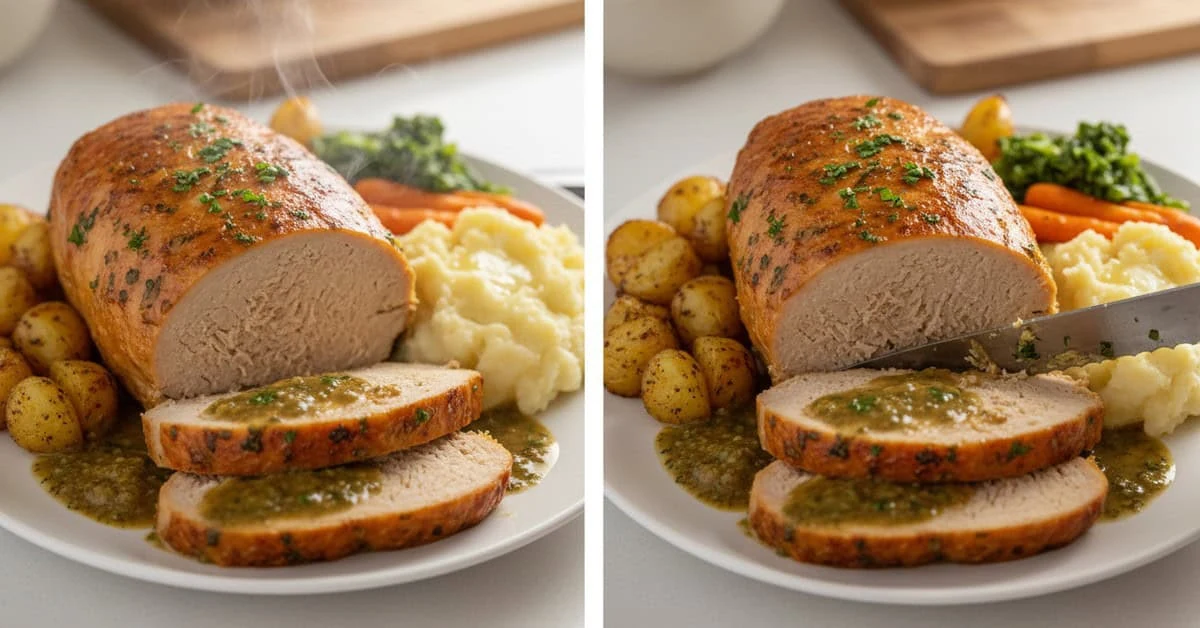
A reliable recipe may layer mash, meat and vegetables for a different presentation. Keep preparation manageable and do not delay serving or compromise cooking and storage for a decorative effect.
Finish with a sauce
Add a suitable sauce shortly before serving, using clean utensils. A small spoonful is enough if you want a decorative finish; there is no need for restaurant-style brushwork or special equipment.
These presentation ideas can be adapted to what you already own. Leave enough room for people to serve themselves comfortably and find any suitable alternatives.
A gathering with variety and consideration
A menu of fresh-tasting party food can include salads, nibbles and alcohol-free drinks without becoming a restrictive diet plan. Choose reliable recipes and options that fit your guests and setting.
Presentation can be enjoyable, but it is not as important as safe preparation, suitable ingredients and a comfortable gathering. Simple plates, clear information and manageable portions are enough.
Select a few ideas you would like to try, keep costs and preparation realistic and leave time to spend with the people attending.
FAQ: fresh-tasting party food and drinks
Salads, suitable vegetable nibbles, bruschetta or fruit can add variety. These are menu ideas, not a promise of low calories or suitability for a particular diet.
How can I improve presentation simply?
Use clean, suitable tableware, combine colours and add an edible garnish if appropriate. Keep serving practical and avoid buying specialist equipment unnecessarily.
Which alcohol-free drinks could I offer?
Plain or fruit-infused water, a fruit spritzer or a suitable chilled tea are possibilities. Check ingredients and remember that alcohol-free does not necessarily mean low in sugar.
How important is presentation?
It can make food look inviting, but safe preparation, flavour and suitable choices matter more. A simple serving arrangement is perfectly acceptable.
How can I adapt food for dietary requirements?
Discuss requirements in advance, check every ingredient and agree how to avoid cross-contact where needed. Vegan or gluten-free labels do not mean a dish is allergen-free.
How can I help guests find something suitable?
Agree a manageable selection, provide clear ingredient information and explain any preparation limits. Offer suitable alternatives rather than assuming variety alone meets everyone’s needs.