Reducing waste at Christmas starts with buying only what you need and reusing what you already have. Craft projects can give materials another use, while recycling depends on their condition and what your local service accepts.
Christmas recycling and reuse can bring creativity to familiar festive traditions. Small, practical changes are a useful place to start, especially when they avoid buying new supplies just to make something from old ones.
Decoration ideas using materials you already have
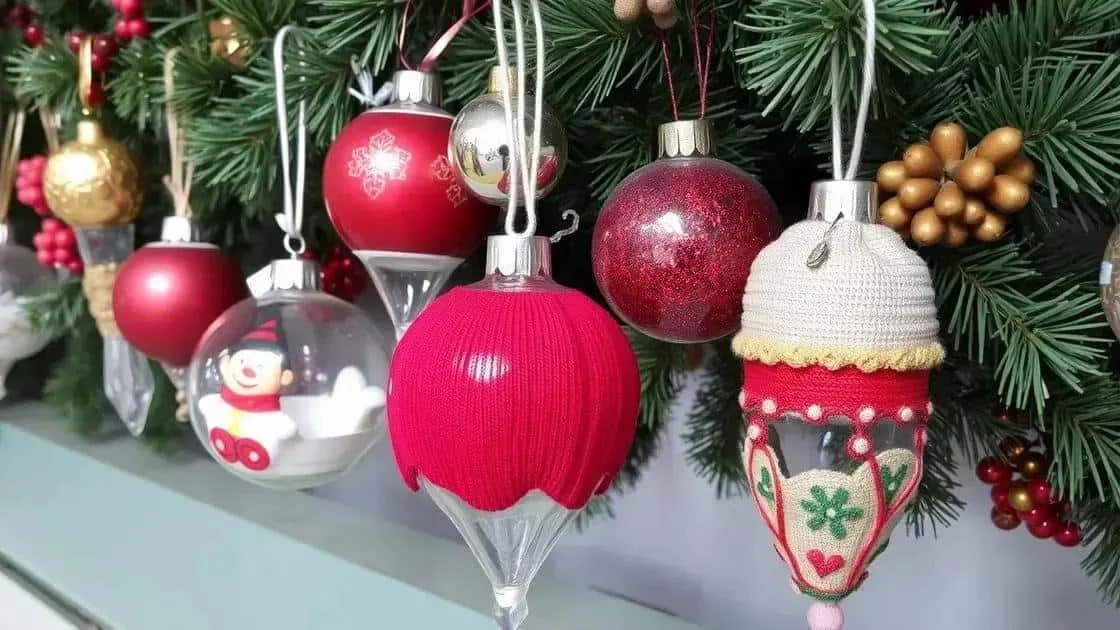
Decorating for Christmas need not mean replacing everything each year. These lower-waste decoration ideas start with clean materials you already own and can use again.
Reusing plastic bottles carefully
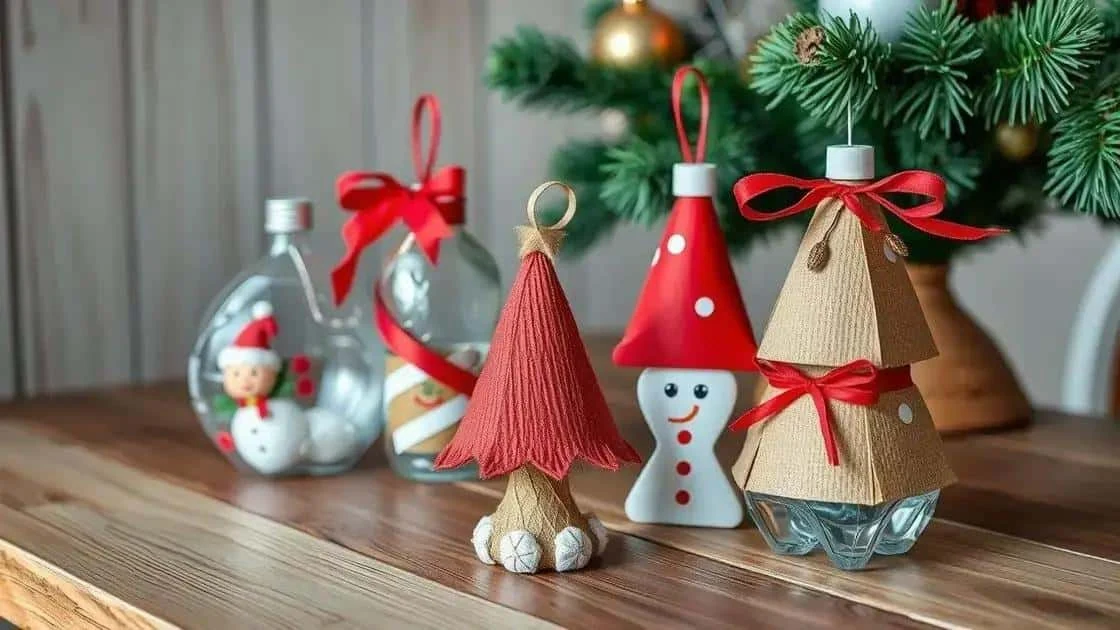
An intact, clean plastic bottle can form the body of a small decorative figure with a removable paper cover. Avoid cutting bottles with children, as cut plastic can have sharp edges. Keep the materials separate where possible so the bottle can later be recycled if your local collection accepts it.
Paper ornaments
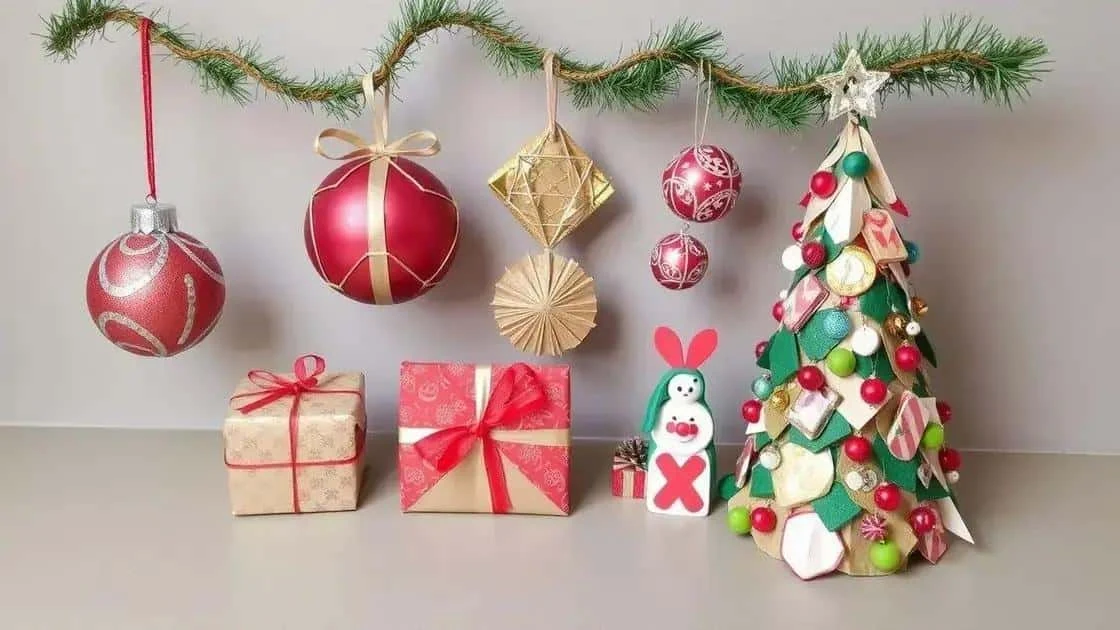
Use clean scrap paper or old magazine pages for paper chains, stars or snowflakes. This is reuse rather than recycling at home. Avoid glitter, foil and plastic coatings, and make decorations that can be stored for another year.
Cardboard decoration bases
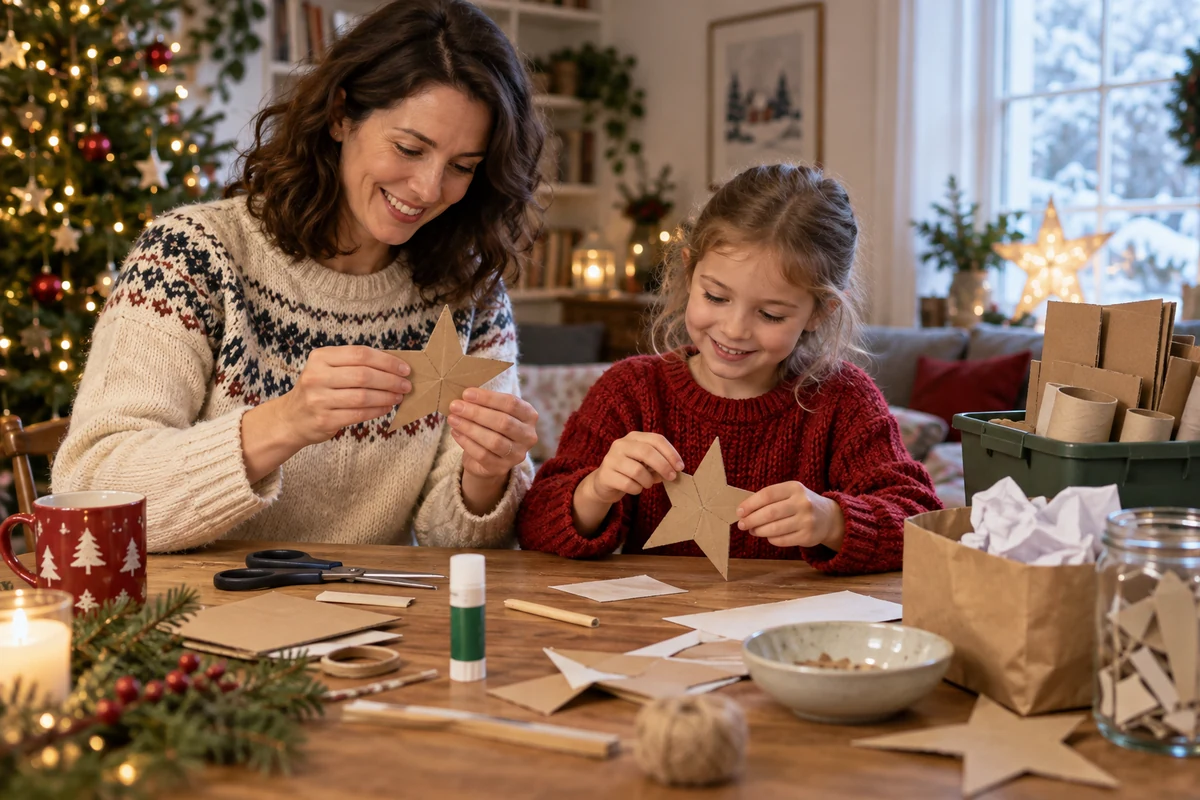
A clean cardboard box can become the base of a small Christmas tree or a freestanding festive shape. Keep the design simple and stable, using as little added material as possible so it is easier to dismantle later.
Giving worn textiles another use
Fabric from clothes that are no longer wearable can become gift bags, soft decorations or reusable wrapping. Donate usable clothes where appropriate before cutting them up. Wash the fabric and let adults handle needles and sharp scissors.
Simple natural decorations
Fallen pine cones, dry twigs or suitable garden clippings can be arranged without metallic spray or glitter. Gather only where permitted, dry materials naturally and keep them away from flames, children and pets as appropriate. Natural materials are not automatically harmless or impact-free.
Small Christmas gifts from reused materials
Small Christmas gifts can show care without requiring elaborate packaging. Choose clean, sound materials that suit the recipient and the intended use:
Reusing glass jars
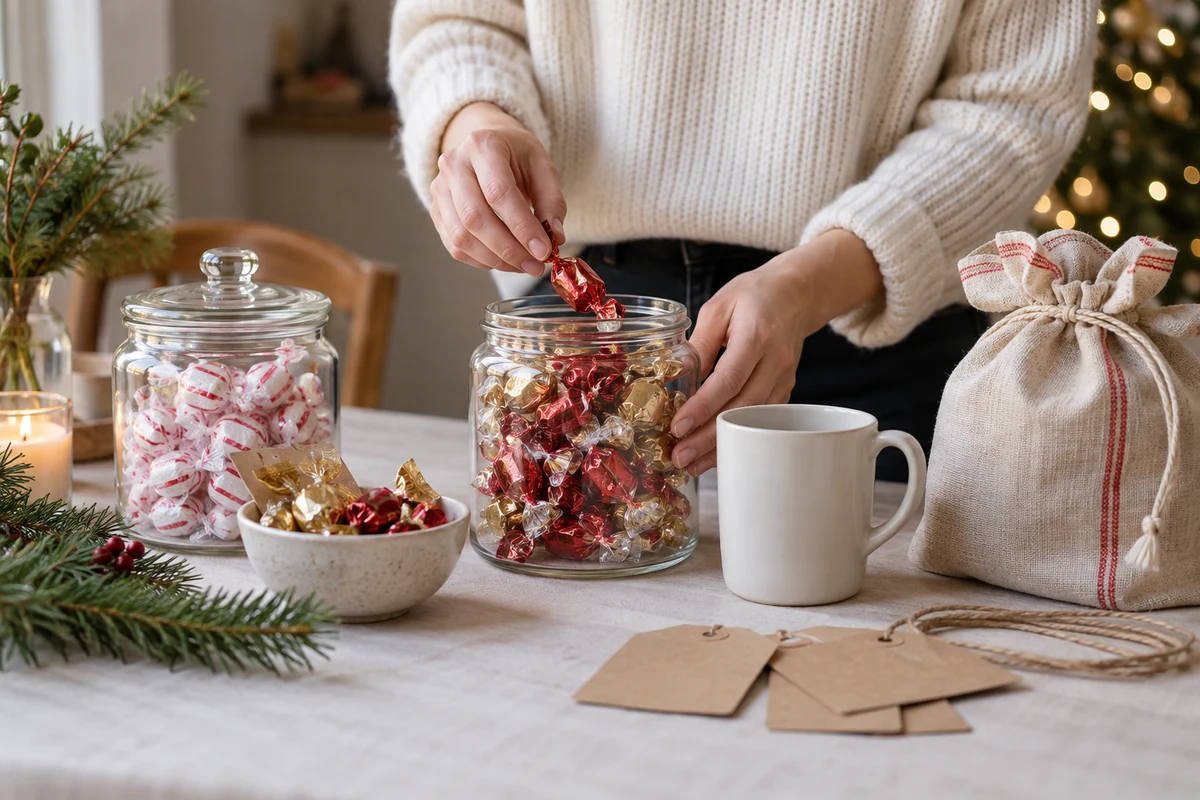
An undamaged, clean and thoroughly dried food jar can hold wrapped sweets or dry baking ingredients. Include the ingredient list, allergens, preparation instructions and relevant dates. This is gift packaging, not a method for preserving fresh food or making it shelf-stable.
Mugs and cups
A sound, clean mug you no longer use could hold wrapped treats or a small gift. Avoid painting surfaces that touch food or lips unless the product is specifically suitable and used according to its instructions. Do not give chipped cups for drinking.
Small cartons as gift boxes
A clean, dry drinks carton can become an outer gift box, with an adult handling cutting and covering any sharp edges. Put only separately packaged items inside; do not place loose food against a decorated or reused surface.
Fabric sachets
Clean fabric scraps can be sewn into a small sachet containing dried lavender or another suitable filling. Check the recipient’s preferences and sensitivities, label the contents and keep sachets away from children and pets. They are not toys or food.
Handmade cards
Use plain card or paper you already own for a personal Christmas message. Simple drawings and a thoughtful note can be enough, without glitter or layers of mixed materials that complicate recycling.
Handmade gift ideas with reused materials
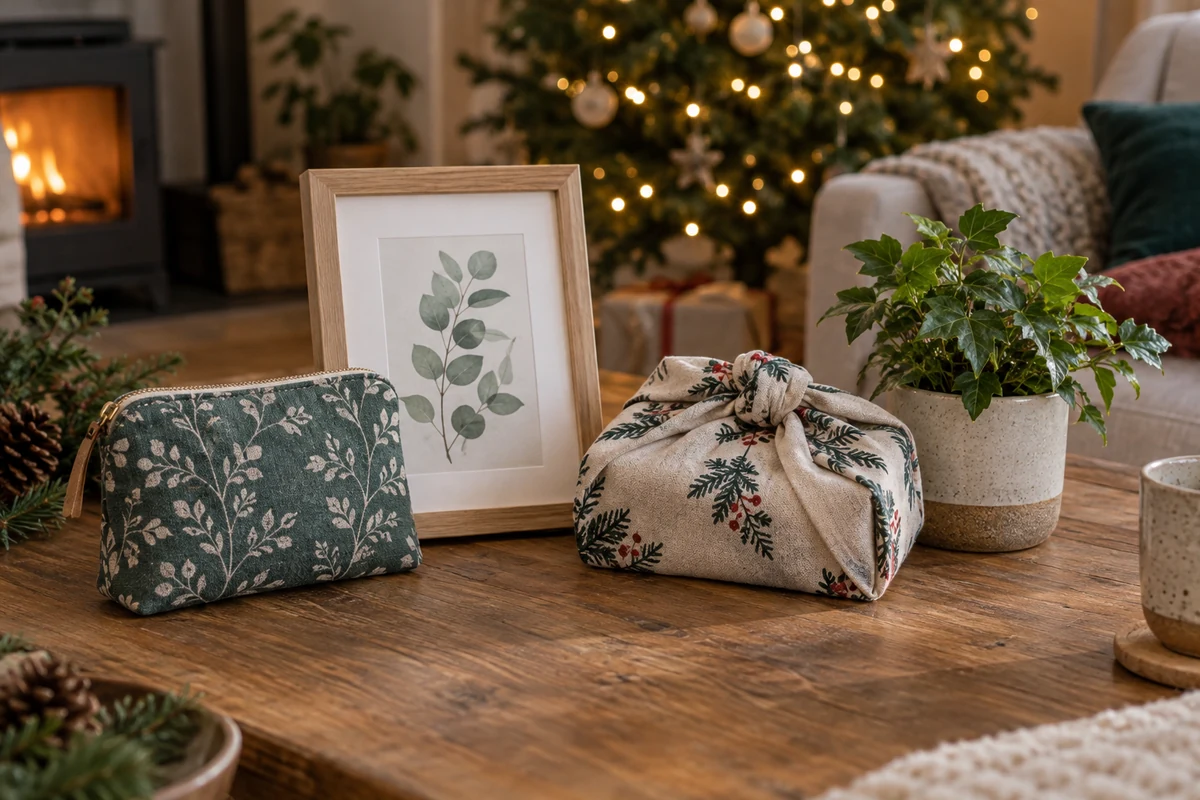
These handmade gift ideas focus on giving useful materials another life. Match the project to your skills and to something the recipient will actually want:
A soap pouch rather than remelting soap
Sew a washable pouch for a new, labelled bar of soap using suitable fabric you already have. Avoid melting together used soap scraps or adding unidentified fragrances for someone else: a homemade product is not automatically suitable for their skin.
Tiny message boxes
Use a small, clean craft box for folded notes or kind messages. A matchbox-style design can be charming, but do not include matches or use packaging with a striker when making a gift for a child.
Reused plant containers
An existing container can serve as a decorative outer pot around a proper plant pot. Check that it is stable and has no sharp edges, and remove the inner pot for watering so it does not sit in excess water. Choose a plant suited to the recipient’s home.
Cardboard photo frames
Cut sturdy cardboard into a simple frame and decorate it with paper scraps or a small amount of paint. Add a stand or a secure hanging loop, and use a photograph you have permission to share.
Small accessories from fabric scraps
Fabric scraps or suitable buttons can be used for an adult’s brooch, bag decoration or other accessory. Check that parts are securely attached. Do not give necklaces, loose beads or small detachable pieces to babies or very young children.
Why reuse and recycling matter at Christmas
Reusing and recycling during the festivities can help reduce unnecessary waste. The benefit depends on the choices you make, rather than on labelling every handmade item sustainable:
Reducing what is thrown away
Keeping decorations in use and separating accepted recyclable packaging can reduce rubbish. Check local guidance before putting mixed or decorated materials in the recycling bin; adding glue, paint or glitter may change what can be accepted.
Managing the budget
Using existing decorations can save money compared with replacing them. Handmade gifts may also help, but check the cost of extra supplies first: a craft project is not always the cheaper option.
Making room for creativity
Combining paper, fabric and other suitable materials can produce personal decorations. Choose a manageable project and involve the family in tasks that suit their age and skills.
Learning about materials
Sorting packaging together can lead to useful conversations about buying less, repairing, reusing and recycling. Look up uncertain items rather than assuming that a recycling symbol means your council collects them.
Sharing within the community
A decoration swap or a collection of items a local charity actually needs can bring people together. Agree what is accepted before donating, so unwanted or damaged objects do not simply become someone else’s waste.
Illustrative ideas for a lower-waste Christmas

The following Christmas examples are hypothetical ideas to adapt, not reports of verified families or community projects:
A family decoration afternoon
A family could make reusable cardboard stars and paper chains from supplies already at home. The project offers a chance to discuss why keeping decorations for next year may be more useful than making a large number of disposable ones.
A community meal using suitable surplus food
A group might work with an established local food organisation to use suitable surplus ingredients in a shared meal. This needs agreement about food safety, allergens, storage and use-by dates; donated food should not be used simply because it is available.
A handmade gift exchange
A family could agree to exchange a few useful handmade or second-hand gifts. Set expectations first so people have time, skills and materials to take part without feeling obliged to spend more on craft supplies.
A living Christmas tree
Where a local nursery offers it, renting a living tree may be an option. Follow the supplier’s care and return instructions, and remember that transport and the tree’s survival affect the outcome. A living tree is not a guarantee of an impact-free Christmas.
Thoughtful donations
A household could sort out good-quality clothes or toys and ask a local organisation what it currently needs. Clean, complete and appropriate donations are more helpful than passing on items without checking.
Making a lower-waste Christmas practical
Reusing what you have, avoiding unnecessary purchases and recycling correctly can make Christmas preparations more considered. You do not need a perfect system to make a useful change.
The examples here show possible approaches rather than proven environmental results. Choose the ideas that fit your household, whether that is keeping decorations, sharing resources or making a small number of useful gifts.
Start with one manageable project and plan what happens to the materials afterwards. A decoration worth keeping for several years can be more satisfying than something made only to be thrown away.
Christmas recycling and reuse: frequently asked questions
Where should I start?
Check decorations and wrapping you already own before buying anything. Set aside reusable items, and look up your council’s guidance for the packaging you expect to have.
What materials can I use for decorations?
Clean paper, cardboard and suitable fabric scraps are useful starting points. Avoid sharp edges, loose small parts for young children and unnecessary coatings that make materials harder to separate.
Can reusing materials save money at Christmas?
It can, especially when it replaces buying new decorations. Include any tools and extra materials in your budget before assuming a handmade project will cost less.
How can I teach children about recycling at Christmas?
Let them help sort suitable materials or make simple paper decorations under supervision. Explain the difference between using something again and sending it for recycling.
What are the benefits of a lower-waste Christmas?
Buying less and keeping items in use can reduce waste and the need for replacements. The effect of any individual project depends on its materials, how long it lasts and how it is disposed of.
How can I involve the community?
Consider a decoration swap or a collection arranged with a local charity. Confirm what is needed and accepted, and work with an experienced organiser for any shared food event.
Sources and Further Reading
- Wrapping paper recycling — Recycle Now
- Recycling at Christmas — Recycle Now
- Christmas trees — Royal Horticultural Society