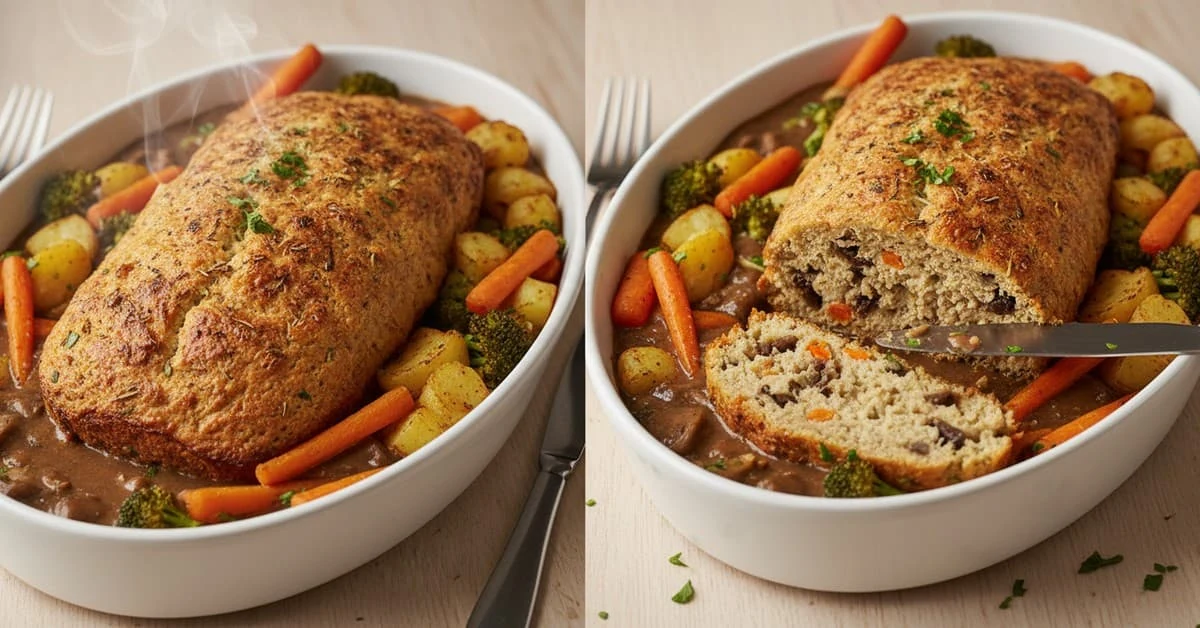
A lower-carb Christmas dinner can include roast mains, vegetable sides and carefully chosen desserts. These are menu ideas, not nutritionally analysed recipes or a prescribed diet: ingredients, quantities and portions determine the carbohydrate content.
If you are planning a lower-carb Christmas dinner, there are ways to keep familiar festive flavours while offering a different balance of dishes. You do not need to change the whole family’s meal, and reducing carbohydrates does not automatically make every dish healthier.
Planning a lower-carb Christmas meal

Planning a lower-carb Christmas dinner starts with your guests’ needs and preferences. Keep favourite dishes where they work, offer a choice of sides and avoid treating one approach to eating as the right answer for everyone.
Options might include roast meat, grilled vegetables and fresh salads. Low-carb eating is not suitable for everyone and is not recommended for children. Anyone with diabetes should discuss significant carbohydrate changes with their healthcare team, especially when using insulin or medicines that can cause low blood sugar.
Family time around the table
Preparing a meal together can be a pleasant family activity without making everyone follow the same diet. Offer food that suits different appetites and requirements, and keep the focus on enjoying the occasion rather than judging anyone’s plate.
Menu ideas to consider
Try herb-roasted turkey, a leafy salad with avocado and walnuts, and small portions of dessert. A chocolate mousse may fit some menus, but its carbohydrate content depends on the chocolate, sweetener, recipe and serving size.
Adapting familiar dishes
Changing a side dish or offering an alternative can introduce variety without replacing every tradition. Keep carbohydrate-containing options available for guests who want or need them, and choose adaptations because they work for the meal rather than promising health benefits.
Main courses and sides for different tastes
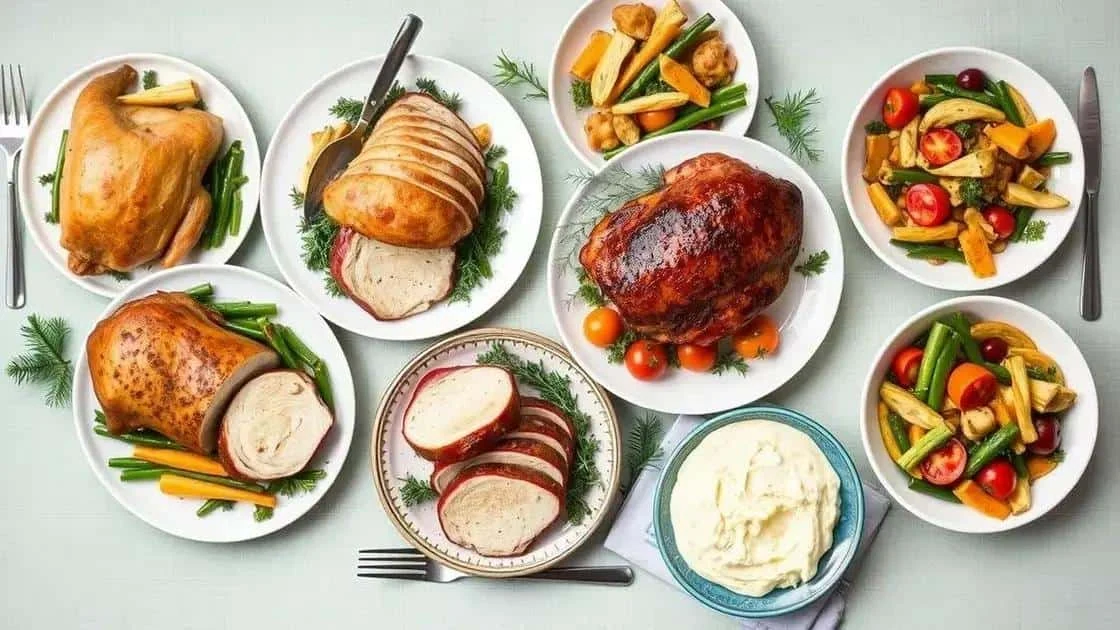
The main courses should provide enough choice for the group. These meat dishes and accompaniments are starting points for a menu, with a suitable vegetarian main added if needed.
Roast turkey with herbs is a familiar Christmas option. Follow a complete recipe and the bird’s cooking instructions. Cauliflower mash can replace some or all of a potato side, although additions such as cream and butter also affect the finished dish’s nutritional profile.
Other meat options
Consider roast pork loin with a mustard and herb sauce, checking the sauce ingredients. Chicken served with spinach and cheese is another idea; cooking the accompaniment separately is simpler than giving instructions for an untested stuffed bird.
Vegetable accompaniments
A green salad with olive oil and lemon offers a fresh contrast to a roast. Grilled courgettes and steamed broccoli add colour and variety without needing a complicated sauce.
Olives and nuts can be served in small portions if suitable for your guests. Check allergies, and do not give whole nuts to children under five. Make sure younger children have food prepared in an age-appropriate shape and texture.
Starter ideas

Starters need not be elaborate. A few small dishes can give guests something to enjoy while leaving room for the main meal.
Try avocado-topped bites using slices of cucumber rather than bread. Add mashed avocado and chopped tomato shortly before serving. These are cucumber bites inspired by a bruschetta topping, rather than traditional bruschetta.
Warm starters
Meatballs with a mustard dip are another possibility. Use a complete recipe, check whether it contains breadcrumbs or other carbohydrate ingredients, and cook minced meat thoroughly; a browned outside alone does not confirm that the centre is cooked.
Vegetarian choices
Grilled vegetable skewers can combine peppers, onions, courgettes and mushrooms. Cook them until tender, and remove food from sharp skewers before serving it to young children.
A cheese board with olives and vegetables offers another choice. Check that cheeses are suitable for vegetarian guests. If you include ham or salami, serve it separately rather than presenting a charcuterie board as vegetarian.
Keep portions manageable and ask about allergies or dietary requirements beforehand. Starters should make the meal easier to share, not leave guests guessing what they can eat.

Lower-carb desserts require a little more care than simply replacing sugar. Look at the full recipe and portion size: they may still contain substantial carbohydrate, fat or energy.
Dark chocolate mousse is one option to explore. Choose a complete recipe with measured quantities and check the chocolate’s label, since a high cocoa percentage does not mean it is sugar-free. Keep a cream-based mousse refrigerated until serving.
A layered pavê-style dessert
A lower-carb pavê-style dessert could use layers of an appropriate almond biscuit and vanilla cream. Pavê is a Brazilian layered dessert; this is an adaptation idea, not a tested recipe. Almond biscuits, coconut milk and sweeteners vary, so check their ingredients and quantities.
An adapted cheesecake
A cheesecake can be made with a ground-almond base and a cream-cheese filling, using a suitable recipe. Do not assume that replacing the biscuit base makes it carbohydrate-free, and clearly identify nuts and dairy for guests with allergies.
Other possibilities include berry jelly and an adapted lemon tart. Check the recipe, labels and portion sizes rather than treating a ‘low-carb’ name as a nutritional guarantee.
Practical tips for organising dinner
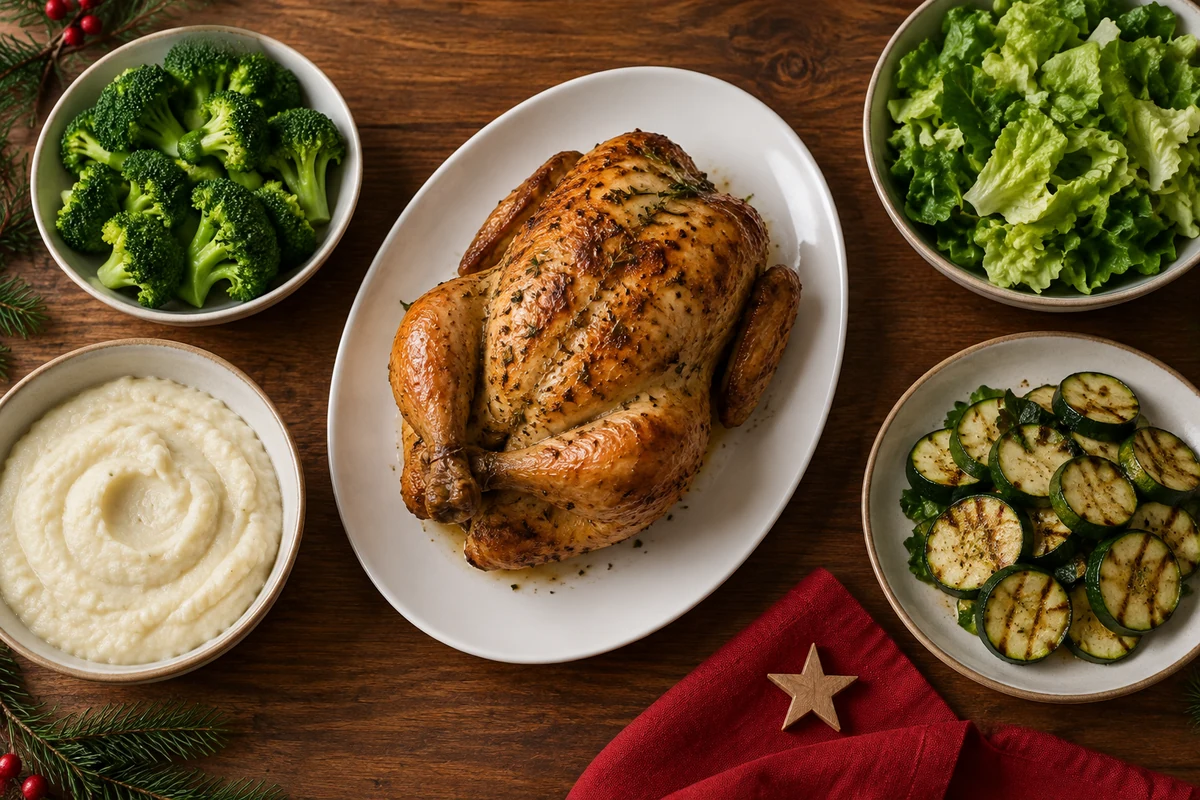
A little preparation can make Christmas cooking feel more manageable. Work out what needs to be cooked, chilled or finished at the last minute before you start shopping.
Make a list of the dishes you want to serve and the ingredients each needs. Check what is already in the cupboard, and plan realistic portions to reduce unnecessary buying.
Share the tasks
Invite relatives or friends to take responsibility for a dish, drinks or setting the table. Agree the plan in advance, including how any food brought from another home will be transported and stored.
Prepare suitable dishes ahead
Some components of salads and desserts can be prepared ahead and refrigerated, following the recipe’s storage instructions. Leave delicate leaves and dressings separate when practical, and make sure there is enough fridge space for everything.
Set a simple table
Use crockery you already own and add a few festive touches. Battery-operated LED candles and a small arrangement can create a welcoming setting without an open flame close to napkins or decorations.
Write a cooking timetable that includes oven space, resting time and safe storage. Cool leftovers and refrigerate them within one to two hours, then eat them within 48 hours or freeze them. Reheat only once, until steaming hot throughout.
Involving the family in preparing the meal
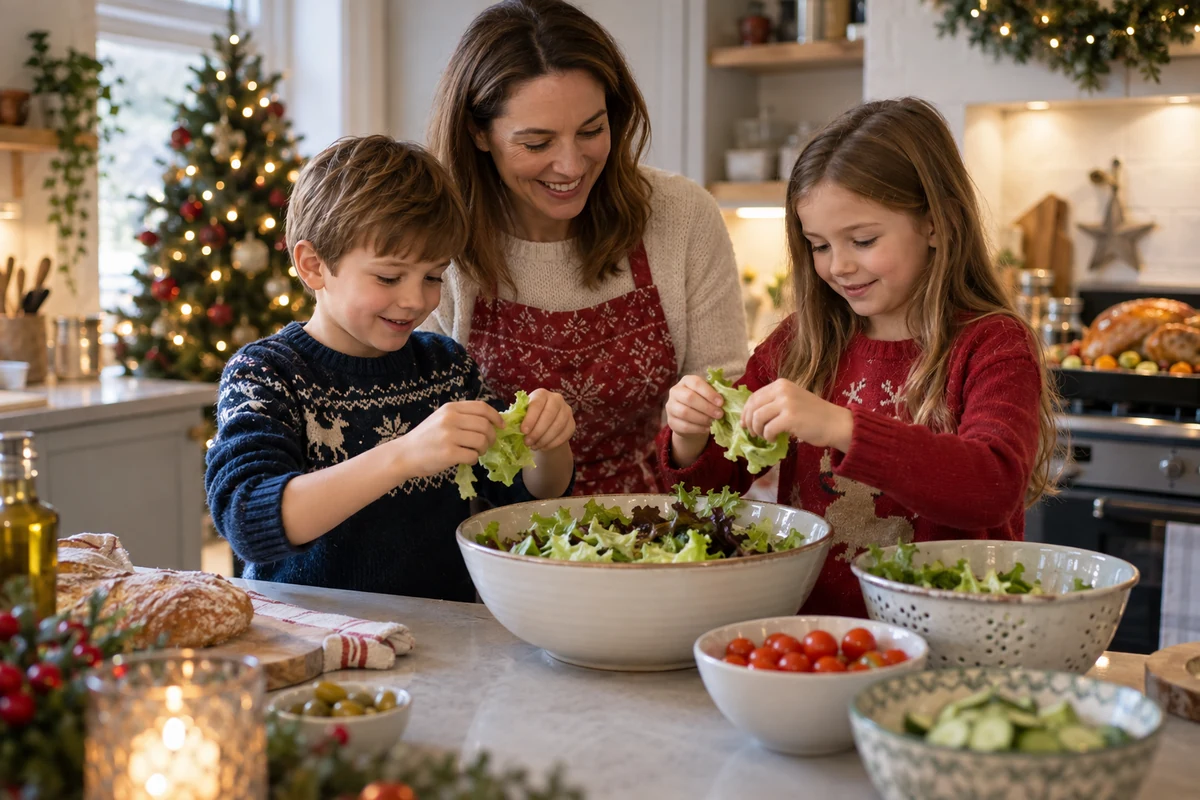
Inviting the family to help can make preparations more sociable. Choose tasks that suit each person’s age, ability and interest.
Give each person a clear task. Children might wash suitable vegetables or help set the table under supervision, while adults handle knives, hot trays and raw meat. Keep raw ingredients and ready-to-eat food separate.
A calm, shared kitchen
Put on some Christmas music if everyone enjoys it and leave enough clear work space. Sharing the jobs works best when nobody feels rushed and the people cooking can communicate easily.
Cook family favourites together
Choose a few family favourite recipes and ask people what they would like to contribute. Familiar dishes can sit alongside new ideas, with stories about earlier Christmas meals becoming part of the preparation.
Take time to enjoy the meal
When the food is ready, make time to sit down together. People may enjoy talking about what they made, but keep comments about diets and portion sizes out of the conversation unless someone wants to discuss their own needs.
Cooking together can create shared memories without requiring a perfect menu. A welcoming atmosphere matters just as much as what is on the table.
A lower-carb Christmas meal can be one option within a varied family celebration. Use these suggestions as menu ideas, choose complete recipes and check that the food suits the people you are cooking for.
Sharing the preparation can make the day easier. Offer choices from starters through to dessert, and give equal attention to dietary requirements, food safety and enjoyment.
Plan a meal you can manage, make room for different preferences and enjoy spending time with the people around your table.
Lower-carb Christmas dinner: frequently asked questions
Is a lower-carb Christmas dinner automatically healthier?
No. The overall ingredients, portions and individual dietary needs matter. Reducing carbohydrates is not appropriate for everyone, and people with diabetes should discuss significant changes with their healthcare team.
How can the family help prepare dinner?
Agree tasks in advance, choose recipes people enjoy and give children suitable supervised jobs. Adults should handle raw meat, sharp knives and hot equipment.
What dishes could I include?
Roast mains, vegetable sides, leafy salads and cucumber bites are possible options. Check sauces, coatings and dessert recipes rather than assuming the whole menu is low in carbohydrate.
Can I prepare everything the day before?
Not necessarily. Some desserts and components can be made ahead, but others are better finished on the day. Follow each recipe’s storage guidance and make sure you have enough fridge space.
How can I decorate the table simply?
Use your usual crockery with a few seasonal details, such as a small arrangement and battery-operated LED candles. Leave room for serving dishes.
What desserts could suit a lower-carb menu?
An adapted mousse, cheesecake or layered pavê-style dessert may work, depending on the recipe and serving size. These suggestions are not nutritionally analysed recipes; check ingredients, allergens and carbohydrate content.
Sources and Further Reading
- Low-carb meal plans — Diabetes UK
- Foods to avoid giving babies and young children — NHS
- Reduce food waste and stay safe this Christmas — Food Standards Agency