Christmas ideas for pets work best when they suit the animal’s normal routine and preferences. Choose appropriate toys and food, keep decorations out of reach and provide a quiet retreat. Pets do not need costumes, rich meals or busy parties to feel included.
When choosing Christmas ideas for pets, start with what your companion already enjoys. A familiar walk, a short play session or a comfortable place beside you may mean more than a festive accessory. The ideas here focus mainly on dogs and cats; other species have different needs.
Christmas decorations in a home with pets
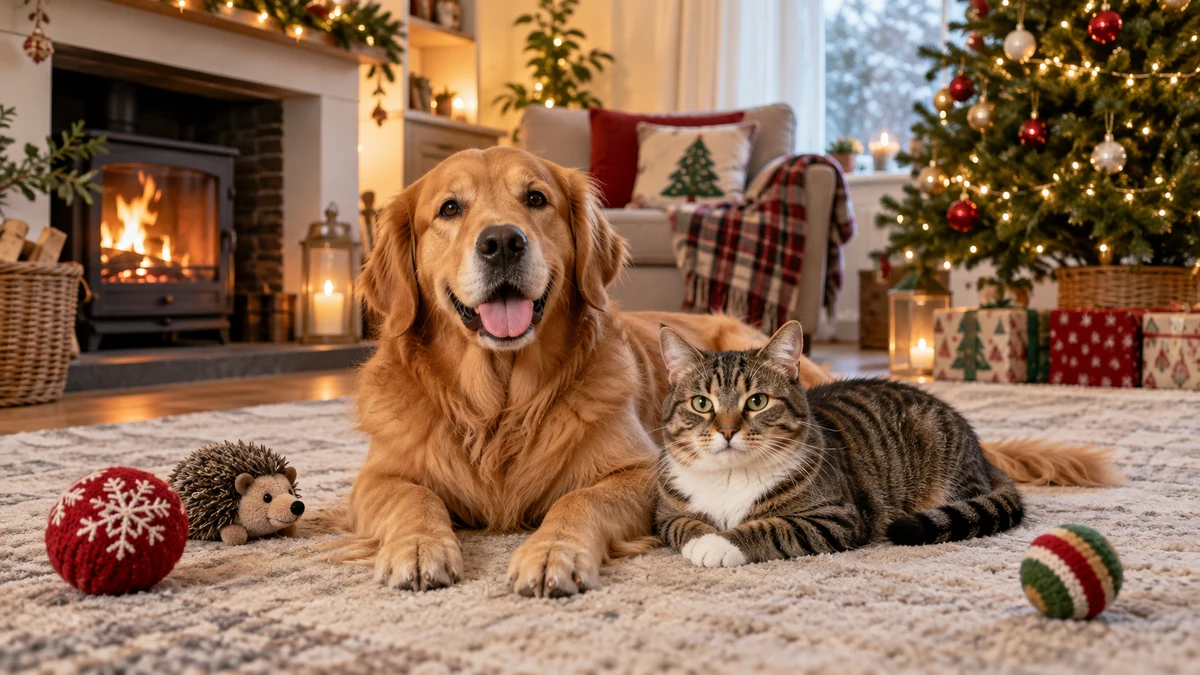
Planning Christmas decorations around pets means looking at what an animal could chew, swallow, knock over or become tangled in. No decoration is safe simply because it is labelled natural, so check the whole arrangement:
Check materials and plants
Avoid accessible tinsel, ribbons, small ornaments and toxic plants. Natural materials can still cause harm, and a non-toxic item may still cause choking or an obstruction if swallowed. Ask your vet about any plant or material you cannot identify confidently.
Position decorations carefully
Keep fragile ornaments and hanging cords out of reach. Remember that cats climb, and a high shelf is not automatically inaccessible. Remove anything your pet persistently tries to investigate or chew.
Secure the Christmas tree
Use a stable stand and secure the tree appropriately. Prevent access to needles and the water in a real tree’s stand. Avoid edible decorations and small detachable pieces, and do not leave an inquisitive pet unsupervised with the tree.
Lights and cables
Use suitable lights in good condition and protect cables from chewing. LED lights can still present electrical and ingestion hazards. Keep battery packs and loose batteries inaccessible, and switch lights off when they are unattended.
Provide an appealing alternative
Offer a familiar pet toy away from the decorations and reward calm behaviour. A festive-looking toy must still suit the animal’s size and chewing habits; an ordinary Christmas ornament is not a pet toy.
Choosing suitable Christmas toys
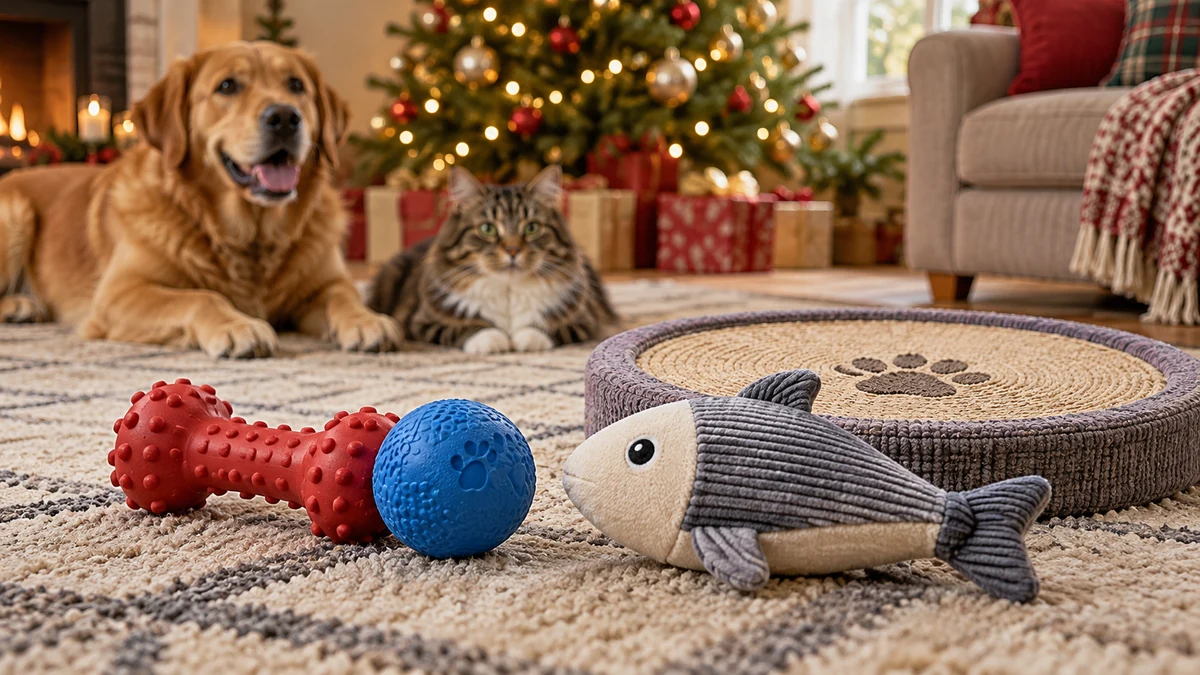
When selecting Christmas toys for pets, consider their species, age, size and usual style of play. The colour or seasonal design matters less than whether the toy is appropriate for that particular animal.
Soft toys
A soft snowman or reindeer designed for pets may suit a gentle player. Check seams and detachable parts, and remove the toy if it starts to break apart. A determined chewer may need a different type of toy.
Interactive toys
Puzzle feeders and interactive toys can offer an interesting activity. Start with an easy setting, supervise use and count any food inside towards the day’s allowance. Put the toy away if it causes frustration or is being chewed apart.
Sniffing games
A supervised sniffing game using a little of your dog’s usual food can be more useful than a strongly scented novelty toy. Do not add essential oils or household fragrances to toys or bedding.
Simple homemade activities
A clean cardboard box may provide supervised exploration for an animal that does not eat cardboard. Remove tape, staples and handles first. Avoid homemade string, ribbon or fraying rope toys that could be swallowed, especially by cats.
A suitable play area
Make space away from food, decorations and visiting children. Supervision helps you notice problems but cannot make an unsuitable toy safe. Stop if your pet becomes tired, worried or overexcited, and inspect toys after use.
Choosing Christmas treats for pets
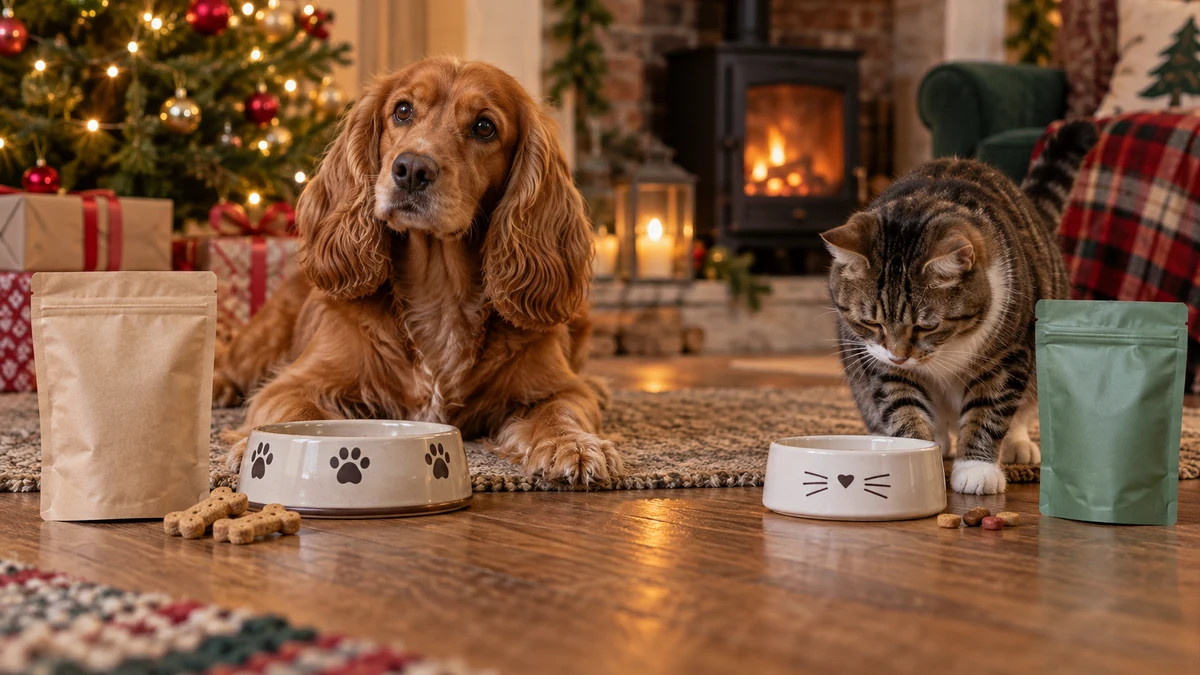
Christmas treats for pets should fit their usual diet, not replace a balanced meal. These are food-selection ideas rather than veterinary-approved recipes. If your pet has a medical condition, food sensitivity or prescribed diet, ask your vet before introducing anything new.
Pumpkin treats
If pumpkin already suits your dog’s diet, choose a suitable dog treat with clear feeding instructions rather than assuming a large homemade batch is healthy. Plain pumpkin and sweetened or spiced pie filling are different products. Any extra should be a small part of the day’s food allowance.
Peanut butter treats
For dogs that can have it, peanut butter must be free from xylitol, which is highly toxic to dogs. Check the label every time and use only a small amount because it is high in fat. A peanut butter recipe for dogs is not a recipe for every species of pet.
Dairy-based treats
Yoghurt is not suitable for every animal, and sweetened products may contain unsuitable ingredients. There is no need to add honey or make frozen dairy treats for Christmas. A familiar, appropriately portioned pet treat is a simpler option when you are unsure.
Fruit and vegetable snacks
Ask your vet which foods and portions suit your pet before experimenting. Do not confuse an occasional appropriate snack with a nutritionally balanced diet, and avoid treating recipes containing several new ingredients as universally safe.
Keep presentation simple
Serve pet food in the usual clean bowl, without foliage, ribbons or small ornaments around it. Keep chocolate, grapes and raisins, mince pies, alcohol, cooked bones and food containing onions or garlic away from pets. If you suspect poisoning or ingestion of a dangerous object, contact a vet promptly rather than waiting for symptoms.
Thoughtful personalised gifts for pets
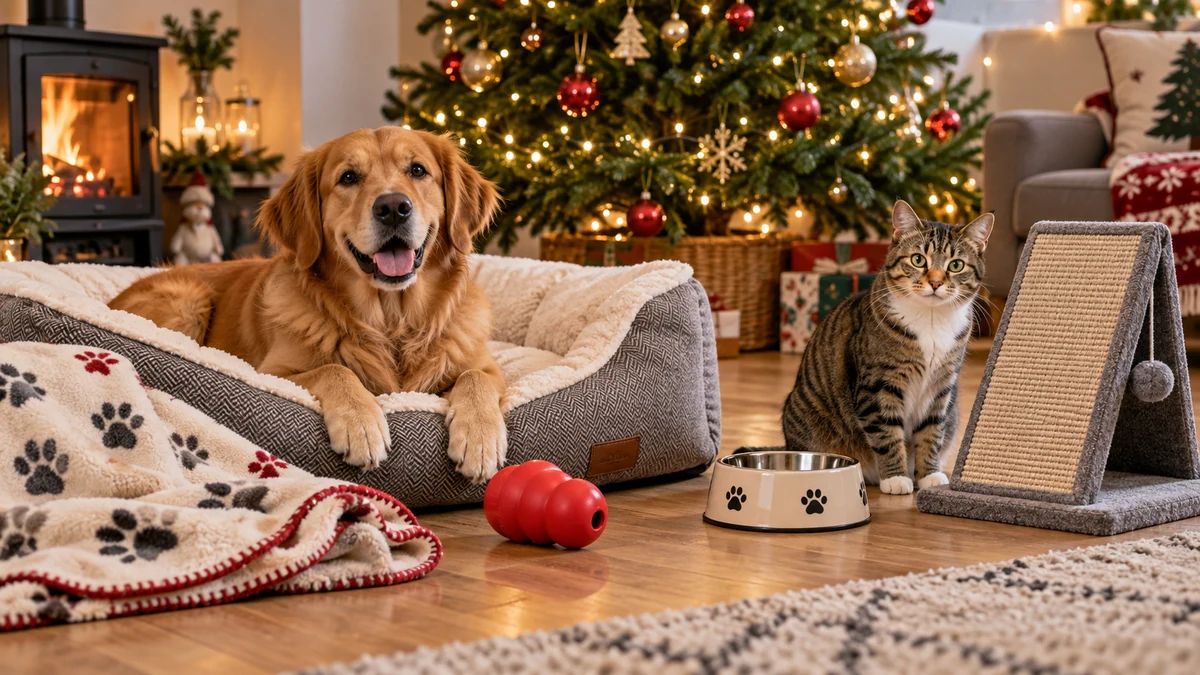
Personalised pet gifts can be useful as well as attractive. Prioritise fit, comfort and the way your animal actually lives rather than choosing an item only for its appearance:
Suitable identification
An identification tag with up-to-date contact information may be a practical choice. Use a correctly fitted collar suited to the species, and avoid dangling decorative additions. Personalisation should not compromise comfort or safety.
A comfortable carrier
Choose a carrier for its secure construction, ventilation, size and suitability for the journey. A name label is secondary. Introduce a new carrier gradually rather than expecting your pet to enjoy a surprise trip on a busy day.
A dedicated towel
A washable towel for muddy paws or after a necessary bath can be useful. Embroidery or a label should not leave loose threads for a pet to chew, and the animal does not need to wear the towel as a costume.
A favourite kind of toy
A toy chosen for the animal’s preferences is more meaningful than a name printed on an unsuitable object. Check that any personalisation is secure and does not add small parts, sharp edges or materials likely to come loose.
Comfort rather than a spa day
Some animals find grooming stressful, so do not assume a salon visit or massage is a treat. Keep necessary grooming familiar and gentle, and seek a qualified professional’s advice where appropriate. A comfortable new bed may be a better gift for a pet that enjoys quiet time.
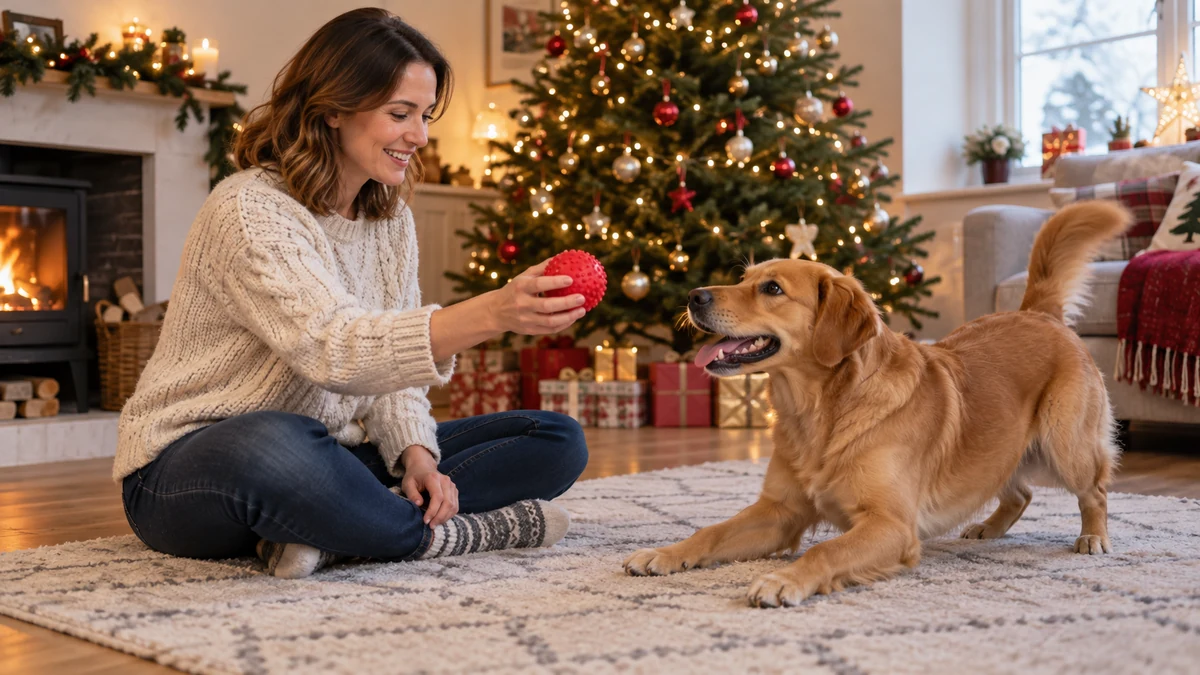
Shared Christmas activities should follow your pet’s interest and energy level. Short, familiar games and undisturbed rest are often better than a noisy programme of entertainment:
A simple treasure hunt
For a dog that enjoys sniffing, hide a few pieces of its usual food in easy, accessible places while you supervise. Keep the game away from household hazards and stop before it becomes frustrating. Avoid creating competition between animals around food.
Exploring a cardboard box
Offer a clean, open box with no tape, staples or loose packing, if your pet enjoys exploring and does not eat it. Let the animal approach voluntarily and remove the box if it begins swallowing pieces.
Familiar games together
Choose a gentle version of a game your pet already knows, using an appropriate toy and enough space. Adapt it to age and mobility. There is no need for vigorous jumping, repeated high-speed turns or a new challenge simply because it is Christmas.
A quiet training moment
If your pet enjoys familiar cues, practise one briefly with positive rewards. Avoid turning it into a performance for a crowd: applause, close attention and repeated handling may be uncomfortable for the animal.
Time to rest
Provide a quiet retreat with water and familiar bedding, and ask guests to leave the pet alone there. Let the animal choose whether to sit nearby. Hugs, costumes and photographs should not be forced on a pet that is trying to move away.
A Christmas that suits your pet
A comfortable Christmas depends more on routine, appropriate food and a calm environment than on the number of presents. Plan around the animal’s usual needs and keep potential hazards out of reach.
Introduce new toys or arrangements gradually and watch how your pet responds. Make sure guests understand feeding rules, door security and the importance of the quiet retreat.
Sometimes the most welcome celebration is an ordinary walk or a peaceful evening beside you. Let your pet’s behaviour guide the amount of activity and attention.
FAQ: Christmas ideas for pets
How can I include my pet in Christmas?
Offer familiar play, an appropriate sniffing activity or quiet time together, while keeping normal routines. Provide somewhere peaceful to retreat and let your pet choose whether to join you.
What Christmas treats can I give my pet?
A small portion of a familiar treat suitable for the species is often the simplest choice. Check with your vet before adding new foods if your pet has dietary or medical needs; homemade does not automatically mean healthy or safe.
Can I put up Christmas decorations if I have pets?
Yes, with careful placement and supervision. Secure the tree and keep cables, batteries, tinsel, ribbons, fragile ornaments and unsuitable plants inaccessible. Natural or non-toxic materials may still be dangerous if swallowed.
Which personalised gifts are useful for pets?
A suitable identification tag, comfortable carrier, washable towel or appropriate toy can be useful. Fit and construction matter more than the name or festive design.
Do not assume human festive food is suitable. Rich dishes and ingredients such as chocolate, raisins, onions, garlic, alcohol and xylitol can be dangerous. Keep to the pet’s normal diet and ask your vet about any proposed extras.
How can I tell whether my pet is comfortable?
Notice changes from normal behaviour, including hiding, avoidance, restlessness or reluctance to interact. Reduce noise and attention, allow an undisturbed retreat and seek veterinary advice if you are concerned.