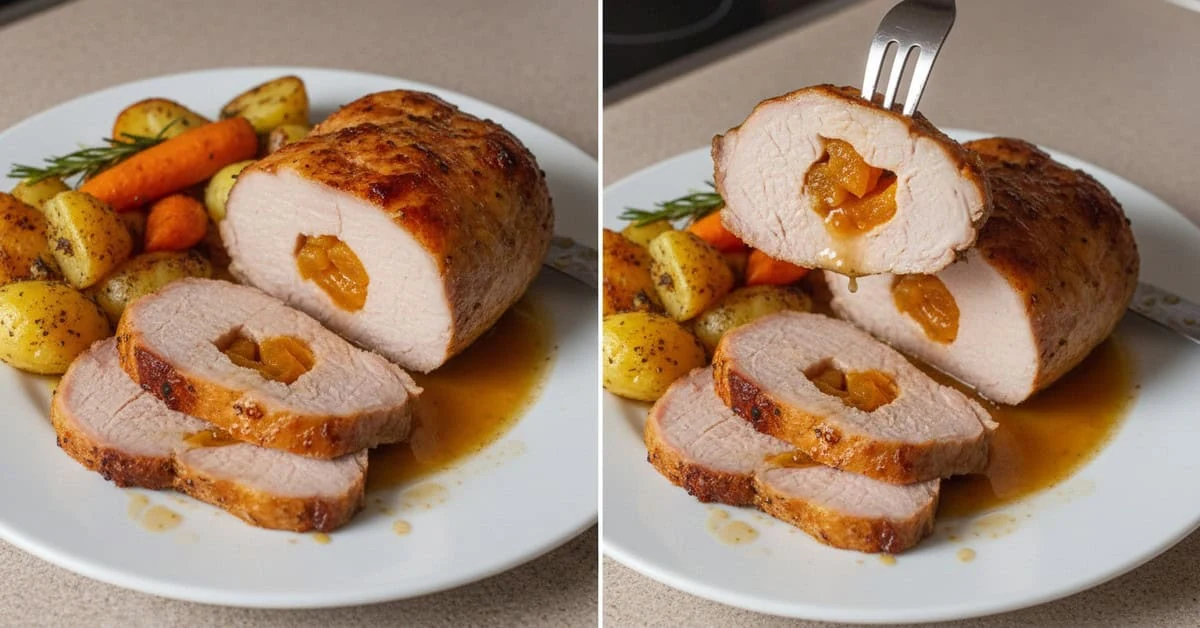
Roast pork loin with apricot stuffing makes a festive centrepiece, with a fruit filling and a honey and mustard glaze. This guide covers ingredients, preparation, roasting, serving and leftovers. The recipe has been reviewed editorially but has not been kitchen-tested; use the cooking checks as well as the suggested timing.
This roast pork loin with apricot stuffing combines savoury pork with dried fruit and herbs. Below you will find the main recipe, optional variations and a preparation plan. Choose any variation before shopping so that you do not accidentally add several different marinades or glazes to the same joint.
Ingredients for roast pork loin with apricot stuffing
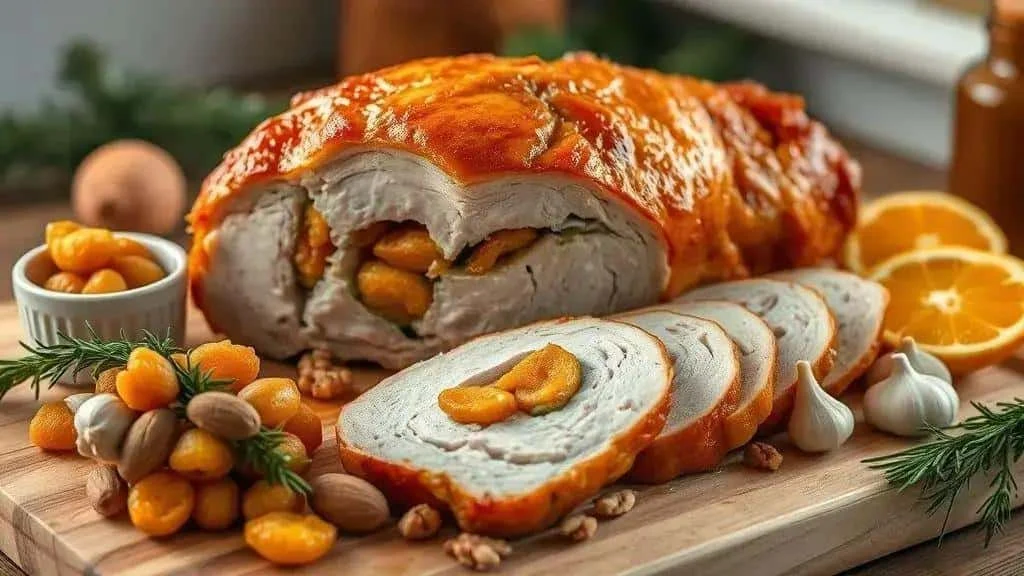
- 1 boneless pork loin joint, 1.5–2 kg — ask your butcher to butterfly it for rolling if you prefer.
- 200 g dried apricots — soften in warm water, drain and chop; stoned dates or prunes are alternatives.
- 100 g sliced streaky bacon, optional — for wrapping the joint; prosciutto is an alternative, not an additional layer.
- 3 garlic cloves — finely chopped; alternatively use 1 teaspoon garlic powder.
- 1 medium onion — finely chopped.
- 3 tablespoons Dijon mustard — 2 for the filling and 1 for the glaze. Mild mustard can be used instead.
- 3 tablespoons honey — 1 for the filling and 2 for the glaze; brown sugar offers a different flavour.
- 120 ml dry white wine or chicken stock — for the roasting tin. Use stock if avoiding alcohol; cooking does not necessarily remove all alcohol.
- 3 tablespoons olive oil — 2 for the filling and 1 for browning the joint.
- 1 tablespoon chopped fresh rosemary — or thyme or sage to taste.
- 15 g butter, optional — to finish the sauce.
- Salt, to taste — season lightly, especially when using bacon, mustard and salted stock; do not automatically add a tablespoon.
- Up to 1 teaspoon ground black pepper — adjust to taste.
- 60 g chopped walnuts or almonds, optional — for texture in the filling; omit for a nut-free ingredient choice and check all other labels and cross-contact risks.
- Finely grated zest of 1 orange, optional — to complement the apricots.
Substitutions and ingredient notes
Softening the apricots: soak for 15–20 minutes in enough warm water to cover them, then drain well. This water is separate from the liquid for the roasting tin.
Seasoning: use a smaller amount of dried herbs than fresh and adjust to taste. Taste the filling before it touches raw pork, never afterwards.
Filling texture: drain the fruit and let excess moisture evaporate from the onion mixture. Optional nuts add texture; breadcrumbs would introduce another ingredient and, usually, gluten.
A pork-free alternative: use a suitable turkey breast joint with a recipe designed for its size, and omit the bacon. Turkey is not vegetarian and its cooking time will differ.
How to make roast pork loin with apricot stuffing
- Butterfly the pork: on a stable board reserved for raw meat, open the loin into a fairly even sheet about 2 cm thick without cutting right through it. Ask a butcher to do this if you are not confident with the knife.
- Season the pork: add a light sprinkling of salt, the pepper, optional orange zest and chopped rosemary. Use the amounts from the ingredient list rather than seasoning again later with a separate dry brine.
- Soften and chop the apricots: soak the 200 g dried fruit in warm water for 15–20 minutes, drain thoroughly and chop. Keep this preparation separate from the raw meat.
- Make the filling: heat 2 tablespoons of the oil and soften the onion and garlic. Stir in the apricots, optional 60 g nuts, 2 tablespoons mustard and 1 tablespoon honey. Season lightly, then spread in a shallow clean dish to cool promptly before filling the pork.
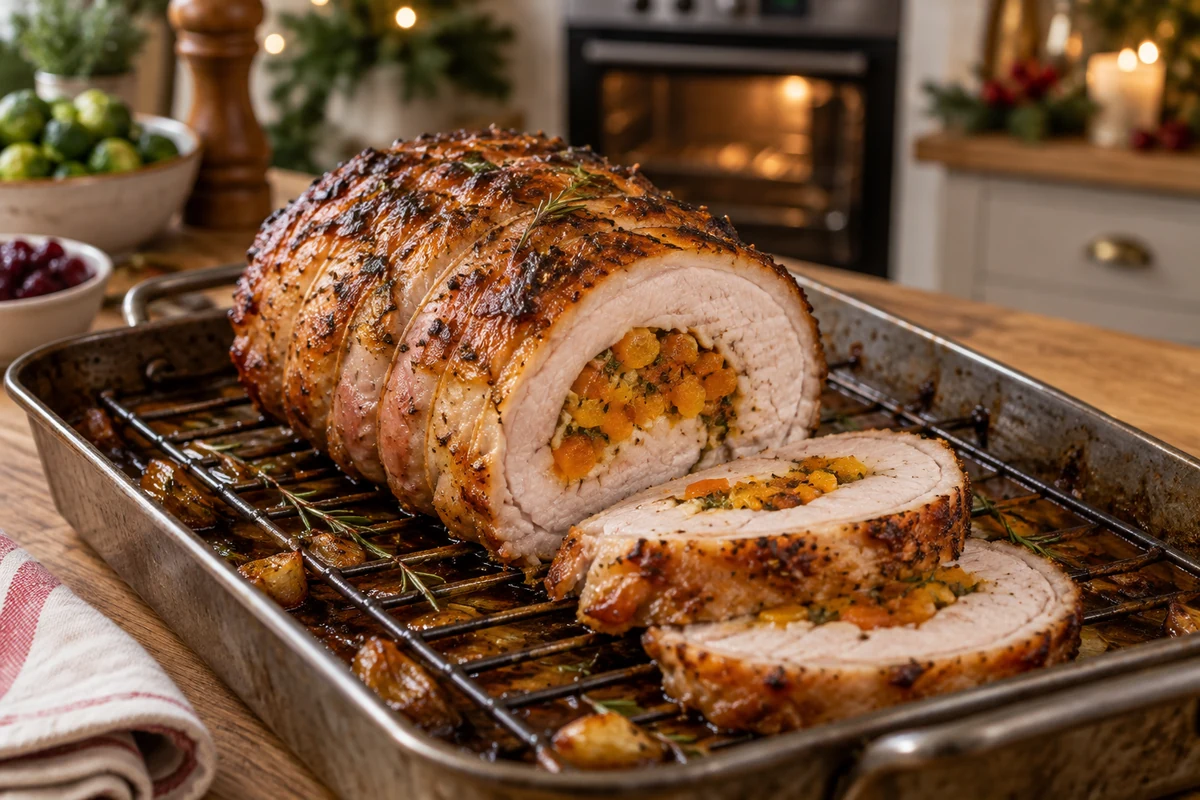
- Fill and roll: spread the cool filling over the pork, leaving clear edges. Roll into a compact joint without overfilling, then secure with food-safe butcher’s string at 3–4 cm intervals.
- Add the optional bacon: arrange the slices over the outside and secure them with the string. For an unwrapped version, simply leave them out; prosciutto is also pork and is not a pork-free substitute.
- Brown the joint: heat the remaining tablespoon of oil in a large pan and turn the pork carefully to colour the surface. This develops flavour; it does not seal juices inside. Transfer straight to the oven rather than storing a partly cooked joint.
- Roast: preheat to 180°C conventional / 160°C fan, or follow the joint’s instructions. Put the pork on a rack in a roasting tin with 120 ml wine or stock beneath it. Allow roughly 25–30 minutes per 500 g as an initial guide, but a thick stuffed roll may take longer. Check both the centre of the filling and the thickest meat with a clean probe: each must reach 75°C for 30 seconds, or 70°C for 2 minutes, before resting.
- Glaze near the end: mix the remaining 2 tablespoons honey and 1 tablespoon mustard. Brush onto the joint during the final 20–30 minutes, watching for scorching. Use a clean brush and do not serve leftover glaze that has contacted undercooked meat.
- Rest before carving: once fully cooked, rest for 10–15 minutes under loose foil. Resting is for texture and easier slicing, not a substitute for reaching the safe cooking temperature.
- Slice and serve: remove all string and cut into 1.5–2 cm slices. Serve with mash, roasted vegetables and a sauce made from the thoroughly heated roasting juices.
Practical tips
- Food thermometer: check several central points, including the filling. Clean the probe between checks and after use.
- Substitutions: replace apricots with stoned dates or prunes and wine with stock. Check dried fruit for sulphites and mustard, stock and bacon for relevant allergens.
- Roasting time: the roll’s thickness, filling and starting temperature all affect the time. Use the thermometer rather than weight alone.
- Prepare ahead: make the filling the day before, cool promptly and refrigerate in a covered container. Keep it separate from the raw joint until assembly.
Variations on apricot-stuffed roast pork loin

You can vary roast pork loin with apricot stuffing by changing the filling or glaze. The suggestions below are alternatives to parts of the main recipe, not extra ingredients to add all at once. They have not been tested as separate finished recipes.
Alternative fillings
- Apple and walnut: replace the apricot-and-nut mixture with 200 g chopped cooking apple and 50 g walnuts; use 1 tablespoon honey and up to 1 teaspoon cinnamon to taste. Cook off excess apple moisture and cool before filling.
- Date and bacon: use 150 g chopped stoned dates and 100 g cooked chopped bacon instead of the apricots and outer bacon layer. Reduce or omit the honey in the filling because dates are sweet.
- Olive and herb: replace the fruit with 100 g chopped green olives, 2 tablespoons parsley and thyme, and a little lemon zest. Omit the honey from the filling and season cautiously.
- Apricot and feta: use 120 g apricots, 80 g crumbled feta and 2 tablespoons toasted pine nuts in place of the main fruit-and-nut mixture. Feta adds milk and salt.
- Mushroom filling: 150 g mushrooms, a small onion and 50 g chopped chestnuts offer a savoury alternative. Cook off moisture and cool before using. A meat joint with this filling is still not vegetarian.
Alternative toppings and glazes
- Citrus glaze: use 3 tablespoons honey, the juice of 1 orange and 1 teaspoon Dijon mustard instead of the main glaze. Simmer briefly if too thin, then brush on towards the end of cooking.
- Balsamic sauce: gently reduce 120 ml balsamic vinegar with 1 tablespoon brown sugar until lightly syrupy. Serve a small amount alongside instead of layering several sweet sauces on the joint.
- Breadcrumb crust: combine 100 g breadcrumbs with 30 g melted butter and add towards the end of roasting, allowing time to brown. This is an alternative topping and introduces wheat and milk unless suitable substitutes are used.
Other cooking approaches
- Conventional roasting: follow the main method at 180°C conventional / 160°C fan, allowing extra time if the centre has not reached the required temperature.
- Sous vide: do not apply a generic low-temperature time to a large stuffed joint. Thickness, filling and pasteurisation matter. Use a validated recipe and suitable equipment if choosing this method; this guide does not provide a sous-vide schedule.
- Indirect barbecue cooking: use a barbecue recipe designed for a stuffed pork joint and monitor the centre of both filling and meat. A fixed one- or two-hour estimate is not enough to establish that it is cooked safely.
Suggested side dishes
- Buttery mashed potatoes: a simple accompaniment to the sweet apricot filling.
- Rosemary roast vegetables: carrots, sweet potatoes and onions with olive oil and herbs.
- Roasting-tin sauce: loosen the cooked juices with a little stock, simmer thoroughly and finish with the optional 15 g butter. Wine is another option if alcohol is suitable for your guests.
- Fresh salad: salad leaves with optional walnuts and goat’s cheese provide contrasting texture. Keep nuts and cheese separate when catering for different needs.
Adaptations and practical details
- Less added sugar: reduce the honey. Replacing it with agave syrup does not automatically reduce the sugar in the dish.
- Without pork: choose a separate turkey recipe and omit bacon and prosciutto. A different cut of pork is not a pork-free alternative.
- Advance assembly: with cold filling, roll and tie the joint the evening before if its use-by date permits. Cover and refrigerate below ready-to-eat foods until you are ready to cook.
- Dried seasoning mixes: check their salt and allergen content before combining them with mustard, bacon or stock.
Marinades, seasoning and checking doneness
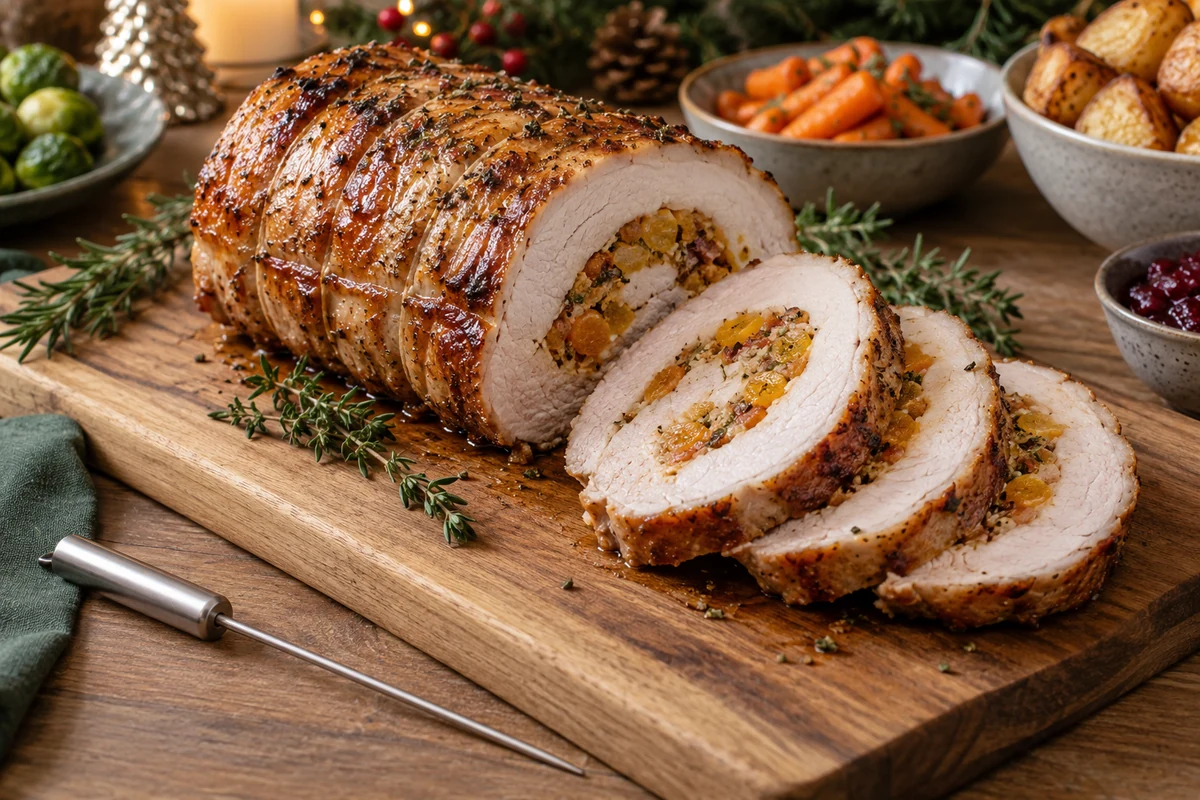
These marinade, seasoning and cooking tips explain optional ways to adapt the dish. Choose one seasoning approach rather than using the main seasoning, a salty marinade and a dry brine together.
Optional marinade and timing
Wet marinade: the following is an optional alternative seasoning mixture for the unfilled pork. It adds surface flavour; it does not guarantee tenderness throughout the joint. Keep the main filling and roasting liquid separate.
- 120 ml white wine or orange juice
- 2 tablespoons olive oil
- 1 tablespoon Dijon mustard
- 2 crushed garlic cloves
- 1 tablespoon chopped fresh rosemary
Timing: marinate in a covered container in the fridge for 2–12 hours, staying within the meat’s use-by date. Drain before filling and discard the used marinade; use fresh stock or wine in the roasting tin.
Seasoning in advance
You can season the unfilled pork ahead and refrigerate it, but remember that bacon, mustard and stock also add salt. This is an alternative to adding salt during assembly, not a second dose.
- Salt quantity: season modestly to suit the ingredients. Avoid applying a fixed spoonful per 500 g on top of an already seasoned recipe.
Flavours that work well
- Rosemary, thyme and sage — choose one or a restrained mixture to accompany apricots.
- Orange zest — adds citrus aroma without extra liquid.
- Garlic and onion — soften them for the filling before assembling the joint.
- Mustard and honey — provide a sweet and sharp glaze; watch it closely as it browns.
- Black pepper and nutmeg — use a little to avoid overpowering the filling.
Applying the seasoning
- Pat the pork dry: use disposable kitchen paper, discard it promptly and wash your hands. Do not wash raw pork under the tap.
- Use a marinade before filling: coat the unfilled meat, refrigerate, drain and discard the used mixture. Do not pour raw-meat marinade over cooked food.
- Tie the joint evenly: roll after filling and secure its shape with food-safe string, avoiding a densely packed centre.
- Keep it chilled until needed: there is no need to leave the joint out to reach room temperature. Have the oven ready and minimise time on the worktop.
Doneness and the food thermometer
Check the thickest meat and the centre of the filling in more than one place, without touching the rack or tin. A rolled stuffed joint needs thorough cooking throughout.
- Cooking target: reach 75°C for 30 seconds, or 70°C for 2 minutes, in the centre of both meat and filling. Do not take this stuffed joint out at 63°C and rely on resting to finish the job.
- Avoid unnecessary overcooking: once the safe time-and-temperature target is met throughout, remove the joint and rest it. Colour alone is less dependable than a correctly used probe.
Keeping the roast from drying out
- Use a moderate oven: start at 180°C conventional / 160°C fan unless the product instructions say otherwise. Add a little extra hot stock if the tin threatens to dry out.
- Glaze late in cooking: honey can burn if applied too early. Cover loosely with foil if the surface colours before the centre is ready.
- Rest before slicing: allow 10–15 minutes under loose foil after the joint is fully cooked.
Planning Christmas dinner around the roast
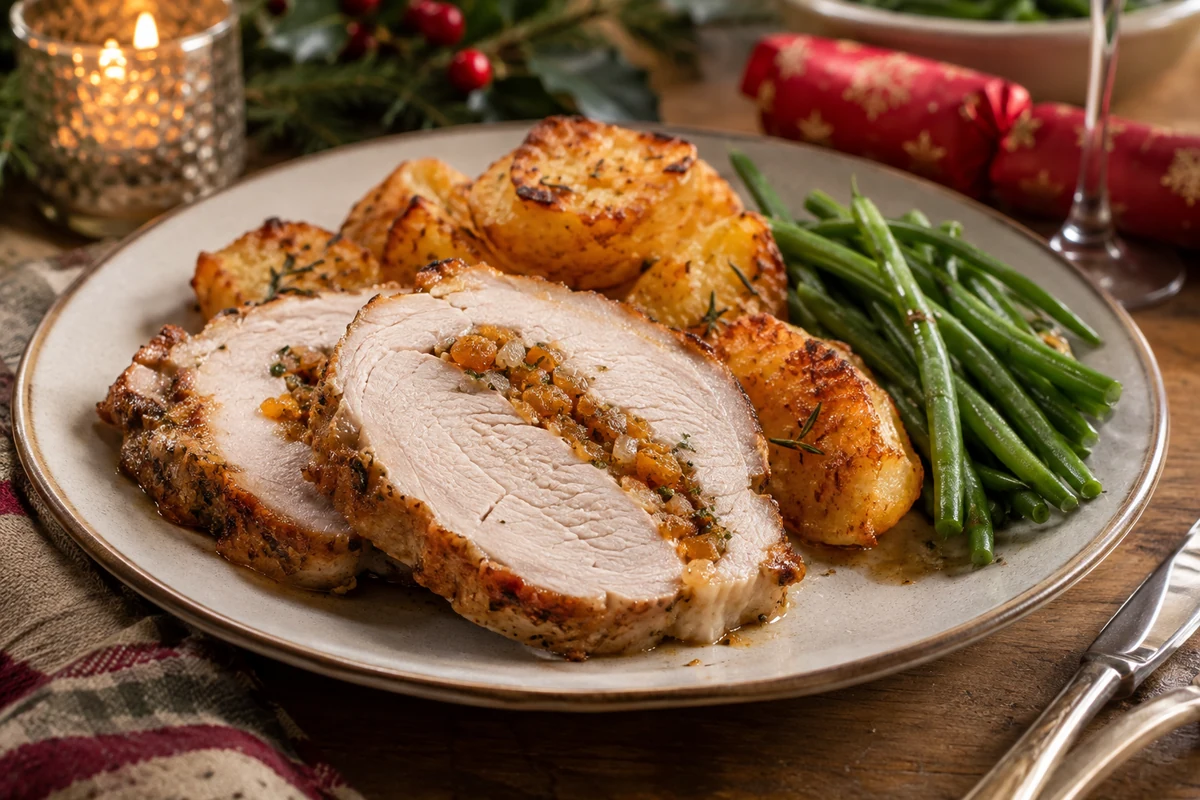
Plan the oven space, side dishes and serving time around the apricot-stuffed roast pork loin. A short menu is often easier to serve well than several dishes competing for the same oven.
Choosing the menu
- Main course: the roast pork loin with apricot stuffing.
- Hot accompaniments: mashed potatoes, rosemary roast vegetables and caramelised onions.
- Cold accompaniments: salad leaves with optional nuts and goat’s cheese, or a citrus salad to contrast with the sweet filling.
- Dessert: panna cotta or a fruit tart in portions suited to your guests. These are serving ideas, not claims that the desserts are nutritionally light.
Planning quantities
- Meat: allow roughly 200–250 g raw boneless pork per adult with substantial sides, adjusting for appetite and planned leftovers. The 1.5–2 kg joint provides around 6–10 such portions; this is a shopping estimate, not a nutritional recommendation.
- Side dishes: about 150–200 g mash and 100–150 g roast vegetables per adult are useful starting estimates, adjusted for the rest of the menu.
- Drinks: provide plenty of water and appealing alcohol-free options. Buy according to guests’ preferences rather than treating a bottle-per-person formula as drinking advice.
Preparation schedule
- Two days before: check your ingredients, storage space and the meat’s use-by date. Leave preparation of the cooked filling until the day before to simplify safe storage.
- The day before: prepare and promptly chill the filling. If assembling the joint ahead, use cold filling, cover and refrigerate immediately; do not add a separate dry brine as extra seasoning.
- On the day: preheat the oven, prepare the tin and take the pork out only when ready to start cooking.
- While it roasts: make the mash, cook the vegetables and prepare the salad with clean utensils away from raw-meat surfaces.
- Towards the end: glaze the joint, check its centre and finish the sides. Build in resting time before the planned meal.
Setting the table and serving
- Centrepiece: use a clean serving board or platter, never the unwashed board used for raw pork.
- Buffet or table service: serve smaller platters and replenish as needed rather than leaving the entire joint out for hours. Put the sauce in a separate jug.
- Presentation: remove the string, slice 1.5–2 cm thick and arrange beside the vegetables. A few clean herbs or a little orange zest add colour.
Pairings and finishing touches
- Optional wine pairing: a fuller-bodied white or a light red such as Pinot Noir can complement the apricots. Sparkling water with citrus is an alcohol-free alternative.
- Sauce: simmer the roasting juices with a little stock and finish with butter if wanted. Keep the sauce hot for prompt serving.
- Different dietary needs: offer a separate pork-free or vegetarian main where required, with suitable utensils and ingredients. Turkey is pork-free, not vegetarian.
Last-minute practical tips
- Reheating: add a little sauce, cover and heat leftovers until steaming hot throughout. Ten minutes is not a universal safe reheating time; reheat only once.
- Prepare serving dishes: have platters, a sauce jug and clean utensils ready. Keep salad refrigerated until needed and bring sauces to temperature shortly before serving.
- Use a simple timetable: work backwards from serving time, allowing for roasting, temperature checks, resting and carving.
Pork loin at Christmas: flavour and traditions
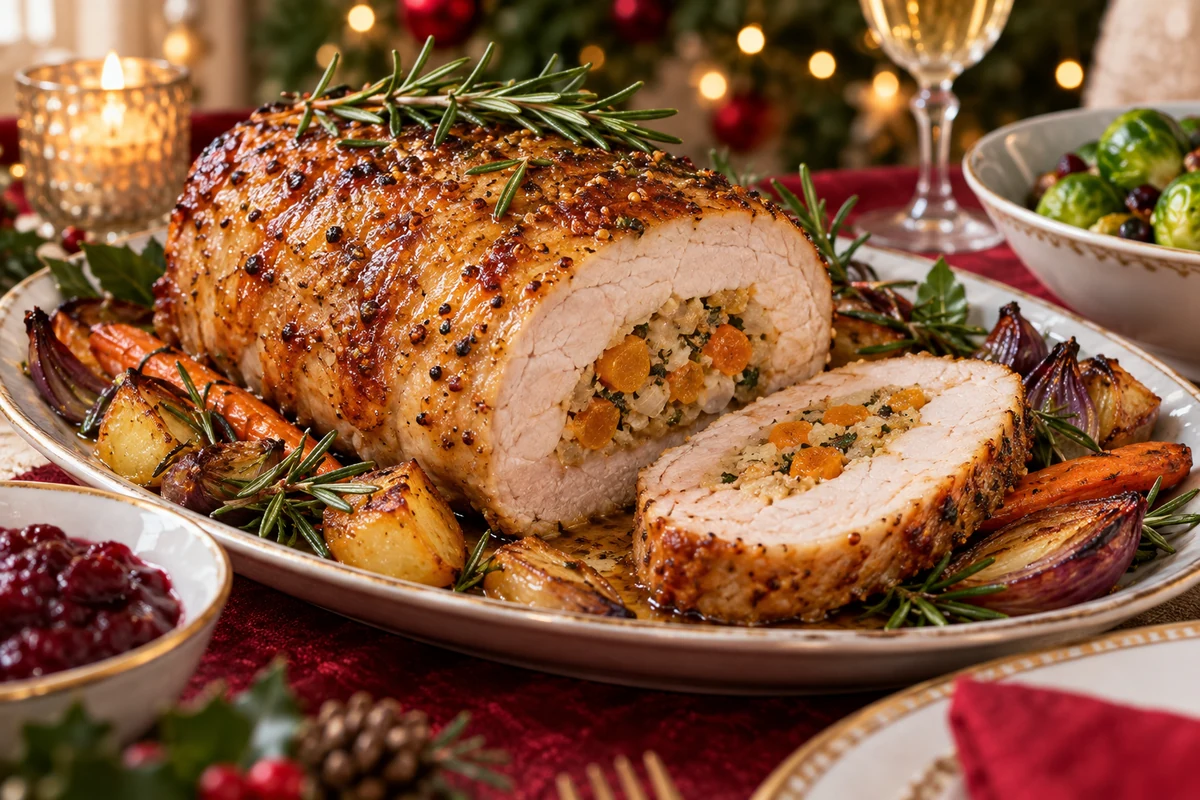
These notes on pork loin at Christmas explore the dish’s place at a festive table and the reasons fruit works well with it. Family recipes vary, so the examples below should not be read as customs followed by everyone in a region.
A festive centrepiece
- A generous shared dish: a whole roast creates a centrepiece that can be sliced at the table. Any symbolism of abundance depends on the family or cultural setting.
- Different traditions: pork appears in a variety of European festive meals, but the exact cut, stuffing and cooking method differ. This recipe does not claim one documented historical origin.
- Brazilian Christmas cooking: fruit-filled pork roasts offer one option alongside the many other dishes chosen for a Brazilian Christmas supper.
Ideas for Brazilian-inspired variations
- Barbecue flavours: herbs and a little smoky seasoning can suggest barbecue cooking, without implying that all families in southern Brazil prepare the dish this way.
- Fruit preserves: a small amount of preserve can replace part of a sweet glaze. Treat this as an optional flavour idea, not a defining recipe from Minas Gerais.
- Tropical fruit: fruit-based sauces offer another variation. Their use depends on the recipe and cook rather than representing a single tradition across north-eastern Brazil.
Why apricots work in the filling
- Sweet and savoury contrast: dried apricots bring sweetness alongside the mustard, herbs and savoury pork.
- Texture: softened, well-drained fruit gives a tender filling without making it excessively wet.
- Aroma: orange zest and a lightly browned honey glaze complement the fruit.
Choosing the joint
- A suitable loin: choose an evenly shaped boneless joint that can be butterflied and rolled. A modest fat layer can help protect the surface during cooking.
- Storage and freshness: buy from a reliable supplier, keep refrigerated and follow the use-by date. Appearance and smell alone cannot establish whether raw meat is safe.
- A different meat: turkey breast needs its own cooking plan. Do not assume that replacing pork automatically makes the finished meal suitable for a particular diet.
Food safety and storage
- Cook the centre thoroughly: this is a rolled, stuffed pork joint, so both the meat and filling must reach the stated safe time-and-temperature target before resting.
- Refrigerate leftovers: divide into smaller portions, cool and refrigerate within 1–2 hours. Use within 48 hours or freeze promptly.
- Freezing: pack slices in airtight portions and label the date. Around 2–3 months is a useful quality guide; thaw in the fridge and use within 24 hours of fully defrosting.
Presentation and reducing waste
- Carve just before serving: let the fully cooked joint rest for 10–15 minutes, then remove its string and slice.
- Aromatic finish: use a little orange zest or a few clean herb sprigs without overwhelming the filling.
- Make use of the juices: this boneless recipe does not provide bones for stock. Use its roasting juices for sauce and save suitable cooked leftovers safely for another meal.
Apricot-stuffed pork loin brings a sweet and savoury centrepiece to a Christmas meal. A well-drained filling, careful temperature checks and a short rest are more useful than promises of a perfectly juicy result every time.
Choose the version that suits your guests and adjust the seasoning thoughtfully. If you try it, share your experience, and visit the I Love Christmas blog for more festive recipes and planning ideas.
Enjoy your Christmas meal and the company around the table.
FAQ — Roast Pork Loin with Apricot Stuffing
What oven temperature and roasting time should I use?
Start at 180°C conventional / 160°C fan, unless the joint’s instructions differ. Roughly 25–30 minutes per 500 g is only an initial estimate. A stuffed roll may need longer: check that both filling and meat reach 75°C for 30 seconds, or 70°C for 2 minutes, before resting.
How can I keep the pork from drying out?
Use a probe to avoid roasting longer than necessary after the safe cooking target is reached. Drain the filling, protect the surface if it browns too quickly and rest the cooked joint for 10–15 minutes. Do not remove it while the centre is still undercooked.
Can I replace the apricots with another fruit?
Yes. Stoned dates or prunes can replace the apricots, although their sweetness differs. Cooking apple is another variation; cook off excess moisture and adjust the honey rather than adding every suggested fruit together.
Can I prepare the joint ahead?
Make the filling the day before, cool it promptly and refrigerate. If rolling the pork that evening, use cold filling, keep the assembled joint covered and chilled, and cook within its use-by date. Do not leave it out to reach room temperature.
How should I store and reheat leftovers?
Cool in small portions and refrigerate within 1–2 hours. Eat within 48 hours or freeze. Thaw in the fridge and use within 24 hours of fully defrosting. Reheat only once, until steaming hot throughout, rather than relying on a fixed ten-minute warming time.
Which side dishes and drinks suit this roast?
Mashed potatoes, rosemary roast vegetables and a citrus salad are straightforward choices. Offer water and alcohol-free drinks; for guests choosing wine, a fuller white or light red such as Pinot Noir is an optional pairing.
Sources and Further Reading
- Food Standards Agency: Cooking Your Food
- Food Standards Agency: Chilling, Freezing and Defrosting Food