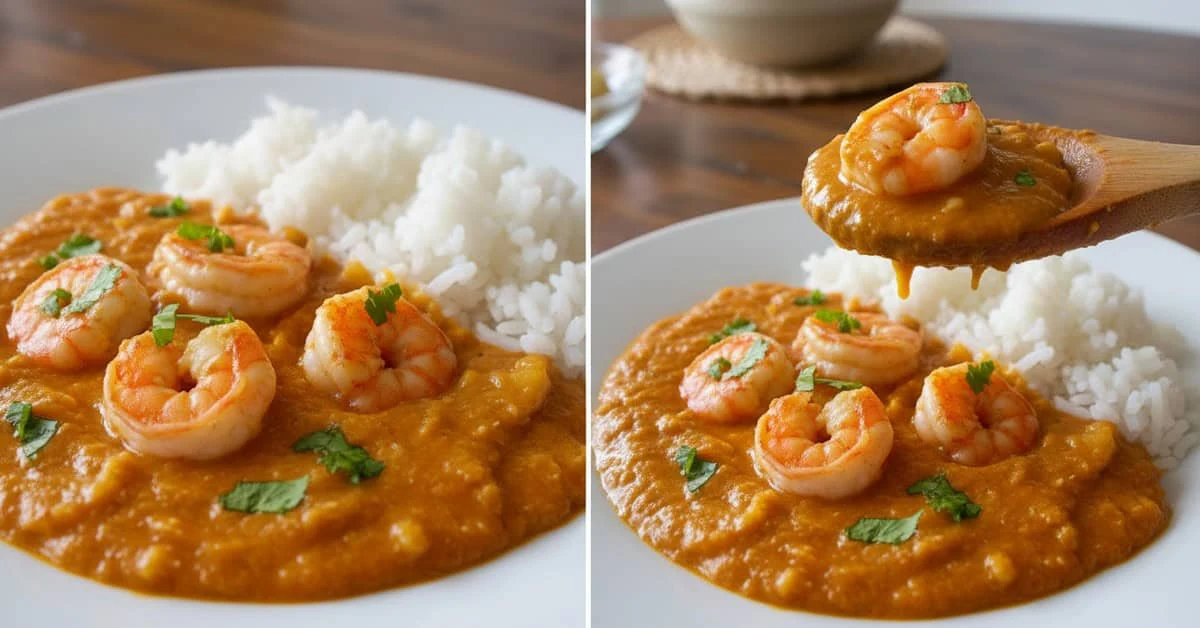
Brazilian prawn bobó is a thick cassava and coconut dish with prawns and dendê oil. It suits a Brazilian summer Christmas menu, or a warming winter meal in Britain. Use properly prepared cassava, cook raw prawns through, and serve promptly with rice and a fresh salad.
Brazilian prawn bobó brings the flavours of a summer Christmas in Brazil to the table. Christmas is in winter in the UK, but the dish can be enjoyed in either season. This recipe has been editorially reviewed, but not kitchen-tested; the version below uses commercially prepared, fully cooked cassava to avoid giving a generic cooking time for unknown raw roots.
Ingredients for prawn bobó
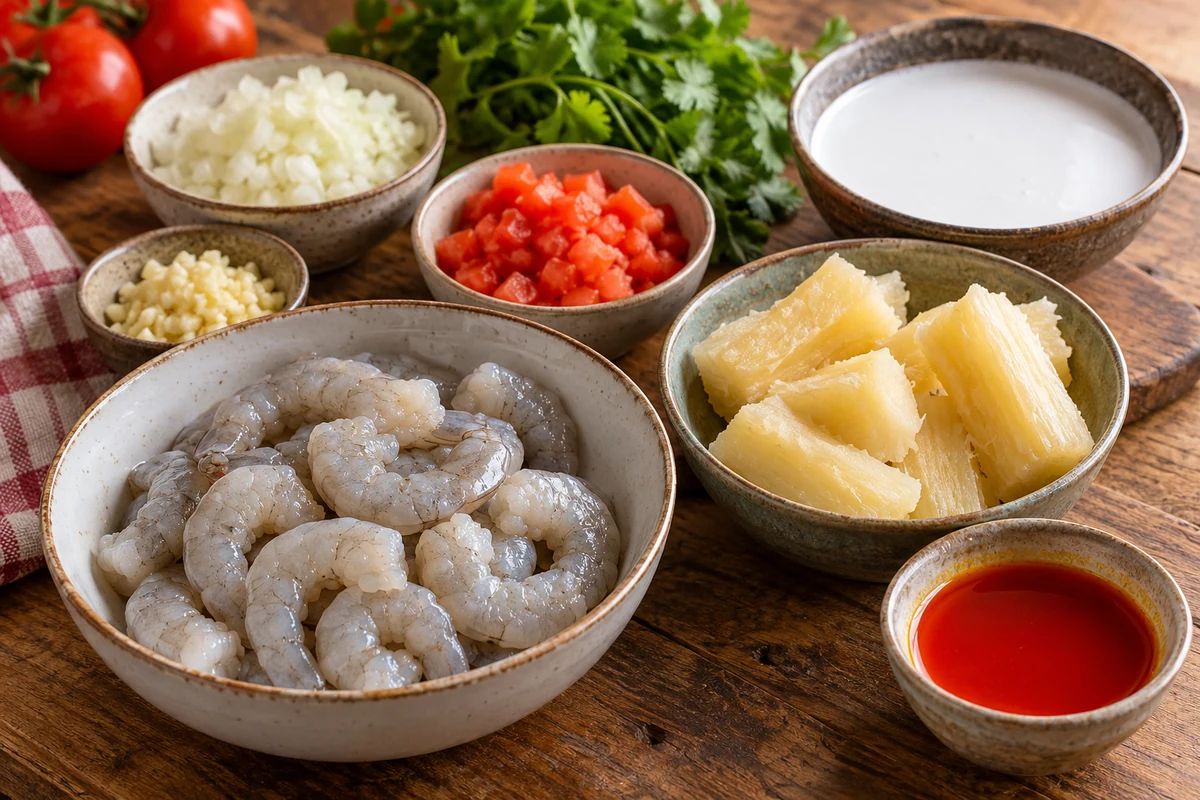
The following quantities make roughly four to six generous main portions with sides. Keep seafood refrigerated until needed and check the cassava product’s preparation and storage instructions.
Ingredients for prawn bobó
- 800 g commercially prepared, fully cooked cassava – drained and ready to mash, from a reliable food supplier. A product that is merely peeled or frozen may still be raw; do not confuse it with cooked cassava. Do not use unidentified or bitter raw roots.
- 600 g raw medium prawns, peeled and deveined – use the edible weight, after defrosting if necessary. Larger prawns are possible but need their cooking checked individually.
- 200 ml coconut milk – full-fat gives a richer texture; a reduced-fat product changes the consistency and should be checked by its label.
- 2 tbsp food-grade dendê oil – Brazilian red palm oil with a distinctive aroma. Olive oil is an alternative, but the flavour will be different.
- 1 medium onion – finely chopped.
- 3 garlic cloves – chopped or crushed.
- 1 large tomato – deseeded and chopped, or about 120 g drained tinned tomatoes.
- ½ small red chilli, optional – finely chopped, adjusting to taste.
- Up to 1 tsp salt – add gradually, allowing for the stock’s salt content.
- ½ tsp ground black pepper – or to taste.
- A small handful of chopped coriander – about 15–20 g, or parsley if preferred.
- Up to 500 ml freshly prepared vegetable or suitable seafood stock – start with 300 ml and add more only if needed. Do not use raw prawn marinade or cassava cooking water as stock. Have 1 lemon available for optional serving wedges.
Before starting: confirm that the cassava is fully cooked, not simply peeled, and that any frozen prawns have been defrosted according to their instructions.
How to make prawn bobó
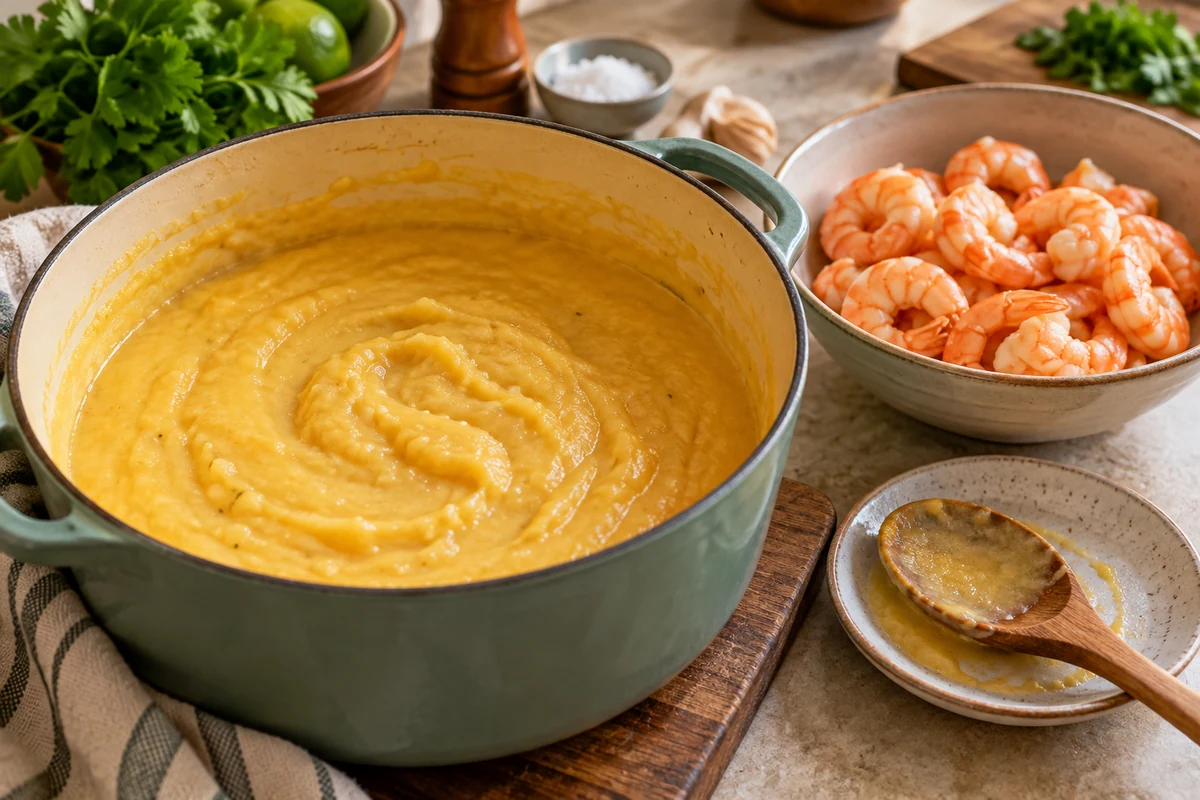
Make the prawn bobó in the following order, using properly prepared cassava and cooking the prawns fully rather than judging only by a short timetable.
- Prepare the cassava: use 800 g fully cooked, commercially prepared cassava. Follow the pack instructions for thawing or warming, drain and remove any tough central fibres. Raw cassava needs appropriate processing; do not substitute an unknown root and assume a 20-minute boil makes it safe.
- Prepare the prawns: check the 600 g peeled, deveined prawns and keep chilled until the pan is ready. Pat dry if necessary and season lightly. Avoid splashing raw seafood juices, and do not retain them or a raw marinade for the sauce.
- Soften the aromatics: heat the 2 tbsp dendê or olive oil, add the onion and cook until softened. Add the garlic, tomato and optional chilli and cook for another 3–4 minutes, stirring.
- Cook the prawns: add them to the pan and cook until opaque and firm throughout, turning as needed. Medium prawns may take only a few minutes, but size and starting temperature vary. Transfer the fully cooked prawns to a clean covered dish while you finish the base.
-
Make the cassava cream
- Blend or mash: combine the fully cooked, drained cassava with about 300 ml fresh stock and the 200 ml coconut milk. Mash thoroughly or use an appliance suitable for the mixture’s temperature. Add more stock gradually if too thick.
- Heat the base: stir the cassava cream into the pan of aromatics and heat gently for about 6–8 minutes, stirring to prevent sticking, until thoroughly hot.
- Return the prawns: add the freshly cooked prawns and any clean juices from their holding dish. Heat the whole dish through and season to taste, avoiding unnecessary prolonged cooking that toughens the prawns.
- Adjust the consistency: add a little more fresh stock if needed. For a stronger dendê flavour, a small extra drizzle is optional rather than essential.
- Finish with herbs: stir in the chopped coriander off the heat and offer lemon wedges at the table.
- Serve promptly: offer rice and farofa or salad alongside. For a Brazilian summer celebration, bring out manageable portions and keep other food appropriately chilled or hot.
- Simple changes: olive oil can replace dendê, but paprika does not reproduce dendê’s characteristic taste. If using reduced-fat coconut milk, add less stock initially so the base does not become thin.
Blender safety: follow the appliance’s instructions for hot food. Never seal hot liquid in a blender not designed for it; allow the mixture to cool appropriately or use a suitable stick blender with care to prevent splashes.
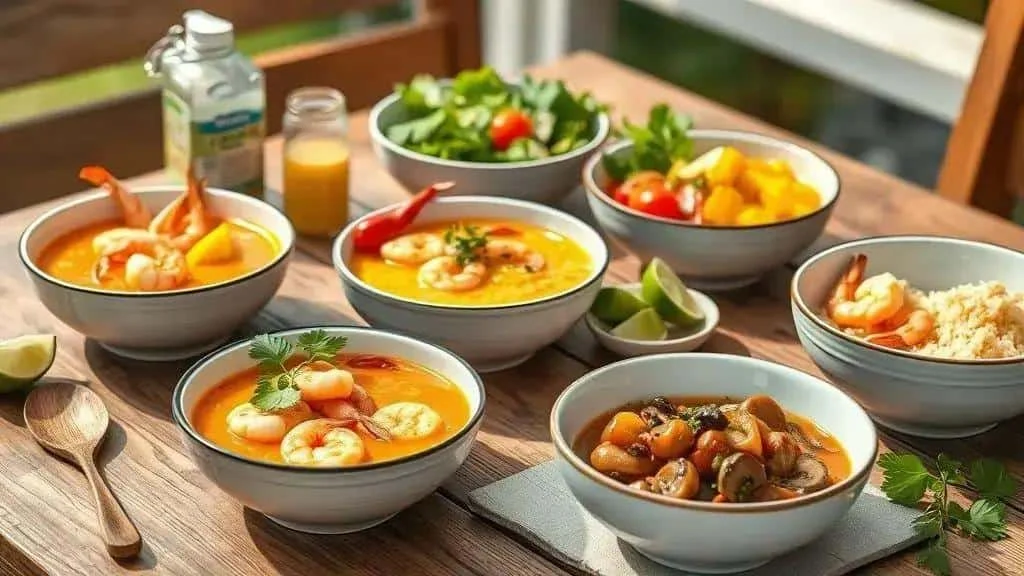
These prawn bobó variations change flavour or texture. They are optional ideas, not claims that the dish is automatically light or low in calories.
Using less oil
Choose reduced-fat coconut milk if preferred and use 1 tbsp oil instead of 2, adding a little fresh stock if the onion catches. Finish with lemon zest and coriander. The texture will differ from the full-fat version.
Bobó with separately grilled prawns
Prepare the cassava base first. Season and grill the prawns using a suitable method until opaque and cooked throughout, then place them on the hot base. Use clean utensils for serving and keep raw seafood away from finished food.
Mango or pineapple garnish
Add a small amount of ripe mango or separately grilled pineapple when serving for a sweet-sharp contrast. Peach or nectarine can also work; prepare the fruit hygienically and keep it chilled until needed.
Fresh tomato and herb variation
Add halved cherry tomatoes and chopped herbs near the end for colour and a fresher taste. This changes the flavour, not the amount of fat already in the coconut milk and oil.
Vegetarian bobó with hearts of palm or mushrooms
Replace the prawns with drained canned hearts of palm or thoroughly cooked mushrooms, such as chestnut mushrooms or shiitake. Use vegetable stock and check every ingredient. If preparing for a seafood allergy, use separate clean equipment to prevent cross-contact.
Optional dairy variation
For a different texture, stir in 2 tbsp ricotta or cream near the end. This introduces milk as an allergen and is not part of the dairy-free base recipe. A small amount of plain yoghurt is another option but may split if boiled.
Tips for the variations:
- Taste the fully cooked base before adding extra salt, especially when using prepared stock.
- Cook raw prawns through first. Once cooked, avoid leaving them simmering unnecessarily while you finish other dishes.
- Serve with rice and salad, adjusting portions to the number of other courses rather than assuming a summer meal must be small.
- Thin the base with fresh stock or water if needed, not with water used to process raw cassava.
Choosing and storing prawns
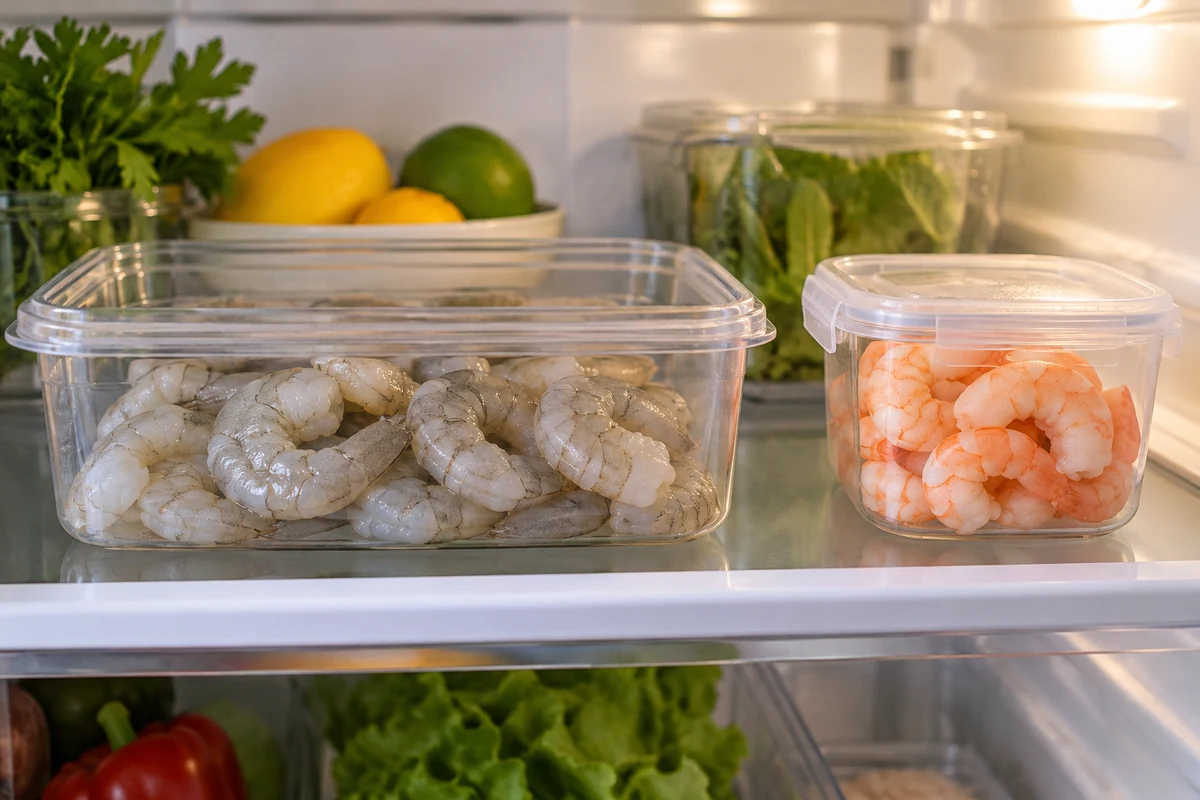
- Smell: reject prawns with an ammonia-like or otherwise unpleasant smell. A normal smell does not prove that seafood is safe.
- Appearance: check for damage or unexpected discolouration and follow the supplier’s description. Raw and cooked products naturally look different.
- Texture: avoid slimy or deteriorated seafood, but do not rely on touch alone to assess freshness.
- Supplier and label: buy from a reliable retailer, check the use-by date and storage instructions, and confirm whether the prawns are raw, cooked or previously frozen.
- Weight and preparation: the recipe uses peeled edible weight. Shell-on prawns need more purchased weight and additional preparation.
Keeping prawns safely
- Refrigeration: keep covered at 0–5°C or the colder temperature stated on the pack, on the lowest shelf away from ready-to-eat food. Follow the use-by date and any shorter after-opening instructions.
- Cooked leftovers: cool and refrigerate within one to two hours, then use within 48 hours or freeze promptly. Do not extend storage to three or four days by relying on appearance.
- Freezing: follow the product’s suitability-for-freezing instructions and freeze before the use-by date in labelled portions at about −18°C. Vacuum packing does not automatically extend safe storage; use the supplier’s guidance.
- Avoid partial cooking before freezing: a 15-second blanch does not cook prawns safely. Either freeze as directed while raw, or cook fully, cool promptly and freeze appropriately.
- Transport: use an insulated bag with ice packs and refrigerate as soon as you get home, especially in warm weather.
Defrosting safely
- In the fridge: place frozen prawns in a covered container and allow enough time to thaw fully according to the pack instructions. Use within 24 hours of complete defrosting unless stricter instructions apply.
- If short of time: use only a defrosting method specifically allowed on the pack, such as microwave defrosting followed immediately by cooking. Do not improvise a prolonged soak on the worktop.
- Avoid room-temperature thawing: do not leave seafood in warm water or on a kitchen counter to defrost.
- Refreezing: do not refreeze thawed raw prawns as raw. If suitable, cook them fully first, then cool and freeze promptly; follow the product instructions.
Quick seafood checks
- Choose a retailer that keeps seafood properly chilled and can explain its handling and storage requirements.
- Keep raw and cooked seafood separate, using clean hands, boards and utensils to prevent cross-contamination.
- Discard seafood showing spoilage, past its use-by date or kept unsafely, even if some aspects of its appearance seem normal.
- Label frozen portions with the contents and date, and note whether they were frozen raw or cooked.
- If starting with shell-on prawns, use an appropriate preparation method and calculate the peeled weight. The main recipe is designed for peeled, deveined prawns.
Side dishes and drinks for the meal
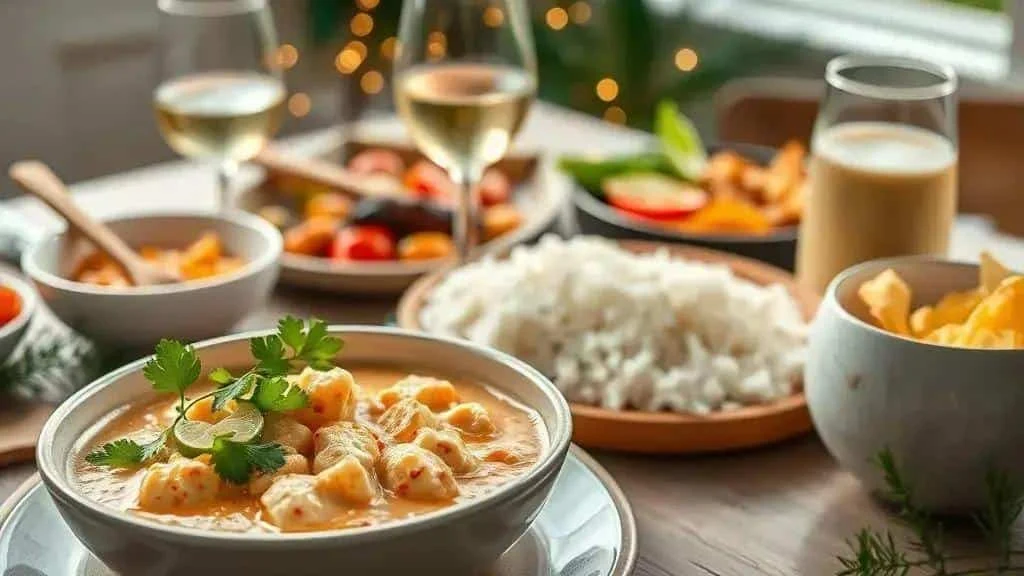
Serve prawn bobó with contrasting textures and fresh flavours rather than several more rich sauces.
Classic combinations
- Plain rice: allow about 50–75 g dry rice per adult as a side. Cool leftovers within one hour, refrigerate and use within 24 hours; reheat only once until steaming hot.
- Crunchy farofa: use coarse toasted cassava flour sold for farofa with onion and butter or oil. Nuts or cooked plantain are optional; identify allergens and do not substitute tapioca starch.
- Tomato salad or Brazilian vinagrete: chopped tomato, red onion, coriander and lemon juice provide a sharp contrast.
- Green salad: washed leaves, cucumber and diced mango with a simple dressing work well alongside the thick base.
- Grilled vegetables: courgette, pepper and aubergine with oil and lemon offer another texture.
Drink suggestions
- Optional white wine: a Sauvignon Blanc or Vinho Verde may suit the coconut and citrus flavours if your guests choose alcohol.
- Optional dry sparkling wine: serve chilled according to the producer’s guidance.
- Optional lager: a lighter-flavoured beer can accompany the meal; check relevant allergens.
- Alcohol-free choices: chilled coconut water, sparkling water with lemon or a fruit infusion are simple alternatives.
- Citrus cooler: lime, sparkling water and a little sweetener if desired give a bright alcohol-free accompaniment. Alcoholic cocktails are optional, not a necessary part of the meal.
Texture and serving temperature
- Serve the bobó hot: finish it close to serving time. If holding for an extended period, use suitable hot-holding equipment and guidance rather than leaving it lukewarm.
- Keep salads chilled: bring them out shortly before eating, particularly at a Brazilian summer gathering.
- Offer crunch separately: farofa or plantain crisps keep their texture better when added at the table.
Portions and presentation
- Small buffet portions: around 200–250 g finished bobó per person can suit a meal with several dishes. Main-course portions will be larger; the recipe gives roughly four to six generous servings.
- Plate simply: serve the bobó beside rice, with a little farofa and coriander or lemon zest.
- Replenish as needed: offer manageable amounts rather than leaving the entire batch on the table for a long buffet.
Planning a summer Christmas meal
- Keep drinks cool in suitable containers without placing melting ice where it can drip onto food or make the floor slippery.
- Bring out seafood dishes near serving time and clear leftovers promptly for safe cooling and storage.
- Taste the fully cooked sauce before adding more salt; stock products vary considerably.
Bobó and its Brazilian context
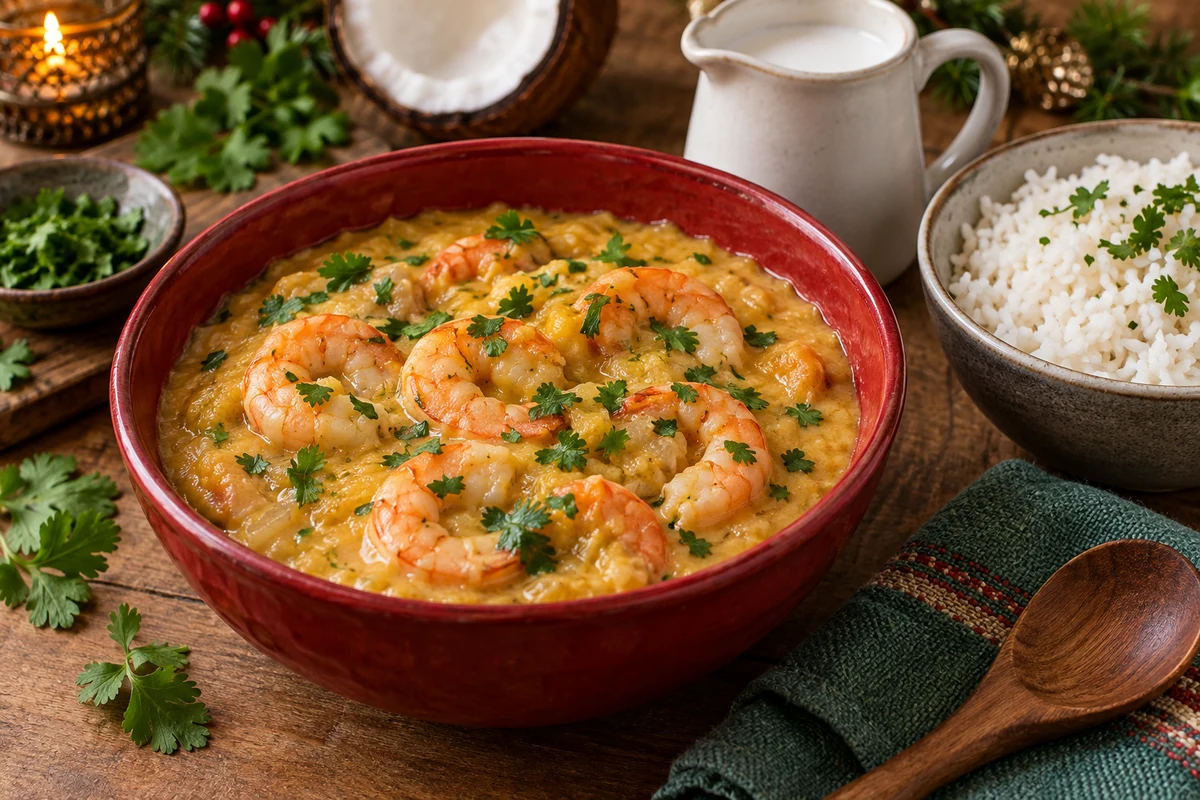
Prawn bobó is closely associated with Bahia and Afro-Brazilian cooking. Cassava, coconut and dendê help give this version its identity. Its history should not be reduced to a single invented origin story or a claim that every household makes it the same way.
Ingredients and cultural connections
- African culinary heritage: dendê oil is an important ingredient in many Afro-Brazilian dishes, including Bahian preparations.
- Cassava in Brazil: aipim or mandioca provides the thick base here. Proper preparation matters; the root, cooked cassava, farofa flour and tapioca starch are not interchangeable products.
- Recipes evolve: family and regional versions use different ingredients and methods. The adaptations in this article are practical suggestions, not proof of a particular historical origin.
A few useful distinctions
- Bobó can refer to thick preparations with ingredients such as cassava, yam or beans; the prawn version is one expression of that broader tradition.
- Prawns connect this version with the seafood dishes associated with Bahia’s coastal cuisine.
- Coconut milk and dendê contribute different flavours. Changing their proportions or using olive oil creates a variation rather than an identical substitute.
- It can be served for a family celebration or a Christmas meal, without suggesting that it is a universal Christmas custom throughout Brazil.
Modern variations
Mushrooms or hearts of palm can replace prawns in a separate vegetarian version, while grilled prawns offer a different presentation. Changing the base, oil or coconut milk also changes the finished texture.
Food and shared traditions
Serving a dish with its name and regional context helps guests appreciate the cuisine behind it. Personal adaptations can be explained without presenting them as the only authentic version.
Thinking about the whole meal
Cassava supplies starch, prawns supply protein, and coconut milk and oil contribute fat. Portions and ingredient quantities determine the overall meal; no calorie or health claim is established by calling the dish light.
Enjoy your prawn bobó
Prawn bobó can bring a Brazilian flavour to Christmas, whether you are celebrating summer in Brazil or winter in Britain. Use properly prepared ingredients, cook the seafood through and serve with a few well-chosen sides.
Thank you for reading. Share the variation you tried and follow our updates for more festive cooking and serving ideas.
Visit the I Love Christmas blog for more recipes and seasonal inspiration. Enjoy your meal!
Prawn bobó for Christmas: frequently asked questions
Can I prepare it ahead?
Prepare the cassava base ahead, cool and refrigerate within one to two hours, then use within 48 hours. Reheat the base thoroughly once and cook fresh raw prawns separately until opaque before combining. Do not repeatedly reheat seafood leftovers.
What if I cannot find dendê or full-fat coconut milk?
Olive oil can replace dendê, but it changes the characteristic flavour. Reduced-fat coconut milk is possible; add stock gradually because it may make a thinner base. Paprika is an optional seasoning, not an exact substitute for dendê.
How do I avoid rubbery prawns?
Cook them until opaque and firm throughout, then avoid prolonged simmering while finishing the sauce. Size and starting temperature affect the time, so two or three minutes is not a universal safety rule.
How much should I serve per person?
For a buffet with several dishes, 200–250 g finished bobó is a rough small-portion guide. Allow more for a main course with rice; this recipe makes around four to six generous servings, depending on sides and appetite.
Which sides and drinks work well?
Rice, farofa and a fresh tomato salad provide contrasting textures. Coconut water or sparkling water with lemon are alcohol-free options; wine or beer is optional according to guest preferences.
Sources and Further Reading
- Food Standards Agency: Cooking Your Food
- Food Standards Agency: Chilling, Freezing and Defrosting Food
- Food Standards Australia New Zealand: Cassava Safety
- Brazilian Government: Baiana Food Traditions