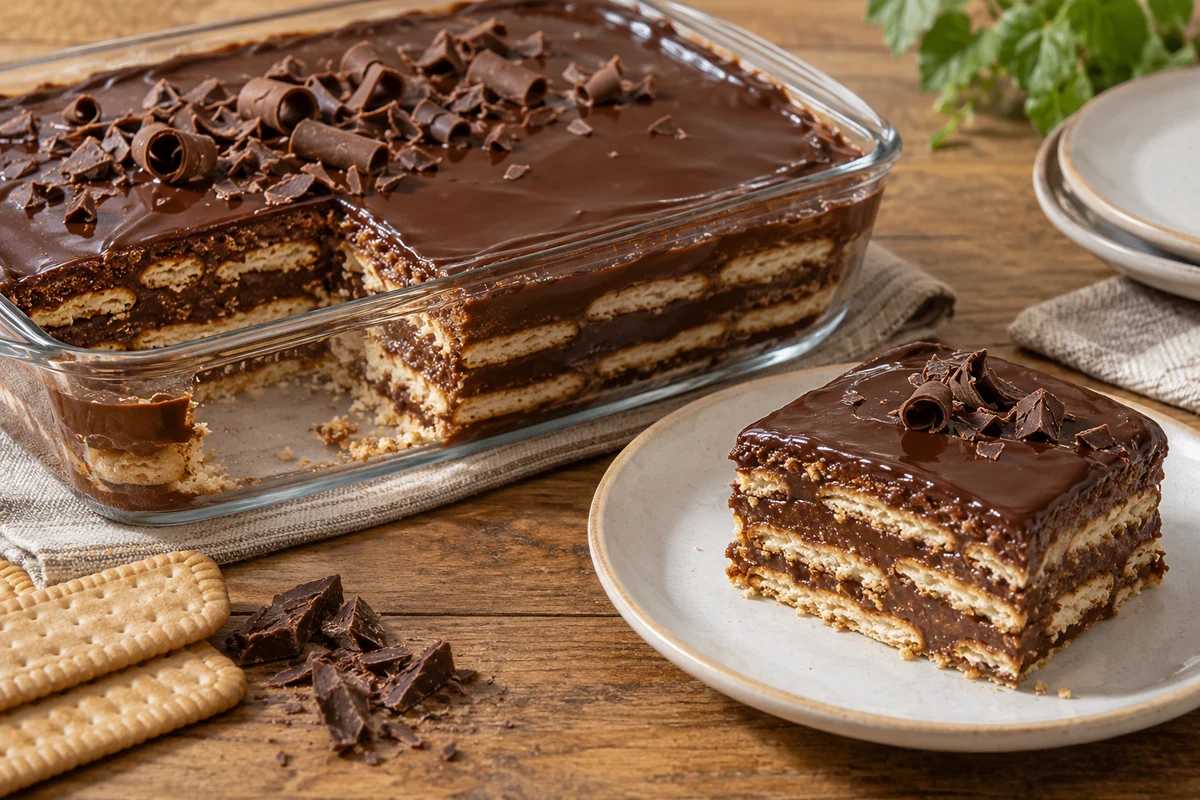
Christmas chocolate biscuit pavé is a Brazilian layered dessert made with chocolate cream and plain sweet biscuits. Follow the assembly steps, optional ganache topping, fruit and nut variations, dairy-free adaptations and chilling advice for a festive make-ahead pudding.
Christmas chocolate biscuit pavé combines creamy chocolate with softened biscuit layers. It is a convenient dessert to make the day before a celebration, leaving just the final decoration for serving time.
Ingredients for Christmas chocolate biscuit pavé
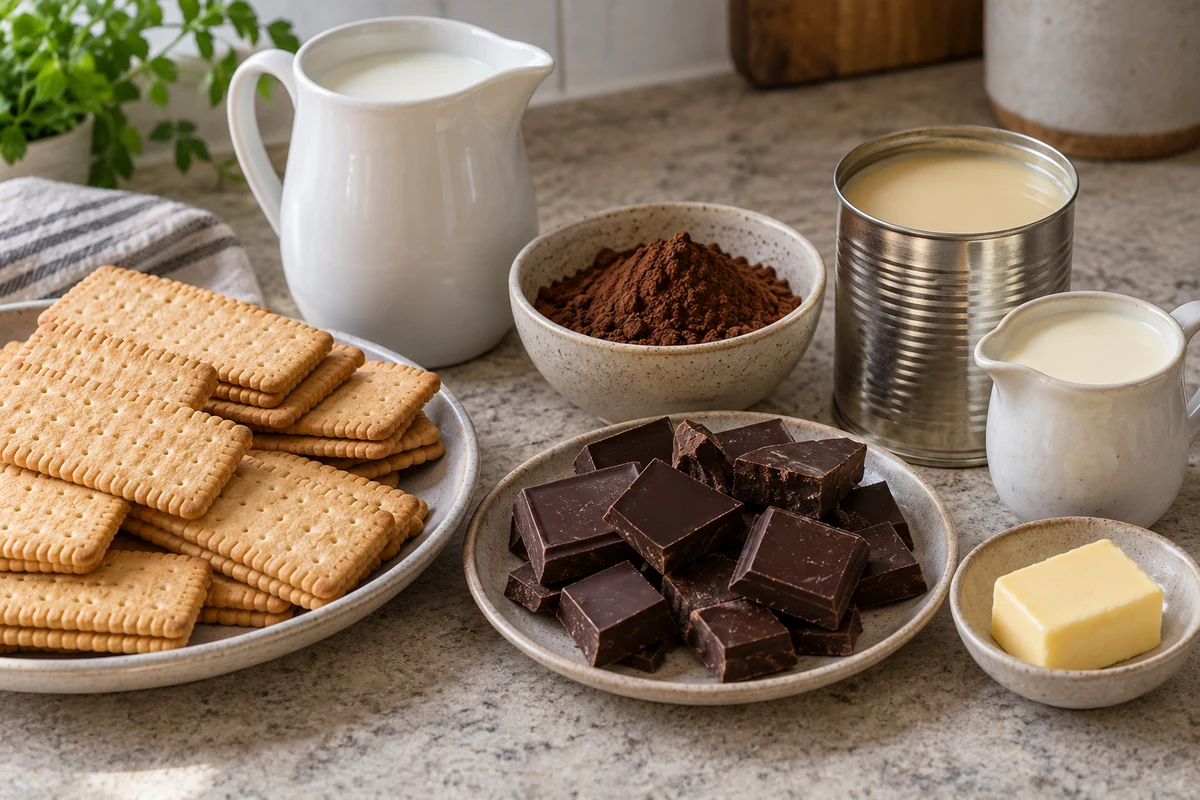
These ingredients make around 10–12 portions of Christmas chocolate biscuit pavé in a roughly 20 × 30 cm serving dish.
Ingredients
- 1 tin sweetened condensed milk, about 397 g — a 395 g Brazilian tin also works.
- 500 ml milk — whole milk gives a rich cream; for a dairy-free version, change all the dairy ingredients as explained below.
- 3 level tablespoons cornflour, about 25–30 g — the fine white starch, not yellow cornmeal. Do not replace directly with an arbitrary quantity of plain flour.
- 4 level tablespoons unsweetened cocoa powder — for the chocolate cream.
- 200 g dark chocolate — chopped, for the cream. For the optional ganache, you will need a further 150 g chocolate.
- 200 ml cream, optional — single or double cream for the ganache; omit if not making the topping.
- 100 g butter — cubed, for the cream; use a suitable vegan block alternative for a dairy-free version.
- About 400 g plain sweet biscuits — Brazilian Maizena biscuits, Maria biscuits or a similar firm plain biscuit. These biscuits commonly contain wheat despite the Maizena name; check the label.
- About 240 ml cooled coffee or milk — for dipping; use decaffeinated coffee or milk if preferred.
- Up to 50 g chocolate curls or sprinkles, optional — or choose chopped toasted nuts.
- 1 teaspoon vanilla extract, optional — for the cream.
- A little cocoa powder, optional — for dusting.
Substitution tips: a dairy-free version needs suitable condensed milk, milk, butter, cream, chocolate and biscuits. Darker chocolate can make the flavour less sweet; reducing condensed milk substantially changes the consistency, so test changes in a smaller batch.
How to make Christmas chocolate biscuit pavé

Follow these steps for distinct layers and a well-chilled Christmas chocolate biscuit pavé.
Make the chocolate cream
- Gather the equipment: use a medium saucepan, whisk, bowl, knife, measuring spoons, spatula and a serving dish about 20 × 30 cm.
- Mix the cornflour: whisk the 3 level tablespoons cornflour with 100 ml of the measured cold milk until smooth.
- Warm the base: put the condensed milk, remaining 400 ml milk and cocoa in the saucepan. Whisk over a low to medium heat until evenly combined.
- Thicken: stir the cornflour mixture again, add it to the pan and whisk continuously. Bring to a gentle bubbling simmer and cook for 1–2 minutes, or according to the cornflour packet, until thickened and smooth.
- Finish the cream: remove from the heat and stir in the 200 g chopped chocolate and 100 g butter until melted. Add the optional vanilla.
- Cool promptly: transfer to a shallow heatproof bowl and stir occasionally over a cold-water bath to release heat, keeping water out of the cream. Assemble once it is no longer hot, then refrigerate within 1–2 hours of cooking; do not leave a deep bowl out for several hours.
Optional ganache and dipping liquid
- Make the optional ganache: warm the 200 ml cream and pour over the additional 150 g chopped chocolate. Leave briefly, then stir until smooth. Cool before spreading. These 150 g are separate from the chocolate already used in the cream.
- Dip the biscuits: pour about 240 ml cooled coffee or milk into a shallow bowl. Dip each biscuit very briefly — do not soak it. One or two seconds may be enough, depending on the biscuit.
Assemble the pavé
- Start with cream: spread a thin layer of chocolate cream across the bottom of the dish.
- Add biscuits: arrange a single layer side by side, breaking a few to fill gaps.
- Cover with cream: spread a layer of chocolate cream over the biscuits and level gently.
- Repeat: alternate briefly dipped biscuits and cream, finishing with cream. Aim for even layers; the exact number depends on the dish.
- Add ganache: if using, spread the cooled ganache over the final cream layer.
- Decorate: add chocolate curls or a light cocoa dusting. Save fresh fruit and crisp nut toppings until shortly before serving.
Chilling, serving and storage
- Chill: refrigerate for at least 4 hours, preferably overnight, until thoroughly cold and the layers have settled.
- Serve neatly: use a clean knife warmed in hot water and dried, wiping between portions. Depending on the biscuits and cream, the pavé may spoon more neatly than it slices.
- Store: keep covered at 5°C or below and eat within 48 hours of making the cream, respecting any shorter ingredient use-by dates. Transport in a properly chilled cool box.
- Quick reminders: dip biscuits briefly, use dark chocolate for a less sweet flavour and check every ingredient when making a dairy-free version.
Chocolate pavé variations: fruit, nuts and dairy-free options
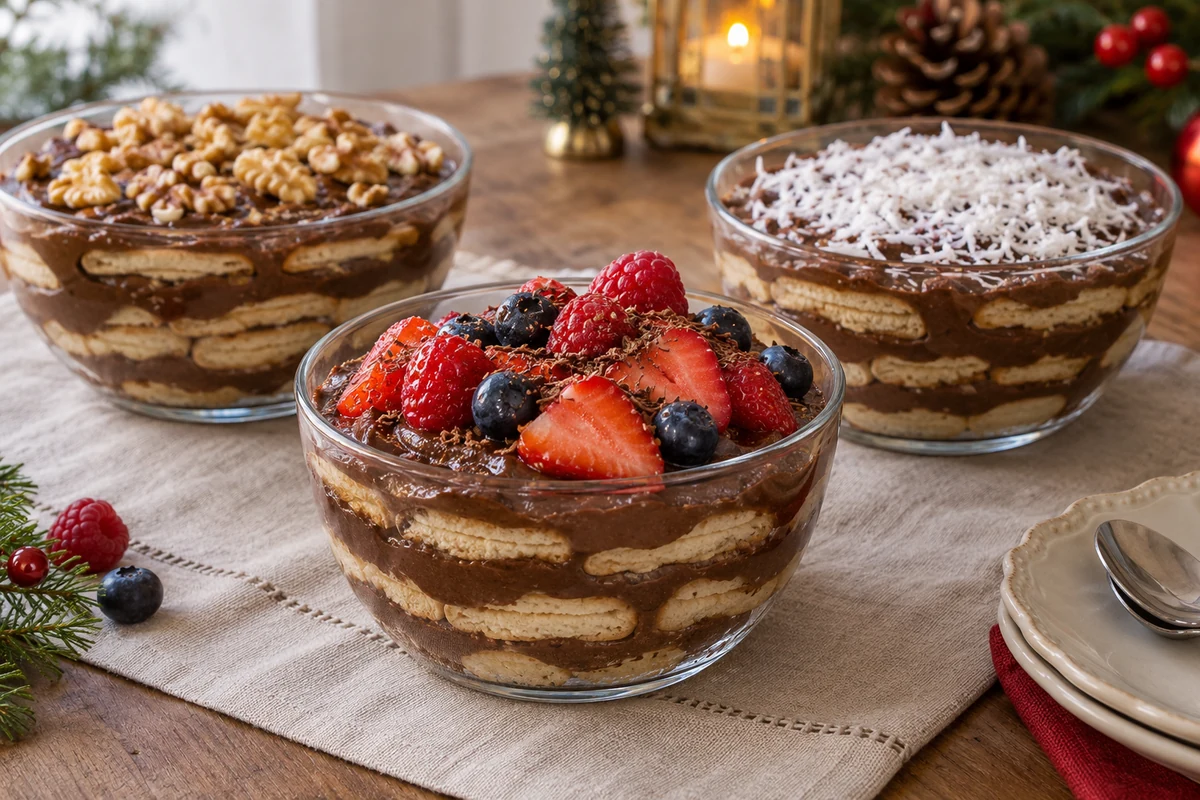
Small changes to toppings and fillings give different festive versions without losing the layered character of the dessert.
Fruit and fresh toppings
Fruit adds colour and a sharper contrast to chocolate. Dry washed fruit well and add it shortly before serving where possible.
- 200 g sliced strawberries — wash and dry well; avoid adding sugar in advance, which draws out juice.
- 1 medium mango, diced — ripe but firm.
- 2 kiwis, sliced — add just before serving rather than leaving them in contact with the dairy cream overnight.
- A small bowl of berries — fresh berries are convenient; follow the packet preparation instructions for frozen fruit and drain well after any required cooking.
Tip: use well-drained fruit or a cooked, cooled fruit compote. Do not stir raw cornflour into cold fruit and assume it has thickened; starch must be cooked as directed.
Nuts and a crunchy finish
Toasted nuts contrast well with the soft biscuit and cream layers.
- About 100 g chopped walnuts or other nuts — toast gently in a dry pan, watching closely, then cool completely.
- 50 g flaked almonds — an alternative light topping.
- A little nut praline, optional — ready-made praline is convenient; homemade caramel needs care because melted sugar is extremely hot.
Tip: add the crisp topping just before serving. Nuts placed inside the dessert will soften during chilling.
Dairy-free and vegan variations
Changing only the cream is not enough. Replace all dairy ingredients and check the biscuits and chocolate; vegan and lactose-free are not identical claims.
- About 395–397 g plant-based condensed milk — choose a product intended as a condensed-milk alternative, noting that sweetness and setting behaviour vary.
- 500 ml plant milk, plus a suitable plant cream for optional ganache — use 200 ml plant cream if making the topping, and plant milk or coffee for dipping.
- 100 g vegan block butter alternative — for the cream; liquid oil is not a direct equivalent for the finished texture.
- 200 g dairy-free dark chocolate — plus another 150 g if making ganache; check the label.
- About 400 g suitable vegan plain biscuits — check for milk, butter, eggs and honey. For a milk allergy, follow the person’s allergen requirements rather than relying only on the word vegan.
Tip: use the same cooked cornflour method, but test unfamiliar alternatives in a small batch. Do not add raw starch to finished cold cream to try to firm it.
Keeping variations balanced
Start with toppings or a small amount of fruit rather than replacing a large proportion of the cream with purée. Extra liquid changes how the dessert sets.
Assembling, decorating and serving at Christmas
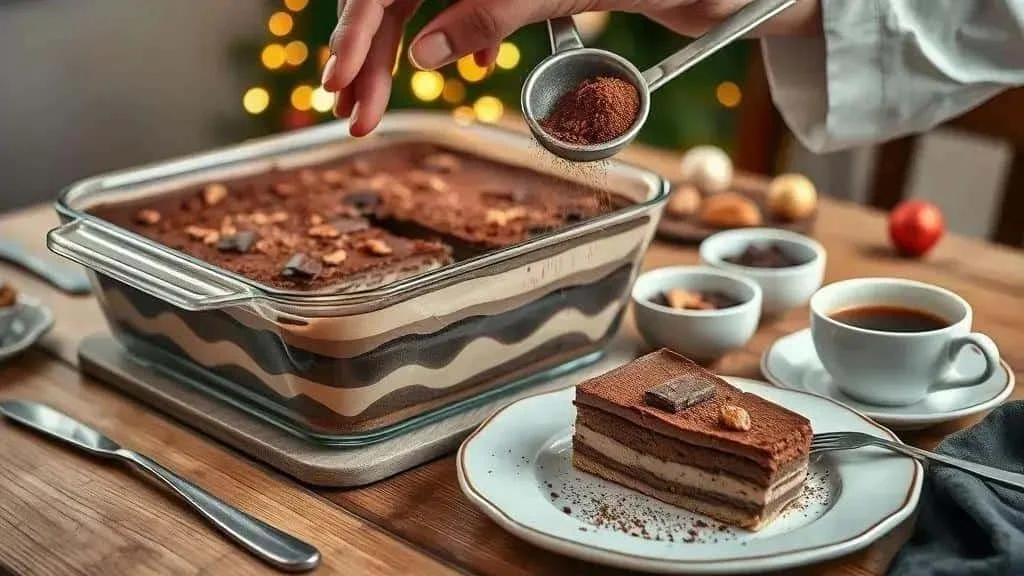
These practical details help you serve Christmas chocolate pavé with attractive layers and sensible preparation times.
Assembly tips
- Choose the dish: a clear glass dish shows the layers. It does not need greasing; start with a thin layer of cream.
- Set the first layer: spread cream under the first row of biscuits to hold them in place and level the base.
- Dip briefly: use cooled coffee or milk for a quick dip. Saturated biscuits can turn the dessert pasty.
- Level gently: use a small spatula to spread each cream layer without crushing the biscuits.
- Organise first: prepare the dish and dipping liquid before assembly, but dip biscuits as you use them rather than stacking them wet in advance.
Festive decoration
Choose edible decorations that add a clear contrast of texture or colour.
- Chocolate curls — a simple finish.
- Sifted cocoa powder — use a light dusting.
- Toasted walnuts or almonds — add just before serving for crunch.
- Fresh fruit — dry it well and add shortly before the dessert goes to the table.
- Praline — small pieces provide a crisp topping.
Finishing tip: two contrasting elements, such as cocoa and berries, are often enough.
Portioning and serving
- Plan portions: decide how many servings you need, but wait until the dessert is chilled before cutting or spooning it.
- Warm knife: dip the blade in hot water and dry it before slicing; keep the handle cool and wipe between cuts.
- Portion size: this is a rich dessert, so start with small portions after a large Christmas meal.
- Serve chilled: keep the dish in the fridge until shortly before serving rather than leaving it out to soften for a long time.
Planning and storage
Plan enough fridge space and a suitable cold container if taking the dessert elsewhere.
- Make ahead: assemble 12–24 hours before serving and keep covered in the fridge. The storage period starts when the cream is made.
- Transport: use a pre-chilled cool box or insulated bag with frozen packs around the covered dish, keeping the dessert at 5°C or below.
- Storage time: use within 48 hours of preparation, or sooner if an ingredient requires it. Smell and appearance do not reliably show whether a dairy dessert is safe.
Drinks and finishing touches
Keep accompaniments simple so the chocolate remains the main flavour.
- Drinks: coffee, decaffeinated coffee or tea pair well with the dessert. Adults who choose alcohol may enjoy a small glass of port.
- Texture: a little praline added at serving time contrasts with the soft cream.
- Dietary options: clearly identify alternatives and their allergens, using separate clean serving utensils where necessary.
Keeping pavé chilled and preparing ahead
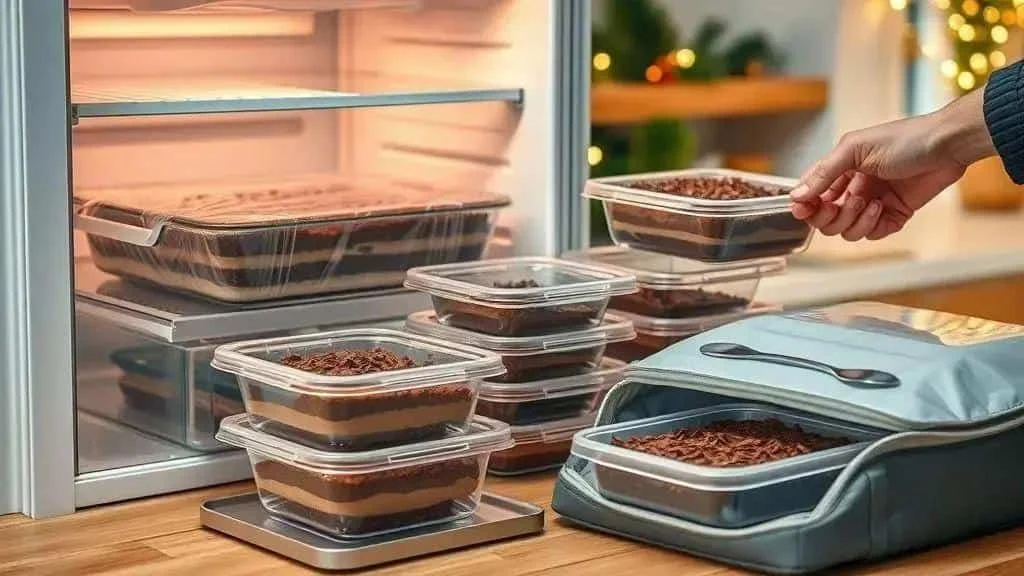
Good chilling matters both for the texture and for safe storage of this milk-based dessert.
Refrigeration
Keep the fridge at 5°C or below. Cover the dish with a lid or suitable food wrap and keep it away from raw foods. Leave room for cold air to circulate.
- Storage time: eat within 48 hours of making the cream, allowing for any shorter use-by date. Do not taste a suspect dessert to test its safety.
- Containers: use a covered serving dish or clean, sealed individual portions.
Freezing
Freezing is possible, but the cream may separate slightly and the biscuits can become softer. Try a small portion first if texture matters.
- Quality guide: aim to use within 1 month, well wrapped.
- Method: freeze promptly once cooled, in suitable individual containers, leaving a little space for expansion.
- Defrosting: thaw fully in the fridge; the time depends on portion size. Eat within 24 hours of defrosting and do not refreeze.
Preparing ahead, step by step
- Make the cream and ganache: cool promptly, refrigerate within 1–2 hours and keep covered if preparing them before assembly. Count this time within the dessert’s total 48-hour storage period.
- Dip as you assemble: briefly dip each biscuit rather than leaving a batch soaking.
- Build the layers: alternate biscuits and cream, smoothing each layer.
- Cover: use a suitable lid or food wrap to protect the dessert in the fridge.
- Chill: allow at least 4 hours, preferably overnight, until cold throughout.
- Decorate near serving time: add fresh fruit, chocolate curls or crunchy toppings.
Transporting the dessert
Keep the dish level and cold throughout the journey.
- Short journeys: use an insulated bag with frozen packs and refrigerate on arrival. An insulated bag alone does not guarantee a safe temperature for a fixed number of hours.
- Longer journeys: use a suitable cool box, plenty of frozen packs and a thermometer where possible to keep the dessert at 5°C or below.
- At the party: keep chilled until serving and bring out smaller portions if it will be a long buffet.
Practical reminders
- Keep stages simple: assemble the layers together, chill, then finish the decoration later. Repeated assembly does not restart the storage time.
- Avoid excess moisture: add dry fresh fruit just before serving.
- Adjusting sweetness: choose darker chocolate or test a small batch before changing the condensed-milk quantity.
Pavé and Brazilian Christmas memories
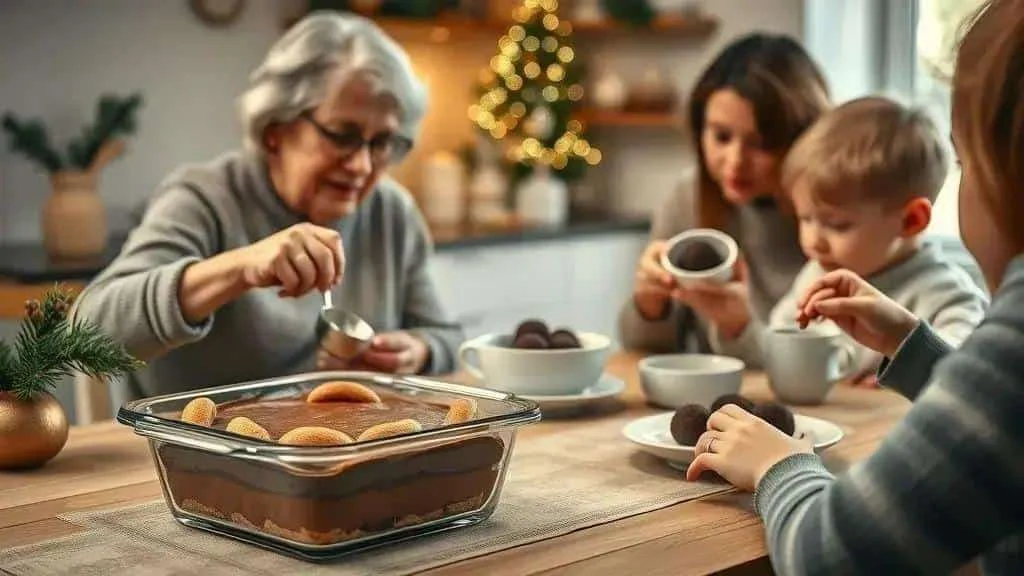
For many Brazilian families, pavé brings to mind Christmas gatherings and the familiar joke, ‘É pavê ou pra comer?’ — a play on words asking whether it is for looking at or for eating.
A few observations
- The name: pavé recalls the French word pavé, meaning a paving stone or block. The dessert’s neat biscuit layers make the comparison easy to picture.
- A familiar Brazilian dessert: biscuits and condensed milk make pavé a common choice for home celebrations, with many household variations.
- Versatility: families adapt it with fruit, nuts, coffee or a little liqueur; these choices do not follow one fixed regional rule.
- Preparing together: one person can arrange biscuits while another spreads the cooled cream or plans the decoration.
- The familiar joke: the ‘pavê or pra comer’ pun is often repeated around the table and online.
Family memories
The sound of biscuits breaking and advice such as ‘dip them quickly’ or ‘add a little more chocolate’ can become part of a family’s Christmas routine.
- Tasting together: let children try a small spoonful of cooled, fully cooked cream using clean utensils, well away from the hot pan.
- Recipe notebooks: handwritten notes record the particular biscuits, chocolate and quantities a family prefers.
- Shared decoration: different generations can add their own touch, from chocolate curls to fruit.
Keeping your own version
- Record the biscuit type: Maizena and Maria biscuits absorb differently from other varieties, so the choice affects the texture.
- Write down clear measures: record weights and liquid quantities rather than relying on an unidentified household cup.
- Invite help: share safe assembly and decorating jobs with family members.
- Keep notes: record any changes and the result so you can repeat the version you enjoy.
A dessert to share
A familiar dessert can start conversations about earlier celebrations and family recipes. Pavé is well suited to that shared, make-ahead style of Christmas cooking.
Ready for your Christmas table
Chocolate biscuit pavé is a rich, layered dessert that can be prepared the day before a celebration.
Dip the biscuits briefly, chill the cooked cream promptly and give the assembled dish enough time in the fridge.
For more ideas, follow our festive recipes and practical preparation guides.
Visit the I Love Christmas blog and share your own version of pavé.
FAQ: Christmas chocolate biscuit pavé
How do I stop the biscuits becoming soggy?
Dip them very briefly in cooled coffee or milk, adjusting to the biscuit type. Do not leave them soaking, and refrigerate the assembled dessert promptly.
Can I prepare pavé ahead?
Yes. Assemble 12–24 hours before serving, keep covered at 5°C or below and add fruit or crunchy toppings shortly before serving. Eat within 48 hours of making the cream.
How do I make it dairy-free or vegan?
Replace the condensed milk, regular milk, butter and any cream with suitable alternatives. Use dairy-free chocolate and appropriate vegan biscuits, checking labels and allergen needs. Changing only the cream is not enough.
What is the best way to serve it?
Serve chilled. A knife warmed in hot water and dried can help with neat portions, but a spoon may work better if your pavé is softer. Start with small servings because it is rich.
Can I freeze pavé?
Yes, although texture can change. Freeze promptly in sealed portions, use within 1 month for quality, thaw in the fridge and eat within 24 hours of defrosting. Do not refreeze.
How can I add crunch?
Add toasted nuts or praline just before serving so they stay crisp, and make any nut allergens clear to guests.
Sources and Further Reading
- Food Standards Agency: cooking food safely
- Food Standards Agency: chilling, freezing and defrosting food safely