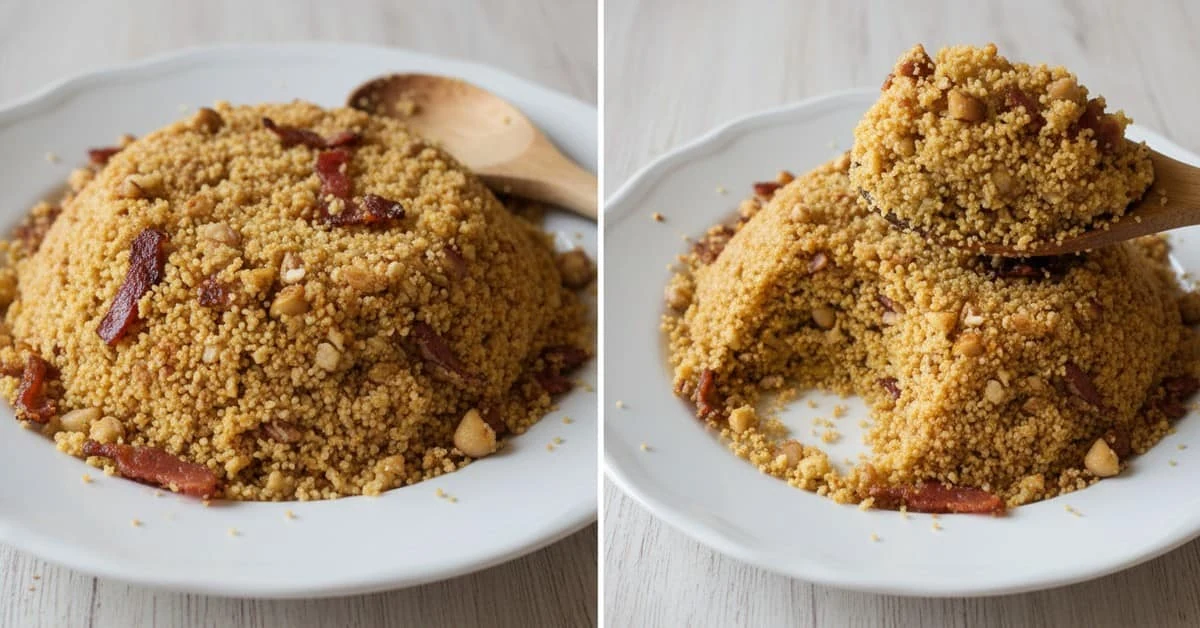
Christmas farofa with bacon and nuts combines toasted coarse cassava flour with browned bacon, 100 g toasted nuts, onion, garlic and fresh herbs. Eggs and raisins are optional. Add the crisp ingredients near serving time for a varied texture alongside a Christmas roast.
Christmas farofa with bacon and nuts brings a Brazilian accompaniment to the festive table. Farofa is made with toasted cassava meal, giving a crumbly texture that works particularly well with roast meat and its juices. Here is how to make this bacon and nut version.
Ingredients for Christmas farofa with bacon and nuts
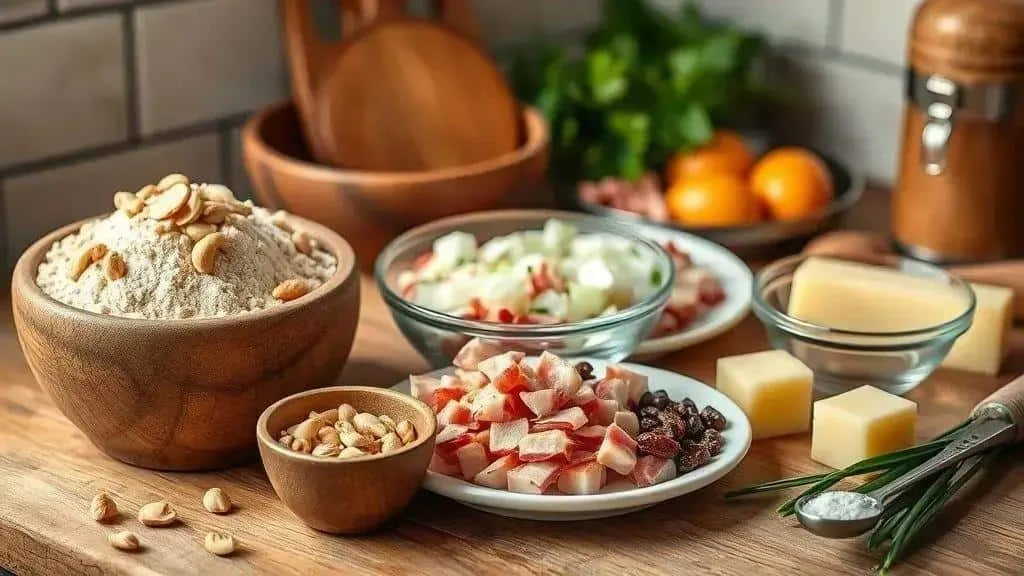
For this Christmas farofa with bacon and nuts, gather the following ingredients. Look for Brazilian farinha de mandioca torrada: coarse toasted cassava meal, not tapioca starch or fine cassava baking flour.
- 200 g diced bacon – cook through before adding to the farofa. Smoked tofu or a suitable meat-free bacon alternative can replace it.
- 100 g roughly chopped nuts – cashews or Brazil nuts are traditional options here; walnuts or almonds also work.
- Up to 45 g butter – add as needed according to how much bacon fat you retain. Use oil for a dairy-free option; clarified butter is still a milk product.
- Up to 2 tablespoons olive oil, if needed – optional for adjusting the texture; you may not need all the listed butter and oil.
- 1 medium onion, finely chopped – red onion is an alternative.
- 2 garlic cloves, finely chopped or crushed – omit for a gentler flavour if preferred.
- 3 level 240 ml cups coarse toasted cassava meal – measure by volume because the weight varies with the grind. Toasted panko creates a different breadcrumb side dish and normally contains gluten.
- 2 eggs, optional – scramble until fully set. Leave out for a vegan version; no binder is needed in their place.
- A small handful each of chopped parsley and chives – the fresh herb combination replaces the Brazilian cheiro-verde mix.
- About 75 g raisins, optional – chopped dried apricots are an alternative if you like a sweet contrast.
- Salt, to taste – bacon already contributes salt, so taste the finished mixture before adding any.
- ½ teaspoon ground black pepper – adjust to taste, or use a small pinch of chilli flakes for heat.
Quick notes and substitutions
Toasting the nuts and using the right cassava meal helps create a crumbly finish. For less added fat, reduce the butter without automatically replacing it with an equal amount of oil. Keep eggs and dried fruit optional to suit the rest of your menu.
How to make Christmas farofa, step by step
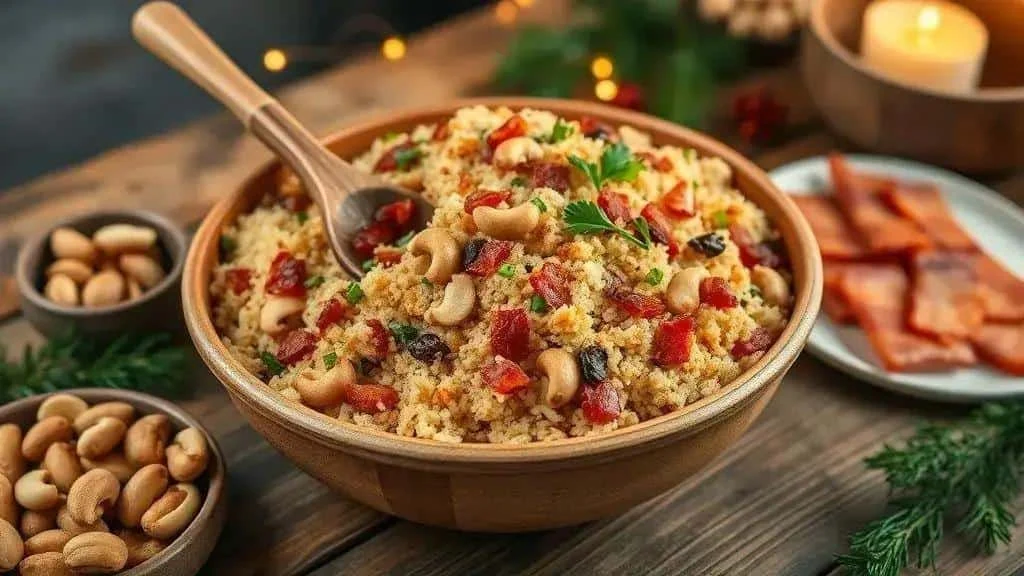
- Prepare everything first: dice the bacon, chop the nuts, onion, garlic and herbs, and measure the cassava meal. Have the butter, optional oil, eggs and raisins ready. Add fats gradually rather than assuming you need their full quantities.
- Toast the nuts gently in a dry frying pan over a medium heat, stirring for around 3–5 minutes until fragrant and lightly golden. Transfer to a plate immediately so they do not keep cooking in the hot pan.
Cook the bacon and aromatic ingredients
- Cook the bacon in a large frying pan over a medium heat, stirring occasionally until cooked through and crisp. This may take around 6–8 minutes, depending on the size of the pieces.
- Lift out the bacon with a slotted spoon. Retain a modest amount of rendered fat in the pan and drain off any excess rather than keeping it all automatically.
- Soften the onion and garlic in the retained fat, adding about 15 g butter if the pan needs it. Cook the onion for 3–4 minutes until softened, then add the garlic briefly so it does not burn.
- Add eggs, if using: move the onion aside, add a little more of the measured butter if needed and scramble the eggs until fully set before mixing with the onion.
- Add cassava meal gradually over a low heat, stirring to coat the crumbs evenly. Add the remaining butter or a little oil only if too dry for your taste. Keep the mixture loose and avoid scorching it.
- Check the seasoning after returning a little bacon to taste with the mixture. Add pepper and only as much salt as needed.
- Finish the farofa by folding in the cooked bacon, toasted nuts, optional raisins and chopped herbs. Mix briefly and remove from the heat.
- Serve promptly in a bowl with a few reserved nuts on top. If you prefer a drier texture, stir over a low heat briefly before adding the herbs, taking care not to burn the crumbs.
Vegetarian variation: use browned smoked tofu or sautéed mushrooms instead of bacon, and oil instead of bacon fat. For a vegan version, omit eggs and use no butter.
Variations on bacon and nut farofa
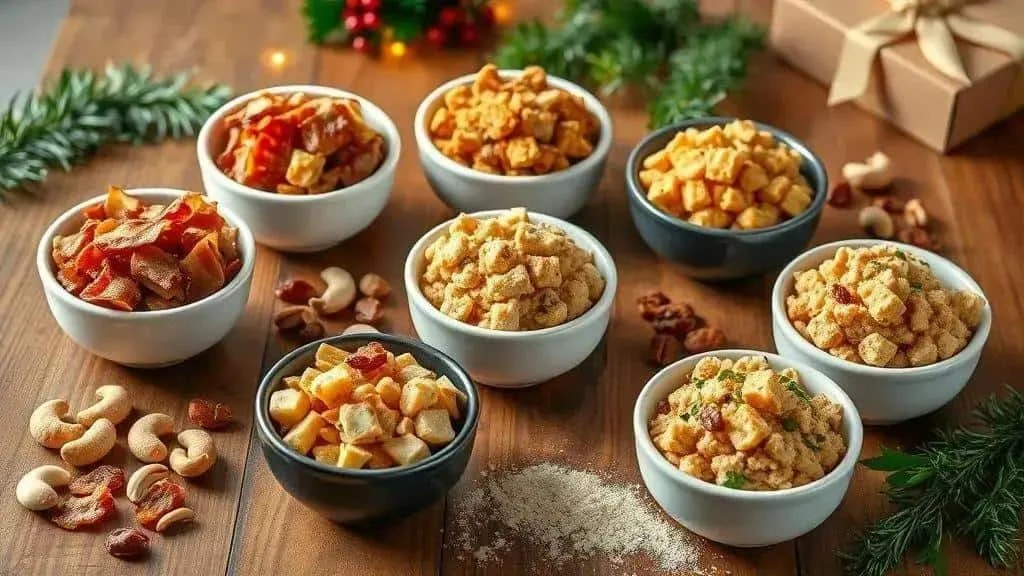
Adapt Christmas farofa with bacon and nuts to your guests’ preferences and available ingredients. These are alternatives, rather than extra ingredients to add all at once.
Bacon and toasted nuts
The main recipe combines rich bacon with a crumbly cassava base and toasted nuts.
- 200 g diced bacon – cook through and let it become crisp.
- 100 g chopped nuts – cashews or Brazil nuts, for example.
- 3 level 240 ml cups toasted cassava meal – coarse and crumbly, not tapioca starch.
Vegetarian farofa with smoked tofu
Replace bacon with smoked tofu or well-browned mushrooms for a different but savoury result.
- 200 g diced smoked tofu – prepare according to the packet and brown in a little oil.
- 100 g nuts – lightly toasted for crunch.
- Up to 3 tablespoons olive oil – use gradually in place of bacon fat, adjusting to the texture of your cassava meal.
A gluten-free variation
Use suitably labelled ingredients and keep preparation surfaces and utensils free from gluten cross-contact.
- Coarse cassava meal – naturally gluten-free, but check the product’s labelling; ordinary panko is not a gluten-free substitute.
- Optional toasted maize meal – a small amount of a ready-to-eat Brazilian toasted maize product gives another texture. Do not confuse it with cornflour or raw polenta requiring cooking.
- Toasted nuts – watch them closely in a dry pan and remove as soon as lightly golden.
Dried fruit and citrus
Dried fruit adds a sweet contrast to the salty bacon and toasted crumbs.
- About 75 g raisins or chopped dried apricots, optional.
- Finely grated orange zest – a little adds citrus aroma without making the farofa wet.
- Toasted nuts – retain their crunch by adding near the end.
Using less added fat
Reduce the bacon quantity and add butter or oil sparingly. Replacing butter with more oil or adding more nuts does not automatically lower the dish’s fat or energy content.
- 100 g leaner bacon or 150 g diced cooked turkey can replace the larger bacon quantity.
- A small amount of olive oil – add only what is needed to soften the onion and coat the meal.
- Extra herbs add aroma without needing more fat; nuts add flavour too, but naturally contain fat.
Herbs and Brazilian-inspired additions
Small additions can change the flavour without overwhelming the cassava meal.
- Parsley and chives – add generously at the end for a fresh finish.
- Fennel seed or finely chopped rosemary – use sparingly because the flavour can be strong.
- Brazilian-style additions such as cooked sausage or grilled queijo coalho cheese can be used for a different version, with salt adjusted accordingly.
Season last: taste after combining the bacon or other savoury additions, before adding salt or dried fruit.
Tips for crisp, fragrant farofa
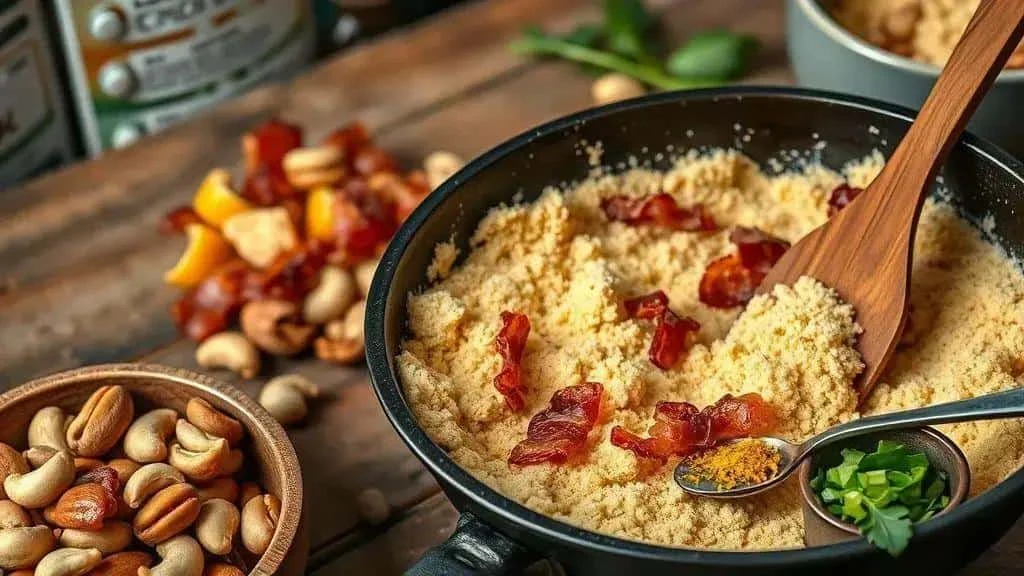
For crisp, fragrant farofa, choose the right meal, control the heat and keep the final additions brief.
Building texture
- Toast the nuts: use a dry pan over a medium heat, or an oven at 180°C conventional or 160°C fan. Watch closely and remove when lightly golden rather than relying on a fixed time.
- Cook the bacon thoroughly: let it crisp, then use a little of its rendered fat to flavour the crumbs, draining off excess.
- Use dry toasted cassava meal: the appropriate coarse product produces farofa’s characteristic texture. Do not use flour that has become damp or spoiled in storage.
- Add the meal in stages: stir over a low heat so it coats evenly without forming greasy clumps.
- Optional breadcrumb contrast: a small handful of toasted panko changes the texture, but normally introduces wheat and gluten. Suitable toasted maize meal is a different option.
Keeping the aroma fresh
- Add herbs at the end: fold in chopped parsley and chives as the pan comes off the heat.
- Try citrus zest: about a teaspoon of finely grated orange or lemon zest adds a fresh note.
- Use toasted seeds sparingly: a small amount of sesame can add flavour, but check for sesame allergies before including it.
Getting the final texture right
- Keep crisp additions for the finish: add cooked bacon and toasted nuts near serving time rather than cooking them throughout with the meal.
- Control the heat: a low to medium-low heat lets you toast the crumbs without burning them.
- Taste before salting: bacon may provide enough salt already; add only a small pinch at a time if needed.
- Reheat thoroughly: stir a chilled portion in a pan until steaming hot throughout, then add reserved toasted nuts. A quick 1–2 minute warming is not a reliable safety check.
- Garnish simply: reserve a few nuts and a little zest for the top.
Adjust fat gradually: reduce the butter if you prefer a drier farofa, then judge the texture before adding more oil or breadcrumbs.
Making gluten-free, vegetarian or vegan farofa
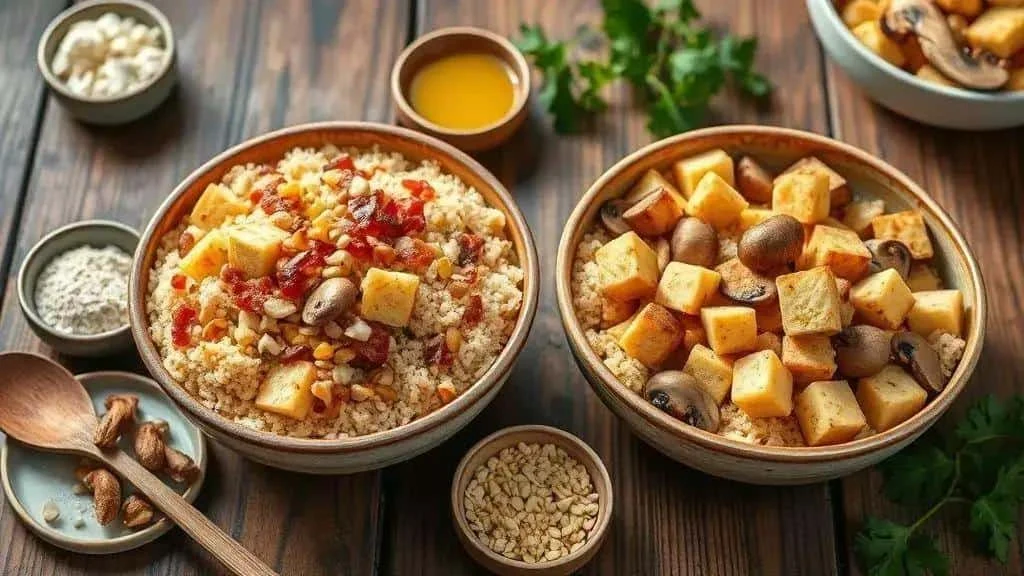
Gluten-free preparation requires both suitable ingredients and care to avoid cross-contact. Check all packaged products rather than relying on ingredient names alone.
- 3 level 240 ml cups coarse toasted cassava meal – choose a suitable labelled product for the base.
- A small amount of suitable toasted maize meal, optional – use a ready-to-eat product, not uncooked cornflour or polenta.
- 100 g chopped, toasted nuts – cashews or Brazil nuts provide texture and flavour.
- 200 g suitable gluten-free bacon, checking the label, or a suitable meat-free alternative. Meat-free does not automatically mean gluten-free.
- Butter or olive oil, added as needed – use the main method, adjusting for the fat released by your bacon or alternative.
- Salt and black pepper, to taste – season after combining the savoury ingredients.
- Prepare the additions: toast the nuts and set aside. Cook bacon or the chosen alternative thoroughly, retaining only as much fat as needed.
- Warm the dry ingredients: if using a ready-to-eat toasted maize product, stir it briefly over a gentle heat; follow its packet if further cooking is required.
- Coat the cassava meal: soften the onion and garlic in the chosen fat, then add the meal gradually over a low heat.
- Finish and taste: fold in the cooked bacon or alternative, nuts and herbs, then adjust seasoning.
Vegetarian and vegan options
- 200 g smoked tofu or mushrooms – cook as appropriate and brown well in place of the bacon.
- Up to 3 tablespoons olive oil – add gradually for a vegan version, with no butter or eggs.
- 1–2 tablespoons nutritional yeast, optional – adds a savoury note. It is not the same product as brewer’s yeast or baking yeast.
- 100 g toasted nuts – retain for the final stage.
- About 75 g raisins or chopped dried apricots, optional – for a sweet-savoury contrast.
- Brown the bacon replacement: cook diced tofu according to its packet and brown in a little oil, or sauté mushrooms until their released liquid has evaporated.
- Soften the onion and garlic: use the same pan with a little oil if needed, adding garlic after the onion has softened.
- Fold in the cassava meal: add gradually over a low heat and stir until lightly toasted and loose.
- Add the finishing ingredients: fold in tofu or mushrooms, nuts and herbs. Take off the heat and add nutritional yeast to taste if using.
Quick substitutions and checks
- Instead of bacon: try smoked tofu, cooked marinated tempeh or well-seasoned mushrooms.
- Instead of butter: use olive oil or another suitable plant oil, added sparingly.
- Instead of eggs: simply omit them for vegan farofa. A wet flaxseed binder is unnecessary and would change the loose, crumbly texture.
- Prevent cross-contact: use clean surfaces and utensils and check ingredient suitability for anyone with an allergy or coeliac disease.
Final texture: keep toasted nuts and the cooked bacon alternative separate until the final mixing stage, then taste before seasoning further.
What to serve with Christmas farofa
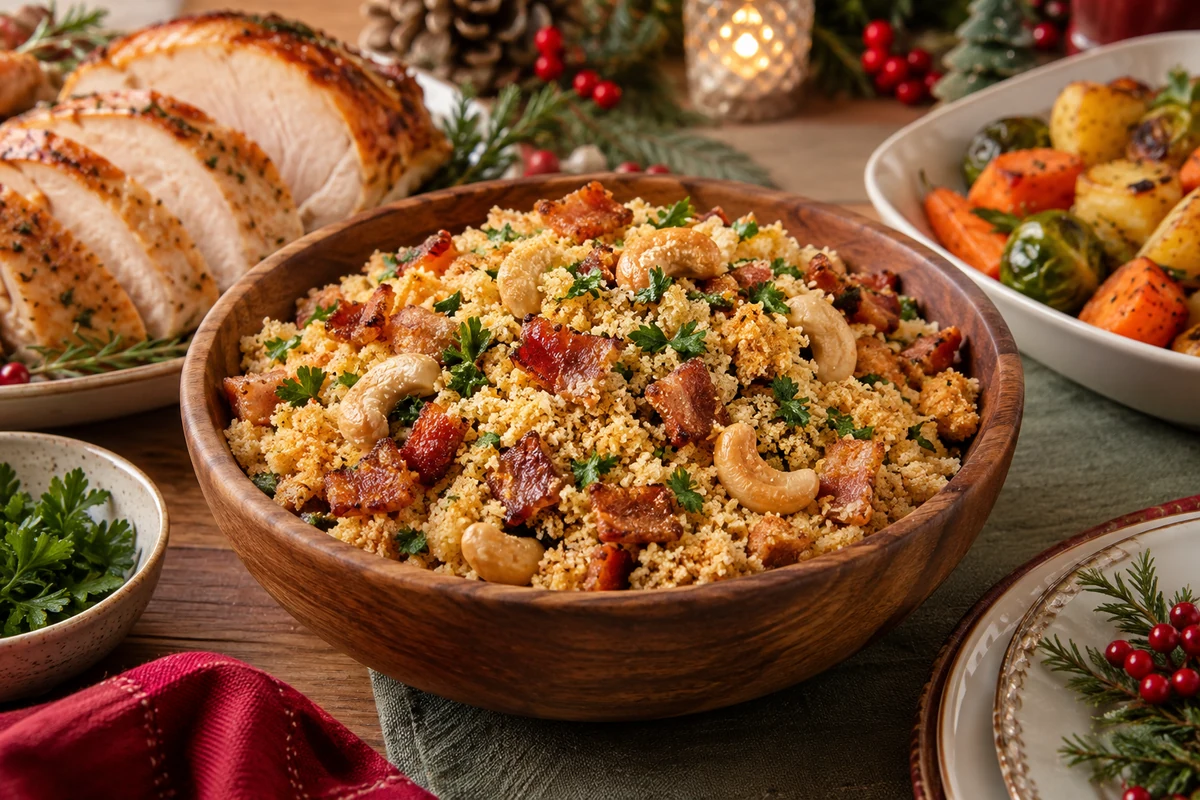
- Plain fluffy rice – a mild accompaniment to the savoury crumbs; adjust portions to the number of other sides.
- Roast turkey or chicken – sliced and served alongside, with the farofa in its own bowl.
- Roast beef or pork – offer the cooking juices or gravy separately so guests can moisten their farofa as they prefer.
- Fresh salad – lettuce, rocket and cherry tomatoes with a light dressing add contrast.
- A dried-fruit variation – choose it if you enjoy a sweet note alongside your roast, rather than necessarily serving two farofas.
- Roasted vegetables – potatoes, carrots or squash work well with the crumbly texture.
- Condiments – a little chilli jam, slowly cooked onion or a sharp pickle can add contrast.
Arranging the serving table
- Choose practical dishes: use a bowl for the farofa and wider platters for the meat and rice.
- Keep everything accessible: place taller items behind shorter dishes, on stable surfaces, without making guests reach over hot food.
- Use small serving bowls: replenish as needed rather than setting out the entire batch for a long buffet.
- Add a simple garnish: a few nuts, some finely grated zest and chopped herbs provide colour without cluttering the bowl.
- Arrange a natural serving order: plates first, followed by the main dishes, sides and sauces, with space for guests to move comfortably.
- Serve safely: serve freshly cooked farofa promptly. Keep chilled portions refrigerated until needed, then reheat once until steaming hot throughout rather than merely warming them.
Portions and preparing ahead
- Portion guide: allow roughly 60–80 g prepared farofa per person among several sides, or a larger portion if it is a main accompaniment.
- Make ahead: cool promptly in shallow portions and refrigerate within 1–2 hours. Use within 48 hours. Keep nuts separately for texture; cooked bacon and egg-containing farofa need refrigeration too.
- Taking it elsewhere: transport cooled farofa in a cool bag with ice packs, then refrigerate or reheat thoroughly at the destination. An insulated container alone does not establish safe hot-holding conditions.
Drinks to serve alongside
- Wine, if wanted: a white or rosé can be a flavour pairing for adults who drink alcohol.
- Beer, if wanted: a pale beer or alcohol-free alternative offers another option.
- Non-alcoholic choices: sparkling water with lemon or a citrus drink provides a fresh contrast.
A practical final touch: give the farofa its own serving spoon and make any nut or other allergen ingredients clear to guests.
A crisp Brazilian Christmas side
Toasted cassava meal, cooked bacon, nuts and fresh herbs create farofa’s mixture of savoury flavour and crumbly texture. Gentle heat and adding the crisp ingredients near the end make the method easier to control.
Adapt the optional eggs, fruit and seasonings to your menu. If preparing ahead, keep storage and reheating separate from the final nut and herb garnish so the farofa stays pleasant to eat.
Visit the I Love Christmas Blog for more festive recipes and side-dish ideas.
Christmas farofa: frequently asked questions
How do I keep farofa crisp?
Add cooked crisp bacon and toasted nuts near serving time, and avoid excessive fat or wet additions. Reheat chilled farofa once until steaming hot throughout, then fold in reserved nuts.
Can I make farofa ahead?
Yes. Cool promptly in shallow portions, refrigerate within 1–2 hours and use within 48 hours. Store nuts separately; cooked bacon must still be refrigerated. Reheat the portion needed once until steaming hot.
How do I make a savoury vegetarian version?
Replace bacon with browned smoked tofu, cooked tempeh or sautéed mushrooms, using oil instead of bacon fat. Nutritional yeast is an optional savoury addition. For a vegan version, also omit butter and eggs.
Which nuts work in farofa?
Cashews and Brazil nuts work well, as do walnuts or almonds. Toast gently and check guests’ allergies before including them.
How do I avoid making the farofa too salty?
Taste the mixture with the bacon included before adding salt. Add only a small pinch at a time; some bacon may provide all the seasoning you need.
Sources and Further Reading
- Food Standards Agency: cooking food safely
- Food Standards Agency: chilling, freezing and defrosting food safely