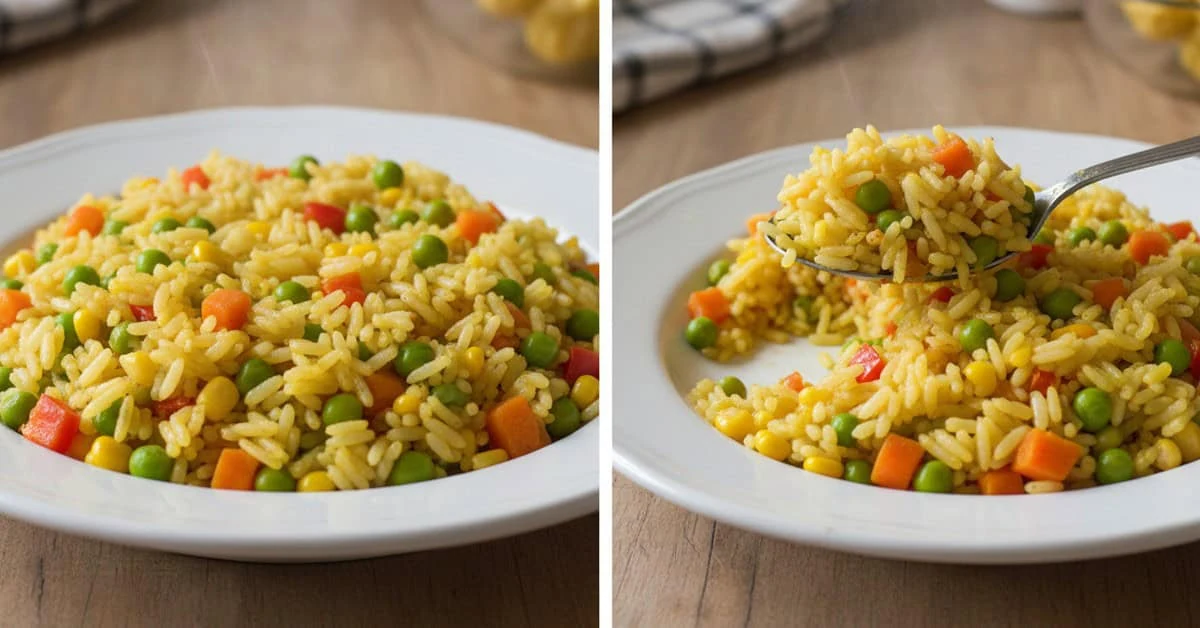
Brazilian Christmas rice, known as arroz à grega, combines fluffy long-grain rice with carrots, peas, peppers and optional raisins. Cook the rice with onion and the liquid quantity recommended on its packet, prepare the vegetables separately, then fold everything together with fresh parsley.
Brazilian Christmas rice is a colourful accompaniment to a festive meal. Raisins add a sweet contrast, but you can leave them out without changing the basic method. Here is a practical guide to separate grains, tender vegetables and a finish that suits your table.
Ingredients for Brazilian Christmas rice
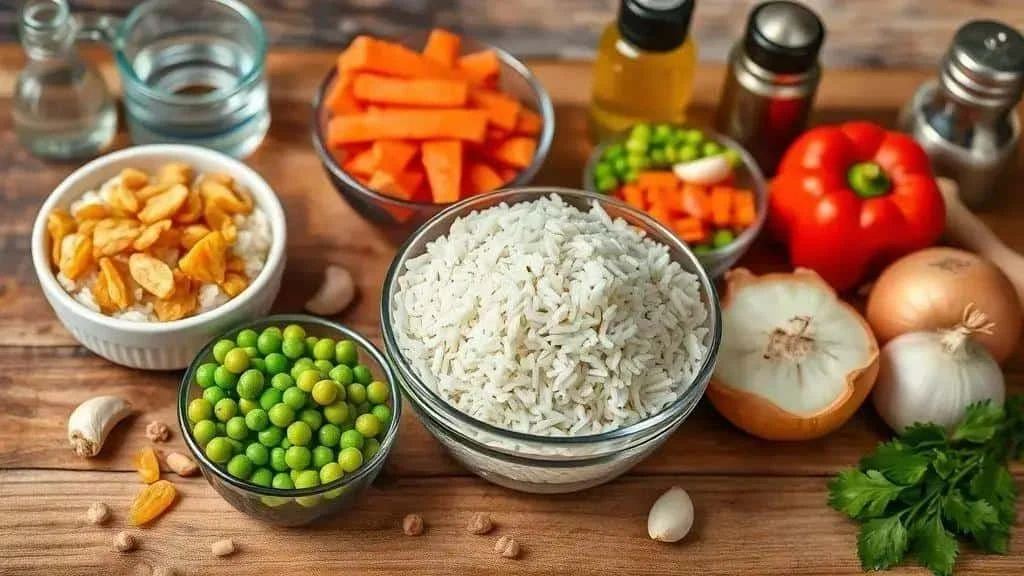
To make Brazilian Christmas rice, gather these ingredients. The quantities make about 6–8 side portions, depending on the rest of the meal.
- 400 g long-grain white rice, rinsed and drained – basmati is an alternative; follow the packet’s absorption-method liquid quantity and cooking time.
- Water or chicken stock, in the quantity specified for your rice – use the same volume whether choosing water or stock. Vegetable stock makes the dish vegetarian; the amount depends on the rice and cooking method.
- 2 tablespoons vegetable or olive oil, plus a little for the vegetables – butter is an alternative for a richer flavour.
- 1 medium onion, finely chopped – forms the aromatic base; red onion can also be used.
- 2 garlic cloves, finely chopped – optional if you prefer a gentler flavour.
- 1 medium carrot, finely diced – adds colour and sweetness; grated carrot cooks more quickly.
- 80 g fresh or frozen peas – cook fully according to the packet before adding; simply thawing frozen peas is not enough.
- 50 g raisins or sultanas, optional – omit if you prefer rice without a sweet element.
- About 40 g red pepper, finely diced – yellow pepper is a colourful alternative.
- Salt, to taste – start sparingly, especially with stock, and adjust at the end.
- Freshly ground black pepper, to taste – optional.
- Chopped fresh parsley, to finish – chives are another option.
Simple substitutions
- For a plant-based version: use olive oil and suitable vegetable stock, with no butter or meat additions.
- Without raisins: leave them out, or substitute chopped dried apricots if you still want a little sweetness.
- For separate grains: rinse the rice until the water runs nearly clear, drain well and avoid stirring during cooking.
- For gluten-free cooking: plain rice and vegetables are gluten-free, but check stock, seasonings and any added sauces for suitable labelling.
How to make Brazilian Christmas rice
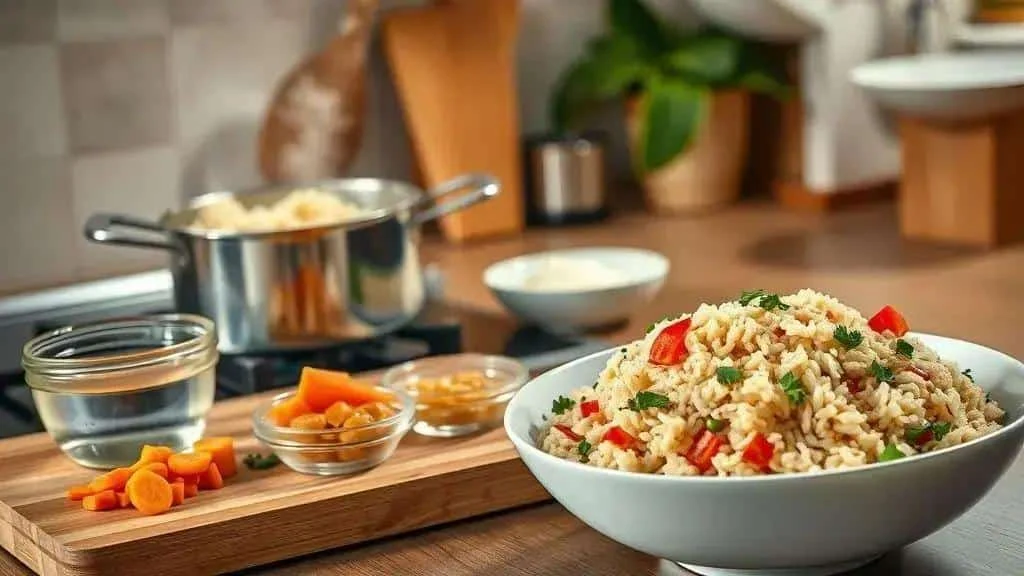
- Rinse the rice: place 400 g long-grain white rice in a sieve, rinse until the water is nearly clear and let it drain thoroughly.
- Heat the pan: warm 2 tablespoons oil in a roomy saucepan over a medium heat. Avoid overheating it and scorching the onion.
- Soften the onion and garlic: add 1 chopped onion and cook for 3–4 minutes, until softened. Stir in 2 chopped garlic cloves and cook for another 30 seconds without letting them burn.
- Add the rice: stir the drained grains through the onion and oil for 1–2 minutes, until lightly coated.
- Add liquid and seasoning: pour in the packet’s recommended amount of water, or the same volume of prepared stock. Add a little salt, if needed, then bring to the boil.
- Simmer gently: lower the heat, cover with a close-fitting lid and cook for the packet’s stated time, often around 12–15 minutes. Avoid lifting the lid or stirring unnecessarily.
- Prepare the additions: soften 1 finely diced carrot and the red pepper in a separate pan with a little oil, adding a splash of water if needed. Cook 80 g peas as directed on their packet. Soak 50 g raisins or sultanas in warm water for 5 minutes, then drain well.
- Rest the cooked rice: when tender and the liquid has been absorbed, take the pan off the heat and leave covered for 5 minutes. If the grains are still hard, add a small splash of boiling water and cook a little longer first.
- Fold everything together: fluff with a fork and gently mix in the cooked vegetables and drained fruit. Taste for salt and pepper. For a richer finish, an optional 15 g butter can be folded through while the rice is hot.
- Garnish and serve: transfer to a serving dish, scatter with chopped fresh parsley and serve hot. Leave out the raisins if preferred; use vegetable stock and omit butter for a vegan version.
Quick cooking tips
- Separate grains: rinse and drain well, use the correct liquid quantity and avoid stirring as the rice simmers.
- Salt control: prepared stock may already provide enough seasoning, so taste before adding more.
- Vegetable texture: cook the vegetables separately and fold them in at the end. Frozen peas still need the cooking directed on their packet.
- Yield: 400 g dry rice makes roughly 6–8 side portions with the vegetables, or fewer larger portions.
How to keep the rice fluffy rather than sticky
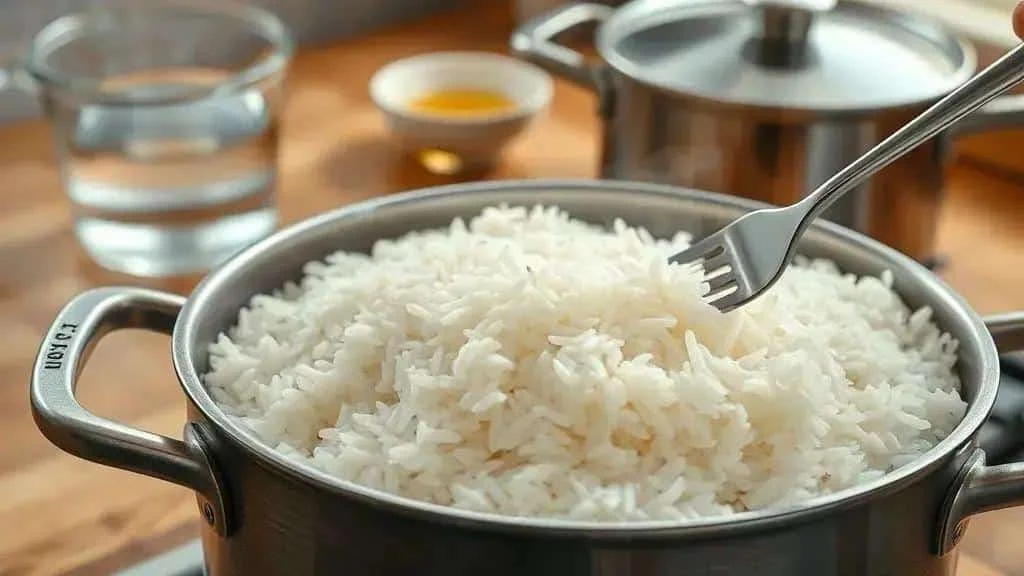
- Rinse until the water is nearly clear to remove some loose surface starch, then drain thoroughly.
- Measure the liquid: follow the absorption-method instructions for your rice rather than assuming every variety needs the same ratio.
- Coat the grains before cooking: stir them through the softened onion and oil for 1–2 minutes. This distributes flavour; it does not seal the grains.
- Stir as little as possible: once covered and simmering, leave the rice alone so you do not release steam or break the grains.
- Use gentle heat and a close-fitting lid to control evaporation and avoid scorching the bottom.
- Rest the cooked rice, covered, for 5–10 minutes before fluffing; check that it is tender before this resting stage.
- Fluff with a fork rather than pressing or vigorously stirring with a spoon.
- Choose stock carefully and reduce added salt when using a concentrated or already seasoned product.
- Using basmati or easy-cook rice? follow that packet’s liquid and timing instructions; a different type may need a different method.
- Avoid unnecessary extra fat – the oil in the recipe coats the grains, and the finishing butter is optional.
Common mistakes
- Adding extra water just in case can leave the rice soggy. Measure first and add a small splash only if the grains remain hard after absorbing the initial liquid.
- Not rinsing or draining properly can leave more surface starch or unmeasured water in the pan.
- Stirring throughout cooking can break grains and make the finished rice stickier.
- A cramped pan leaves too little room for the rice to expand and for the vegetables to be folded in gently.
A few finishing touches
- Drain well: let rinsed rice sit in the sieve briefly so it does not carry excess water into the pan.
- Add richness if wanted: use the optional finishing butter or a small drizzle of olive oil, folding rather than beating it in.
- If the rice is too wet: a brief uncovered rest can let excess steam escape. Severely overcooked grains will not become firm again, so avoid promising a quick oven rescue.
Variations with and without raisins
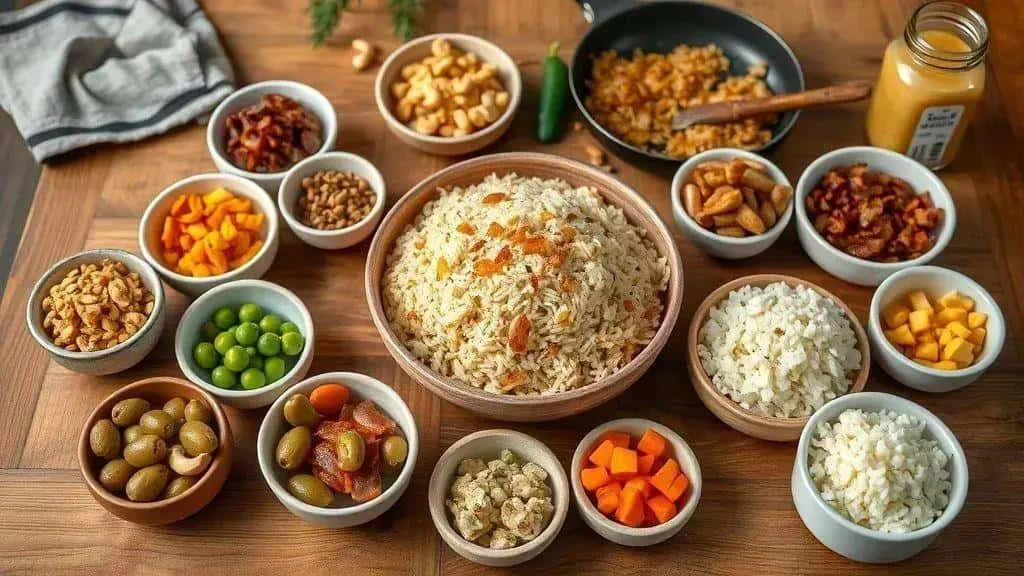
Adapt Brazilian Christmas rice to the other dishes you are serving. Choose a variation or two rather than adding every extra to the same pan.
The familiar raisin version
A little dried fruit gives a gentle contrast to the savoury rice and vegetables.
- Main additions: diced carrot, peas, red pepper and 50 g soaked, well-drained raisins or sultanas.
- Tip: a 5-minute soak softens dried fruit; drain it so it does not bring extra water into the rice.
Without raisins
Keep the colourful vegetables and simply omit the dried fruit for an entirely savoury version.
- Optional additions: a little extra cooked carrot or drained tinned sweetcorn can replace the fruit’s colour and texture.
- Tip: coating the rice in the onion and oil before adding liquid gives the savoury base more flavour.
Dried fruit and nuts
This variation adds contrasting textures to a festive meal.
- Optional extras: about 40 g chopped dried apricots and 40 g cashews or walnuts; keep or omit the raisins as you prefer.
- Tip: toast the nuts separately and add just before serving. Check guests’ allergies before including them.
Bacon and peas
Bacon makes a more substantial, savoury side dish.
- Change to the method: fry 100–150 g diced bacon until cooked through, then use a little of its fat instead of some of the oil for the onion. Keep the 80 g cooked peas.
- Tip: drain excess bacon fat and reduce added salt, as bacon is already salty.
Olives and slowly cooked onion
These additions give the rice a stronger savoury flavour alongside roast meat or vegetables.
- Key additions: about 40 g sliced olives, slowly cooked onion to taste and the red pepper from the main recipe.
- Tip: cook the extra onion gently until soft and golden, stirring as needed. True caramelisation takes longer than a quick 10-minute sauté.
A simple vegan version
Vegetable stock and olive oil provide a plant-based base without changing the rice method.
- Substitutions: use the packet’s required liquid volume as vegetable stock, choose olive oil instead of butter and leave out bacon or other animal ingredients.
- Tip: a small squeeze of lemon just before serving can brighten the flavour.
Cauliflower variation
Finely grated cauliflower gives a vegetable-based variation with a different texture and cooking method from rice.
- Ingredients: about 500–600 g finely grated cauliflower, finely diced carrot, a smaller quantity of cooked peas and the same aromatic seasonings.
- Tip: sauté the cauliflower briefly until tender, without the rice-cooking liquid. Fold in the separately cooked vegetables; overcooking makes it soft and watery.
Vegan and gluten-free substitutions
- Stock: replace the required volume of chicken stock with the same volume of suitable vegetable stock. Taste before adding salt.
- Finishing fat: use a little olive oil or 15 g labelled vegan spread instead of the optional butter.
- Optional savoury seasoning: although soy sauce is not required in the main recipe, you can add 1–2 teaspoons labelled gluten-free tamari or suitable coconut aminos. Check the label and reduce other salt.
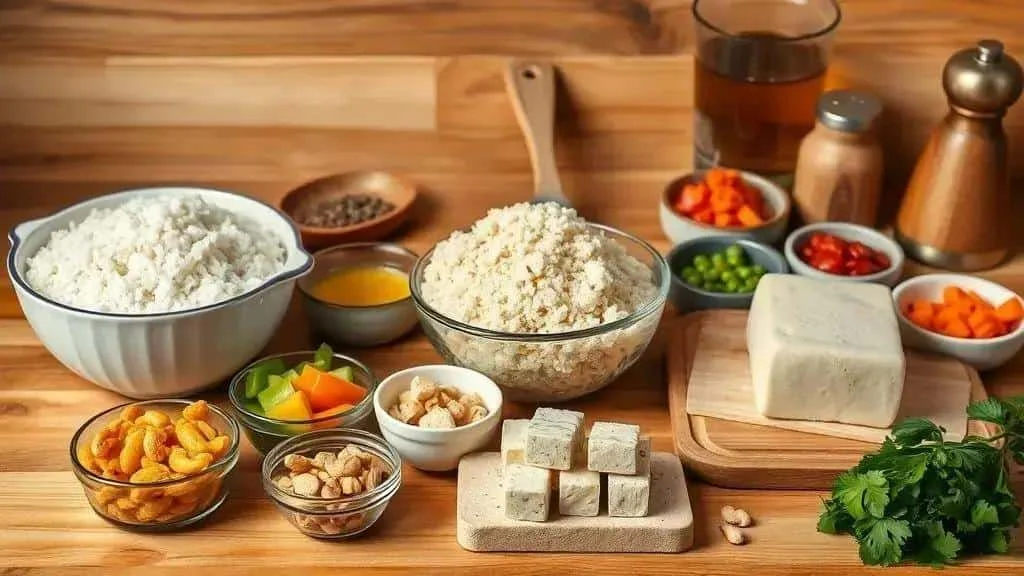
- Instead of bacon: try 100 g diced smoked tofu or 150 g sautéed mushrooms, prepared separately and folded through.
- Raisins: replace with about 40 g chopped dried apricots or omit for an entirely savoury dish.
- Dairy-free finish: swap the optional 15 g butter for a small drizzle of olive oil or suitable dairy-free spread.
- Alternatives to rice: plain rice is naturally gluten-free. For variety, use quinoa cooked according to its packet or finely grated, sautéed cauliflower; neither is a direct substitute in the rice method.
Changes to the preparation
- Vegetable stock: use the same measured liquid volume required for your rice, then check the seasoning at the end.
- Olive oil: soften the onion and coat the rice as in the main method.
- Plant-based savoury flavour: a teaspoon of suitable tamari or a tablespoon of nutritional yeast can be an optional addition. Taste before adding more salt.
- Smoked tofu: cook diced tofu according to its packet, brown separately if wanted, then fold into the finished rice.
- Colourful vegetables: add cooked peas and peppers near serving time to preserve texture, rather than merely thawing frozen vegetables into the rice.
- Quinoa or cauliflower: follow the quinoa packet for liquid and cooking time. Sauté cauliflower without adding the rice’s volume of stock.
Labels and allergens
- Stock and seasoning: check product labels for gluten and other relevant allergens; choose a suitable gluten-free stock when needed.
- Bottled sauces: ordinary soy sauce commonly contains wheat, and tamari is not automatically gluten-free. Look for explicit labelling.
- Cross-contact: use clean utensils and surfaces, and keep unsuitable ingredients separate when cooking for someone with coeliac disease or an allergy.
Finishing ideas
- Extra flavour: try a little lemon zest or an optional tablespoon of nutritional yeast.
- Crunch: scatter over about 40 g toasted cashews or walnuts, if suitable for your guests.
- Freshness: add chopped parsley or chives just before serving.
Storing and reheating rice safely
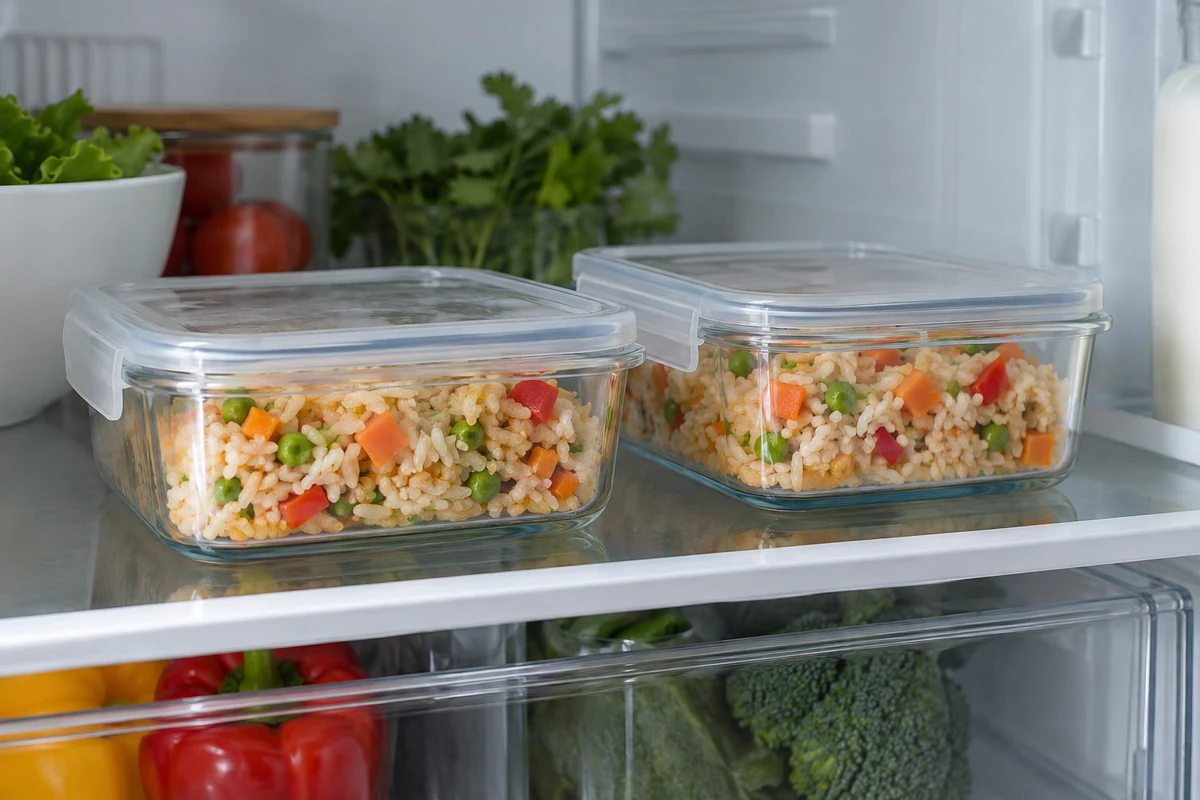
Safe storage starts with rapid cooling. Rice needs particular care: do not leave it standing in its cooking pan for hours before refrigerating.
- Cool quickly: divide rice into small, shallow portions and get it into the fridge promptly, ideally within one hour of cooking.
- Use suitable containers: store covered portions in clean food containers so you can take out only what you need.
- Fridge storage: use within 24 hours and keep the fridge at 5°C or below. Freeze promptly if you need to keep it longer.
- Freezing: freeze cooled portions promptly in suitable containers and aim to use within one month for best texture. Label each portion with its date.
- Defrosting: thaw in the fridge and use within 24 hours of fully defrosting. If using a microwave to defrost, continue immediately into thorough reheating.
- Reheat only once: take out just the portion you plan to eat and heat until steaming hot throughout.
Reheating while keeping a good texture
On the hob
- Prepare a pan: add a small splash of water to the rice; water, rather than extra oil, provides steam.
- Separate the grains gently: stir enough to break up cold clumps and distribute the moisture.
- Heat thoroughly: cover and heat, stirring as needed, until steaming hot right through. Do not rely on a fixed 3–5 minute timing for every portion.
In the microwave
- Choose a microwave-safe dish: use an appropriate vented cover and follow the appliance instructions.
- Add a little moisture: sprinkle with a tablespoon or two of water, depending on the portion size, and loosen the grains.
- Heat and stir: follow the microwave guidance, stirring between intervals and allowing the recommended standing time. Check for steaming heat throughout, with no cold pockets.
In the oven
- Preheat to 180°C conventional or 160°C fan: spread the rice in a shallow ovenproof dish.
- Moisten and cover: add a small splash of water and cover with foil to retain steam.
- Check the centre: heat until steaming hot throughout, stirring if practical. A large dish may take considerably longer than a small portion.
In a steamer
- Use a proper steaming setup: place the rice in a suitable heatproof dish above simmering water, keeping it stable and following the steamer’s instructions.
- Cover and heat through: check that the middle becomes steaming hot, not just the outer grains. Take care when removing the lid and hot dish.
Practical reheating tips
- Adjust moisture gradually: a small splash of water helps dry rice; adding too much can make it soggy.
- Avoid excess oil: it does not replace steam or thorough heating.
- Reheat one portion at a time: only warm what you will eat, and do not cool and reheat that portion again.
- Refresh the garnish: add fresh parsley after reheating; extra butter or oil is optional.
Arroz à grega at the Brazilian Christmas table
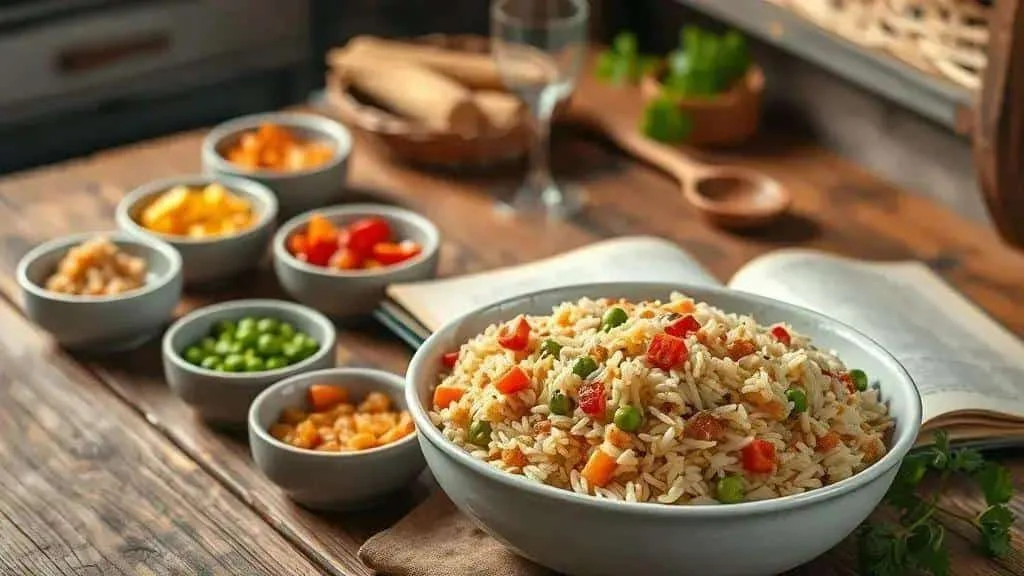
Arroz à grega is familiar in Brazilian festive cooking. Although its name translates as Greek-style rice, the colourful rice, vegetable and raisin combination described here is presented as a Brazilian dish, not as a definitive traditional recipe from Greece.
About the name
The precise origin of the name is not established here. Rather than attach an unverified story or date to it, this guide focuses on the version cooked in Brazilian homes and the practical choices involved in making it.
Christmas meals and the raisin question
At Brazilian family celebrations, raisins can divide opinion: some enjoy the sweet-savoury contrast, while others prefer their rice without fruit. Serving the raisins separately is a simple compromise.
Useful details about the dish
- Soaking dried fruit: a short soak softens raisins before they are folded into the rice; drain them well.
- Frozen peas: convenient and colourful, they still need cooking according to their packet, even when added near the end.
- Fluffy grains: rinsing, measuring liquid and letting cooked rice rest all help the final texture.
- Household variations: bacon, nuts and different dried fruits are possible additions, but none is essential to this version.
Adapting it to your menu
Vegetable stock makes an easy plant-based variation, nuts and apricots give a festive finish, and cauliflower offers a different vegetable-based dish. Choose the combination that complements your main course rather than adding ingredients simply for variety.
A flexible festive accompaniment
Whatever the preference on raisins, Brazilian Christmas rice offers an adaptable way to bring colour and texture to the table.
Ready for the festive table
Good Brazilian Christmas rice starts with properly cooked grains and vegetables, then gentle mixing and careful seasoning. Keep the raisins, serve them separately or leave them out: the choice is yours.
Visit the I Love Christmas Blog for more festive recipes and ideas for planning the rest of your Christmas meal.
Brazilian Christmas rice: frequently asked questions
Should I soak the raisins first?
A 5-minute soak in warm water softens the 50 g raisins or sultanas. Drain well before adding so you do not introduce extra liquid into the rice.
How do I stop the rice becoming sticky?
Rinse and drain it, follow its packet’s liquid quantity, simmer gently with the lid on and avoid stirring. Once tender, rest covered for 5–10 minutes and fluff with a fork.
Can I make Brazilian Christmas rice ahead?
Yes, but cool it quickly, ideally within one hour, refrigerate promptly and use within 24 hours. Reheat only once until steaming hot throughout, adding a little water if needed.
How can I make it vegan or gluten-free?
Use vegetable stock and oil instead of chicken stock and butter for a vegan version. For gluten-free cooking, check stock and added seasonings; choose explicitly gluten-free tamari if using it. Plain rice and vegetables are naturally gluten-free.
How do I keep the vegetables from making the rice soggy?
Cook carrot and pepper separately, cook peas according to their packet, then drain and fold them into the rested rice. Simply defrosting frozen peas is not a substitute for cooking them.
Sources and Further Reading
- Food Standards Agency: cooking food safely
- Food Standards Agency: chilling, freezing and defrosting food safely
- Food Standards Agency: cooking and reheating safely, including rice