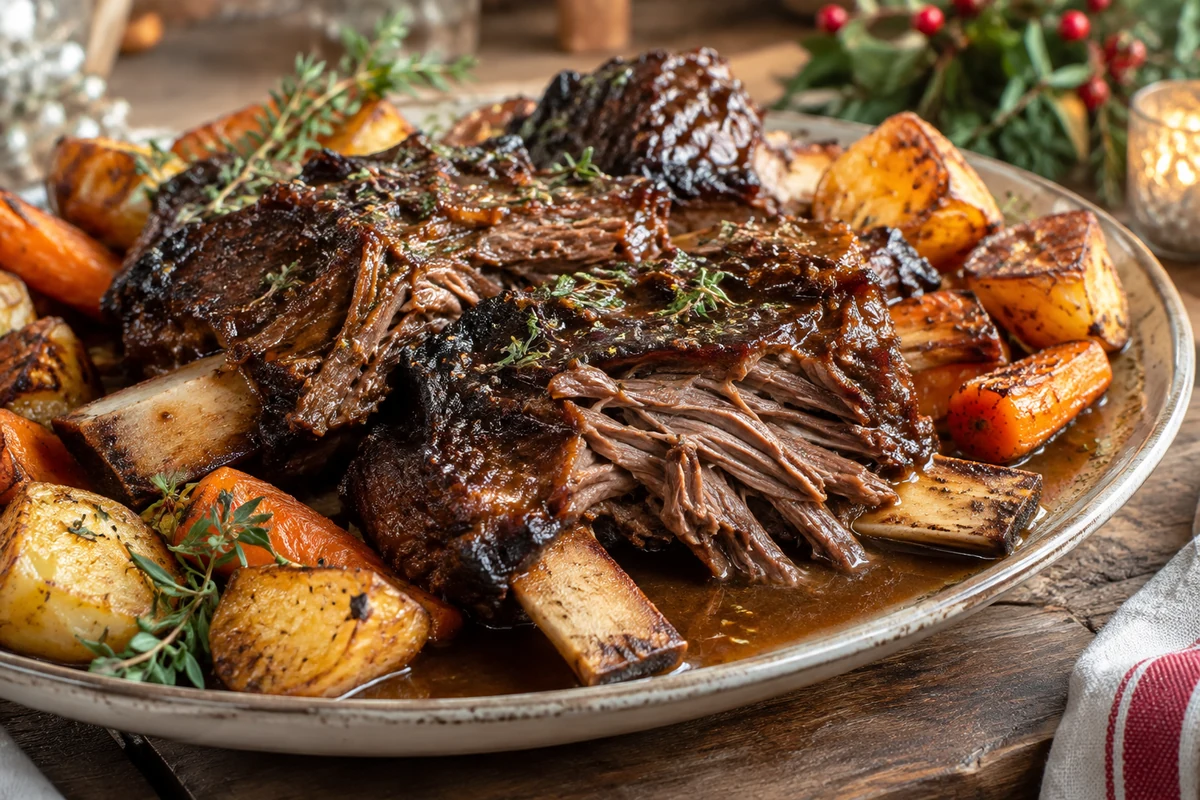
Slow-roasted beef short ribs become tender through prolonged gentle cooking with seasoning, a little stock and a tightly covered roasting dish. A large slab may take much of the day, but twelve hours is a planning estimate, not a compulsory cooking time. Check the liquid, temperature and tenderness, then rest before portioning.
Slow-roasted beef short ribs make a generous Christmas centrepiece, with deep flavour and meat that pulls easily from the bone. This long, gentle method uses straightforward seasonings and careful checks rather than a promise that every cut will be ready at exactly twelve hours.
Ingredients for slow-roasted beef short ribs
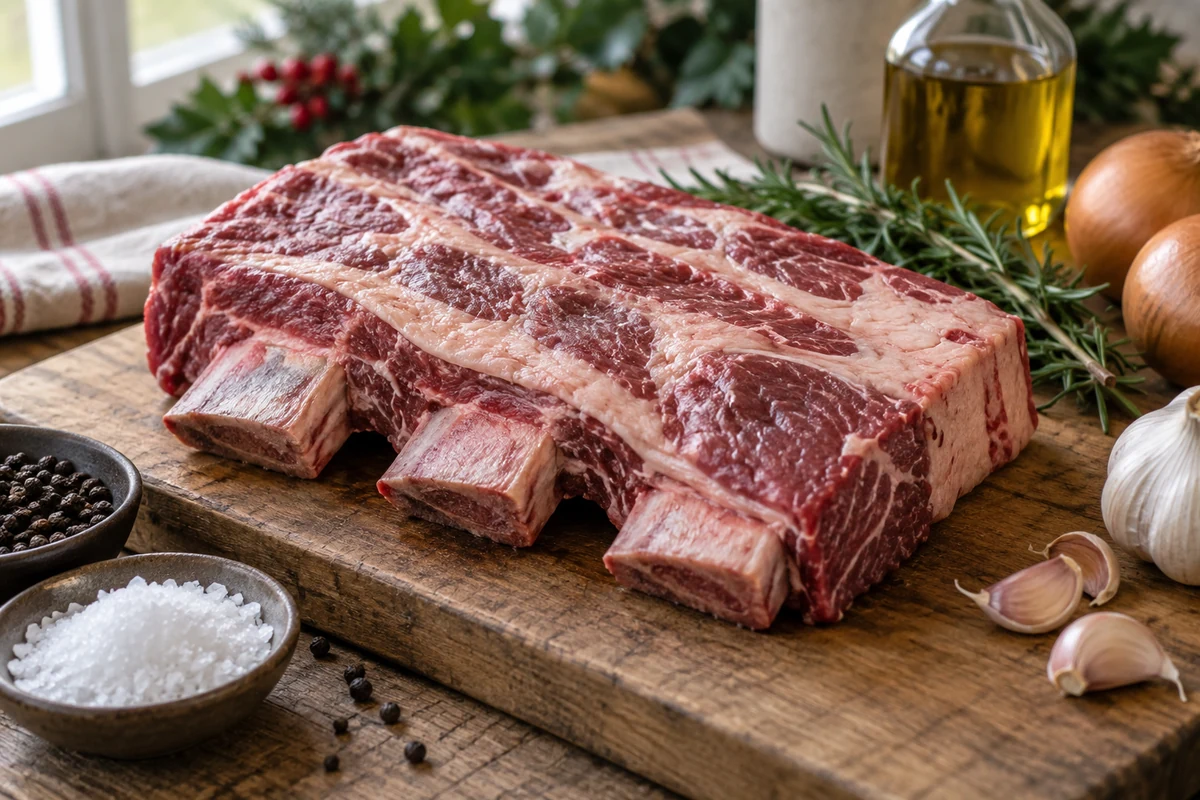
For these slow-roasted beef short ribs, gather the ingredients below. A 3–4 kg bone-in slab gives roughly 6–8 generous servings, depending on its bone and fat content.
Ingredients for slow-roasted beef short ribs
- 3–4 kg bone-in beef short ribs – a meaty slab, sometimes sold as Jacob’s ladder in the UK. Ask the butcher for ribs suitable for slow cooking, not a prime rib roasting joint; individual short ribs will cook differently.
- Up to 3 tablespoons coarse salt, adjusted to taste – start with considerably less if using fine salt or salted stock. Crystal size changes the amount in a spoon; the full quantity is not compulsory.
- 2 tablespoons ground black pepper – or less for a milder rub.
- 6 crushed garlic cloves – or garlic granules adjusted to taste; do not assume 2 tablespoons granules are equivalent to 6 cloves.
- 2 medium onions – sliced for the base of the roasting tin.
- 2 tablespoons smoked paprika – or sweet paprika; a pinch of cayenne adds heat but does not replace the smoked flavour.
- 2 tablespoons soft brown sugar – optional for a sweeter crust; honey or grated rapadura changes the flavour and texture of the rub.
- 3 tablespoons olive oil – divided between browning and the seasoning; vegetable oil is an alternative.
- 2 tablespoons Worcestershire sauce – or 1 tablespoon soy sauce diluted with 1 tablespoon water, with a different flavour and allergen profile.
- 300 ml beef stock or pale beer – for the tin, with extra hot stock or water available if needed. Choose stock for an alcohol-free version.
- 2 rosemary sprigs and 2 thyme sprigs – or about 1 teaspoon dried mixed herbs.
- 2 bay leaves.
- 1 teaspoon chilli flakes, optional – omit for less heat.
- Juice of 1 lemon, optional – or 1 tablespoon cider vinegar, for flavour rather than a guarantee of tenderising the whole joint.
Before seasoning: consider the salt already present in the stock and sauces. Marbling and connective tissue make short ribs well suited to slow cooking, but both timing and final yield vary between pieces.
How to cook slow-roasted beef short ribs
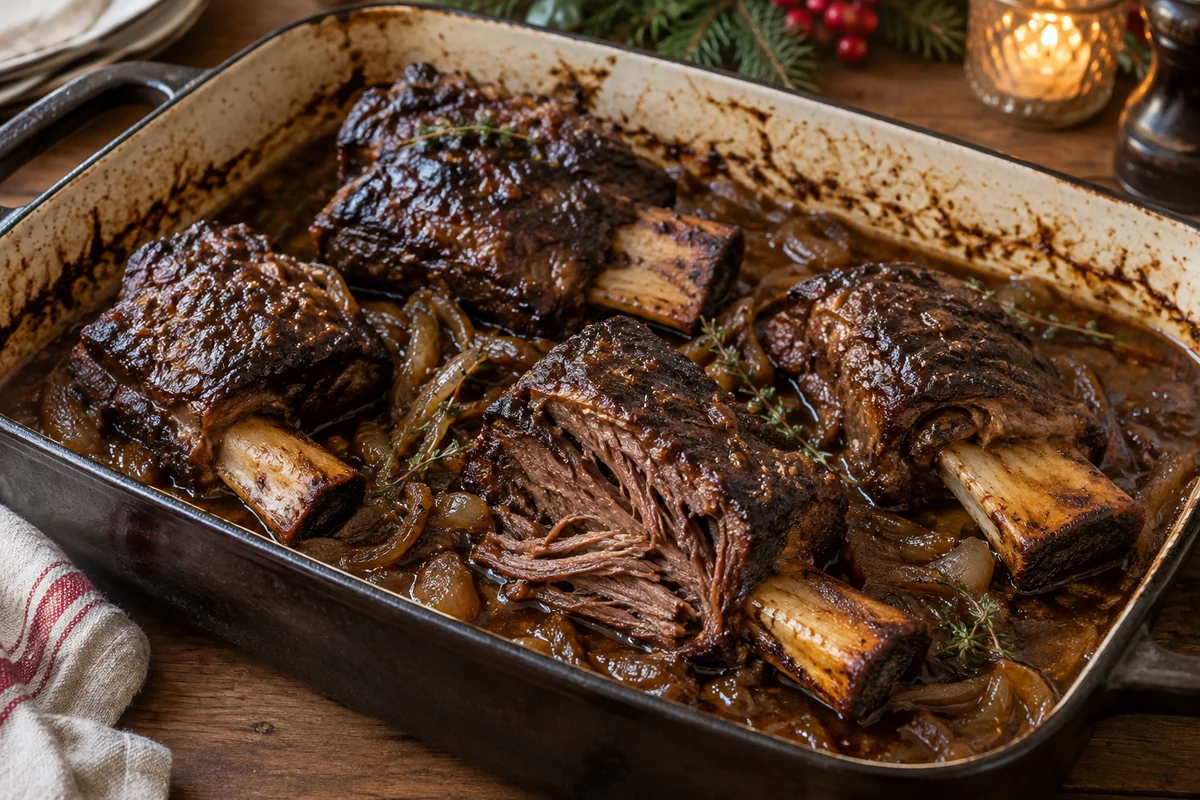
- Prepare the ribs: use fully defrosted meat. Ask the butcher to remove any tough membrane if needed, trim loose excess fat and pat dry with kitchen paper. Do not wash raw meat.
- Prepare the seasoning: mix your chosen amount of salt with black pepper, smoked paprika, garlic, brown sugar and 2 tablespoons of the oil. Stir in the Worcestershire sauce and optional lemon juice and chilli. Reserve the remaining tablespoon of oil for browning.
- Marinate if convenient: rub the seasoning over the ribs, cover and refrigerate for 2 hours or overnight, within the use-by date. Keep chilled until preparation rather than leaving a large slab out to reach room temperature.
- Brown carefully: if your pan can safely accommodate the ribs, use the reserved oil to brown the outside. Watch the sugar and garlic closely so they do not burn; browning before applying the sweet rub is another option. This adds flavour, not a seal that traps juices.
- Prepare the tin: spread the onions across a deep roasting tin, add the stock or beer, rosemary, thyme and bay leaves, then place the ribs bone-side down on top. A close-fitting tin helps the liquid last.
- Cover securely: use a suitable ovenproof lid or tightly sealed foil to retain steam. The dish must have room for the meat and liquid without overflowing.
- Cook gently: place in an oven preheated to 120°C conventional. A large slab may need up to about 10–12 hours, while smaller or thinner ribs can be ready much sooner. Check during cooking rather than waiting twelve hours blindly. Keep the tin from drying out, use a thermometer and stop when the meat is thoroughly cooked and tender. Follow your oven’s guidance for prolonged low-temperature cooking and do not leave cooking unattended overnight.
- Monitor moisture: check the seal and liquid as the ribs cook, topping up with hot stock or water if needed. Baste when checking if you wish, then cover again promptly.
- Brown the surface: once tender, uncover and briefly raise the oven to 200°C conventional/180°C fan, or use the grill with suitable cookware. Watch closely, especially with a sugary rub, and stop as soon as the surface is browned rather than adding a fixed extra forty minutes.
- Check tenderness: a skewer or fork should meet very little resistance and the meat should release readily from the bone. Around 90–95°C in the thick meat is a useful texture guide, not a guarantee that collagen has softened in every piece; check both temperature and feel.
- Rest: cover loosely and rest for 20–30 minutes before portioning and serving.
- Portion and serve: cut between the bones or pull the meat into portions, removing bone fragments. Skim excess fat from the juices, heat them thoroughly and spoon a little over the meat.
- Adjust the flavour: add chilli if preferred. For an alcohol-free version, use stock rather than beer, with a little cider vinegar if you want acidity. Check sauces and stock for allergens.
Finishing the ribs
Variations on slow-roasted beef ribs
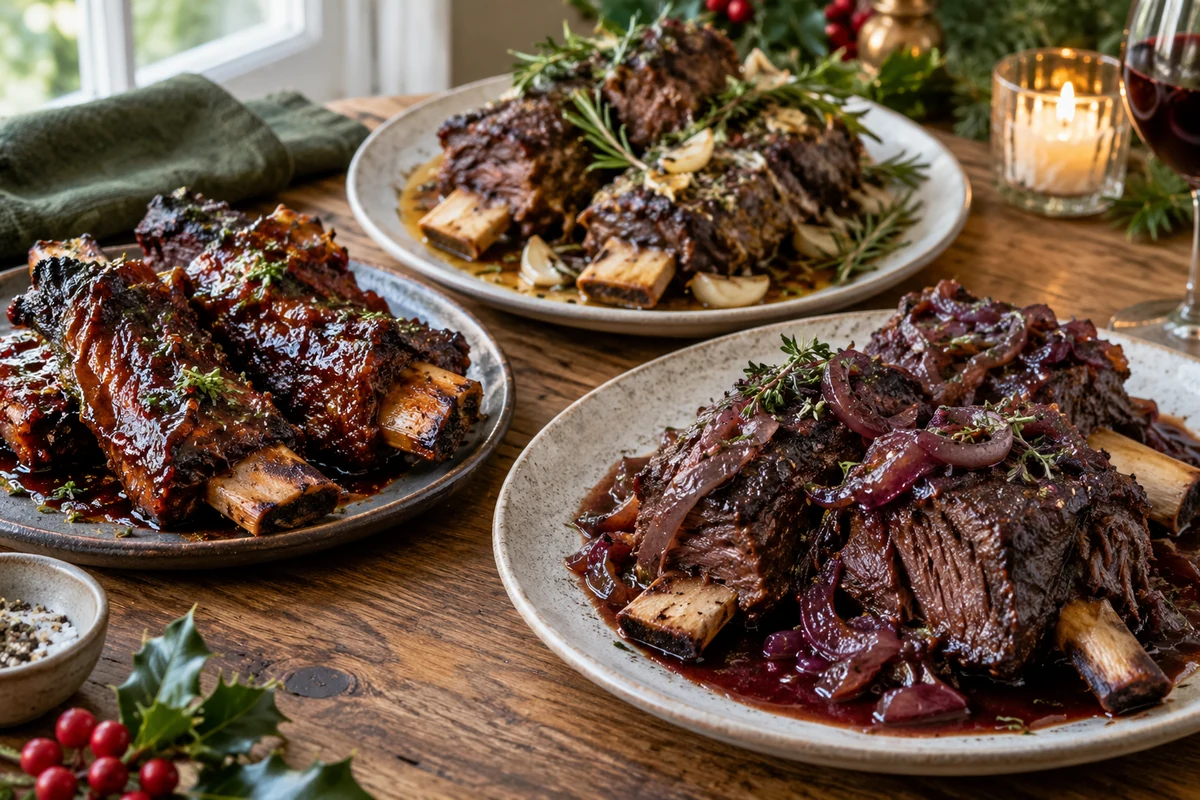
You can vary the seasoning of slow-roasted beef short ribs or use another appliance. A different method needs its own tested timing and capacity guidance; it is not simply the same twelve-hour recipe at a new temperature.
Smoked barbecue style
A suitable outdoor smoker gives a different result, with smoke flavour and a glazed finish.
- Use a rub with brown sugar, smoked paprika, salt and pepper, watching the sugar during the final browning.
- Use food-safe smoking wood and a tested short-rib method for your smoker, monitoring cooking temperature and doneness. A generic 4–6-hour smoke is not a complete cooking instruction for every slab.
- Brush with barbecue sauce towards the end and allow it to set without burning.
Pressure-cooker version
Pressure cooking can tenderise smaller rib portions more quickly, but the quantity must fit the appliance safely.
- Brown suitable portions first if your appliance’s instructions allow it.
- Use a tested recipe specifying the rib size, minimum liquid, maximum fill and pressure setting. Do not pack an entire 3–4 kg slab into a small cooker or assume 500 ml liquid and ninety minutes suit every model.
- Release pressure as the manufacturer and recipe instruct, then check tenderness. A brief oven or grill finish can brown the cooked ribs.
Mustard and herb crust
Add a herb coating near the end for a more aromatic finish.
- Mix 3 tablespoons mustard with chopped rosemary and thyme, 1 tablespoon olive oil and a little pepper.
- Apply near the end of cooking, then uncover to brown, watching closely rather than relying on a fixed finishing time.
- A little breadcrumb topping can add crunch; use gluten-free crumbs if required and check the mustard too.
Beer and caramelised onions
This variation produces a malty, onion-rich pan sauce.
- Replace the stock with 300–400 ml pale beer, topping up with water if needed during cooking.
- Soften and slowly brown 3–4 sliced onions in a little butter before placing them under the ribs; additional sugar is optional.
- After roasting, skim excess fat and reduce the liquid only until its flavour and consistency suit you.
Reducing salt and added sugar
You can reduce these ingredients, but the result should not automatically be labelled low-sodium or low-calorie without analysis.
- Use less of the salt and build flavour with garlic, herbs and smoked paprika, also checking the sauces.
- Reduce or omit the brown sugar. Molasses, honey and fruit syrups still add sugar; they are not sugar-free substitutes.
- Choose unsalted or reduced-salt stock. A little cider vinegar adds acidity, but does not replace the long cooking needed to soften connective tissue.
Individual ribs with a barbecue finish
Smaller pieces are easier to serve and can be finished briefly over a hot grill after cooking through.
- Ask the butcher to portion the ribs, or cut between the bones after cooking and resting.
- Individual ribs may take substantially less time than a whole slab. Check early and cook until thoroughly done and tender; do not impose a fixed 6–8 hours on every piece.
- Brush with sauce only near the end of grilling so it does not burn, and serve promptly.
Seasonings, marinades and tenderness
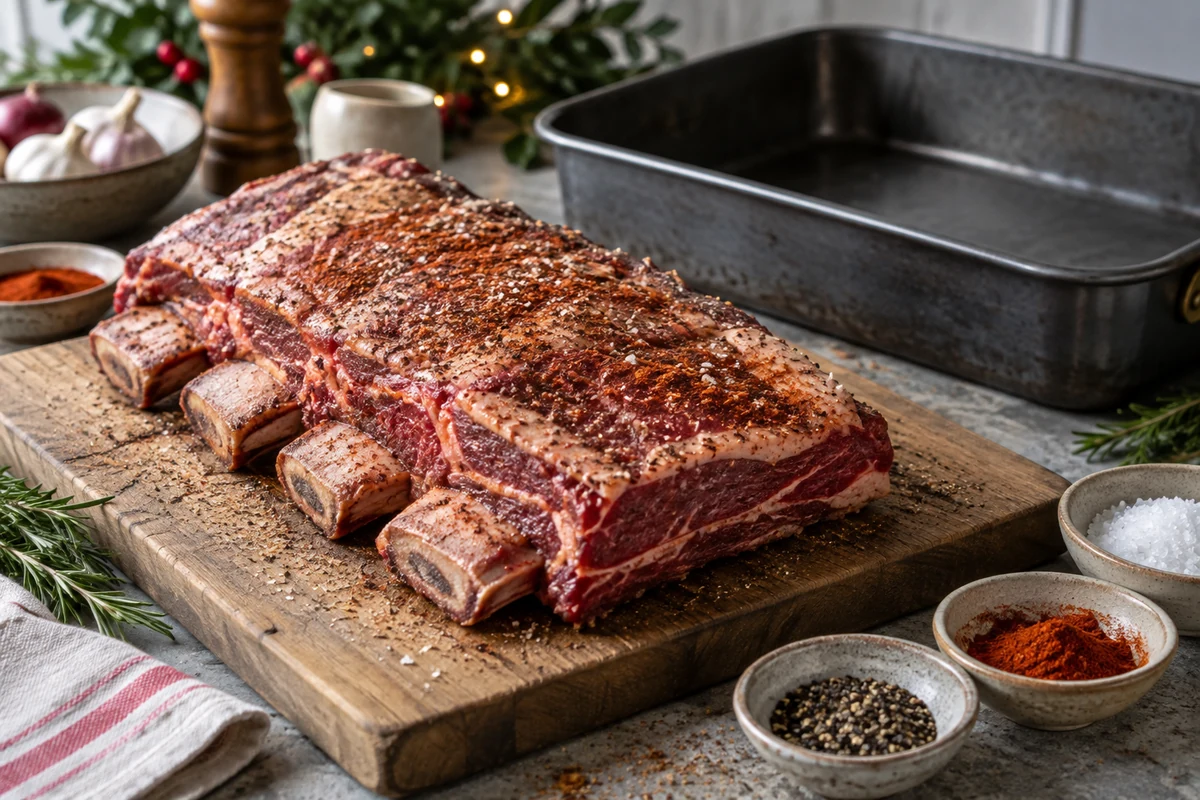
A dry rub and a liquid marinade add flavour, mostly near the surface. Controlled, prolonged cooking is what softens the ribs’ connective tissue; a marinade does not tenderise a whole large slab evenly.
An alternative dry rub
- Coarse salt, up to 3 tablespoons – use less according to the meat, crystal size and salt in the accompaniments.
- 2 tablespoons brown sugar – optional.
- 2 tablespoons smoked paprika.
- 1 tablespoon ground black pepper – a milder amount than in the main rub.
- 1 teaspoon garlic powder – adjust to taste.
Apply the rub: pat the ribs dry, rub over the surface and refrigerate, covered, for 2 hours or overnight within the use-by date. Use this instead of the main seasoning mixture, not on top of it.
Marinades and brining
- A stock-based marinade: combine 300 ml beef stock, 2 tablespoons Worcestershire sauce, the juice of 1 lemon, 2 crushed garlic cloves and 1 tablespoon oil. This does not reliably total 500 ml; there is no need to top it up to that volume.
- Brining is optional: if using a wet brine, follow a tested recipe for the exact cut, meat weight, salt concentration and refrigerated duration. Do not combine a full-strength brine with all the salt in the rub.
Marinate in the fridge: cover the meat and stay within its use-by date. Acid changes surface texture but does not sterilise raw meat. Reserve any finishing sauce before contact with raw meat, and discard used raw marinade.
Techniques that help
- Browning: brown the outside for flavour where practical, taking care not to burn sweet seasonings.
- Gentle covered cooking: use a preheated oven and a covered tin, checking the ribs rather than relying only on the elapsed time.
- Enough moisture: start with the recipe’s 300 ml liquid and replenish as needed. The amount that evaporates depends on the tin and its seal.
- Basting: spoon over some pan juices when checking, if desired, then cover again promptly.
- A browned finish: once tender, uncover and use a short hotter finish, watching the surface carefully.
- Use a thermometer and a tenderness test: around 90–95°C often accompanies a pull-apart texture, but a probe should also slide in easily. Temperature alone does not tell you how long the connective tissue has had to soften.
- Rest before serving: allow 20–30 minutes under loose foil, then portion and serve.
Other methods: smoking or sous-vide can produce different textures, but require suitable equipment and a tested method. A broad temperature range without a validated time, thickness and chilling process is not a safe sous-vide recipe.
The cut, its thickness, reliable oven temperature and enough cooking time all affect the result. Keep an eye on the meat and liquid rather than treating the process as completely hands-off.
Time, oven and long-cooking tips
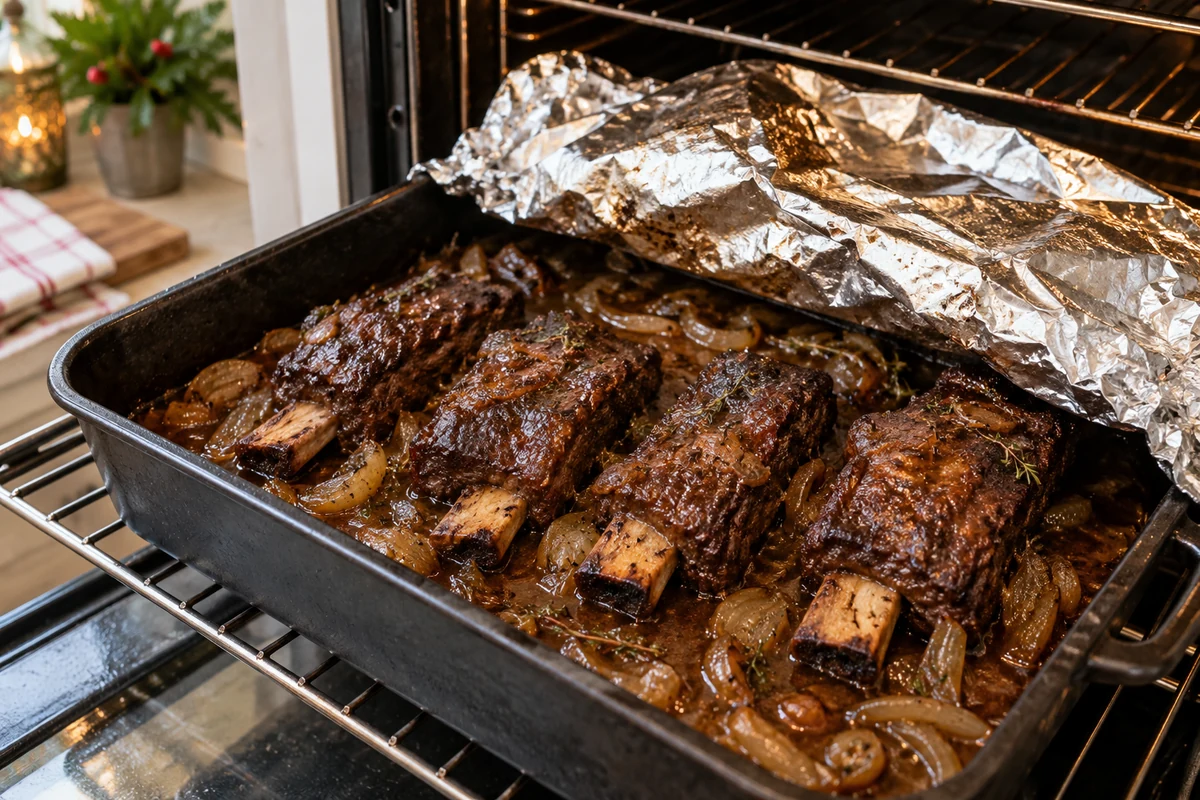
For tender slow-cooked ribs, plan enough time and check conditions during the cook. A small portion and a thick connected slab will not finish together.
Oven temperature
- A low oven suits this covered method, provided it is preheated and maintains the chosen temperature reliably.
- 120°C conventional is the setting used here. Follow your oven’s advice for long, low-temperature cooking and confirm performance if its thermostat is unreliable.
- Use a clean probe to monitor the centre of the meat, away from bone. A reading around 90–95°C is a texture guide to combine with a fork or skewer test, not proof on its own of perfect tenderness.
Timing and checks
- Allow a generous cooking window, potentially 10–12 hours for a large slab, while starting checks earlier. Stop when done rather than drying out smaller ribs to reach the number in a recipe title.
- Check the liquid during cooking and top up with hot stock or water before the tin dries out. Check sooner if the cover is loose or the pan is wide.
- Baste when making those occasional checks if desired, rather than opening the oven unnecessarily.
Position and cookware
- Place the ribs bone-side down over the onions in a deep tin; an appropriate low rack can also be used if it does not leave the meat too far above the cooking liquid.
- Cover securely with oven-safe foil or a close-fitting lid to retain steam.
- For a fan oven, use the manufacturer’s low-temperature guidance rather than automatically subtracting a fixed amount from an already low setting.
Keeping the tin moist
- Start with 300 ml stock, beer or water as specified, with more available for topping up.
- A separate tray of water in the oven is not a substitute for keeping sufficient liquid in the covered roasting tin.
- Open the oven only when necessary to check progress, and replace the cover promptly.
Alternative appliances
- Pressure cooker: follow a tested short-rib recipe for your model, respecting liquid and fill limits; finish briefly in the oven if you want more browning.
- Sous-vide: use a validated recipe with precise temperature, meat thickness, time and handling instructions. Do not use a generic 55–60°C for 24–48 hours as a complete safety instruction.
- Slow cooker: use fully defrosted portions and follow the appliance’s recipe, capacity and heat-setting guidance. An oven recipe cannot be converted simply by selecting low for eight hours.
Knowing when it is ready
- A fork or skewer should slide in with little resistance, and the meat should release readily from the bones.
- A centre temperature around 90–95°C can help assess progress, alongside the tenderness test.
- Rest for 20–30 minutes under loose foil, then portion and serve promptly.
Christmas accompaniments and table service
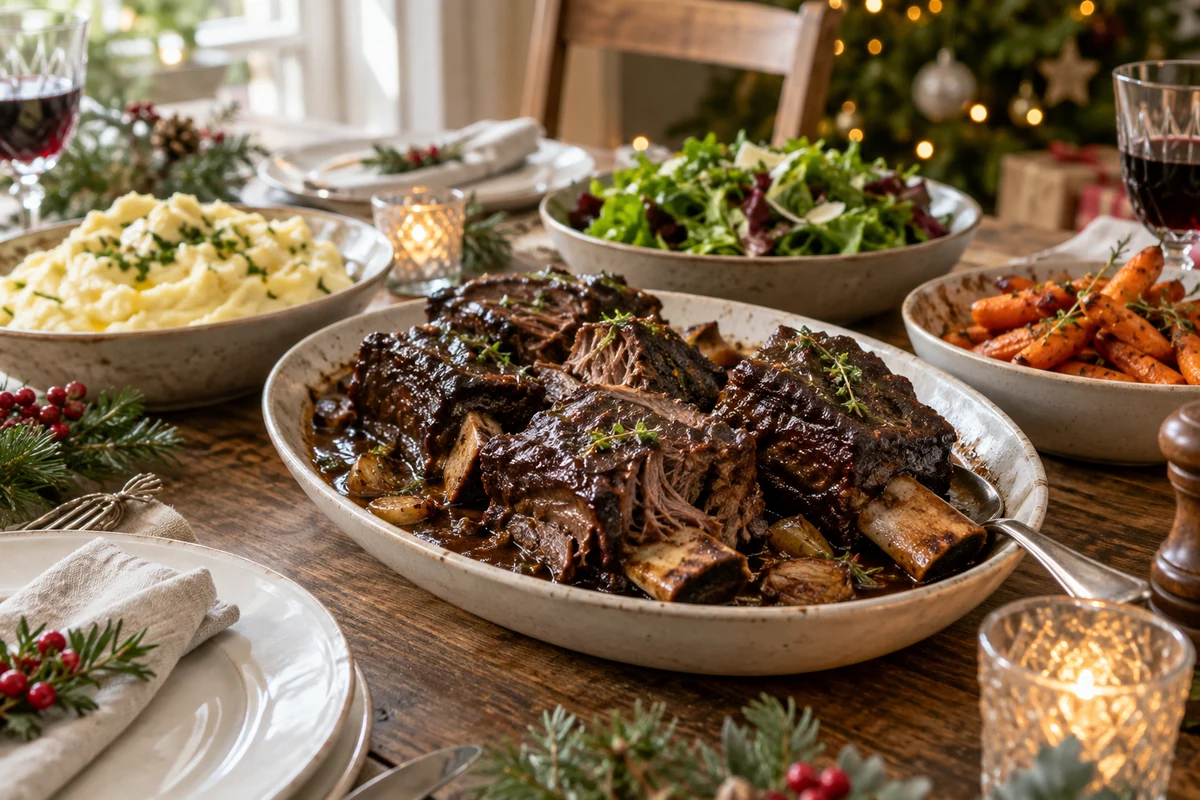
Serve slow-roasted beef short ribs with a mixture of creamy, crisp and fresh sides. The following are separate accompaniment recipes, so their ingredients are additional to the ribs.
Suggested accompaniments
Creamy mashed potatoes
- 1 kg potatoes – peeled and cut into even chunks.
- 50 g butter – or a suitable alternative; oil is not automatically lower in fat.
- 200 ml milk – add gradually to the texture you prefer.
- Salt and nutmeg, to taste.
- Cook the potatoes: boil in water until tender.
- Drain and mash: let excess moisture steam away briefly, then mash with the butter and gradually add the warm milk.
- Season: add salt if needed and a little nutmeg.
Crunchy onion farofa
- 2 cups Brazilian cassava flour – the granular flour used for farofa, not tapioca starch; follow its preparation instructions.
- 2 medium onions – thinly sliced.
- 3 tablespoons butter or oil.
- Raisins or cooked bacon, optional.
- Cook the onions: heat the fat and soften the onions until lightly golden.
- Add extras: stir in raisins or bacon that has already been cooked thoroughly, if using.
- Toast the flour: add the cassava flour and stir over a gentle heat until cooked and lightly golden, following the product’s instructions. Season to taste.
Brazilian-style vegetable rice
- 2 cups long-grain rice – rinsed if the packet advises it.
- 1 grated carrot and ½ cup peas, fresh or frozen.
- 3 tablespoons oil and up to 4 cups water – use the rice packet’s liquid ratio if different.
- Salt, to taste.
- Start the rice: heat the oil and stir the rice and carrot for 1–2 minutes.
- Cook: add the appropriate water and salt, cover and cook gently according to the rice packet until tender.
- Finish: cook the peas thoroughly according to their instructions, fold through and fluff the rice with a fork. Serve promptly.
Roast vegetables
- 2 carrots, 1 courgette, 1 pepper and 1 onion – cut into pieces, with carrots smaller than quicker-cooking courgettes.
- 3 tablespoons olive oil, salt, pepper and herbs.
- Season: toss the vegetables with oil, seasoning and rosemary.
- Roast: spread in a tin and roast at 200°C conventional/180°C fan for roughly 25–35 minutes, until tender and browned, turning as needed.
- Serve hot: taste and adjust the seasoning before bringing to the table.
Quick chimichurri
- ½ cup chopped parsley and 2 tablespoons chopped fresh oregano; use less if substituting dried oregano.
- 2 chopped garlic cloves, 4 tablespoons olive oil and 2 tablespoons vinegar.
- Salt and pepper, to taste.
- Combine: mix everything in a clean bowl and let the flavour develop for 10–20 minutes before serving. Refrigerate promptly if preparing ahead; this is a fresh sauce, not a shelf-stable preserve.
Organising Christmas dinner
- Arrange the serving area: keep hot dishes together and cold salads separate, with room to serve safely.
- Warm suitable plates: this helps the meal stay pleasant while serving, but does not replace proper hot holding for a long buffet.
- Make space for carving: use a clean, stable board with room for bones and utensils.
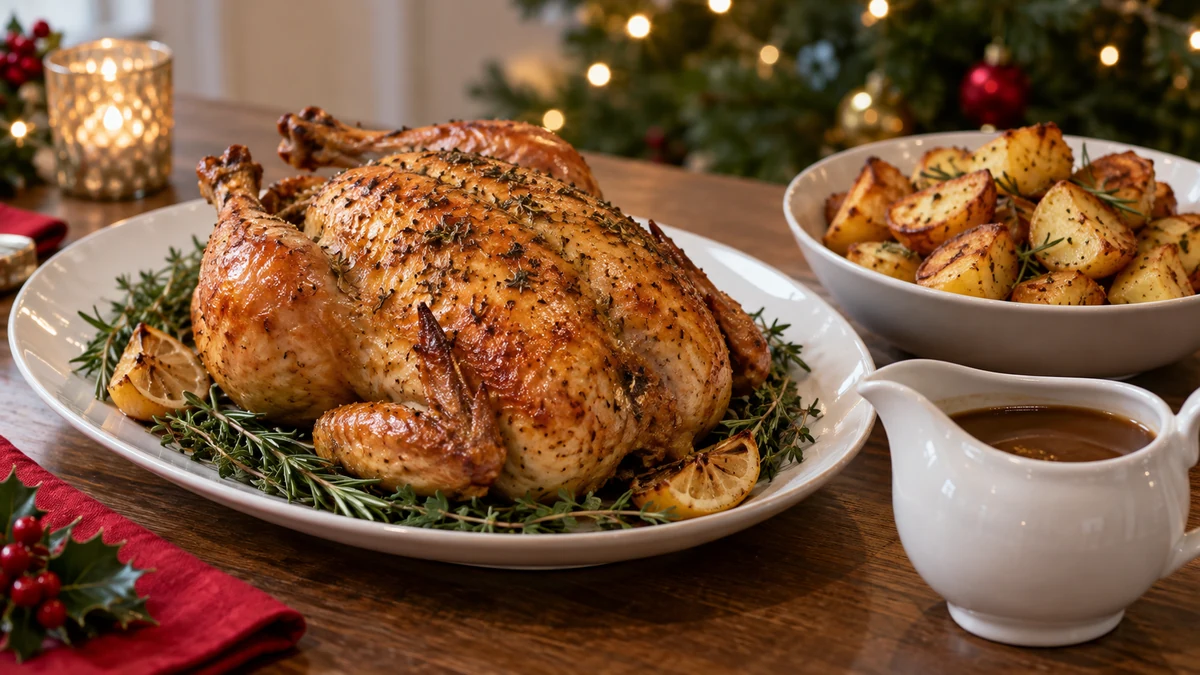
- Present simply: arrange ribs with the cooked onions and a few herbs, with mash and farofa in separate bowls.
- Plan quantities: approximately 400–600 g raw bone-in ribs per person is a generous shopping guide, not the weight of edible cooked meat. Adjust for the bones, fat, other courses and desired leftovers.
- Offer sauces separately: serve chimichurri or barbecue sauce alongside, adding fresh herbs or lemon zest if desired.
Make serving easy: group the main dish, vegetables, salads and sauces so guests can serve themselves without crowding.
A patient cook for a generous meal
Good slow-roasted beef short ribs depend on the right cut, controlled heat and enough time for tenderness. Check the actual meat rather than cooking to a number of hours regardless of the result.
Vary the seasoning to suit your table and keep a note of how your own oven and cut behave for next time.
Visit the I Love Christmas blog for more festive recipes, accompaniments and ideas for sharing a Christmas meal.
Slow-roasted beef short ribs: frequently asked questions
Do the ribs need exactly twelve hours?
No. This method uses a preheated 120°C conventional oven and a tightly covered tin, but thickness, cut and equipment affect timing. A large slab may take around 10–12 hours; smaller ribs can finish much earlier. Check liquid, core temperature and tenderness, and follow the oven’s guidance for a prolonged cook.
How do I know the ribs are tender?
A fork or skewer should slide in with little resistance and the meat should release readily from the bones. Around 90–95°C in the thick meat is a useful texture guide, but combine it with the physical tenderness test rather than treating it as a guarantee.
Can I use a pressure cooker or slow cooker?
Yes, with a tested recipe for that appliance and suitable-sized portions. Respect minimum liquid, maximum fill, pressure release or heat-setting instructions. Do not transfer the whole oven quantity or a generic cooking time directly to another appliance.
How should I store and reheat leftovers?
Cool in smaller portions and refrigerate within 2 hours at 0–5°C. Use within 48 hours or freeze promptly; about three months is a freezer quality guide. Defrost in the fridge and reheat only once until steaming hot throughout, covered with some stock or gravy to limit drying. Cool leftover rice ideally within an hour, refrigerate for no more than 24 hours and reheat once.
What should I serve with the ribs?
Mashed potatoes, onion farofa, vegetable rice, roast vegetables and a fresh salad all work well. Chimichurri or a little barbecue sauce adds contrast to the rich meat.
Sources and Further Reading
- Food Standards Agency: cooking and reheating food safely
- Food Standards Agency: chilling, freezing and defrosting food safely
- Food Standards Agency: cooking and reheating safely, including rice
- Great British Chefs: cooking beef short ribs
- Chef Michael Bremner: slowly braised short ribs