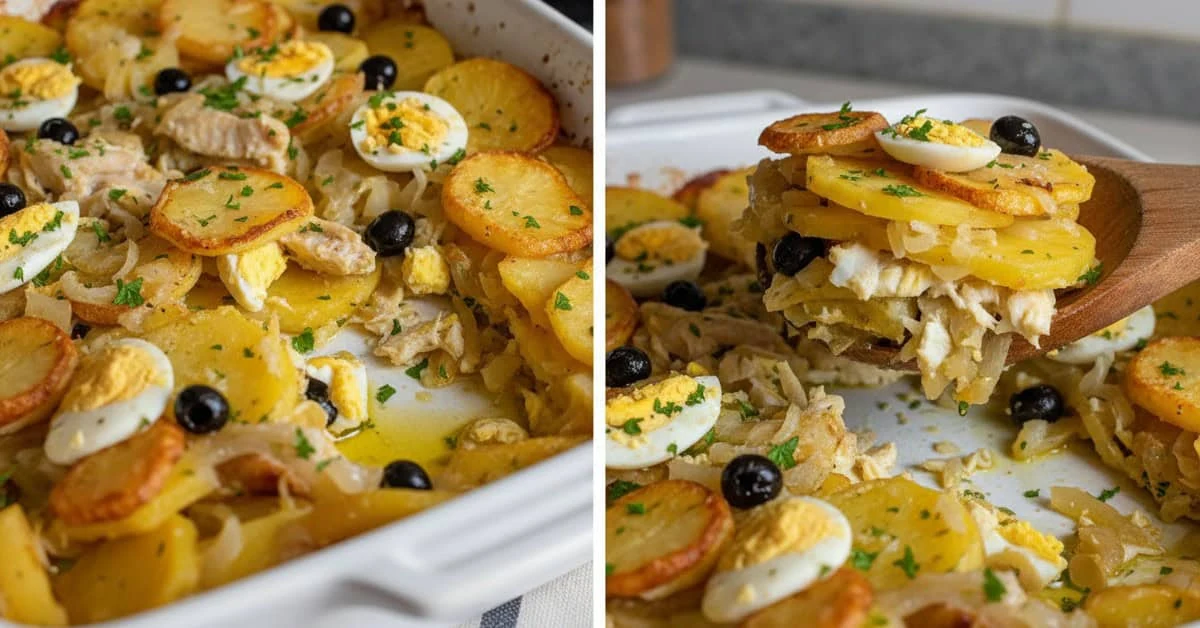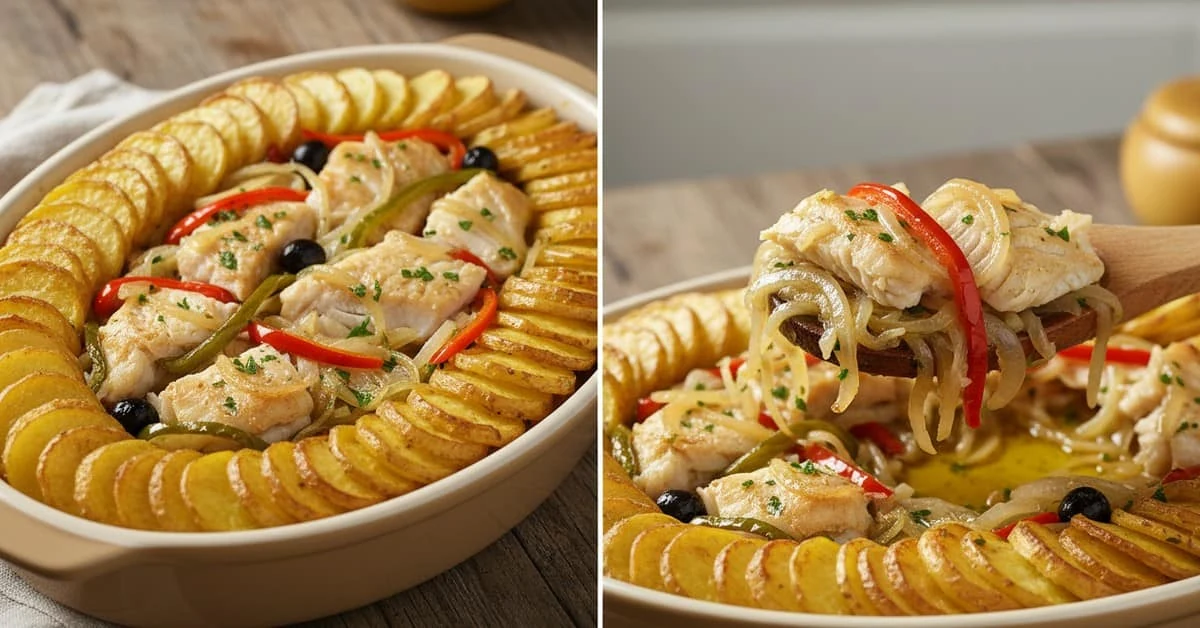
Portuguese-style bacalhoada layers properly desalted cod with potatoes, onions, tomatoes, peppers, olives and olive oil. Parboil the potatoes so they finish alongside the fish, follow the salt cod supplier’s soaking instructions and bake until the centre is hot, the potatoes tender and the fish opaque and flaky.
Portuguese-style bacalhoada makes a colourful dish to share at Christmas, with salt cod, potatoes and vegetables in fragrant olive oil. This version includes practical steps for preparing the fish and keeping the layers evenly cooked.
Ingredients for Portuguese-style bacalhoada
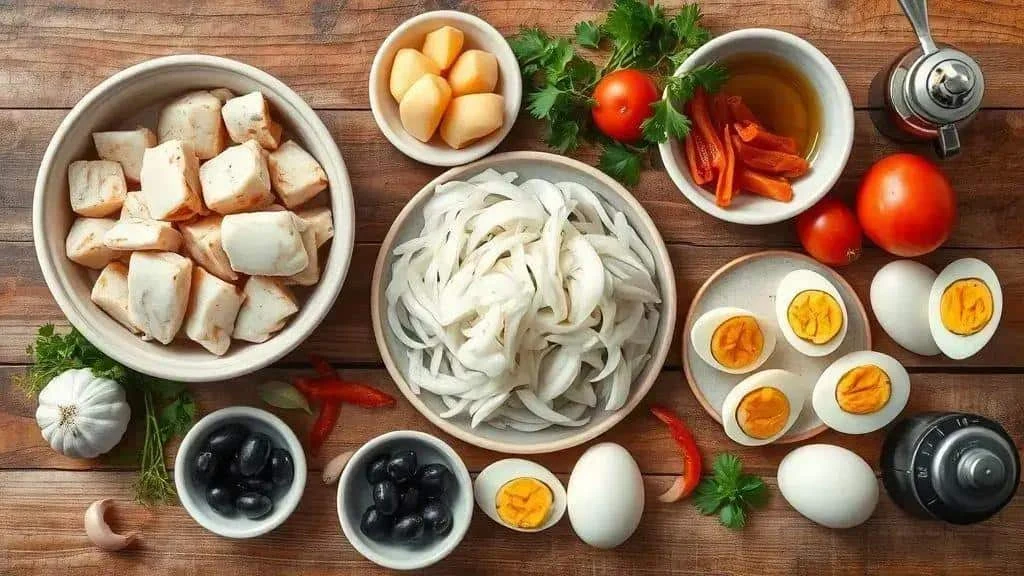
To make Portuguese-style bacalhoada for approximately 4–6 people, gather the ingredients below.
- 800 g desalted cod – in thick portions or large flakes. Ready-desalted frozen salt cod is convenient; defrost according to its instructions.
- 1 kg potatoes – peeled and sliced about 1 cm thick. Choose a variety that holds its shape, such as Charlotte or another waxy potato available locally.
- 3 medium onions – thinly sliced into half-moons; red onions can be used for a different flavour.
- 4 garlic cloves – thinly sliced, or fewer if preferred.
- 4 medium tomatoes – sliced; a 400 g tin of peeled tomatoes is an alternative, drained of excess liquid.
- 200 g pitted black olives – or green olives for a different flavour; use less if preferred.
- 3 roasted red peppers – cut into strips; drained jarred roasted peppers are a useful shortcut.
- 120 ml extra virgin olive oil in total – for greasing and drizzling through the layers; ordinary olive oil can also be used.
- 3 bay leaves.
- Salt and black pepper – season cautiously because the cod and olives can retain plenty of salt.
- 1 bunch fresh parsley – chopped, using as much as you like to finish.
- 3 eggs, optional – hard-boiled and quartered, for serving.
Ingredient notes
Salt cod: if buying it salted rather than ready-desalted, follow the supplier’s cold-soaking instructions and plan ahead; thick pieces may take several days. Potatoes: choose ones that hold their shape. Olive oil: use one whose flavour you enjoy, and keep the 120 ml as the total for assembly rather than adding it twice.
How to make Portuguese-style bacalhoada
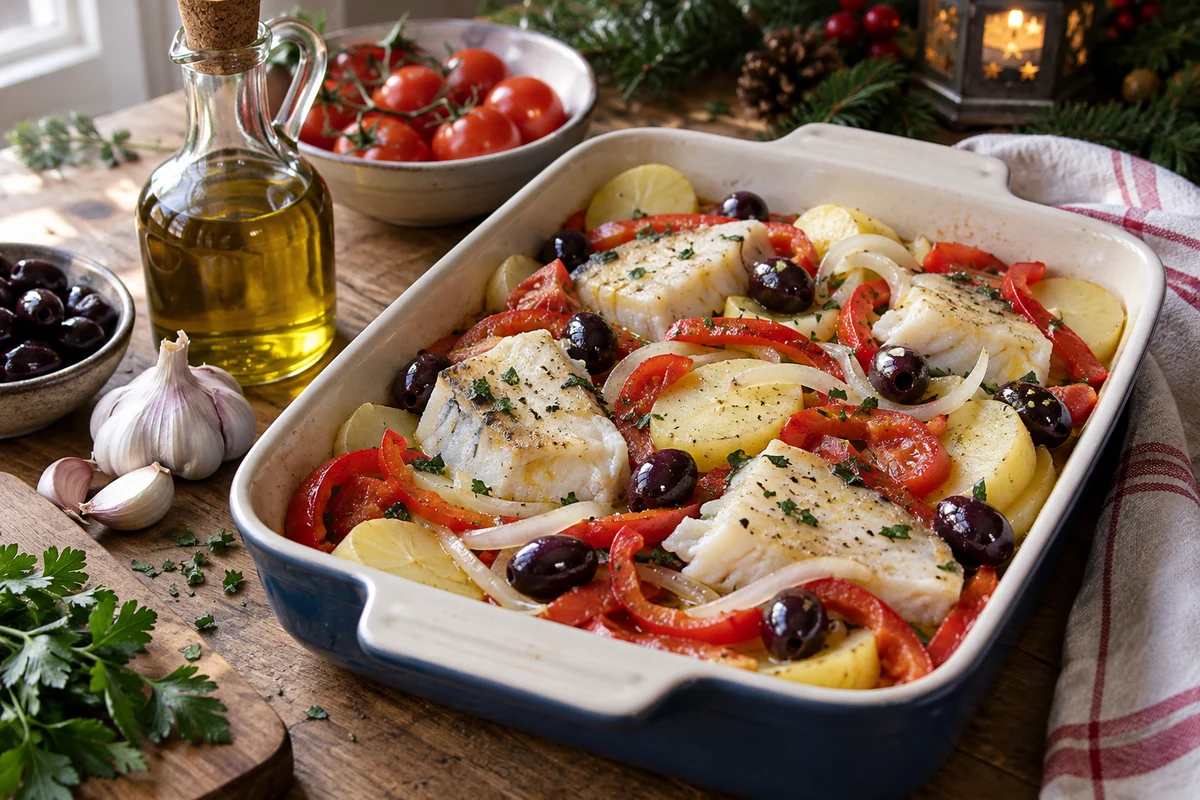
Follow these steps to assemble and bake Portuguese-style bacalhoada, allowing time for any desalting before you begin.
- Desalt if required: rinse off surface salt as directed by the supplier, then soak generously covered with cold water in the fridge. Change the water as instructed for the thickness and cure of your fish. Do not replace this with a five-minute boil; buy ready-desalted cod if time is short.
- Preheat the oven: set to 200°C conventional/180°C fan.
- Parboil the potatoes: cut into 1 cm slices and simmer in water for roughly 6–8 minutes, until beginning to soften but still holding their shape. Check the actual texture, then drain and let excess moisture steam away.
- Prepare the cod: remove skin if desired and check carefully for bones. Divide into even portions or large flakes and keep chilled until assembly.
- Slice the vegetables: prepare thin onion half-moons, garlic slices and tomato rounds so they can cook evenly around the fish.
- Grease the dish: use about 3 tablespoons (45 ml) of the measured olive oil in a sufficiently large ovenproof dish, leaving approximately 75 ml for the layers.
- Build the layers: arrange potatoes, onions, garlic and tomatoes, then add the cod. Distribute remaining potato and tomato slices around it, followed by olives, roasted pepper strips and bay leaves. Avoid compressing everything into a deep, crowded pile.
- Season and drizzle: add the remaining measured oil and black pepper. If assessing the cod’s saltiness beforehand, cook a small sample thoroughly before tasting it; never taste raw fish.
- Bake covered, then uncover: cover with foil and bake for approximately 25–30 minutes. Uncover for around 10–15 minutes to colour lightly, adjusting the time to the fish’s thickness and the dish’s depth. Check doneness rather than relying only on these estimates.
- Rest and garnish: once fully cooked, rest for about 5 minutes. Add the hard-boiled egg quarters, if using, and chopped parsley.
- Check the centre: the potatoes should be tender but intact, and the cod opaque and easy to flake. Check central pieces as well as those at the edge, with the whole dish steaming hot.
- Serve: bring to the table promptly with crusty bread or a salad. Offer extra pepper or a small amount of oil separately if wanted.
Useful preparation tips
- Watch the oven time: begin checking progress after about 20 minutes, especially with thinner fish, without assuming the centre is cooked because the top looks ready.
- Use practical substitutes: drained jarred roasted peppers and tinned tomatoes can simplify preparation.
- Prepare components ahead: keep everything appropriately chilled and assemble shortly before baking. Cool cooked potatoes promptly and do not place hot ingredients against raw fish for storage.
- Check ready-desalted cod: it may still contain salt. Taste only a thoroughly cooked sample before adding more seasoning.
Bacalhoada variations
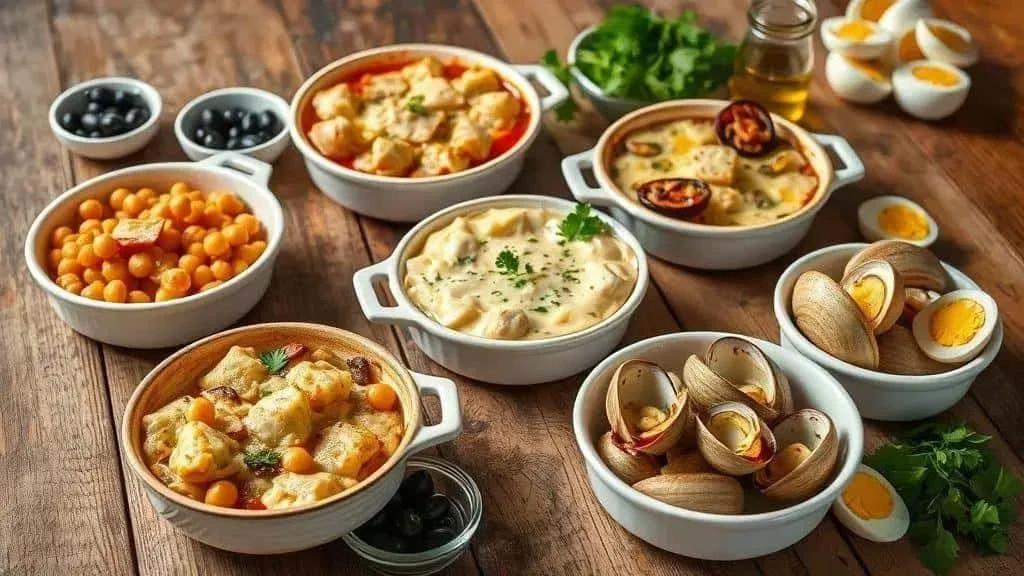
Adapt Portuguese-style bacalhoada to your table with these variations. Each changes the recipe; they are not all claims of a particular regional tradition.
- With chickpeas: add 200 g cooked chickpeas and reduce the potatoes to 700 g. Properly cooked dried chickpeas or drained tinned chickpeas add another texture.
- Creamy version: add 200 ml cream near the end, then return to the oven until the sauce and centre are thoroughly hot. A plant-based cooking cream changes the flavour and allergens and is not automatically lower in fat.
- Reducing salt: choose properly desalted cod, reduce the olives and avoid extra salt. Do not shorten desalting to reduce sodium: that leaves more salt in the fish. Fresh unsalted white fish is another option, producing a different flavour.
- Vegetarian or vegan variation: replace the cod with 2 medium roasted aubergines, sliced, or smoked tofu in a quantity suited to the number of diners. These do not reproduce cod’s texture exactly. Omit the eggs for a vegan dish and check all other ingredients.
- With shellfish: add 300–400 g properly prepared clams or mussels. For more reliable control, cook them separately according to supplier guidance, discard any that remain closed after cooking, then add to the finished bake. Do not assume a fixed eight minutes in a crowded oven dish cooks every shellfish safely.
- Alternative appliances: use a tested fish recipe for your slow cooker or pressure cooker, respecting liquid and fill limits. Fish and potatoes need different handling, so a generic four-hour slow cook or eight-minute pressure setting is not a direct replacement for this oven method.
Tips when adapting the recipe
- Balance the oil: keep track of the total, particularly if adding cream or using vegetables that have already been cooked in oil.
- Check each ingredient: adding cream or shellfish does not remove the need to finish cooking the potatoes and cod thoroughly.
- Useful shortcuts: drained tinned tomatoes, cooked tinned chickpeas and pre-roasted aubergines can reduce preparation time.
- Taste before salting: properly desalt the fish first, then assess a cooked sample and adjust the finished dish.
- Garnish to suit the version: parsley and olives work across variations; include hard-boiled eggs only where appropriate for guests’ diets.
Choosing and desalting salt cod
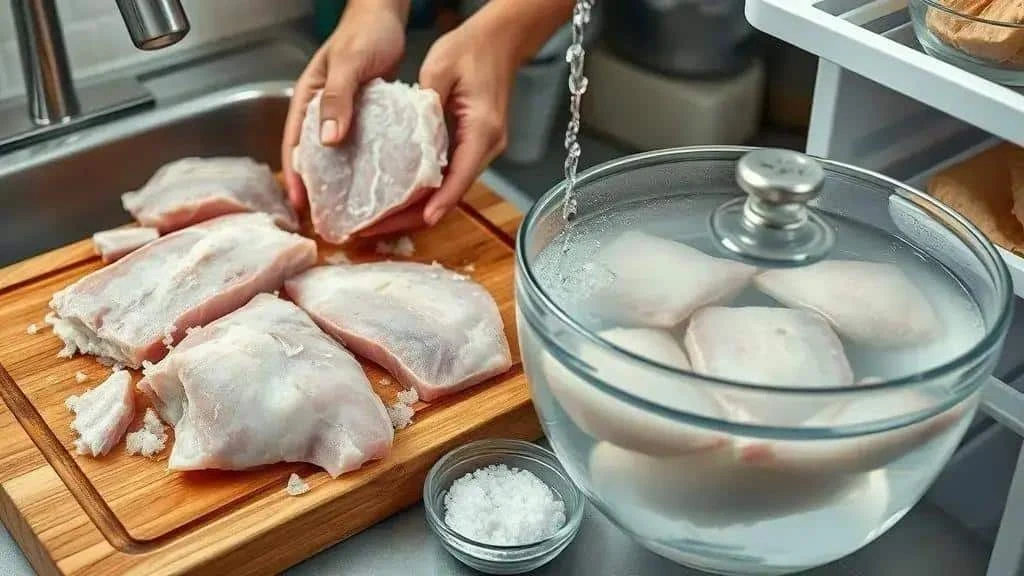
Correct preparation balances the fish’s saltiness and texture. Start by identifying the product you have bought and following its instructions.
Choosing cod
- Species: Gadus morhua is Atlantic cod, commonly used for salt cod; Gadus macrocephalus is Pacific cod. Read the label so you know the species and product you are buying.
- Cut: thick pieces give substantial portions; large flakes are convenient and cook more quickly.
- Condition: check packaging, storage and use-by information. Unexpected discolouration or an unpleasant smell is a reason to reject the fish, but appearance alone cannot prove safety.
- Salted or ready-desalted: ready-desalted fish saves preparation time; dried salted fish needs a soaking schedule suitable for its cure and thickness.
- Source: buy from a reputable supplier with clear labelling and appropriate storage.
Desalting step by step
- Remove surface salt: rinse briefly in cold water if directed, avoiding splashes and cleaning the sink and utensils afterwards.
- Cover generously with cold water: use a clean food-safe container large enough for the fish and water.
- Follow the supplier’s schedule: change the water as instructed and allow enough time for the thickness. Some thick salt cod requires around three days; a universal 24–48-hour rule is not reliable.
- Keep refrigerated: cover the container and keep it in the fridge throughout soaking, never on the worktop.
- Check a cooked sample: after the prescribed soaking, cook a small piece thoroughly before tasting. If still excessively salty, seek the supplier’s advice on further soaking and storage limits.
- Avoid a boiling shortcut: a brief boil followed by a quick soak is not a reliable equivalent to properly desalting every thickness of fish, and can damage the texture. Use ready-desalted cod when preparation time is limited.
- Drain and pat dry: remove excess surface water before assembling the bake.
Further tips
- Skin and bones: follow the supplier’s preparation advice and check carefully for bones before serving, whether the skin is retained or removed.
- Discard soaking water: do not use it to cook potatoes or other food.
- Milk is not necessary: it adds an allergen and does not make spoiled fish safe or replace adequate desalting.
- Cook promptly after preparation: follow the supplier’s storage limit. Desalted fish needs the same care as fresh fish; defrosted fish should be used within 24 hours of thawing unless the label specifies less. Cooked leftovers have a separate 48-hour refrigerator limit.
- Adjust salt cautiously: use a thoroughly cooked sample to assess seasoning, never a raw taste.
Accompaniments and serving
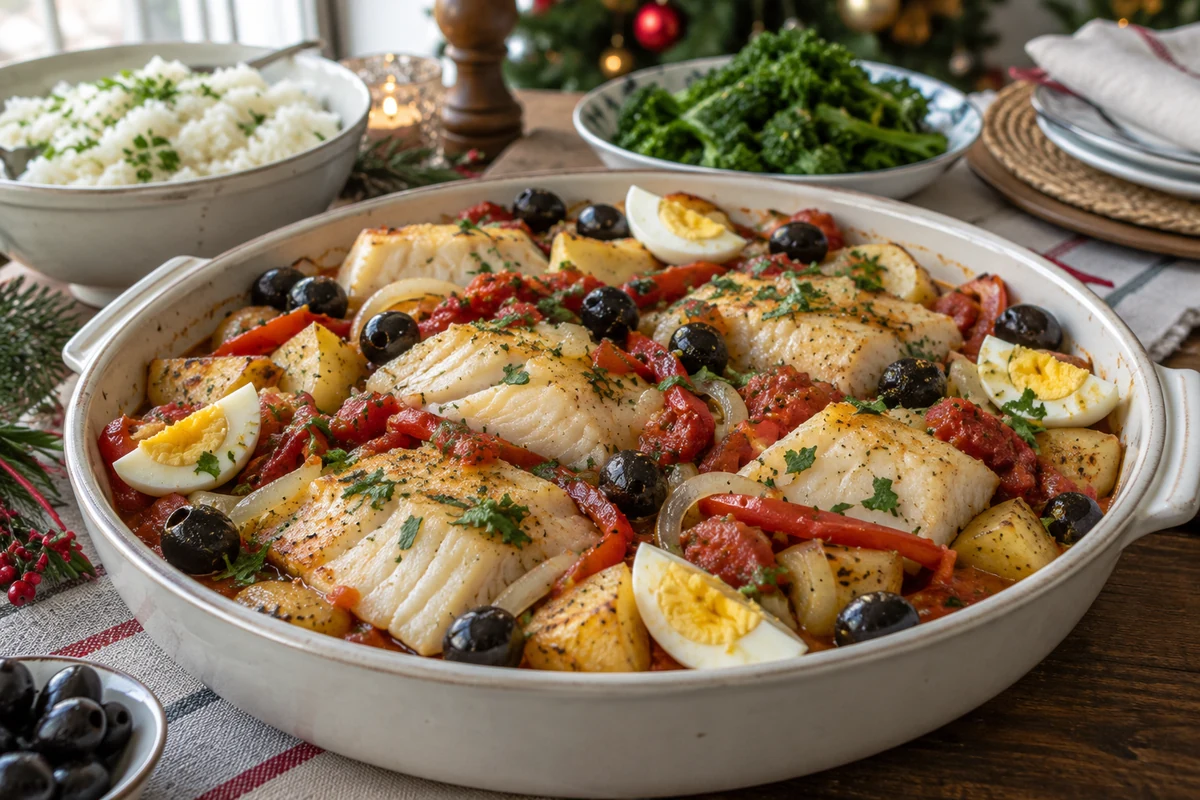
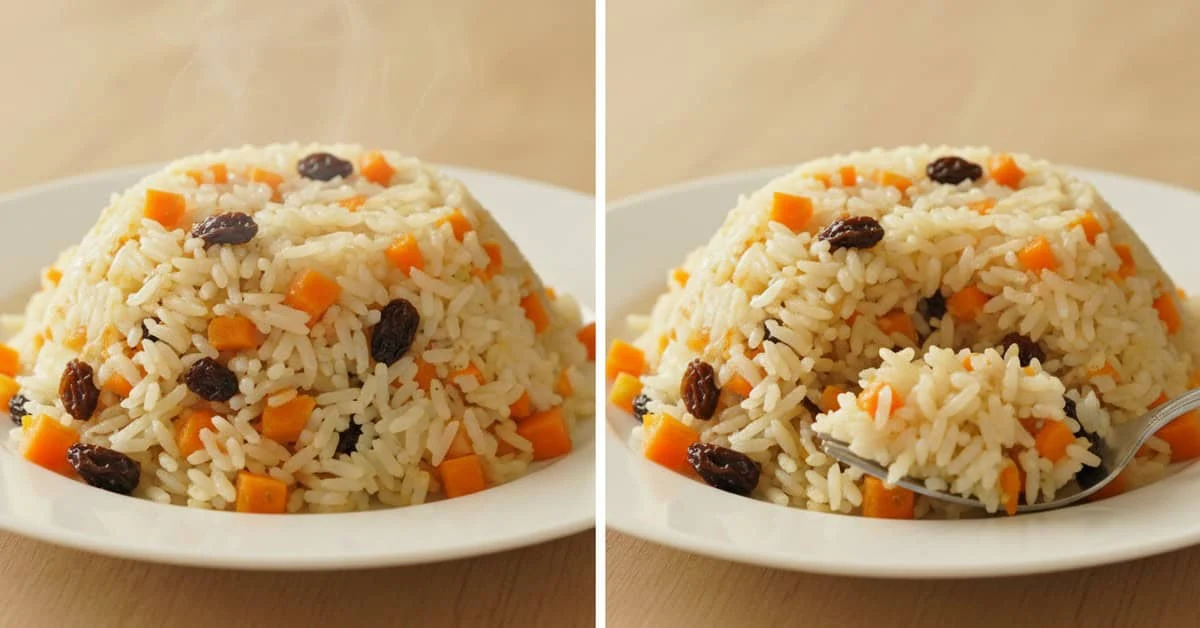
- Plain rice, about 300 g dry for four generous side servings – long-grain or basmati rice works well; reduce the amount when also serving bread and potatoes.
- Crusty bread – a medium loaf, sliced, to accompany the cooking juices.
- Green salad – lettuce, rocket and red onion with a simple oil and vinegar dressing.
- 200 g cooked chickpeas, optional – warmed and served separately if not included in the bake.
- Extra boiled potatoes, optional – about 500 g only if wanted; the main dish already contains 1 kg.
- Olives and piri-piri sauce – offer small amounts separately for those who want more seasoning.
- Hard-boiled eggs – the 3 optional eggs from the main recipe, quartered, rather than an additional three.
- Wine – Vinho Verde or another light Portuguese white; offer sparkling water with citrus as an alcohol-free alternative.
Assembly reminder
- Choose a large enough dish: use ovenproof ceramic or glass that accommodates the layers without overcrowding.
- Start with potatoes: arrange an even layer of drained, parboiled slices.
- Add onions and tomatoes: spread thin slices evenly over the base, including the garlic.
- Position the cod: distribute portions or large flakes so they can cook evenly among the vegetables.
- Add the remaining ingredients: distribute olives, roasted pepper strips and bay leaves around the fish.
- Drizzle the measured oil: use 120 ml in total, including the oil already used to grease the dish. Season with pepper and add salt only if needed.
- Bake: cook covered in the preheated oven for about 25–30 minutes, then uncover for approximately 10–15 minutes, checking the centre and adjusting to the ingredients’ actual doneness.
- Garnish: add the optional hard-boiled egg quarters and parsley after a brief rest.
- Serve family-style: put the bacalhoada in the centre with rice, salad and bread separately.
- Use a broad serving spoon: lift a balanced portion of potatoes, cod and vegetables for each guest, with piri-piri on the side.
Serving tips
- Allow a short rest: 3–5 minutes lets the cooking juices settle; serve promptly afterwards.
- Keep the colours fresh: parsley and red pepper strips make an uncomplicated garnish.
- Adapt the presentation: use a shared dish for a casual meal or individual shallow bowls for a seated dinner.
Tips for balanced flavour and texture

These practical points help you make Portuguese-style bacalhoada at home without claiming a chef’s personal testing or one definitive version of the dish.
Key techniques
- Desalt appropriately: allow the time specified for your product, keeping it refrigerated and changing the water as directed. Thick pieces may need several days.
- Dry before assembly: pat the prepared cod dry to avoid diluting the cooking juices unnecessarily.
- Parboil evenly sliced potatoes: aim for slices about 1 cm thick and simmer for roughly 6–8 minutes, checking that they soften slightly but keep their shape.
- Measure the oil once: the recipe uses 120 ml in total for 4–6 people, divided between the dish and layers, rather than repeated additions of that amount.
- Season cautiously: assess a cooked piece of cod and remember the olives before adding salt.
- Spread ingredients evenly: thin onion and tomato layers cook more consistently than a dense pile.
Common mistakes to avoid
- Adding too much salt: the fish and olives can already provide enough.
- Very thin potato slices: these can collapse; use roughly 1 cm slices and avoid overboiling them.
- Leaving the cover on throughout: uncover towards the end for some colour, but protect the fish if the surface starts to dry before the middle cooks.
- Starting with raw thick potatoes: they may need longer than the fish, which can then become dry. Parboiling helps coordinate the cooking.
Finishing touches
- Rest briefly: leave the finished dish for 3–5 minutes before serving.
- Add herbs at the end: fresh parsley keeps its colour and flavour better as a final garnish.
- Include eggs if wanted: hard-boiled quarters add colour and another texture alongside the olives.
- Offer piri-piri separately: guests can add heat without changing the whole dish.
- Adjust individual portions: offer pepper and lemon or a little extra oil at the table according to preference.
Portuguese-style bacalhoada brings salt cod, vegetables and olive oil together in a generous oven dish. Proper desalting, evenly prepared layers and checking doneness help keep the flavours balanced.
Try a variation on another occasion, taste only cooked samples when adjusting the salt and keep the accompaniments simple.
Visit the I Love Christmas blog for more festive recipes and ideas for your Christmas table.
Enjoy sharing the meal.
Portuguese-style bacalhoada: frequently asked questions
Which cod should I use?
Atlantic salt cod (Gadus morhua) in thick portions is a common choice, while large flakes are convenient and cook more quickly. Buy a clearly labelled product from a reputable supplier and check whether it is salted, ready-desalted or frozen.
How long does desalting take?
Follow the supplier’s directions for the cure and thickness of your fish, always soaking in the fridge with water changes as instructed. Thick pieces may need around three days, so 24–48 hours is not universal. Cook a small sample thoroughly before tasting it for salt.
How do I stop the potatoes falling apart?
Choose a potato that holds its shape, cut slices about 1 cm thick and parboil only until beginning to soften, roughly 6–8 minutes. Check the texture rather than overcooking by the clock.
Can I make a vegetarian version?
Yes. Roasted aubergine or smoked tofu makes a different vegetable-based bake with the same style of layers. Adjust the quantity to your diners and omit eggs for a vegan version, checking the other ingredients too.
How should I store leftovers?
Cool in smaller portions and refrigerate within 2 hours at 0–5°C. Use within 48 hours or freeze promptly, aiming for about three months for freezer quality. Defrost in the fridge and reheat only once until steaming hot throughout. Leftover rice needs quicker cooling, ideally within an hour, and no more than 24 hours in the fridge before its single reheating.
Sources and Further Reading
- Food Standards Agency: cooking and reheating food safely
- Food Standards Agency: chilling, freezing and defrosting food safely
- Food Standards Agency: cooking and reheating safely, including rice
- Fiskkaup: preparing and soaking salted fish