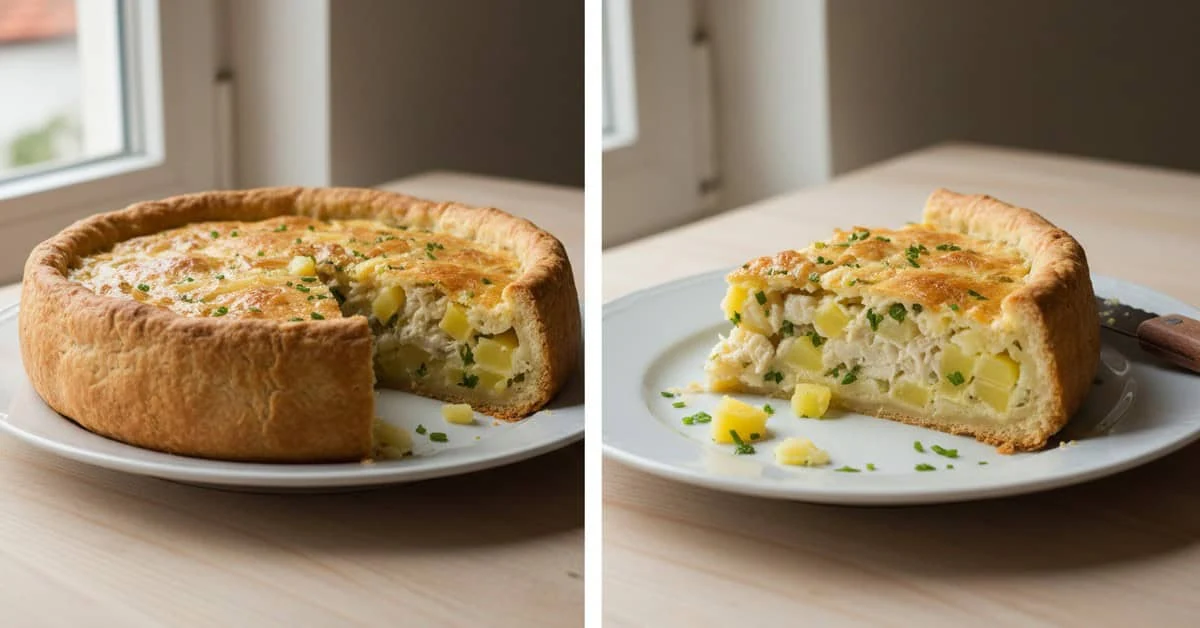
This Brazilian salt cod pie combines a soft savoury batter with a filling of desalted cod, mashed potato and olives. The recipe includes preparation and baking steps, ideas for alternative fillings and pastry styles, and guidance on desalting, chilling and reheating.
Brazilian salt cod pie makes a substantial centrepiece for a festive meal. A creamy potato-and-fish filling sits between layers of batter, with olives and herbs adding flavour. Prepare the salt cod properly before starting, then follow the assembly steps below.
Ingredients for Brazilian salt cod pie

For this Brazilian salt cod pie, measure the ingredients before cooking and taste the cooked fish before adding more salt.
Ingredients
- 500 g desalted cod, drained and flaked – remove skin and bones. If starting with salt cod, follow the supplier’s desalting instructions in advance. Drained tinned tuna gives a different but convenient filling.
- 3 medium potatoes, cooked and mashed – for the filling. Cooked cassava is an alternative with a different texture; peel and cook food-grade sweet cassava thoroughly and discard its cooking water.
- 2 medium onions, chopped
- 3 garlic cloves, chopped – adjust to taste.
- 120 ml olive or vegetable oil in total, divided – use 30 ml for the filling and the remaining 90 ml for the batter.
- 3 eggs – 2 for the batter and 1 for the filling.
- 240 ml milk – for the batter. A suitable unsweetened milk alternative can be used, but the other dairy ingredients must also be considered if avoiding milk.
- 240 g plain flour – gluten-free blends behave differently, so use a tested gluten-free batter recipe if required.
- 1 tbsp baking powder
- 50 g grated Parmesan, optional – a suitable dairy-free grated alternative changes the flavour and texture.
- 80 g sliced green olives – drained.
- Chopped parsley and chives – about ¼ cup in total, or to taste.
- Salt and freshly ground black pepper, to taste – the fish, olives and cheese already contribute salt.
- Butter or oil for greasing – with a little flour for dusting, or use suitable baking paper.
- Optional: 3 tbsp Brazilian requeijão or cream cheese – for a creamier filling.
Substitutions and preparation notes
Desalting time depends on the product and thickness; follow the pack or fishmonger’s directions, keeping the fish refrigerated throughout. Skimmed milk or less cheese can change the richness. A gluten-free version needs a suitable batter recipe and checks on all other ingredients, including baking powder.
How to make Brazilian salt cod pie
- Prepare the oven and tin: preheat to 180°C conventional/160°C fan. Grease and line a suitably deep baking tin, around 20–23 cm across. Capacity varies: do not overfill, and use a larger dish or divide the mixture if needed.
- Prepare the cod: ensure it has been desalted according to its instructions. Drain, check carefully for skin and bones and separate into small flakes.
- Cook the potatoes: boil until tender, drain, peel if necessary and mash with a fork.
- Soften onion and garlic: heat 30 ml of the measured oil in a large pan. Cook the onions until softened, add garlic and cook briefly without burning it.
- Cook the fish: add the flaked cod and cook until opaque and cooked through; small flakes may take around 3–5 minutes, but check rather than relying on time alone. Add olives and herbs. Taste the cooked mixture with a clean spoon, then adjust pepper and salt only if needed.
- Finish the filling: remove from the heat and mix in the potato and optional soft cheese. Let it cool enough not to scramble the egg, then stir in 1 beaten egg shortly before assembly. Do not taste the mixture after adding raw egg. Keep the filling thick rather than adding extra unmeasured milk.
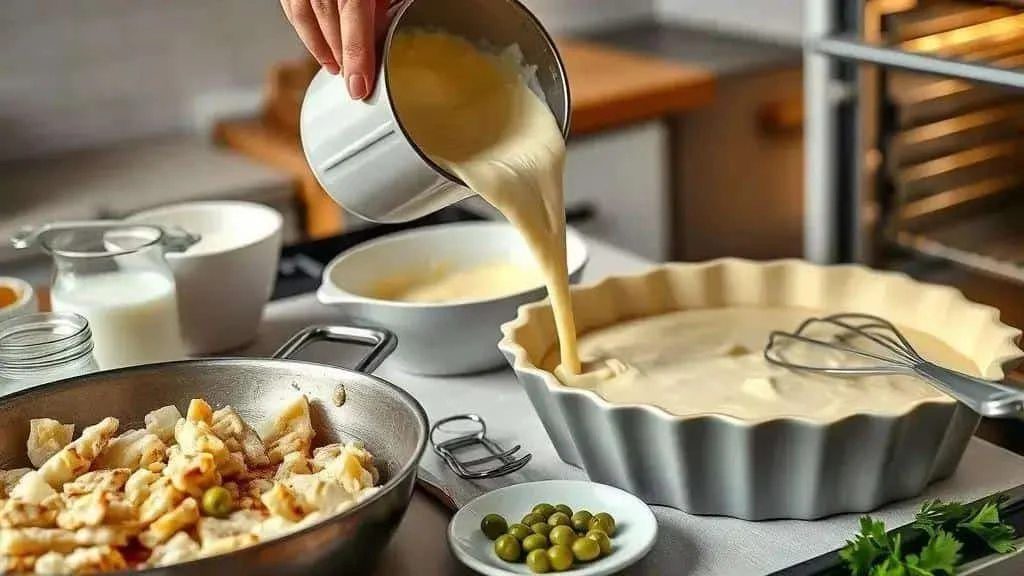
- Combine the liquids: whisk the remaining 2 eggs with 240 ml milk and the remaining 90 ml oil.
- Add the dry ingredients: stir in flour, baking powder, optional Parmesan and a little salt if needed. Mix just until the batter is smooth; do not taste uncooked flour or egg mixture.
- Assemble: spread half the batter in the prepared tin, distribute the filling evenly and cover with the remaining batter. Leave room for it to rise.
- Finish the top: smooth gently with a spatula. If desired, reserve a few of the listed olive slices or a little of the cheese for the top. An egg glaze is unnecessary for this batter-topped pie.
- Bake and check: start checking after 35–45 minutes; a deep pie may take longer. A skewer test helps assess the batter, but also check that the filling is steaming hot throughout. A clean food thermometer reading of 75°C for 30 seconds in the centre is one suitable check.
- Rest and slice: allow about 10–15 minutes for the pie to firm slightly before carefully cutting and serving.
- Store leftovers: cool promptly, refrigerate within 2 hours and use within 48 hours. Reheat only once until steaming hot throughout; a fixed short oven time is not enough to judge every slice.
Making the batter
Salt cod pie variations: batters, pastry and fillings

The flavours in Brazilian salt cod pie can work with several styles of crust. Changing the crust or filling changes the method, so treat the following as ideas to develop with an appropriate tested recipe.
Ideas for the crust
- Savoury batter: the basic version above is soft and straightforward. Begin checking at 35–45 minutes at 180°C conventional/160°C fan, allowing longer as needed.
- Shortcrust pastry: gives a firmer, buttery shell. Follow a suitable pie or tart method for lining, blind-baking where required and final cooking, rather than assuming the batter timing will apply.
- Puff pastry: ready-made pastry can provide a crisp lid. Follow the pack’s temperature guidance and make sure the filling heats through before the pastry over-browns.
- Potato crust: a grated-potato base is another option, using a tested method that removes excess moisture and cooks the base fully.
- Gluten-free batter: choose a recipe designed for the flour blend you are using. Check baking powder and all other ingredients as well.
Filling ideas
- Classic filling: desalted cod, mashed potato, sliced olives and herbs make the substantial filling used here.
- Cod with béchamel: combine cooked cod with a thick white sauce and a little grated cheese. Add sauce gradually so the filling remains spoonable rather than runny.
- Spinach and ricotta: try 300 g prepared cod with 200 g cooked, well-drained spinach and 200 g ricotta. Squeeze moisture from the spinach and check the capacity of the pie dish.
- Roasted peppers and tomatoes: add drained roasted pepper strips and slow-roasted cherry tomatoes for a different flavour.
- Adjusting the richness: use skimmed milk, less cheese or replace some potato with well-drained cooked pumpkin. Brazilian mandioquinha, also called arracacha, is another root vegetable option where available.
- A convenient creamy filling: combine cooked cod with requeijão or cream cheese and drained sweetcorn. Add cheese gradually to reach a thick consistency. A softer filling does not automatically mean a shorter safe baking time.
- Plant-based variation: shredded jackfruit or smoked tofu can replace the fish, with a little food-grade seaweed for flavour if desired. A fully vegan pie also requires an egg-free batter, plant-based milk, suitable cheese alternatives and vegan greasing fat.
Practical cooking tips
- Control the salt: taste only a fully cooked sample of fish or filling, before adding raw egg. Add extra salt cautiously.
- Check the texture: drain ingredients and cook off excess liquid. A little extra cooked mashed potato can thicken a loose filling, though it changes the yield.
- Match filling and crust: keep a batter-pie filling fairly firm. Rich sauces may suit a separate pastry-lidded pie method better.
- Browning the top: cheese or breadcrumbs can add colour. If finishing under a grill, use a suitable dish and watch closely; browning cannot replace thoroughly cooking the centre.
- Freezing: freeze fully cooked, promptly cooled slices rather than partly baked pie. Wrap well and plan to use within about 2 months for quality. Thaw in the fridge before reheating thoroughly.
Choosing, desalting and storing salt cod
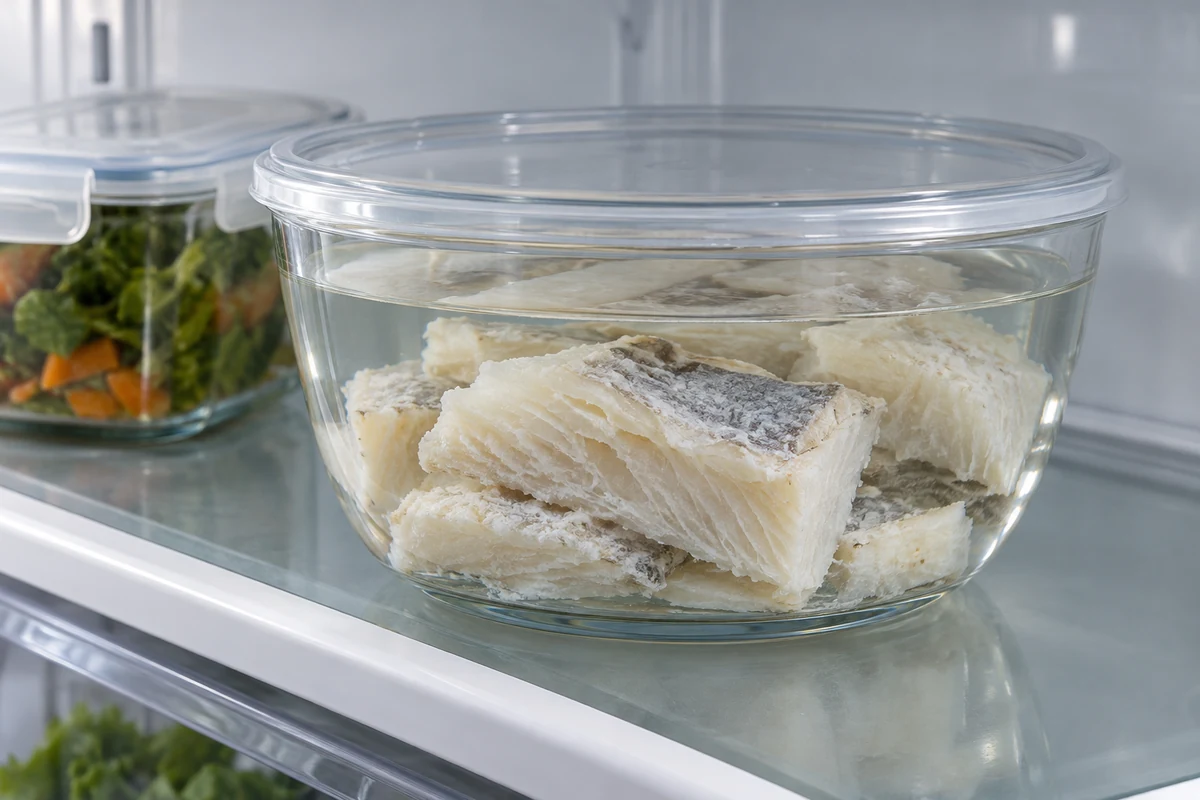
Salt cod products vary considerably. Supplier instructions are more useful than a single soaking time for every cut.
How to desalt salt cod
- Follow the product instructions: thick pieces usually need longer than thin flakes, but curing and thickness vary. Check the pack or ask the fishmonger rather than applying a universal 24- or 48-hour rule.
- Use cold water: place the fish in a suitable covered food-safe container with enough cold water, as directed.
- Change the water as instructed: drain and replace it at the intervals recommended for that product, using clean utensils.
- Keep refrigerated: soak in the fridge at 5°C or below, keeping the container away from ready-to-eat food.
- Check a cooked sample: cook a small piece thoroughly before tasting for salt. Continue the recommended process if necessary; do not taste raw fish.
- For a quicker option: buy ready-desalted cod and follow its preparation instructions. Brief boiling followed by a shorter soak is not a reliable universal shortcut for thick salt cod.
- Drain before cooking: pat the prepared fish dry with kitchen paper so it does not water down the filling.
Choosing salt cod
- Use a reputable supplier: check the fish species, origin, storage directions and date information.
- Inspect the pack: avoid damaged packaging, visible spoilage or products stored contrary to their instructions.
- Notice unusual odours: an unpleasant smell is a reason to reject fish, but a normal smell does not prove it is safe or extend a use-by date.
- Choose a useful cut: flakes can be convenient for fillings. Check all cuts carefully for bones rather than assuming fillets are boneless.
- Ready-desalted fish: convenient when time is short; follow chilled or frozen storage directions and the use-by date.
Storage guidance
- Dry salt cod: follow the supplier’s storage instructions. Do not assume every salted product can remain at room temperature for months.
- Moist salted fish: keep at the stated storage temperature and use within the specified period. Ask the supplier if instructions are missing.
- Desalted uncooked cod: keep refrigerated and cook promptly within the product’s instructions. Desalting changes its storage requirements.
- Freezing fish: freeze only when suitable according to the product directions, before its use-by date. Wrap securely and label; thaw in the fridge before cooking.
- Cooked pie and leftovers: cool promptly, refrigerate within 2 hours and use within 48 hours. Reheat once until steaming hot throughout.
- Kitchen hygiene: clean equipment and surfaces and keep raw fish separate from cooked or ready-to-eat food.
- Keep track of dates: label stored food, follow use-by dates and discard food that has been mishandled, even if it looks or smells normal.
Accompaniments, serving and festive preparation

Pair Brazilian salt cod pie with simple sides that bring freshness and colour to the table.
Side dishes
- Leaf salad with citrus dressing – mixed leaves, rocket and finely sliced red onion provide a fresh contrast.
- Lemon and herb rice – rice with lemon zest and parsley is an optional accompaniment if you want a more substantial meal.
- Roasted vegetables – carrots, courgettes and peppers roasted with oil and garlic work well. Serve promptly, or cool and refrigerate safely if preparing ahead.
- Crusty bread – offer sliced bread if desired, including a wholemeal option.
- Mashed roots – a little potato or arracacha mash with nutmeg is another option, although the pie already contains potato.
- Sauces and extras – try a small serving of aioli, tomato dressing or olives, keeping chilled sauces refrigerated until serving.
Presentation and serving
- Rest briefly: wait about 10–15 minutes after baking before cutting so the pie can firm slightly.
- Slice carefully: use a clean sharp knife and wipe it between cuts.
- Choose serving dishes: present the pie on a suitable platter or serve directly from its baking dish.
- Add a fresh finish: parsley, a few olive slices and lemon zest can add colour just before serving.
- Plan portions: offer a substantial slice as a main course, or smaller slices when several buffet dishes are available. Actual portions depend on the tin and the rest of the menu.
Storing and using leftovers
- Cool promptly: divide leftovers into suitable shallow containers and refrigerate within 2 hours.
- Use promptly: keep at 5°C or below and eat within 48 hours. Smell and appearance cannot replace safe handling and time limits.
- Freeze portions: wrap slices well and plan to use within about 2 months for quality. Thaw in the fridge and use within 24 hours of fully defrosting.
- Reheat thoroughly: use a preheated oven, covering loosely if the top browns too quickly. Heat until steaming hot throughout, checking the centre rather than relying on a fixed 10–15 minutes. Reheat only once.
- Use leftovers simply: serve a safely stored, thoroughly reheated slice with a fresh salad. Adding it to another dish does not reset its storage time.
Festive preparation tips
- Prepare in stages: make the cooked fish-and-potato filling a day ahead, before adding the raw egg. Cool and refrigerate promptly, then add the egg shortly before assembly and bake thoroughly.
- Hot holding: if keeping the pie hot for service, verify that the food stays at 63°C or above. An oven dial alone does not confirm the food temperature; freshly cooked portions are easier to manage.
- Transport safely: transport chilled portions in an insulated cool bag with ice packs and reheat at the destination, or use equipment designed to maintain safe hot-holding temperatures.
- Arrange the table: leave space for serving utensils and make the sides easy to reach. Identify fish, wheat, milk and egg in the standard recipe.
Final thoughts
Try this Brazilian salt cod pie for a festive meal, choosing sides and variations to suit your table. Careful desalting and a thoroughly cooked centre matter as much as a golden top.
Thank you for following the recipe. Find more seasonal recipes and practical ideas on the I Love Christmas blog.
Brazilian salt cod pie: frequently asked questions
How should I desalt the cod?
Follow the supplier’s instructions for the particular cut, soaking in cold water in the fridge and changing the water as directed. Cook a small sample fully before tasting for salt. Thick cuts and thin flakes do not necessarily need the same soaking time.
Can I replace the cod?
Drained tinned tuna makes a convenient alternative filling. Jackfruit or smoked tofu can be used for a plant-based variation, but a vegan pie also needs an egg-free batter and suitable milk, cheese and fat substitutes.
Which crust should I use for a crisp pie?
Puff pastry or a properly cooked shortcrust shell gives a crisper result than the soft savoury batter used here. Use an appropriate tested pastry-pie method rather than keeping the batter recipe’s timings unchanged.
How should I store and reheat leftovers?
Refrigerate within 2 hours and use within 48 hours, or freeze well-wrapped slices for about 2 months for quality. Thaw in the fridge, use within 24 hours of fully defrosting and reheat only once until steaming hot throughout.
What can I serve with the pie?
A citrus-dressed leaf salad and roasted vegetables make simple sides. Lemon rice, crusty bread or a small serving of aioli are optional additions according to how substantial you want the meal to be.
Sources and Further Reading
- Food Standards Agency: cooking and reheating safely
- Food Standards Agency: chilling, freezing and defrosting safely
- Food Standards Australia New Zealand: preparing cassava safely