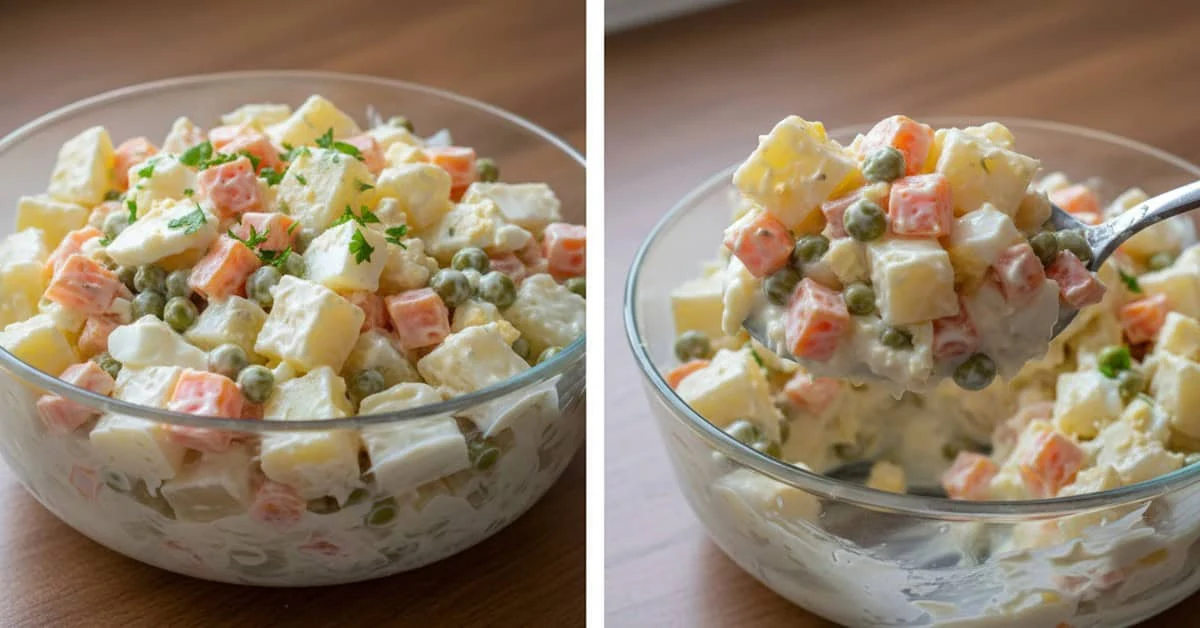
Brazilian potato salad, known as salada de maionese, combines potatoes, carrots, peas and mayonnaise, often with boiled eggs. It is a creamy festive side with chicken, apple or vegan variations. Keep it refrigerated and use within 48 hours of preparing the cooked ingredients, or sooner if a component’s guidance requires it.
Brazilian potato salad is a familiar party and Christmas side, with tender vegetables in a creamy dressing. Even cutting, careful cooking and thorough chilling help it hold its texture and flavour.
Ingredients for Brazilian potato salad
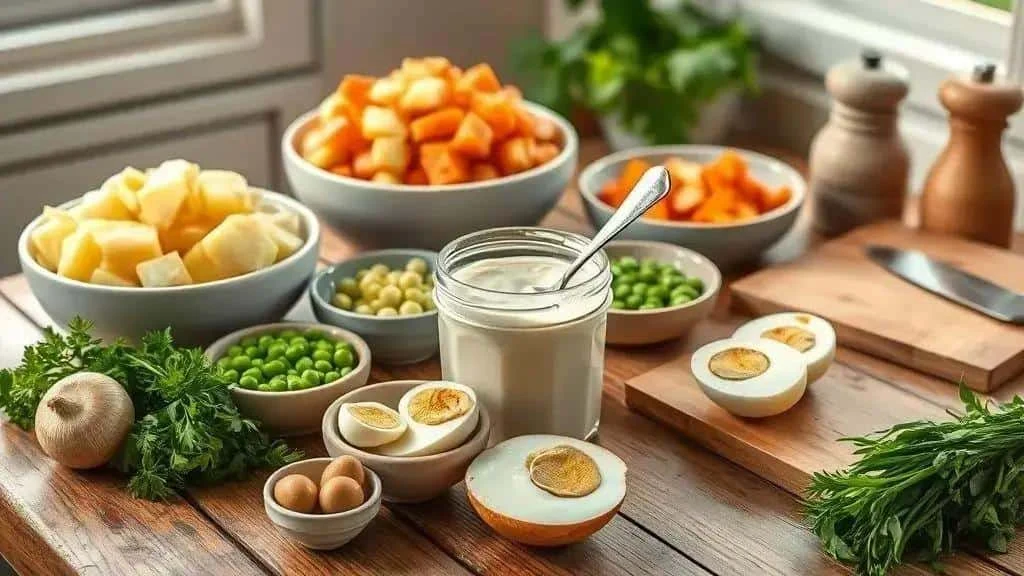
To make this Brazilian potato salad, prepare the following ingredients:
- 500 g potatoes – peeled and cut into medium cubes. Sweet potatoes give a sweeter variation, with a different cooking time.
- 2 medium carrots, about 200 g – peeled and diced. Finely grated raw carrot gives a different texture if preferred; wash and prepare it separately.
- 150 g peas – fresh or frozen, cooked as required. Cooked or ready-to-eat tinned sweetcorn is an alternative.
- 3 large eggs – hard-boiled, cooled, peeled and chopped. A fourth is optional.
- 200–250 g mayonnaise – add gradually to taste. For a tangier dressing, replace a quarter of that total with plain yoghurt rather than adding yoghurt to the full amount.
- ½ small onion – finely chopped; spring onion is a milder alternative.
- 100 g green olives or pickled vegetables – drained and sliced. Pickled cucumber is another option; salt and acidity vary by product.
- Salt, to taste – start with a small pinch and taste after the mayonnaise and olives are mixed in.
- Ground black pepper, to taste
- Chopped parsley or chives – to finish.
Quick tips and substitutions
Yoghurt dressing: Replace some mayonnaise with plain yoghurt, starting with three parts mayonnaise to one part yoghurt. Whether it lowers calories depends on the products and amounts used.
Texture: Cook the potatoes and carrots until tender but still holding their shape so they do not collapse during mixing.
Vegan version: Use vegan mayonnaise, omit the eggs and add ready-to-eat firm tofu or cooked chickpeas if wanted. Any yoghurt must also be plant-based.
Storage: Keep covered at 5°C or below and use within 48 hours of cooking the ingredients. Follow a shorter limit on any component and avoid prolonged time out of the fridge.
How to make Brazilian potato salad
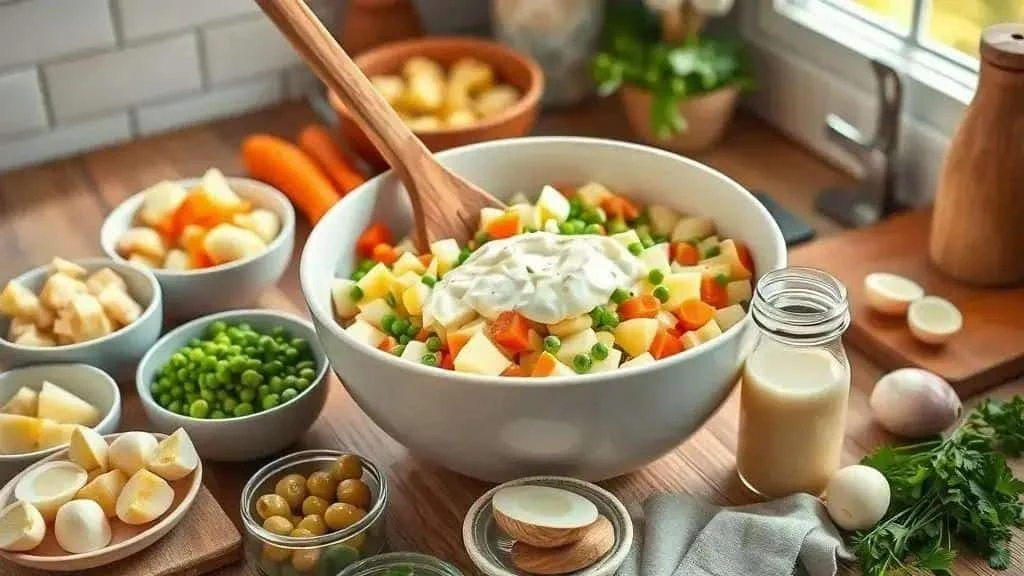
Follow these steps for Brazilian potato salad with tender vegetables and an evenly coated dressing:
- Prepare the vegetables: Wash, peel and dice the 500 g potatoes and 2 carrots into evenly sized pieces.
- Cook potatoes and carrots: Cover with cold water, adding a small pinch of salt if wanted. Bring to the boil, reduce to a simmer and check after about 10–15 minutes. Drain when tender but intact. If the vegetables cook at different rates, cook separately or remove the ready pieces first.
- Cook the eggs: Hard-boil the 3 eggs until both whites and yolks are set; roughly 9–12 minutes in gently boiling water is a guide depending on size and starting temperature. Cool promptly in cold water, then peel and chop using clean utensils.
- Cook the peas: Follow the frozen peas’ packet instructions, or simmer fresh peas until cooked and tender. Drain well and cool promptly. Frozen vegetables should not simply be thawed unless the packet says they are ready to eat.
- Prepare the additions: Finely chop the onion, slice the drained olives or pickles and chop the herbs. Cool the cooked ingredients in shallow portions and refrigerate within 2 hours; mix the salad once they are cold.
- Prepare the dressing: Measure 200–250 g mayonnaise, or replace a quarter of that total with plain yoghurt. Add black pepper and only a little salt if needed. Extra milk is unnecessary and does not automatically make the dish lighter.
- Combine gently: Put the cold potatoes, carrots, peas, eggs, onion and olives in a bowl. Fold in the dressing gradually with a spatula, stopping when coated without crushing the cubes.
- Taste: Adjust salt and pepper. An optional 1 tbsp lemon juice or 1 tsp mustard can add tang; add gradually and check mustard allergens where relevant.
- Chill: Cover and refrigerate for about an hour before serving, keeping the salad at 5°C or below.
- Finish: Scatter over parsley or chives and decorate with a few reserved pieces of cooked egg or olive if liked.
Practical tips
- Avoid overcooking: Test regularly near the end; very soft potato cubes break up when stirred.
- Cut consistently: Similar-sized pieces make the texture more even, although different vegetables can still need different cooking times.
- Change the flavour: Replace some mayonnaise with yoghurt for tang, use sweet potato for a sweeter version, or add a little diced apple for crunch.
- Keep cold: Store covered at 5°C or below and use within 48 hours of cooking the ingredients. Limit time at room temperature and refrigerate promptly after serving.
Brazilian potato salad variations
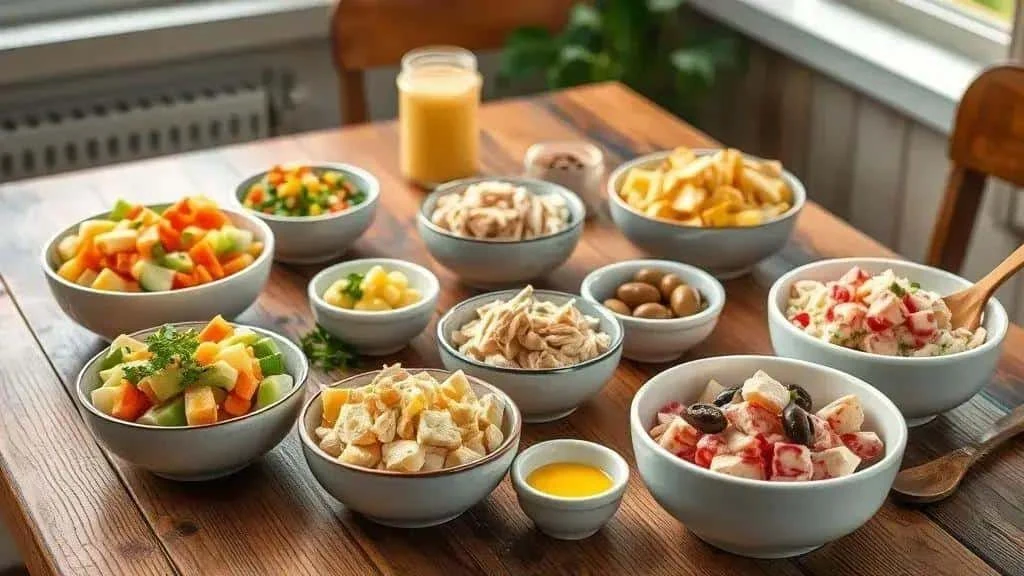
- Classic eggs and olives: Use the main recipe’s 500 g potatoes, 2 carrots, 150 g peas, 3 boiled eggs and 100 g olives, with 200–250 g mayonnaise. These are the base quantities, not extra additions to a finished salad.
- Apple and sweetcorn: Add 1 diced green apple and 80–100 g cooked or ready-to-eat tinned sweetcorn to the base salad. For this version, start with about 150–190 g mayonnaise and 2 tbsp plain yoghurt, adding more dressing only if needed. A sweeter apple changes the balance.
- Shredded chicken: Fold in 200 g fully cooked, safely chilled shredded chicken. Use enough of the measured dressing to coat it and add up to 1 tbsp mustard if wanted. Leftover roast chicken must still be within its original storage limit; mixing it into salad does not reset that time.
- Vegan tofu version: Replace the eggs with 200–250 g firm tofu suitable to eat cold, following its packet instructions, and use 200–250 g vegan mayonnaise. Add optional lemon juice and up to 1 tsp smoked paprika to taste; omit dairy yoghurt or replace it with a suitable plant-based alternative.
- Yoghurt variation: Try three parts mayonnaise to one part plain yoghurt, or equal parts for a tangier, thinner dressing. Plain yoghurt alone gives a different texture. Add herbs and compare product labels if reducing calories is your aim.
- Festive beetroot: Add 1 small cooked, cooled and diced beetroot, with up to 1 tbsp apple cider vinegar to taste. It colours the salad pink and can stain utensils or clothing.
Tips for adapting the salad
- Texture: Keep the cooked vegetable cubes tender but intact and fold gently.
- Dressing: Add gradually; it is easier to add more than to remove excess.
- Seasoning: A little mustard, lemon juice or mild vinegar adds acidity if the dressing tastes too rich.
- Ingredient swaps: Cooked sweetcorn can replace peas, and cooked chickpeas can replace the boiled eggs. An egg-free version also needs egg-free mayonnaise.
- Servings: The main quantities make roughly 6–8 side portions, depending on the rest of the meal.
Serving and storage suggestions
- Presentation: Add chopped herbs and a few reserved pieces of cooked egg or olive just before serving.
- Pairings: Roast meat, rice, farofa and green salad contrast with the creamy dressing.
- Storage: Keep covered at 5°C or below and use within 48 hours of cooking the ingredients, or sooner if an ingredient requires it. Do not leave the salad out for long periods.
Preparation, chilling and serving
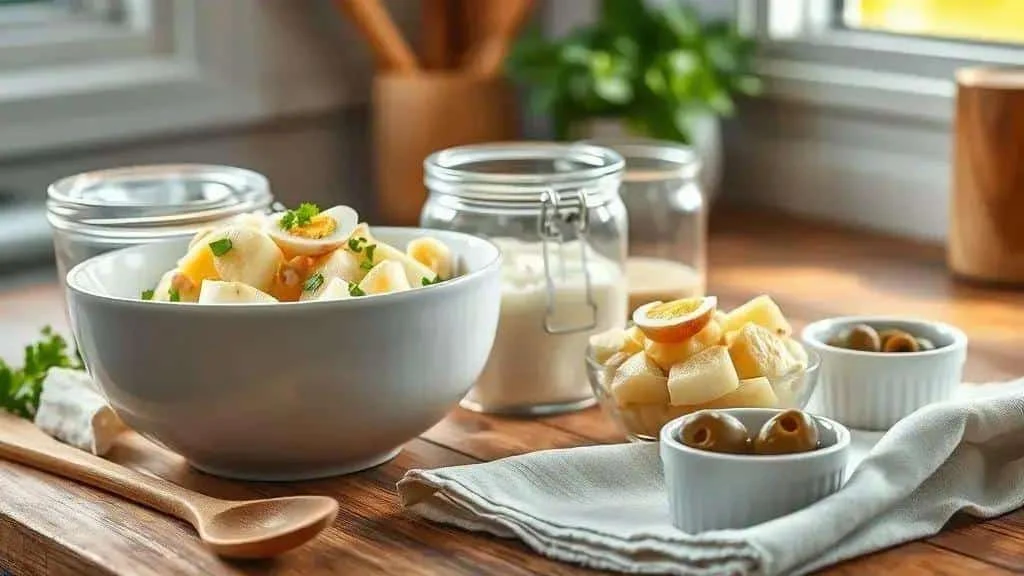
These practical steps help keep Brazilian potato salad pleasant to eat and safely chilled:
Preparation
- Even cutting: Cut vegetables into similar-sized cubes. Cook separately if necessary so one does not turn mushy before the other is ready.
- Check tenderness: A fork should pass through easily while the pieces still hold their shape.
- Cool promptly: Drain well and divide cooked ingredients into shallow portions. Let excess steam disperse briefly and refrigerate within 2 hours; do not leave a deep bowl on the worktop to cool slowly.
- Mix cold ingredients: Once chilled, fold in the mayonnaise gradually with a clean spatula, avoiding crushing the cubes.
- Season in stages: Taste after adding the dressing and salty additions before deciding whether more salt is needed.
Storage
- Refrigerate: Cover and keep the finished salad at 5°C or below, following any stricter ingredient instructions.
- Use promptly: Eat within 48 hours of cooking the ingredients, or sooner where a component requires it. Adding fresh mayonnaise does not restart the clock.
- Avoid freezing the finished salad: Mayonnaise can separate and potatoes can change texture, so this dish is best made for refrigerated use.
- Use small containers: Portioning reduces repeated handling and lets you bring out only what is needed.
- Transport cold: Use an insulated cool bag with sufficient frozen ice packs to keep the salad at 5°C or below. Do not use a cool bag without enough ice packs to maintain a safe chilled temperature.
Serving
- Serve chilled: Allow around an hour in the fridge after mixing so the flavours settle; keep it cold until the meal.
- Simple garnish: Parsley, chives and reserved cooked egg make an easy finish.
- Small serving bowls: Use clean utensils and replenish with a fresh chilled bowl instead of topping up warm leftovers.
- Serve alongside: Pair with roast dishes, rice or farofa; a little lemon or mustard in the dressing gives a tangy contrast.
- Make ahead: Prepare and chill the cooked ingredients the day before if needed, keeping within the original 48-hour limit. Combine with dressing while cold and keep refrigerated until serving.
Understanding mayonnaise and useful substitutions
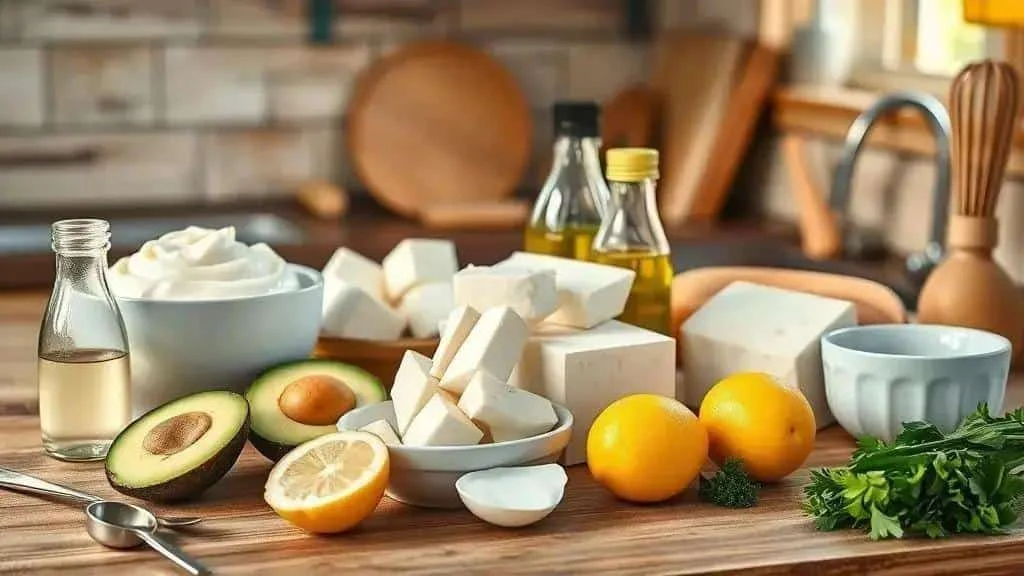
Knowing how the dressing works makes it easier to adapt Brazilian potato salad without losing its creamy character.
About the dressing
- Different styles: Mayonnaise-based vegetable salads have many variations. This recipe follows the Brazilian salada de maionese style without relying on a disputed claim about where mayonnaise was first invented.
- An emulsion: Mayonnaise disperses tiny oil droplets in a water-based phase. Egg yolk commonly helps stabilise the mixture; poor technique can make it separate.
- Oil and flavour: Neutral oils such as rapeseed or sunflower give a milder dressing, while extra virgin olive oil adds a stronger taste.
- Choosing mayonnaise: A ready-made product simplifies this salad; follow its storage instructions. If making mayonnaise with uncooked egg, use a suitable pasteurised egg product and a reliable food-safety recipe rather than assuming lemon juice makes raw egg safe.
Dressing and ingredient alternatives
- Yoghurt: Replace up to half the mayonnaise with plain yoghurt for a tangier dressing. Texture and calorie changes depend on the chosen products.
- Vegan dressing: Use ready-made vegan mayonnaise. Alternatively, blend 200 g tofu suitable to eat without further cooking with 2 tbsp oil, 1 tbsp lemon juice and seasoning, following the tofu’s packet guidance. This makes a tofu dressing with a different texture, not an identical mayonnaise.
- Aquafaba: Chickpea cooking liquid can be used in some vegan mayonnaise recipes. Its strength varies, so use a complete tested recipe rather than assuming a fixed spoonful-for-yolk swap always works.
- Other oils: If making a dressing, choose an oil whose flavour suits the vegetables. Strong-tasting oils can dominate even in small quantities.
- Replacing boiled eggs: Cooked chickpeas or suitable firm tofu give a different texture. Check the dressing too if avoiding all animal ingredients.
- Acidity is not preservation: Lemon juice or vinegar can improve flavour but does not make this salad shelf-stable or remove the need for refrigeration.
Practical dressing tips
- If a homemade dressing separates: Follow the recovery instructions in its tested recipe. Do not add an unpasteurised raw yolk to this prepared salad as a quick fix.
- Mustard: A small amount adds flavour and can help an emulsion, but it introduces another allergen to check.
- Keep chilled: Refrigerate promptly, keep at 5°C or below and use within 48 hours of cooking the ingredients, or sooner if required. A vegan version also needs refrigeration.
- Taste at the end: Adjust salt, pepper and acidity after combining the ingredients to avoid overseasoning.
Ready to try it?
Brazilian potato salad is a versatile side for festive meals and family lunches. Start with the classic version, then try a variation that suits your table.
For more recipes and seasonal ideas, follow our social channels and explore I Love Christmas.
Brazilian potato salad: frequently asked questions
How long can I keep potato salad in the fridge?
Keep it covered at 5°C or below and use within 48 hours of cooking the ingredients, or sooner if an ingredient requires it. Refrigerate cooked components within 2 hours and do not leave the finished salad out for prolonged periods.
Can I freeze the finished salad?
It is not recommended for texture: mayonnaise can separate and the vegetables may become watery. If freezing plain cooked vegetables separately, cool and freeze promptly, thaw in the fridge and use within 24 hours before combining with fresh dressing.
How can I change the dressing without losing its flavour?
Replace some mayonnaise with plain yoghurt, use a reduced-fat product or simply add less dressing. Herbs, a little mustard or lemon add flavour. Whether it is lower in calories depends on the products and quantities.
Can I include eggs safely?
Use thoroughly hard-boiled eggs, cool promptly and keep the salad refrigerated. Ready-made mayonnaise is convenient; if making an uncooked-egg dressing, use a suitable pasteurised egg product and reliable food-safety instructions. Follow the shortest storage limit among the ingredients.
What variations work well?
Try safely chilled shredded chicken, apple and cooked sweetcorn, cooked beetroot, or a vegan version with suitable tofu and vegan mayonnaise. Adjust the dressing gradually and keep every version refrigerated.
Sources and Further Reading
- Food Standards Agency: cooking and reheating safely
- Food Standards Agency: chilling, freezing and defrosting safely