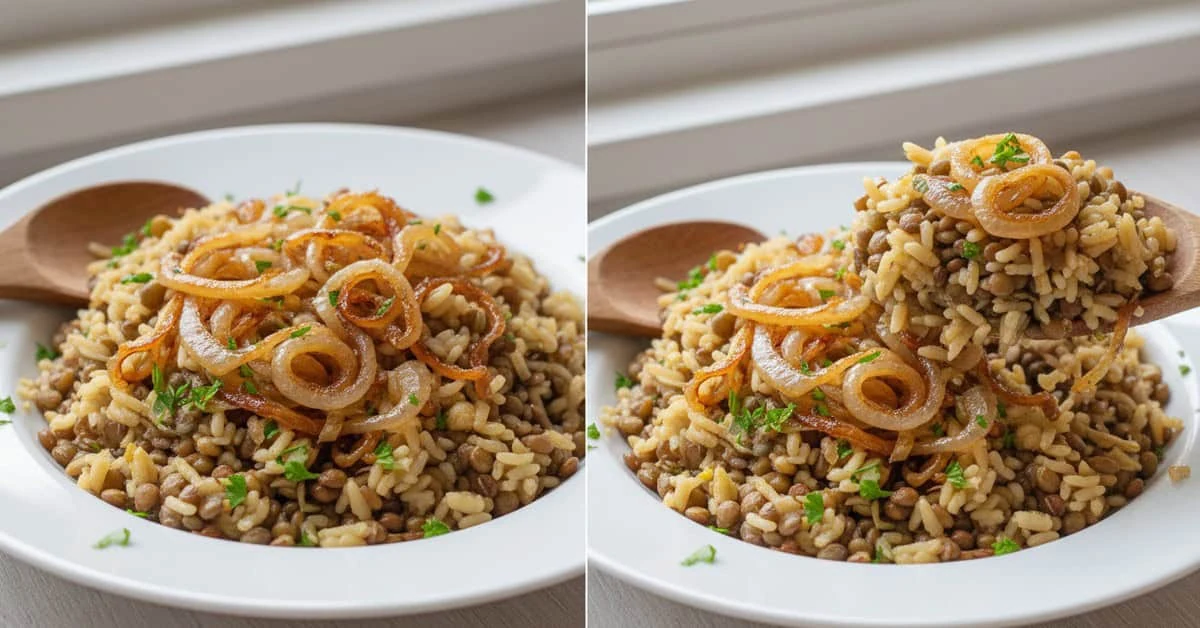
Lentil rice with caramelised onions combines tender rice and lentils with sweet, golden onions. Serve it at a festive meal or an everyday dinner, and vary it with vegetables, tofu or cooked chicken. Cooking the lentils separately helps both grains reach the right texture.
Lentil rice with caramelised onions is simple comfort food: a few everyday ingredients become a warming bowl with plenty of flavour. Below are the cooking steps, a shortcut using cooked lentils and ideas for making the dish your own.
Ingredients for lentil rice with caramelised onions
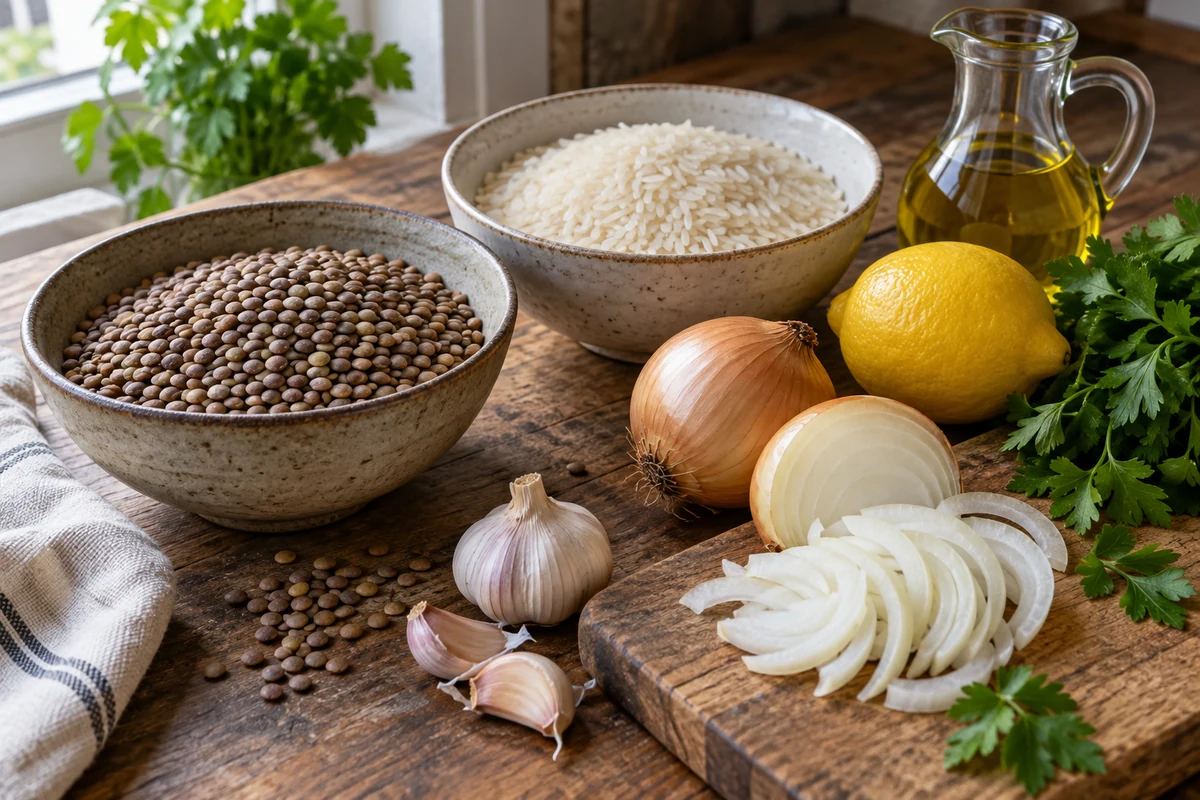
- 1 cup white rice – rinsed and drained. Brown rice is an alternative, but needs its own packet cooking time and liquid quantity.
- 1 cup dried green or brown lentils – picked over and rinsed. Cook separately according to the packet. For a quicker version with fewer lentils, use 1½ cups ready-cooked lentils; this is not an equivalent yield from 1 cup dried.
- 2 tbsp olive oil, divided – 1 tbsp for the onions and 1 tbsp for the rice. Vegetable oil also works.
- 1 tbsp butter – optional, added to the onions for flavour. Omit for a vegan version, or use a little extra olive oil if needed.
- 2 medium onions – thinly sliced. Red onions give a different colour and flavour.
- 2 garlic cloves – finely chopped or crushed, optional.
- Vegetable stock or water for cooking – have 2½ cups prepared stock available for the rice, but measure the amount required by its packet rather than adding it all automatically. You will also need separate water for cooking the dried lentils.
- 1 bay leaf – optional.
- Salt to taste – the suggested 1 tsp may be too much with salted stock; start with less and adjust at the end.
- Freshly ground black pepper – to taste.
- 1 tbsp balsamic vinegar or 1 tsp sugar – optional, for finishing the onions. Neither is essential for caramelising them.
- 2 tbsp chopped parsley or coriander – to finish.
- Juice of ½ lemon, optional – add to taste before serving.
Ingredient tips and substitutions
Cooking liquid: stock adds flavour; water lets the lentils and onions take centre stage. Check the salt content of stock before seasoning.
Lentils: green or brown lentils hold their shape well. Split red lentils soften and break down more readily, so they give a different result.
Onions: cook gently, stirring occasionally, until soft and golden. Allow at least 15–25 minutes, and longer for a deeper caramelised colour. Add the optional sugar or balsamic near the end rather than relying on it to replace slow cooking.
Additional protein: add browned tofu, cooked sliced sausages or fully cooked chicken for a more substantial version.
How to make lentil rice with caramelised onions
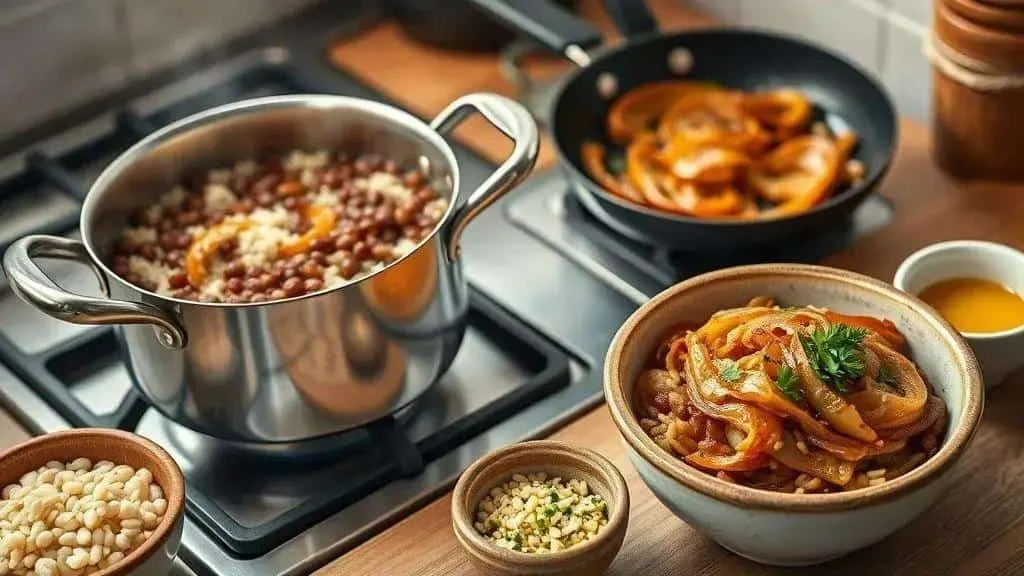
- Prepare the rice and lentils: measure 1 cup of each and rinse separately. Cook the lentils in a separate saucepan according to their packet until tender but still holding their shape, then drain. This avoids overcooking the rice while waiting for the lentils to soften. Use the same cup throughout for volume measurements.
- Caramelise the onions: thinly slice the 2 onions. Heat 1 tbsp of the olive oil and the optional 1 tbsp butter in a wide pan over a low to medium-low heat. Add the onions and a small pinch of salt. Cook gently, stirring often enough to prevent catching, until soft and golden. Start checking after 15–25 minutes; a deeper colour can take longer. Stir in the optional balsamic or sugar near the end, then set aside.
- Cook the garlic and rice: heat the remaining 1 tbsp olive oil in a saucepan over a medium heat. Add the chopped garlic and stir for 30–60 seconds without letting it burn. Add the drained rice and stir for 2–3 minutes. Keep the cooked lentils aside for now.
- Add liquid and seasoning: add the quantity of prepared vegetable stock or water specified for the rice on its packet, along with the optional bay leaf and a little salt and pepper. Bring to the boil.
- Simmer gently: cover and cook over a low heat for the rice packet’s recommended time, often around 15–20 minutes for white rice. When nearly tender, gently fold in the drained cooked lentils and heat everything through. If needed, add a little hot water to prevent sticking; do not keep cooking tender rice alongside hard lentils.
- Rest and fluff: remove from the heat and leave covered for 5–10 minutes, then gently fluff with a fork. Remove the bay leaf before serving.
- Add the onions and finish: stir in most of the onions, keeping a few for the top. Add the 2 tbsp chopped herbs and optional lemon juice to taste, then adjust the seasoning.
- Serve: spoon into bowls, top with the reserved onions and, if you like, a little olive oil. Serve with green salad, roasted vegetables or a cooked protein of your choice.
Practical cooking tips
Heat and timing: keep the heat low enough for the onions to soften without burning. Brown rice needs a different cooking time and liquid quantity; follow its packet.
Quick substitutions: 1½ cups cooked lentils make a quicker, less lentil-heavy version; they do not shorten the rice’s cooking time. Brown rice, couscous or quinoa can replace white rice, each prepared using its own instructions.
Storage: cool leftover rice quickly, ideally within 1 hour, and refrigerate in a covered container at 5°C or below. Use within 24 hours. Reheat only once, until steaming hot throughout; a splash of water helps loosen the grains.
Lentil rice variations
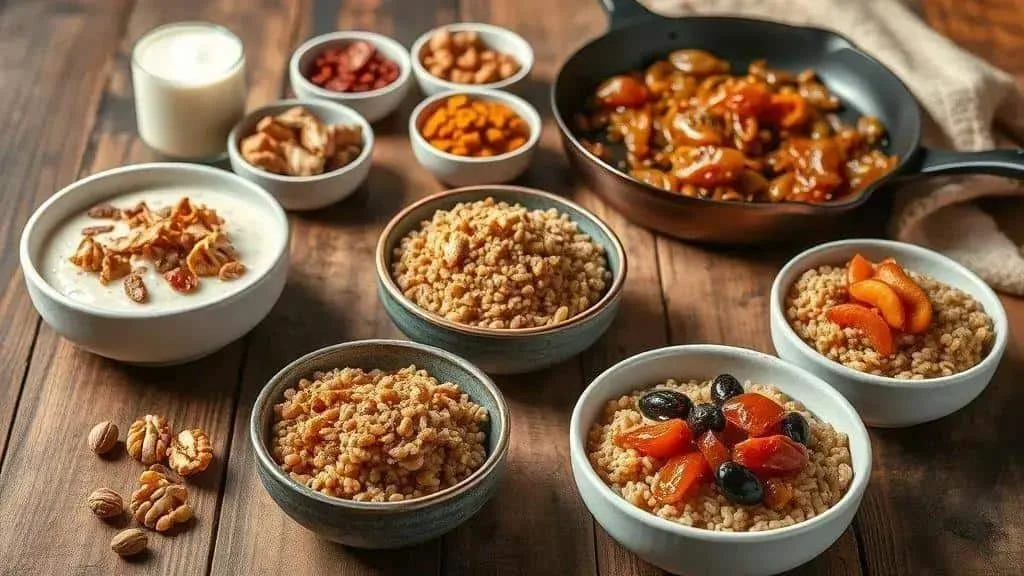
Keep rice, lentils and caramelised onions as the base, then adapt the finishing ingredients to the occasion and the time you have available.
A creamy vegan version
Omit the butter or use olive oil instead, choose vegan stock and add a little coconut milk or pumpkin purée for a softer texture.
- Coconut milk – stir in ¼–½ cup for a creamy finish and heat through.
- Pumpkin purée – use ½ cup cooked purée as an alternative.
- Extra olive oil – optional, for finishing.
With chicken, sausages or tofu
Cook these additions separately before folding them into the rice. Browning the surface alone does not mean chicken or sausages are cooked through.
- Chicken breast – 250 g, cubed and thoroughly cooked before adding.
- Sausages – 150–200 g, cooked according to the packet and sliced.
- Firm tofu – 200 g, cubed and browned, for a vegetarian alternative.
Brown rice and brown lentils
Brown rice gives a firmer texture. Cook the rice and lentils separately so you can adjust each one’s liquid and cooking time.
- Brown rice – use 1 cup and the liquid quantity specified on the packet, rather than simply adding a fixed extra amount of water.
- Brown lentils – simmer until tender but still whole, then drain and combine with the rice.
- Cooking time – brown rice often takes longer than white; use the packet’s instructions and check for tenderness.
A festive version with nuts and dried fruit
Add a sweet and savoury contrast with dried fruit and a little crunch from toasted nuts.
- Walnuts or other nuts – ⅓ cup, toasted and chopped.
- Dried apricots or dates – ¼ cup, chopped.
- Orange zest – 1 tsp, finely grated.
Mediterranean-inspired seasonings
Try herbs, sun-dried tomatoes and olives for another flavour combination.
- Sun-dried tomatoes – ¼ cup, chopped.
- Oregano and thyme – 1 tsp combined.
- Sliced olives – 2 tbsp; taste before adding more salt.
A quicker version with cooked lentils
Ready-cooked lentils save their separate cooking step, making this version useful for a quick meal. The rice still needs its normal cooking time.
- Cooked lentils – use 1½ cups, drained, and add near the end of cooking so they become hot throughout without breaking up.
- Prepared stock – cook the rice in the normal packet quantity of liquid. Add only a splash more if needed when combining; do not add undiluted stock concentrate.
- Reheating – add a splash of water and heat until steaming throughout, only once and within the 24-hour refrigerated rice storage window.
Tips for any variation
Flavour balance: adjust lemon juice, balsamic and salt at the end. Texture: add crunchy toppings just before serving.
How to caramelise onions and build flavour
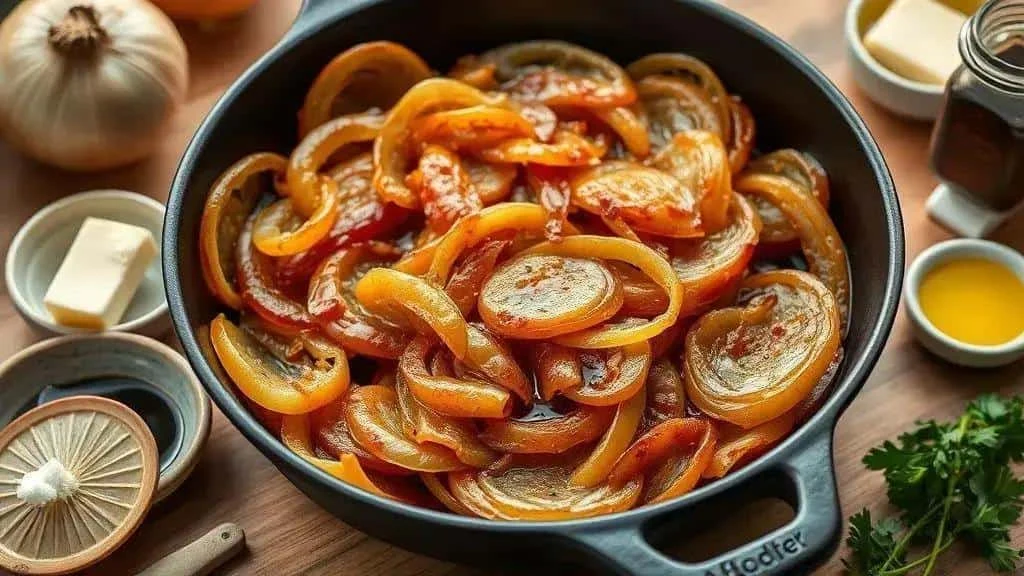
Gentle cooking turns onions soft, sweet and golden. Allow enough time and use the colour and texture, rather than the clock alone, as your guide.
The essential steps
- Choose and slice: use white, yellow or red onions, cutting thin, even slices so they cook at a similar rate.
- Heat the pan: for this recipe, use 1 tbsp of the measured olive oil and the optional 1 tbsp butter. Reserve the other tablespoon of oil for the rice.
- Cook gently: spread the onions in a wide pan and stir every few minutes, or more often if they begin to catch.
- Season lightly: a small pinch of salt seasons the onions as they soften. It is not a substitute for patient cooking.
- Give them time: start checking after 15–25 minutes. Continue gently if you want a deeper golden colour, adding a splash of water if the pan starts to catch rather than turning the heat up sharply.
- Finish to taste: add the optional 1 tsp sugar or 1 tbsp balsamic in the final few minutes. Take care not to burn the added sugar.
Seasonings for extra savoury depth
These small additions give different flavours without changing the basic method:
- Garlic – cook briefly, for about 30–60 seconds, without allowing it to burn.
- Soy sauce or tamari – 1 tsp adds savoury saltiness. Check the label if avoiding gluten; not every tamari is gluten-free.
- Tomato purée – ½ tbsp, cooked briefly in the pan.
- Miso – dissolve ½ tsp in a little water before stirring in.
- Fresh herbs – parsley, thyme or a little finely chopped rosemary add aroma.
Common mistakes
- Too much heat: onions can burn before they soften. Lower the heat and keep an eye on the pan.
- Stirring too little or constantly: let the onions make contact with the pan, but stir often enough to prevent sticking and uneven browning.
- Overcrowding: a small, crowded pan encourages steaming. A wider pan gives the onions more room.
Finishing and storing onions: loosen the golden pan juices with 1–2 tbsp water or wine; add vinegar more cautiously, to taste. Cool cooked onions and refrigerate within 2 hours at 5°C or below, using within 48 hours, or freeze portions. Once mixed with rice, follow the stricter rice guidance: cool ideally within 1 hour, refrigerate and use within 24 hours. Reheat only once until steaming hot throughout.
Side dishes and festive serving ideas
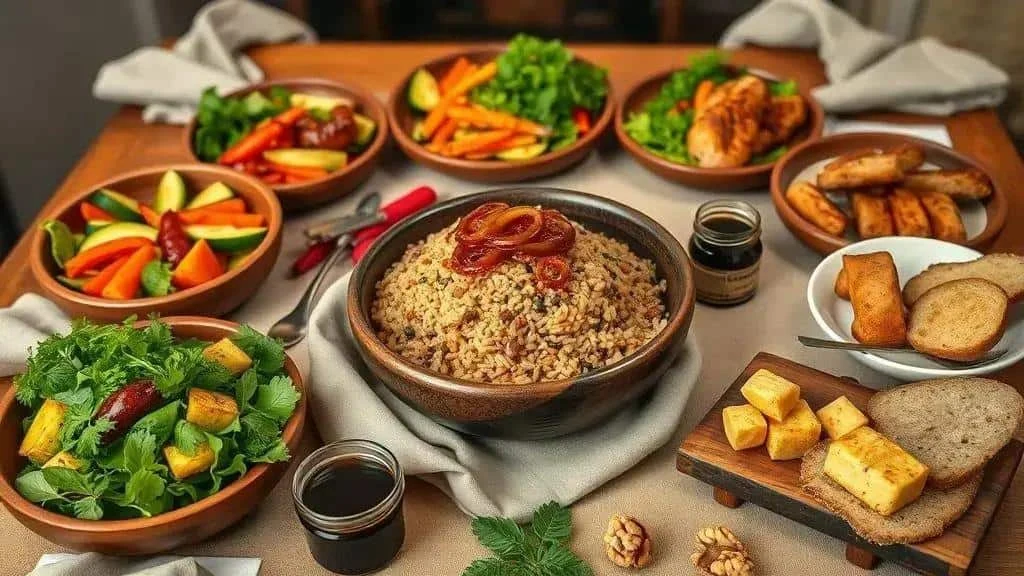
Pair lentil rice with caramelised onions with something fresh, crisp or sharp to balance the soft grains and sweet onions.
Suggested accompaniments
- Simple green salad – mixed lettuce, rocket and watercress for 4 people, dressed with 2 tbsp olive oil, the juice of ½ lemon, salt and pepper.
- Roasted vegetables – cut 500 g carrots, courgettes and peppers into pieces. Toss with olive oil, salt, pepper and thyme, then roast at 200°C, or 180°C fan, for about 25–30 minutes or until tender.
- Grilled vegetables – brush sliced aubergine and courgette with olive oil and garlic, then grill until cooked and tender, not merely marked on the surface.
- Optional protein – serve thoroughly cooked chicken breast or browned marinated tofu alongside. A 200–250 g chicken breast per person is a generous addition; adjust to appetite and the other dishes. The tofu variation uses 200 g for the recipe.
- Bread or mash – sliced rustic bread, mashed potato or cauliflower mash provide a different texture.
- Crunchy topping – scatter over ⅓ cup toasted chopped walnuts or other nuts, if not already using them in a variation.
- Finishing sauce – drizzle with a little balsamic reduction, using about 2 tbsp for the dish, or seasoned yoghurt.
Putting the plate together
- Choose a dish: shallow bowls or wide plates show off the rice and lentils.
- Add the base: if using mash, spoon a little onto the plate first. Otherwise, place a serving of rice in the centre; 180–220 g is a suggested portion, not a fixed requirement.
- Top with onions: arrange the reserved caramelised onions over the rice.
- Add the protein: place cooked chicken slices or tofu cubes alongside.
- Add colour: arrange the roasted vegetables or salad around the rice.
- Finish: sprinkle with the toasted nuts, a little balsamic reduction or olive oil, chopped herbs and lemon zest.
Portions and drinks
Portion guide: allow roughly 180–220 g rice and lentils as a substantial serving, or 120–150 g as a smaller side when several other dishes are available. Adjust to your guests’ appetites.
Drinks: lemon water works well. For adults who choose wine, try a light Pinot Noir or an aromatic Sauvignon Blanc.
A help-yourself festive table: serve the rice, extra onions, side dishes and toppings in separate dishes. Guests can choose their portions and flavours; keep nuts and other allergens clearly identified and separate.
More about lentils and onions
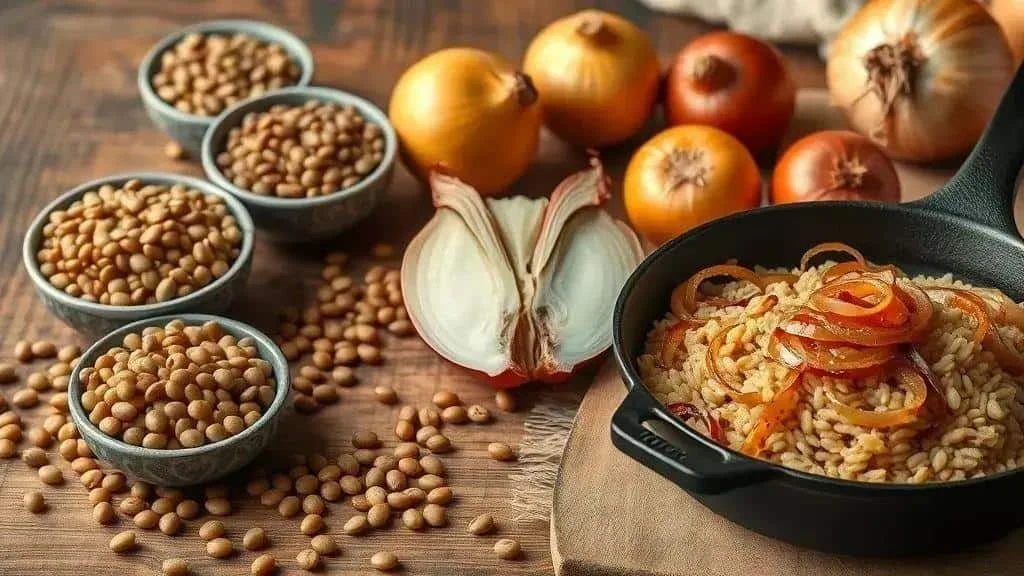
Lentils and onions bring different textures and flavours to the same dish, and lentils also have a place in festive traditions.
Nutritional context
- Lentils: pulses contribute plant protein and fibre, along with vitamins and minerals. They can be one part of a varied, balanced diet.
- Onions: their main role here is to add savoury depth and sweetness. This recipe is not a treatment for inflammation or any other health condition.
- The whole recipe matters: rice, oil, butter and toppings all affect the final dish. It should not automatically be described as low-calorie simply because it contains lentils and onions.
Lentils at festive meals
- A symbol of prosperity: in Italy, lentils are traditionally eaten at New Year as a symbol of good fortune and abundance. This is a cultural tradition, not a promise of luck.
- A familiar combination: lentils and onions suit many everyday and celebratory dishes. Their appeal here is the contrast between earthy pulses and gently sweetened onions.
What they bring to cooking
- Versatile lentils: use them in soups, salads, purées and main dishes, choosing the type to suit the texture you want.
- Onions as an aromatic base: raw onions taste sharp; gentle cooking softens them and develops a sweeter, deeper flavour.
- A useful pairing: caramelised onions give lentils a sweet and savoury contrast without a long list of ingredients.
More practical tips
- Cooking times vary: use the lentil packet as your guide and test for tenderness. Green and brown lentils hold their shape better than split red lentils.
- Preparation: rinse and check dried lentils before cooking. Follow any soaking instructions on the packet; do not assume a short soak guarantees easier digestion or a particular cooking time.
- Season to taste: adjust the finished dish after combining it with stock and onions. If lentils remain hard, continue cooking them separately until tender rather than relying on seasoning changes to fix them.
Choosing and storing ingredients
- Dried lentils: choose intact lentils free from debris and store sealed in a cool, dry place, following the packet’s date and instructions.
- Onions: choose firm onions without mould or soft patches and keep them somewhere cool, dry and ventilated. Check them regularly rather than relying on a fixed storage period.
- Cooked caramelised onions: cool and refrigerate promptly, within 2 hours, and use within 48 hours. They can also be frozen in portions. Rice mixed with onions must be used within 24 hours of refrigeration after rapid cooling.
A simple finishing thought: this combination brings together familiar ingredients, useful textures and plenty of flavour.
Enjoy your lentil rice
Lentil rice with caramelised onions works at a festive dinner or a relaxed midweek meal. Small changes to herbs, toppings and accompaniments let you adapt it without losing the character of the dish.
Thank you for reading. Follow us on social media for more recipes and festive ideas, and visit the I Love Christmas blog for more inspiration.
Try the variations, share your favourite combinations and return whenever you need another idea for the table.
Lentil rice with caramelised onions: frequently asked questions
Can I use tinned lentils instead of dried?
Yes. Drain 1½ cups cooked tinned lentils and add near the end of the rice’s cooking time, heating them thoroughly. This gives a version with fewer lentils than 1 cup dried would produce, and does not shorten the rice’s cooking time.
How long do onions take to caramelise?
Start checking after 15–25 minutes over a low heat. A deeper caramelised colour may take longer, depending on the pan, heat and quantity. Stir regularly and add the optional sugar or balsamic near the end; slow cooking is still important.
How should I store and reheat lentil rice?
Cool it quickly, ideally within 1 hour, then refrigerate covered at 5°C or below and use within 24 hours. Reheat only once, until steaming hot throughout, adding a splash of water if needed to loosen the grains.
Can I make it vegan?
Yes. Omit the butter or replace it with olive oil, and use vegan vegetable stock. For a creamy finish, stir in ¼–½ cup coconut milk or ½ cup cooked pumpkin purée and heat through.
What can I serve with it at a festive dinner?
Try green salad, roasted vegetables, cooked chicken or browned tofu, and a topping of toasted chopped nuts. A little balsamic reduction or lemon zest adds contrast. Keep allergen-containing toppings separate where needed.
Sources and Further Reading
- Food Standards Agency: chilling, freezing and defrosting safely
- Food Standards Agency: cooking and reheating safely, including rice
- Italia.it: New Year traditions in Italy
- NHS: a balanced vegetarian diet