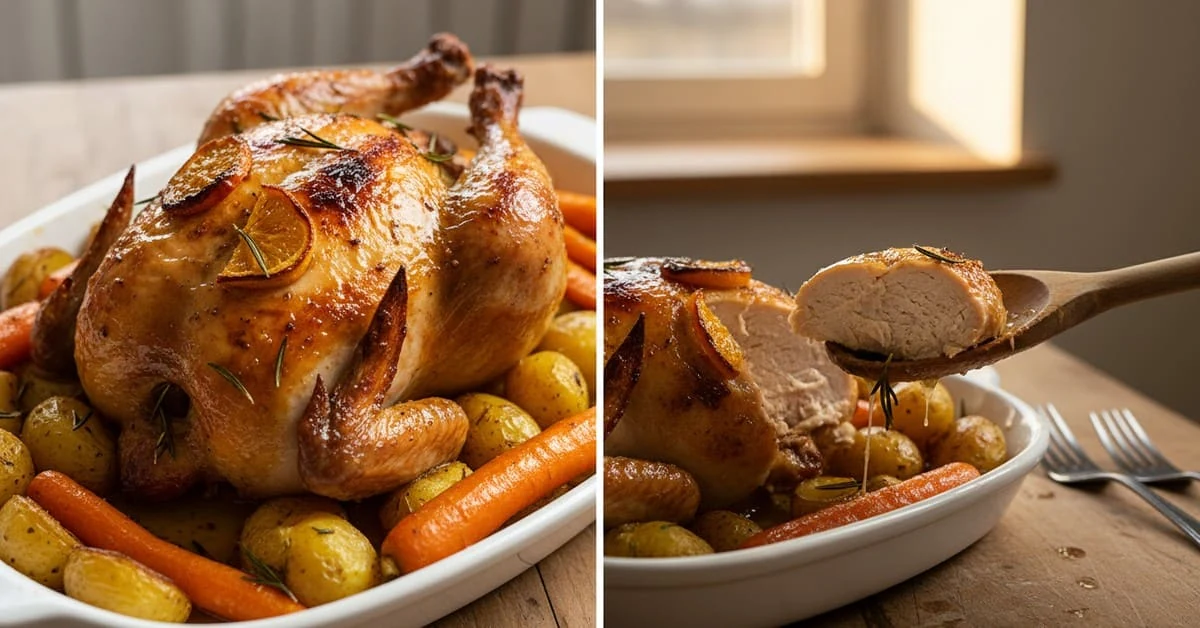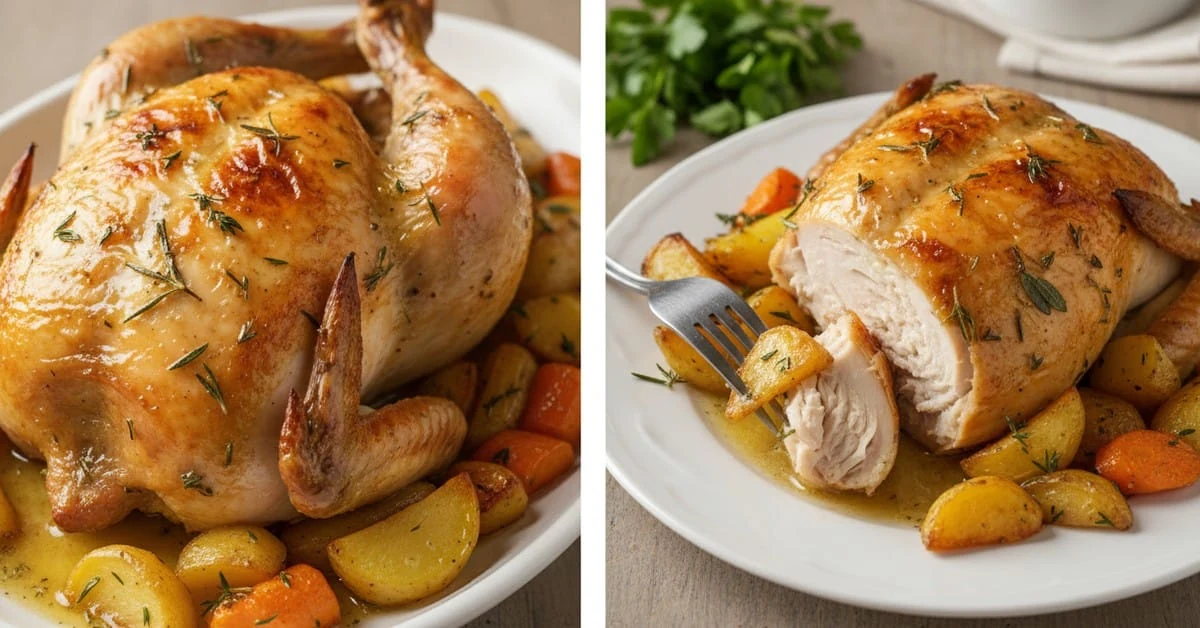
Christmas Chester chicken with herb butter brings a Brazilian festive favourite to the table. Check whether the bird is already seasoned, follow its roasting instructions, spread herb butter beneath the skin and check that the thickest parts reach 75°C for 30 seconds before resting and carving.
Christmas Chester chicken makes a fragrant centrepiece with butter, garlic and herbs. Chester is a Brazilian brand of chicken, rather than a separate species. A large roasting chicken is a practical alternative in the UK; use cooking guidance appropriate to the bird you buy.
Ingredients for Roast Chester Chicken with Herb Butter
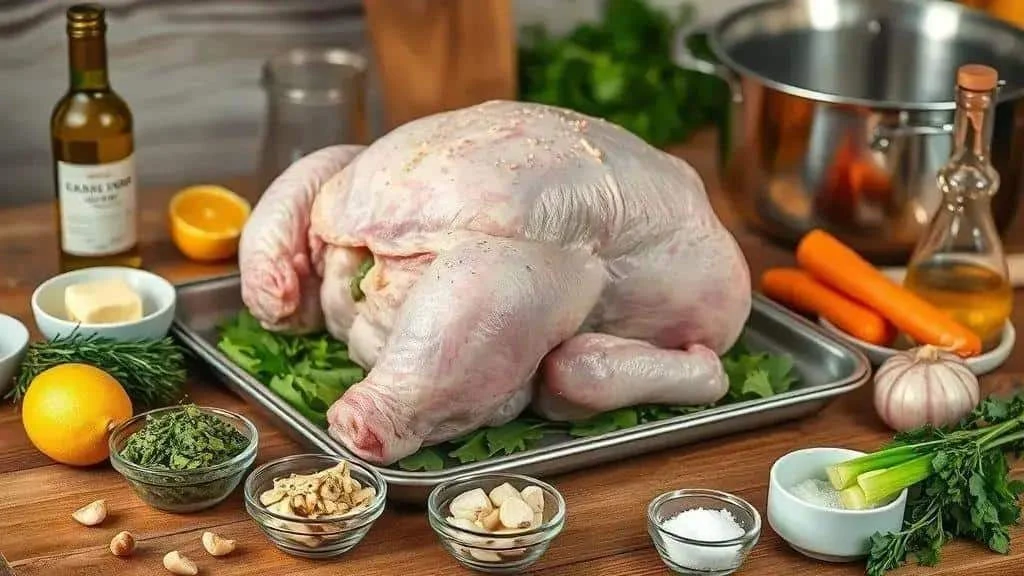
For this roast Chester chicken with herb butter, gather the following ingredients.
- 1 Chester chicken, 3–4 kg – fully defrosted if frozen, with any giblet bag removed. Do not wash raw poultry.
- 200 g unsalted butter – softened enough to spread. A suitable baking spread can be used, or replace some butter with thick plain yoghurt as described below.
- 3 garlic cloves – crushed or finely chopped; alternatively, use 1 teaspoon garlic powder.
- 2 tablespoons chopped fresh herbs – rosemary, thyme and parsley, or 2 teaspoons dried herbs.
- 1 tablespoon lemon zest – or the juice of half a lemon for a different, sharper finish.
- 2 tablespoons olive oil – for the roasting tin and surface of the bird.
- 1 large onion – quartered, for the roasting tin; leave the bird’s cavity unfilled.
- 2 carrots and 2 celery sticks – chopped, to flavour the pan juices.
- 120 ml dry white wine or chicken stock – for the roasting tin, with a little more stock if the tin dries out.
- Salt, if needed – check the bird’s label first. A pre-seasoned Chester chicken may need no extra salt.
- Freshly ground black pepper, to taste
- 1 bay leaf – optional, for the roasting tin.
- Extra rosemary and thyme sprigs – for the tin and, using separate clean sprigs, the serving platter.
Notes and Substitutions
For a yoghurt variation, replace up to 100 g of the butter with thick plain yoghurt; the skin and flavour will differ. This may reduce fat depending on the products used, but is not a calculated nutritional claim. A large chicken or small turkey can replace Chester, following its own weight-based cooking instructions. Use about one-third as much dried herb as fresh. Pat the skin dry with kitchen paper without washing the bird. If seasoning ahead, keep it covered in the fridge and respect its use-by and defrosting instructions.
How to Roast Chester Chicken with Herb Butter
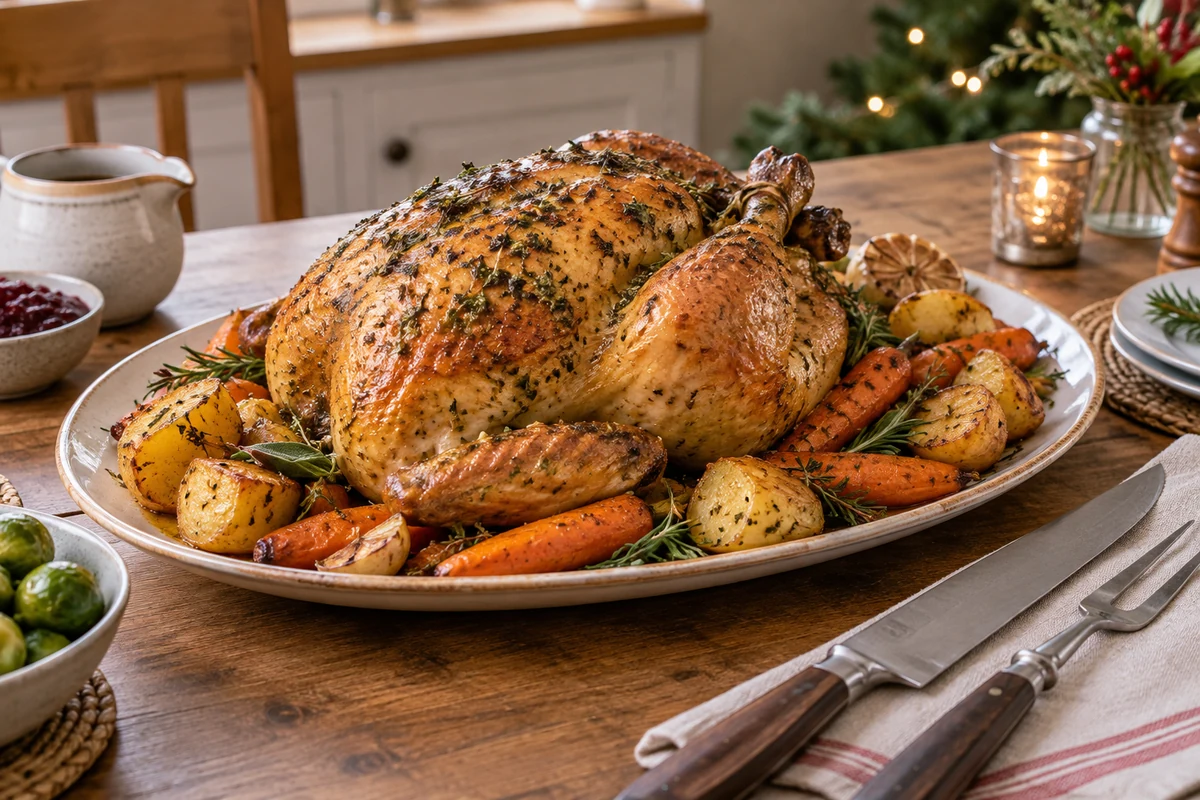
- Preheat the oven according to the bird’s packaging. For an ordinary unstuffed roasting chicken, 180°C conventional/160°C fan is a useful starting point, unless its label specifies otherwise. Keep the bird refrigerated until preparation; it does not need to stand out to warm up.
- Pat the skin dry with kitchen paper. Check for packaging and giblets, then discard the paper and wash your hands. Put the onion and optional bay leaf in the roasting tin, leaving the cavity unfilled.
- Make the herb butter: combine the 200 g softened butter, 3 crushed garlic cloves, 2 tablespoons chopped herbs and 1 tablespoon lemon zest. Add pepper and only as much salt as the bird’s existing seasoning allows.
- Gently loosen the breast skin and spread some herb butter underneath without tearing it. Spread the rest over the skin and tuck the wing tips underneath. Wash hands and utensils that have touched raw poultry.
- Place the chicken on a rack in a roasting tin with the onion, carrots and celery beneath it. Add the olive oil and 120 ml wine or stock to the tin. Keep the bird above the liquid rather than submerged.
- Roast using the manufacturer’s temperature and timing. This is especially important for pre-seasoned Chester products; do not add an untested high-heat stage to the packet method.
- Allow sufficient cooking time. For a plain unstuffed chicken, a guide at 180°C conventional is 45 minutes per kilogram plus 20 minutes: about 2 hours 35 minutes for 3 kg or 3 hours 20 minutes for 4 kg. Treat this as a planning guide and confirm doneness with a thermometer; fan ovens and individual products may differ.
- Check the tin about every 30 minutes and add a little extra stock if it is drying out. Spoon pan juices over the bird if desired, working quickly. Cover loosely with foil if the skin browns before the centre is cooked.
- Check with a clean food thermometer: the thickest breast and inner thigh, away from bone, should reach 75°C for 30 seconds, or an equivalent safe combination such as 70°C for 2 minutes. Check more than one place; browned skin alone is not a reliable guide.
- Rest for about 20 minutes under loose foil once the bird is fully cooked, then carve. Keep raw-poultry utensils away from the cooked meat.
- Use the pan juices for gravy: strain them, skim excess fat and bring to a boil in the gravy pan before simmering and adjusting the seasoning.
Quick Tips
- Timing: follow the bird’s label; for plain chicken, use the weight-based guide above and confirm the centre temperature.
- Dry skin: patting the skin dry helps browning. Do not rinse poultry first.
- Seasoning ahead: keep the bird refrigerated, and avoid adding extra salt to a pre-seasoned product.
- Substitutions: use a suitable spread in place of butter, or try the butter-and-yoghurt variation for a different finish.
Variations on Roast Chester Chicken with Herb Butter
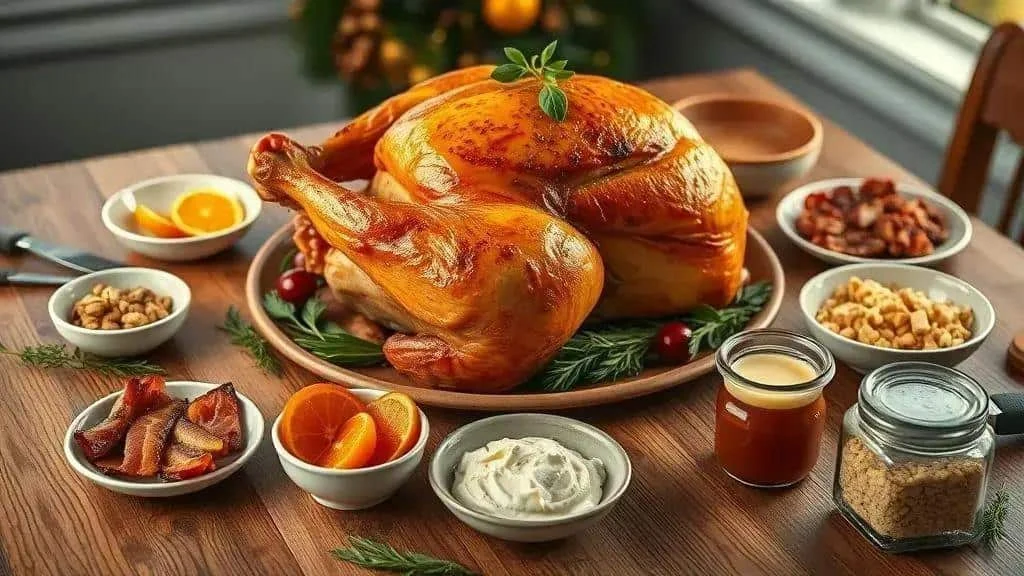
Choose a variation to adapt roast Chester chicken with herb butter to your guests. Keep the bird unstuffed and cook accompaniments separately so that the roasting guidance remains applicable.
Chester Chicken with Citrus Fruit and Nuts
Fruit adds freshness while nuts bring a contrasting texture.
- Main ingredients: 2 oranges cut into wedges, 1 chopped apple and 100 g chopped Brazil nuts or walnuts.
- Method adjustment: roast the fruit in a separate dish until tender, adding the nuts towards the end so they do not burn. Serve alongside the chicken rather than packing its cavity.
- Timing: cook the bird according to its normal unstuffed method and check the fruit separately. Clearly identify the nuts for guests with allergies.
Honey and Bacon Chester Chicken
A sweet and savoury variation with a glossy finish.
- Main ingredients: 150 g bacon rashers, 3 tablespoons honey and, optionally, 1 tablespoon Dijon mustard.
- Method adjustment: lay the bacon over the bird for the final 30–40 minutes and brush with honey mixed with mustard towards the end. Cook the bacon thoroughly and check the chicken’s centre temperature independently.
- Take care: honey can burn quickly. Cover loosely if necessary, and discard glaze contaminated by a brush used on undercooked poultry; reserve any serving sauce in a separate clean bowl.
Herb and Parmesan Crust
Crisp crumbs, herbs and cheese add another layer of flavour.
- Main ingredients: 100 g grated Parmesan, 1 cup panko or dried breadcrumbs and 3 tablespoons chopped herbs.
- Method adjustment: mix the cheese, crumbs and herbs with a little olive oil. Add the coating towards the end of roasting and cook until golden, without relying on the crust to indicate whether the chicken is done.
- Substitution: for a dairy-free version, replace the butter with a suitable dairy-free spread and omit the cheese or add nutritional yeast to taste. Check the breadcrumbs too; use certified gluten-free crumbs if needed.
Butter and Yoghurt Variation
A different balance of butter and tangy yoghurt, with a softer finish to the skin.
- Main ingredients: 100 g butter, 100 g thick plain Greek yoghurt and the recipe’s 2 tablespoons chopped fresh herbs.
- Method adjustment: use this mixture in place of the original 200 g butter, retaining the garlic and lemon. Spread beneath and over the skin, then follow the same packet-led roasting and temperature checks.
- Result: the skin may be less glossy and crisp than with butter alone. This version still contains milk.
Orange and Cranberry Glaze
A colourful, sweet-sharp finish for a festive table.
- Main ingredients: half a cup cranberry sauce, the zest and juice of 1 orange and 1 tablespoon balsamic vinegar.
- Method adjustment: combine the ingredients and brush over the bird during the final 20–30 minutes, watching for scorching. Reserve a clean portion before basting if you want sauce for serving.
- Tip: serve with less sweet side dishes to balance the glaze.
Smoked Paprika and Garlic Chester Chicken
Smoked paprika brings a smoky flavour without needing a smoker.
- Main ingredients: 1 tablespoon smoked paprika, up to 1 teaspoon chilli flakes and the recipe’s 3 chopped garlic cloves.
- Method adjustment: mix the spices into the herb butter and spread beneath and over the skin. Roast normally; an improvised smoking stage is unnecessary for this version.
- Substitution: leave out the chilli for a milder result.
Chester Chicken with Christmas Farofa
This Brazilian accompaniment brings toasted cassava crumbs and festive fruit to the meal.
- Main ingredients: 300 g ready-made or homemade farofa, 50 g dried fruit such as raisins or chopped apricots, and optionally 50 g chopped bacon.
- Method adjustment: cook the bacon thoroughly in a separate pan, then add the fruit and farofa and heat through. Serve beside the roast rather than stuffing the cavity.
- Tip: taste before adding salt, particularly if using bacon or seasoned ready-made farofa.
Practical Guidance
Seasoning and cooking time: retain the herb-butter method, keep accompaniments separate and follow the bird’s cooking instructions. Shield sugary coatings if they darken too quickly and use a thermometer to check the meat.
How to Keep Chester Chicken Juicy
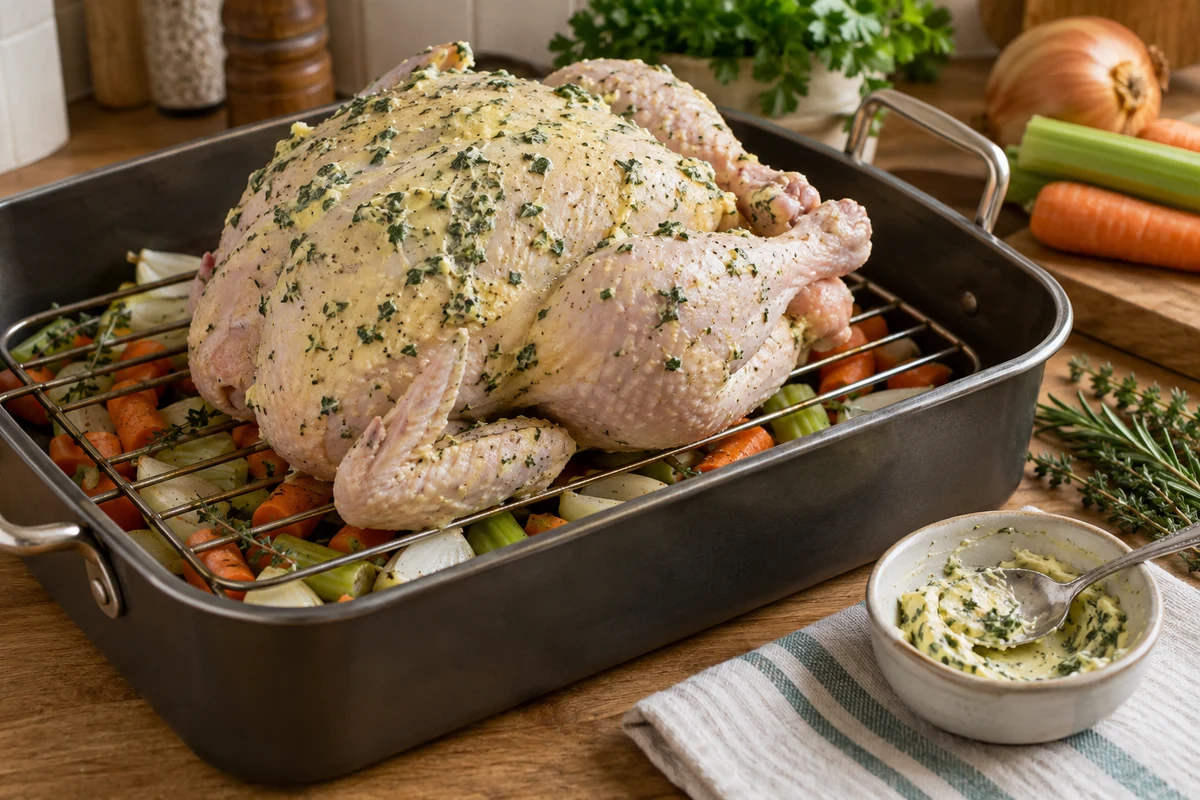
Preparation and careful cooking help preserve the texture of Chester chicken. These practical steps focus on seasoning, heat and resting.
Brining: Check the Product First
Dry brining: first check whether the bird is already salted or marinated. Traditional Chester products may be pre-seasoned, so additional brining can make them too salty. For a plain bird, use a tested recipe matched to its weight and keep it refrigerated throughout.
Wet brining: it is not required for this recipe. A pre-seasoned bird generally needs no additional brine. If using a tested brine for plain poultry, keep the bird and liquid cold in the fridge, prevent spills and do not rinse the bird afterwards.
Herb Butter Beneath the Skin
Gently loosen the breast skin and spread softened butter, garlic and herbs underneath. This adds flavour directly beneath the skin, but cannot compensate for overcooking; temperature checks remain important.
Temperature Control and Browning
- Follow the packet: Chester products can have specific instructions. For plain unstuffed chicken, the guide above starts at 180°C conventional/160°C fan.
- Keep the cooking method consistent: avoid switching to a much lower temperature mid-roast without appropriate instructions. Cover darkening skin loosely with foil while the centre finishes cooking.
- Use a thermometer: check the thickest breast and thigh, avoiding bone, for 75°C for 30 seconds or 70°C for 2 minutes.
Basting and Protecting the Skin
Baste if desired at the occasional pan check, rather than opening the oven repeatedly. Basting flavours the surface; it does not replace checking the centre. Shield the bird loosely with foil if it browns too quickly.
Rack, Aromatics and Pan Juices
A rack keeps the chicken above the liquid and allows heat to circulate. Add onion, carrots and celery below, with 120 ml wine or stock initially. Top up with a little stock if the tin dries out.
Spatchcocking and Other Preparation Methods
Spatchcocking: removing the backbone and flattening the bird changes its cooking time; ask a butcher to prepare it and use an appropriate method. Injecting flavourings: is unnecessary here, particularly for an already-marinated Chester. Herb butter is the simpler option and avoids adding extra handling of raw poultry.
Resting Before Carving
Once fully cooked, cover loosely with foil and rest for about 20 minutes before carving. This makes the meat easier to portion without rushing straight from the oven.
Common Mistakes to Avoid
- Leaving raw poultry out to warm up: keep it refrigerated until preparation and do not leave it standing at room temperature unnecessarily.
- Relying only on the clock: allow enough time, then check the centre with a thermometer.
- Opening the oven too often: heat escapes each time, which can extend cooking.
Quick Checklist
- Check the label for existing seasoning and cooking instructions
- Spread herb butter beneath and over the skin
- Use a rack and vegetables in the roasting tin
- Follow a consistent roasting method appropriate to the bird
- Check the pan occasionally and shield the skin if needed
- Confirm safe centre temperatures, then rest before carving
Preparing Ahead and Storing Food for Christmas
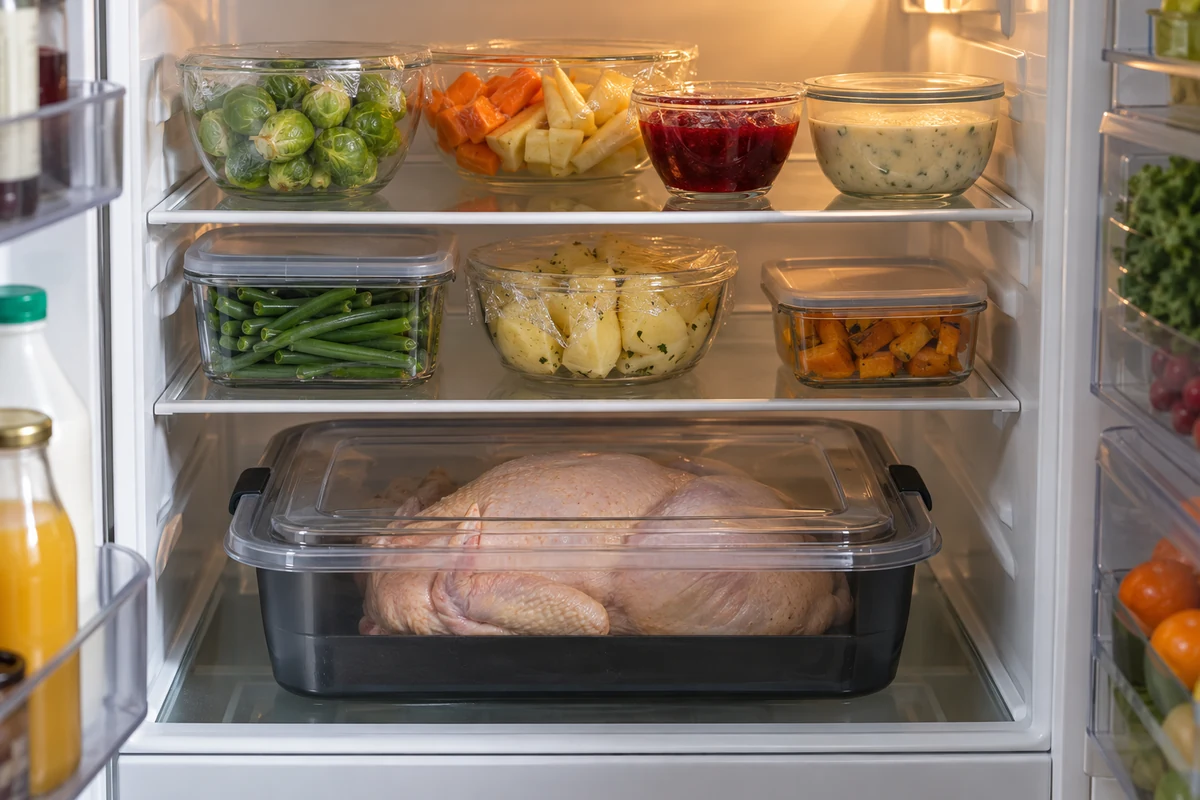
Plan ahead by setting out defrosting, preparation and cooking tasks. Allow longer for defrosting if the packet requires it, and keep the short fridge life of prepared food in mind.
Make-Ahead Checklist
- Several days before: check the defrosting instructions and allow enough fridge time. Do not assume every 3–4 kg bird will thaw in two days, and do not add brine to an already-seasoned bird.
- One or two days before: prepare herb butter and suitable sauces, refrigerating promptly and using within their safe storage time. Freeze components that will need to wait longer.
- The day before: cook suitable side dishes if helpful, cool promptly and refrigerate in covered containers. Reheat only the portions needed, once.
Safe storage: divide cooked food into shallow portions and refrigerate within 2 hours. Do not wait for a large joint to cool completely on the worktop. Vacuum packing does not make cooked food safe for longer at home.
Temperatures and Storage Times
- Fridge: keep it at 5°C or below. Use cooked leftovers within 48 hours or freeze promptly. Cooked rice has a shorter limit, noted below.
- Freezer: keep it at −18°C or below. Using cooked portions within 2–3 months is a practical quality guide, rather than a precise safety expiry date.
- Defrosting: use a covered tray on the fridge’s bottom shelf and follow the packet. Allow several days if needed; confirm there is no ice left inside and use the bird within 24 hours of full defrosting, unless the label requires sooner.
Storing roast chicken: remove meat from the carcass and divide it into shallow portions to cool more quickly. Keep gravy separately and refrigerate both promptly.
Reheating Safely
- Oven: place defrosted portions in a covered ovenproof dish with a little stock and heat at 160°C conventional/140°C fan until steaming throughout, reaching 75°C for 30 seconds. Reheat only once.
- Sliced portions: arrange in a shallow dish with stock and cover. Timing depends on thickness and quantity; do not rely on a fixed 15–25 minutes without checking the centre.
- Microwave: use small portions, cover with a suitable vented lid, turn or rearrange during heating and observe standing time. Check several places reach 75°C for 30 seconds.
- Gravy and sauces: bring to a boil while stirring, checking they are hot throughout. Reheat once and serve promptly.
Keeping reheated meat moist: use a little stock or gravy and cover while heating. Slicing before storage helps cooling and makes it easier to reheat only the amount needed.
Organising Christmas Dinner
- Allow time for roasting, temperature checks, resting and carving.
- Keep a clean digital food thermometer ready.
- If hot-holding dishes, use suitable equipment that keeps food at 63°C or above; a warm serving dish alone is not enough.
Good practice: label containers, keep raw and cooked foods separate and reheat leftovers only once. Smell and appearance cannot establish safety: discard food if its storage history or use-by date makes it unsafe.
Side Dishes for Chester Chicken
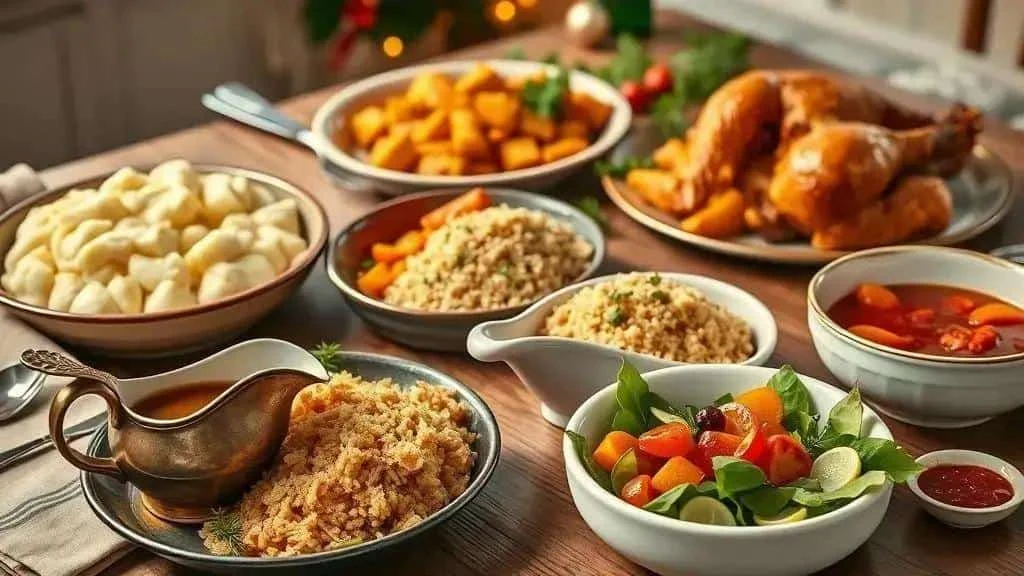
Choose accompaniments for Chester chicken that balance the rich roast with contrasting textures and fresh flavours.
Creamy Mashed Potatoes
A soft, comforting accompaniment for roast poultry and gravy.
- 1 kg potatoes – peeled and cut into evenly sized pieces.
- 100 g butter – or olive oil added gradually to taste for a different flavour, not automatically a lower-fat result.
- 200 ml milk – warmed before adding.
- Salt and pepper, to taste
- Cook the potatoes: cover with cold water, add salt if desired and bring to a boil. Simmer for about 15–20 minutes, depending on size, until tender.
- Mash: drain well and use a potato ricer or masher.
- Add the butter and milk: work in the butter, then add warm milk gradually to reach the texture you prefer.
- Season: taste and serve promptly, or keep safely hot until serving.
Christmas Farofa
Toasted cassava flour adds crunch; serve this Brazilian side separately from the bird.
- 300 g cassava flour suitable for farofa – not tapioca starch.
- 100 g chopped bacon – optional; browned onion provides a meat-free alternative.
- 50 g dried fruit – such as raisins or chopped apricots.
- Butter, salt, chopped parsley and spring onion, to taste – plus optional chopped onion and garlic for frying.
- Cook the bacon: fry until cooked through and crisp, retaining a little fat. If omitting bacon, use a little butter instead.
- Soften the aromatics: fry the optional onion and garlic in the fat, then add the dried fruit.
- Toast the flour: add gradually and stir until lightly golden, following any cooking instructions on its packet.
- Finish: season, stir in the fresh herbs and serve.
Brazilian-Style Vegetable Rice
Colourful rice provides a simple accompaniment to the roast.
- 2 cups uncooked white rice
- 1 grated carrot
- Half a cup peas – fresh or frozen.
- 1 small chopped onion
- Vegetable stock or water, and salt if needed – plus a little olive oil for frying.
- Soften the onion: fry gently in the olive oil until translucent.
- Add the rice and carrot: stir over the heat for 1–2 minutes.
- Add liquid and cook: use the quantity and timing on the rice packet. Add peas with enough time to cook them thoroughly according to their own instructions. Serve promptly; cool leftover rice within 1 hour, refrigerate for no more than 24 hours and reheat once until steaming throughout.
Roast Vegetables
Golden vegetables bring colour and another texture to the plate.
- 2 carrots – sliced.
- 2 small potatoes – diced.
- 1 red onion – cut into wedges.
- Olive oil, salt, pepper and herbs, to taste
- Season: toss the vegetables with oil, herbs and seasoning.
- Roast: cook at 200°C conventional/180°C fan for roughly 30–40 minutes, turning halfway, until tender and golden. Adjust for the size of the pieces.
Simple Gravy
Turn the strained roasting juices into a sauce for the chicken and potatoes.
- 2 tablespoons butter
- 2 tablespoons plain flour
- 500 ml liquid in total – skimmed pan juices topped up with chicken stock as needed.
- Salt and pepper, to taste
- Make a roux: melt the butter, stir in the flour and cook gently for 1–2 minutes.
- Whisk in the liquid: add gradually, whisking to prevent lumps, and bring to a boil.
- Simmer and season: cook until thickened and the flour has cooked through. Taste before adding salt and strain if desired.
Leaf Salad with Orange Dressing
A fresh, citrusy contrast to richer dishes.
- Mixed salad leaves – such as lettuce, rocket and radicchio.
- 1 orange – zest and juice.
- 3 tablespoons olive oil
- Salt, pepper and honey, to taste
- Make the dressing: whisk orange juice and zest with oil, seasoning and a little honey if wanted.
- Dress the salad: toss just before serving. Keep washed leaves and utensils away from raw poultry during preparation.
Cranberry Sauce or Apple Sauce
A sweet-sharp sauce adds colour and contrast.
- 1 cup fresh or frozen cranberries – or 3 peeled, chopped apples for a separate apple-sauce variation.
- Up to half a cup sugar – add gradually to taste; the two fruits have different sweetness and yields.
- A quarter of a cup water – with a little extra if the pan dries out.
- Cook the fruit: simmer with the water and some sugar until soft. Taste and adjust the sugar, taking care with the hot mixture.
- Adjust the texture: mash with a spoon and cool for serving. This is a fresh sauce, not a shelf-stable preserve: refrigerate within 2 hours and use within 48 hours or freeze.
Serving Suggestions
Balance the meal: choose creamy mash, crunchy farofa, vegetables and a sharp fruit sauce. Serve in separate dishes so guests can choose their own combinations.
Chester Chicken and Brazilian Christmas Traditions
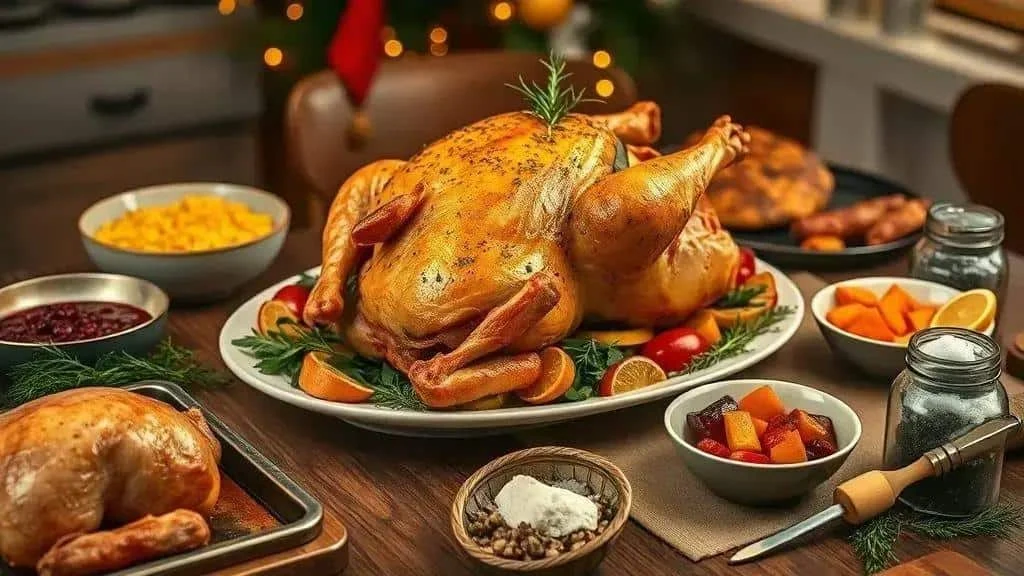
These notes explain the place of Chester chicken at Brazilian Christmas tables and how to choose an alternative elsewhere.
The Name and Product
Chester is a Perdigão brand of chicken sold in Brazil, including a traditional seasoned whole-bird product. It is not a separate species or a chicken–turkey hybrid.
The Meat
- Breast meat: the product is associated with a substantial breast portion. The amount of meat and the serving yield depend on the particular bird and how it is carved.
- Texture: careful cooking and resting matter more than adding extra seasoning to a bird that is already marinated.
- Versatility: it works with herb butter, sweet or savoury glazes and separately cooked accompaniments.
Its Place at Christmas
- Festive marketing: seasonal packaging and promotion have helped associate the product with celebrations in Brazil.
- Planning portions: choose a bird by its weight, the number of guests and the other dishes being served, rather than assuming one size suits every gathering.
- Preparation: packet instructions can make planning straightforward, but every whole bird still needs adequate defrosting, careful handling and thorough cooking.
Buying and Reading Labels
Check whether the Chester chicken is frozen or chilled, its weight, storage instructions and use-by date. The traditional seasoned product contains added water and seasonings, so extra salt or brining may be unnecessary. Check the full ingredients for dietary requirements.
Chester, Turkey and Other Roasting Chickens
- Turkey: often chosen for larger gatherings, although smaller birds are available. Use turkey-specific cooking guidance.
- Roasting chicken: a widely available UK alternative. Choose a weight to suit your guests and check current prices locally.
- Chester: a branded chicken product with its own packaging and preparation instructions, rather than a separate category of poultry species.
Alternatives and Value
If Chester is unavailable or expensive where you live, use a large roasting chicken or small turkey. Keep the herb-butter flavours but adjust the cooking method to the type, weight and instructions for the bird you actually buy.
Cultural Notes
- Brazilian Christmas tables: Chester is one of several festive main-course choices, alongside turkey, pork and other family favourites.
- Accompaniments: Christmas farofa and fruit sauces give the meal a particularly Brazilian character.
- Myths and practical facts: a festive brand name does not remove the need for safe handling, correct cooking and careful storage.
Conclusion
With herb butter, suitable accompaniments and a thermometer, roast Chester chicken with herb butter can make a flavourful Christmas centrepiece.
Start with the label, plan enough defrosting and cooking time, and avoid over-salting an already-seasoned bird.
Thank you for reading. Follow our social channels for more seasonal ideas and explore the I Love Christmas blog for festive inspiration.
Happy Christmas, and enjoy your meal!
Christmas Chester Chicken: Frequently Asked Questions
How do I defrost Chester chicken safely?
Use a covered tray on the bottom shelf of the fridge and follow the packet’s defrosting time, allowing several days if required. Check that the bird is fully thawed inside, then use within 24 hours unless the label requires sooner. Never defrost it on the worktop.
What temperature and timing should I use for a 3–4 kg Chester chicken?
Follow the Chester product’s own instructions. For a plain unstuffed roasting chicken, a guide at 180°C conventional is 45 minutes per kilogram plus 20 minutes, but timing is only a guide. Check the thickest breast and thigh reach 75°C for 30 seconds, or an equivalent safe temperature and time.
How can I keep the chicken juicy?
Use herb butter beneath the skin, avoid overcooking, shield the skin if it browns too quickly and rest the fully cooked bird for about 20 minutes. Do not add brine automatically to a pre-seasoned product.
What substitutions can I make?
Use 2 teaspoons dried herbs instead of 2 tablespoons fresh, try the butter-and-yoghurt variation, or replace Chester with a large chicken or small turkey. Follow cooking instructions appropriate to the replacement bird.
How should I store and reheat leftovers?
Refrigerate in shallow portions within 2 hours and use within 48 hours or freeze promptly. Defrost frozen portions in the fridge and use within 24 hours. Reheat once until steaming throughout, reaching 75°C for 30 seconds or an equivalent safe combination. Keep rice leftovers for no more than 24 hours.
Sources and Further Reading
- Food Standards Agency: cooking food safely
- Food Standards Agency: chilling, freezing and defrosting food
- Food Standards Scotland: turkey and poultry cooking guide
- Perdigao: traditional Chester chicken product information