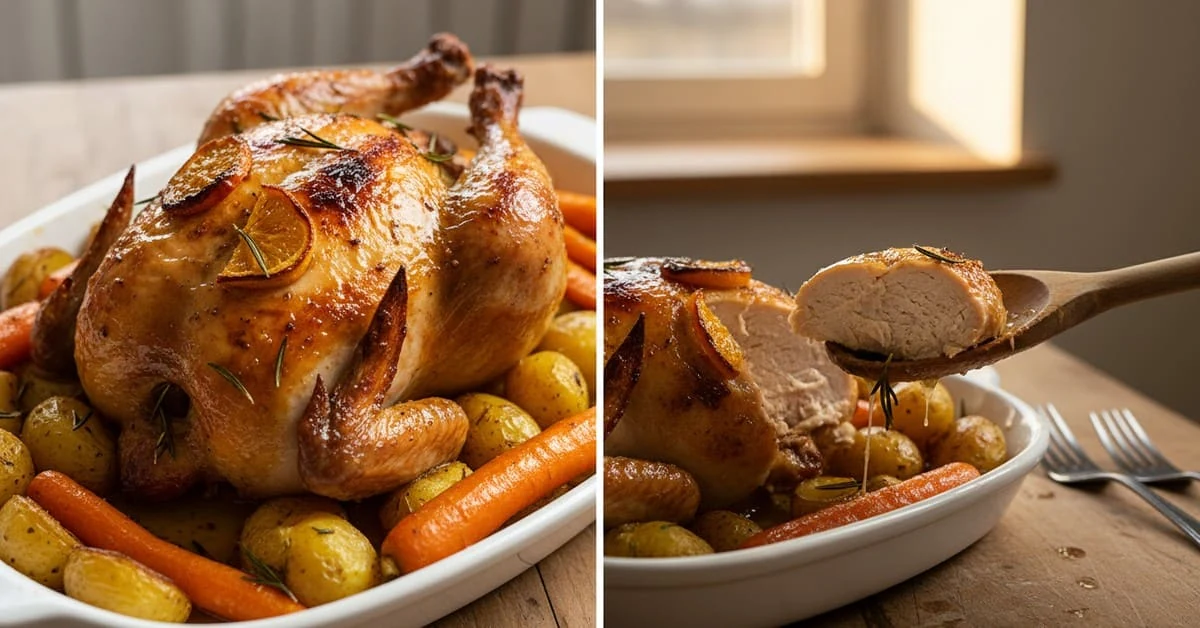
Christmas roast chicken with orange and rosemary offers a smaller alternative to turkey. This guide includes the seasoning, roasting method and simple accompaniments such as rice or Brazilian farofa. Prices vary, so compare local options when planning your budget. The recipe is editorially reviewed, not kitchen-tested; follow the chicken’s instructions and check doneness.
This Christmas roast chicken with orange and rosemary uses familiar ingredients and a manageable whole bird. The orange provides citrus flavour and the rosemary adds aroma, while a short menu of sides keeps the preparation straightforward.
Ingredients for Christmas roast chicken with orange and rosemary
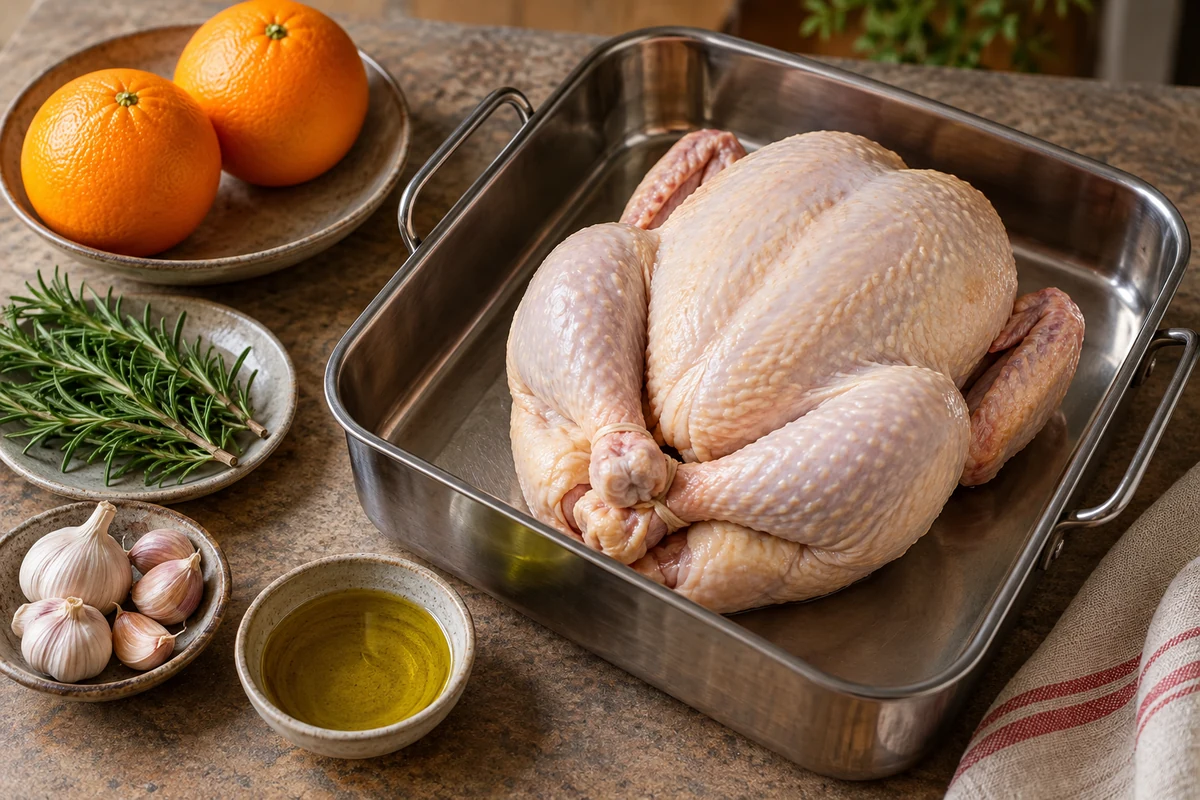
For Christmas roast chicken with orange and rosemary, gather the following ingredients:
- 1 whole chicken, 1.6–2 kg — fully thawed if frozen. Drumsticks and thighs are an alternative with different cooking times.
- 2 large oranges — juice and optional zest from one; slice the second for the roasting tin or keep clean slices for serving.
- 3–4 sprigs fresh rosemary — use some in the seasoning and the remainder with the potatoes. Thyme is an alternative.
- 4 garlic cloves — crushed or finely chopped; alternatively 1 teaspoon garlic powder.
- 4 tablespoons olive oil in total — 3 for the chicken and 1 for the potatoes. A suitable vegetable oil can replace it.
- 30 g melted butter, optional — cooled before mixing with the seasoning. Check ingredients if substituting a spread.
- 1 medium onion — quartered, to put in the roasting tin rather than packing the bird’s cavity.
- 500 g small potatoes — halved, for a separate roasting tray. Carrots are an alternative with an adjusted cooking time.
- Salt, to taste — use less if the chicken or stock is already seasoned; do not automatically add a tablespoon.
- Up to 1 teaspoon ground black pepper — according to taste.
- 1 teaspoon sweet or smoked paprika, optional — for colour and flavour.
- 100 ml chicken stock or water — for the tin. White wine is an option for adults choosing alcohol; roasting does not necessarily remove it all.
Notes and substitutions
Servings: roughly 4–6 with side dishes, depending on the bird and appetites. A 1.6 kg bird provides smaller portions than a 2 kg one.
Budget: compare price per usable portion rather than assuming a whole bird or pieces will always be cheapest.
Herbs: fresh rosemary and orange zest give a distinct aroma. If using dried rosemary, start with about 1 teaspoon and adjust rather than measuring dried sprigs.
How to roast the Christmas chicken
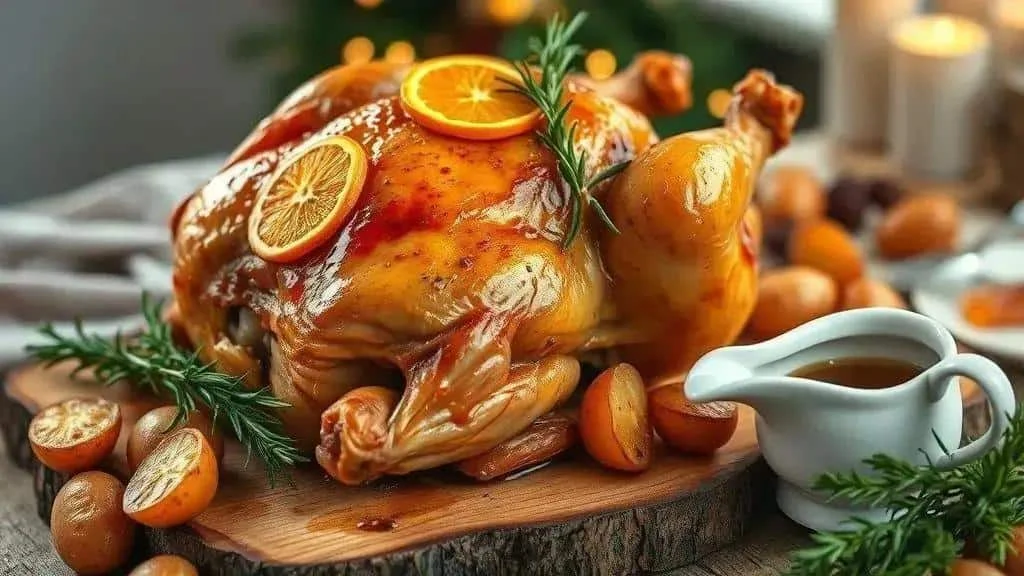
- Preheat the oven: use 180°C conventional / 160°C fan, unless the chicken’s instructions specify otherwise. Have the oven hot before putting the bird in.
- Prepare the chicken: remove packaging and any giblet bag. Do not wash raw poultry. Pat dry with disposable paper if needed, discard it and wash hands and surfaces. Keep the cavity unstuffed.
- Mix the seasoning: combine 3 tablespoons olive oil, the optional 30 g melted and cooled butter, 4 crushed garlic cloves, zest and juice of 1 orange, a modest amount of salt, up to 1 teaspoon black pepper, optional 1 teaspoon paprika and chopped leaves from 2–3 rosemary sprigs. You may use thyme instead of rosemary.
- Season the bird: carefully loosen the breast skin and spread a little of the mixture beneath it, then coat the outside. Place onion and orange slices in the tin, not tightly inside the cavity. Keep any clean garnish separate from raw poultry.
- Prepare the trays: set the chicken breast-side up on a rack above the onion and orange. Toss the 500 g halved potatoes with the remaining tablespoon of oil, a little seasoning and rosemary on a separate tray. This makes it easier to cook and remove them independently.
- Roast until cooked: use the package timing first. A general whole-chicken guide is 45 minutes per kg plus 20 minutes at 180°C conventional / 160°C fan. For a 1.8 kg bird that is approximately 1 hour 41 minutes in total, but check the centre rather than relying on the clock. Roast the potatoes until tender and browned, allowing roughly 45–60 minutes or longer depending on their size.
- Keep the tin from drying: add the 100 ml stock or water beneath the bird and top up a little if necessary. Frequent basting and opening the oven are not essential; do not splash partly cooked juices onto ready-to-eat food.
- Check doneness: use a clean probe in the thickest breast and inner thigh without touching bone. Both should reach 75°C for 30 seconds, or 70°C for 2 minutes. If not, continue cooking and check again.
- Rest: once fully cooked, cover loosely with foil and rest for 10–15 minutes before carving. Resting does not replace the cooking check.
- Carve and serve: on a clean board, remove the legs at the joints, then lift and slice the breast meat. Garnish with clean orange slices and rosemary and serve with the cooked potatoes.
Tips for texture and flavour
- Drying the surface before seasoning can help browning, although the orange-based mixture adds moisture. Crispness is not guaranteed by one step alone.
- If seasoning ahead, refrigerate covered for 1–4 hours or overnight within the use-by date. Longer acidic marinating is not always better for texture.
- Without a thermometer, check that the thickest meat is steaming hot, no pink flesh remains and the juices run clear. Use these checks together, not clear juices alone.
- Cool leftovers promptly, refrigerate within 1–2 hours and use within 48 hours or freeze. Only use safely stored cooked meat in later meals.
Roast chicken variations for Christmas
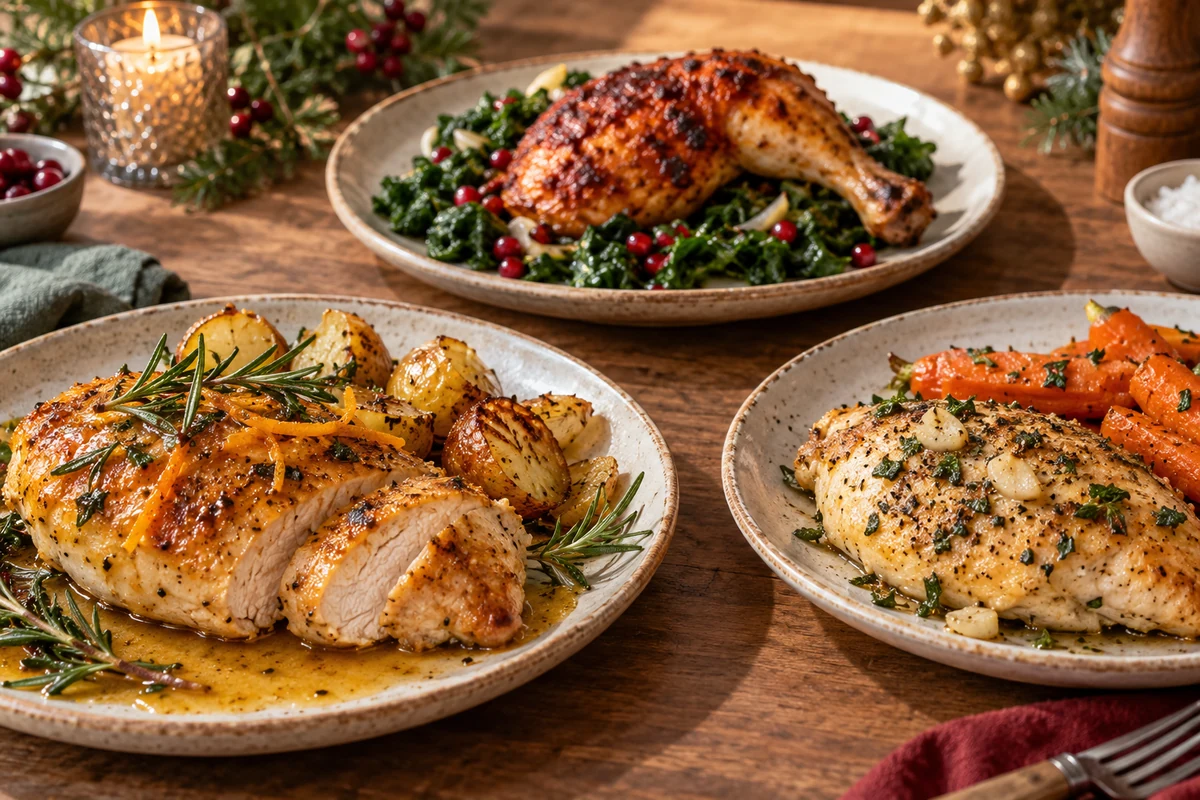
- Drumsticks and thighs: use 1.6–2 kg of pieces instead of a whole bird if the price and portions suit you. Season similarly, arrange in one layer and follow the pieces’ cooking instructions, checking each thick portion rather than using the whole-bird timing.
- Orange and honey glaze: mix 3 tablespoons honey with a little freshly squeezed orange juice as an optional extra glaze. Brush on near the end, watching for burning. Never use marinade that has touched raw chicken as an uncooked finishing sauce.
- Bacon-wrapped legs: wrap suitable slices around the legs as an optional variation and adjust added salt. Check the chicken beneath the bacon is thoroughly cooked; browned bacon alone does not establish doneness.
- Simpler seasoning: use oil, garlic, a little salt and pepper if that is what you have. Follow the same thorough cooking checks; using fewer ingredients does not shorten the bird’s cooking time.
- Fruit and farofa alongside: cook apple, raisins and a chosen farofa recipe separately as a side dish. Keep the chicken cavity unstuffed rather than packing it with a dense filling.
Adapting flavours and portions
- Yield: a 1.6–2 kg bird can serve about 4–6 with sides. Compare the actual price and edible yield of pieces before assuming they cost less.
- Herbs: start with around 1 teaspoon dried rosemary or thyme if replacing the fresh sprigs, then adjust to taste.
- Glazes: a little honey or orange marmalade can be used near the end. Choose one variation, allow it to cook and do not let it burn.
- Timing: a smaller whole bird normally needs less time, but follow the package and check the breast and thigh. The general guide here is 45 minutes per kg plus 20 minutes.
- Leftovers: use safely chilled cooked chicken in a salad or another dish, keeping track of its original cooking date and reheating no more than once.
Seasoning, marinating and roasting details
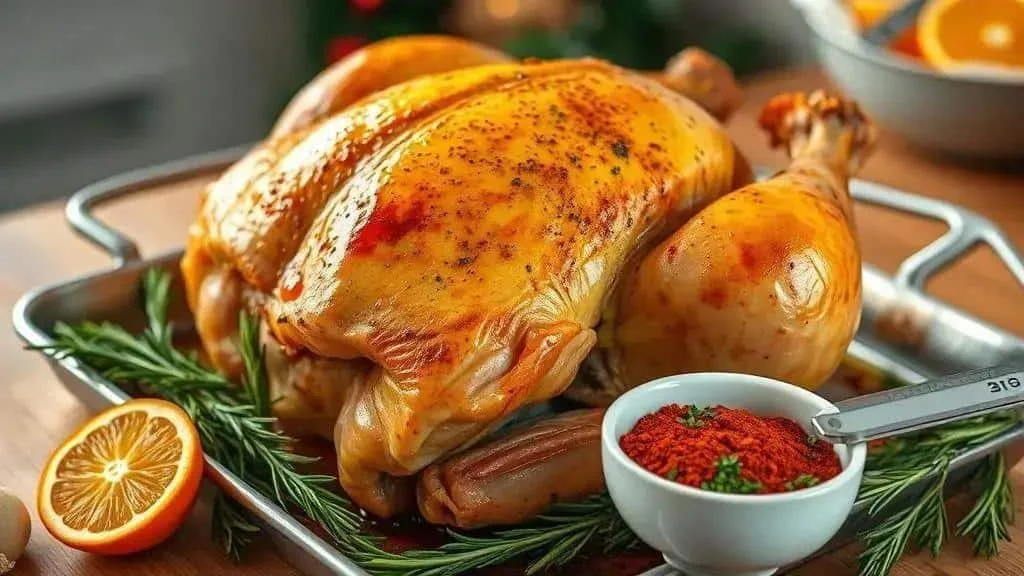
Good seasoning and careful cooking help produce flavoursome roast chicken. The quantities below repeat the main recipe for reference: they are not an additional batch of ingredients.
Main seasoning ingredients
- Salt — add moderately to taste, considering any salt already in the chicken and stock.
- Black pepper — up to 1 teaspoon, or less to taste.
- Garlic — 4 crushed cloves or 1 teaspoon garlic powder.
- Olive oil — 3 tablespoons in the chicken seasoning; the fourth tablespoon is for the potatoes.
- Fresh rosemary — leaves from 2–3 sprigs for the bird, with the remaining sprig for potatoes.
- Sweet or smoked paprika — 1 teaspoon, optional.
- Orange zest and juice — from 1 orange; wash the fruit before zesting.
Mixing and applying the seasoning
- Combine the wet ingredients: mix 3 tablespoons oil, the orange juice, optional 30 g melted and cooled butter and the crushed garlic.
- Add seasonings: stir in a little salt, the pepper, optional paprika and orange zest. Taste before the mixture touches raw poultry.
- Add herbs: mix in the chopped rosemary leaves or the smaller quantity of dried herbs.
- Under the skin: gently loosen the breast skin without tearing and spread in a little mixture using clean hands or a utensil. Wash thoroughly afterwards.
- Over the outside: spread the remainder over the bird. Put onion, sliced orange and any extra herb sprigs in the tin rather than filling the cavity.
- Advance seasoning: refrigerate covered for 1–4 hours or overnight if its use-by date allows. Do not leave raw chicken marinating at room temperature.
Roasting method and doneness
- Oven setting: use 180°C conventional / 160°C fan unless the package directs otherwise. Browning develops flavour but does not seal juices inside.
- Allow enough time: use 45 minutes per kg plus 20 minutes as a general whole-chicken guide, checking both breast and thigh before serving.
- Limit unnecessary opening: watch the liquid level and surface colour. If the skin darkens before the centre is cooked, cover it loosely with foil.
- Probe the centre: the thickest breast and thigh must each reach 75°C for 30 seconds, or 70°C for 2 minutes. Keep the probe away from bone and clean it after use.
- Rest: let the fully cooked chicken stand under loose foil for 10–15 minutes, then carve on a clean board.
Quick reminders
- Do not wash raw chicken. If patting it dry, dispose of the paper immediately and clean your hands and work area.
- A rack keeps the bird above the liquid in the roasting tin. Make sure it sits securely.
- The 100 ml stock or water in the tin can form the base of a sauce once the juices are thoroughly cooked. Wine is optional and may leave residual alcohol.
- Seasoning ahead can save work on the day, provided the chicken stays refrigerated and within its use-by date.
Simple side dishes and presentation
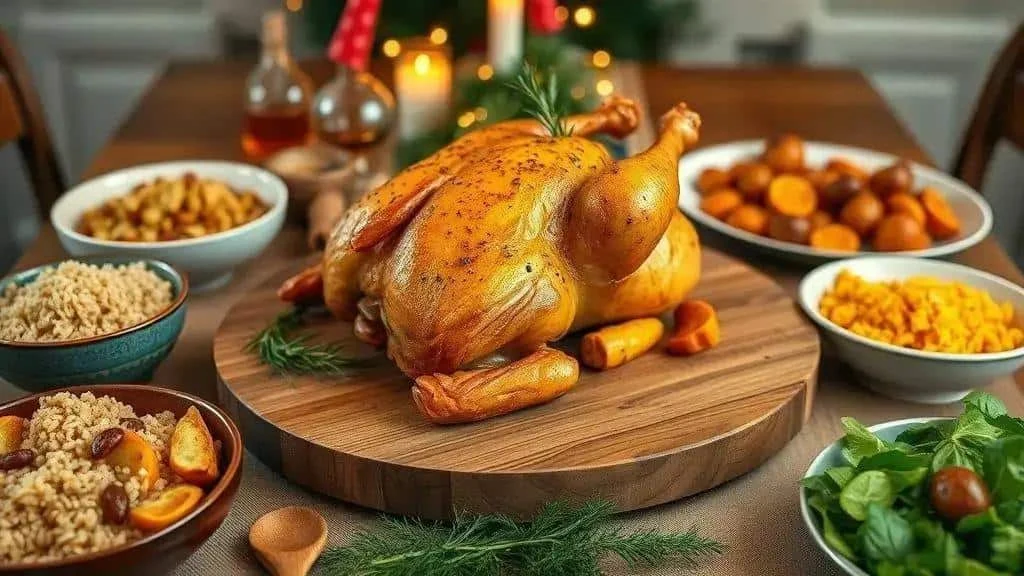
Choose a few accompaniments that fit the budget and cooking space around your roast chicken. The following are side-dish ideas, not extra ingredients in the chicken recipe.
Practical accompaniments
- Rice with raisins — allow roughly 50–75 g dry rice per adult as a side, with raisins and softened onion to taste. Cook according to the rice packet rather than treating dry and cooked weights as interchangeable.
- Simple Brazilian farofa — 250 g coarse toasted cassava flour, 1 chopped onion and about 30 g butter make a starting quantity for roughly 6 small side portions. Soften the onion, then stir and toast the flour as directed on its packet. Use farinha de mandioca, not tapioca starch or raw cassava.
- Mashed potatoes — 1 kg cooked potatoes with about 50 g butter and 100 ml milk can serve 4–6 as a side. Adjust consistency gradually and check dairy needs.
- Roast vegetables — carrots, potatoes and onions can share oven time on a separate tray. They may need longer at a lower temperature or in a crowded oven.
- Simple salad — lettuce, tomato and red onion with a little dressing provide a fresh accompaniment.
Quick portion estimates
- Whole chicken: around 300–350 g of raw whole-bird weight per person is a shopping estimate with sides, not the weight of cooked edible meat.
- Rice: about 50–75 g dry rice per adult, adjusted for the number of other sides. The cooked weight depends on the rice and water absorbed.
- Mash or farofa: around 150 g mash or a smaller 40–60 g portion of farofa can be a starting serving guide. These dishes are not equivalent by volume or energy.
Organising preparation
- Make-ahead sides: cool and refrigerate cooked sides promptly. Rice needs particular care: cool it quickly, ideally within an hour, refrigerate and use within 24 hours, reheating only once until steaming. Other suitable leftovers should be refrigerated within 1–2 hours and used within 48 hours.
- Share oven space: roast potatoes or vegetables on a separate tray alongside the chicken, checking their tenderness and the bird’s temperature independently.
- Use leftovers thoughtfully: plan a next-day meal with properly stored chicken. Adding it to a fresh dish does not reset its storage time.
Affordable presentation ideas
- Centrepiece: use a clean serving platter with clean orange slices and a few herbs. Keep it separate from raw-poultry equipment.
- Family-style service: put sides in serving dishes that guests can reach easily, with separate utensils.
- Simple garnish: a little orange zest or fresh rosemary is enough; elaborate decoration is unnecessary.
- Table setting: use an existing cloth and a small arrangement kept away from food, with battery LED candles if wanted.
Drinks to serve alongside
- Alcohol-free: sparkling water with a little orange juice or fresh orange slices echoes the citrus flavour.
- Optional wine: a light red or dry white can suit guests who choose alcohol. Pick within your budget rather than treating a higher price as necessary.
- A toast: sparkling water or an alcohol-free drink works as well as sparkling wine for marking the occasion.
Final serving tips
- Carve on a clean board before serving if that makes it easier to share the bird evenly.
- Bring hot food to the table together and keep cold dishes refrigerated until needed. Position alone does not maintain a safe serving temperature.
- Identify dishes and relevant allergens, especially butter, stock and any added bacon or sauces, for guests who need that information.
Enjoy your Christmas dinner
Christmas roast chicken with orange and rosemary can be a practical centrepiece for a smaller gathering, with familiar ingredients and flexible side dishes.
Careful seasoning, a suitable roasting time and checks in both breast and thigh matter more than promises of guaranteed crisp skin or juiciness.
For more festive meal ideas, visit the I Love Christmas blog and explore the other recipes and planning guides.
If you make this version, share what worked for your oven and table.
FAQ — Christmas Roast Chicken with Orange and Rosemary
How long should a 1.8 kg whole chicken roast?
Follow the product instructions first. At 180°C conventional / 160°C fan, a general guide of 45 minutes per kg plus 20 minutes gives about 1 hour 41 minutes for 1.8 kg. Check the breast and thigh reach 75°C for 30 seconds or 70°C for 2 minutes; timing alone cannot confirm doneness.
How can I improve the skin and keep the meat moist?
Pat the bird dry without washing it, avoid excessive liquid on the skin and cook on a rack. Cover loosely if browning too fast, stop cooking only after the safe temperature is reached and rest for 10–15 minutes. Crispness varies with the oven and seasoning.
Can I use drumsticks and thighs instead?
Yes. Compare prices and portions, season the pieces similarly and follow their cooking guidance. They may cook faster than a whole bird, so check the thickest part of each piece rather than applying the whole-chicken schedule.
What can replace rosemary or orange?
Thyme can replace rosemary, using less if dried. Lemon gives a sharper variation: start with less juice and add zest to taste. Honey adds sweetness, not acidity, and is optional rather than an automatic orange substitute.
How should I store and reuse leftovers?
Cool in small portions and refrigerate within 1–2 hours. Use within 48 hours or freeze. Reheat only once until steaming hot throughout, or use properly cooked and chilled chicken cold. Rice has a shorter refrigerated storage recommendation of 24 hours.
How can I check the chicken without a thermometer?
Cut into the thickest meat with a clean knife and check that it is steaming hot, no pink flesh remains and juices run clear. Use all these signs together. If uncertain, continue cooking; a clean food thermometer gives a more direct temperature check.
Sources and Further Reading
- Food Standards Agency: Cooking Your Food
- Food Standards Agency: Chilling, Freezing and Defrosting Food