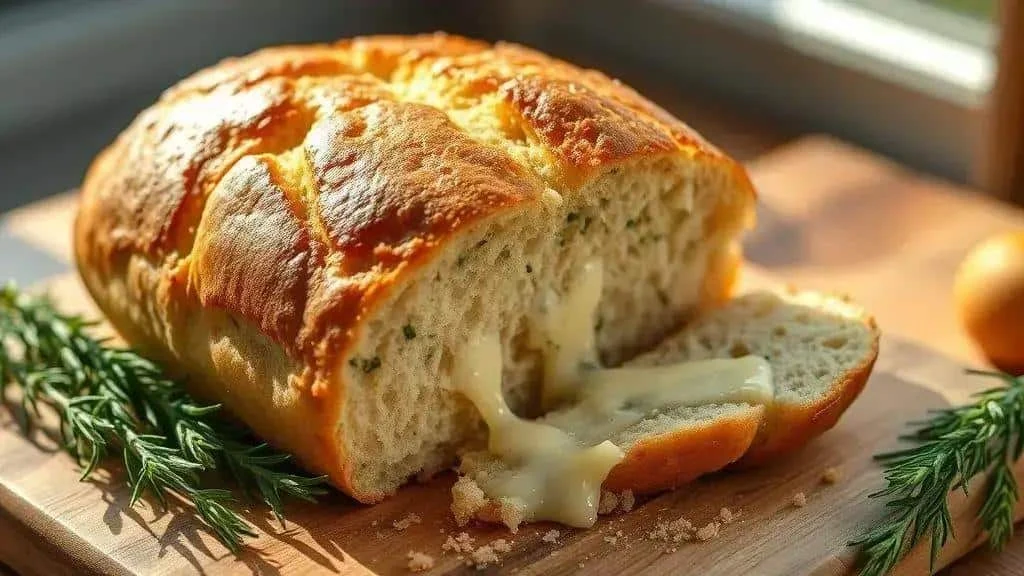
Christmas herb and cheese bread is a savoury festive loaf flavoured with rosemary and thyme and enriched with melting cheese. Follow the mixing, proving and shaping steps, then explore serving ideas and practical freezing advice. Dietary adaptations need their own ingredient and texture checks.
Christmas herb and cheese bread fills the kitchen with a welcoming aroma and makes a generous loaf to share. Shape it as a braid or a simple round and serve alongside your festive meal.
Ingredients for Christmas Herb and Cheese Bread
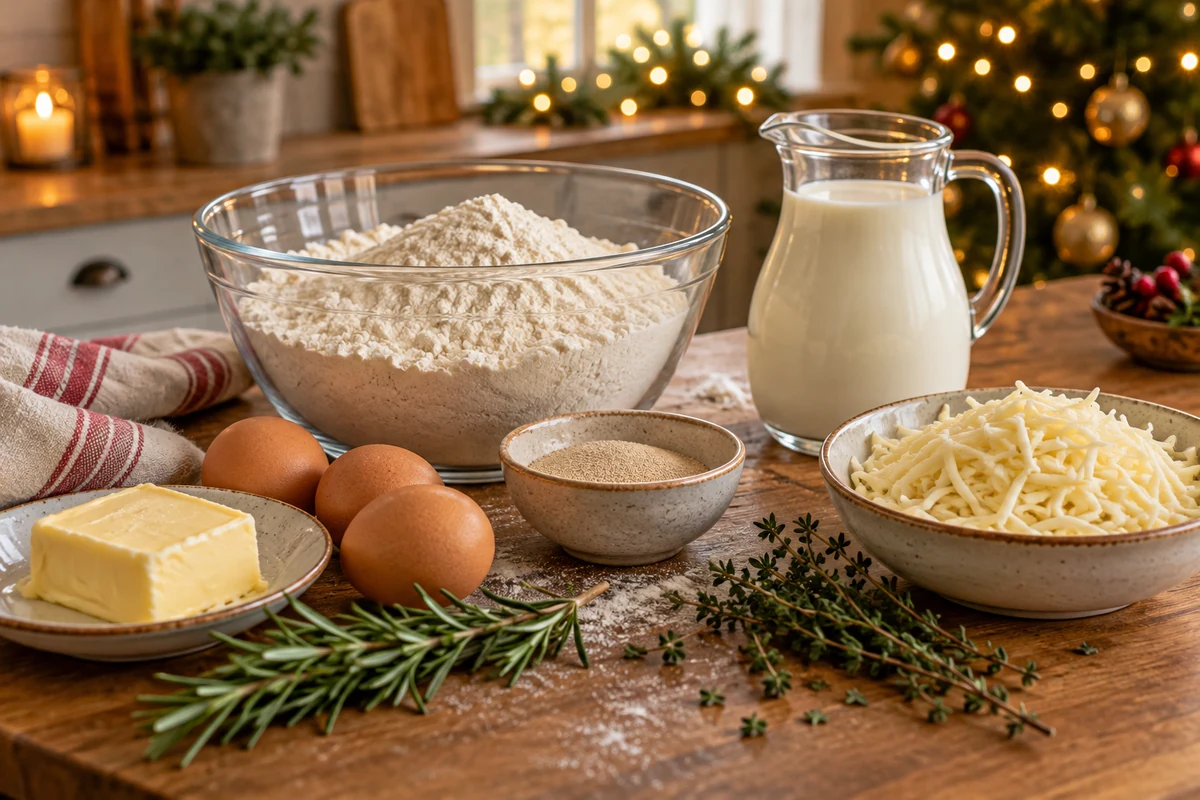
For Christmas herb and cheese bread, weigh the main ingredients rather than relying on approximate spoon measures. Bread flour is a practical choice for the UK version.
Ingredients
- 500 g strong white bread flour — a gluten-free blend is not a direct replacement in this kneaded wheat dough; use a tested gluten-free bread formula for that variation.
- 10 g salt — weigh it, as teaspoon weights vary with the salt.
- 10 g sugar — use the weight rather than treating it as a full tablespoon.
- 7 g dried baker’s yeast — check whether the packet is instant or active dried yeast and follow its instructions. About 20 g fresh yeast is an alternative, subject to the manufacturer’s guidance.
- 300 ml lukewarm whole milk — an unsweetened plant drink can replace the milk, but butter and cheese also need attention for a dairy-free version.
- 60 g softened butter — a suitable plant-based baking block is an alternative. The source’s 60 ml oil substitution changes the fat and water balance and is not an exact equivalent.
- 1 large egg — enriches the dough. Apple purée is sometimes used in vegan baking, but 3 tablespoons is not a validated direct substitute in this bread.
- 150 g grated cheese — mozzarella or a mild melting cheese. Plant-based cheese can be used in a separately adapted dairy-free recipe.
- 2 tablespoons grated Parmesan, optional — for stronger flavour. For vegetarian guests, choose a hard cheese made with vegetarian rennet instead of traditional Parmesan.
- 2 tablespoons chopped fresh herbs — rosemary and thyme work well. If using dried herbs, start with less and adjust to taste; up to 1 tablespoon gives a stronger flavour.
- Up to 1 teaspoon ground black pepper, optional — adjust to taste.
- 1 tablespoon olive oil — or a neutral vegetable oil.
- 1 extra egg yolk for glazing — a little plant drink is an alternative glaze, but does not make the rest of the dough vegan.
- Seeds or chopped nuts, optional — sunflower seeds or walnuts add texture. Check guests’ allergies before using them.
Quick Tips
For a vegan loaf, milk, butter, cheese, the egg in the dough and the egg glaze all need replacing; use a complete tested formula rather than changing only the dairy ingredients. A gluten-free dough behaves differently and cannot be corrected simply by adding more flour. Fresh herbs give this wheat-based version a fragrant finish.
How to Make Christmas Herb and Cheese Bread

- Prepare the yeast: warm the milk until lukewarm, around 37–40°C. If using active dried yeast, follow the packet’s rehydration instructions with the milk and sugar. Instant yeast can usually be mixed into the flour directly; it does not need a separate foaming stage.
- Mix the dry ingredients: combine 500 g flour and 10 g salt in a large bowl, distributing the salt evenly. Add instant yeast here if that is the type you are using.
- Combine: beat the egg and add it, the softened butter and olive oil to the lukewarm milk mixture. Add the sugar here if it was not used with the yeast. Pour into the flour and mix to form a soft, sticky dough.
- Knead: knead on a lightly floured surface for roughly 8–10 minutes, or with a dough hook on a suitable low setting for about 5–7 minutes. Look for a smooth, elastic dough rather than treating the timing as exact.
- Add cheese and herbs: reserve a little of the 150 g grated cheese for the top, then knead in the rest with the herbs. Add the optional Parmesan and black pepper at this stage too, until evenly distributed.
- First rise: place the dough in a lightly oiled bowl and cover. Leave somewhere comfortably warm until roughly doubled, often 1–1½ hours. The actual time depends on the dough and room temperature.
- Shape: gently press out excess gas. Form a round or oval loaf, or divide into three equal ropes and braid without pulling them tightly, leaving room for expansion.
- Second rise: place on a lined baking tray, cover and leave until noticeably puffy, often 30–45 minutes. Dough readiness matters more than the clock.
- Prepare to bake: preheat to 200°C conventional or about 180°C fan, adjusting to your oven’s guidance. Brush with the extra beaten yolk and scatter over the reserved cheese and any optional seeds or nuts.
- Bake: the source suggests 25–35 minutes, but this recipe produces more than 1 kg of dough, so a single deep loaf may need longer. Smaller rolls may take about 18–25 minutes. Check for a fully set crumb, using a probe as well as appearance; an enriched loaf commonly finishes around 90–95°C internally. Cover loosely with foil if the top colours too quickly.
- Cool: transfer to a rack and let the crumb set before slicing. Twenty to thirty minutes may suit small loaves, while a large one needs longer. Cutting too early can make the centre seem gummy.
- Serve and store: serve warm with butter or olive oil. Because the bread contains cheese, cool promptly and refrigerate leftovers within two hours, using within 48 hours, or freeze portions. Thaw in the fridge and use within 24 hours of complete thawing.
Practical Tips
The dough should be soft and slightly tacky, not stiff. Let it come together through kneading before adding more flour; if genuinely dry, add milk a spoonful at a time. Do not spray water onto oven glass, lights or electrical parts. This cheese-topped loaf does not require a steam treatment.
Christmas Herb and Cheese Bread Variations
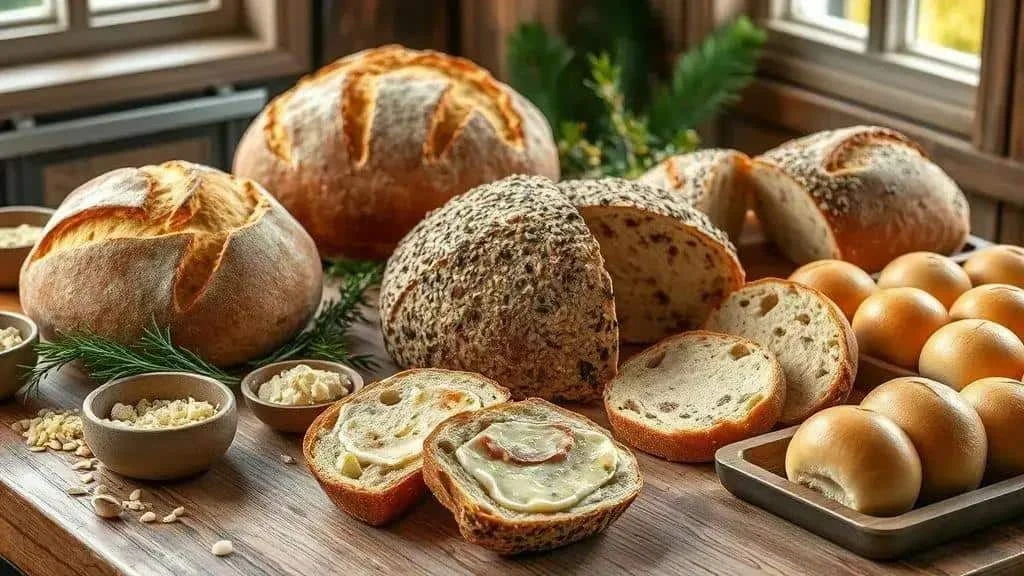
Adapt Christmas herb and cheese bread with different flavours and shapes. Changes to flour, eggs or dairy may also change proving and baking, so they need more than a simple ingredient swap.
Classic Cheese and Herbs
- Base: keep the 500 g flour, 150 g cheese and 2 tablespoons fresh rosemary and thyme in the main recipe.
- Variation: add 1 teaspoon finely grated lemon zest for a gentle citrus note.
Garlic and Parmesan
- Cheese: replace 100 g of the mozzarella with 80 g grated Parmesan, leaving 50 g mozzarella. Use a vegetarian hard cheese if needed and omit the separate optional Parmesan to avoid doubling it.
- Garlic: add two finely chopped cloves or 1 teaspoon garlic powder.
Wholemeal and Seeds
- Flour: replace 200 g of the white flour with 200 g strong wholemeal flour.
- Seeds: add 3 tablespoons mixed linseed, sunflower and sesame seeds, reserving a little for the top if desired. Sesame is an allergen.
- Liquid: wholemeal flour may absorb more moisture. Add 1–2 tablespoons extra milk only if the dough needs it.
Ham and Cheese Filling
- Assembly: roll the dough into a rectangle, add 150 g sliced cooked ham and 150 g cheese strips, then roll up and seal. These are additional filling ingredients; the resulting loaf is larger and needs its centre checked carefully during baking.
- Meat-free alternative: replace ham with cooked mushrooms or spinach, cooled and well drained. Check that the cheese is suitable for vegetarians.
Vegan and Dairy-Free Adaptations
- Dairy ingredients: plant drink and a suitable plant-based baking fat can replace milk and butter, but the fat and water balance may need adjustment. Simply exchanging 60 g butter for 60 ml oil is not a tested equivalent.
- Cheese and eggs: use a plant-based cheese and optionally 1 tablespoon nutritional yeast. The egg in the dough and the yolk glaze also need replacing; start from a tested vegan enriched-bread recipe for dependable structure.
Mini Rolls for Sharing
- Portions: divide the finished dough into pieces weighing 50–70 g for individual rolls.
- Fillings and toppings: tuck a small amount of cheese and herbs inside, or brush with olive oil before baking. Any extra salt on top should be modest because the dough and cheese are already seasoned.
Quick Adaptation Tips
Herbs: use dried herbs more sparingly than fresh, adjusting to taste. Texture: do not add a whole extra egg or arbitrarily remove flour to make the bread softer; first check kneading, hydration and proving. Baking: smaller pieces bake faster, but check each size rather than subtracting a fixed number of minutes.
Pairings for a Christmas Meal

Christmas herb and cheese bread works as a sharing centrepiece or an accompaniment to soups, salads and festive platters.
Food Pairings
- Cheese and charcuterie: offer a selection such as Brie, Gouda or a semi-hard cheese, with cured ham, salami, chutney and dried fruit. These cheeses differ in style rather than all being medium-aged.
- Soups: pumpkin or mushroom soup makes a warm, comforting partner.
- Fresh salads: leaves with sliced pear, walnuts and a light dressing balance the richness of the cheese.
- Spreads: try herb butter, tapenade or olive spread on warm slices.
Drinks to Serve
- Wine: dry sparkling wine, Sauvignon Blanc or a lightly oaked Chardonnay are options for adults who choose alcohol.
- Beer: a wheat beer, saison or light lager can complement the bread without overwhelming it.
- Alcohol-free choices: try sparkling apple juice, an alcohol-free cider, herbal tea or sparkling water with lemon. Check labels when complete alcohol avoidance matters.
How to Serve
Warm the bread gently, slice and arrange on a board with fresh herbs and small bowls of spreads. Serve warm so the cheese is soft, allowing hot fillings to cool enough to eat safely.
Presentation Ideas
- Use a clean serving board, small jars of chutney and bowls of nuts or fresh fruit, keeping allergens clearly separated.
- Add a little fresh herb and a few cheese shavings for colour and aroma.
- Pickles, dried figs or cranberries give contrasting textures and sweet or sharp flavours.
Planning and Timing
- Bake on the day if practical. Otherwise, freeze cooled portions and thaw safely before warming for serving.
- Assemble the accompanying platter shortly before serving, keeping perishable ingredients refrigerated until needed.
- For larger gatherings, 50–70 g dough portions make convenient individual rolls and are easier to portion than a large filled loaf.
Storage, Freezing and Using Leftovers
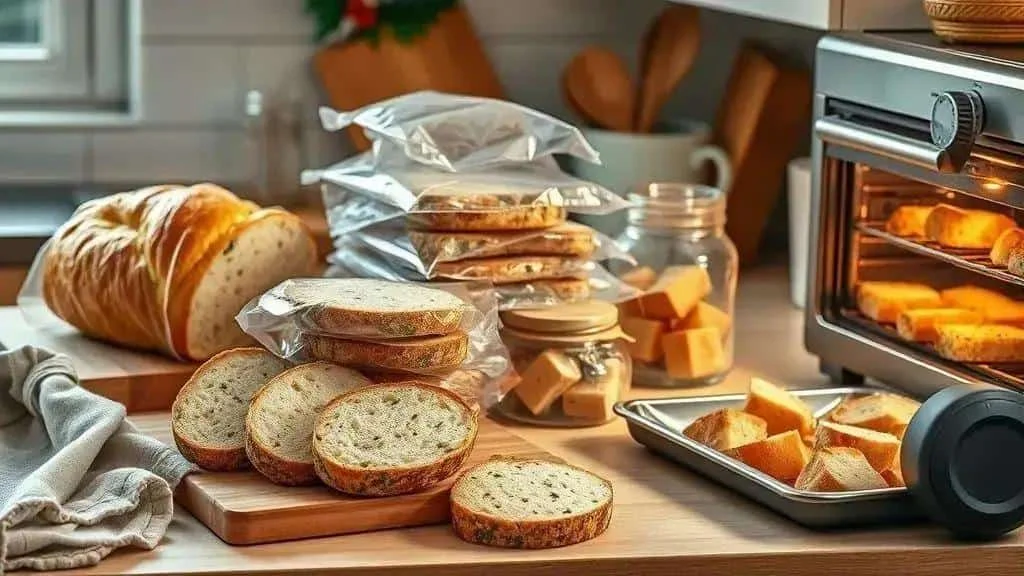
Store Christmas herb and cheese bread with its cheese and any other fillings in mind. Advice for a plain flour-and-water loaf does not automatically apply to a moist filled bread.
Cooling and Short-Term Storage
- Timing: cool on a rack and refrigerate leftovers within two hours. Use within 48 hours, or freeze earlier if you will not finish them.
- Method: allow steam to escape during cooling, then cover for refrigeration. A cloth or bread basket alone is not suitable longer-term storage for ham- or moist cheese-filled versions.
- Texture: wrapping once cool reduces drying, although refrigeration can firm the crumb. Warm a portion before serving rather than leaving the whole loaf out for days.
Freezing
Freezing portions is useful when you want to keep the bread beyond its short refrigerated storage period.
- Slice first: cut the cooled loaf into portions so you can take out only what you need.
- Wrap: use food-safe wrapping and a freezer bag or container, removing excess air and adding a date label.
- Keep portions separate: freeze slices in a single layer until firm before packing together, if this helps prevent sticking.
- Quality: aim to use within about three months for good quality. Freezing does not make food safe if it was already stored incorrectly; keep it continuously frozen and follow your freezer’s guidance.
Thawing and Reheating
- Plan ahead: thaw cheese- or ham-filled bread in the fridge rather than leaving it on the worktop.
- Allow enough time: slices may thaw in a few hours; a whole loaf can need overnight or longer. Check that the centre has thawed and use within 24 hours.
- Oven: warm at 160–180°C. Ten to fifteen minutes for a small loaf or four to six for slices are starting points only; filled leftovers should be steaming hot throughout, and should be reheated only once.
- Microwave: it is quick but softens the crust. Heat in short stages, checking the centre rather than assuming 15–25 seconds is sufficient.
- Mini oven or grill: use a tray suitable for the appliance, watch the cheese closely and check the centre is hot. Avoid a pop-up toaster if cheese could melt into its heating elements.
Ways to Use Leftovers
- Croutons: cube bread that has been safely stored, toss with a little olive oil and herbs, and bake at 160°C until crisp, checking from around 12–15 minutes.
- Breadcrumbs: dry thin slices in a low oven at 100–120°C, checking from 30–40 minutes, then blitz. Because this bread contains cheese, do not assume the crumbs will be shelf-stable; refrigerate briefly or freeze.
- Savoury bread pudding or French toast: use safely stored bread in a complete recipe with enough liquid and proper cooking. Stale bread is useful; mouldy or spoiled bread is not.
- Panzanella-style salad: combine toasted cubes with tomatoes, onion, herbs and vinaigrette shortly before serving.
- Bruschetta-style slices: toast and top with spreads, roasted tomatoes or sautéed mushrooms.
Practical Storage Tips
- Avoid condensation: let the bread release steam before wrapping. Discard mouldy bread rather than trimming off the visible patch.
- Portion sensibly: freeze serving-sized amounts to reduce waste and repeated warming.
- Refresh the crust: a very light mist of water on the bread itself before oven warming may help. Do not spray the oven’s internal parts.
Notes on Festive Bread
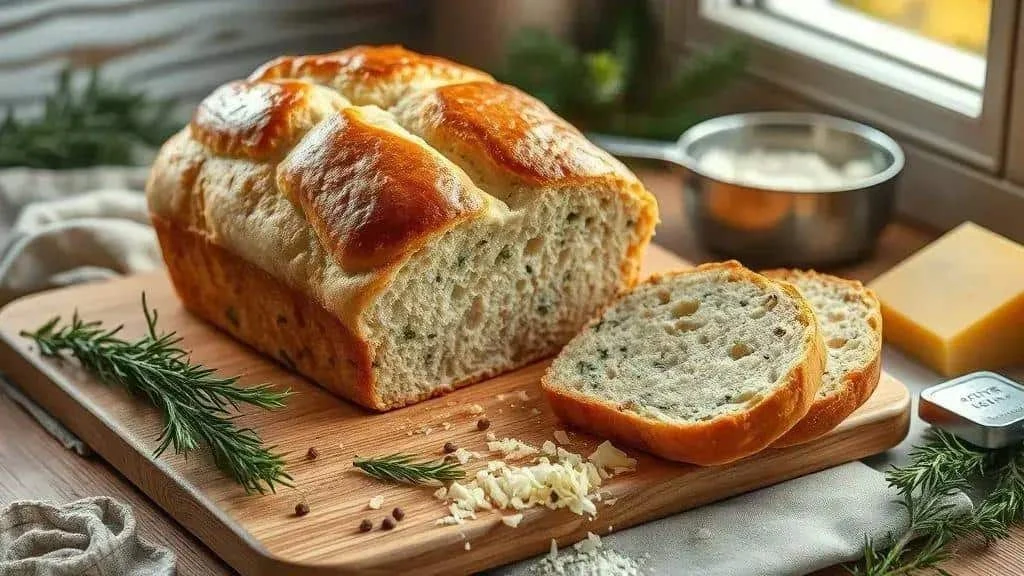
This Christmas bread is a savoury festive recipe, rather than a single historically defined loaf with one documented origin.
Background
Many cuisines have enriched breads for celebrations. This herb-and-cheese version draws on that broad idea, but a specific European-to-Brazilian origin has not been established for this particular recipe.
Sharing and Celebration
- Sharing: a large loaf invites family and friends to take a slice together.
- At the table: a braid or round loaf can be an attractive centrepiece as well as an accompaniment.
Ingredient Notes
- Herbs: rosemary and thyme add aroma. They should not be treated as preservatives that make the finished bread safe for longer storage.
- Cheese: mozzarella and other melting cheeses create soft pockets, while hard grated cheese gives a more concentrated savoury flavour.
- Flour: wholemeal flour changes the texture and adds fibre, but may also require a small liquid adjustment.
Baking Notes
- Proving: controlled fermentation develops the dough, but longer is not always better. Overproved dough can lose structure.
- Crust: a preheated oven helps the loaf bake properly, and egg glaze adds colour and shine. This enriched bread is not intended to have the same crust as a lean baguette.
- Flavour contrast: savoury cheese and herbs pair well with a little chutney or fruit preserve.
Modern Variations
- Individual rolls: smaller portions suit buffets and gift boxes. If selling food, follow the applicable food hygiene and allergen requirements.
- Vegan adaptations: plant-based versions can be enjoyable, but the replacements affect texture and should be tested as a complete recipe.
- Different fillings: ham, mushrooms, wholemeal flour and seeds offer different flavours and serving options.
Putting the Tips into Practice
- Add herbs towards the end of kneading so they are distributed without excessive handling.
- For a soft crumb, pay attention to dough development and proving before changing the proportions of fat or egg.
- Cool promptly, refrigerate short-term leftovers and freeze portions for later use, rather than relying on a cloth wrap for prolonged storage.
Try this Christmas herb and cheese bread as a fragrant, shareable addition to your festive meal.
For more seasonal recipes and ideas, follow our social channels and visit the I Love Christmas blog.
Thank you for reading, and enjoy planning your Christmas table.
FAQ: Christmas Herb and Cheese Bread
How should I store the bread?
Cool it on a rack, then refrigerate leftovers within two hours and eat within 48 hours, or freeze portions. A cloth may protect the crust during brief cooling but is not a substitute for safe storage of cheese- or ham-filled bread.
Can I freeze the baked bread?
Yes. Cool, slice, wrap and freeze in a labelled container or bag. Aim to use within about three months for quality, thaw in the fridge and use within 24 hours of complete thawing. Reheat filled leftovers only once, until steaming hot throughout.
How do I make it dairy-free or vegan?
Replace milk, butter and cheese for a dairy-free version. A vegan version also needs to replace the egg in the dough and the yolk glaze. Use a tested vegan enriched-bread formula rather than assuming all substitutions are interchangeable.
Why did my bread turn out dense?
Possible causes include too much flour, inactive yeast, insufficient kneading, underproving or overproving. Check the yeast, dough texture and rise before simply extending the proving time. Avoid cutting the loaf while its centre is still setting.
How can I get a better crust?
Preheat the oven fully, use the glaze and bake until the centre is done. Cool on a rack so steam can escape. Do not spray water onto oven components; this cheese-topped enriched loaf does not need a steam treatment.
Can I use fillings other than cheese?
Yes. Cooked ham, sautéed mushrooms or well-drained cooked spinach are options. Cool fillings before shaping, avoid overfilling and check the centre carefully during baking. Refrigerate leftovers promptly.
Sources and Further Reading
- King Arthur Baking: using a thermometer with yeast bread
- Handling flour and flour products safely
- Food Standards Agency: chilling, freezing and defrosting food