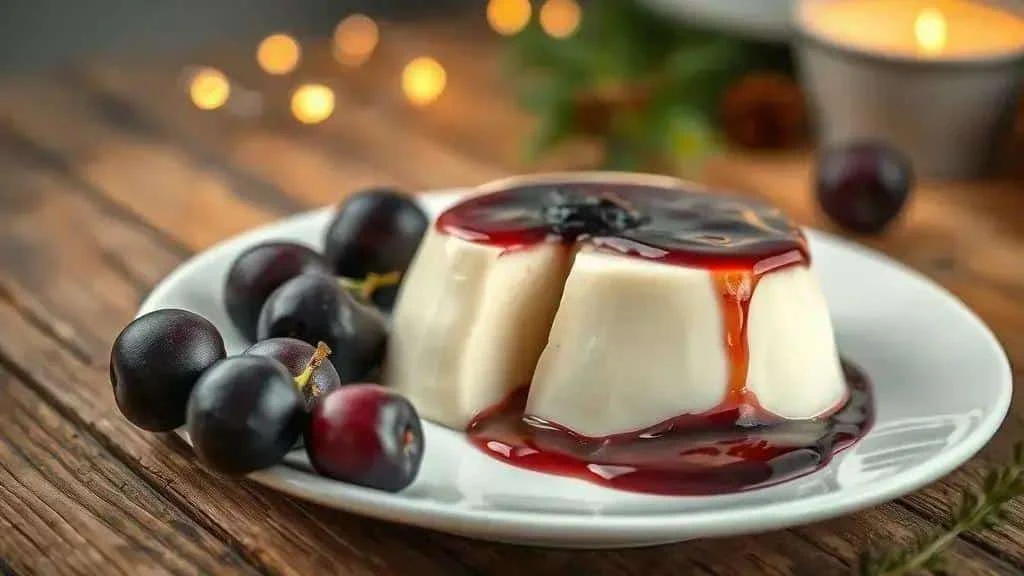
Christmas coconut pudding, or Brazilian manjar branco, pairs a softly set milk and coconut dessert with prune sauce. This guide covers measured ingredients, preparation, dairy-free adaptations, chocolate and individual-serving variations, presentation and chilled storage.
Christmas coconut pudding makes a festive dessert with its pale, creamy base and rich homemade prune sauce. The steps below explain how to prepare this Brazilian favourite and adjust its presentation for your Christmas table.
Ingredients for Christmas Coconut Pudding with Prune Sauce
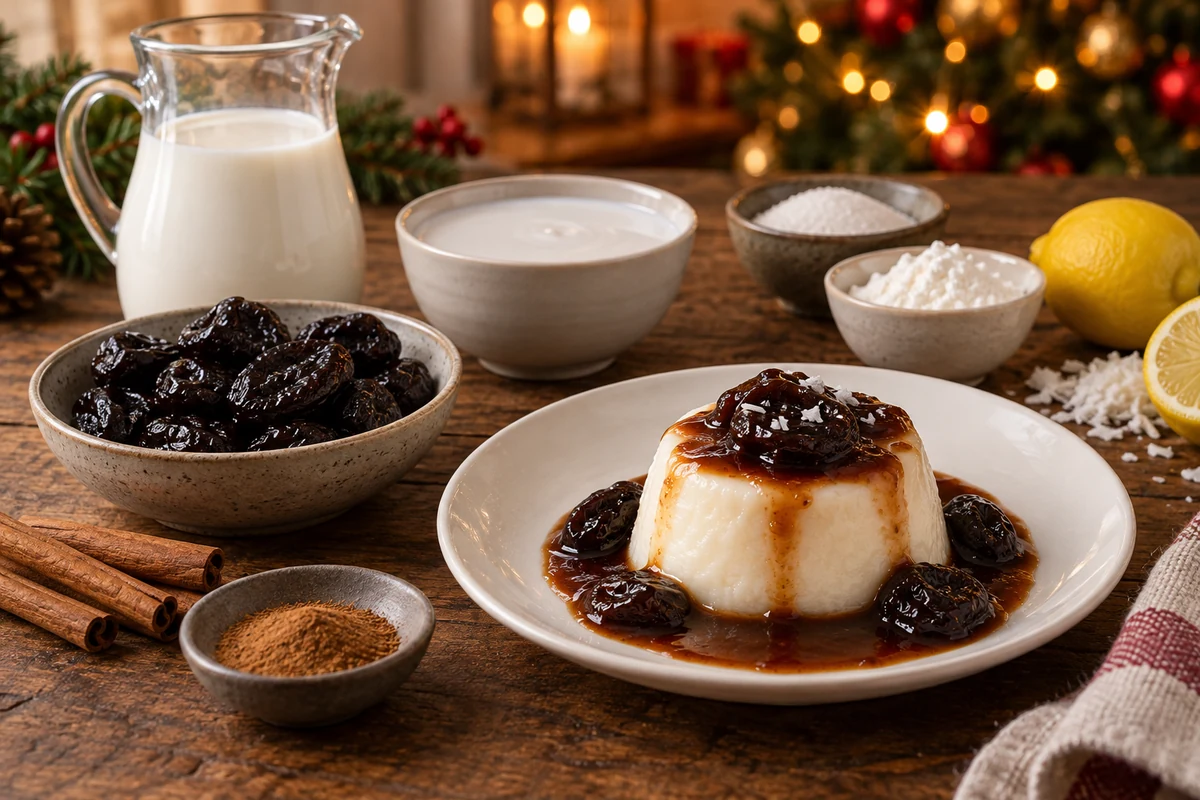
Gather the following ingredients for Christmas coconut pudding. Weigh the cornflour and sugar rather than relying on cup measures. Ingredient changes can affect how firmly the pudding sets.
- 1 litre whole milk in total – reserve 240 ml of this for the cornflour mixture. Semi-skimmed milk gives a less rich result; an unsweetened plant-based drink can be used for a dairy-free variation.
- 200 ml coconut milk – use canned cooking coconut milk, stirred until smooth, rather than a thin coconut drink. Coconut cream is richer and is not a direct equivalent.
- 200 g sugar – the original sweet version. You can try less sugar to taste; demerara changes the colour and flavour. Concentrated sweeteners require their own manufacturer’s conversion, not an equal volume.
- 60 g cornflour – this produces a relatively soft pudding with the liquid quantity above. For a firmer version, see the 80 g variation below. Agar and wheat flour are not direct substitutes at the quantities suggested for cornflour.
- A pinch of salt – to balance the flavours.
- 1 teaspoon vanilla extract – optional. Finely grated lemon zest or a little orange blossom water offers a different aroma; add strong flavourings sparingly.
- A little butter to grease the mould – alternatively, use a very thin coating of neutral oil, particularly for a dairy-free version.
- 300 g pitted prunes – for the sauce. Dried apricots make a different fruit sauce; fresh plums need a separate adjustment of liquid and cooking time.
- 200 g sugar for the sauce – adjust downwards if the prunes are very sweet. Brown sugar gives a deeper flavour; honey changes the consistency and is not vegan or automatically healthier.
- 240 ml water – for the sauce. Orange juice can replace the water for a citrus variation. Optional port is added in a small amount; it does not replace all this liquid.
- 1 cinnamon stick – optional. Alternatively, use about ¼ teaspoon ground cinnamon.
- Juice of ½ lemon – to balance the sweetness of the sauce.
Texture tip: try 80 g cornflour for the firmer variation, but test a small portion before relying on an elaborate mould: milk type, cooking and chilling affect the set. The 60 g version is particularly suited to serving in glasses. Cornflour is already plant-based, so making the pudding vegan does not require agar.
How to Make Christmas Coconut Pudding Step by Step
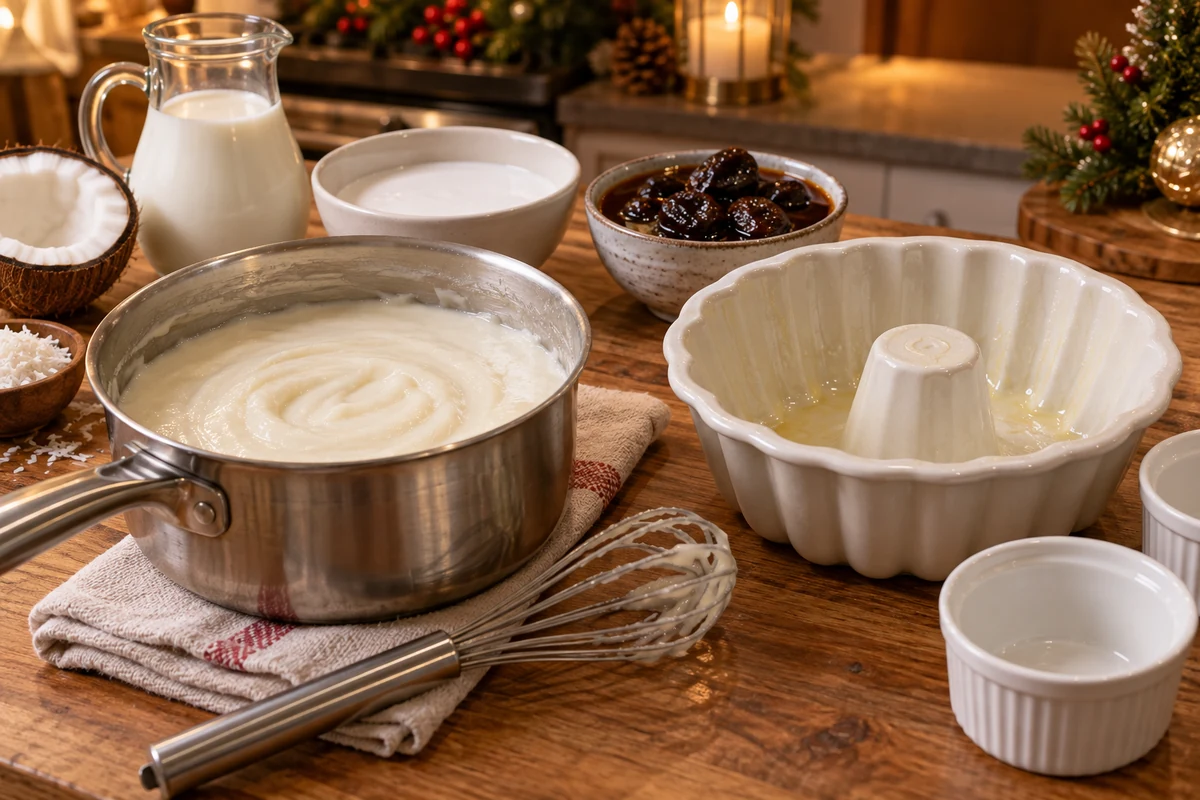
- Prepare the mould: lightly grease a ring mould or individual heatproof dishes. Choose a container with enough capacity for the whole mixture and some headroom; individual dishes also cool more quickly. Chill a buttered mould briefly if necessary.
- Mix the cornflour: whisk 60 g cornflour with the reserved 240 ml cold milk until completely smooth. Use 80 g instead if making the firmer variation, not in addition to the 60 g.
- Heat the milk mixture: put the remaining 760 ml milk, 200 ml coconut milk, 200 g sugar and salt in a saucepan large enough for stirring. Heat gently until small bubbles appear around the edge. Do not add another litre of milk after reserving the slurry liquid.
- Add the cornflour mixture: stir the slurry again, then gradually whisk it into the hot milk. Keep stirring across the base and corners until the mixture thickens and begins to bubble gently. It remains pale and opaque rather than becoming clear.
- Finish cooking: once the mixture is bubbling throughout, cook gently for another minute or two, stirring continuously to avoid scorching. Remove from the heat and mix in the vanilla. The pudding thickens further as it chills.
- Pour and chill: transfer to the prepared mould or dishes. Cool promptly, then refrigerate within one to two hours; do not leave a large mould on the counter until completely cold. Chill for at least four hours, preferably overnight, until cold and set. Use individual dishes if a large mould would cool too slowly.
How to Make the Prune Sauce
- Simmer the prunes: combine 300 g pitted prunes, 200 g sugar, 240 ml water and the optional cinnamon stick in a saucepan. Simmer gently for about 10–15 minutes, until the fruit is soft and the syrup has thickened. Add a little water if it reduces too far before the fruit softens.
- Choose the texture: keep the prunes whole or break them up for a chunky sauce. For a smoother result, remove the cinnamon, cool slightly and blend carefully with a stick blender, keeping the blade submerged. Sieve if desired; never blend piping-hot sauce in a sealed container.
- Balance the flavour: stir in the lemon juice. Let a small spoonful cool before tasting and adjusting the sweetness. Lemon adds acidity; it does not make this a shelf-stable preserve.
- Unmould carefully: only turn out a pudding that has set firmly. Loosen the edge gently with a suitable thin utensil, briefly warm the outside of the mould with a warm cloth and invert onto a serving plate. If it is too soft, serve directly from the dish instead.
- Finish and serve: spoon cooled prune sauce over the cold pudding. Decorate with prunes, coconut shavings or washed mint leaves, and serve the remaining sauce separately.
- Storage: keep the pudding and sauce covered in the fridge and use within 48 hours of preparation, or follow a shorter ingredient use-by date. Store separately for the best texture. The sauce does not need reheating to serve.
Variations on Christmas Coconut Pudding
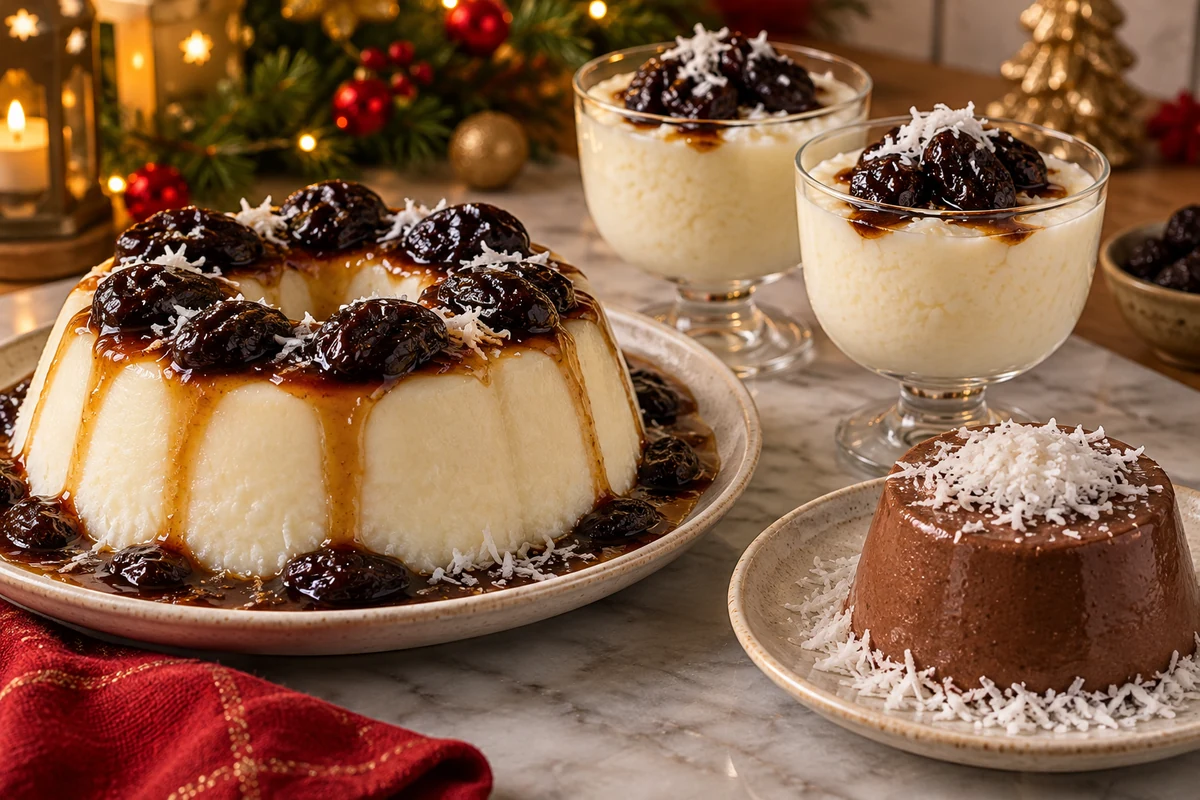
Adapt Christmas coconut pudding with different flavours, textures and serving styles. Unless a change is specified, keep the remaining ingredients and method from the base recipe.
Vegan and Dairy-Free Version
Replace the whole milk with 1 litre unsweetened plant-based drink, retain the coconut milk and cornflour, and grease with oil. Agar is optional for a separately tested setting method, not necessary for a vegan pudding. Its dose and boiling instructions vary, and the texture is different. Check toppings and all ingredient labels too.
- 1 litre unsweetened plant-based drink – such as soya or oat; take account of relevant allergies.
- Retain the measured cornflour from the base recipe; do not replace it with a tablespoon of agar without a validated recipe for this liquid volume.
- 100 g sugar for a less sweet trial batch, or an appropriately converted sweetener suitable for cooking. Changes may affect texture.
A Firmer Version for Slicing
For a firmer pudding, try 80 g cornflour in total with the same liquid quantity. Weigh it rather than combining inconsistent cup and spoon measures. Chill thoroughly and check that it holds before unmoulding.
- 80 g cornflour in total – the firmer variation, not an extra 80 g.
Chocolate Version
Whisk 2 tablespoons cocoa powder into the cold cornflour mixture for a chocolate flavour. For extra richness, melt 50 g dark chocolate into the cooked hot pudding. This changes the sweetness and set; serve with prune sauce or a separately prepared ganache.
- 2 tablespoons cocoa powder
- 50 g dark chocolate – optional; check for milk if preparing a dairy-free dessert.
Festive Sauce with Port or Spices
For an adult version, add 2 tablespoons port or brandy to the sauce during cooking, keeping the water specified in the base recipe. Use the cinnamon stick already listed and add 2 cloves if desired; remove whole spices before serving. Brief cooking does not guarantee that all alcohol has evaporated.
- 2 tablespoons port or brandy, optional and for adults only.
- 1 cinnamon stick in total and 2 cloves
A Less Sweet Version
Try 100 g sugar in the pudding and a sauce made with less added sugar, or prunes gently cooked in orange juice. These versions still contain sugars from milk, fruit and juice. Plant-based milk is not automatically lower in calories; compare labels if that matters to you.
- 100 g sugar for the less sweet pudding variation.
- Skimmed milk or an unsweetened plant-based drink – with a different richness and potentially a different set.
Pudding with Dried Fruit and Nuts
For extra texture, fold finely chopped walnuts, almonds or candied fruit into the cooked pudding while it is still fluid, before chilling. Alternatively, scatter them over the set dessert just before serving. Keep nuts separate when catering for allergies.
- About ⅓ cup chopped walnuts or almonds – an optional addition rather than a required ingredient.
- 2 tablespoons finely chopped candied fruit – optional.
Individual Glasses and Dessert Pots
Pour the cooked pudding into individual heatproof serving dishes and chill. Once set, top with cold prune sauce, whipped cream or suitable whipped coconut cream and fruit. To make several layers, spoon cooled pudding and sauce into glasses shortly before serving rather than putting hot liquid into delicate glassware.
- Individual serving: allow one appropriately sized dish per person; the number depends on its capacity.
- Decoration: lemon zest, washed mint or desiccated coconut.
Practical tip: when changing the milk, sugar or thickener, try a small batch in advance. Check the flavour and final chilled texture before preparing a moulded centrepiece.
Prune Sauce: Preparation, Tips and Quick Options
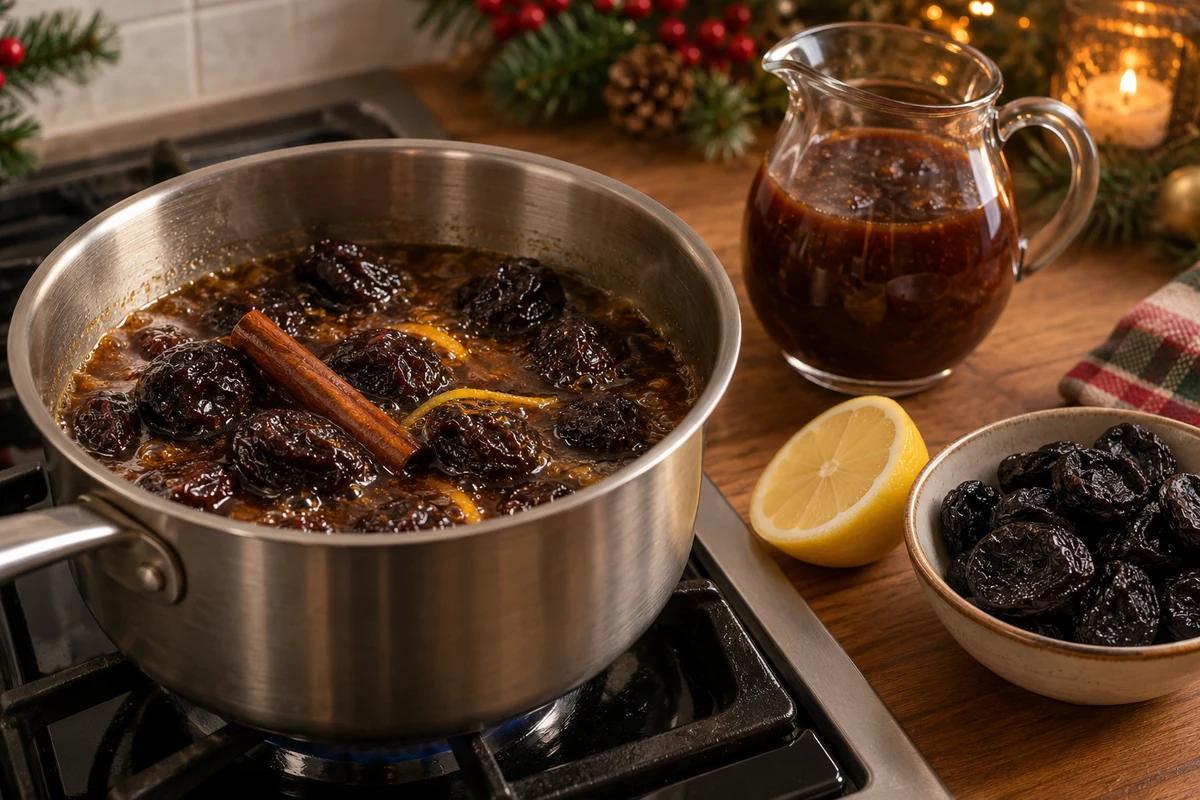
The sauce adds a dark fruit flavour and a glossy finish. The quantities below repeat the sauce from the main recipe for convenience; they are not a second batch to add on top.
Prune Sauce Ingredients
- 300 g pitted prunes – soft ready-to-eat prunes are convenient. Dried apricots give a different flavour.
- 200 g sugar – reduce to taste if the fruit is sweet. Brown sugar changes the flavour and colour.
- 240 ml water – or orange juice for a citrus variation.
- 1 cinnamon stick – optional; about ¼ teaspoon ground cinnamon can be used instead.
- Juice of ½ lemon – to balance the sweetness, not to preserve the sauce at room temperature.
Step-by-Step Sauce Method
- Soften firm prunes if needed: soak in hot water for about 10 minutes, then drain. Soft ready-to-eat prunes may not need soaking.
- Combine the ingredients: put the prunes, sugar, measured water and optional cinnamon in a saucepan.
- Simmer gently: bring to a simmer, then cook over a low heat for about 10–15 minutes, stirring occasionally. Watch the liquid level and add a little water if necessary.
- Adjust the consistency: when the fruit is soft and the sauce syrupy, take it off the heat. Keep it chunky, or remove whole spices and blend carefully after cooling slightly. It thickens further as it cools.
- Add the lemon: stir in the juice and taste a cooled spoonful before adjusting the sweetness.
- Cool before serving: transfer to a suitable shallow container, cool promptly and refrigerate within one to two hours. Use cold sauce on the set pudding.
Quick Tips and Variations
- Deeper flavour: brown sugar gives a darker taste. Reducing the sauce concentrates its flavour, but do not let it become sticky or scorch.
- Festive addition: optional port or brandy suits an adult dessert. It does not extend the storage time, and alcohol may remain after simmering.
- Quick option: use ready-made prunes in syrup, adjusting with a little orange juice and cinnamon. Follow the pack’s instructions and use-by guidance after opening.
- Texture to taste: blend only part of the cooled fruit and combine with the remaining pieces for a sauce with body.
Storing and Using the Sauce
Keep homemade sauce covered in the fridge and use within 48 hours, counting from preparation. Serve it cold with the pudding. If you prefer it warm, reheat only the portion needed until steaming throughout, then let it cool to a comfortable serving temperature; a fixed 20-second microwave burst is not a reliable reheating method.
Assembling and Serving the Christmas Dessert
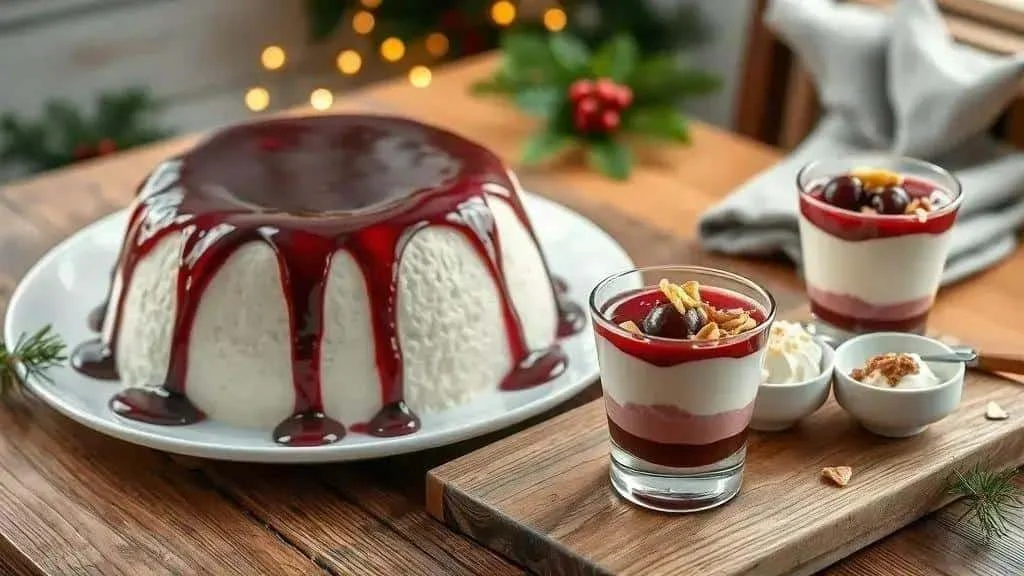
A few simple finishing touches show off the contrast between Christmas coconut pudding and its dark prune sauce. Keep the dessert chilled until close to serving time.
Step-by-Step Presentation
- Unmould gently: check that the pudding is firm, loosen the edge without damaging the mould and briefly apply a warm cloth to the outside. Invert onto a plate wide enough to catch the sauce. Serve a soft pudding in its dish instead.
- Position the pudding: centre it on the serving plate. If there is condensation on the plate, wipe the plate carefully rather than pressing kitchen paper against the delicate pudding.
- Spoon over sauce: start with 3–4 tablespoons and let it run down the sides. Add more as desired, keeping the remainder in a jug for individual portions.
- Arrange the fruit: place a few whole or halved cooked prunes around or on the pudding, checking that no stones remain.
- Add a finishing touch: use toasted coconut, lemon zest or chopped nuts for contrast. Tell guests about any added allergens.
- Individual portions: top chilled pudding pots with sauce, optional whipped coconut cream and fruit. Keep refrigerated until required.
Practical Christmas Serving Ideas
- A shared centrepiece: turn out a sufficiently firm pudding and serve slices at the table. A large spoonable dessert in a serving dish works just as well.
- Individual dishes: prepare small pots or moulds for easy serving and consistent portion sizes.
- A dessert station: offer pudding with prune or berry sauce, biscuits and toppings. Put out small amounts at a time and replenish from the fridge rather than leaving the whole batch out for hours.
- What to serve alongside: coffee or a caffeine-free hot drink pairs well with the sweet pudding. Adults may enjoy a small glass of port or demi-sec sparkling wine, if desired.
- For children: use the alcohol-free sauce with water or orange juice. Chop or omit garnishes as appropriate for the child’s age.
Simple Garnishes
- Toasted desiccated coconut – adds colour and texture.
- Finely grated lemon zest – brings a fresh citrus aroma.
- Chopped walnuts or other suitable nuts – add crunch; keep separate when needed for allergies.
- Washed mint leaves – a simple green finishing touch.
- A light dusting of cinnamon or nutmeg – use sparingly over the sauce.
Serving and Storage Logistics
Serve the pudding chilled, taking out only what you need. Keep it covered in the fridge and follow the 48-hour storage guidance above, counting from preparation. Storing the sauce separately helps preserve the appearance; warming it is optional and does not restart its storage time.
Storage, Ingredient Swaps and Less Sweet Options
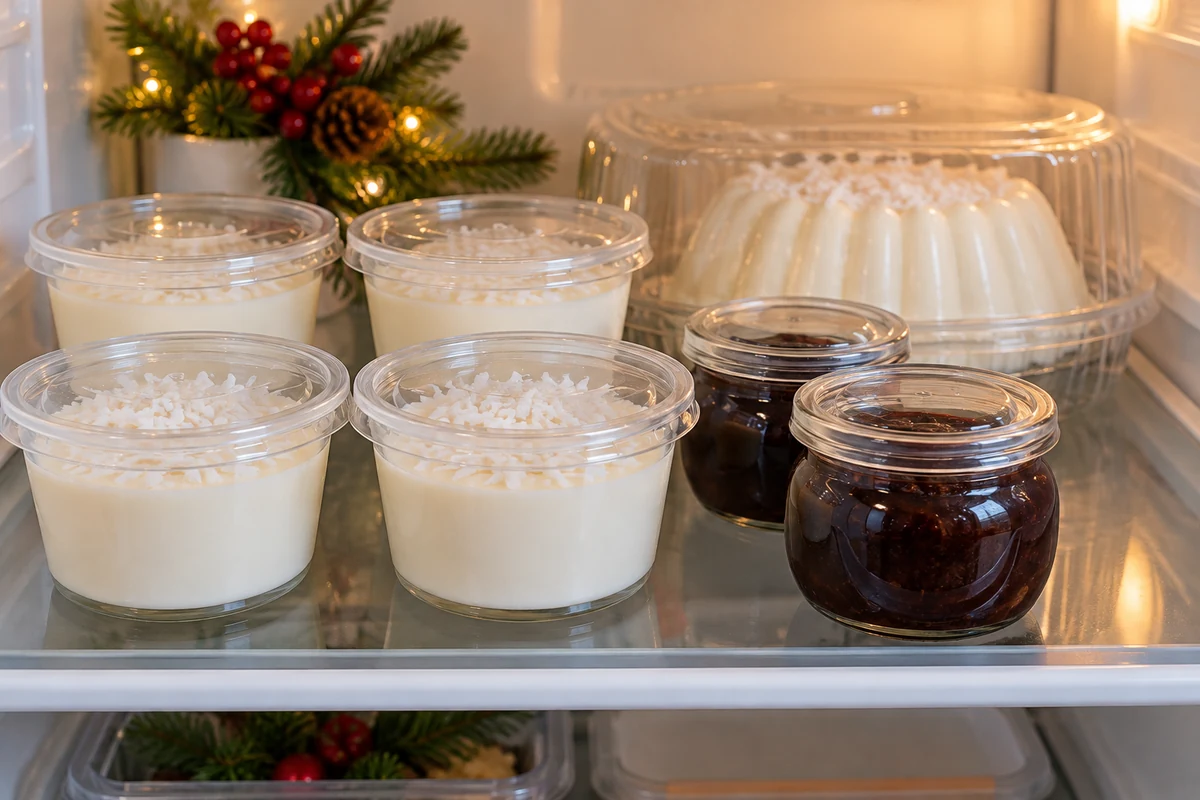
Store Christmas coconut pudding carefully to protect its texture, and treat ingredient changes as variations to try in advance rather than guaranteed equivalents.
Refrigerated Storage
- A whole pudding: cool promptly, cover and refrigerate. Use within 48 hours of preparation, or sooner if an ingredient’s use-by date requires it.
- Individual portions: use clean, food-safe lidded containers. Small portions cool more quickly and are convenient to serve; the same storage limit applies.
- Separate sauce: refrigerate in a clean covered container and use within 48 hours. It is not a preserve suitable for storage in a cupboard.
Freezing and Defrosting
- Freezing: this cornflour-thickened pudding is best freshly chilled, as freezing can change its texture. If testing a small portion, freeze promptly in a suitable container without sauce; one month is a practical quality target, not a validated shelf life for every variation.
- Defrosting: thaw in the fridge until fully defrosted; the time depends on portion size. Use within 24 hours of defrosting and do not leave it on the counter to thaw.
- Texture after thawing: some separation or graininess may remain. Serve as a spooned dessert if acceptable; blending in more milk will not reliably restore a moulded pudding and does not make poorly stored food safe.
Useful Ingredient Substitutions
- Whole milk: an unsweetened soya or oat drink offers a dairy-free alternative. Use oil for greasing and check toppings. Lactose-free cow’s milk still contains milk proteins and is unsuitable for milk allergy.
- Coconut milk: use a cooking product with a similar consistency. Coconut cream may need dilution according to the product; coconut soaked in milk gives a more textured dessert and is not an exact substitute.
- Cornflour: it is already vegan. Agar requires a different setting method and a product-specific dose; wheat flour changes flavour, texture and allergen content. Use a tested alternative recipe if replacing the thickener.
- Prunes: dried apricots or a prepared berry compote offer different flavours. Adjust water and cooking for the fruit rather than assuming identical results.
Less Sweet Options and Portion Ideas
- Reduce added sugar: try 100 g sugar in the pudding, tasting only after the mixture is cooked. A cooking sweetener needs an appropriate conversion and may alter the final texture.
- Change the milk: skimmed milk reduces milk fat, while plant-based products vary considerably. Check labels; neither choice guarantees that the whole dessert is low in calories.
- Alternative topping: use prunes cooked with orange juice and no extra sugar, or plain yoghurt with lemon zest. Fruit and juice still contain sugars, and yoghurt changes the dairy-free suitability.
- Smaller servings: little dessert glasses make it easy to offer modest portions alongside other Christmas treats.
Final Preparation Tips
Refrigerate promptly after cooling; do not wait for the pudding to set at room temperature. Let it firm in the fridge, store the sauce separately and trial significant ingredient changes ahead of the celebration.
We hope this Christmas coconut pudding brings a little Brazilian flavour to your festive table, whether you serve it as a centrepiece or in individual dishes.
Follow our social channels for more Christmas recipe ideas, presentation tips and seasonal variations, and share your own creations with the people you love.
For more seasonal inspiration, explore the I Love Christmas blog and discover other ideas for your celebrations.
Happy Christmas, and enjoy preparing your next festive dessert!
FAQ — Christmas Coconut Pudding with Prune Sauce
How long can I keep the pudding and sauce in the fridge?
Cool both promptly, refrigerate within one to two hours and use within 48 hours of preparation, following any shorter ingredient use-by date. Keep the sauce separate for the best appearance.
Can I make a vegan version of manjar branco?
Yes. Replace the dairy milk with a suitable plant-based drink, grease with oil and check the toppings. Keep the cornflour: it is already plant-based. Agar is not a necessary vegan substitute and requires its own dose and method.
How do I prevent lumps?
Mix the cornflour with the reserved cold milk until smooth, stir it again before adding and whisk steadily into the warm milk mixture. Cook gently while stirring across the base of the pan until the pudding thickens and bubbles.
How can I make it less sweet while keeping the festive flavour?
Try the 100 g sugar variation and flavour the sauce with cinnamon, citrus zest or lemon juice. Orange juice changes the taste but still adds sugar; sweeteners need their own conversion and may affect texture.
Can I prepare it ahead for Christmas?
Yes. Make it the day before, cool promptly and refrigerate. Keep the sauce separate until serving and count the storage time from preparation, not from the day you unmould it.
How can I unmould it without breaking it?
Chill until thoroughly cold and firm, usually at least four hours or overnight. Loosen the edge gently and warm the outside of the mould briefly with a warm cloth before turning out. If the pudding is too soft to hold its shape, serve it in its dish. Test the firmer variation in advance if you need a moulded centrepiece.
Sources and Further Reading
- Food Standards Agency: chilling, freezing and defrosting food
- King Arthur Baking: cooking a cornflour thickened pudding