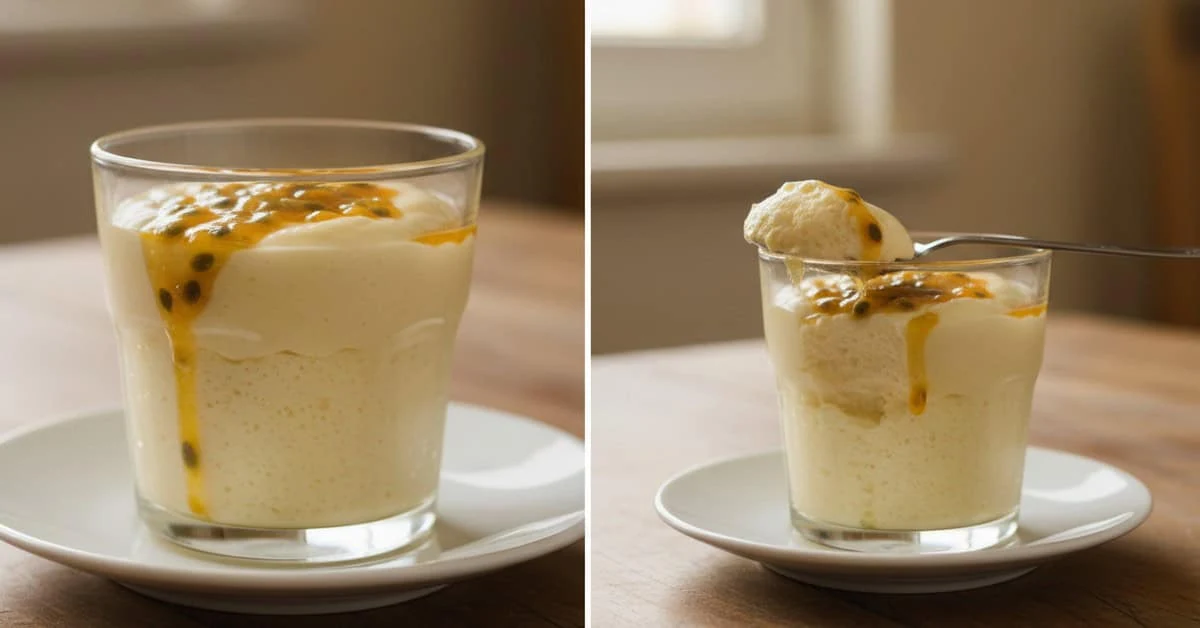
Brazilian passion fruit mousse combines condensed milk, cream and passion fruit into a chilled dessert. Gelatine gives a firmer set, while folded whipped cream creates a lighter variation. Preparation takes roughly 10–15 minutes, followed by at least four hours in the fridge. The main mixture serves about six, depending on portion size.
Brazilian passion fruit mousse offers a tangy contrast to rich festive food. This simple blended version is creamy rather than especially airy; use the optional whipped-cream method if you prefer a lighter texture.
Ingredients for passion fruit mousse
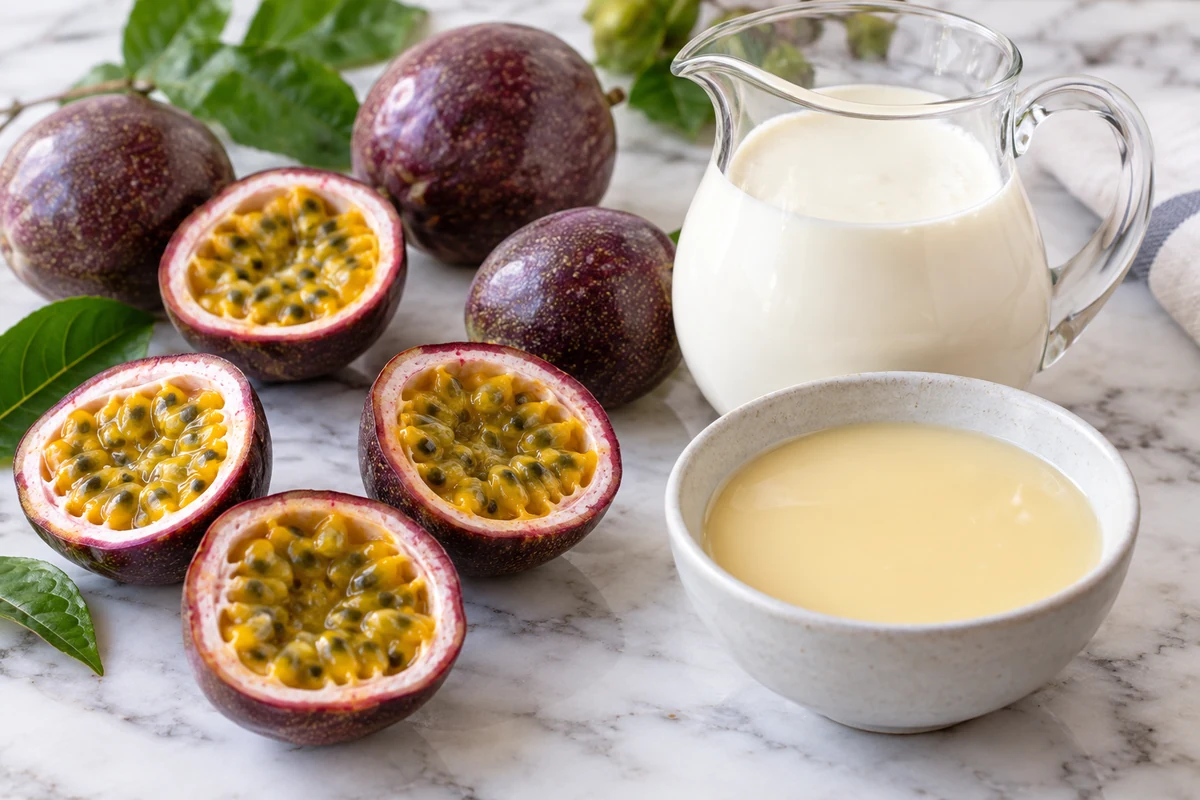
For the main passion fruit mousse, gather:
- 395 g sweetened condensed milk – weigh it if your tin differs in size. A plant-based version is an option only as part of a fully plant-based adaptation.
- 200 g cream – Brazilian-style cream or single cream for blending into the base. Coconut cream gives a different dairy-free flavour and texture.
- 170 ml unsweetened concentrated passion fruit juice suitable for desserts or 200 ml strained fresh passion fruit pulp. These have different strengths; check the product rather than using a sweetened cordial or diluting it with arbitrary extra water.
- 12 g unflavoured powdered gelatine, subject to product strength – this is the source recipe’s quantity, but sachet sizes and setting strengths vary. Check the manufacturer’s guidance for the filling volume and fruit acidity. Agar is not a direct teaspoon-for-sachet replacement.
- Pulp of 1 fresh passion fruit – including its edible seeds, for the topping.
- Water for preparing the gelatine – the source method uses 100 ml, but follow your product’s specified quantity. Do not add a further 100 ml to thin the mousse. The optional airy version also needs an additional 200 ml whipping cream.
- Citrus zest or mint leaves, optional – for finishing.
Servings: approximately six individual portions; adding whipped cream increases the mixture’s volume.
Texture tip
Brief blending gives a smooth base, but does not create the same texture as folded whipped cream. Chill for at least four hours. Adjusting condensed milk or adding more fruit changes the set as well as sweetness, so start with the measured recipe before making substantial changes.
How to make passion fruit mousse
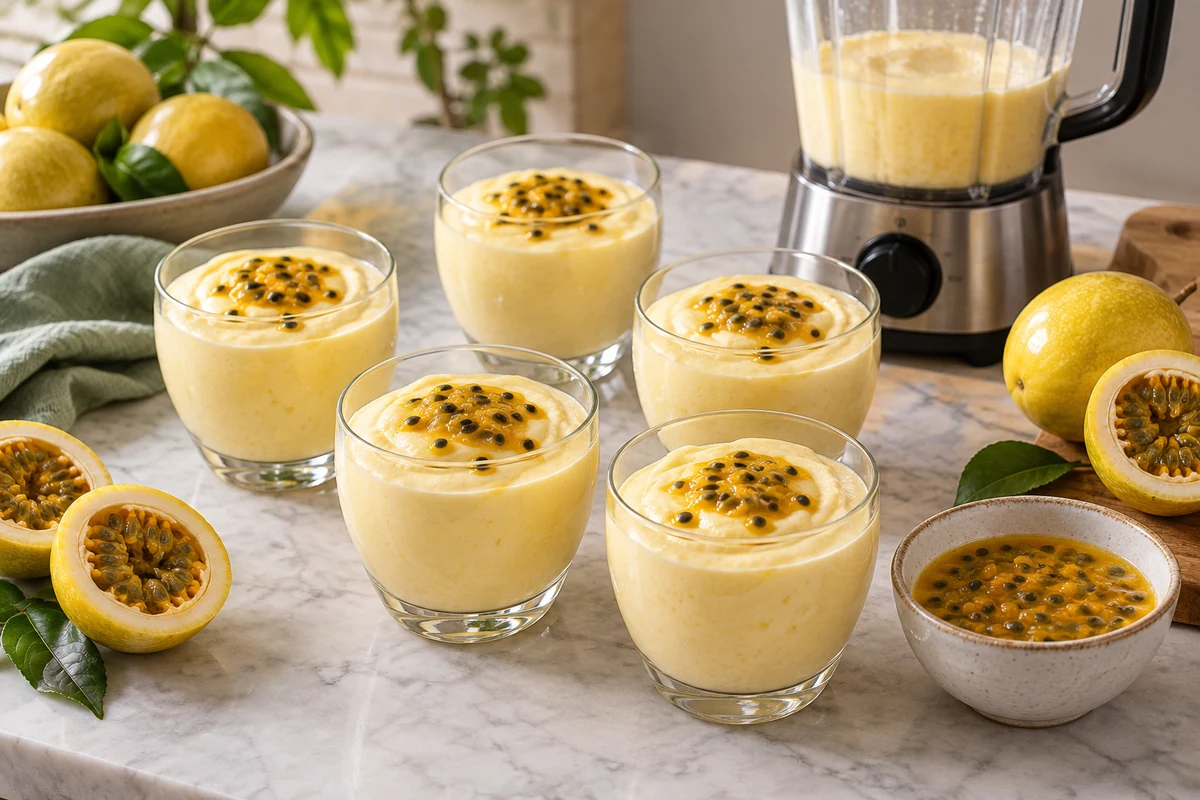
- Prepare the gelatine: follow the packet for blooming and dissolving the amount appropriate to this filling. If it specifies blooming, use cold water and the stated rest time, then dissolve gently. Microwave power varies, so do not rely on a universal 10–15 second burst. Avoid boiling unless the product expressly directs it.
- Blend the base: combine 395 g condensed milk, 200 g cream and either the measured 170 ml concentrated juice or 200 ml strained pulp. Blend briefly, about 30 seconds or just until smooth.
- Incorporate the gelatine: let the dissolved gelatine lose excess heat without setting. Mix a little base into it, then combine evenly with the remaining base on low speed or by stirring, avoiding sudden temperature changes and lumps.
- Simple blended version: divide between glasses or pour into a serving dish. Cover and chill for at least four hours, or the setting time required by your product, until properly set.
- Optional airy version: before the base sets, whip an additional 200 ml cold whipping cream to soft peaks. Stir about one-third into the base to lighten it, then fold in the rest with a spatula. Divide into glasses and chill thoroughly. Single cream will not whip, and the increased volume may alter firmness.
- Finish: once set, spoon the fresh passion fruit pulp over the top. Add a little citrus zest or washed mint if wanted.
- Serve chilled: keep refrigerated until serving and use small dessert spoons to enjoy the creamy filling and crunchy seeds together.
- Store: keep covered at 5°C or below and use within 48 hours of preparation, or the earlier ingredient limit. Freezing can damage the airy texture and is not recommended for the best result.
- Adjusting sweetness: taste with a clean spoon before adding gelatine. A less sweet condensed-milk product or more acidic fruit changes the formulation, so do not assume removing a quarter of the condensed milk and adding extra liquid will set identically.
- If the texture is wrong: allow enough chilling time and check the gelatine instructions. Dissolve any gelatine lumps before adding it to the base; do not repeatedly heat a finished dairy mousse to repair it. A safely stored soft mousse can be served in glasses.
Practical notes
Servings: about six, depending on the glasses. Timing: roughly 10–15 minutes of preparation plus at least four hours of chilling, with extra time if your setting agent requires it.
Have clean utensils ready and keep dairy ingredients chilled until needed. Strain the pulp for a smooth base and reserve a little unstrained pulp for the topping. Avoid crushing the seeds in the blender if you want a smooth flavour and appearance.
Passion fruit mousse variations
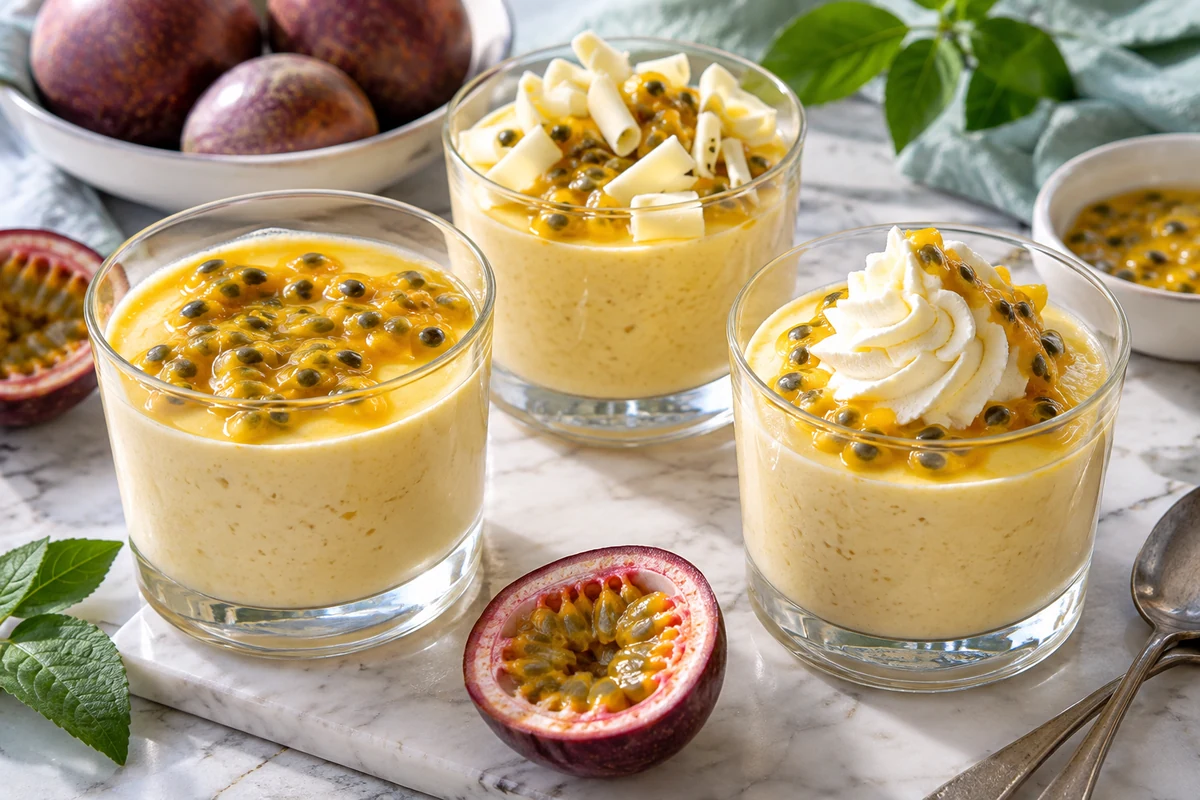
Choose one variation of passion fruit mousse to suit your occasion, checking how additions affect setting and dietary requirements.
Classic festive version
The basic blended mousse is convenient to prepare ahead and serve in individual glasses.
- Main quantities: 395 g condensed milk, 200 g cream, 170 ml suitable concentrated passion fruit juice or 200 ml strained pulp, plus gelatine prepared in the quantity appropriate to the product and filling volume.
- Serving: chill thoroughly for at least four hours and finish with a little fresh pulp near serving time.
A less sweet variation
If you want a less sweet dessert, choose ingredients deliberately rather than assuming a ‘light’ label means less sugar.
- Check the formulation: reduced-fat condensed milk may still contain similar sugar. Plain coconut milk is much thinner and is not a direct replacement for a tin of condensed milk.
- For substantial reductions: use a tested lower-sugar mousse recipe. Removing 20–30% of the condensed milk and adding more pulp changes both the volume and setting behaviour.
Vegan variation
A fully plant-based mousse needs different dairy and setting ingredients, with a texture that may differ from the classic version.
- Plant-based ingredients: use 395 g suitable plant-based condensed milk, 200 g coconut cream and the measured passion fruit pulp. Select a tested plant-based setting method; do not assume 1 tsp agar equals the listed gelatine.
- Prepare the setting agent correctly: agar generally requires a heating step specified by its manufacturer, and acidity affects the method. Simply stirring it into hot water is not a universal solution. Check the cream topping is plant-based too.
Optional sparkling-wine version for adults
A little sparkling wine gives an adult variation. Alcohol remains in an unbaked mousse, so identify it clearly and offer an alcohol-free option.
- Replace, rather than add, liquid: up to 50 ml cold dry sparkling wine can replace part of the measured fruit liquid as an experimental variation. Alcohol changes setting, so check the gelatine guidance rather than promising one sachet will always suffice.
- Presentation: use dessert glasses and finish with passion fruit pulp and a little lemon zest.
White chocolate variation
White chocolate adds sweetness and firmness alongside the tart fruit.
- Optional addition: gently melt 100 g white chocolate, let it cool until still fluid but not hot, then combine evenly with the base before adding the prepared gelatine.
- Adjust with care: reducing condensed milk can balance sweetness but changes the proportions. Try a small batch or a tested white-chocolate formula rather than making several unmeasured changes at once.
Small party portions
Smaller servings are convenient when there are several desserts on offer.
- Portion size: divide the main mixture between suitable 80–100 ml cups, leaving space for a little pulp or optional white chocolate decoration. The number depends on the actual mixture volume.
- Serving: choose age-appropriate cups and spoons for children, avoid the alcohol variation and check milk and other allergens.
Soft mousse without gelatine
Whipped cream can give a softer, airy dessert for serving in glasses, but it does not provide the same firm set as gelatine.
- Method: omit the gelatine and its preparation water. Make the main condensed-milk, cream and fruit base, then fold in an additional 200 ml whipping cream beaten to soft peaks. Chill thoroughly in individual glasses; do not expect it to unmould.
- Keep it cold: serve shortly after removing from the fridge and follow the same 48-hour or earlier ingredient storage limit.
Finishing combinations
Choose passion fruit pulp and seeds for contrast, a small swirl of whipped cream for richness, citrus zest for fragrance or white chocolate shavings for extra sweetness.
Scaling the recipe: scale the main quantities consistently for more guests, and calculate setting-agent needs from the final mixture and the product instructions.
Keeping mousse airy and well set
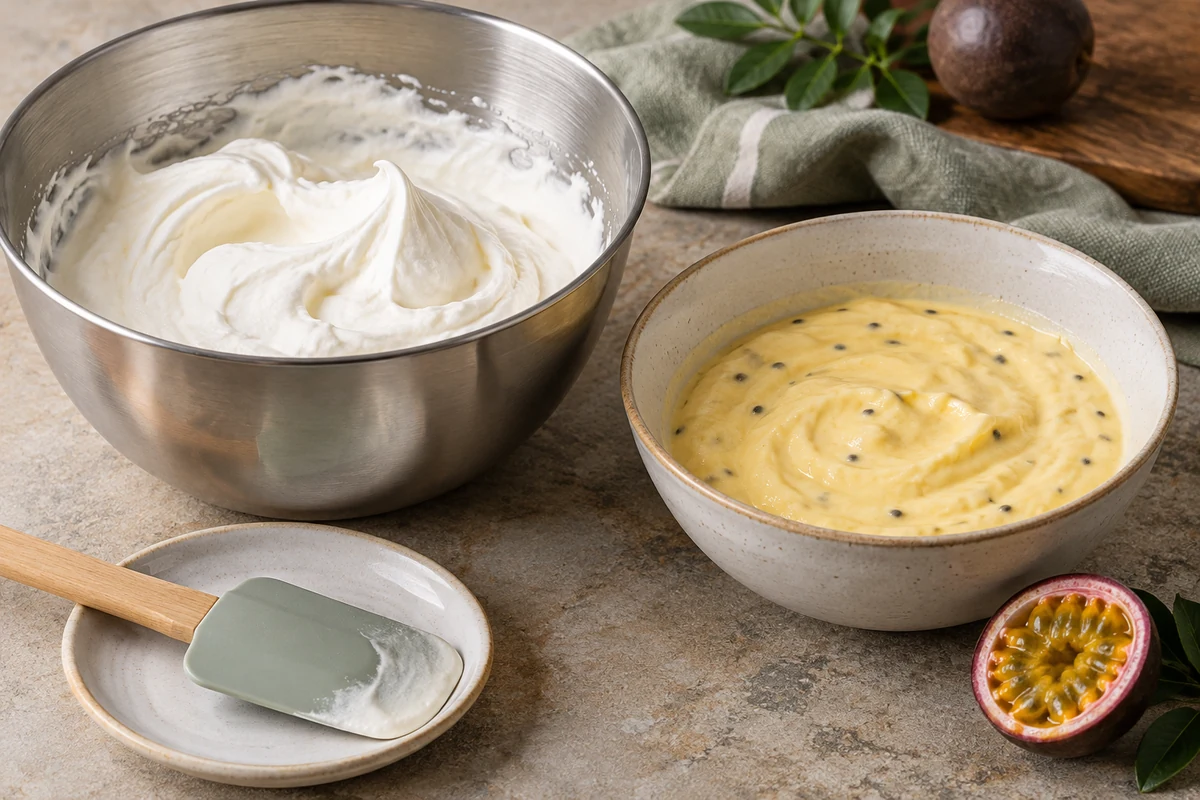
Texture depends on the cream, mixing technique, temperature and correct use of any setting agent. A blender-only mousse and a folded-cream mousse have different finishes.
Useful techniques
- Chill the bowl and beaters: a cool bowl helps whipping. If briefly chilling equipment in the freezer, use suitable materials and avoid sudden temperature changes that could damage glass.
- Whip gently: for the optional airy version, use the additional 200 ml cold whipping cream. Stop at soft peaks that hold their shape gently; over-whipping makes it grainy.
- Fold rather than blend: lighten the base with about one-third of the whipped cream, then fold the remainder through with broad, gentle strokes.
- Prepare gelatine separately: follow its packet’s quantity, water and dissolving instructions. The source recipe uses 12 g with 100 ml water, but product strengths differ.
- Avoid temperature shocks: do not pour very hot gelatine into cold whipped cream. Temper it with a little base first and mix before it begins to set.
Setting agents and alternatives
- Gelatine: gives a firmer set when correctly prepared and measured. More is not always better: too much makes the mousse rubbery.
- Agar: a plant-based option with different setting properties and heating requirements. There is no universal 1 tsp per 200–250 ml rule that suits every product and acidic mousse.
- Cream cheese: a small optional addition, such as 50 g, changes flavour and body. It is not a universal replacement for a setting agent.
- Egg whites or aquafaba: these need a recipe designed around them rather than being added automatically here. The main method contains no raw egg; if choosing an egg-white mousse elsewhere, use suitable pasteurised whites and a safe preparation method.
Texture problems
- Too runny: check the product quantity, fruit liquid and chilling time. If safely stored but still soft, serve in glasses and adjust the next batch rather than repeatedly warming it.
- Too heavy: the blended version is naturally denser. For a lighter version, fold in properly whipped cream without beating the air out.
- Gelatine lumps: dissolve fully before combining and avoid adding it after it has begun to set. Fix lumps in the separate gelatine mixture, not by heating the finished mousse repeatedly.
- Lost volume: stop using the blender once whipped cream is added and finish with a spatula.
Chilling: allow at least four hours, keep covered and serve cold. Freezing may spoil the creamy, airy texture.
Passion fruit in desserts
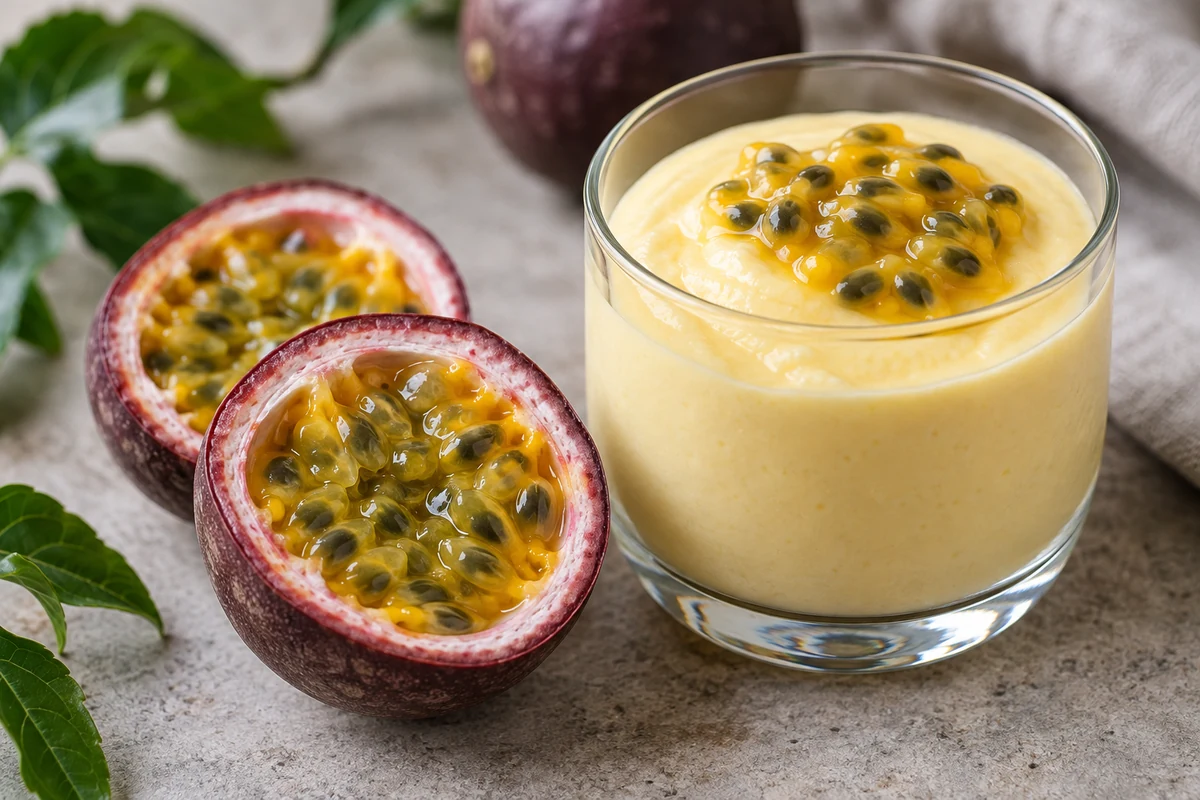
Passion fruit has an intense aroma and tart pulp that contrasts well with sweet condensed milk and cream.
Varieties and flavour
Purple and yellow passion fruits are widely used for their aromatic pulp. Flavour and acidity vary with the variety and ripeness, so measure and taste the fruit rather than assuming every batch has the same strength.
Why it works in sweets
- Acidity: gives contrast to sweet creams and white chocolate.
- Texture: edible seeds add crunch to a smooth mousse or pavlova.
- Aroma: the distinctive fruit fragrance works in ice cream, coulis and sauces.
- Pairings: try it with condensed milk, cream, coconut, white chocolate or berries.
Other ways to use it
- Mousse: concentrated juice or strained fresh pulp flavours a creamy base.
- Coulis and sauces: a small amount adds a fruity finish to cheesecake or cake.
- Ice cream and granita: the tartness provides a refreshing flavour in frozen desserts.
- Pavlova and meringue: the fruit balances a sweet topping.
- Drinks: use the pulp in an alcohol-free cooler or an optional cocktail for adults.
Choosing and storing the fruit
- Choosing fruit: ripe purple passion fruit may have wrinkled skin, but avoid mould, leaks or signs of spoilage. Skin appearance alone does not establish safety.
- Storage: follow the supplier’s guidance and use ripe fruit promptly. Refrigerate cut fruit or extracted pulp in a covered container, or freeze suitable pulp in small portions.
- Seeds or no seeds: strain for a smooth filling or sauce; keep some whole pulp for a crunchy topping.
A few points of interest
- The name ‘passionflower’ refers to Christian Passion symbolism historically associated with the flower’s unusual structure, rather than to the flavour of the fruit.
- A small amount of aromatic pulp can noticeably change a dessert’s flavour. The finished condensed-milk mousse remains a sweet dessert, rather than a reason to make health claims about the fruit.
- Passion fruit sauce also offers a tart contrast to chocolate or rich dairy desserts; add it sparingly so it does not overwhelm them.
- The small dark seeds in the golden pulp are edible and give a crunch when used whole as a topping.
Useful preparation: freeze suitable fresh pulp in a covered ice-cube tray, then transfer to a labelled freezer container for measured portions. Thaw in the fridge when needed.
Enjoy your passion fruit mousse
Passion fruit mousse is easy to prepare ahead when you measure the fruit, handle the setting agent correctly and allow enough chilling time. Choose the simple blended version or the lighter folded-cream variation.
Thank you for reading. Follow our social channels and visit the I Love Christmas blog for more festive recipes and ideas.
If you try the recipe, share a photo and tell us which version you made. Your experience can help other readers choose their own festive dessert.
FAQ: passion fruit mousse
Can I use plant-based condensed milk?
Yes, as part of a plant-based variation with suitable coconut or other plant cream. Also replace animal gelatine with a properly formulated plant-based setting method and check any whipped topping. Texture and setting may differ.
Can I make it without gelatine?
For a softer mousse in glasses, omit the gelatine and its water, then fold an additional 200 ml whipped whipping cream into the main base. Chill thoroughly and keep cold; it will not set as firmly as the gelatine version.
How long can I keep it in the fridge?
Keep covered at 5°C or below and use within 48 hours of preparation, or sooner if an ingredient requires it. Freezing may damage the texture and is best avoided for this mousse.
How do I avoid runny mousse or gelatine lumps?
Measure the fruit, follow your gelatine product’s quantity and preparation instructions, temper it with a little base and combine before it sets. Allow at least four hours of chilling. Do not repeatedly warm a finished mousse to repair it.
Can I use fresh passion fruit instead of concentrated juice?
Yes. Use the listed 200 ml strained fresh pulp instead of 170 ml suitable concentrated juice, recognising that their strengths differ. Reserve a little unstrained pulp for decoration and avoid adding unmeasured extra water.
Sources and Further Reading
- Food Standards Agency: chilling, freezing and defrosting safely
- Dr. Oetker: gelatine and baking ingredient guidance
- Royal Botanic Gardens Kew: Passiflora edulis