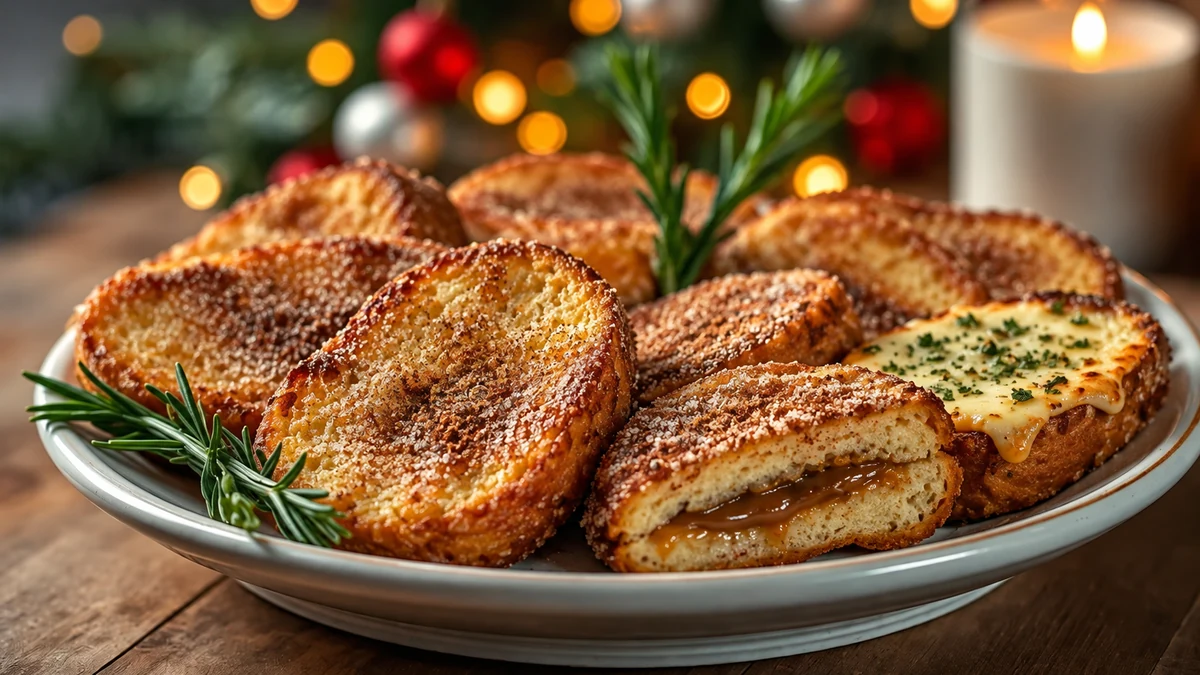
Goat’s cheese and honey bruschetta combines crisp toasted bread with a creamy cheese topping and a light drizzle of honey. Rocket, figs or chopped walnuts add contrasting flavours and textures. Assemble just before serving for a simple festive starter with a sweet and savoury balance.
Goat’s cheese and honey bruschetta is an easy way to put together an attractive starter without complicated preparation. Toast the bread, add the cheese and finish with a little honey and fresh leaves for a Christmas gathering or informal supper.
Ingredients for goat’s cheese and honey bruschetta
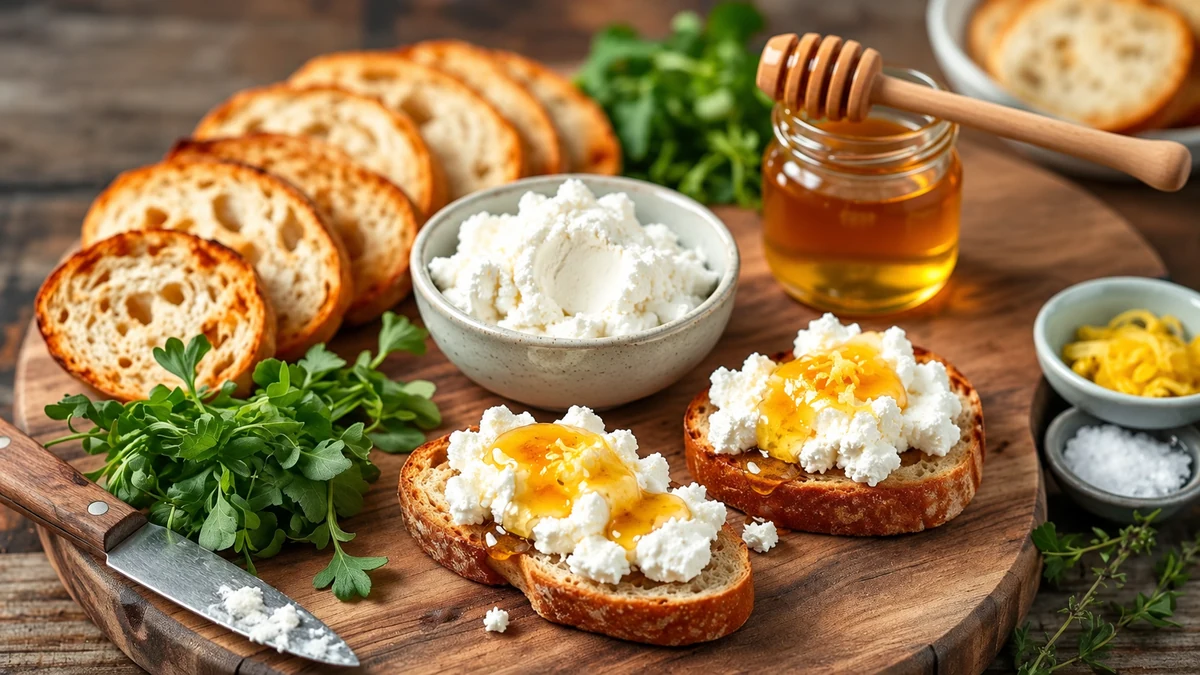
For goat’s cheese and honey bruschetta, you will need:
- 1 baguette, about 400 g – cut into slices about 1.5 cm thick; ciabatta or a rustic loaf also works.
- 200 g fresh, soft goat’s cheese – choose a spreadable, pasteurised cheese without a mould-ripened rind for this version. Creamy ricotta or mashed feta gives a different flavour.
- 2–3 tablespoons honey – for the whole batch, drizzled lightly. Maple syrup can replace honey, but the cheese must also be replaced for a vegan version. Do not give honey to babies under one year.
- 2 tablespoons extra virgin olive oil – for brushing the bread; melted butter is an alternative if dairy is suitable.
- 1 garlic clove – halved, for rubbing lightly over the warm toast.
- A handful of rocket or microgreens – washed and dried as appropriate; basil leaves are an alternative.
- Flaky sea salt – optional, to taste; the cheese may already be salty enough.
- Freshly ground black pepper – to taste.
- ½ teaspoon finely grated lemon zest, optional – shared across the batch for a light citrus note.
- A few thyme leaves or finely chopped rosemary leaves, optional – for aroma and garnish.
- Balsamic glaze, optional – a few drops per slice, rather than enough to soak the toast.
Notes and substitutions
For a vegan version, use a suitable creamy plant-based spread in place of the cheese, maple syrup instead of honey, and olive oil rather than butter. Check the bread too. Nut-based spreads introduce nut allergens. To soften the dairy topping, mix the goat’s cheese with a little plain yoghurt or cream. Expect roughly 12–16 topped slices, depending on their size; a long, thin baguette may produce more, in which case reserve extra bread or spread the toppings more thinly.
How to make goat’s cheese and honey bruschetta
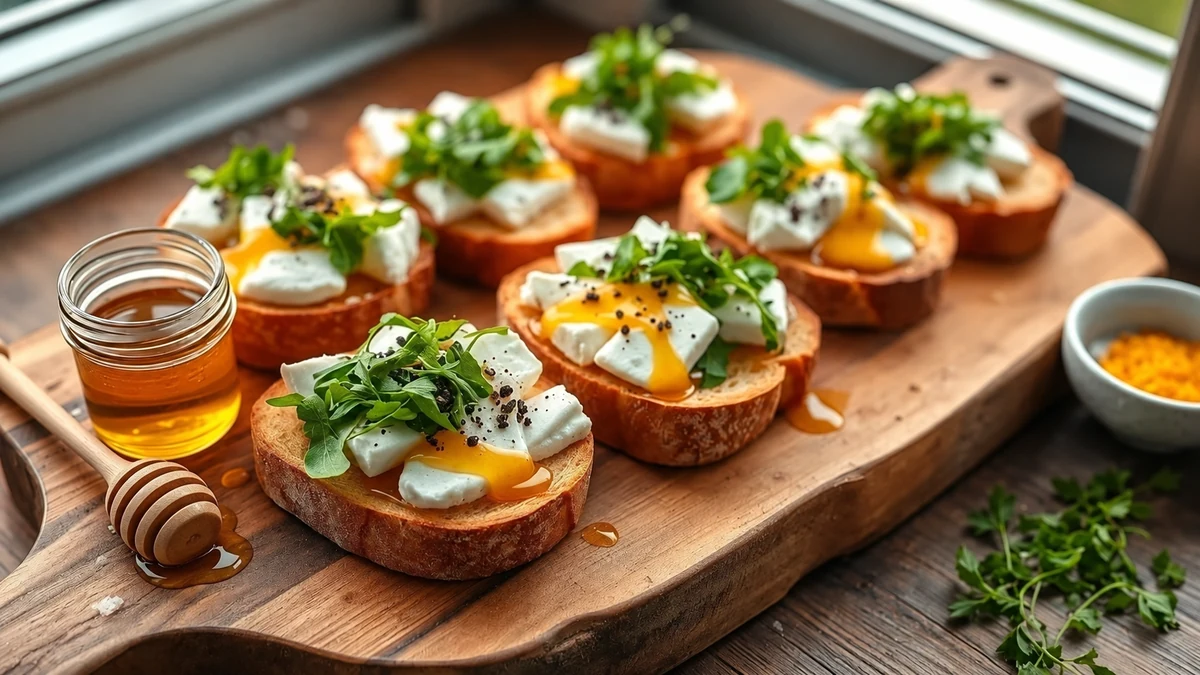
Follow these steps for goat’s cheese and honey bruschetta with crisp bread and a balanced amount of topping.
- Heat the oven: preheat to 200°C conventional / 180°C fan. Alternatively, use a griddle or frying pan over a medium-high heat.
- Slice and oil the bread: cut slices about 1.5 cm thick and brush lightly with the 2 tablespoons of olive oil, dividing it between them rather than using a fixed amount per slice.
- Toast: arrange on a baking tray and bake for about 6–8 minutes, turning halfway, until lightly golden and crisp. On a griddle, start checking after 2–3 minutes per side; bread thickness and heat affect the time.
- Rub with garlic: gently rub the cut side of the halved clove over the warm toast for a subtle garlic flavour.
- Add the cheese: divide the 200 g goat’s cheese between the slices. For 12–16 pieces, that is roughly 12–17 g each. If needed, loosen the whole batch of cheese with 1–2 tablespoons plain yoghurt, adding gradually.
- Drizzle with honey: share the 2–3 tablespoons across the whole batch, using a thin drizzle. The original’s 1–2 teaspoons per slice would need substantially more honey than the ingredient list, so start lightly and add only if wanted.
- Add the leaves: place a little rocket or a few prepared microgreens on each slice.
- Season: finish with black pepper and a little salt only if needed. Divide the optional half-teaspoon of lemon zest between the slices.
- Optional finish: add a few drops of balsamic glaze or a few thyme leaves for another layer of flavour.
- Serve promptly: keep the bread and toppings separate until just before serving to preserve the crisp texture.
Practical tips
Soften the cheese: take out only the amount needed shortly before assembly, or stir in a little yoghurt. Keep the remaining cheese refrigerated; a warm water bath is unnecessary.
Quick variations: add sliced figs or chopped walnuts for texture. A vegan version needs both a plant-based cheese alternative and maple syrup instead of honey, with suitable bread and oil.
Topping variations
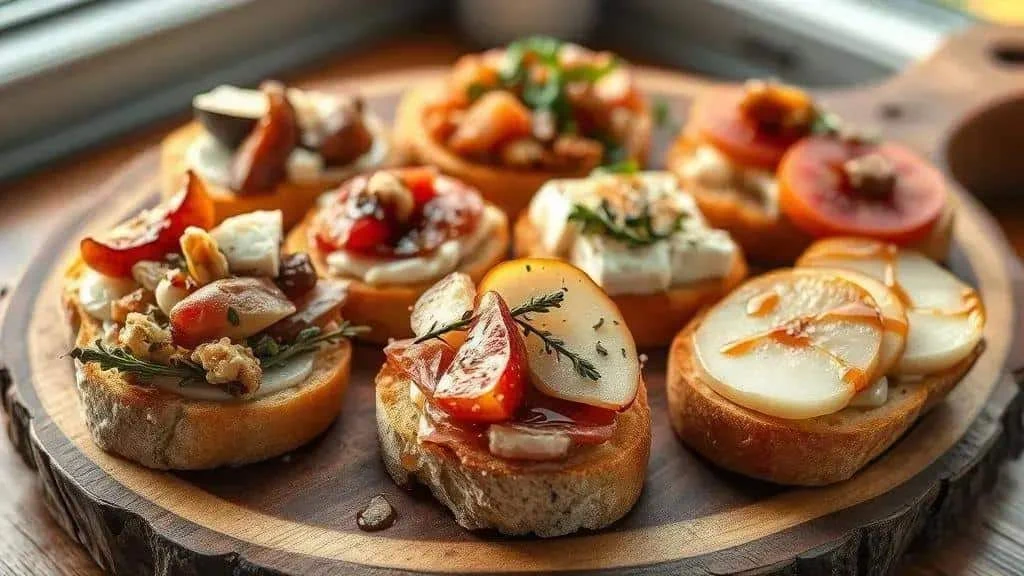
Try these additions to goat’s cheese and honey bruschetta, adjusting the quantities to the size of the toast so the topping stays easy to eat.
- Fig and walnut – add a few slices of fresh fig and a small scattering of chopped walnuts. Use less honey if the fruit is very sweet, and clearly identify the nut ingredient.
- Caramelised onion and thyme – a small spoonful of drained caramelised onion with thyme provides a rich, savoury contrast. Avoid overloading small slices.
- Prosciutto and balsamic glaze – add a thin piece of ready-to-eat cured ham and a few drops of glaze. This is not a vegetarian variation; follow the product’s storage instructions and any dietary guidance relevant to your guests.
- Roasted pear and black pepper – two thin pear slices, cooled slightly after roasting, pair well with the cheese and a little freshly ground pepper.
- Olive tapenade – a small spoonful gives a salty contrast. Check the ingredients, since some tapenades contain anchovies, and add chilli only if wanted.
- Vegan topping – use a suitable creamy plant-based spread or seasoned soft tofu and a light drizzle of maple syrup. Check for nuts or soya and ensure the bread is suitable too.
Changing texture and temperature
For a softer topping, stir 1–2 tablespoons plain yoghurt or cream into the whole batch of cheese, adding gradually. If you prefer a warm version, briefly grill the cheese-topped toast, watching closely, then add honey and leaves afterwards. This brief warming is not a way to make unsuitable cheese or poorly stored ingredients safe; use appropriate products from the outset.
Pairings and substitutions
Pairings: dry rosé or a lighter Chardonnay can accompany the bruschetta for adults who choose alcohol; sparkling water with citrus is an alternative. Quick substitutions: use ricotta or feta for a different cheese topping. For vegan portions, replace the cheese as well as the honey and check the bread and cooking fat.
Presentation ideas
Arrange contrasting toppings in small groups, with fruit, herbs and leaves adding colour. Keep meat, vegan and allergy-sensitive versions separately labelled, with suitable utensils. Finish lightly with honey or balsamic glaze rather than soaking the bread.
Presentation, pairings and storage

A few contrasting colours and neatly portioned toppings make these bruschetta easy to serve without needing an elaborate display.
Presentation
- Simple platter: use a clean wooden board or white plate to show the colours of the toppings.
- Arrange neatly: leave enough space between slices for guests to pick them up without dislodging neighbouring toppings.
- Colour contrast: green rocket, pale cheese and fresh fruit create variety on the plate.
- Final drizzle: add honey just before serving, followed by pepper and only a little salt if needed.
- Portions: around 2–3 small slices per person is a useful starting point alongside other appetisers; adjust for bread size and the rest of the meal.
Drink pairings
- Dry rosé: a fruity style can accompany the sweet honey and tangy cheese.
- Lighter Chardonnay: a fresh, less heavily oaked style works with the creamy topping.
- Light red wine: a young, fruity red is another option, particularly with the cured-ham variation.
- Alcohol-free choice: sparkling water with lemon or an unsweetened citrus-flavoured drink provides a refreshing contrast.
- Flavour combinations: a light floral honey works with figs and pears; a few drops of balsamic glaze add sharpness to saltier toppings.
Storage
- Keep components separate: store cooled toast separately from the chilled cheese and prepared fruit until ready to assemble.
- Follow the cheese label: refrigerate at 5°C or below and respect the use-by date and instructions after opening. There is no single five-day limit that fits every fresh goat’s cheese. Store honey sealed as directed on its label.
- Assembled slices: serve soon after topping for the best texture. If prepared ahead, keep chilled until serving; refrigeration may soften the bread, but a two-hour texture estimate is not a universal safety deadline.
- Refresh plain toast: warm untopped slices briefly at 180°C conventional / 160°C fan, checking after about 3–4 minutes so they do not burn. Add the chilled toppings afterwards.
- Transport: take the bread separately and keep perishable toppings in an insulated cool bag with ice packs. Assemble at the destination where possible.
Make ahead: prepare suitable toppings in advance within their safe storage periods, then toast and assemble shortly before serving.
Choosing goat’s cheese and honey
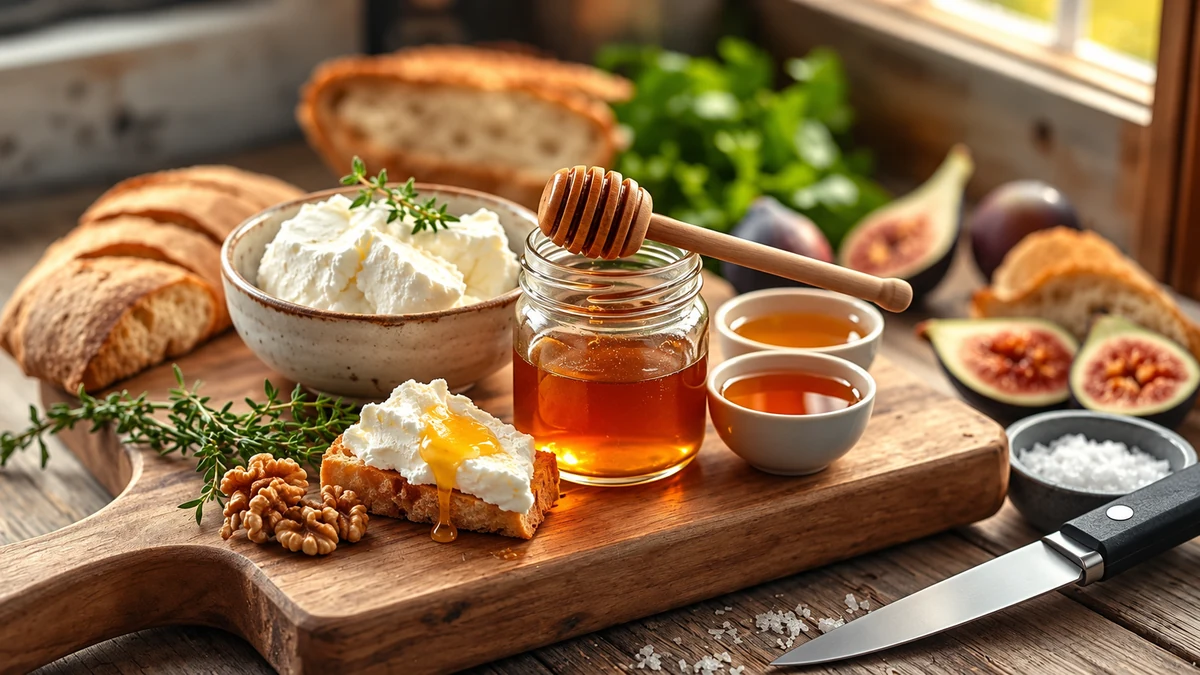
Goat’s cheese and honey bring together tanginess, creaminess and sweetness. The variety of cheese and honey changes the strength of that contrast.
- Names and styles: French-labelled goat’s cheeses often use the word chèvre. There are fresh and matured styles, so choose the soft, spreadable type specified for this recipe rather than assuming they are interchangeable.
- Texture and flavour: fresh goat’s cheese is often soft and tangy; matured varieties can be firmer and stronger. The individual product matters more than a general rule.
- Milk and lactose: goat’s cheese is not automatically lactose-free and is not a suitable substitute for someone with a cow’s milk protein allergy. Check the person’s dietary advice and the product label rather than assuming it is easier to digest.
- Honey varieties: floral sources influence flavour. Wildflower, orange blossom, chestnut and acacia honeys offer different levels of intensity; taste a little before choosing how much to use.
- Sweet and savoury: a small drizzle of honey contrasts with the cheese’s tang without covering it completely.
- Extra texture: chopped nuts add crunch, fruit adds juiciness and balsamic glaze adds a sharp note. Choose only the additions that suit your guests.
- Storage reminder: fresh goat’s cheese needs refrigeration according to its label. Keep honey sealed in a suitable cupboard; crystallisation is a normal change and does not by itself mean it has spoiled.
Why the combination works
The creamy texture and tang of goat’s cheese contrast with honey’s sweetness. Crisp toast adds a third element, making the topping feel less heavy than it would on soft bread.
Choosing a honey
- Wildflower: flavour varies with the flowers visited, so taste it first and use a light drizzle.
- Orange blossom: a floral option to try with pear or fig toppings.
- Chestnut: often a stronger choice; use sparingly if you want the mild cheese to remain prominent.
- Acacia: a lighter option when you want a gentle sweet finish.
Using honey in the kitchen
- Avoid scorching: add honey after toasting or grilling; excessive heat can darken it and overwhelm its delicate flavour.
- Other uses: small amounts of honey can flavour dressings, marinades and finishing sauces. It remains an added source of sugar, even when used in savoury food.
- Crystallised honey: follow the storage label. If needed, stand a suitable sealed container in warm, not boiling, water to loosen it, taking care with the container material and keeping water out.
- Timing: toast the bread first, then add the cheese, honey and leaves shortly before serving.
Taste a small sample: compare a light and a stronger honey with your chosen cheese to find the balance you prefer.
Final thoughts
Goat’s cheese and honey bruschetta is a simple starter with contrasting textures and flavours. Use a modest amount of honey, spread the cheese evenly and keep the toast crisp.
Try figs, chopped walnuts or a separately labelled cured-ham variation if they suit your guests. Preparing the components ahead and assembling at the last moment keeps service straightforward.
Thank you for reading. Follow us on social media and visit I Love Christmas for more seasonal recipes and festive ideas.
FAQ: goat’s cheese and honey bruschetta
Can I prepare the bruschetta in advance?
Prepare the components separately, keeping perishable toppings chilled within their storage limits. Toast or refresh the bread shortly before serving and assemble at the last moment for the best texture.
What can I use instead of goat’s cheese?
Creamy ricotta or mashed feta gives a different dairy topping. A suitable nut-based or tofu-based spread can be used for a vegan version, with maple syrup instead of honey and suitable bread and oil. Check allergens and adjust the seasoning.
Can I replace honey for a vegan version?
Yes, use maple syrup or another suitable plant-based syrup. Replacing honey alone does not make the recipe vegan: replace the cheese too and check the bread, cooking fat and garnishes.
How should I store goat’s cheese and honey?
Keep the cheese covered in the fridge at 5°C or below, following its use-by date and opening instructions rather than a universal 4–7-day estimate. Store honey sealed according to its label, usually in a cupboard. Keep prepared cheese toppings chilled until service.
Which drinks go well with the bruschetta?
Dry rosé, a lighter Chardonnay or a light fruity red are options for adults who choose alcohol. Sparkling water with lemon or an alcohol-free citrus drink also works well.
How do I stop the bread becoming soggy?
Toast it until crisp and add the toppings just before serving. Keep ingredients separate in advance, drain wet toppings and use a light drizzle of honey rather than soaking the bread.
Sources and Further Reading
- Food Standards Agency: cooking your food
- Food Standards Agency: chilling, freezing and defrosting food safely
- Food Standards Agency: food allergies and intolerances
- Cambridge University Hospitals: milk allergy