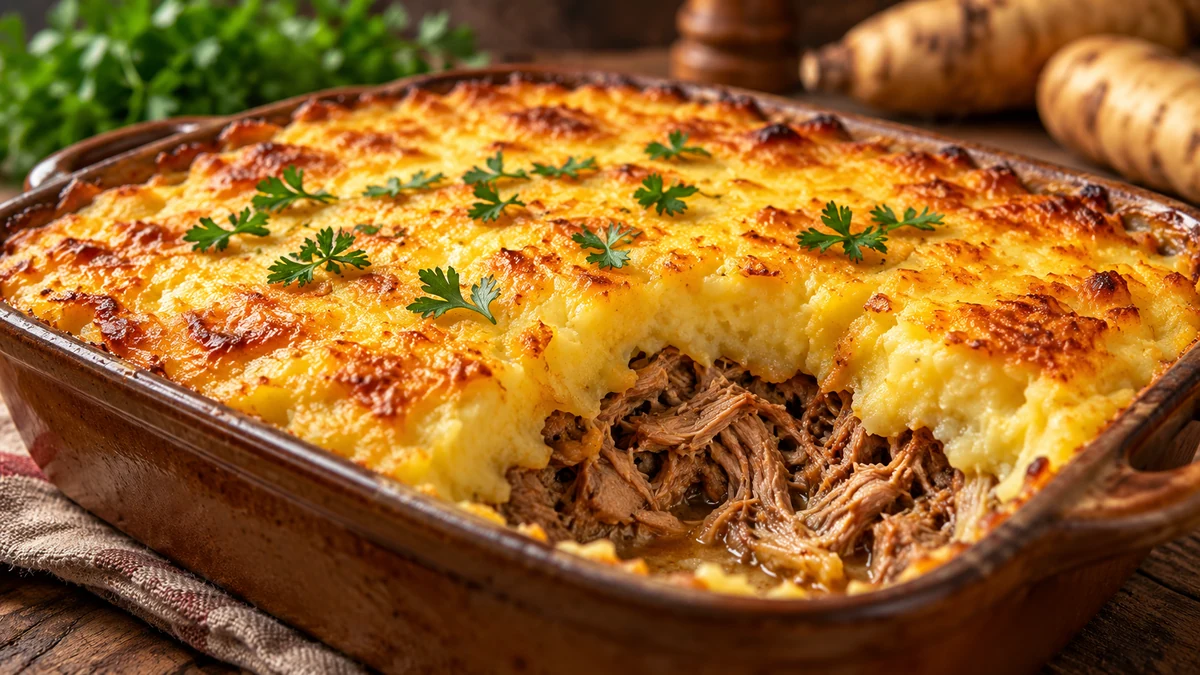
This Brazilian pulled pork escondidinho layers a moist pork filling with creamy mandioquinha, also called arracacha, and a cheese topping. The recipe covers assembly, seasoning, variations and serving ideas, with potato as an accessible alternative when arracacha is unavailable.
Pulled pork escondidinho is a comforting Brazilian bake in which a savoury filling is covered with mash. Here the topping uses mandioquinha, a root vegetable with a flavour of its own. Follow the steps for a festive family meal, keeping that Brazilian character rather than treating it as a British cottage pie.
Ingredients for pork escondidinho with arracacha mash
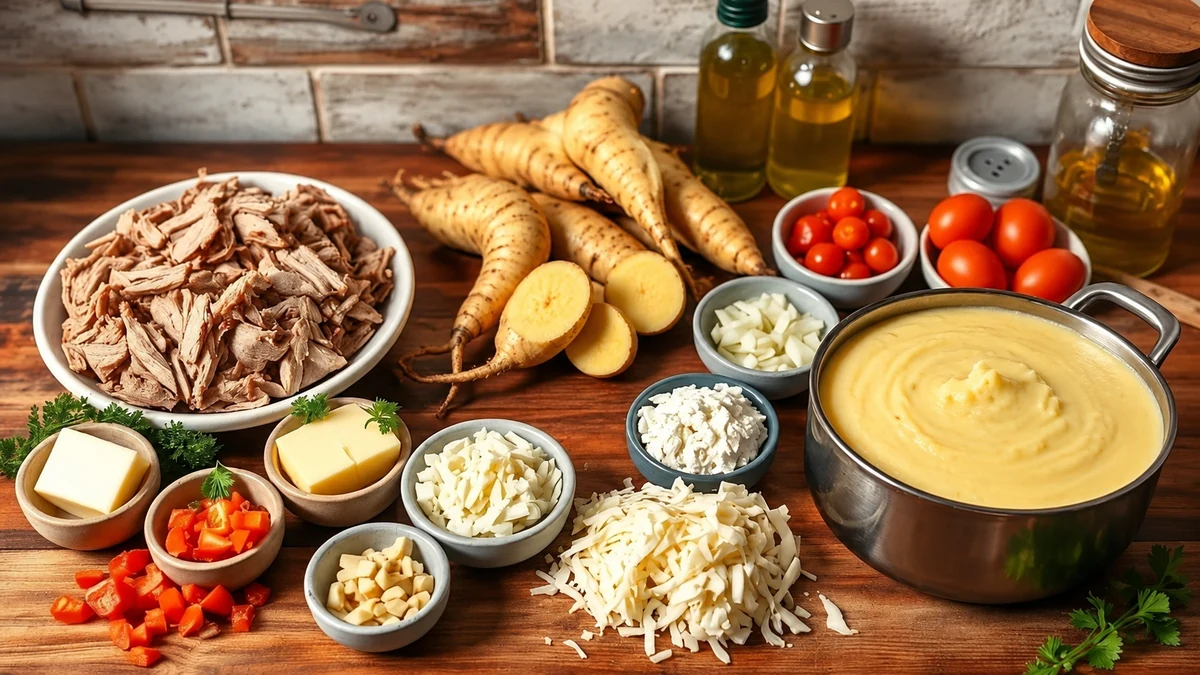
To make pork escondidinho with arracacha mash, you will need:
- 1.2 kg cooked, shredded pork, weighed without bones – the ingredient list specifies cooked meat; this is not the starting weight of a raw joint. Pernil means pork leg, although shoulder is a suitable alternative for pulling. Cooked shredded beef gives a different variation; the original’s smaller 800 g alternative makes a thinner filling.
- 2 tablespoons olive oil – for the filling.
- 1 medium onion, chopped – to soften for flavour.
- 3 garlic cloves, chopped – or crushed.
- 2 ripe tomatoes, chopped or 120 ml tomato sauce – to moisten the filling.
- Up to 120 ml meat stock or water – add as needed for a moist, not runny, filling. Wine changes the flavour and is not an alcohol-free equivalent, even after cooking.
- 1 teaspoon sweet paprika – for colour and flavour; annatto seasoning is another option, while cumin gives a different flavour.
- Salt and black pepper, to taste
- 1 tablespoon chopped parsley and chives – the herb combination often called cheiro-verde in Brazil.
- 1 kg mandioquinha, also called batata-baroa or arracacha – peeled and cut into even pieces. It is not cassava or ordinary parsnip. Use potatoes for a clearly identified alternative if you cannot source it.
- 100 g butter – for the mash; use a suitable dairy-free baking block if required, checking its ingredients.
- Up to 200 ml milk – add gradually to reach a spreadable consistency. An unsweetened, unflavoured plant drink is an alternative.
- 150 g Brazilian requeijão cremoso or up to 200 g cream cheese – optional for a richer mash. Requeijão is a creamy cheese spread; add extra milk cautiously when using either option.
- 150 g grated mozzarella – for the topping. A little Parmesan can provide a stronger finish, but is saltier and is not vegetarian.
- A little grated nutmeg and black pepper – for the mash.
Servings
The recipe makes approximately 6–8 generous portions, depending on the accompaniments. The ingredients total substantially more than six 200 g portions, so use the overall yield rather than treating that smaller serving estimate as exact.
Quick tips
- If the pork is dry, add the stock a tablespoon at a time rather than pouring it all in at once.
- For smooth mash, use a potato ricer or masher before stirring in the warm milk and butter.
- For a dairy-free variation, replace the butter, milk, optional creamy cheese and grated topping with suitable alternatives, or omit the optional cheese. Changing only the milk does not remove all dairy.
How to make pork escondidinho with arracacha mash
- Start with properly cooked pork: this assembly recipe requires 1.2 kg cooked, shredded meat. If starting with a raw joint, follow a suitable pork-leg or shoulder recipe for its actual weight and equipment, cooking until both safe and tender enough to pull. Pressure-cooker liquid, capacity and release instructions must come from the appliance manufacturer; a fixed cup of water and universal 60–90-minute timing are not suitable for every model or joint. Any seasonings used for that cooking stage are additional to the filling ingredients listed here.
- Shred the pork: if freshly cooked, let it rest briefly until manageable, then shred with two forks and remove bones and tough pieces. Reserve suitable cooking juices for the filling. If using chilled leftovers, keep them refrigerated until assembly and check they have not already been reheated.
- Make the filling base: heat the oil and soften the chopped onion. Add the garlic and cook briefly without burning. Add the tomatoes or sauce, paprika and a little stock, then simmer for about 6–8 minutes until thickened. Stir in the herbs and season cautiously. For freshly cooked pork, combine and proceed straight to assembly; for chilled leftover pork, cool the sauce promptly before mixing with the cold meat so the final oven bake is its single reheating step.
- Cook the arracacha: put the even-sized pieces in a pan, cover with water and add a little salt if desired. Bring to a simmer and cook until easily pierced with a fork, checking after about 12–15 minutes. Larger pieces or a potato substitute may take longer.
- Make the mash: drain thoroughly and mash or pass through a ricer. Stir in the butter and gradually add warm milk, using only enough for a soft but spreadable texture. Mix in the optional creamy cheese, then season with pepper, a little nutmeg and salt if needed. Do not make the mash pourable.
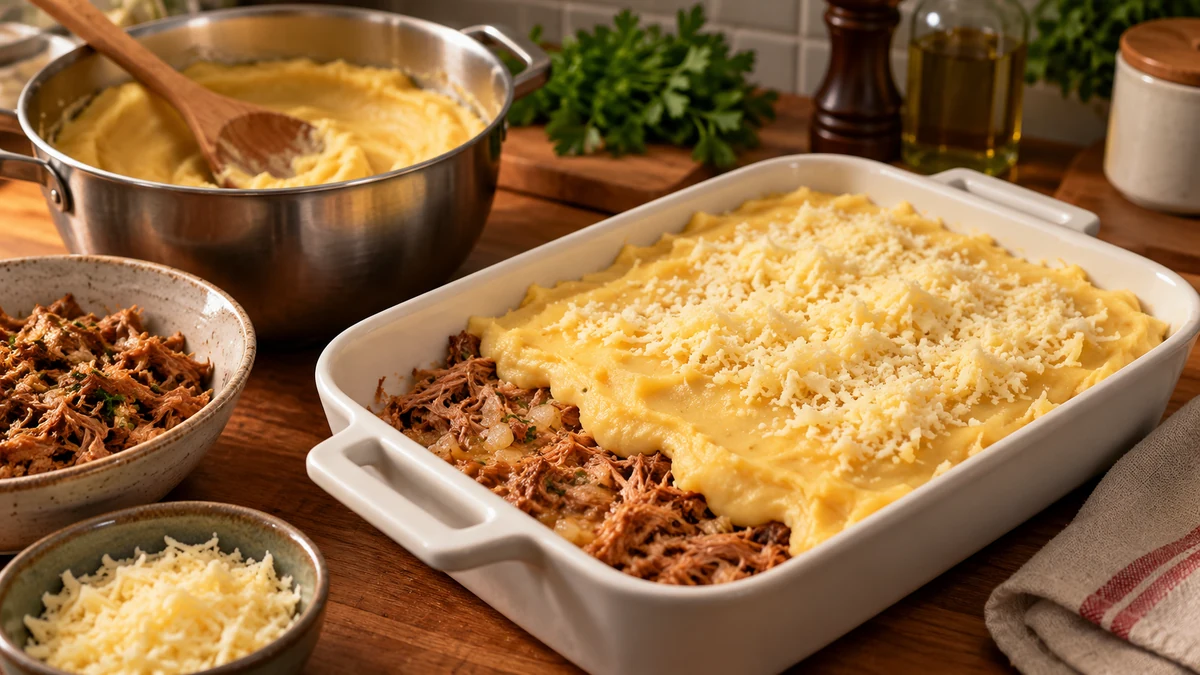
- Assemble: heat the oven to 200°C conventional / 180°C fan. Lightly grease a deep ovenproof dish, around 20 × 30 cm if it has sufficient capacity, or divide between two dishes. Spread half the mash over the base, add the pork filling and cover with the remaining mash. Scatter over the mozzarella, leaving headroom so the dish does not overflow.
- Bake: start checking after 20–25 minutes and continue until the centre is steaming hot and the cheese has melted. A deep or chilled dish can need considerably longer. Check for 70°C in the centre for 2 minutes or an equivalent safe combination. If desired, briefly grill the top only after the centre is ready, watching closely.
- Rest and serve: leave for about 5 minutes before portioning. Finish with chopped herbs; crisp onions or toasted breadcrumbs are optional, with their ingredients checked for allergens.
- Adjust texture: add stock sparingly to dry pork and warm milk gradually to firm mash. The optional cheese makes the topping richer, so taste before adding more butter, cream or salt.
- Quick variations: fully cooked bacon adds a smoky note. For a meat-free version, replace the pork and meat stock with mushrooms or a suitable plant-based filling and vegetable stock, and choose vegetarian cheese.
- Leftovers: cool promptly, refrigerate within 2 hours at 5°C or below and use within 48 hours of the original cooking, or freeze suitable portions promptly. If the bake used previously cooked and chilled pork, the oven stage already reheated it: do not plan another reheating cycle. Storage deadlines do not restart when ingredients become a new dish.
Practical tips
- Cut the arracacha into similar-sized pieces so they cook evenly.
- Taste before adding salt when using already seasoned pork or stock.
- Spread the cheese evenly and keep a safe distance between the dish and the grill element.
Variations on pork escondidinho
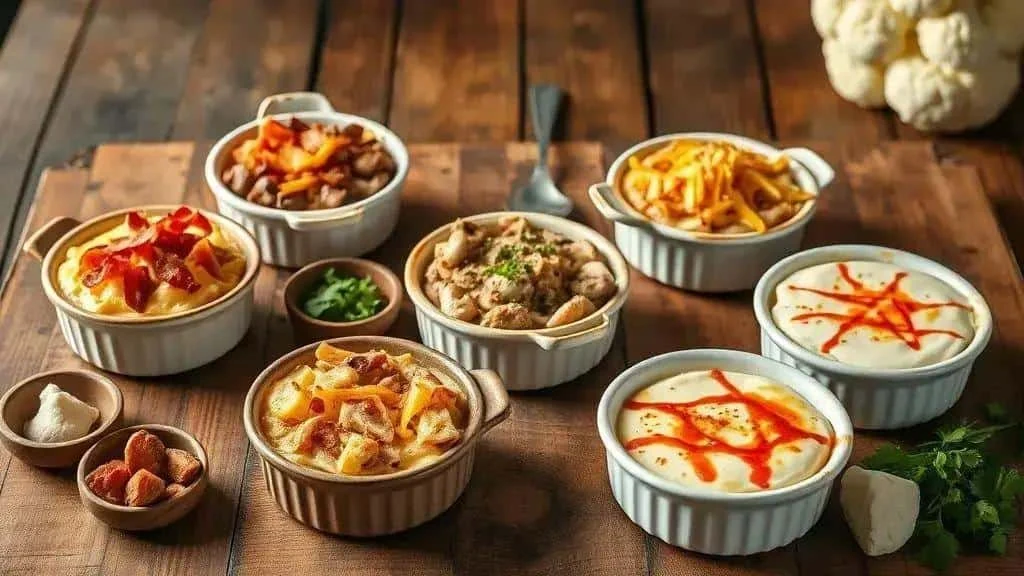
These variations on pork escondidinho change the filling or topping while retaining the layered bake. Smaller alternative fillings will produce a different yield from the substantial pork version.
Bacon and Cheddar
This variation adds a smoky filling and a stronger cheese finish.
- 50 g bacon – chopped, fully cooked and drained.
- 100 g grated Cheddar – to replace some or all of the usual cheese topping, or divide between mash and topping.
- 1 small red onion, optional – caramelised for a sweeter note.
- Add the cooked bacon to the pork filling before assembly; it will soften somewhat inside the bake.
- Stir some Cheddar into the mash if desired, allowing for its saltiness.
- Top with the remaining cheese and bake until hot throughout before browning the surface.
Mushroom and ricotta variation
Replace the pork with mushrooms and seasoned ricotta, using vegetable stock and vegetarian cheese throughout. This makes a lighter, smaller filling than 1.2 kg pork, so use a smaller dish or adjust the mash accordingly.
- 400 g mixed mushrooms – sliced and sautéed.
- 200 g ricotta – crumbled and seasoned with pepper and a little nutmeg; choose a vegetarian product.
- Up to 1 tablespoon soy sauce – for savoury depth; add gradually because it is salty and check for soya and wheat allergens.
- Sauté the mushrooms in a little olive oil until golden and their released liquid has evaporated.
- Add the ricotta and herbs, adjusting seasoning without making the filling wet.
- Assemble in layers with the mash and bake until the centre is steaming hot, then brown the topping if needed.
Carne seca and Catupiry variation
This Brazilian-style option uses cooked, desalted dried beef and Catupiry, a creamy cheese spread. It is a different filling rather than a direct equal-weight replacement for the pork.
- 500 g cooked, shredded carne seca – desalted and cooked properly according to the product’s preparation instructions.
- 150 g Catupiry – to mix into the filling or use as a layer.
- 1 tablespoon butter – optional for the filling.
- Combine the cheese spread with the prepared filling, following the same distinction between freshly cooked meat and chilled leftovers used in the main method.
- Check the salt before adding any, because the beef may retain substantial salt even after desalting.
- Cover with mash and bake until the middle is hot throughout, not merely bubbling around the edges.
Cauliflower mash variation
Cauliflower provides a less starchy alternative to the root-vegetable topping, with a different flavour and usually a softer texture. No nutritional calculation is provided for the finished dish.
- 1 medium cauliflower – cooked until tender and thoroughly drained; its size determines the amount of topping.
- 50 g butter and up to 100 ml cream – or suitable plant-based alternatives, added gradually.
- Salt, pepper and nutmeg – to taste.
- Cook and drain the cauliflower thoroughly before mashing with the butter and only enough cream to make it spreadable.
- Check the texture before adding more liquid; cauliflower holds water, so it may need much less cream than expected.
- Layer and bake using the cauliflower topping in place of arracacha, adjusting the dish size to the amount available.
Chilli and chimichurri variation
A little chilli and a herby chimichurri sauce give the filling a more assertive flavour.
- 1–2 red chillies, to taste – finely chopped; removing the seeds and inner membranes can reduce the heat, but chillies vary considerably.
- 1 tablespoon chimichurri – stirred into the filling or spooned over individual portions.
- Up to 1 teaspoon hot paprika – optional; use less if the chillies already provide enough heat.
- Add the chilli while cooking the onion and tomato base, then adjust the amount to taste before assembly.
- Use the chimichurri in the filling or serve a little separately for guests to add themselves.
- Serve with salad dressed with citrus for a fresh contrast.
Choosing a variation
Consider the guests’ preferences and dietary needs. Keep a mild portion available if needed, and adjust seasoning and chilli before assembly rather than assuming everyone enjoys the same level of heat.
Shredding, seasoning and storing the pork
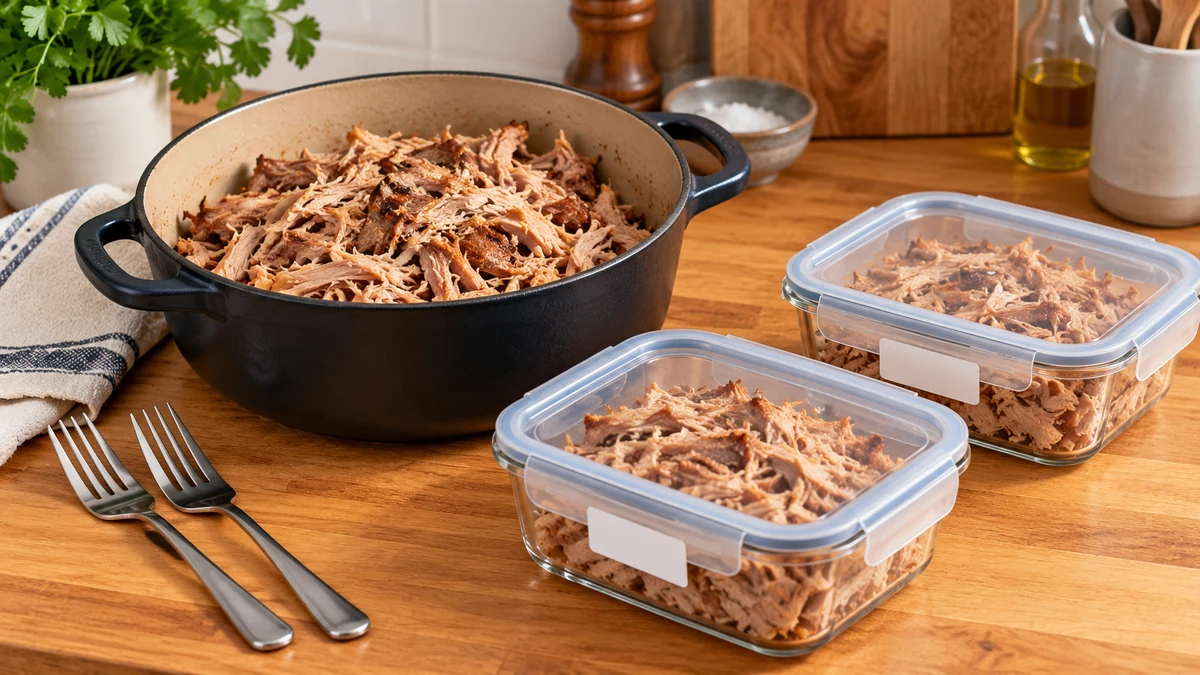
Tender cooked meat is easier to shred and combine with the sauce. The following guidance distinguishes fresh preparation from using safely stored leftovers.
Shredding the meat
- Rest briefly: allow freshly cooked pork around 10–15 minutes to become manageable, then shred without leaving it unrefrigerated for an extended period.
- Use two forks: hold the meat with one fork and pull it apart with the other.
- For a larger batch: work in manageable pieces with forks or suitable meat-shredding tools. An immersion blender tends to purée the meat rather than producing useful shreds; use powered equipment only as its manufacturer permits.
- Remove unwanted pieces: discard bones, cartilage and excessive fat while shredding.
- Reserve juices: retain about 60–120 ml suitable cooking liquid and add gradually to the filling as needed.
Seasoning the filling
Aromatic base: soften the onion and garlic, then cook the tomato sauce before combining with the pork. Keep chilled leftovers cold until their single final reheating stage.
- 2 tablespoons olive oil – for cooking the base.
- 1 medium chopped onion and 3 garlic cloves – softened without burning.
- 2 chopped tomatoes or 120 ml tomato sauce – for moisture.
- Up to 120 ml reserved stock – only as much as the filling needs.
- 1 teaspoon sweet paprika and black pepper to taste – sweet paprika adds colour and flavour without the heat of hot paprika.
- 1 tablespoon chopped parsley and chives – for a fresh finish.
- Optional additions: 50 g fully cooked, drained bacon or a little balsamic vinegar for a different flavour. Add vinegar gradually rather than making the filling overly sharp.
Taste the properly prepared filling to adjust salt and sharpness, taking account of the seasoning already in the pork and stock.
Storage and reheating
- Cool promptly: divide cooked food into shallow portions and refrigerate within 2 hours. Do not wait indefinitely for a large, deep dish to cool completely on the worktop.
- Portion before storing: use covered containers sized for one meal so only the amount needed is taken out.
- Refrigerate: keep at 5°C or below and use cooked leftovers within 48 hours of their original cooking, unless frozen promptly.
- Freeze promptly: label suitable portions with the cooking and freezing dates. Three months can be a planning target for quality where appropriate, but vacuum packing does not make previously mishandled meat safe or extend a use-by date.
- Thaw in the fridge: allow enough time for the portion to defrost fully, then use within 24 hours. Large portions may take longer than a fixed overnight estimate.
- Reheat once: if the pork has not already been reheated, warm the required portion in a covered ovenproof dish until steaming hot throughout, adding a little stock if dry. For the assembled bake, check its centre; time depends strongly on depth and starting temperature.
- Hob option for pork alone: add a little stock and stir over the heat until steaming hot throughout. Do not then cool it and schedule another reheating as a separate meal.
- Avoid repeated cycles: reheat leftovers only once and do not keep thawing, reheating and refreezing the same portions. Plan servings before heating.
Practical reminders
- Add small amounts of stock to dry pork until it is moist, without making a pool of liquid under the mash.
- Check seasoning during the single final preparation stage; freezing and assembly do not reset the food’s age.
- Use clean equipment, separate raw ingredients from ready-to-eat food and refrigerate cooked portions promptly at 5°C or below.
Accompaniments and a festive table

- Leek rice – a small optional side; the bake already contains a substantial mash layer, so choose portions around the whole meal.
- Crisp farofa – Brazilian toasted cassava flour with onion, and optional cooked bacon, adds a contrasting texture. Cassava flour here is different from the arracacha used in the mash.
- Green salad with citrus dressing – lettuce, rocket or watercress with lemon or orange dressing gives a fresh accompaniment.
- Roasted vegetables – carrots, courgettes and broccoli with a little oil and herbs add colour.
- Tomato and onion salad – a lightly dressed, chilled side for a sharper contrast.
- Rustic bread – optional slices of ciabatta or another loaf for any sauce on the plate.
Arranging the meal
- Separate hot and cold dishes: bring salads out shortly before service and keep the main dish safely hot if not serving immediately.
- Position the bake: place the hot dish on a suitable heatproof mat where it is easy to portion without reaching over other food.
- Arrange the sides: use accessible dishes for the vegetables, salad and any rice or farofa.
- Separate serving utensils: provide a spoon or spatula for each dish, particularly where dietary alternatives are offered.
- Buffet layout: separate hot dishes, chilled sides and bread to reduce crowding and make choices clear.
Serving temperature
- Keep the bake hot at a food temperature of 63°C or above if holding before service. Covering it can reduce drying, but an oven setting alone does not verify the food’s temperature.
- Keep salads chilled until serving, then add dressing shortly before eating to preserve their texture.
- Heat only what is needed, ensuring the centre is steaming hot and observing the one-reheat limit. Do not use a fixed short microwave or oven time as proof that a deep portion is ready.
- Offer garnishes separately, such as chopped herbs, crisp onions or chilli, so guests can choose.
Drink pairings
- Wine: a fruity Merlot or Garnacha, or an unoaked Chardonnay, is an option for adults who choose alcohol.
- Beer: a light lager or wheat beer offers another pairing.
- Alcohol-free drinks: water, sparkling water with lemon, apple juice or a citrus-flavoured alcohol-free drink can accompany the meal.
Planning portions
- Servings: divide the finished bake into about 6–8 generous portions, or more smaller servings when several sides are offered. Weigh the finished dish if an exact portion weight is needed.
- Prepare ahead: cook the pork and mash the day before, cool and refrigerate promptly, then assemble cold and bake until thoroughly hot. Treat that bake as the single reheating stage and keep within the original storage deadlines.
- Dietary alternatives: check every dairy ingredient for a dairy-free version. For a meat-free version, replace the pork and meat stock and use vegetarian cheese; mushrooms added to pork do not make it vegetarian.
Final thoughts
Pork escondidinho with arracacha mash is a hearty Brazilian dish for a festive family meal. A moist filling, spreadable mash and properly heated centre matter more than an exact browning time. Keep the Brazilian ingredients where available, or identify substitutions clearly.
Thank you for reading. Follow us on social media for more seasonal recipes and visit I Love Christmas for further festive inspiration. Enjoy your meal!
FAQ: pork escondidinho with arracacha mash
How long does the pork take to become tender enough to shred?
That depends on the cut, raw weight and cooking equipment. This assembly recipe uses 1.2 kg already cooked, shredded pork. If starting raw, use a suitable recipe for the joint and follow pressure-cooker instructions where relevant; do not assume a universal cooking time or minimum liquid. The meat must be safely cooked and tender enough to pull apart.
Can I replace arracacha with another vegetable?
Yes. Potatoes or sweet potatoes give an accessible alternative, using a similar starting quantity and adding liquid gradually because their texture differs. Cauliflower gives a less starchy, softer topping. Arracacha is not the same ingredient as cassava or ordinary parsnip.
How can I make the mash smoother?
Drain the cooked root thoroughly and use a ricer or masher. Stir in butter and warm milk gradually, with optional requeijão or cream cheese for richness. Keep the mash spreadable rather than runny.
How should I store the pork and finished bake?
Cool promptly, refrigerate within 2 hours at 5°C or below and use within 48 hours of the original cooking, or freeze suitable portions promptly. Thaw in the fridge and use within 24 hours of full defrosting. Making the bake does not reset the age of leftover pork, and reheating should happen only once.
How do I heat the bake without drying it out?
Cover the dish while it heats and add a little stock to the filling before assembly if it is dry. Check that the centre is steaming hot; a deep chilled dish can take longer than 20 minutes. If made with previously cooked and chilled pork, the final bake is its reheating stage, so do not plan another reheating of leftovers.
Sources and Further Reading
- Food Standards Agency: cooking your food
- Food Standards Agency: chilling, freezing and defrosting food safely
- Food Standards Agency: food allergies and intolerances
- Royal Botanic Gardens, Kew: Arracacia xanthorrhiza