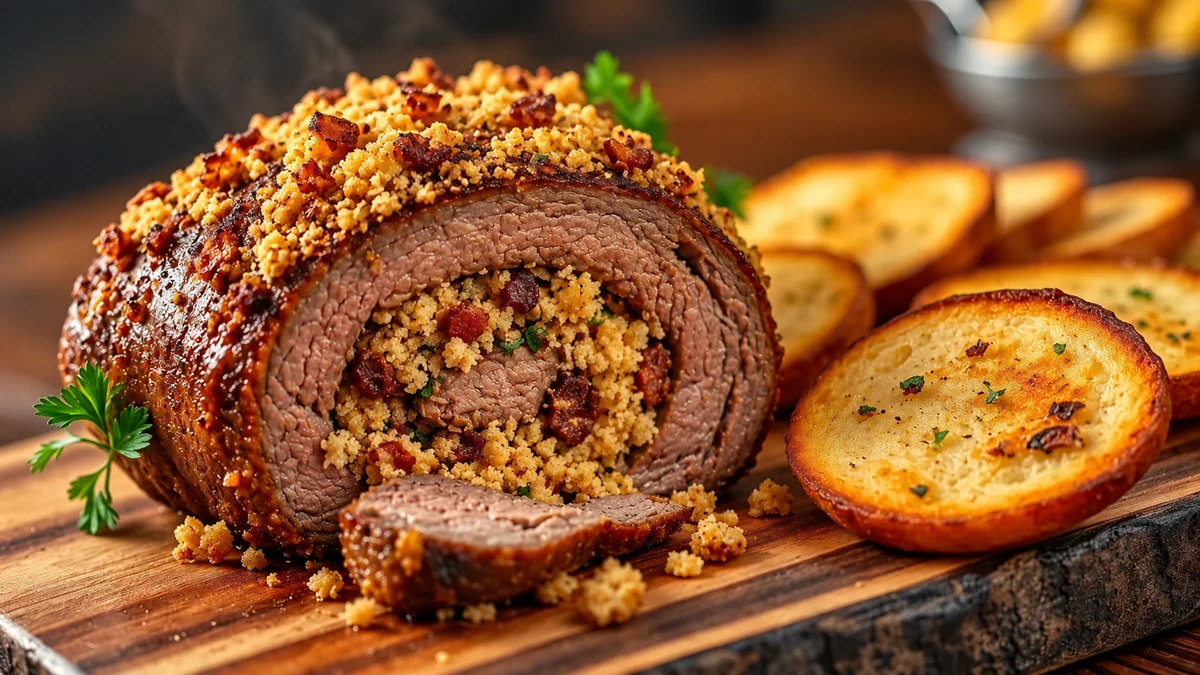
Farofa-stuffed tri-tip is inspired by Brazilian maminha recheada: butterflied beef filled with toasted cassava flour, bacon and herbs, tied and roasted. Because the beef is opened and stuffed, both meat and filling must cook thoroughly. The farofa inside will soften with the meat juices; serve a separate portion for extra crunch.
Farofa-stuffed tri-tip roast combines savoury beef with a Brazilian toasted-cassava filling. It makes a generous centrepiece for a festive meal, especially with fresh salad and a little extra farofa alongside.
Ingredients for farofa-stuffed tri-tip
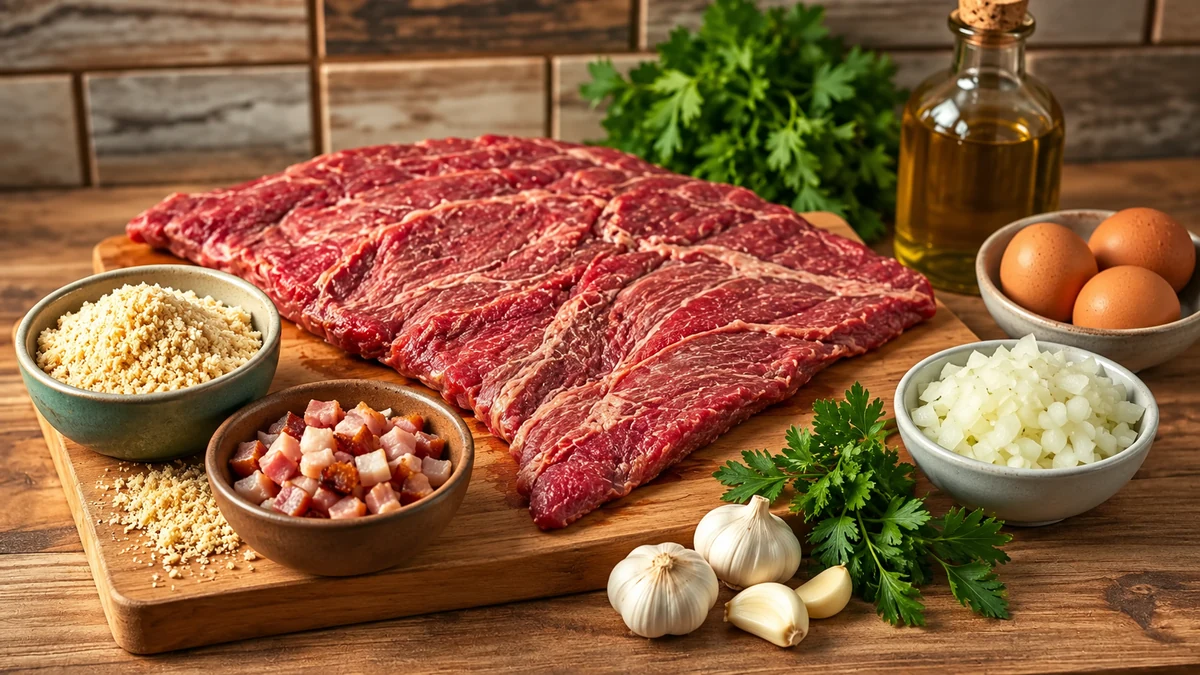
Gather these ingredients for farofa-stuffed tri-tip. A large 1.8–2 kg joint can serve around six to eight people generously with sides; final yield depends on trimming and cooking losses.
- 1.8–2 kg whole maminha or suitable tri-tip beef joint – ask a butcher for an appropriate piece and help butterflying it. Trim excessive fat and tough membrane while leaving a modest fat covering.
- 2 tablespoons olive oil – for searing; another suitable cooking oil can be used.
- 4 chopped garlic cloves – or 2 teaspoons garlic powder for a different flavour.
- Coarse salt, to taste – the source quantity is up to 1 tablespoon, but reduce as needed for salty bacon, olives or cheese. Fine salt is not a direct volume equivalent.
- 1 teaspoon ground black pepper – adjust to taste; chilli flakes give a different heat.
- 1 lemon – use half the juice for seasoning and reserve the rest for serving if wanted. Lemon adds acidity; it does not reliably tenderise a whole joint or replace salt.
- 100 g chopped bacon – or suitable Brazilian calabresa sausage, prepared according to its label.
- 3 tablespoons butter – for the farofa; use less if the bacon releases plenty of fat. Olive oil is an alternative fat, not automatically a lower-calorie substitute.
- 1 medium onion, chopped – for the filling.
- 2 eggs, hard-boiled and chopped – or fully scrambled before adding to the farofa.
- 2 cups toasted Brazilian cassava flour – look for coarse farinha de mandioca torrada, not tapioca starch. A suitable toasted Brazilian maize flour makes a different version.
- Half a cup of chopped fresh parsley and spring onion – the Brazilian herb mixture known as cheiro-verde.
- One-third of a cup of raisins, optional – chopped dried apricots are an alternative.
- 2 tablespoons chopped olives, optional – drain well and reduce added salt if using.
- Food-safe kitchen string or suitable skewers – to secure the joint; remove completely before serving.
- Roasting tin, foil and a food probe – a rack can help air circulate, but the important check is thorough cooking through the meat and filling.
Quick tips: ready-toasted cassava flour saves time. Less bacon and butter changes the richness; add herbs for flavour rather than assuming the recipe becomes low in fat. Taste the farofa before it touches raw beef, and never taste filling after contact with raw meat until fully cooked.
How to prepare farofa-stuffed tri-tip
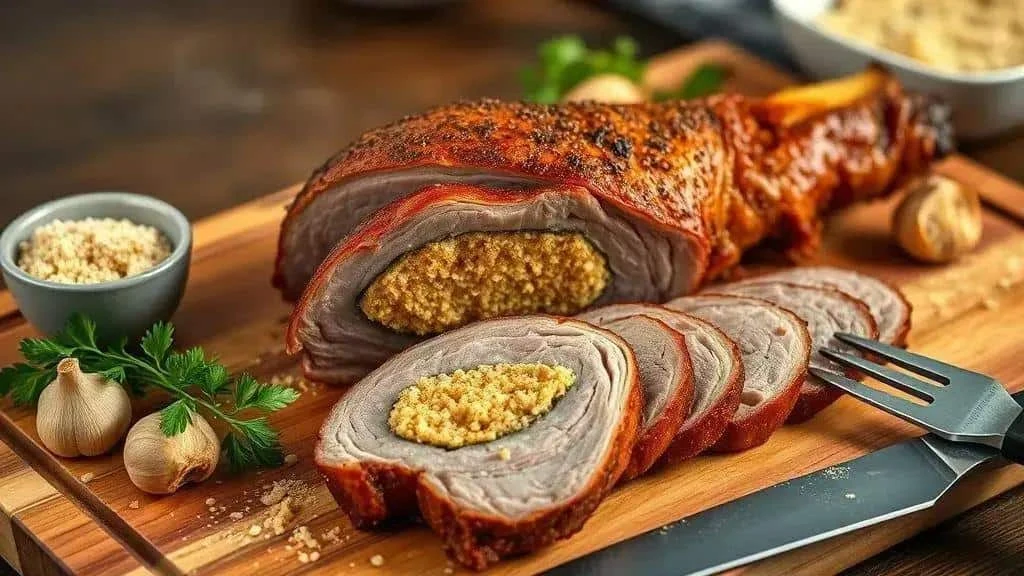
Follow these steps for farofa-stuffed tri-tip. A filled joint needs more than a quick surface sear to be safely cooked.
- Prepare the beef: ask the butcher to butterfly the joint into an even sheet suitable for rolling, or do so carefully with a sharp knife. A pocket cut is a different technique; do not combine the two descriptions. Keep the meat chilled while preparing the filling.
- Season: rub the beef with garlic, pepper, juice of half the lemon and a measured amount of salt. Cover and refrigerate for 1–2 hours, or up to about 8 hours within the meat’s use-by period.
- Make the farofa: cook the bacon thoroughly in a pan, using some of the butter if needed. Add onion and cook until soft, then stir in the remaining butter as required, cooked eggs, toasted cassava flour, herbs, optional raisins and olives. Stir until evenly seasoned and lightly toasted. Spread in a shallow clean container to cool quickly; refrigerate within two hours if not using promptly.
- Fill and secure: spread cooled farofa over the beef without overfilling, roll and tie securely at intervals. Keep any extra farofa separate before filling the meat. Once farofa has touched raw beef, it must be cooked as part of the raw-meat preparation, not served as a ready-to-eat side.
- Brown the outside: heat the oil in a heavy pan and brown the joint on all sides, turning carefully. A few minutes per surface may provide colour, but searing does not seal in juices or cook the filling.
- Roast thoroughly: transfer to a preheated oven at 180°C, or 160°C fan. Check the deepest meat and the centre of the filling with a clean probe: reach at least 70°C for 2 minutes, or an equivalent safe time–temperature combination. Begin checking as cooking progresses, but do not assume 40–60 minutes is enough for a 1.8–2 kg stuffed joint. Cover loosely if the outside browns too quickly and continue until the centre is safely cooked.
- Rest: once the meat and filling are thoroughly cooked, rest loosely covered for 10–15 minutes. Resting is not a substitute for completing the required cooking.
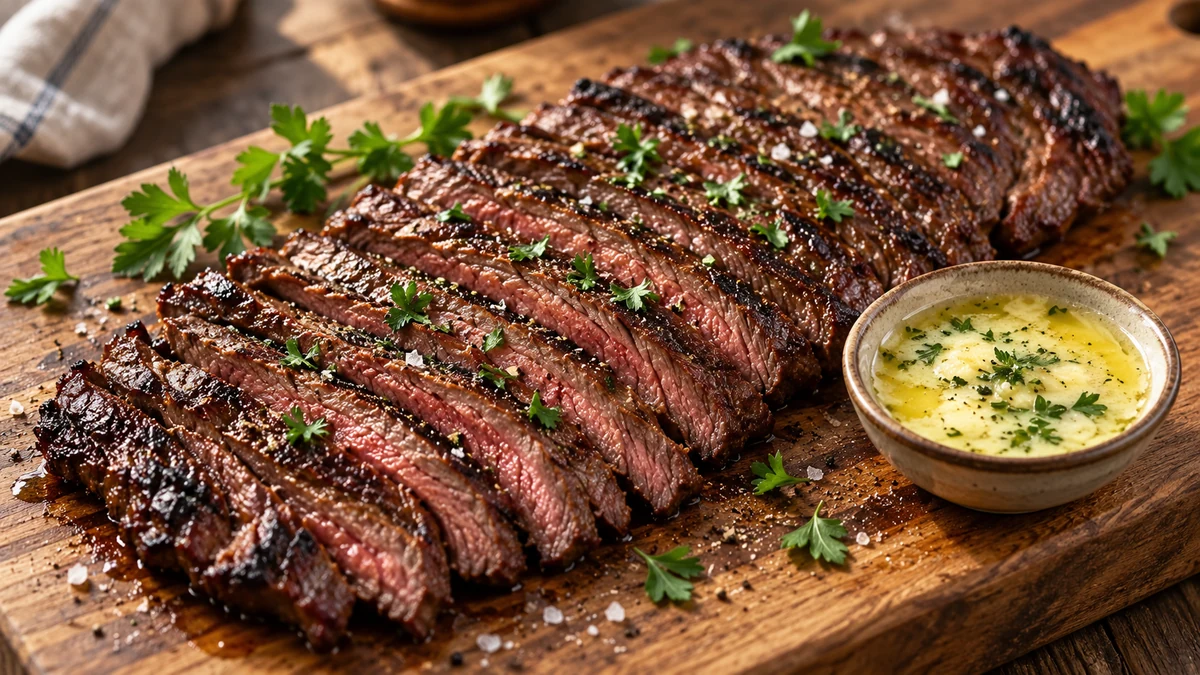
- Carve: remove all string or skewers and cut across the grain where possible into even slices that hold the filling. The grain direction can change across a tri-tip, so adjust the carving angle.
- Finish: spoon over thoroughly heated pan juices and add chopped herbs if desired. Serve promptly; a brief two-minute warming is not a dependable method for reheating chilled slices.
- Leftovers: cool quickly in smaller portions, cover and refrigerate within two hours. Eat within 48 hours or freeze; reheat only once until steaming hot throughout, including the filling.
Practical points: avoid overfilling and use a probe to check more than one central position. A relatively dry farofa is easier to handle, but it will absorb moisture inside the roast.
Variations on the stuffed roast
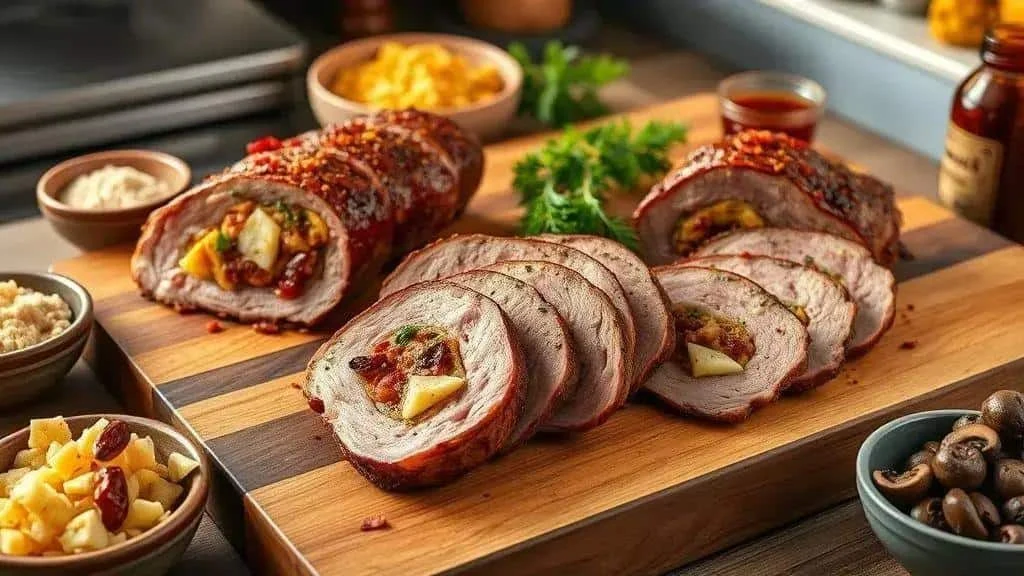
- Bacon and raisins: use the main filling of 100 g bacon, 2 cups cassava flour, 2 cooked eggs and an optional third-cup of raisins, with the onion, butter and herbs already listed.
- Provolone and herbs: add up to 150 g diced provolone and a little lemon zest if the joint has room. Mozzarella is another option; the extra cheese changes salt, moisture and allergens.
- Spicy calabresa: replace the bacon with about 150 g diced calabresa sausage, cooked as its label requires, and add chilli flakes to taste. Use the onion already in the filling rather than automatically adding another.
- Mushroom and cashew filling: replace the bacon with 200 g well-cooked mushrooms and add half a cup of chopped cashews. This changes the filling, but the beef dish is still not vegetarian. For vegetarian guests, prepare a separate meat-free main and use suitable ingredients throughout.
- Prunes or apricots: use about half a cup of chopped dried fruit instead of raisins and add a little nutmeg. Extra butter is not automatically necessary.
- Barbecue-style glaze: brush with about 3 tablespoons barbecue sauce or a suitable honey-and-mustard mixture near the end. Watch closely to avoid scorching and still check that the filling is thoroughly cooked.
Other filling ideas
- Cheese: provolone, mozzarella or a little blue cheese changes the flavour; adjust salt and check guests’ dietary requirements.
- Dried fruit and nuts: raisins, apricots, prunes, cashews or walnuts add contrasting textures. Tell guests when nuts are used.
- Savoury additions: cooked bacon, sausage or freshly cooked shredded chicken can be used with appropriate handling. Mushrooms make a meat-free filling only when prepared separately from the beef and other meat ingredients.
Choosing the farofa base
- Toasted cassava flour: 2 cups is the starting quantity for this large joint, but use only as much finished filling as fits comfortably. Keep any clean surplus separately.
- Toasted maize flour: suitable Brazilian flaked maize flour can replace some or all of the cassava flour for a different texture; it is not the same as cornflour used to thicken sauce.
- Toasted bread: 2 cups of small toasted bread pieces makes a bread-stuffing variation. It contains different allergens and absorbs moisture differently.
Cooking methods
- Conventional oven: use 180°C, or 160°C fan, and cook the meat and filling fully through. Shape and stuffing density matter as well as weight, so a fixed short timetable is unreliable.
- Covered barbecue: use a suitable indirect-heat roasting method and a probe, checking both meat and stuffing. A browned exterior does not establish that the middle is safe.
- Sous vide: do not use a generic low-temperature steak schedule for a stuffed joint. This recipe does not provide a validated sous-vide process; use the oven method unless following a specialist validated method for this exact preparation.
Serving suggestions
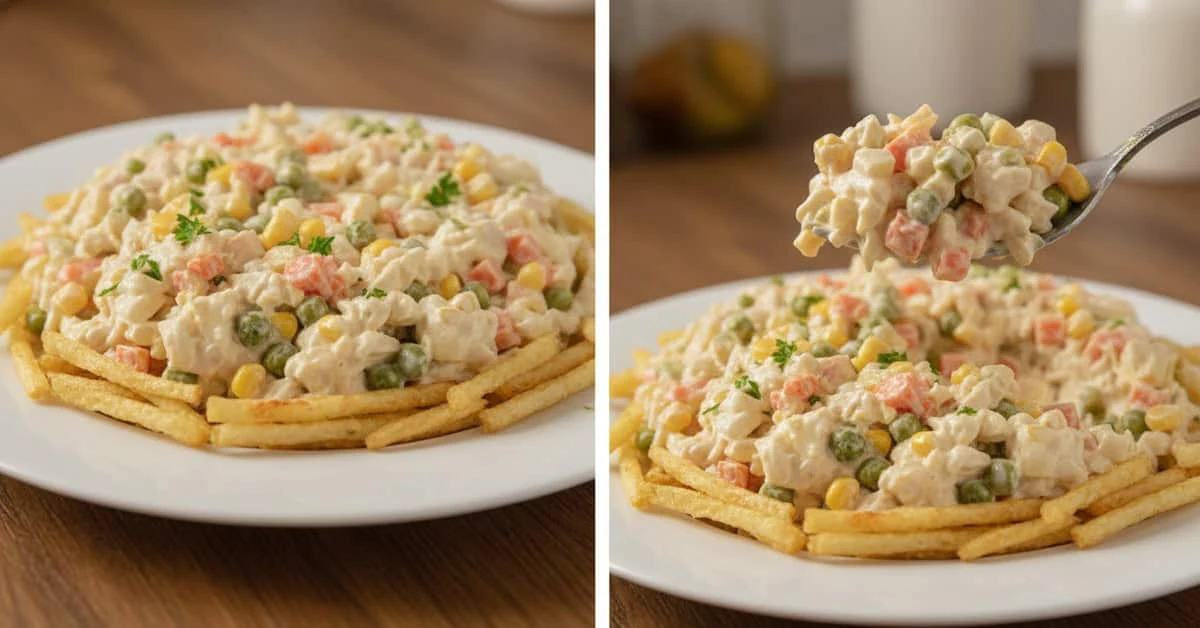
- Brazilian vinagrete: chopped tomato, onion and pepper dressed with vinegar and olive oil.
- Potato or cassava mash: a creamy side; cassava must be correctly prepared and cooked using a suitable method.
- Plain rice or biro-biro rice: the latter is a Brazilian rice dish often including bacon and eggs.
- Sauces: chimichurri, honey and mustard, or a red-wine sauce can be offered separately.
Texture: tender slices and toasted farofa
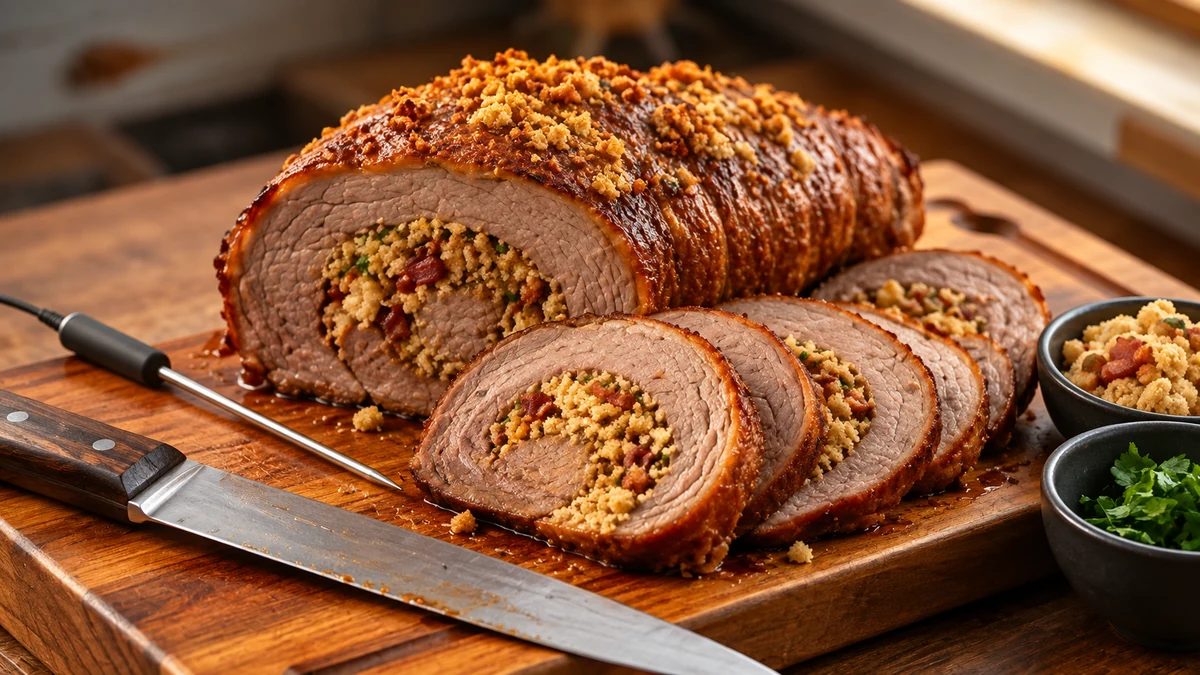
Careful cooking, a modest amount of filling and a short rest help produce neat slices. Farofa enclosed in the meat will absorb juices and become softer; crispness is easiest to preserve in a separate side portion.
Checking the centre
- Use a food probe: check the thickest meat and the middle of the stuffing. For this opened and filled joint, use 70°C for 2 minutes or an equivalent safe combination, not a rare-steak temperature.
- Do not rely on time alone: ovens, joint shape and stuffing depth vary. Check several central points with a clean probe.
- Rest after cooking: cover loosely for 10–15 minutes once safely cooked, then carve.
Browning and finishing
- Season ahead: allow 1–2 hours in the fridge, or up to about 8 hours within the use-by period, if convenient.
- Brown in a hot pan: turn the secured joint carefully to colour the outside. This builds flavour rather than creating a protective seal.
- Roast at moderate heat: the main setting of 180°C conventional or 160°C fan balances browning with heating the centre. Cover if the exterior is becoming too dark.
- Finish the crust: a short hotter finish or glaze can add colour, but monitor closely and use suitable cookware.
Toasting the farofa
- Toast gently: stir suitable cassava flour in a dry pan over moderate heat if it needs more toasting. Already-toasted flour can scorch quickly.
- Cool before stuffing: spread the filling shallowly and cool promptly; do not leave it on the counter for hours. Refrigerate if not using immediately.
- Add texture: thoroughly cooked bacon or toasted nuts gives contrast, with nuts clearly identified for guests.
- Balance the fat: the bacon may release enough fat that not all the butter is needed. The farofa should be crumbly, not greasy.
Common mistakes to avoid
- Turn with tongs: avoid unnecessary stabbing while moving the roast. A clean food probe is still needed to check its centre.
- Do not overfill: too much farofa makes closure difficult and can create a very dense centre that heats slowly.
- Watch the salt: account for bacon, cheese and olives. Taste the filling only before it contacts raw meat or after complete cooking.
- Reheat thoroughly: cover leftover portions and add a little stock or water if needed, but heat until steaming hot throughout rather than merely warm.
Expected texture: cooked beef surrounds a savoury, slightly softened filling. Serve separately toasted farofa if a crunchy contrast is important.
Sides and drinks for a festive meal
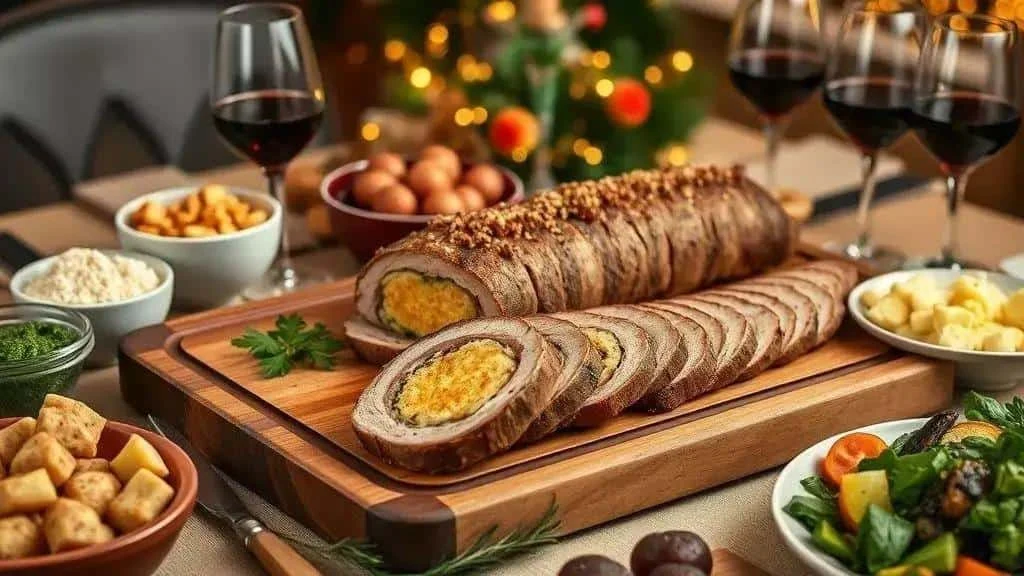
- Rice dishes: plain rice or biro-biro rice can accompany the farofa-stuffed tri-tip and its juices.
- Creamy sides: potato mash or safely prepared cassava mash offers a contrasting texture.
- Roast potatoes: rosemary and olive oil complement the savoury filling.
- Roasted or grilled vegetables: carrots, courgettes and asparagus bring colour to the plate.
- Fresh salads: tomato, onion and pepper vinagrete, or a leaf salad, balances the rich meat.
- Extra farofa and sauce: offer a clean, separately prepared portion of toasted farofa and sauces on the side.
- Meat-free guests: provide a separate main using mushrooms, aubergine or grains and suitable ingredients, prepared with clean utensils away from raw meat.
Portions and serving
- Portion planning: around 180–220 g cooked beef per adult may suit a substantial meal, with smaller portions at a varied buffet. Allow for cooking losses and the added filling rather than assuming raw weight equals served weight.
- Serve promptly: carve after resting and bring to the table. If hot-holding for a buffet, food must remain at 63°C or above; a 55–65°C range is not a reliable holding standard.
- Sauces: heat hot sauces thoroughly and maintain safe serving conditions. An insulated jug alone does not prove the temperature remains safe.
- Extra farofa: offer a modest side portion because the roast already contains filling. A half-cup per person is a generous optional serving, not an additional amount built into the main recipe.
Drinks
- Red wine: Malbec, Merlot or Cabernet Sauvignon can be optional pairings for adults who drink alcohol.
- Beer: a lager or amber ale offers a different pairing.
- Alcohol-free choices: grape juice, iced tea with lemon or sparkling water with citrus.
- Festive alternatives: a citrus drink or sparkling wine can suit the occasion; include an alcohol-free option.
Presentation
- Carve across the grain: remove all ties first and adjust direction where the muscle fibres change.
- Arrange on a platter: overlap slices slightly and serve extra farofa in a separate bowl with the chosen sides.
- Finish simply: add chopped herbs and a little lemon zest if desired.
- Make serving easy: provide serving utensils and small bowls of sauces so guests can choose.
Organise the table: separate mains, sides, salads and drinks, allowing space for serving without leaving perishable food out unnecessarily.
Storage and using leftovers
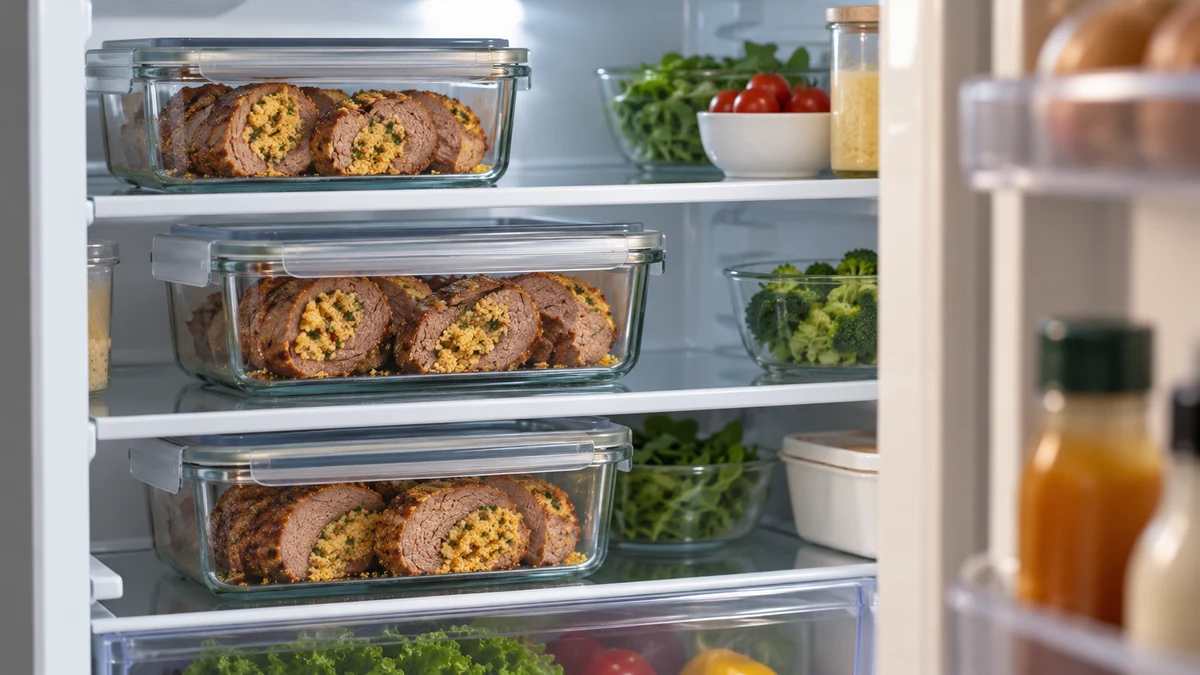
Cool promptly: divide leftover beef and filling into smaller portions and refrigerate covered within two hours of cooking.
Storage times
- Fridge: keep at 5°C or below and eat within 48 hours, following any shorter ingredient limit.
- Freezer: freeze promptly once cooled if not using soon. About three months is a quality guide, not a way to rescue food stored unsafely beforehand.
- Defrosting: thaw in the fridge until fully defrosted; large portions can take longer than 24 hours. Use within 24 hours after defrosting and do not thaw on the counter.
Packaging
- Individual portions: smaller portions cool and reheat more evenly and reduce waste.
- Containers: use suitable covered food containers or freezer bags, removing excess air where practical.
- Label: record the contents and date; reheating does not restart the storage clock.
Reheating without drying out
- Oven: cover portions loosely and heat at a moderate setting until both meat and filling are steaming hot throughout. A fixed 15–25 minutes is not dependable for every thickness.
- Slices: spread in a shallow dish with a little moisture, cover and heat through. Check the filling as well as the meat rather than using an eight-minute rule.
- Pan: warm with a little water or stock, covered if useful, turning gently and continuing until hot throughout.
- Microwave: use a microwave-safe cover, arrange pieces evenly and turn or stir where possible. Follow standing-time guidance and check for cold spots. Reheat only once.
Bringing back some crunch
- Store the separate side separately: keep clean extra farofa apart from the roast. Farofa from inside the cooked joint must be handled as a meat-containing leftover.
- Heat and toast: spread in a pan or shallow ovenproof dish and stir gently. Ensure leftovers are hot throughout before considering the surface crisp enough.
- Add crunch at serving: a few freshly toasted nuts or suitable toasted maize flakes can provide texture; check allergens.
Ideas for leftovers
- Hot sandwich: reheat thin beef slices and filling fully before adding to bread with cheese and leaves. Melted cheese alone does not show that the meat is hot enough.
- Rice bake: use safe leftovers with rice, vegetables and cheese, then heat thoroughly. Cooked rice needs quicker cooling, ideally within one hour, and use within 24 hours in the fridge; the shortest storage limit applies.
- Salad: use safely stored cooked beef cold, or reheat it fully once before adding to leaves and tomatoes. Avoid merely warming chilled meat.
- Omelette: heat chopped leftover meat and filling through before adding egg, and cook the completed dish appropriately.
- Pie filling: use the meat and farofa in a suitable pie recipe, checking that the middle is steaming hot rather than judging only the pastry.
Reducing waste
- Portion early: cool and freeze quantities suited to your household instead of repeatedly warming a large joint.
- Plan ahead: use refrigerated leftovers within 48 hours or freeze promptly. Do not keep reheating the same batch in successive dishes.
- Heat evenly: a suitable check is 70°C for 2 minutes at the coldest part, or an equivalent safe time–temperature combination. Reheat only once.
Enjoy your festive roast
Careful filling, thorough cooking and thoughtful carving produce a flavourful farofa-stuffed tri-tip roast. Add separately toasted farofa for crunch and choose sides to suit your guests.
Share your results on our social pages and visit I Love Christmas for more festive recipes and ideas.
FAQ — Farofa-Stuffed Tri-Tip Roast
Which beef cut should I choose?
Ask for a whole maminha or suitable tri-tip joint that can be butterflied and rolled. A butcher can help with the cut and preparation; the exact British equivalent depends on how the beef has been butchered.
How long should I marinate it?
One or two hours adds flavour; up to about eight hours in the fridge is an option within the meat’s use-by period. Keep it covered and separate from ready-to-eat food.
Will the filling stay crunchy?
It will soften as it absorbs meat juices. Start with a cooled, crumbly farofa and avoid excess fat, but serve a clean separate toasted portion if you want a reliably crunchy side.
How do I check that the roast is cooked?
Use a clean probe in both the thickest meat and the centre of the stuffing. Because the meat is opened and filled, it must cook through: 70°C for two minutes or an equivalent safe combination is suitable. Do not use a rare-steak target.
How do I store and reheat leftovers?
Cool in smaller portions and refrigerate within two hours at 5°C or below. Eat within 48 hours or freeze promptly. Reheat once until steaming hot throughout, including the filling, using a little stock and a cover if needed to reduce drying.