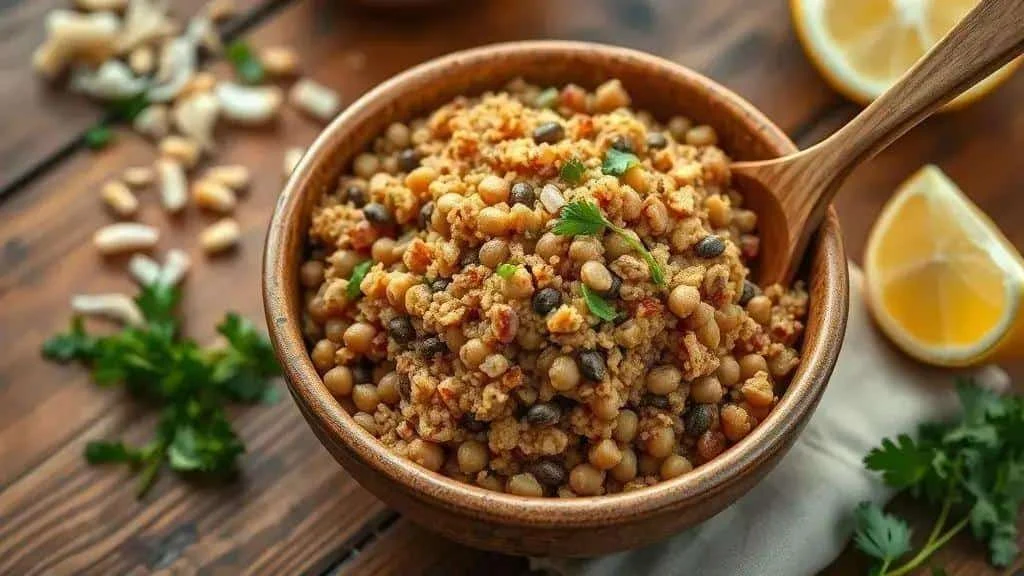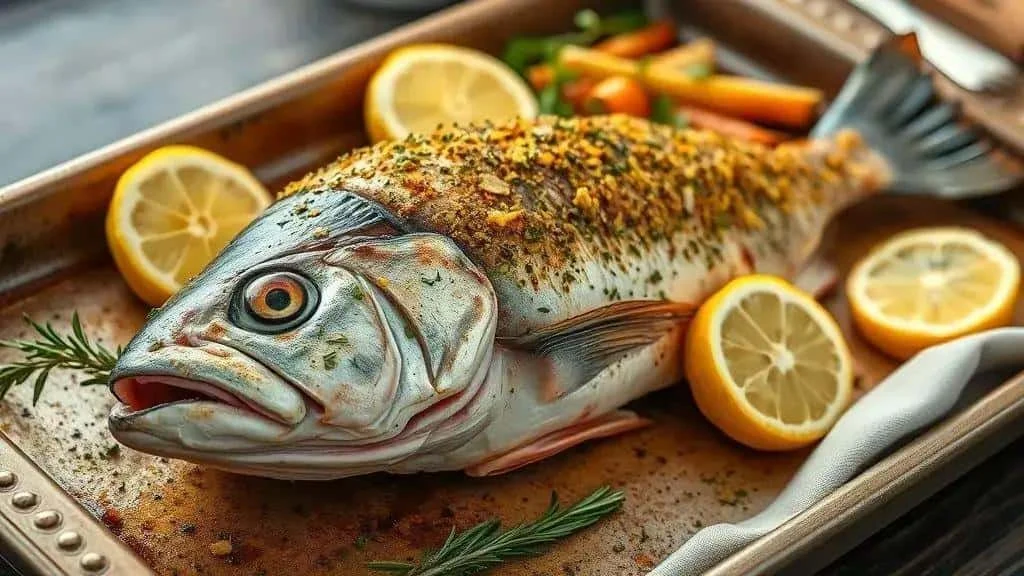
Herb-crusted baked fish pairs a golden breadcrumb topping with parsley, thyme, rosemary and lemon. This guide covers preparing a whole fish or fillets, checking that the fish is cooked through, adapting the crust and choosing side dishes for a festive meal.
Herb-crusted baked fish makes a colourful centrepiece for a Christmas meal. Fresh herbs and olive oil complement the fish without needing a complicated sauce. Choose fillets for easier portioning or a whole fish for serving at the table.
Ingredients for herb-crusted baked fish
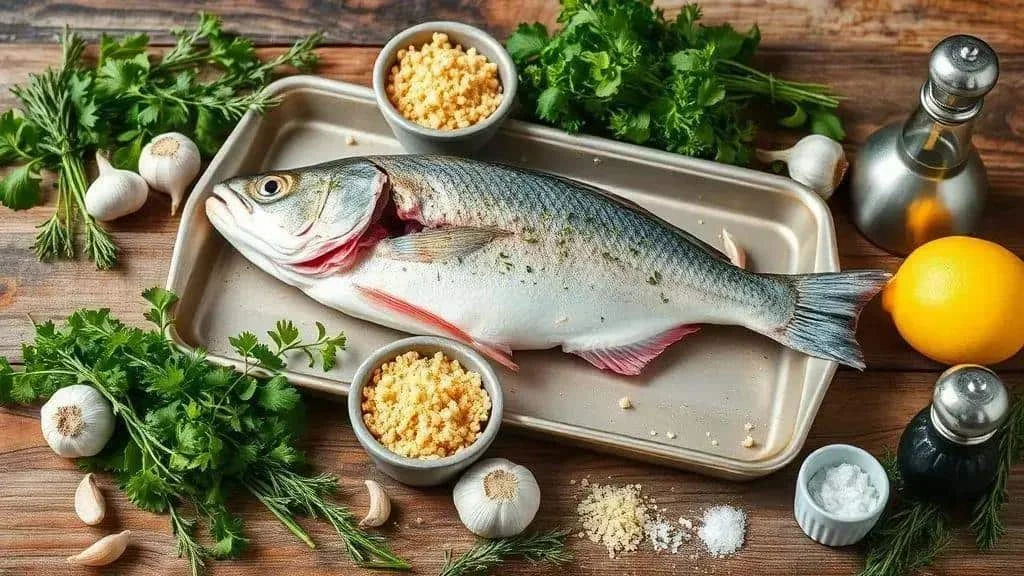
Ingredients for herb-crusted baked fish — enough topping for four substantial fillets or a whole fish, with simple substitutions. A whole fish gives less edible flesh than the same weight of fillets.
Ingredients
- 1 kg whole fish, such as sea bass or sea bream — cleaned, scaled and gutted by your fishmonger; alternatively, use 4 fillets weighing 200–250 g each.
- 120 g panko breadcrumbs — ordinary dried breadcrumbs or crushed plain savoury crackers also work, although the texture and salt content will differ.
- 30 g fresh parsley, chopped — coriander is an alternative if you enjoy its more distinctive flavour.
- 2 tablespoons fresh thyme leaves — use less dried thyme, adding to taste; fresh oregano is another option.
- 1 tablespoon finely chopped fresh rosemary — discard the woody stems; tarragon gives a different, gentler flavour.
- 3 garlic cloves — finely chopped or crushed; use about 1 teaspoon garlic granules as an alternative.
- Zest and juice of 1 lemon — reserve the zest for the crust and use the juice for seasoning and serving.
- 3 tablespoons olive oil — for the crumb mixture; melted butter can replace some or all of it.
- 25 g grated Parmesan, optional — adds savoury flavour; substitute pecorino or leave it out.
- Up to 1 teaspoon coarse salt, to taste — start with less, particularly when using salty cheese or crackers. Fine salt measures differently by volume.
- ½ teaspoon ground black pepper, or to taste — white pepper is an alternative.
- 1 tablespoon Dijon mustard, optional — spread over the fish to help the crust adhere; plain yoghurt gives a milder alternative. These introduce mustard or milk allergens respectively.
- A little extra oil or butter for the baking tray — use only enough to prevent sticking, or suitable baking parchment.
Servings and practical notes
Four fillets provide four portions. A 1 kg whole fish has a lower edible yield because of its head and bones; ask your fishmonger whether it will suit your guests and side dishes. Fillets generally cook faster. For a gluten-free crust, use labelled gluten-free breadcrumbs or ground almonds, noting the nut allergen.
How to make herb-crusted baked fish
- Heat the oven and prepare the tray: preheat to 200°C conventional or 180°C fan. Lightly grease a large baking tray or line it with baking parchment suitable for that temperature.
- Dry and season the fish: pat the prepared whole fish or fillets dry with kitchen paper. Season with salt and pepper to taste and a little of the lemon juice. Keep the lemon zest for the crumb mixture.
- Mix the crust: combine 120 g panko, 30 g parsley, the thyme, rosemary, garlic, lemon zest, optional 25 g Parmesan and 3 tablespoons olive oil. The crumbs should be lightly moistened rather than soaked. Keep the mustard separate for the next step.
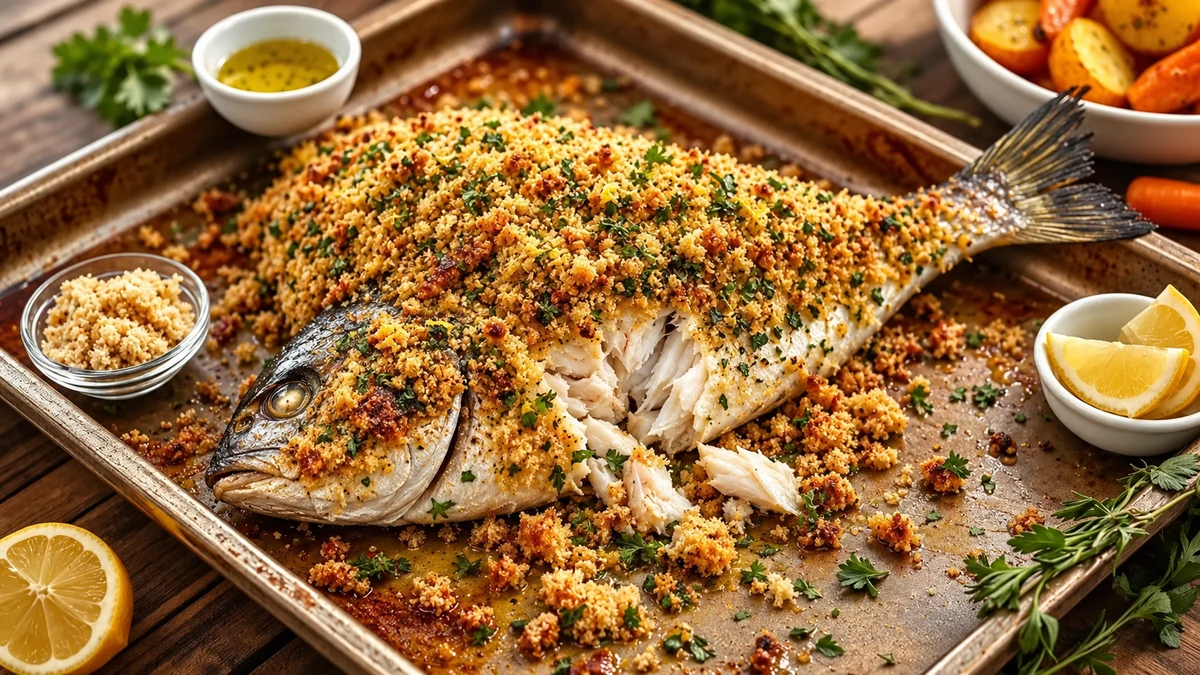
- Apply the topping: spread the optional mustard thinly over the upper surface. Press on the crumbs. Place skin-on fillets skin-side down and coat the exposed flesh; with a whole fish, press the crust over the upper side. Do not force crumbs into deep cuts or the cavity.
- Bake until cooked through: as a starting guide, 200–250 g fillets may take 12–18 minutes and a whole fish of about 1 kg may take 25–35 minutes. Thickness, starting temperature and oven performance matter more than weight alone. The flesh should be opaque and separate easily into flakes; use a clean probe to check the thickest part when possible.
- Brown the crust if needed: a brief finish under a hot grill can add colour. Watch constantly and stop before the herbs burn. Use grill-safe cookware and remove any baking parchment before grilling.
- Finish and serve: allow a brief 3–5 minute rest, then add lemon juice and a few fresh herbs. Serve promptly while the crust is crisp.
- Check the centre: follow the Food Standards Agency’s thorough-cooking guidance: 70°C for 2 minutes, or an equivalent safe time–temperature combination. Insert a clean probe into the thickest flesh, away from bones. A browned topping alone does not show that the fish underneath is ready.
Tips and substitutions
- Gluten-free: use labelled gluten-free breadcrumbs or ground almonds, and check the other ingredients. Almonds introduce a nut allergen.
- Dairy-free: omit the cheese, use olive oil instead of butter and avoid a yoghurt coating. Check the breadcrumbs and other labels. The dish still contains fish and is not vegan.
- Thicker fillets: allow extra time and check the centre; there is no fixed number of additional minutes that suits every piece.
- Alternative herbs: try coriander instead of parsley for a bolder flavour, or tarragon for an aniseed note.
- A buttery crust: replace 1 tablespoon of the olive oil with melted butter, rather than automatically adding extra fat. Press the crumbs on gently.
- Serving: offer lemon wedges, roasted vegetables or a fresh salad alongside.
Variations on herb-crusted baked fish
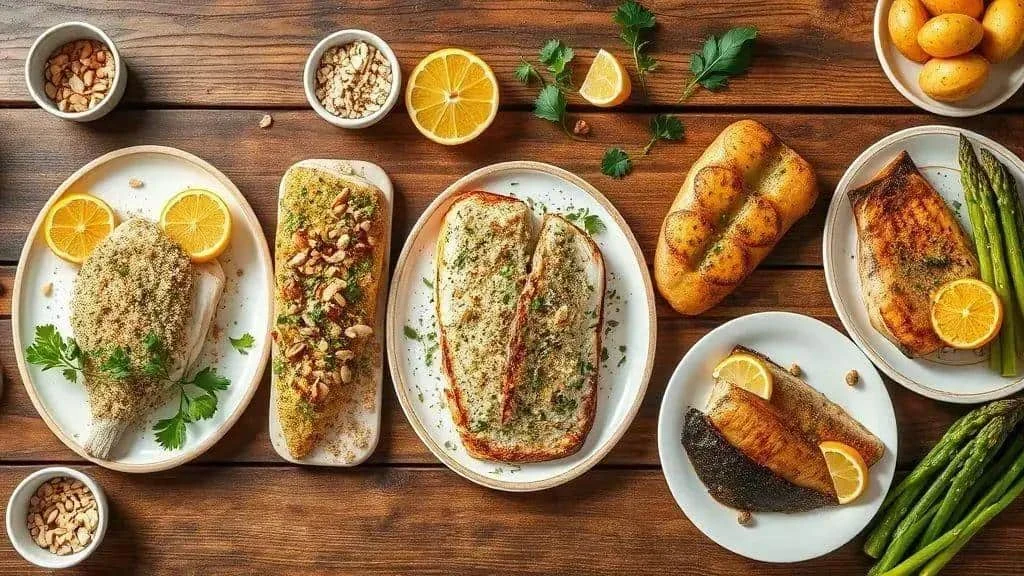
Adapt herb-crusted baked fish with one of these alternative toppings. Use a variation instead of the main crumb mixture, rather than adding every set of ingredients together.
Lemon and parsley crust
A simple topping for white fish. Mix the following, adding just enough oil for the crumbs to cling together:
- 120 g panko breadcrumbs
- Zest of 1 lemon
- 2 tablespoons chopped parsley
- 1 tablespoon olive oil to start, with a little more if needed
- 1 garlic clove — finely chopped
Try orange zest for a sweeter citrus aroma. Ordinary dried breadcrumbs can replace panko, although they make a denser topping.
Crunchy gluten-free topping
For a breadcrumb-free alternative, combine these ingredients and check all labels for your dietary needs:
- 100 g ground or finely chopped almonds
- 2 tablespoons crushed sunflower seeds
- 1 tablespoon olive oil
- Salt to taste
Lightly toasting the almonds first deepens their flavour, but watch closely because they can burn during baking. For a less dense mixture, combine equal volumes of gluten-free panko and ground almonds. This topping is unsuitable for anyone with an almond allergy.
Parmesan and walnut crust
A richer topping for a special meal:
- 90 g panko breadcrumbs
- 25 g grated Parmesan
- 30 g walnuts or pecans, lightly toasted and finely chopped
- 2 tablespoons melted butter
- 1 tablespoon chopped parsley
Pecorino gives a stronger cheese flavour. Almonds or pistachios change the texture, but remain nut ingredients; none is an allergy-safe replacement for the others.
Pan-started fish with an oven-finished crust
For a crisp skin and a crumb topping, start the fish in a frying pan and finish it in the oven:
- Choose firm skin-on fillets of roughly 200–250 g each for easier handling.
- Cook skin-side down first in a lightly oiled, ovenproof frying pan. Add the crumb mixture to the upper flesh side before transferring to the oven.
- Avoid flipping the crumb-coated side into the pan: the topping may break off or burn. Keep the heat controlled and finish cooking through in the oven, checking the centre rather than relying on a fixed frying time.
- If the crust colours too quickly, finish at a gentler oven setting, such as 180°C conventional or 160°C fan, and shield the top loosely if necessary. Continue until the fish is thoroughly cooked.
Use cookware with an oven-safe handle and protect your hands when it comes out. A lightly oiled heavy pan is easier to manage than an open grill for this crumb topping.
Flavour ideas from different cuisines
Small changes can give the crust a different character:
- Mediterranean-inspired: add 1 tablespoon finely chopped capers and a little lemon juice to the herb crumbs. Start with less salt and avoid making the mixture wet.
- Miso and ginger: for a small alternative seasoning mixture, combine 1 tablespoon white miso, 2 tablespoons panko, grated ginger to taste and chopped coriander. Spread thinly; scale to the fish you are using. Miso is salty and commonly contains soya, and some varieties contain gluten.
- Brazilian-inspired crunch: replace part of the panko with an equal volume of toasted cassava flour or plain farofa. Cassava flour for farofa is not the same as tapioca starch. Check seasoned farofa for salt and allergens.
Practical notes and pairings
- Cooking time: adjust for the thickness and form of the fish. Fillets usually cook considerably faster than a whole fish.
- Internal temperature: check the thickest part with a clean probe and use 70°C for 2 minutes, or an equivalent safe combination. Do not use the colour of the crust as the only test.
- Side dishes: roasted vegetables, mash or a citrus salad balance richer toppings.
Choosing and preparing the fish
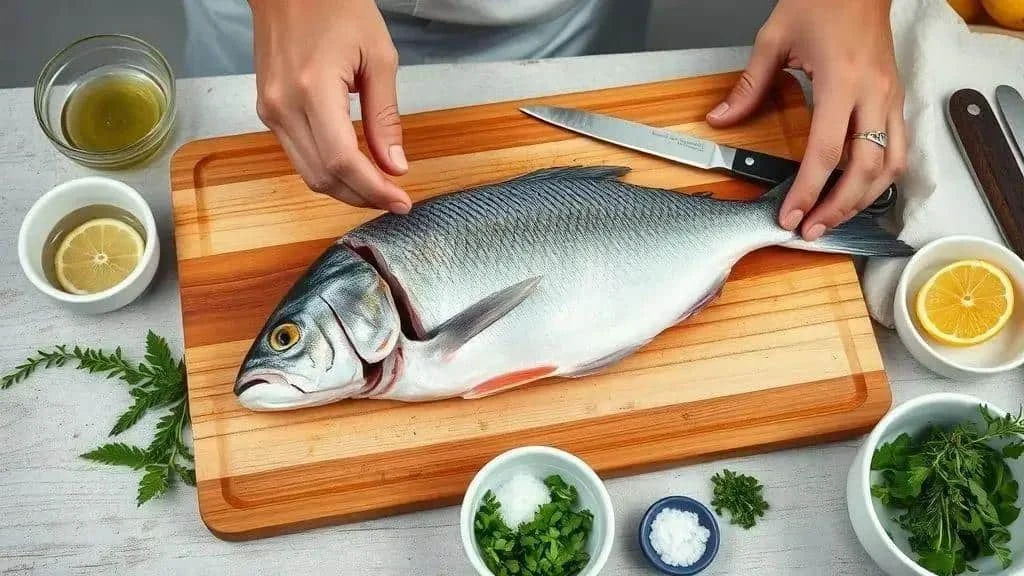
Good preparation helps herb-crusted baked fish cook evenly and keeps the topping in place. Buy from a reputable supplier and follow storage and use-by instructions.
Choosing fish
- Suitable choices: sea bass or sea bream work as whole fish; cod, haddock and other firm white-fish fillets are practical alternatives. Tilapia can also be used where available.
- Appearance: clear eyes, fresh-looking gills and intact skin can indicate quality in a whole fish, but appearance alone cannot establish food safety.
- Smell: reject fish with an unpleasant or ammonia-like odour. A normal smell does not override a use-by date or poor storage.
- Texture: firm flesh is a useful quality sign. Let the fishmonger handle and assess unpackaged fish rather than repeatedly touching it.
- Whole fish or fillets: whole fish makes an attractive centrepiece; fillets are easier to portion and check for bones.
- Frozen fish: choose intact packaging and follow its defrosting instructions. Defrost in the fridge and use within 24 hours of fully defrosting, unless the label gives a shorter limit.
- Portion planning: the recipe allows 200–250 g raw fillet per person. Whole-fish weight includes bones and the head, so it cannot be treated as the same quantity of edible fish; ask your fishmonger for guidance.
Cleaning and preparation
- Prepare the work area: wash your hands and use a clean board, knife and fish-bone tweezers. Keep raw fish away from salads and other ready-to-eat food.
- Scaling a whole fish: ask the fishmonger to do this before you take it home. Check for remaining scales and remove them carefully without spreading splashes around the kitchen.
- Gutting: buy the fish fully gutted and inspect the cavity before cooking. If it has not been prepared, ask a fishmonger to do so rather than leaving the innards in place.
- Check the cavity: remove any remaining blood or loose debris carefully. Clean and disinfect the sink and surrounding surfaces afterwards if they have come into contact with raw fish.
- Check fillets for pin bones: run clean fingers gently along the flesh and use fish-bone tweezers to pull out any bones you find.
- Pat dry: use kitchen paper and discard it immediately. A dry surface helps the mustard and crumbs adhere.
- Optional brining: this recipe does not need a brine. If you choose to use one, follow a reliable recipe matched to your fish and keep it refrigerated; reduce the later seasoning accordingly. Brining does not replace thorough cooking.
Seasoning and a short marinade
Use seasoning to complement the herbs rather than overwhelm the fish.
- Salt: season lightly just before cooking, especially if the topping contains cheese, crackers, capers or miso. Different salt crystals do not measure equally by the teaspoon.
- Acidity: lemon juice or a little mild vinegar works well as a finishing touch. A short refrigerated marinade adds flavour, but too much acid changes the texture. Acid does not make raw fish safely cooked.
- Alternative seasoning base: a little olive oil, lemon zest, crushed garlic, salt and pepper can replace the seasoning in the main method. Do not add another full quantity of zest, oil and salt on top of those already measured for the recipe.
- Fresh herbs: chop parsley, thyme and rosemary finely and remove woody stalks so that the flavour is evenly distributed.
Food safety and storage
- Keep chilled: leave the fish in the fridge until you are ready to prepare it. Work promptly rather than using room-temperature standing time as part of the recipe.
- Storage: follow the supplier’s use-by date and storage instructions, using fresh fish promptly. Freeze before the use-by date if it is suitable for freezing and you will not use it in time.
- Hygiene: wash hands and clean and disinfect utensils and surfaces after handling raw fish. Do not reuse raw-fish crumbs or marinade as a ready-to-eat garnish.
- Cooking: the flesh should be opaque and flake easily. Where using a probe, check for 70°C for 2 minutes, or an equivalent safe time–temperature combination, at the thickest point.
Side dishes and festive serving ideas
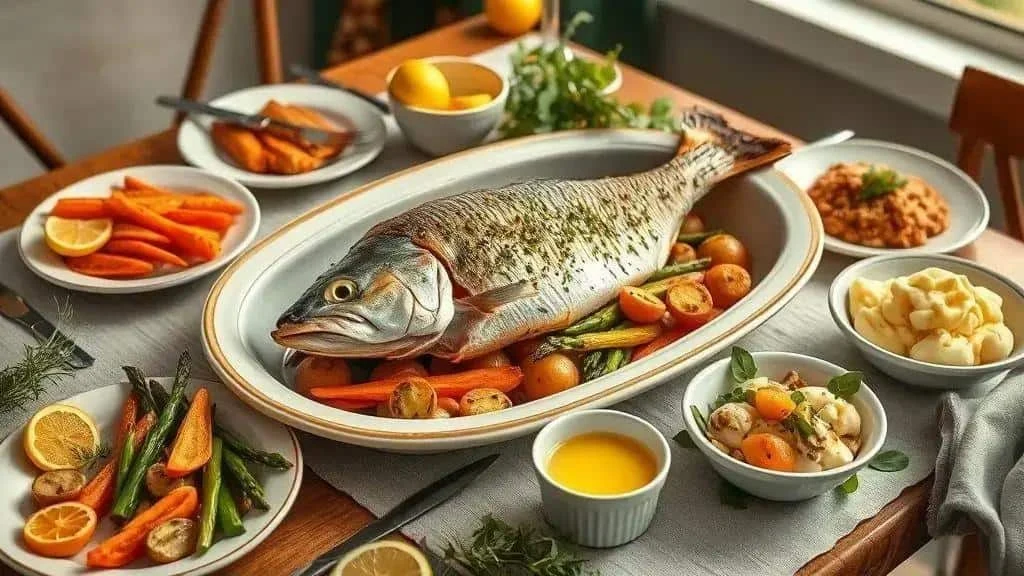
Side dishes and serving ideas to complement the flavour and texture of herb-crusted baked fish.
Side dishes
- Roasted vegetables: allow roughly 150–200 g per person of carrots, asparagus or small potatoes. Season with oil, salt and pepper, and start slower-cooking vegetables before the fish.
- Potato or cauliflower mash: about 150 g per person makes a useful side. Butter and milk add richness, while stock gives a dairy-free alternative if the label is suitable. Brazilian mandioquinha, or arracacha, gives a sweeter mash where available.
- Citrus salad: combine mixed leaves, orange segments, thinly sliced red onion and optional toasted walnuts. Around 200 g leaves serves four as a side; dress with lemon vinaigrette just before serving.
- Herby rice: lemon and herb rice absorbs the fish juices. A cup of dry rice makes roughly four side portions, depending on the rice and appetites; follow the packet’s cooking instructions.
- Farofa: offer a small bowl of toasted cassava flour with herbs for a Brazilian festive touch. Check every ingredient if a gluten-free version is needed.
Sauces and finishing touches
- Lemon butter: melt 50 g butter and add lemon juice to taste, up to the juice of half a lemon, with a little zest. Serve separately.
- Yoghurt and herb sauce: mix ½ cup plain yoghurt with dill or parsley, lemon juice and a little salt. Keep chilled until serving.
- Caper dressing: combine olive oil, chopped capers and lemon juice. Taste before adding salt, particularly with a Parmesan crust.
Presentation and serving
- Place the fish in the centre of a platter with colourful vegetables alongside rather than covering the crisp topping.
- Add lemon wedges and a few fresh herb sprigs just before taking the dish to the table.
- Serve sauces separately so that guests can add their own without softening everyone’s crust.
- Portion carefully at the table: lift the flesh from a whole fish and check for bones, especially when serving children. Fillets also need a final bone check.
Planning ahead
- Prepare components ahead: mix the clean crust ingredients and refrigerate for up to 24 hours, keeping them away from raw fish. Cooked vegetables or mash should be cooled and refrigerated within 2 hours, used within 48 hours and reheated only once until steaming hot throughout.
- Bake close to serving time: plan around the thickness and type of fish rather than assuming every dish will be ready in 20–30 minutes. Serve as soon as it is cooked and briefly rested.
- Organise the table: have garnishes ready and chilled sauces in the fridge. Warm the serving platter if appropriate, but do not use it as a substitute for safe hot holding.
Drinks to serve alongside
- White wine: for adults who drink alcohol, Sauvignon Blanc or Verdejo can complement a lemon and herb crust.
- Fuller-bodied white wine: a lightly oaked Chardonnay can suit a richer Parmesan and nut topping.
- Alcohol-free choices: sparkling water with lemon, chilled herbal tea or a gentle homemade lemonade also work well.
A fresh centrepiece for the table
Herb-crusted baked fish brings together crisp crumbs, fresh herbs and tender fish in a dish that suits both a family meal and a festive table.
Choose one topping, adjust the herbs to your taste and keep the sides simple. Careful cooking and a final check for bones matter more than an elaborate presentation.
Thank you for reading. Follow our social channels for more recipes and visit the I Love Christmas blog for more festive inspiration.
Herb-crusted baked fish: frequently asked questions
What oven temperature and cooking time should I use?
Start at 200°C conventional or 180°C fan. As a guide, 200–250 g fillets may take 12–18 minutes and a 1 kg whole fish 25–35 minutes, but thickness and oven performance vary. Check that the fish is cooked through; with a probe, use 70°C for 2 minutes or an equivalent safe combination.
How do I make the crust stick to the fish?
Pat the fish dry, spread a thin layer of the optional mustard over the upper surface and gently press on the moistened crumbs. Place skin-on fillets skin-side down and coat the flesh. Keep the topping reasonably even rather than piling it too thickly.
What can I use instead of panko, including for a gluten-free version?
Try labelled gluten-free breadcrumbs or cornflakes, or ground almonds and finely chopped nuts. Check all other ingredients and remember that nuts introduce a separate allergen. Adjust the oil so that the topping is lightly moistened, not greasy.
Can I prepare the fish and crust ahead?
Mix the clean crust ingredients up to 24 hours ahead and refrigerate separately from raw fish. Keep the fish chilled and follow its use-by instructions. Season and add the topping shortly before baking for a crisper result.
How can I make the flavour milder?
Use less garlic, leave out the Parmesan and choose mainly parsley with a little thyme. Serve lemon separately. When serving children, check carefully for bones and consider the allergens in the topping and sauce.
How should I store and reheat leftovers?
Cool and refrigerate leftovers within 2 hours and use within 48 hours, or freeze promptly. Reheat only once until steaming hot throughout. An oven can help the crust recover some crispness, but a few minutes at a set temperature does not guarantee that the centre is hot. Defrost frozen portions in the fridge and use within 24 hours of fully defrosting.