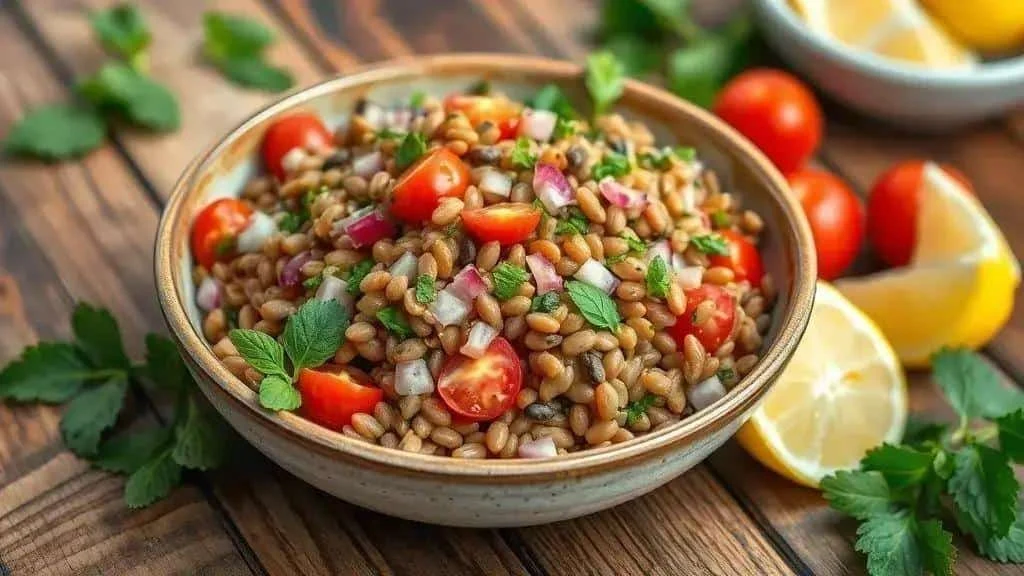
Lentil salad with mint combines tender lentils, fresh herbs, tomatoes and a lemon dressing. Serve it as a starter, side dish or part of a light lunch. Add optional feta, choose a suitable vegan alternative or leave the cheese out; keep delicate herbs and dressing separate when preparing ahead.
Lentil salad with mint brings fresh flavour and contrasting textures to a simple meal. The method below helps you cook the lentils without turning them mushy and balance the dressing to your taste.
Ingredients for lentil salad with mint
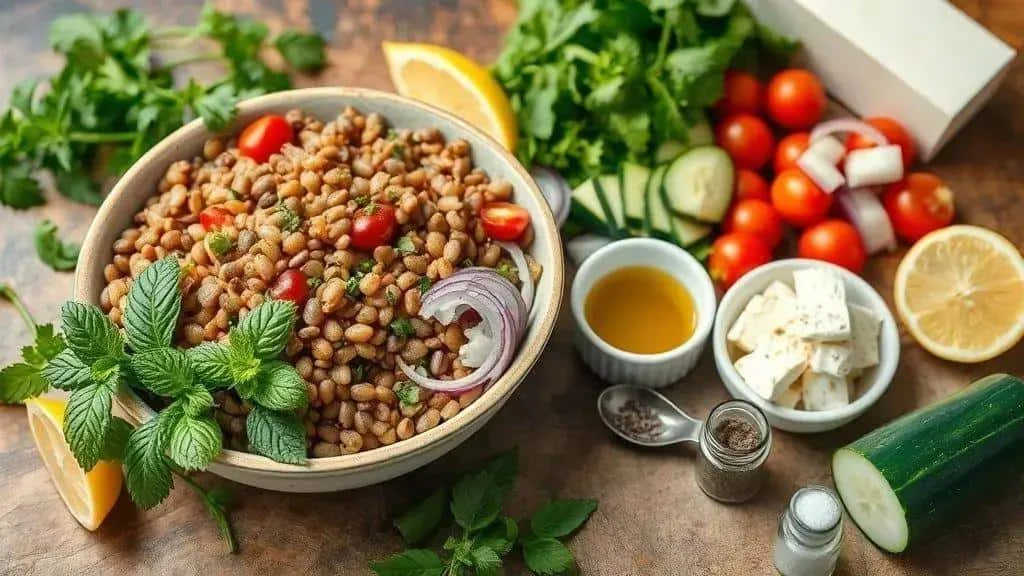
For roughly four side portions of lentil salad with mint, gather the following ingredients:
Ingredients
- 200 g dried green or brown lentils — cook until tender, then drain. For a quicker, somewhat smaller batch, use about 400 g drained ready-cooked lentils and adjust the dressing; cooked yield from dried lentils varies.
- 3 tablespoons extra virgin olive oil — avocado oil is an alternative.
- 2 tablespoons lemon juice, then more to taste — the juice yield of a lemon varies. Alternatively, start with 1 tablespoon white wine vinegar and adjust.
- ½ medium red onion — thinly sliced or finely diced; spring onion gives a different flavour.
- 200 g cherry tomatoes — halved; use chopped larger tomatoes if preferred.
- 1 small cucumber, optional — deseeded and diced for crunch.
- About 15 g fresh mint leaves — roughly chopped, with a few whole leaves reserved for serving.
- About 10 g fresh parsley — chopped; coriander gives a different aroma.
- 100 g feta, optional — crumbled. For a vegan version, omit it or use 120 g marinated firm tofu suitable for eating without further cooking.
- Up to 1 teaspoon ground cumin, optional — start with less if you prefer a delicate flavour.
- Salt to taste — add sparingly, especially with feta.
- Freshly ground black pepper — to taste.
Practical tip: pick over and rinse dried lentils before cooking. About three volumes of water to one of lentils is a starting guide, but follow the packet and add more water if needed. Drain once tender but still intact.
How to make lentil salad with mint
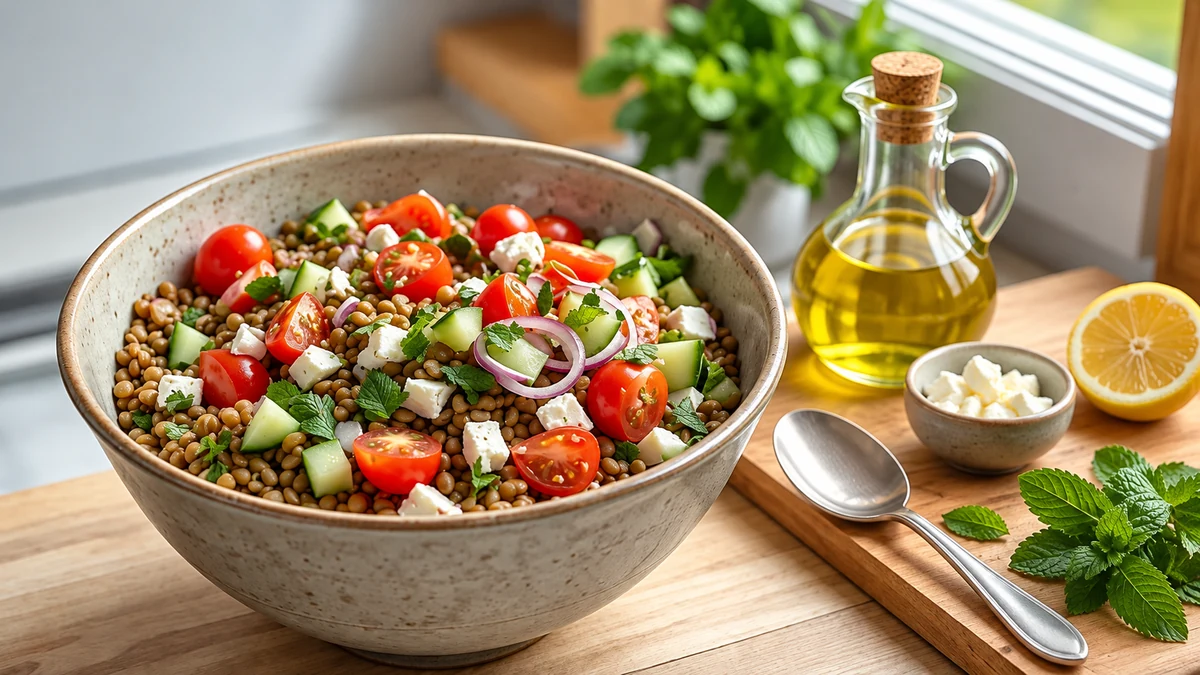
- Rinse the lentils: pick over 200 g dried lentils, removing stones or debris, then rinse in a sieve under cold running water.
- Cook until tender: put the lentils in a saucepan with enough water according to the packet, starting with around 750 ml if suitable. Add an optional bay leaf. Simmer gently, checking for tenderness; many varieties take around 20–30 minutes, but some need longer.
- Drain and cool: drain well, discard any bay leaf and spread the lentils in a clean shallow dish. Cool promptly so they will not wilt the herbs, and refrigerate within 2 hours if not serving immediately.
- Prepare vegetables and herbs: wash the produce, halve the tomatoes, slice or dice the onion, dice the optional cucumber, and chop the mint and parsley with clean utensils.
- Make the dressing: whisk 3 tablespoons olive oil with 2 tablespoons lemon juice, optional cumin and a little salt and pepper. Taste before adding more lemon or salt.
- Combine: once the lentils are cool enough not to wilt the herbs, fold in the vegetables, mint and parsley. Add about half the dressing first and mix gently.
- Adjust the flavour: add more dressing as needed, then check the lemon, pepper and salt. You may not need all the dressing if using fewer cooked lentils.
- Add the optional cheese or tofu: fold in 100 g crumbled feta or 120 g suitable marinated firm tofu. Check tofu preparation instructions and choose vegetarian-rennet cheese if that matters to your guests.
- Chill briefly: 15–30 minutes in the fridge lets the flavours mingle. Keep chilled until close to serving rather than leaving the salad standing warm.
- Serve: finish with the reserved mint leaves. Offer mixed leaves or rustic bread alongside if desired.
- Storage: refrigerate promptly in a covered container and use within 48 hours of cooking the lentils, or sooner if an ingredient’s label requires it. Store dressing and delicate herbs separately when preparing ahead for better texture.
Practical tips
- Avoid overcooking: stop when the lentils are tender throughout but still hold their shape.
- Tinned lentils: drain and rinse as directed, and taste before salting the dressing.
- Dietary variations: chickpeas add another texture. For a vegan version omit feta or use a suitable alternative. Gluten-free requirements need separate label checks; removing feta is not what makes a dish gluten-free.
- Crunch: add toasted walnuts or sunflower seeds just before serving, taking account of allergies.
Cooking and storing lentils
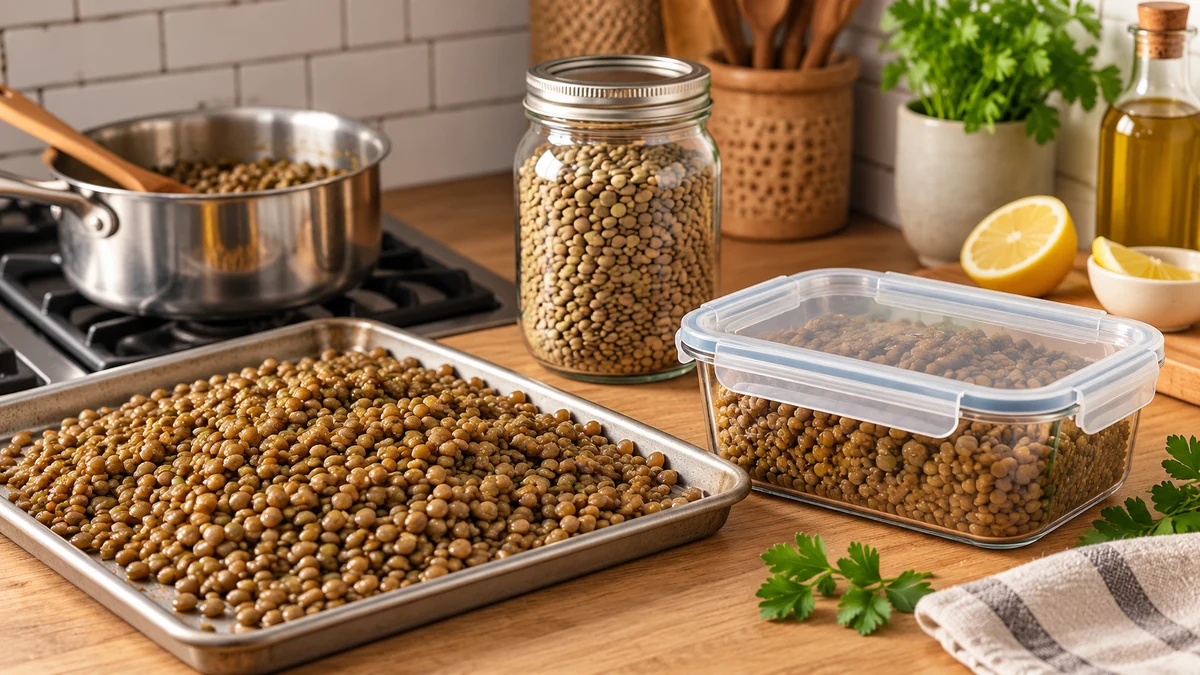
Practical guidance for tender lentils and safe storage.
Before cooking
- Rinse dried lentils in a sieve under cold running water.
- Pick them over and remove stones, debris or damaged lentils.
- Water: follow the packet, using enough to keep the lentils covered while simmering. Roughly three volumes of water to one of whole lentils is a useful starting point; split lentils behave differently.
Cooking times
- Green or brown lentils: often take around 20–30 minutes or longer depending on variety and age. Check rather than relying on a fixed time.
- French green or Puy lentils: tend to hold their shape well, but still need cooking until tender according to the packet.
- Split red lentils: cook more quickly and break down readily, making them less suitable for this distinct-grain salad.
- Pressure cooker: follow a tested method for your appliance, lentil variety, quantity and pressure-release process. Do not assume one short timing suits all machines.
Seasoning and acidic ingredients
- Salt: season lightly and adjust after draining, particularly when adding salty feta or olives.
- Lemon, vinegar and tomatoes: add these when assembling the salad after the lentils are cooked; this also keeps their flavour fresh.
- Herbs and spices: an optional bay leaf can flavour the cooking water. Add the fresh mint at the end and remove bay leaves before serving.
Checking the texture
- Test for tenderness: try a lentil near the packet’s suggested cooking time. It should have no hard centre but should still hold together.
- Keep the simmer gentle: vigorous boiling and excessive stirring can break the lentils apart.
- Cool in a shallow layer: spread drained lentils in a clean shallow dish so that they cool more quickly than in a deep pan.
Storage
- Dried lentils: keep in a sealed container in a cool, dry cupboard and follow the packet’s quality guidance.
- Cooked lentils in the fridge: cool and refrigerate within 2 hours, keep at 5°C or below and use within 48 hours. Dressing kept separately helps texture but does not extend the safety limit.
- Freezing: freeze plain cooked lentils promptly in portions; around 3 months is a quality guide. Defrost in the fridge and use within 24 hours of fully defrosting. Fresh cucumber and herbs are best added afterwards.
- Label containers: record the cooking or freezing date so that you can track storage time.
Reheating and other uses
- Reheating plain lentils: add a splash of water and heat on the hob or in the microwave until steaming hot throughout, stirring as needed. Reheat only once.
- Using leftovers: safely chilled lentils can go into a cold salad or be heated thoroughly in soup, patties or a filling. Keep within the original storage limit; changing the recipe does not restart it.
- Food safety: do not leave a large batch cooling on the worktop for hours. Portion it and refrigerate within 2 hours.
Final reminders
- Batch cooking: freeze spare plain lentils in meal-sized portions once cooled safely.
- Keep dressing separate when preparing ahead and combine shortly before serving for a firmer texture.
- Add crunchy toppings last so toasted nuts or seeds do not soften in the dressing.
Vegan and festive lentil salad variations
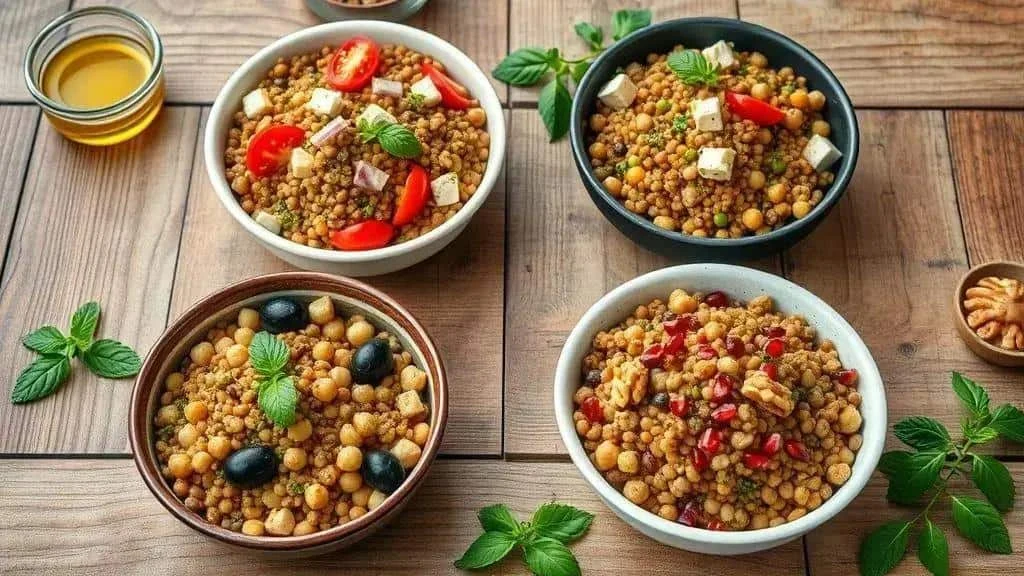
Vegan and festive variations give you different flavours and textures. The small versions below start with 200 g cooked lentils, not 200 g dried lentils, so they are smaller than the main recipe.
Simple vegan version
A fresh variation for a light meal or side dish:
- 200 g cooked lentils — cooled safely.
- 2 tablespoons olive oil
- Lemon juice to taste, starting with 1–2 tablespoons
- A small handful of chopped mint
- A small handful of chopped parsley
- ½ red onion, thinly sliced
- 200 g cherry tomatoes, halved
- Salt and black pepper to taste
Alternative dressing: start with 1 tablespoon cider vinegar instead of lemon and adjust to taste.
Lentil, chickpea and tofu version
A more substantial mix with several textures:
- 200 g cooked lentils
- 200 g cooked, drained chickpeas
- 120 g suitable marinated firm tofu — diced, prepared according to its label.
- 2 tablespoons olive oil
- Ground cumin to taste, up to 1 teaspoon — optional.
- A small handful of chopped mint
- Salt and pepper to taste
Tip: roasted chickpeas give crunch if added at serving time. Add lemon juice to taste if you prefer a sharper dressing.
Mediterranean-inspired version
A combination of lentils, salty cheese and olives; choose cheese made with vegetarian rennet if required.
- 200 g cooked lentils
- 100 g crumbled feta — or a suitable goat’s cheese.
- ¼ cup sliced black olives
- 1 tablespoon capers, optional
- 2 tablespoons olive oil and 1 tablespoon balsamic vinegar
- A small handful of chopped mint
Vegan alternative: replace feta with suitable marinated tofu or a labelled vegan cheese, and check the remaining ingredients.
Festive pomegranate and nut version
A colourful option with a crunchy topping:
- 200 g cooked lentils
- ½ cup toasted walnuts or pecans — roughly chopped.
- ⅓ cup pomegranate seeds
- 2 tablespoons olive oil and 1 tablespoon balsamic vinegar, adjusted to taste.
- A small handful of chopped mint
- Salt and pepper to taste
Assembly: dress the lentils, then add the nuts and pomegranate just before serving. Keep nuts separate for guests who cannot eat them.
Adjusting flavour and presentation
- Acidity: add lemon juice gradually and taste rather than assuming every lemon yields the same amount.
- Texture: combine tender lentils with crisp cucumber or suitable toasted nuts.
- Extra ingredients: chickpeas, tofu or feta can make the salad more substantial according to your dietary needs.
- Serving: use individual bowls or a shared platter with a few whole mint leaves on top.
Serving ideas for Christmas or a light lunch
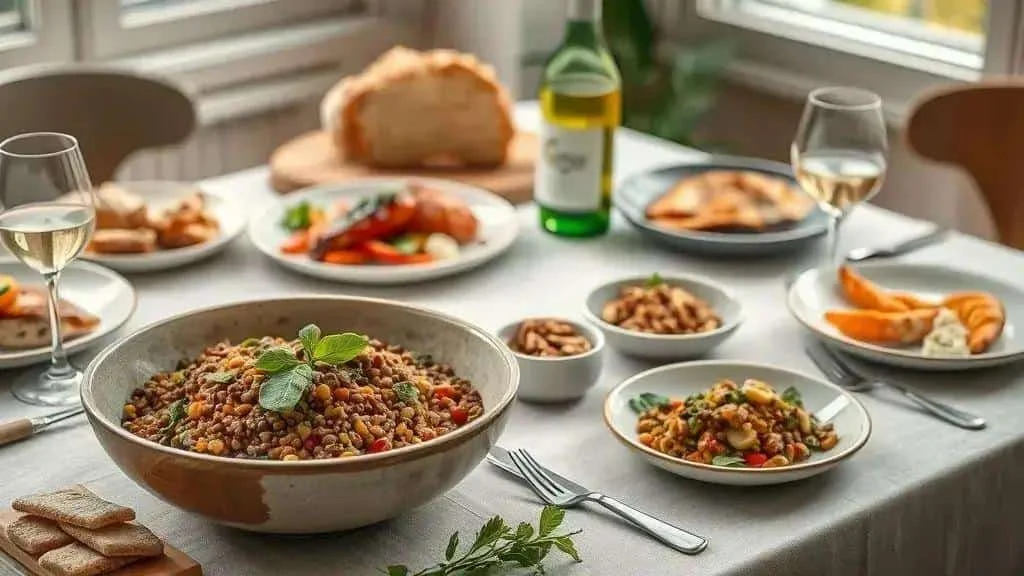
Serve lentil salad with mint chilled or shortly after removing it from the fridge. Keep the rest refrigerated and avoid leaving it out for a long meal.
Portions and occasions
- Starter or side: roughly 100–150 g per person is a useful guide, adjusted to the rest of the meal.
- Light main: offer a larger portion with bread, vegetables or another accompaniment according to appetite.
- Buffet: put out small chilled portions and replenish from the fridge. Minimise time at room temperature, especially in hot weather, rather than leaving the whole batch out.
Main-dish pairings
- Grilled fish: sea bass or salmon pairs well with mint and lemon.
- Poultry: herb-roasted chicken or turkey breast makes a simple accompaniment.
- Vegetarian or vegan: serve with suitable marinated tofu, falafel or roasted chickpeas.
- Cheese: feta or goat’s cheese adds saltiness and creaminess; tofu offers a different, dairy-free option when suitable.
Other accompaniments
- Mixed leaves: rocket or baby leaves add a fresh contrast.
- Roasted vegetables: squash, aubergine and carrots bring sweetness.
- Bread or grains: rustic bread, ciabatta or cooked quinoa can turn the salad into a larger meal.
- Crunch: add suitable toasted seeds or chopped nuts at the table.
Drinks
- White wine: Sauvignon Blanc, Vinho Verde or unoaked Chardonnay are optional pairings for adults who drink alcohol.
- Dry rosé: another optional adult pairing, especially for an outdoor meal.
- Alcohol-free: try sparkling water with lemon, chilled hibiscus tea or cucumber-infused water.
Presentation tips
- Use a shallow serving dish: spread out the salad and finish with mint leaves and lemon zest.
- Keep some dressing aside: add it shortly before serving if preparing the components ahead.
- Individual bowls: arrange leaves, lentil salad and your chosen accompaniment in separate sections.
- Festive colour: pomegranate seeds add a bright finishing touch.
Making ahead
- Prepare components: cook the lentils the day before, cool and refrigerate promptly, then add fresh herbs and vegetables shortly before serving.
- Storage: keep covered in the fridge and use within 48 hours of cooking, or an earlier ingredient limit. Bring out only what you plan to serve.
About lentils and fresh mint
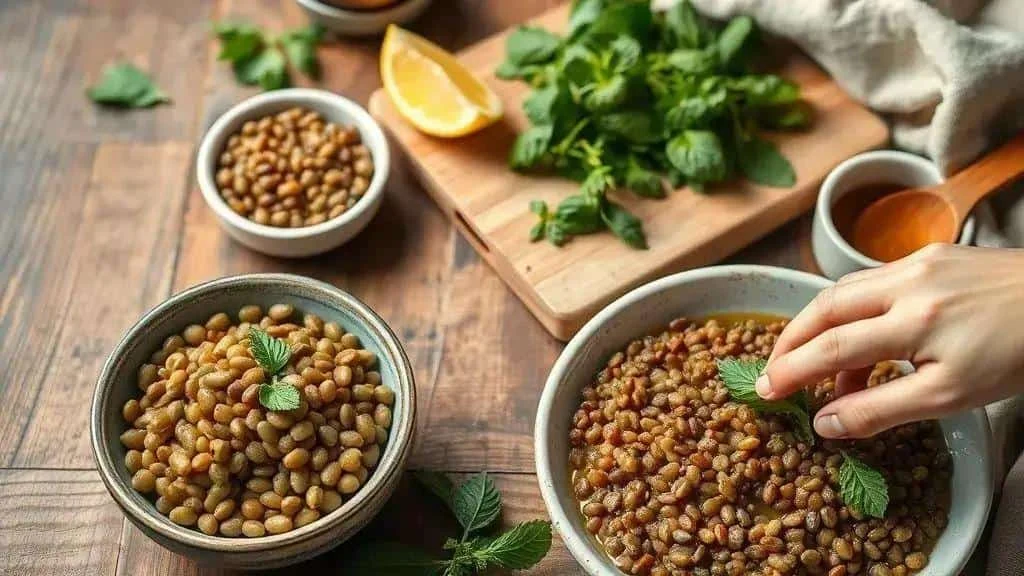
Lentils and mint contribute different things to the salad: lentils provide its substance, while mint adds a distinctive fresh aroma.
About lentils
- A long-established ingredient: lentils feature in many food traditions, from soups and stews to salads and rice dishes.
- Varieties: brown, green, French green and split red lentils differ in texture and cooking time.
- Preparation: many lentils do not need soaking, but follow the packet for the variety you buy.
- Nutrition: lentils contribute plant protein and fibre, along with minerals such as iron. The amount in a serving depends on the portion and the complete recipe.
- Growing pulses: lentil roots can form a partnership with nitrogen-fixing bacteria, making pulses useful in crop rotations. Actual environmental benefits depend on farming conditions.
- Tradition: lentils symbolise prosperity in some New Year customs, including the Italian festive meal.
What mint adds to the salad
- Fresh aroma: mint gives a lively herbal flavour that complements lemon, cucumber and lentils.
- Culinary use, not a treatment: use mint here for flavour. Evidence about peppermint-oil preparations cannot be transferred to a handful of mint leaves in a salad, and the dish should not be presented as a remedy for digestive symptoms.
- A varied diet: herbs add flavour and variety, but this recipe does not establish a particular antioxidant or disease-prevention benefit.
- Versatility: mint works with vegetables, yoghurt, cheese and pulses, especially when added near the end of preparation.
- Handling: wash and dry the leaves gently, then chop shortly before using to preserve their appearance and aroma.
Why the combination works
- Flavour: fresh mint contrasts with the earthy taste of the lentils.
- Texture: tender lentils, crisp vegetables and delicate leaves make each mouthful different.
- Final touch: add mint shortly before serving so it does not wilt in warm lentils or dressing.
A fresh salad for your table
Lentil salad with mint is easy to adapt for a light lunch or festive meal. Cook the lentils until tender, balance the dressing and choose toppings that suit your guests. Good cooling and storage keep make-ahead preparation practical.
Thank you for reading. Follow our social channels and visit the I Love Christmas blog for more recipes and seasonal inspiration.
Lentil salad with mint: frequently asked questions
How long do salad lentils take to cook?
Many green or brown lentils take about 20–30 minutes, but variety and age affect the timing. Follow the packet and test for tenderness, stopping before they break apart.
Can I make the salad ahead?
Yes. Cook, cool and refrigerate the lentils promptly, then add fresh herbs and vegetables close to serving. Keep within 48 hours of cooking, or an earlier ingredient storage limit.
How can I replace feta in a vegan version?
Omit it or use suitable marinated firm tofu or a labelled vegan cheese. Check whether the tofu needs cooking and review allergens, including soya, in substitutes.
How should I keep leftovers?
Refrigerate promptly in a covered container and use within 48 hours of cooking the lentils. Keeping dressing separate helps texture but does not extend the storage time. Use any shorter limit stated for other ingredients.
How do I keep mint fresh?
Keep clean, gently dried leaves in the fridge in a suitable container with kitchen paper. Check their condition and chop just before adding to the salad.
Sources and Further Reading
- Lentils.org — Getting started with lentils
- FAO — Ten reasons to choose pulses
- NCCIH — Peppermint: evidence and limitations
- UK Government — Chilling, freezing and defrosting safely