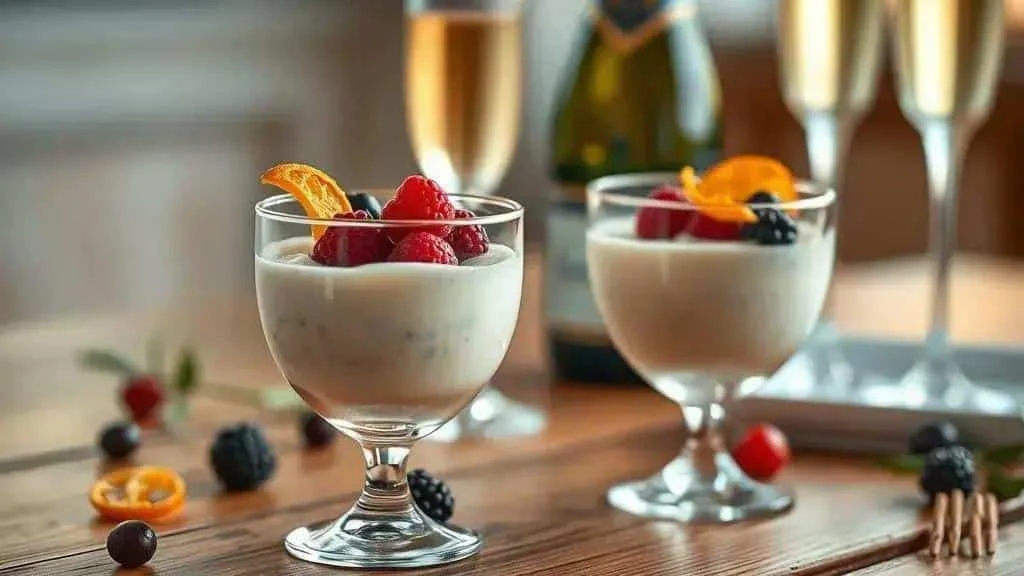
Sparkling wine mousse is an airy dessert made with sparkling wine, condensed milk, whipped cream, pasteurised egg whites and gelatine. Serve it chilled in individual glasses. The wine version contains alcohol; a suitable sparkling grape drink offers an alternative, while plant-based substitutions require a different setting method.
Sparkling wine mousse brings a festive touch to a New Year’s Eve meal. Its airy texture comes mainly from whipped cream and egg whites, rather than bubbles surviving in the finished dessert. Allow several hours for chilling and choose the alcohol-free variation when needed.
Ingredients for sparkling wine mousse
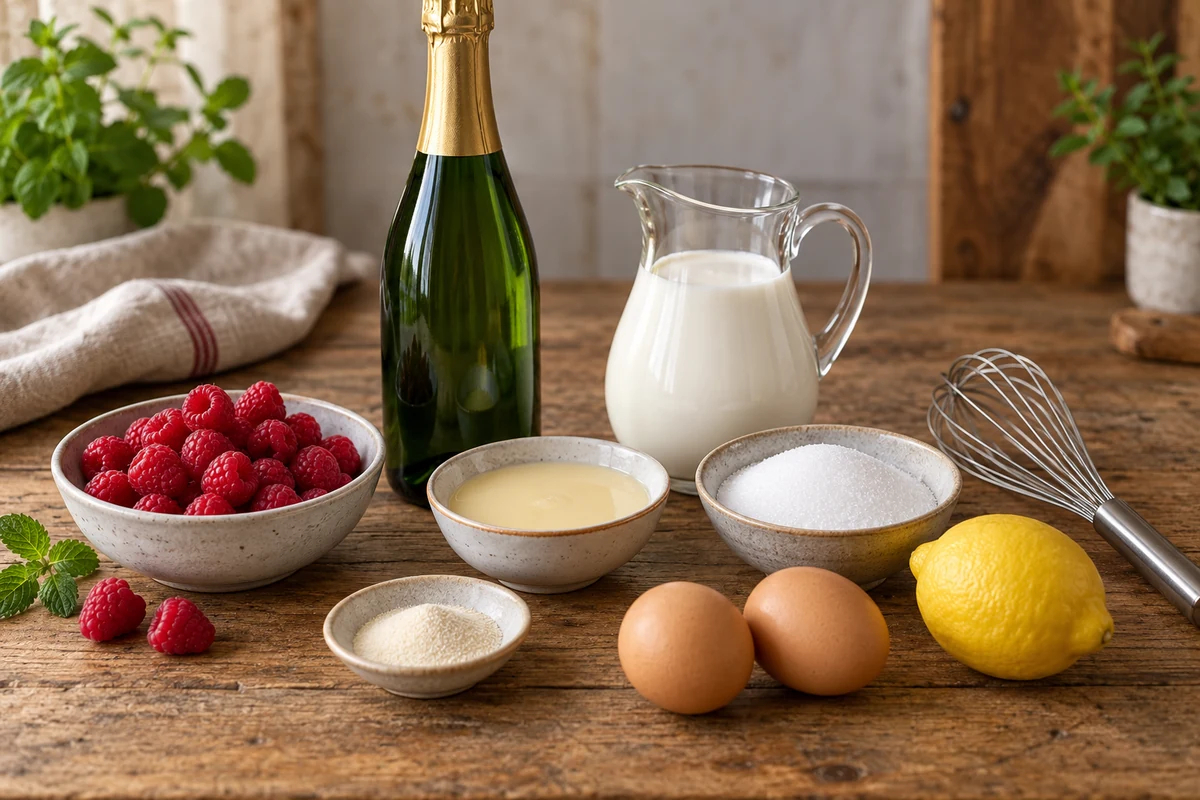
For this sparkling wine mousse, prepare the ingredients below. Decide on any substitutions before starting, because they can change the set and texture.
- 250 ml brut sparkling wine – demi-sec gives a sweeter result. For a version without wine, choose sparkling grape juice and check the alcohol declaration if alcohol must be avoided completely.
- 395 g sweetened condensed milk – weigh the amount rather than assuming every UK tin has the same contents. Coconut condensed milk can be part of a vegan adaptation.
- 200 ml chilled whipping cream – to whip to soft peaks. A plant-based whipping product can replace it, but check that the product is suitable for whipping and for the intended dietary requirements.
- 12 g unflavoured powdered gelatine – the original recipe’s quantity; check the packet’s guidance for the full mixture, including alcohol and acidity. Bloom using the product instructions; the original allows 5 tbsp cold water. A vegan setting agent needs its own method, not an automatic swap for 8 g agar.
- 3 pasteurised egg whites – or the equivalent amount of a pasteurised liquid egg-white product suitable for uncooked recipes and whipping. Aquafaba can be used in a plant-based adaptation, but the original’s 200 ml is not a guaranteed equivalent of three whites.
- Finely grated zest of 1 lemon or orange – wash the fruit first. Alternatively, use 1 tsp vanilla extract, checking its alcohol content if relevant.
- Fresh berries, optional – raspberries, strawberries or blackberries for decoration. White chocolate shavings are another option; check ingredients for dietary requirements.
Before you start
Dissolve the gelatine completely without boiling it, following its packet. A vegetarian setting product may require boiling and can begin to set much faster, so plan that method separately. Chill the cream and its bowl for whipping. Use a clean, grease-free bowl for egg whites or aquafaba.
Choose a wine whose flavour you enjoy. A sweeter drink changes the balance; reducing condensed milk also changes the body and quantity of the mousse. Trial substantial changes in a small batch. This is an uncooked alcoholic dessert, so keep the standard version for adults who choose to consume alcohol.
How to make sparkling wine mousse
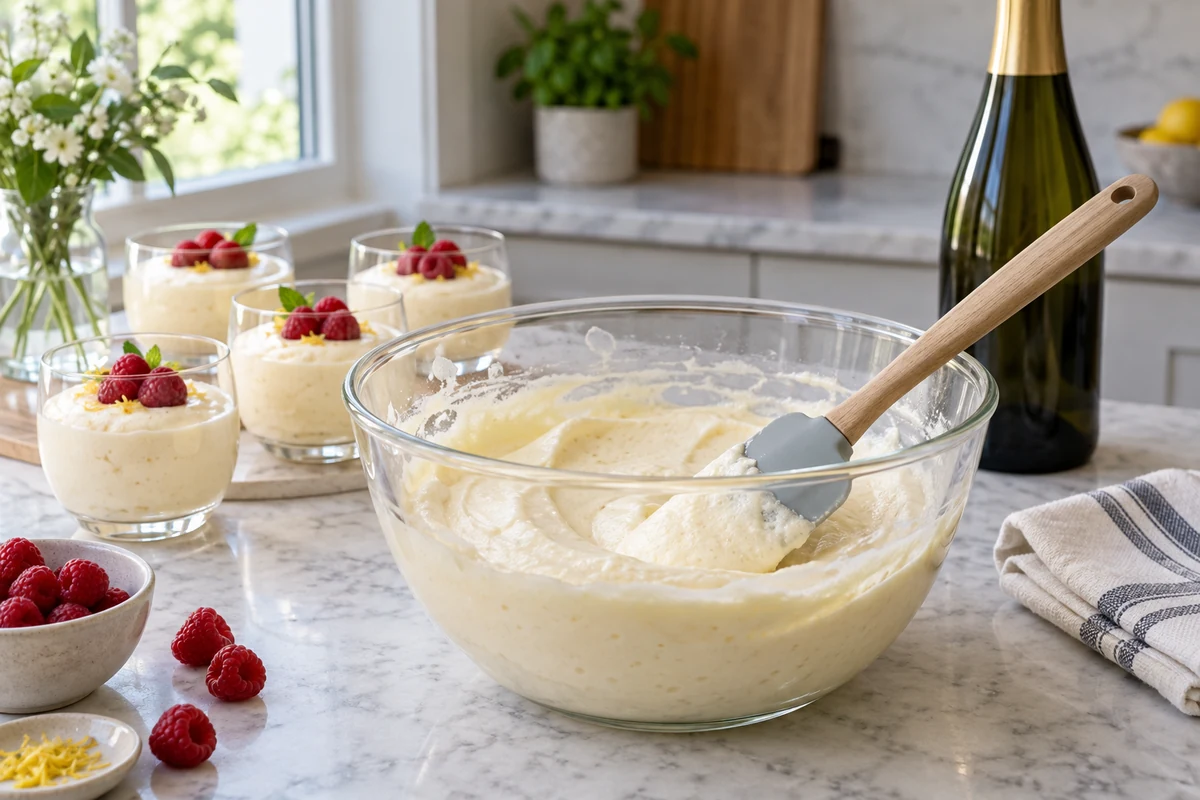
- Bloom and dissolve the gelatine: follow its packet for the quantity of cold water and soaking time. Dissolve gently over warm water or with the product’s microwave method, without boiling. Do not assume one minute of blooming or a fixed 10-second heating time suits every product.
- Combine condensed milk and wine: stir 395 g condensed milk with 250 ml sparkling wine in a medium bowl. Avoid an ice-cold base when adding gelatine, as it can set into strands on contact.
- Incorporate the gelatine: stir a small amount of the base into the dissolved, warm but not hot gelatine, then gradually mix this back into the remaining base until smooth. Do not add hot gelatine directly to whipped ingredients.
- Whip the cream: beat 200 ml chilled whipping cream in a cold bowl to soft peaks. Stop before it becomes stiff or grainy.
- Add the zest: stir the lemon or orange zest into the wine base. It should be cool but still fluid before the whipped ingredients are folded in.
Folding and chilling
- Fold in the cream: gently lift the mixture from the bottom of the bowl over the top until combined, keeping as much air as practical.
- Whisk the egg whites: use three pasteurised whites or a suitable equivalent product, following its whipping instructions. Whisk to firm peaks. If trialling aquafaba, use ready-to-eat chickpea liquid and an appropriate substitution quantity.
- Fold in the whites: add in three portions, folding gently until evenly incorporated. Work promptly before the gelatine sets.
- Fill the glasses: divide between individual dessert glasses or a serving dish, leaving about 2 cm at the top for garnish.
- Chill until set: cover and refrigerate for at least 4 hours, preferably overnight. Keep the mixture chilled promptly rather than leaving the assembled glasses on the worktop.
- Decorate before serving: add washed berries, citrus zest or chocolate shavings and serve cold.
Variations: alcohol-free, fruit and chocolate
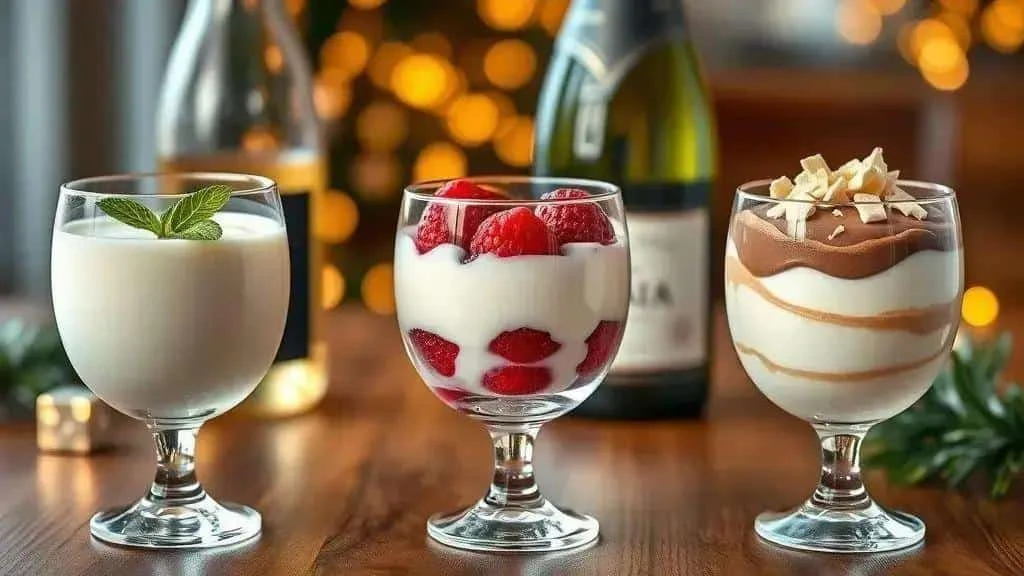
These variations give sparkling wine mousse different flavours and serving possibilities. Added fruit, chocolate or alternative setting agents can change its texture; they are not guaranteed to behave identically to the original mixture.
An alcohol-free variation
Replace the wine with sparkling grape juice or another suitable drink. Check the label when complete avoidance of alcohol matters; terms such as low-alcohol and alcohol-free are not interchangeable. Use a suitable alcohol-free flavouring too.
- 250 ml suitable sparkling grape drink – use in place of the wine, checking sweetness and the alcohol declaration.
- 395 g sweetened condensed milk – the original suggests reducing to 300 g with a very sweet drink, but that changes the body and set, so test the variation before serving guests.
- Zest of 1 lemon – adds fragrance without extra alcohol or much additional liquid.
A fruit variation
Berries or mango add colour and a contrasting fruit flavour. A thin layer of cooled compote is easier to control than adding a large amount of purée directly to the mousse.
- 150–200 g berry or mango purée for layering – sieve if needed. Follow any cooking instructions on frozen fruit; do not assume all frozen fruit is intended to be eaten just thawed.
- 1–2 tbsp sugar, if needed – adjust to the fruit rather than adding automatically.
- Optional: 1 tsp lemon juice – for the fruit topping if it needs extra sharpness.
How to use it: spoon a little chilled purée into each glass and add mousse. For fruit mixed into the base, the original suggests 3–4 tbsp; this changes acidity and liquid, so trial the set rather than adding the whole prepared quantity.
A chocolate variation
White chocolate produces a sweeter, creamier flavour, while dark chocolate gives a stronger contrast. Choose one version rather than adding both quantities below.
- 100 g white chocolate – melt gently in a heatproof bowl over barely simmering water, then allow to cool slightly.
- Alternatively, 80 g dark chocolate – sweetness depends on the product, so taste the base before folding in the egg whites.
- 1 tsp vanilla extract, optional – choose an appropriate product for any alcohol or dietary restrictions.
Mix carefully: blend slightly cooled melted chocolate with a little of the base, then combine before folding in the whipped ingredients. Do not pour hot chocolate into finished mousse or sprinkle extra dry gelatine into it. Test the set of a changed recipe in advance.
Tips for all versions
- Check the sweetness in the base with a clean spoon before adding the egg whites. Fruit and the chosen drink change the balance.
- Serve chilled and add fresh decorations shortly before serving.
- Keep refrigerated at 5°C or below and use within 48 hours of making, or sooner if an ingredient requires it. Store fresh garnishes separately.
Presentation and portions for New Year’s Eve
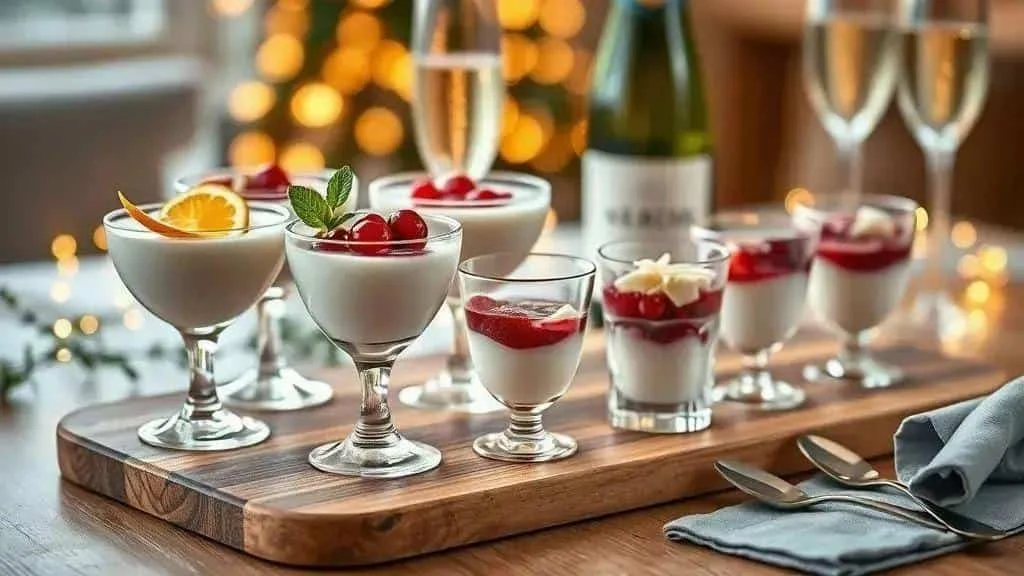
Individual portions make a festive dessert easier to serve. Choose glasses that fit comfortably in the fridge and use a simple repeated garnish.
Planning the portions
Individual dessert: allow roughly 100–150 ml per person after a substantial meal, adjusting to the rest of the menu.
Batch yield: the original estimates 6–8 portions, but the final volume depends on whipping and substitutions. Measure the finished volume and divide by your chosen serving size before deciding how much to scale the next batch.
Choosing serving dishes
- Coupe glasses or small wine glasses – suitable for a seated meal if stable and easy to eat from.
- Small 60–90 ml glasses – useful for tasting portions alongside other desserts. Provide spoons and plan numbers around your menu.
- Small glass pots – show fruit and mousse layers and are practical to cover for chilling.
Garnishes
- Fresh berries – washed raspberries, blackberries or sliced strawberries add colour.
- Citrus zest – finely grated lemon or orange adds fragrance.
- White chocolate shavings – add a little texture and sweetness, with ingredients checked for allergies.
- Mint leaves – a small washed leaf gives a simple finishing touch.
Practical party assembly
- Layers: use a little cold fruit compote beneath the mousse, then garnish after chilling.
- A shared dish: set the mousse in a suitable serving dish if space permits, and spoon portions onto plates. It is a soft dessert, not necessarily a firm slicing mousse.
- Last-minute decoration: keep washed fruit and zest separately chilled and garnish shortly before serving.
Serving temperature and accompaniments
Serve the mousse well chilled. Adults may enjoy a sparkling wine alongside it, but a very dry wine can taste sharper next to a sweet dessert. Chilled citrus tea or a suitable sparkling grape drink are alternatives.
Storage and transport
- Preparing ahead: the day before is convenient; keep covered and use within the 48-hour storage period, not two days plus another day after serving.
- Transport: secure the glasses or serving dish in an insulated cool box with ice packs. Keep upright and refrigerate on arrival.
- Keeping time: use within 48 hours of preparation, or earlier if required by any ingredient’s instructions. Adding new garnish does not restart the storage clock.
Drinks and desserts to serve together

Choose pairings to suit your guests rather than assuming one wine works perfectly with every sweet dish. The sweetness of the mousse and drink should be considered together.
Sparkling wine pairings
- Brut sparkling wine – offers a dry contrast, though it may taste austere beside a very sweet mousse. Try a small pairing first.
- Demi-sec sparkling wine – a sweeter option that may sit more comfortably beside dessert.
- Sparkling rosé – can complement berries, depending on the wine’s sweetness and flavour.
Alternatives to wine
- A suitable sparkling grape drink – choose its sweetness to match the dessert and check the alcohol declaration when necessary.
- Chilled citrus tea – a refreshing alternative; use a decaffeinated infusion if preferred and flavour with orange zest.
- Kombucha – can taste pleasantly sharp, but fermentation can leave alcohol. Do not assume it is suitable for someone avoiding alcohol completely; choose a clearly suitable alternative instead.
A small dessert selection
- Mousse with berries – fruit adds a sharp contrast to the cream.
- Mousse with white chocolate shavings – a sweeter option that can be served in smaller portions.
- Mini citrus tartlets – provide pastry texture alongside a little mousse.
- Petits fours or butter biscuits – add crunch; check their ingredients when serving guests with allergies.
Serving tips
- Temperature: follow the wine producer’s recommendation. Comité Champagne suggests 8–10°C for Champagne; other drinks can be served chilled to taste.
- Tasting order: try lighter or drier drinks before sweeter ones if offering a tasting, with water available alongside.
- Portions: use 100–150 ml as a dessert guide, or around 60–80 ml for a tasting portion. Actual yield depends on the finished mousse volume.
- Glasses: use suitable wine glasses for drinks and stable, spoon-friendly glasses or pots for the mousse.
Final touches
When choosing a pairing, taste a small combination first. Citrus zest, a crisp biscuit or a little fruit can provide contrast without a complicated garnish.
Sparkling wine and festive traditions

- Where the bubbles come from: in traditional-method sparkling wine, a second fermentation in the bottle produces carbon dioxide that is retained under pressure. Other sparkling wines use different production methods.
- Production methods: the traditional method uses bottle fermentation, while the tank method carries out the sparkling fermentation in a pressure tank. Method alone does not guarantee a particular quality or flavour.
- Dom Pérignon and Champagne: the monk is associated with important developments in Champagne winemaking. The region’s history involved many people and advances; it should not be reduced to one person’s sudden invention of sparkling wine.
- Champagne is a protected name: it refers to wine meeting the Champagne appellation’s requirements, not any sparkling wine. Cava and Prosecco also have their own rules; they are not generic names for all Spanish or Italian sparkling wine.
- Aroma and bubbles: effervescence is part of the drinking experience, but the mousse’s airy structure relies chiefly on the whipped ingredients.
A little history and a practical caution
Champagne developed over time through changes in winemaking, bottles and the control of fermentation. It later became closely associated with celebration. The ceremonial practice of sabrage involves a blade and a pressurised glass bottle; it is not a recommended home-party opening method. Chill the bottle, control the cork and keep it pointed away from people.
New Year customs
- A midnight toast: many people welcome the year with good wishes and a drink. There is no need to fire the cork into the air to celebrate.
- Twelve grapes: Spain’s well-known New Year custom associates twelve grapes with the midnight chimes and good fortune. It is a tradition, not a guarantee of luck; do not rush eating or give whole grapes to young children.
- Brazilian customs: the original places the dessert alongside wearing white, eating lentils and seaside New Year celebrations. These practices vary between families and communities and should not be treated as universal rules or promises of prosperity.
- A midnight kiss: for some people this is an affectionate way to welcome the year, rather than a requirement for good fortune.
Wine-serving reminders
- Chill appropriately: use the producer’s serving advice; Champagne’s recommended range is 8–10°C. Keep the mousse refrigerated separately.
- Glass shape: a tulip-shaped glass is a practical choice for sparkling wine. A wide coupe and a narrow flute give different drinking experiences; choose what is suitable and stable.
- Dessert pairing: consider sweetness as well as fruit flavour. A dry brut is not automatically the best match for a sweet condensed-milk dessert.
- Bottle storage: keep unopened wine cool and away from strong light, following the producer’s advice. After opening, refrigerate with a proper sparkling-wine stopper and use promptly; carbonation and quality decline.
Conversation starters
- From technical challenge to celebration: controlling sparkling fermentation and pressure was an important part of developing these wines.
- The sound of a cork: a pop is the release of pressure, not a measure of quality. Controlled opening is safer and wastes less wine.
- Explore different producers: the Brazilian setting of the original is a reminder that sparkling wine is made beyond France. Choose by the product and your taste rather than price or a national stereotype alone.
To finish
Sparkling wine mousse is a festive chilled dessert with a soft, airy texture. Prepare it ahead, label the alcohol-containing version clearly and offer a suitable alternative when needed.
Thank you for reading. Follow our social channels for more recipes and serving ideas, and visit the I Love Christmas blog for seasonal inspiration.
Enjoy preparing your festive meal, and come back for more recipes to share with your guests.
FAQ: sparkling wine mousse for New Year’s Eve
Can I make the mousse without alcohol?
Yes. Replace wine with a suitable sparkling grape drink, check the alcohol declaration and use an appropriate flavouring. Sweetness and setting can differ, so trial the version ahead of a party.
How far ahead can I prepare it?
The day before is convenient. Keep covered at 5°C or below and use within 48 hours of preparation, or sooner if an ingredient requires it. Add fresh garnishes before serving.
How do I replace gelatine for a vegan version?
Use a plant-based setting product and its own instructions for the whole mixture, including alcohol and acidity. Replace condensed milk, whipping cream and egg whites as well; changing gelatine alone does not make the mousse vegan.
Can aquafaba replace the egg whites?
It can provide foam in a plant-based adaptation. Use ready-to-eat chickpea liquid and a suitable replacement quantity; the original’s 200 ml is not an automatic equivalent of three egg whites. Test the texture before making a large batch.
What size serving should I plan?
Around 100–150 ml is a useful guide for an individual dessert, or 60–90 ml alongside other desserts. Divide the measured final volume by the portion size to calculate the yield.
Sources and Further Reading
- Dr. Oetker: gelatine and preparation questions
- Comité Champagne: frequently asked questions
- Spain’s official tourism portal: New Year’s Eve traditions
- Food Standards Agency: cooking and cooling food