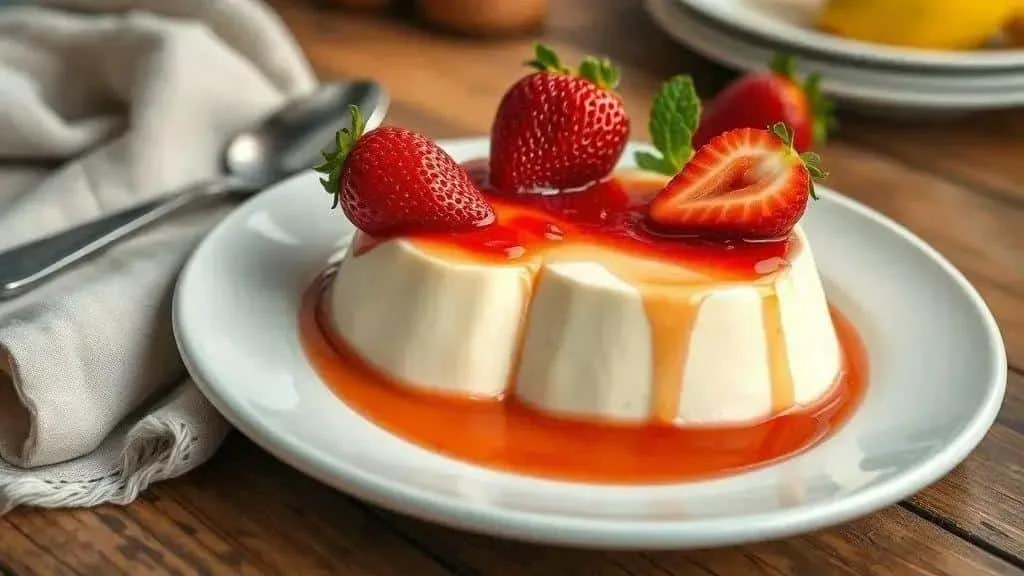
Lemon panna cotta with strawberries is a chilled cream dessert flavoured with lemon zest and served with strawberry compote. It needs several hours to set. Coconut milk and a suitable plant-based setting agent can be used for a vegan variation, with quantities and methods checked against the product instructions.
Lemon panna cotta with strawberries combines a creamy texture, citrus fragrance and sweet fruit. Serve it in small glasses for a practical festive dessert, or use suitable moulds if you prefer to turn it out. The steps below cover preparation, presentation and variations.
Ingredients for lemon panna cotta with strawberries
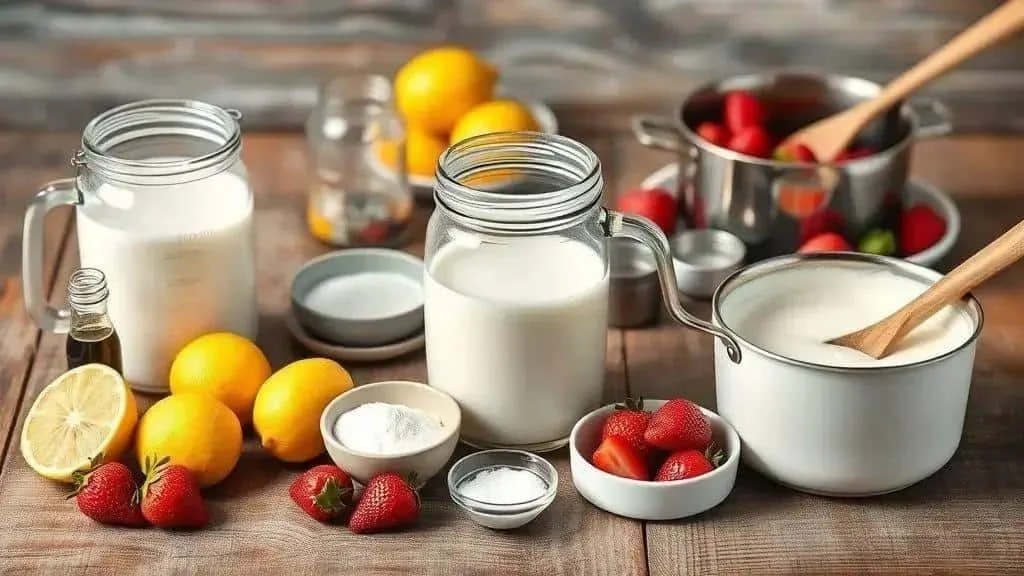
For this lemon panna cotta with strawberries, gather the following ingredients. The original suggests 4–6 servings, but these quantities make generous portions; choose the number of glasses according to their capacity.
- 500 ml fresh whipping cream – for a smooth, creamy base. Double cream gives a richer result. For a plant-based version, see the coconut milk notes below.
- 250 ml whole milk – to lighten the cream. Replacing this alone does not make the recipe dairy-free: the cream must also be replaced.
- 100 g caster sugar – adjust modestly to taste. Demerara changes the colour and flavour; sweeteners are not necessarily interchangeable by weight.
- 10 g powdered gelatine, subject to the packet’s setting guidance – the quantity given in the original. Sachet sizes and leaf strengths vary, so do not assume this equals one sachet or four leaves. For a vegan version, use a suitable food-grade agar or vegetarian setting product at the manufacturer’s quantity for the full mixture, including lemon juice.
- Finely grated zest of 2 lemons – wash the fruit and take only the yellow layer, avoiding bitter white pith.
- Lemon juice, to taste – the original lists 80–100 ml, but do not add that amount automatically. Acidity can affect both the dairy and the set. Add gradually to the cooled base, following the setting product’s advice; use extra zest for more aroma without extra liquid.
- 1 tsp vanilla extract, optional – for a gentle background flavour.
- A pinch of salt – to balance the sweetness.
- 300 g fresh strawberries – washed and hulled, for the topping.
- 50–70 g sugar for the strawberry compote – adjust to the fruit. Honey or agave changes the flavour and sweetness; use agave rather than honey for a vegan dessert.
- 1–2 tbsp water or lemon juice – to start the compote. An optional tablespoon of orange liqueur is for an adult version and should not be assumed alcohol-free after cooking.
Substitutions and practical notes
Gelatine: follow its instructions for soaking and dissolving. Leaf gelatine is usually soaked in cold water and squeezed before adding to a warm liquid. Agar needs a different heating method and is not a gram-for-gram replacement; check the product guidance, especially for acidic mixtures.
Lactose-free or vegan version: replace both the cream and milk with 750 ml full-fat coconut milk or a suitable creamy plant-based blend. Use a compatible setting agent at the stated dose. Lactose-free dairy is not suitable for a milk-protein allergy.
Ingredient tips: choose ripe strawberries without spoiled areas. Grate lemon zest just before using. If you prefer a less sweet cream layer, reduce its sugar by 10–20 g and taste before setting.
How to make lemon panna cotta with strawberry compote
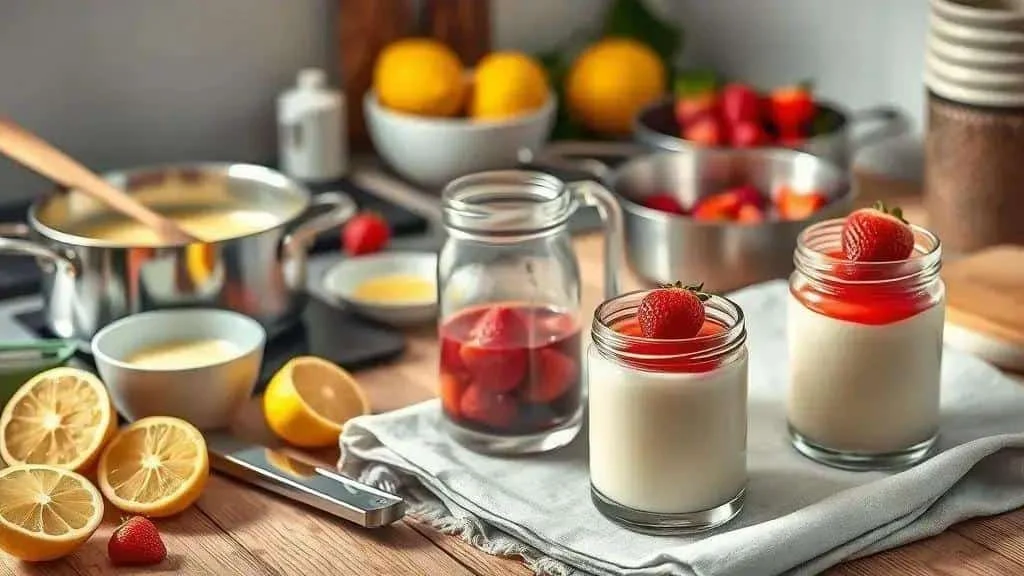
- Prepare the gelatine: bloom the measured powdered gelatine in cold water according to its packet; the original uses 4 tbsp water and about 5 minutes. Use the product’s own directions if different. Soak an equivalent quantity of leaf gelatine separately if using it. For agar, use the alternative method in step 3.
- Warm the cream base: put 500 ml cream, 250 ml whole milk, 100 g sugar, lemon zest and a pinch of salt in a saucepan. Heat gently, stirring until the sugar dissolves. Do not let it boil.
- Dissolve the gelatine: remove the pan from the heat and stir in the bloomed gelatine until completely dissolved. For an agar version: use the product’s specified dose and heating method with the plant-based base, rather than adding it as if it were gelatine. Make this choice before heating the mixture.
- Add lemon and vanilla: let the base cool slightly, then stir in the optional vanilla. Add lemon juice gradually, tasting a clean spoonful and watching for separation. Keep the setting agent’s total-liquid and acidity guidance in mind; more zest is the simplest way to strengthen the lemon aroma.
- Strain and portion: strain through a fine sieve into a jug, then pour into heatproof dessert glasses or suitable moulds. Leave room for the topping instead of filling to the brim.
- Cool and chill: allow the initial heat to subside for around 15–20 minutes, then refrigerate. Do not leave the desserts out for more than two hours in total. Chill for at least 4 hours, preferably overnight, until set.
- Cook the strawberry compote: put the chopped strawberries, 50–70 g sugar and 1–2 tbsp water or lemon juice in a small saucepan. Simmer for about 5–8 minutes, stirring, until juicy and slightly thickened. For a smooth sauce, cool sufficiently before blending safely, then sieve if desired.
- Cool the topping: transfer to a shallow clean container, cool promptly and refrigerate within two hours. Chill before spooning over the panna cotta.
- Turn out, if desired: briefly dip the outside base of a suitable mould in warm water, keeping water out of the dessert. Loosen the edge carefully if needed and invert onto a plate. Serving in glasses avoids this step.
- Finish and serve: add cold strawberry compote, fresh berries and lemon zest. Keep covered in the fridge and use within 48 hours of preparation, or sooner if an ingredient requires it. Freezing may spoil the texture.
Practical tips
Setting agent: use the product’s instructions rather than a universal conversion. Creaminess: replacing 50 ml milk with 50 ml cream makes a richer base without changing its total volume. Turning out: warm the outside of the mould briefly; do not pour hot water over the dessert.
Assembly and presentation
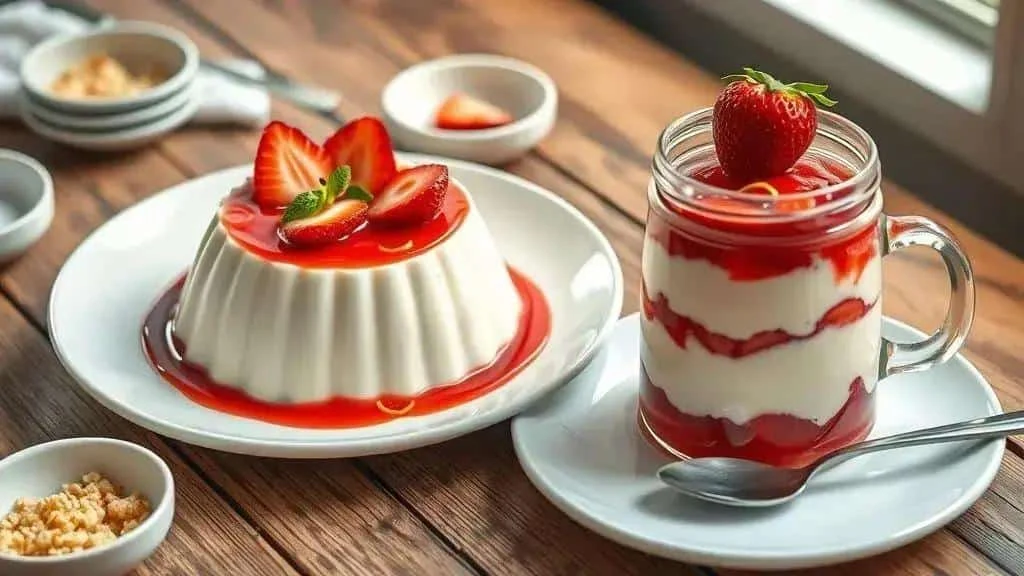
When presenting lemon panna cotta with strawberries, use the contrast between pale cream, red fruit and yellow zest. A little garnish is enough to make each portion attractive.
- Choose the container: glasses show the layers, while shallow plates suit unmoulded desserts.
- Portion size: 120–150 g can be a useful guide for a small finished serving. Divide the actual mixture and topping accordingly; do not assume the full batch makes only four portions of that size.
- Fresh garnish: add sliced strawberries, fine lemon zest and a small mint leaf just before serving.
- Crunch: biscuit crumbs, chopped pistachios or almond crumble add contrast. Check nut, milk and gluten requirements before using them.
- A glossy finish: stir the chilled compote until smooth and spoon it neatly over the dessert. Hot topping can melt or soften the set cream.
- Serving temperature: keep both components refrigerated until shortly before serving.
- Unmoulded portions: dip the outside of the mould briefly in warm water and invert onto the serving plate. Avoid prolonged heating.
- Dessert glasses: set the cream layer first, then add a thin layer of cold compote and fresh fruit.
- Simple decoration: a curl of lemon zest or a few edible herb leaves provide a finishing touch.
- Accompaniments: serve with a small butter biscuit or, for adults who drink alcohol, a little dessert wine.
Serving at a party
- Prepare ahead: make the panna cotta the day before and the compote that day or the next morning, keeping both chilled.
- Transport safely: use sturdy lidded containers in an insulated cool bag with ice packs. Add delicate decorations at the venue.
- Quick assembly: transport the chilled compote separately and spoon it over each portion before serving.
- Check the texture: a softly set panna cotta should wobble gently. More chilling can help an incompletely chilled batch, but will not correct too little setting agent or an unsuitable mixture. If it remains soft, serve as a chilled spoon dessert rather than trying to unmould it.
- Arrange the portions: repeat the same fruit or herb garnish across a tray for a coordinated presentation, bringing out small batches at a time.
Finishing touches – clean rims, neatly placed sauce and restrained garnishes make the dessert inviting.
Variations on lemon and strawberry panna cotta
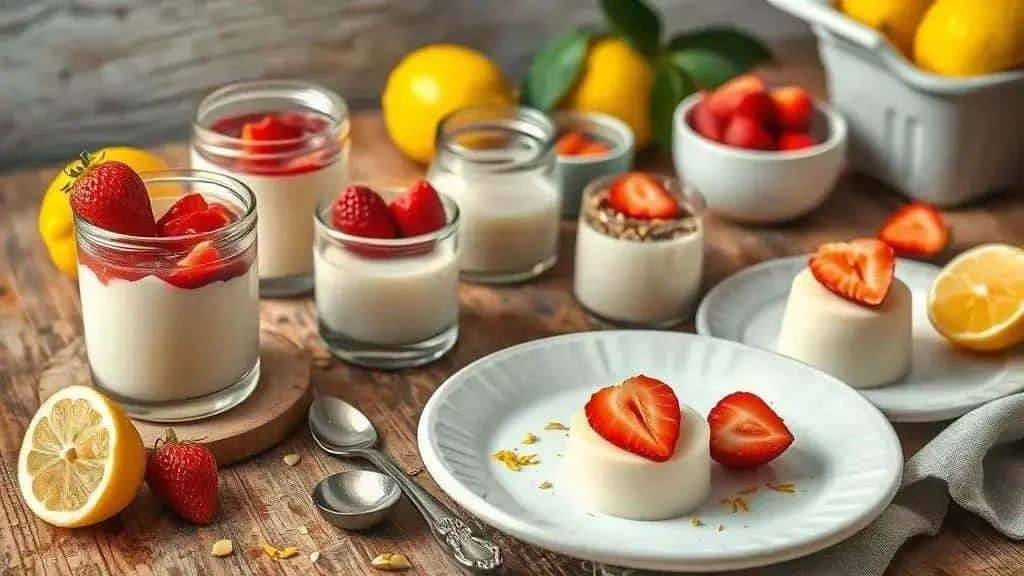
Adapt lemon panna cotta with strawberries to suit your preferred flavour and texture. Changes to dairy, acidity, alcohol or total liquid can alter the set, so trial a small portion before making a party batch.
Flavour and ingredient variations
- Vegan coconut version: replace the cream and milk with 750 ml full-fat coconut milk and use a suitable plant-based setting product according to its instructions. The original’s 6 g agar suggestion is not a universal dose.
- Yoghurt variation: replace some cream with plain Greek yoghurt and reduce the sugar slightly if preferred. Fold yoghurt into a cooled base; the fat content depends on the yoghurt chosen, so this is not automatically a low-fat dessert.
- More lemon fragrance: add zest from another lemon. Increasing juice also increases acidity and liquid, which can affect the result.
- Infused cream: steep lemon peel with a teaspoon of fennel seeds or green tea in the warm cream for about 10 minutes, then strain before adding the setting agent. Rewarm gently if necessary.
- Mascarpone variation: blend 100 g mascarpone into a warm base for a richer flavour. This changes the batch quantity and texture; check the set before scaling up.
- Liqueur variation: add 15–25 ml limoncello or orange liqueur to a slightly cooled base for adults. Account for this extra liquid when checking the setting product; the alcohol remains in the dessert.
- Tangy yoghurt cream: replace part of the cream with 150–200 g plain yoghurt, mixing it in once the base has cooled. It will have a different texture from the cream-only version.
Toppings and contrasting textures
- Strawberry compote: cook the fruit with sugar and a little water or lemon juice, then cool and refrigerate before serving.
- Smooth coulis: blend and sieve the cooked strawberry mixture for a smooth sauce.
- Crunchy finish: add biscuit crumbs, pistachios or toasted almonds at the last moment so they stay crisp.
- Lemon curd: a small spoonful adds colour and a stronger citrus flavour. Check its egg and milk ingredients; it is not the same preparation as mousseline.
- Meringue: use small cooked meringue pieces for a crisp topping. A quick pass with a blowtorch does not reliably cook raw egg throughout.
Serving formats
- In glasses: show the pale cream layer beneath a little strawberry sauce and fresh fruit.
- Turned out: use individual moulds and a sufficiently firm set for serving on plates.
- Mini portions: use small spoon-served dessert glasses for a buffet, adjusting the number to the available mixture.
- In jars: layer set cream and compote in lidded jars for chilled transport. Keep biscuit crumbs separate until serving if you want them crunchy.
Practical notes
- Agar and gelatine: they set differently and are not interchangeable by weight or method. Use product-specific advice and trial the texture.
- Sugar balance: taste the cream base with a clean spoon before setting; a sweeter topping may suit a less sweet base.
- Assembly: add fresh fruit and crunchy toppings shortly before serving.
- Storage: keep covered and refrigerated for up to 48 hours. Avoid freezing the cream layer if preserving its texture is important.
Replacing gelatine and making a vegan dessert
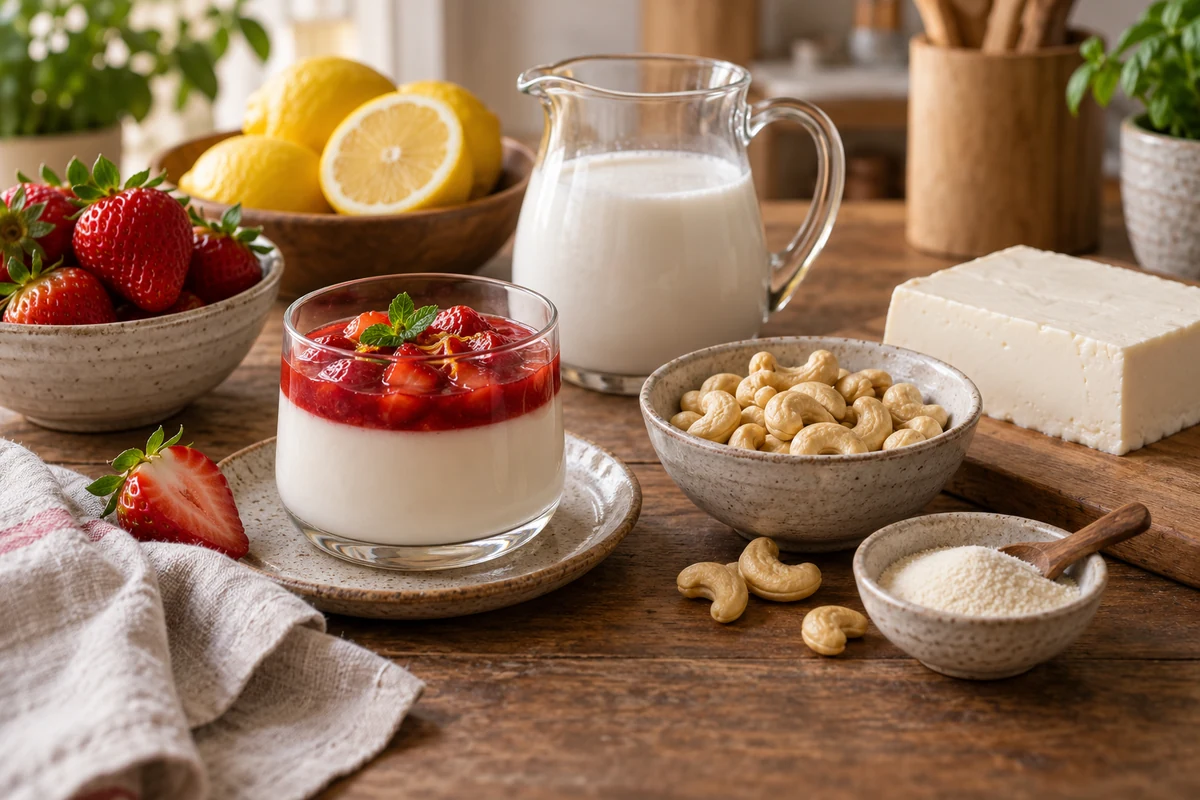
There are several ways to make a plant-based lemon and strawberry dessert, but they do not all produce the same soft set as gelatine. The options below explain those differences; they should not be treated as kitchen-tested, direct substitutions for this exact recipe.
Setting agents and softer alternatives
- Powdered agar: a plant-based setting agent. The original suggests 6 g agar for 700–750 ml liquid, but product strength, acidity and the desired texture matter. Use the manufacturer’s advice for your full mixture rather than relying on that fixed ratio.
- Other agar formats: flakes, strips and powders need different measurements and preparation. Follow the product directions, not the gelatine-leaf method.
- Pectin: formulations vary and some depend on particular sugar and acidity levels. Use a dedicated recipe for the product; do not simply swap it into this cream dessert.
- Carrageenan-based products: commercial vegetarian setting blends have their own instructions. Individual carrageenan types are not equivalent, so avoid improvising a dose of a specialist powder.
- Konjac: this is not recommended here as an improvised substitute. Its firm, elastic gels require specialist formulation, and certain jelly confectionery formats raise choking concerns. Choose a setting product intended for this kind of spoon-served dessert.
- Plant creams and tofu: 700–750 ml full-fat coconut milk, cashew cream or 300–400 g silken tofu can provide a creamy base. Without a suitable setting agent, expect a spoonable cream, not a reliably unmouldable panna cotta.
Using agar step by step
- Measure the product: calculate its dose from the manufacturer’s directions for the complete quantity of liquid and the acidity of the recipe. Use accurate scales.
- Combine as instructed: disperse the agar in the specified liquid before heating, stirring to avoid lumps.
- Heat to activate: follow the product’s heating temperature and time. Unlike ordinary gelatine, agar normally needs boiling, but a universal one-minute method is not suitable for every product.
- Add the flavouring: incorporate lemon zest and any juice as advised for the product. Too much acid can weaken the set; do not keep increasing the juice after calculating the formula.
- Strain and portion: strain if needed and pour promptly before the agar begins to set. Cool safely and refrigerate until thoroughly chilled and set.
Ideas for desserts without animal gelatine
- Coconut cream dessert: combine 700 ml full-fat coconut milk with 100 g sugar and lemon zest. Use the setting product’s directions for that quantity, accounting for any juice or other liquid you add.
- Cashew cream without a setting agent: soak 150 g cashews in the fridge for about 4 hours, drain and blend with some of the original’s 400–450 ml water, adding more gradually. Flavour with lemon and chill. The amount of water determines how loose it becomes; it will not automatically set like panna cotta. Cashews are an allergen.
- Lemon silken tofu cream: use 300–400 g silken tofu that is suitable for eating without further cooking, or prepare it according to its label. Blend with sugar and lemon zest, adding juice gradually to taste. The original’s 80–100 ml juice and 80–100 g sugar may be more than you need. Chill as a spoon dessert; tofu contains soy.
Adjusting the texture
- A softer set: use the setting product’s guidance for a softer dessert and trial a small batch. Do not reduce a specialist powder arbitrarily.
- A creamier base: increase the proportion of cream or coconut milk while keeping the total liquid controlled.
- Trial portions: chill a small portion to judge the result. A one- or two-minute cold-plate test does not reliably predict the final set of every gelatine dessert.
- Sweetness and acidity: taste before portioning, using modest adjustments that stay within the setting product’s guidance.
Storage and serving safely
- Chilled storage: refrigerate promptly at 5°C or below and use within 48 hours, respecting any shorter ingredient instructions.
- Freezing: the cream or plant-based gel can separate or change texture, so refrigeration is preferable for this dessert.
- Tell guests what is in it: identify the dairy, nuts, soy, gluten or alcohol actually used. Vegan does not guarantee that a product is free from allergen cross-contact.
Storage, portions and preparing ahead
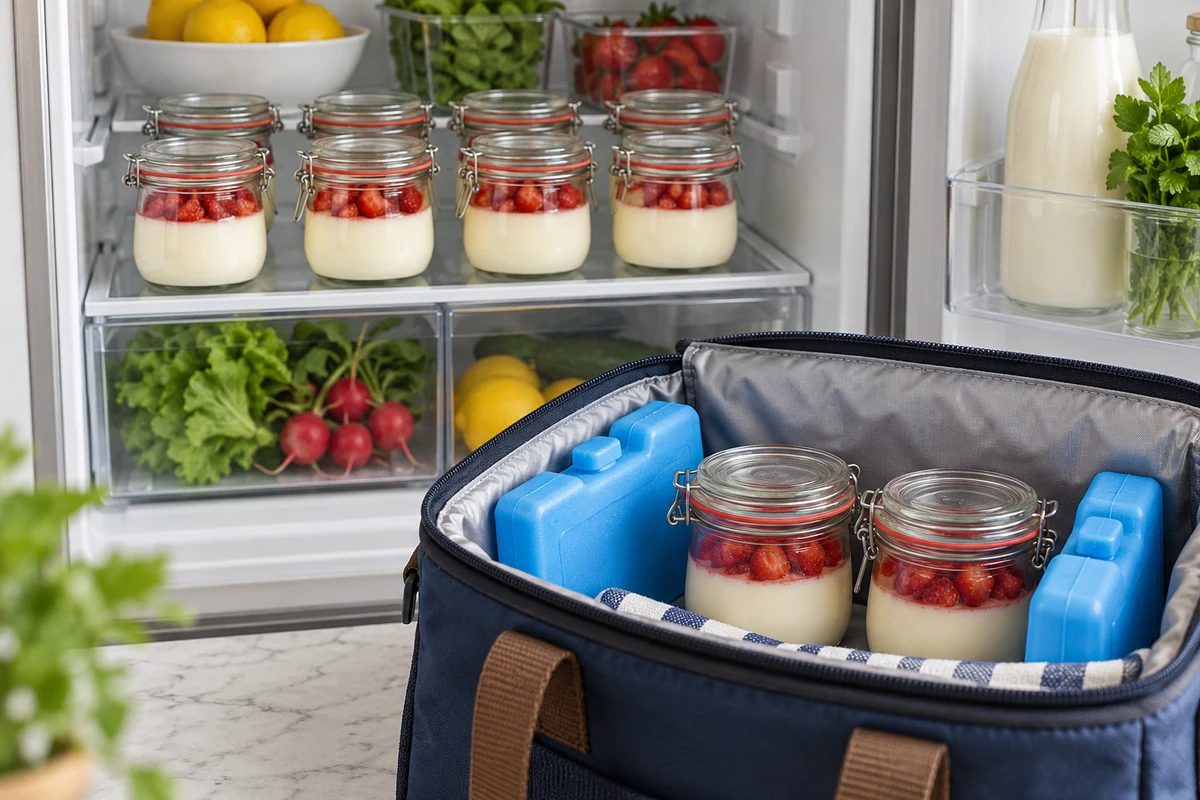
Plan your lemon panna cotta with strawberries around the chilling time and the space in your fridge. Keeping the cream and topping separate makes final assembly easier.
How many portions?
The original suggests 4–6 generous portions, but the cream base alone starts with 750 ml dairy, before sugar, juice and topping. For small 120–150 g finished desserts, divide by the actual batch weight instead. Double the ingredients only after deciding the serving size and checking your fridge capacity.
Keeping the dessert
- Refrigeration: cover the portions and keep chilled for up to 48 hours, counted from preparation rather than final decoration.
- Strawberry compote: cool promptly, refrigerate in a clean covered container and use within 48 hours. This lightly sweetened sauce is not a tested preserve; sugar and lemon do not justify assuming a week of storage.
- Freezing: avoid freezing the panna cotta if you want its original texture. Compote can be frozen promptly in suitable portions; the original’s two-month suggestion is a quality guide. Defrost in the fridge and use within 24 hours of complete thawing.
- Transport: keep lidded containers upright in an insulated cool bag with ice packs, and return them to refrigeration on arrival.
A simple preparation schedule
- The day before: make the panna cotta, cool safely and refrigerate overnight to set.
- On the day: make the compote early enough to cool and chill before serving. It can also be made the day before within the same storage limit.
- Before guests arrive: check one portion’s set and prepare clean serving plates. Keep the remaining portions chilled.
- Final assembly: add cold compote up to an hour before serving and return the glasses to the fridge. For unmoulded portions, add the sauce after turning them out.
- Garnishes: add washed strawberries, lemon zest and mint shortly before serving.
- Scaling for a party: plan one appropriately sized serving per guest, with a small allowance for extras if useful. A buffet with several desserts may need smaller portions, not automatically one and a half portions each.
Quick reminders
- Sweetness: reduce the base sugar modestly if the topping is very sweet.
- Testing the set: allow a trial portion the full chilling time required; a briefly cooled spoonful is not a guarantee of a successful unmoulded dessert.
- Neat presentation: wipe plate and glass rims and use a clean spoon to add the chilled sauce.
- Dietary information: distinguish lactose intolerance from milk allergy, and check both ingredients and preparation for cross-contact when serving guests with allergies.
Lemon panna cotta with strawberries makes an appealing end to a festive meal, with a softly set cream and bright fruit topping. Choose a setting product you know, allow enough chilling time and adjust sweetness gently to suit your taste.
Thank you for reading. Share the recipe, tell us how your version turned out and follow our social channels for more seasonal ideas.
Explore the I Love Christmas blog for more recipes and festive inspiration.
FAQ: lemon panna cotta with strawberry compote
Can I make panna cotta ahead for a party?
Yes. Make it the day before, cool promptly and keep covered in the fridge. Use both the panna cotta and homemade compote within 48 hours of preparation, or sooner if an ingredient requires it.
How do I know whether the panna cotta is set?
After its full chilling time, it should wobble gently without flowing like liquid. A small trial portion is useful; a one- or two-minute cold-plate test is not enough to judge all setting agents.
How can I make a vegan version?
Replace both cream and milk with a suitable coconut or plant-based mixture, and replace gelatine with a compatible setting product using its instructions. Plain cashew cream is a spoon dessert, not a direct substitute for a set panna cotta.
Can I use agar instead of gelatine?
Yes, but the dose, heating method and texture differ. Follow the manufacturer’s guidance for the full acidic mixture rather than assuming 6 g agar is always equivalent to 10 g gelatine.
How should I store the strawberry compote?
Cool promptly and refrigerate covered within two hours. Use within 48 hours or freeze suitable portions promptly. After thawing in the fridge, use within 24 hours; this recipe is not a shelf-stable preserve.
What if I have lactose intolerance or a milk allergy?
These are different conditions. Lactose-free dairy can suit lactose intolerance but still contains milk proteins. For a milk allergy, choose suitable milk-free ingredients and avoid cross-contact; coconut, soy, oat and nut products also need checking for individual allergies. Recheck the setting method when changing the base.
Sources and Further Reading
- Dr. Oetker: platinum-grade leaf gelatine
- Dr. Oetker: Vege-Gel instructions
- Food Standards Agency: cooking and cooling food