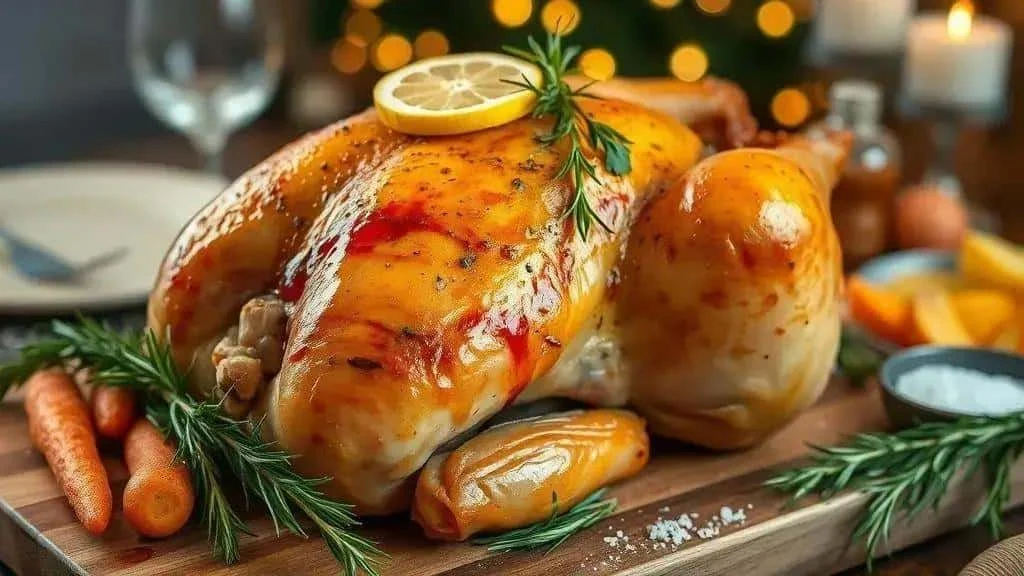
Lemon and herb roast chicken makes a fragrant centrepiece for New Year’s Eve. This recipe uses a whole chicken, rosemary, thyme, garlic and lemon, with herb butter under the skin. It includes roasting guidance, safe temperature checks, a short rest before carving and ideas for side dishes and variations.
Lemon and herb roast chicken is a versatile choice for a New Year’s Eve meal. Fresh herbs and lemon give it a bright aroma, while careful cooking helps keep the meat moist and the skin golden.
Ingredients for lemon and herb roast chicken
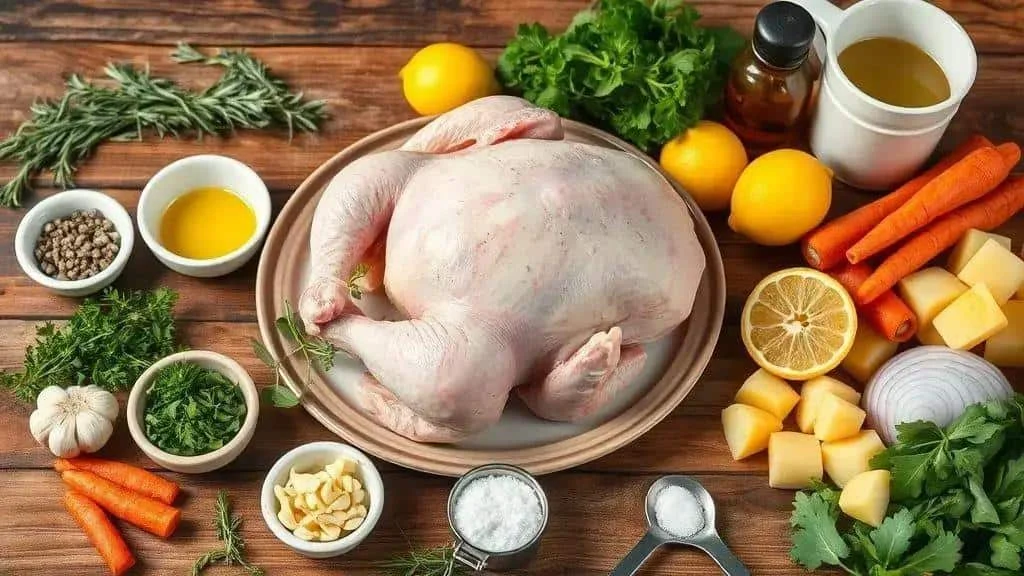
Measure the ingredients before handling the raw chicken. These quantities are for a lemon and herb roast chicken weighing 1.6–2 kg.
Ingredients
- 1 whole chicken, 1.6–2 kg – giblets removed, fully thawed if previously frozen. Do not wash raw poultry.
- 4 tbsp olive oil – or a suitable vegetable oil.
- 3 tbsp softened butter – a firm dairy-free baking fat is an alternative; low-fat spreads may contain too much water.
- 2 lemons – for zest, juice and garnish. The Brazilian limão siciliano means the familiar yellow lemon; a Persian lime gives a different flavour.
- 2 tbsp chopped fresh rosemary – or about 2 tsp dried rosemary.
- 2 tbsp fresh thyme leaves – or about 2 tsp dried thyme.
- 2 tbsp chopped parsley – optional, divided between the butter and serving.
- 4 crushed garlic cloves – or about 1 tsp garlic powder.
- Up to 1 tbsp coarse salt in total – adjust for grain size and taste; use less with salted butter, stock or pre-seasoned chicken.
- Up to 1 tsp ground black pepper – to taste.
- 1 tsp sweet paprika, optional – for colour and mild flavour. Sweet paprika is not necessarily smoked.
- 200 ml chicken stock or water – for the roasting tin. Dry white wine changes the flavour and is not an alcohol-free substitute after cooking.
- Optional roasting vegetables: 3 carrots, 4 medium potatoes and 1 red onion, cut into suitable chunks.
Quick ingredient tips
Substitutions: use olive oil or suitable dairy-free fat instead of butter; dried herbs generally need about one-third the volume of fresh. Scaling: adjust seasoning for a different-sized bird and follow its weight-based cooking instructions rather than multiplying the time mechanically.
How to make lemon and herb roast chicken
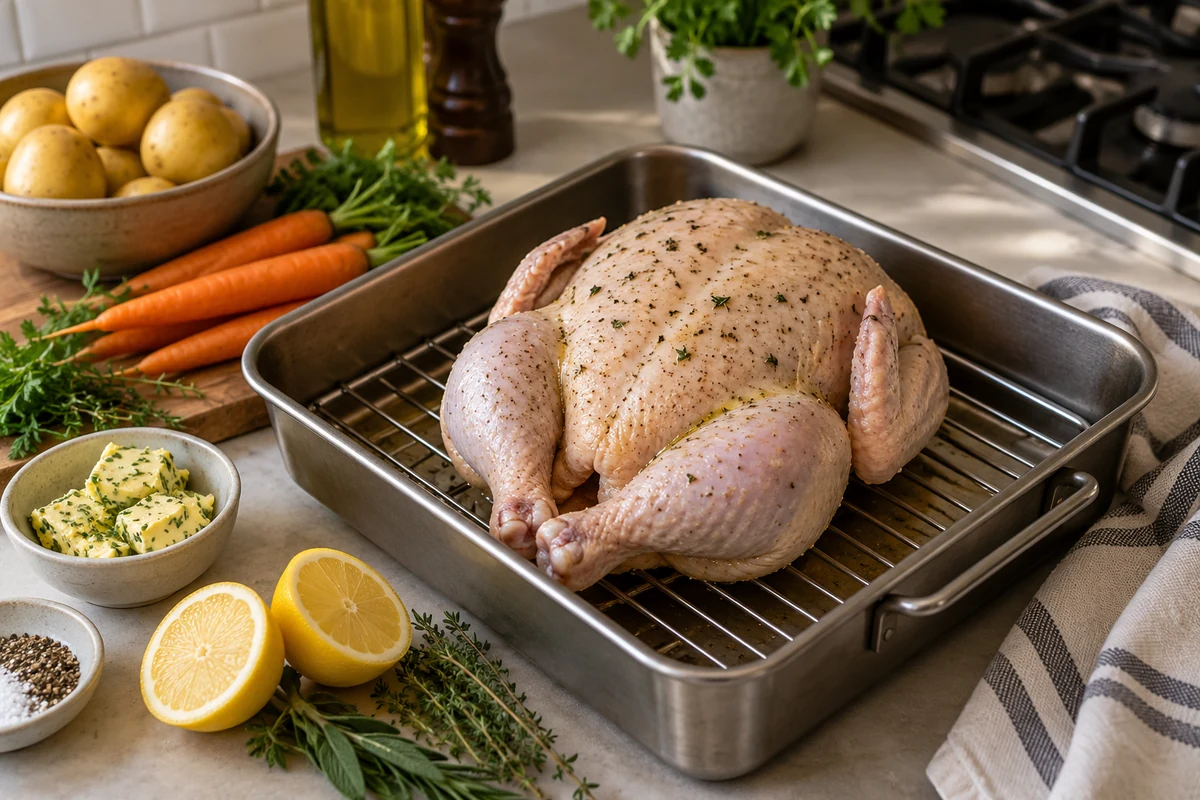
- Preheat and organise: heat the oven to 220°C conventional/200°C fan. Prepare a roasting tin, rack, foil and clean food thermometer. Keep raw-poultry utensils separate from ready-to-eat food.
- Dry the skin: pat the chicken dry with kitchen paper without washing it. Discard the paper immediately and wash hands and surfaces after contact with raw poultry.
- Mix the herb butter: combine the butter, 2 tbsp oil, zest of 1 lemon, rosemary, thyme, 1 tbsp parsley and all 4 crushed garlic cloves. Add a portion of the measured salt and pepper, reserving the rest for the outside and vegetables.
- Season beneath the skin: gently loosen the breast skin without tearing it and spread half the herb butter underneath. Wash your hands afterwards.
- Keep the cavity open: put lemon halves and onion pieces in the roasting tin rather than packing the cavity. Cook any substantial stuffing separately so heat can reach the bird evenly.
- Position the chicken: tuck the wing tips underneath. If tying the legs with kitchen string, do so loosely rather than closing the cavity tightly.
- Season the outside: spread the remaining herb butter over the skin and add paprika and the reserved seasoning as needed. The tablespoon of salt is the total allowance, not another tablespoon at this stage.
- Arrange the roasting tin: place the chicken breast-up on the rack. Toss the optional vegetables with the remaining 2 tbsp oil and a little of the reserved seasoning. Add the 200 ml stock or water to the tin without pouring it over the skin.
- Roast in two stages: cook at 220°C conventional/200°C fan for 15–20 minutes, then reduce to 180°C conventional/160°C fan. Use the packet’s timing as a guide and continue until thoroughly cooked. A clean probe in the thickest breast and thigh, away from bone, should show 70°C for 2 minutes or 75°C for 30 seconds. Size and oven performance affect the total time.
- Check occasionally: keep an eye on the tin so the juices do not burn, adding a little water if necessary. Occasional basting is optional; repeatedly opening the oven slows cooking and wetting the skin can reduce crispness.
- Protect the surface: cover loosely with foil if it browns before the centre is cooked.
- Rest before carving: once fully cooked, rest for 10–15 minutes under loose foil, then carve and serve promptly. Resting is not a substitute for completing cooking.
Practical tips and alternatives
- Temperature checks: check more than one thick area with a clean probe, avoiding bone. Use 70°C for 2 minutes or 75°C for 30 seconds; a single surface reading is insufficient.
- Season ahead: apply the herb butter 2–4 hours ahead if convenient, keeping the chicken covered on the lowest fridge shelf at 5°C or below and within its use-by date.
- Dried herbs: start with roughly one-third the fresh herb volume.
- Without butter: use olive oil for a dairy-free variation, checking the stock and other ingredients too.
- Different ovens: fan, gas and conventional ovens behave differently. Use the appropriate setting and rotate the tin if your oven has a hot spot, without relying on colour alone.
- Vegetables: dense potatoes and carrots need longer than soft vegetables. Adjust their size and starting time, and ensure anything exposed to raw chicken juices is thoroughly cooked.
- To finish: squeeze a little fresh lemon juice over the cooked chicken and add the remaining parsley using clean utensils.
New Year’s Eve roast chicken variations
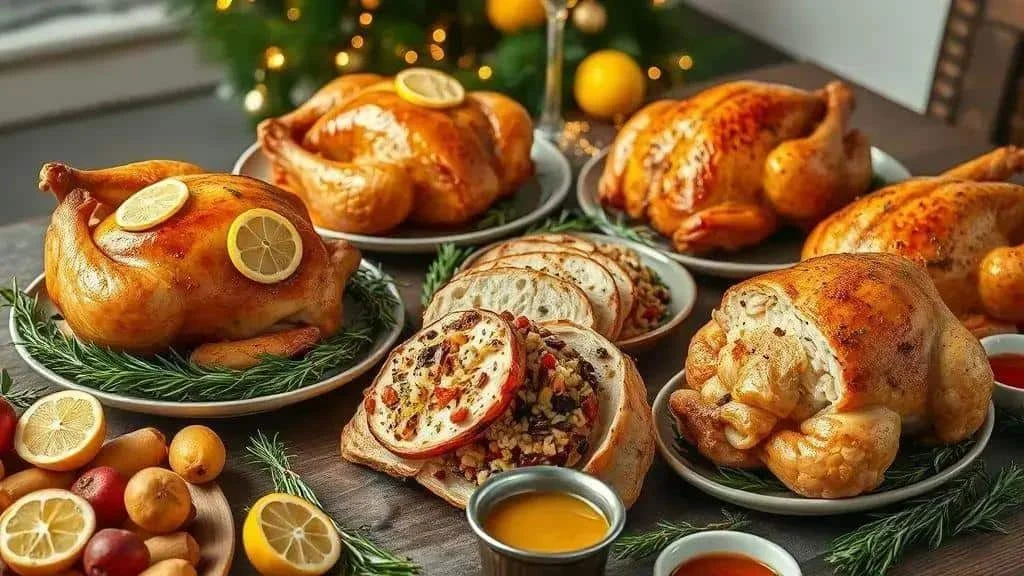
Adapt this New Year’s Eve roast chicken with different seasonings while keeping the same careful checks for doneness.
- Classic lemon and herbs: use rosemary, thyme and lemon zest with butter or olive oil. Oil makes it dairy-free if all other ingredients are suitable.
- Honey and lemon glaze: brush on a little honey, lemon juice and paprika near the end of cooking, watching closely because sugar burns easily.
- Mediterranean flavours: add garlic, oregano, chopped olives and capers, reducing added salt. Finish with lemon and a little olive oil.
- A spicy variation: mix a little harissa or piri-piri paste into the herb butter. Adjust the heat for your guests.
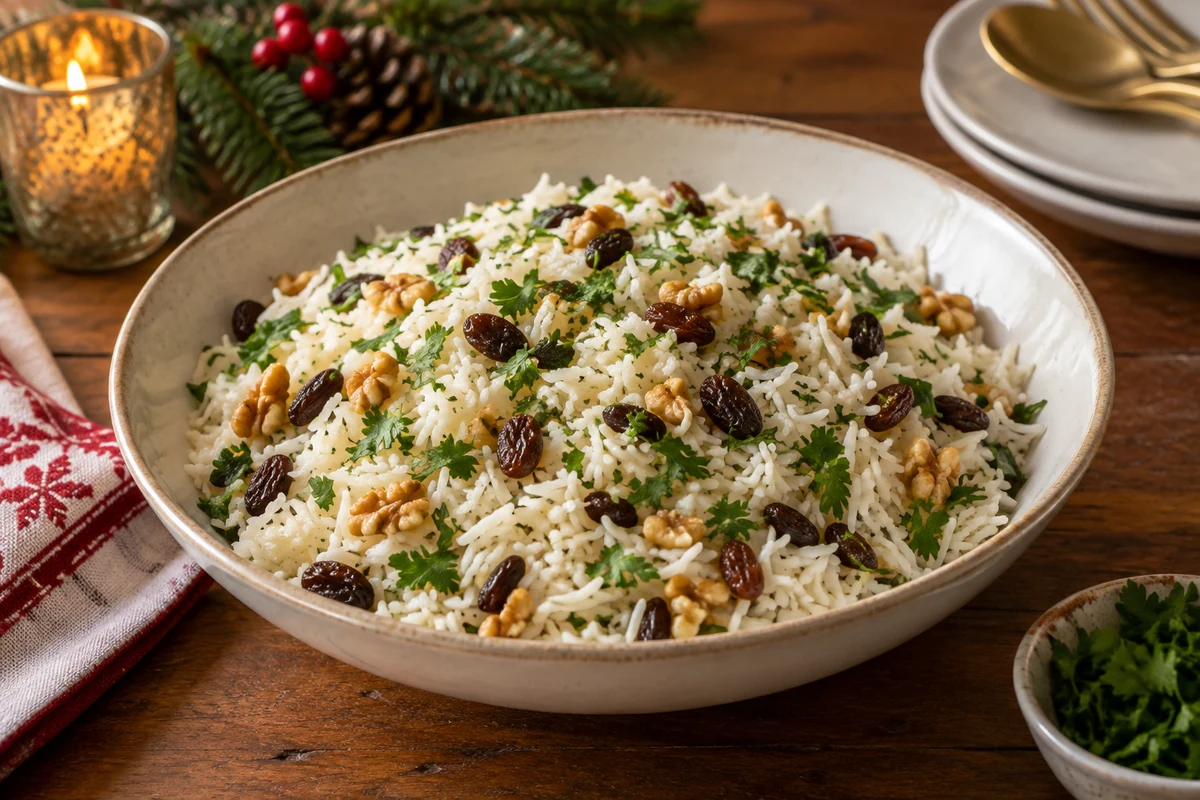
- Festive rice and dried fruit: prepare rice, apricots, raisins and nuts as a separate side dish, rather than packing them inside the raw chicken. This makes cooking and temperature checks easier.
- Dairy-free option: use olive oil, fresh herbs and suitable stock. Check individual dietary needs instead of assuming one substitution suits every restriction.
- Vegetarian or vegan centrepiece: roast a whole cauliflower with lemon, herbs and oil in its own clean tray. Use a cauliflower-specific method and cooking time, keeping it separate from meat juices.
Choosing a variation
- Consider preparation time: simple herbs or a final glaze take little extra work; prepare rice or stuffing separately and plan the oven space.
- Consider the guests: keep the main seasoning mild if needed and offer chilli sauce separately.
- Pairing ideas: citrus flavours work with green salads and sparkling drinks, while sweeter glazes suit mash and roast vegetables.
Quick substitutions
- Dried for fresh herbs: use around one-third as much by volume.
- Olive oil for butter: gives a different flavour and a dairy-free option, with less saturated fat than butter.
- Maple syrup for honey: works in a glaze, including one for the vegan cauliflower variation; it does not make chicken vegan.
Seasoning and marinating: what they do
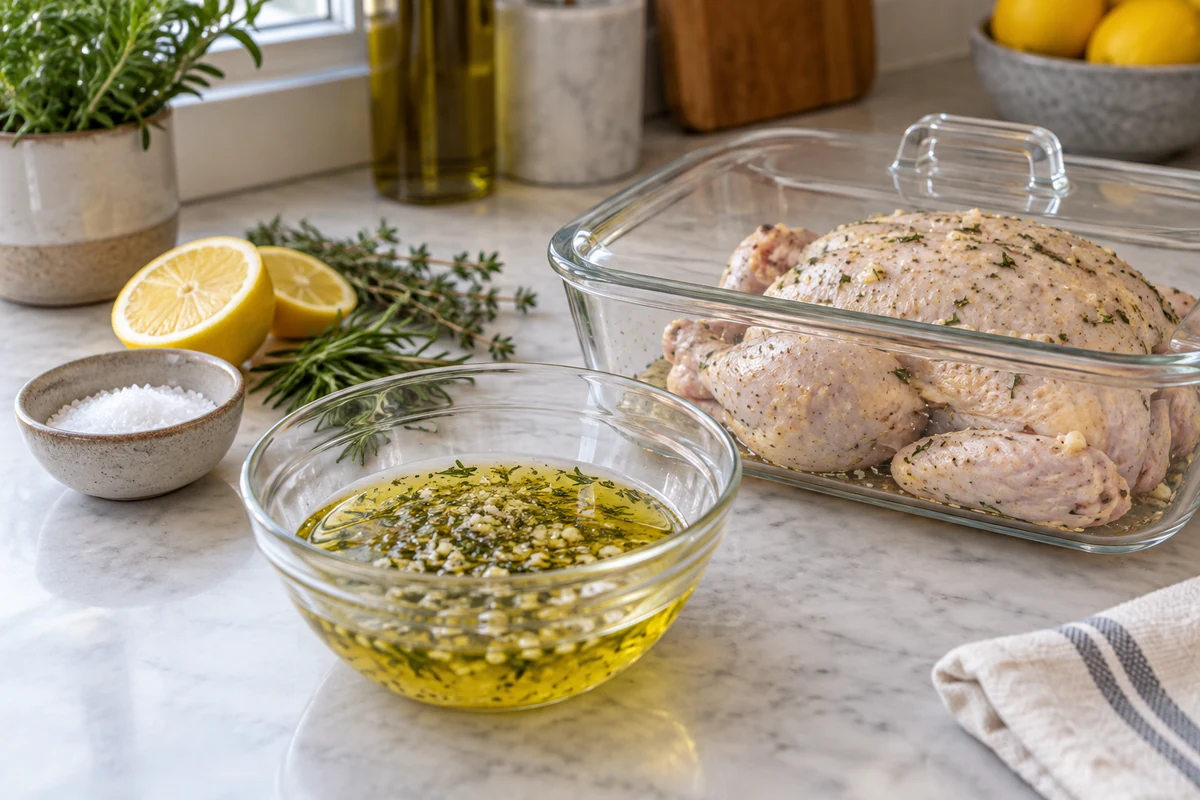
Seasoning works in different ways: salt enhances flavour, acids affect surface proteins and oil carries herb aromas. A marinade mainly flavours the surface; it does not reliably season an entire bird deeply or make raw chicken safe to eat.
The main elements
- Salt: seasons the meat and, in a suitable brine, can affect protein structure and water retention. The concentration and time matter.
- Acids such as lemon, vinegar or yoghurt: change the surface texture. Too much acid or too long a soak can make it unpleasantly soft; this is not cooking for food-safety purposes.
- Fats and oils: distribute aromatic compounds and help coat the surface. They do not seal all moisture inside.
- Herbs and spices: bring fragrance; dried herbs are usually more concentrated by volume than fresh.
- Honey and sugar: encourage browning and shine but can burn during prolonged high heat.
- Pineapple and papaya: contain enzymes that can break down proteins. Uncontrolled use can make the surface mushy, so follow a tested marinade rather than adding them casually.
Marinating carefully
- Choose a simple mixture: balance seasoning, a little acid and oil, or use a separate tested brine. You do not need both a salty brine and the full salt quantity in the herb butter.
- Measure salt by weight for brines: follow a tested concentration and soaking time. Salt crystal sizes vary, so a tablespoon per jug of liquid is not a reliable universal formula.
- Allow an appropriate time: small pieces can take 30 minutes to 2 hours, breasts around 2–6 hours and a whole bird around 4–12 hours in a mild marinade. These are flavour guidelines, not safety guarantees; strong acid needs less time and the use-by date still applies.
- Keep refrigerated: marinate covered at 5°C or below on the bottom shelf. Never leave raw chicken marinating on the worktop.
- Distribute the seasoning: loosen the breast skin gently if needed; there is no need to pierce the bird all over. Wash hands, utensils and surfaces afterwards.
- Remove excess moisture: pat the skin with kitchen paper before roasting. Discard used marinade and paper; keep a clean portion of sauce separate if needed for serving.
Practical marinade substitutions
- Dairy-free marinades: use a suitable plain plant-based yoghurt or a little lemon juice with oil. Their acidity differs, so follow a compatible recipe.
- Dried versus fresh herbs: start with one-third the volume of dried herbs.
- Oil choice: olive oil adds flavour; use only enough to coat rather than soaking the bird in fat.
- Bought marinades: check salt, sugar and allergens before adding more seasoning.
Flavour combinations
- Citrus and herbs: lemon zest and a little juice, olive oil, garlic and rosemary.
- Honey and mustard: honey, Dijon mustard, olive oil and paprika, with sugary glaze applied near the end.
- Mediterranean: olive oil, garlic, oregano, lemon and chopped olives.
- Warm and spicy: chilli paste, olive oil, cumin and thyme, with a little honey if desired.
Roasting evenly without drying the chicken
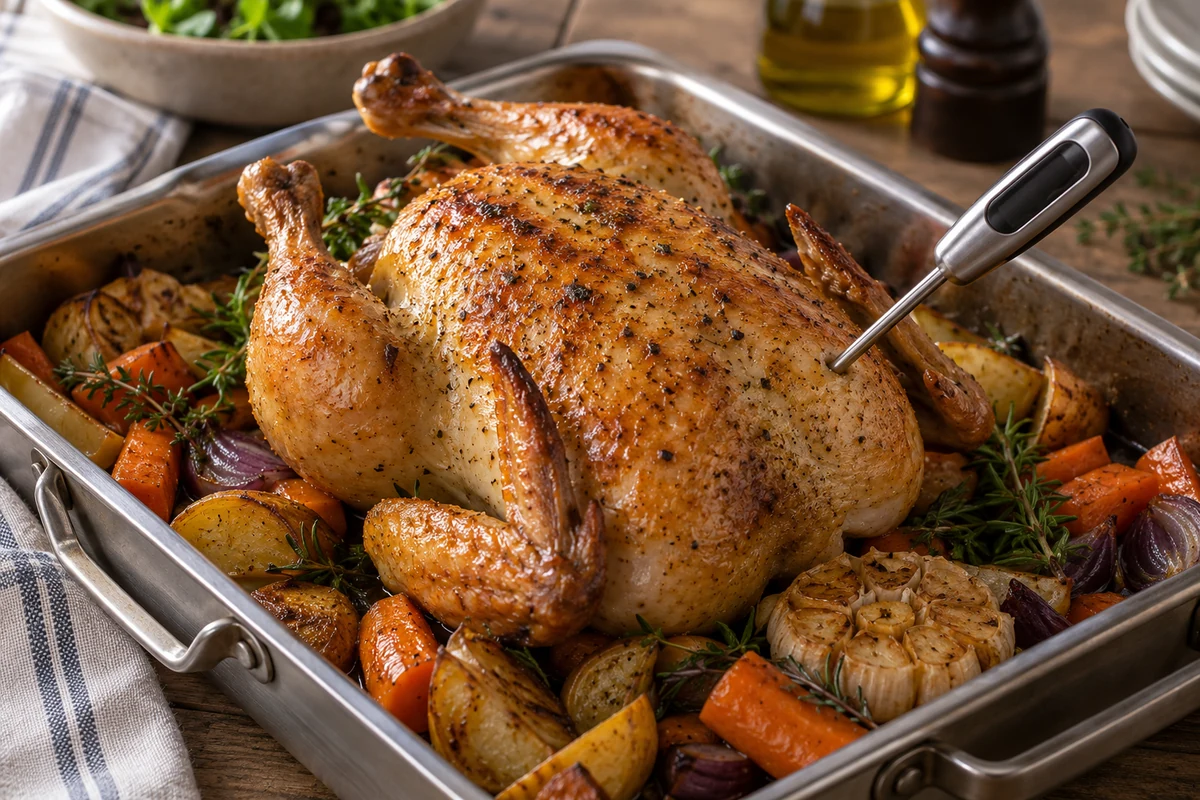
For evenly cooked, juicy roast chicken, pay attention to the oven, the centre temperature and the colour of the skin. Avoid extending cooking just to chase a darker surface.
Useful techniques
- A hot start: use 220°C conventional/200°C fan for 15–20 minutes, then reduce to 180°C conventional/160°C fan to finish.
- A roasting rack: allows air to circulate around the chicken and keeps it above the liquid in the tin.
- A food thermometer: check the thickest breast and thigh away from bone. 70°C for 2 minutes or 75°C for 30 seconds is a safe time–temperature check; temperature alone does not guarantee a juicy result.
- Brine or herb butter: a properly formulated brine can help moisture retention, while butter adds flavour beneath the skin. Adjust total salt and follow safe chilled handling.
- Liquid in the tin: use the 200 ml stock or water to prevent the drippings scorching. Top up a little if needed, keeping the liquid below the skin.
- Optional basting: an occasional spoonful of pan juices adds flavour, but frequent basting wets the skin and loses oven heat.
- Foil if needed: shield an already browned surface while the centre finishes cooking.
A practical roasting checklist
- Preheat to 220°C conventional/200°C fan and set a rack in a roasting tin.
- Pat the chicken dry without washing it.
- Apply the seasoning and herb butter beneath and over the skin.
- Place the bird on the rack, add 200 ml stock to the tin and arrange optional vegetables around it.
- Roast at the higher setting for 15–20 minutes, then reduce to 180°C conventional/160°C fan and cook through, checking both breast and thigh.
- Check the juices in the tin and add a little water if they are drying out. Shield the skin with foil if necessary.
- Rest the fully cooked bird for 10–15 minutes under loose foil before carving.
Quick reminders
- Carve after resting: use a clean board and knife for neat portions.
- Time the vegetables separately: adjust their size and cooking duration, checking tenderness and that any chicken juices are cooked through.
- Use the grill cautiously: a brief finish can add colour, but watch continuously and use only grill-safe cookware.
Side dishes for New Year’s Eve
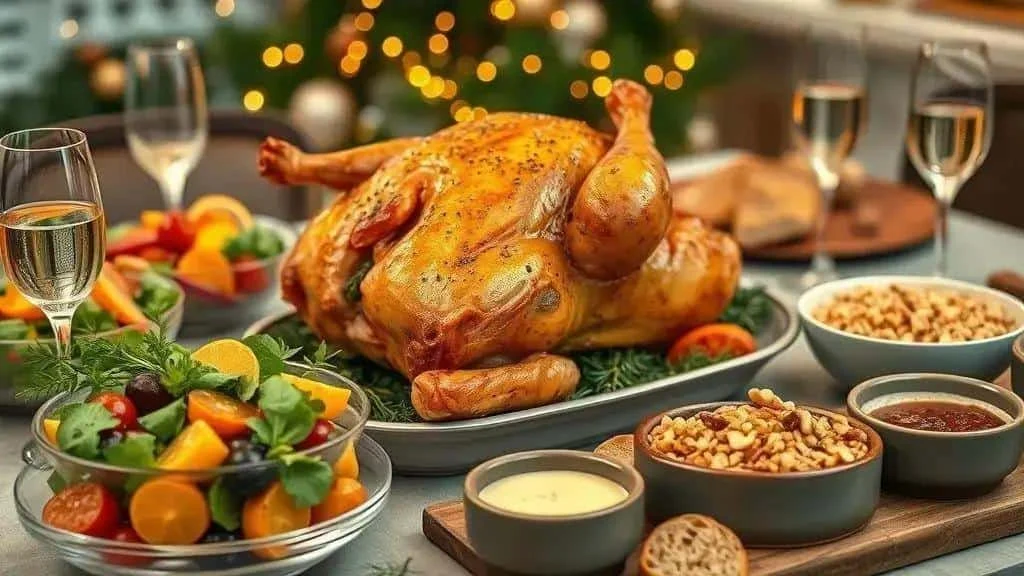
Choose sides that complement roast chicken with fresh, creamy and crisp textures.
Serving suggestions
- Citrus green salad: rocket, lettuce or watercress with orange segments and a light lemon-and-olive-oil dressing.
- Rustic roast potatoes: potato chunks with rosemary, oil and salt, or sweet potatoes for a sweeter variation.
- Mashed potato or mandioquinha: a creamy side made with milk and butter, or suitable plant-based alternatives. Mandioquinha is the Brazilian root vegetable also called arracacha.
- Festive rice: white or brown rice with nuts, raisins and lemon zest. Check nut allergies before adding them.
- Grilled vegetables: courgettes, aubergines and peppers with garlic and herbs.
- Sauces: offer a clean lemon-and-herb sauce or honey-mustard dressing separately. Never serve a sauce that contacted raw chicken without appropriate cooking.
- Bread and toast: a rustic baguette or lightly toasted sourdough works with sauces and mash.
Drinks to serve
- Sparkling wine: an optional pairing for adults who drink alcohol, particularly with citrus flavours.
- Light white wine: Sauvignon Blanc or a lightly oaked Chardonnay can accompany the herbs without dominating them.
- Alcohol-free option: sparkling water with lemon and mint or a lightly diluted citrus drink.
Meal-planning tips
- Vary textures: combine crisp bread, creamy mash and fresh salad.
- Plan the timing: choose some sides that can be made ahead, cooled and stored safely, then reheated once until steaming hot.
- Check dietary needs: offer suitable dairy-free and vegetarian dishes with separate utensils and clear ingredient information.
Roast chicken at Brazilian celebrations
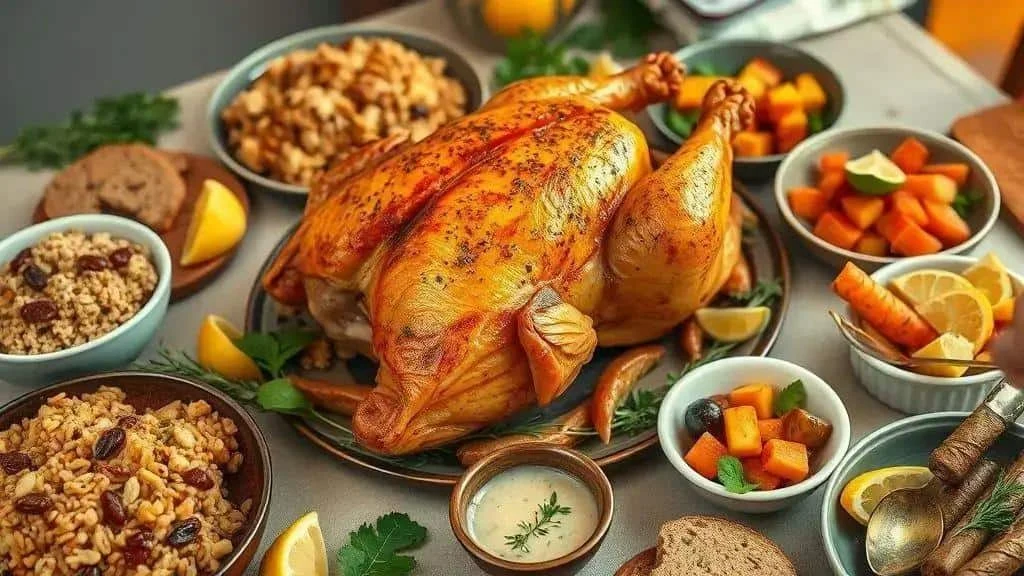
Chicken is a practical alternative for Brazilian festive meals, with seasonings and side dishes varying between families.
Some background
- A roast chicken can be a more manageable option than a large turkey for a smaller gathering. Cost depends on the bird and local prices.
- Brazil’s poultry sector expanded substantially during the twentieth century and beyond, as documented by Embrapa. That broader production history does not establish one universal history of Christmas dinner.
Regional inspiration
- Herbs, lemon and a separate bowl of cassava-flour farofa offer one Brazilian-inspired serving combination.
- Local fruit, rice dishes and seasonings from northern or north-eastern Brazil can inspire other versions without representing every household in those regions.
- Nuts, apples and dried fruit provide another festive flavour combination; these are serving ideas rather than fixed regional rules.
Cooking ideas
- A separate rice or farofa dish with dried fruit and nuts adds portions and sweet-savoury contrast.
- Citrus seasoning and herb butter add flavour, while careful cooking and temperature checks help avoid dry meat.
- Honey or mustard glazes are best added near the end so they colour without burning.
Sharing a festive meal
- A whole roast bird makes a striking centrepiece for a shared family meal.
- A smaller joint and separately prepared vegetarian options can help suit different budgets and dietary needs.
Quick ideas
- For a smaller budget: compare suitable bird sizes and use simple sides. Use leftovers only when they have been stored safely.
- For more herb flavour: season ahead in the fridge and spread herb butter under the breast skin.
- To serve: pair with crisp farofa, festive rice and citrus salad.
To finish
Lemon and herb roast chicken is an inviting New Year’s Eve main course. Prepare the seasoning ahead, keep raw poultry chilled and cook it thoroughly before the final rest.
Try one of the suggested flavours and adjust it to your household’s taste. Carve after the short rest, then serve promptly with your chosen sides.
Thank you for reading. Follow our social channels and visit I Love Christmas for more seasonal recipes and festive meal ideas.
Share a photograph or tell us in the comments how you served your roast chicken.
New Year’s Eve roast chicken: frequently asked questions
How long should I roast a 1.6–2 kg chicken?
Follow the bird’s packet instructions and use timing only as a guide. This method starts at 220°C conventional/200°C fan for 15–20 minutes, then reduces to 180°C conventional/160°C fan. Continue until the thickest breast and thigh reach 70°C for 2 minutes or 75°C for 30 seconds, away from bone. A larger bird may need longer than the original recipe’s estimate.
How long can I marinate the chicken?
For a mild marinade, small pieces may need 30 minutes to 2 hours, breasts 2–6 hours and a whole bird 4–12 hours. Strongly acidic mixtures need less time. Always refrigerate covered at 5°C or below and stay within the use-by date; marinating does not extend storage life.
How do I get crisp skin and moist meat?
Pat the skin dry without washing the chicken, add herb butter or oil and use a hot start before reducing the oven temperature. Avoid excessive basting, check doneness with a thermometer and rest for 10–15 minutes before carving.
Can I use dried herbs?
Yes. Start with about one-third the volume of dried herbs and mix them into the butter or oil.
How should I store and reheat leftovers?
Remove meat from the carcass into manageable portions, cool promptly and refrigerate within 2 hours at 5°C or below. Eat within 48 hours or freeze promptly. Reheat only once until steaming hot throughout, checking the centre rather than just the surface.
Which side dishes work well?
Try citrus green salad, roast potatoes, creamy mash or festive rice. Offer clean honey-mustard or herb sauce separately and check ingredients for guests with allergies.
Sources and Further Reading
- Food Standards Agency: cooking food safely
- UK guidance: chilling, freezing and defrosting food
- Embrapa: poultry and pig production in Brazil