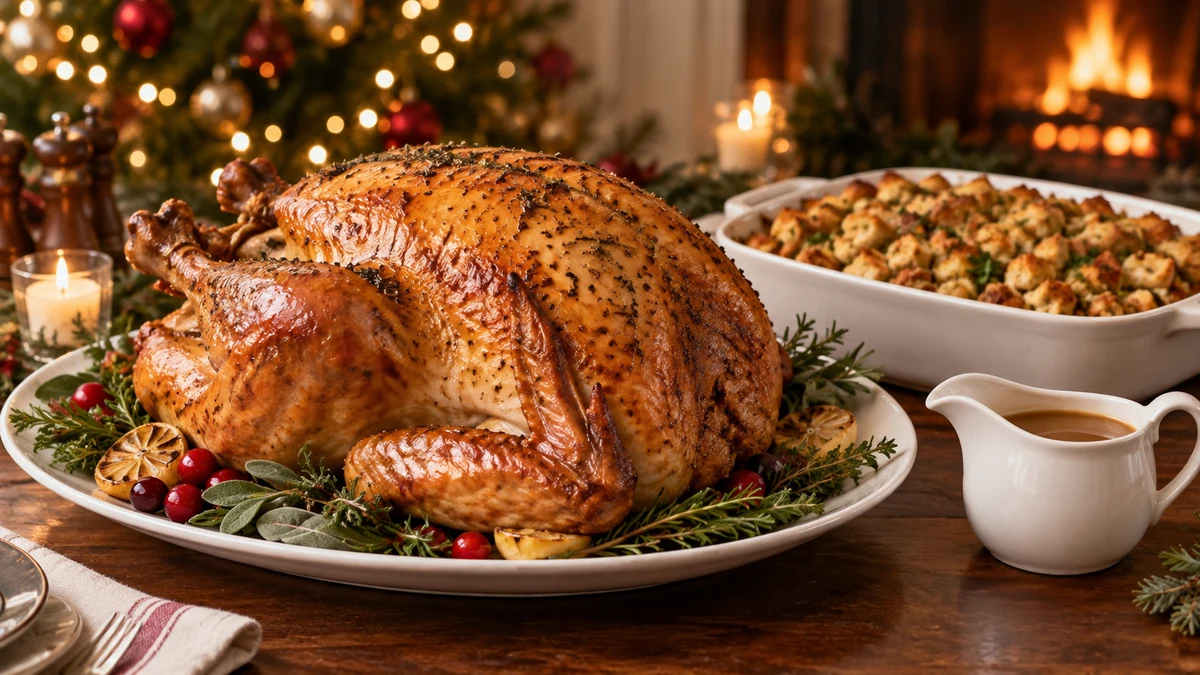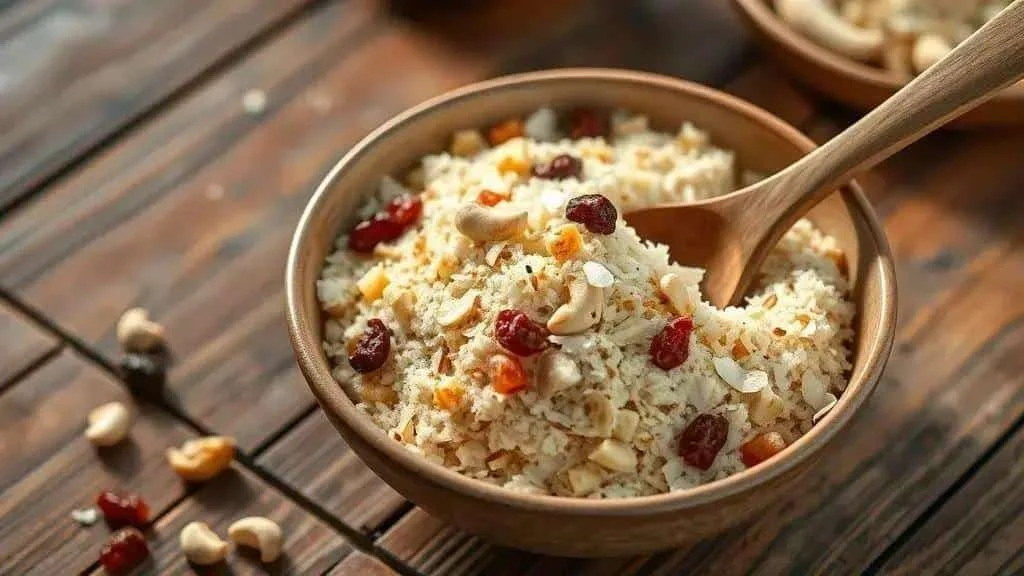
Dried fruit farofa is a Brazilian side dish made with toasted cassava flour, dried fruit, coconut and toasted nuts. Its sweet-savoury flavour and crumbly texture complement roast dinners. It can be made vegan, but this recipe contains cooked onion and fresh herbs: cool and refrigerate leftovers promptly and use within 48 hours, rather than treating it as a shelf-stable dry mix.
Dried fruit farofa brings coconut sweetness and crunchy nuts to the Christmas table. This fragrant, straightforward side dish is a lovely way to introduce a Brazilian festive favourite to your family meal.
Ingredients for dried fruit farofa
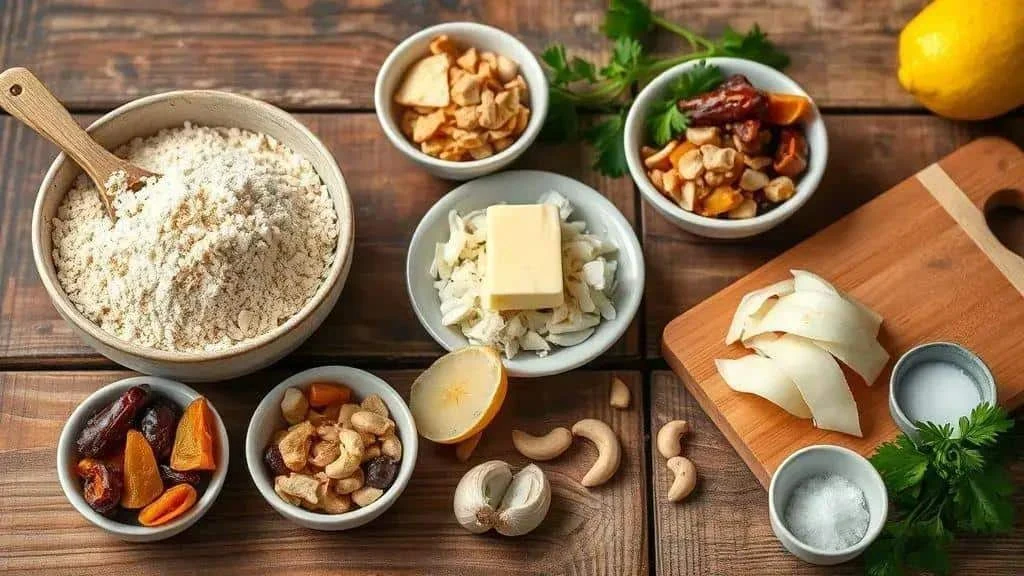
- 240 g toasted cassava flour – use Brazilian farinha de mandioca torrada, adding gradually to suit the texture. This is not tapioca starch or raw cassava baking flour; follow the product’s preparation instructions.
- 45 g butter – for frying; alternatively use 3 tablespoons vegetable oil.
- 80 g desiccated coconut – for fragrance and gentle sweetness. Fresh grated coconut is an alternative, but needs draining and light toasting to reduce moisture.
- 60 g chopped nuts – a mixture of cashews, Brazil nuts or walnuts, toasted and chopped.
- 140 g chopped dried fruit – combine raisins, dried apricots and dates, cutting larger pieces into small chunks.
- 1 medium onion, finely chopped – softened onion adds savoury flavour and a little moisture.
- 2 garlic cloves, finely chopped – fry briefly with the onion.
- 15 g soft brown sugar, optional – add only if you prefer a sweeter farofa; the fruit may be sweet enough.
- Salt to taste, starting with up to ½ teaspoon – use less if the nuts or butter are salted.
- 2 tablespoons chopped fresh parsley – for colour and freshness at the end.
- Finely grated zest of 1 lime or lemon, optional – adds a bright citrus aroma.
Quick substitutions and tips
- Oil instead of butter: coconut oil or olive oil makes the base vegan, with a slightly different flavour.
- Fresh coconut: drain and lightly toast grated fresh coconut before using. Its extra water, rather than the amount of butter alone, can make the farofa damp.
- Dried fruit: substitute dried cranberries or dried apple for apricots, chopping evenly so the pieces are well distributed.
- Coarser flour: choose the grade of toasted cassava flour you enjoy. Sieving removes large particles but does not make them finer; briefly toasting enhances flavour rather than changing grain size.
- No added sugar: leave out the brown sugar for a more savoury balance. The dried fruit still contributes sugar and sweetness.
- Storage: cool leftovers promptly, refrigerate within 2 hours at 5°C or below and eat within 48 hours. Cooked onion and fresh parsley mean this farofa should not be stored at room temperature for days.
How to make dried fruit farofa
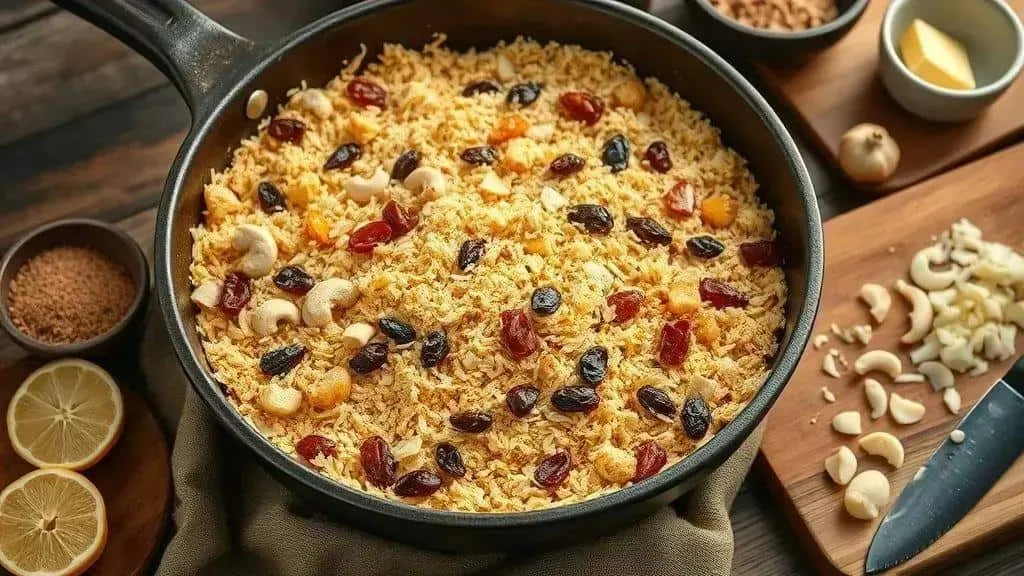
- Prepare the ingredients: chop the nuts and dried fruit, measure the coconut, cassava flour and butter, and prepare the onion, garlic and herbs.
- Toast the nuts: stir the chopped nuts in a dry frying pan over a medium heat for around 2–3 minutes, watching carefully, until fragrant and lightly golden. Set aside.
- Soften the onion and garlic: melt the 45 g butter over a medium heat. Add the chopped onion and cook for about 3–4 minutes, or until softened and translucent. Stir in the garlic for another 30–60 seconds without letting it burn.
- Warm the fruit and coconut: stir in the 140 g dried fruit and 80 g coconut for 1–2 minutes to warm them through and release their aromas. This warms the fruit rather than fully rehydrating it.
- Add the flour gradually: reduce the heat and stir in the 240 g toasted cassava flour a little at a time, stopping when the farofa has the crumbly texture you prefer. Follow any cooking directions on the packet.
- Adjust the texture: if too dry, add a little extra butter or oil, up to a tablespoon at a time. If damp, stir over a low heat until the mixture becomes looser and drier.
- Season: add up to ½ teaspoon salt, adjusting for salted ingredients. Add the optional 15 g brown sugar and citrus zest if using, then taste and adjust.
- Finish with nuts and herbs: gently fold in the toasted nuts and 2 tablespoons chopped parsley.
- Rest briefly and serve: remove from the heat and rest for 5 minutes, then serve warm or shortly afterwards at room temperature. Refrigerate leftovers promptly.
Practical tips
- For a vegan version: use coconut oil or olive oil instead of butter and check any added ingredients are vegan.
- Vary the fruit: dried cranberries or apple work instead of apricots; chop them finely enough to distribute throughout the flour.
- Storage: cool and refrigerate within 2 hours, in a covered container at 5°C or below. Eat within 48 hours or freeze promptly for later use.
Dried fruit farofa variations
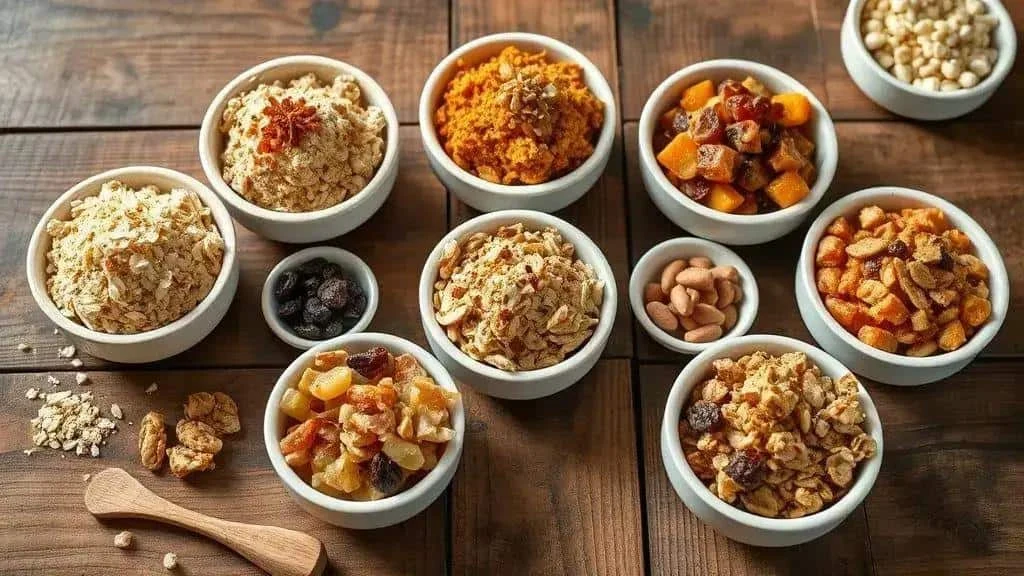
Adapt dried fruit farofa to your tastes and the occasion. Changing the fat, fruit or nuts creates a different balance while retaining the familiar crumbly texture.
Ideas to try
- Coconut and nuts: combine butter, desiccated coconut, cashews and Brazil nuts. Lightly toast the nuts to bring out their flavour.
- Vegan: replace butter with coconut oil or olive oil. Use a little brown sugar or molasses if desired, or omit added sweeteners. Adjust dryness with a little oil; this recipe does not need milk, and honey is not vegan.
- Savoury with bacon and caramelised onion: add thoroughly cooked, crisp bacon and well-browned onion. Reduce or omit the sugar and season with salt only after tasting.
- Citrus and apricot: add orange or lemon zest and chopped dried apricots. A little brown sugar or, for a non-vegan version, honey can add sweetness if needed.
- A sweet crumble-style topping: use chopped dark chocolate, cocoa nibs and dried apple in a separate sweet variation, omitting the onion, garlic and parsley. Add chocolate once cool so it stays in pieces.
- Seeds and granola: add pumpkin seeds, sunflower seeds or unsweetened granola for extra crunch with salads. Check labels for gluten, nuts and other allergens.
- For children: keep salt modest and choose mild flavours. Omit nuts or prepare them in a form suitable for the child’s age; whole nuts and large hard pieces are choking hazards for young children.
Useful substitutions
- Flour: a Brazilian maize-based farofa flour can give a different texture; follow its packet directions. British cornflour is starch and is not a suitable like-for-like replacement.
- Nuts: use walnuts, almonds or pistachios instead of Brazil nuts, adjusting the toasting time and checking guests’ allergies.
- Coconut: fresh grated coconut can replace desiccated coconut, but drain and lightly toast it first to reduce moisture.
Balancing sweetness and salt
- Taste before adding sugar: dried fruit may provide all the sweetness you need.
- If adding bacon or cheese, use less salt at first and adjust at the end.
- Citrus zest adds fragrance to a sweet version, although it does not remove its sugar.
Texture and presentation tips
- Briefly toast the cassava flour over a low heat for a drier, more fragrant farofa, following its packet instructions.
- Fold in the toasted nuts at the end to keep their crunch.
- Serve warm for the fullest aroma, or at room temperature shortly after making; keep the remaining portion chilled.
Choosing dried fruit, coconut and nuts
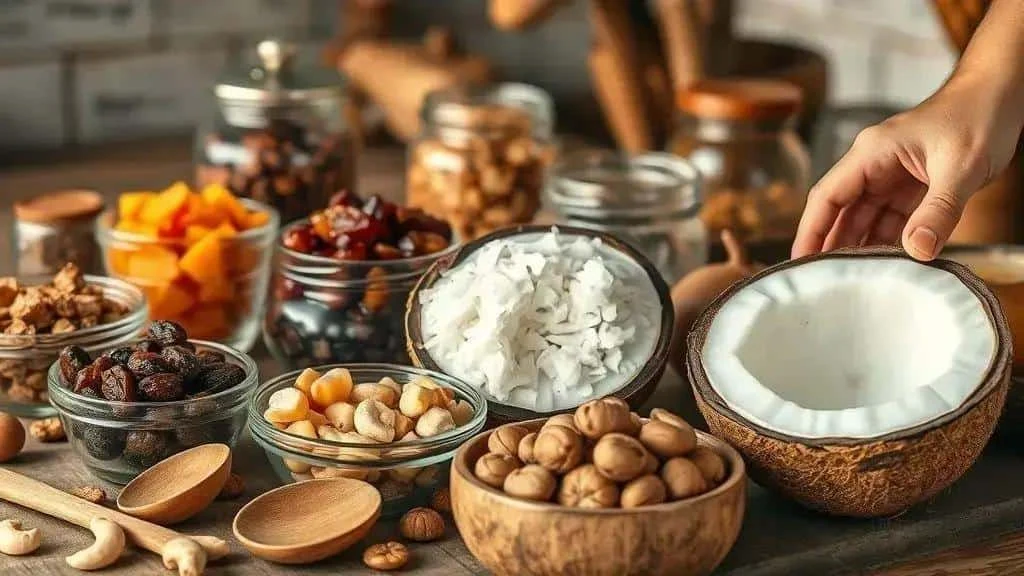
Good ingredients make dried fruit farofa more enjoyable. Check packaging, dates, texture and aroma, remembering that good appearance alone cannot guarantee food safety.
Dried fruit
- Colour and texture: look for the expected colour and texture for the fruit, without mould or unexpected wetness. Some fruits naturally develop sugar crystals, which are not automatically a sign of spoilage.
- Smell: avoid fruit with an unexpectedly fermented, sour or otherwise unpleasant smell.
- Packet ingredients: check added sugar, storage instructions and dates. Dried fruit may contain sulphites; preservatives are not inherently a defect, but allergen information matters.
- Size and cutting: cut larger fruits into evenly sized pieces so their flavour is spread through the farofa.
Desiccated or fresh coconut
- Desiccated coconut: choose a sealed packet with the expected cream-white colour, without mould, unusual damp clumps or signs of damaged packaging.
- Fresh coconut: look for an intact shell and, once opened, firm flesh without mould or an unpleasant smell. A sloshing sound alone does not establish freshness.
- Aroma: expect a clean coconut smell; discard coconut that smells sour or rancid.
Nuts
- Appearance and texture: avoid mould, unexpected discolouration and rancid smells. Nuts naturally contain oil, so an oily surface alone does not prove rancidity.
- Flavour and use: Brazil nuts and cashews have different flavours and textures; choose the mixture you enjoy.
- Raw or roasted: raw nuts let you control toasting; ready-roasted nuts save time. Check whether oil or salt has been added.
Buying and storing ingredients
- Buy manageable amounts: opened fruit and nuts gradually lose quality, especially when kept warm or exposed to air.
- Storage: keep dry ingredients sealed according to their labels. Nuts may keep better chilled or frozen; fresh coconut needs refrigeration. These ingredient rules do not make the finished onion-and-herb farofa shelf-stable.
- Check before use: inspect packaging and smell the ingredients. Do not taste food you suspect has spoiled, and discard anything mouldy or otherwise doubtful.
- Finishing touch: lightly toast nuts and cassava flour separately, stirring frequently so they become fragrant without burning.
How to store farofa safely
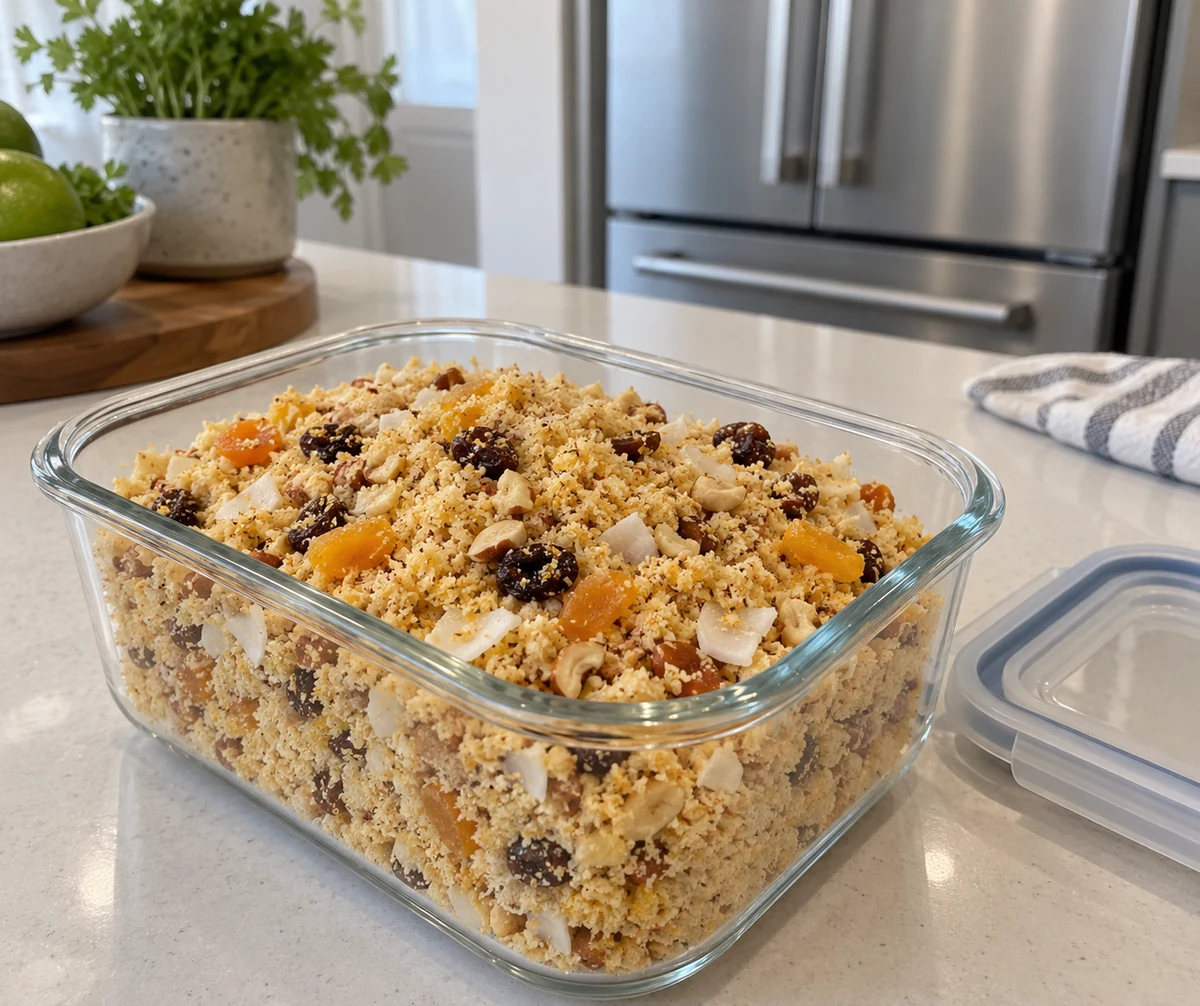
Divide leftovers into small, shallow portions so they cool quickly. Refrigerate within 2 hours, rather than waiting indefinitely for a large bowl to become completely cold.
At room temperature
- Container: keep the serving bowl protected from contamination and use a clean spoon.
- Location: keep it away from direct sunlight and other heat sources during the meal.
- Time: room temperature is for brief serving, not storage. Refrigerate within 2 hours of cooking or taking it out of the fridge; discard portions left out too long.
In the fridge
- When to refrigerate: always refrigerate leftovers from this recipe because it includes cooked onion and fresh herbs, even when made with oil and desiccated coconut.
- Container: use a clean, covered food container and keep the fridge at 5°C or below.
- Time: eat within 48 hours or freeze promptly. A tightly closed lid does not make 20 days of refrigerated storage appropriate.
- Avoid: do not leave a deep, tightly packed bowl cooling for hours. Use shallow portions, allow steam to escape briefly, then cover and chill promptly.
In the freezer
- Packaging: freeze cooled portions promptly in suitable bags with excess air removed, or in freezer-safe containers.
- Time: aim to use within about 3 months for quality, subject to the ingredients’ instructions. The nuts and coconut may soften after thawing.
- Thawing: thaw in the fridge and use within 24 hours of fully defrosting. Reheat only once if serving hot.
Preventing moisture and contamination
- Cool promptly: spread the farofa into shallow portions rather than sealing a large steaming mass; refrigerate within 2 hours.
- Clean utensils: use a clean, dry serving spoon and keep it away from raw meat or used plates.
- Small portions: store portions separately so you only take out what you need.
- Label: record the preparation or freezing date and keep track of the storage time.
Reheating tips
- Frying pan: stir over a gentle to medium heat until steaming hot throughout. Timing depends on the quantity and starting temperature; 2–4 minutes is not a safety guarantee.
- Oven: spread in a shallow tray in an oven preheated to 160°C conventional or 140°C fan. Stir periodically and heat until steaming hot throughout, rather than relying on a fixed 5–8 minutes.
- Microwave: heat in a suitable covered container in short intervals, stirring to eliminate cold spots, until steaming hot throughout. A brief final stir in a pan can improve texture.
- Serving: serve soon after reheating. Reheat only the amount needed and do not reheat the same portion repeatedly.
What to serve with farofa at Christmas
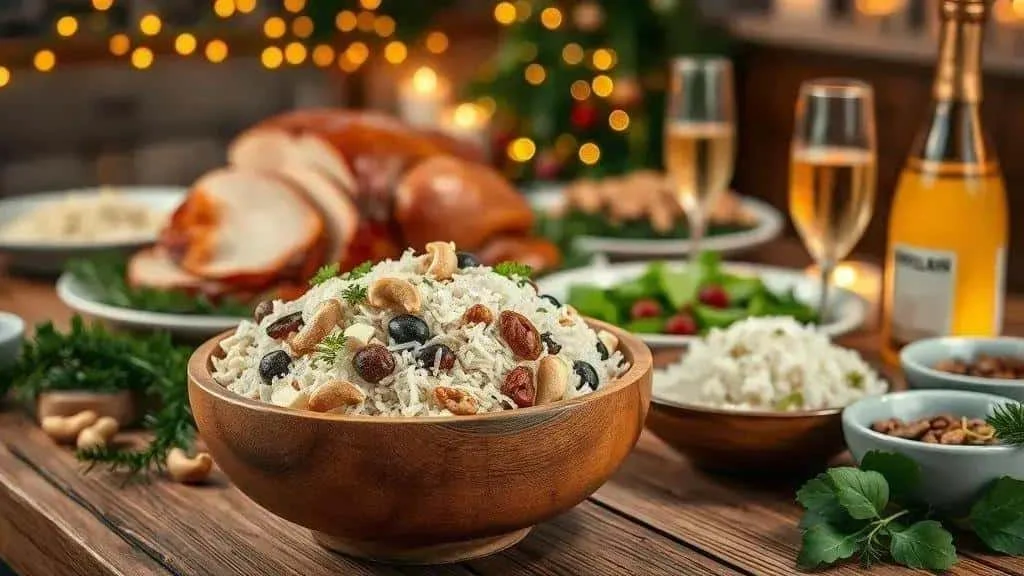
Balance the sweetness and texture of dried fruit farofa with dishes and drinks that complement its rich, nutty flavour.
Classic pairings
- Roast turkey or chicken: juicy roast poultry with a light gravy contrasts with the crumbly farofa. In Brazil, festive poultry such as Chester is another familiar pairing.
- Roast pork: the fruit’s sweetness and the farofa’s texture complement richer cuts; they do not remove fat from the meal.
- Plain or herbed rice: a simply seasoned rice dish lets the fruit stand out, while parsley adds freshness.
- Green salad with vinaigrette: a sharp dressing provides contrast to the sweet fruit and buttery crumbs.
Drinks
- Brut sparkling wine: a dry sparkling wine offers a refreshing contrast if you choose to serve alcohol.
- Fresh white wine: a sauvignon blanc’s acidity and fruit notes can complement the dish without overwhelming it.
- Lighter red wine: pinot noir is one option alongside a more strongly flavoured roast.
- Alcohol-free option: sparkling water with citrus slices or a lightly diluted citrus juice refreshes between mouthfuls.
Pairings for different variations
- Vegan version: serve with roasted vegetables and a bean or grain salad for a varied meal.
- Bacon or savoury version: add simply seasoned rice and a sweet-sour salad to balance the saltier flavours.
- Sweet dessert variation: the separate version without onion, garlic and parsley can accompany fresh fruit or a mild cheese such as ricotta, for contrasting textures.
Serving tips
- Serve warm: gentle warmth brings out the coconut and toasted-nut aromas.
- Portions: allow roughly 40–60 g per person as a side, adjusting to the rest of the meal and guests’ appetites.
- Separate serving bowl: offer farofa with its own spoon so guests can choose their portion. Label the nuts and other allergens clearly.
- Flavour balance: if other dishes are very sweet, include sharper and more savoury accompaniments.
Finishing touches
- Citrus zest: a little freshly grated lime, lemon or orange zest adds fragrance just before serving.
- Fresh herbs: parsley or chives add colour and a fresh flavour.
The background to dried fruit farofa
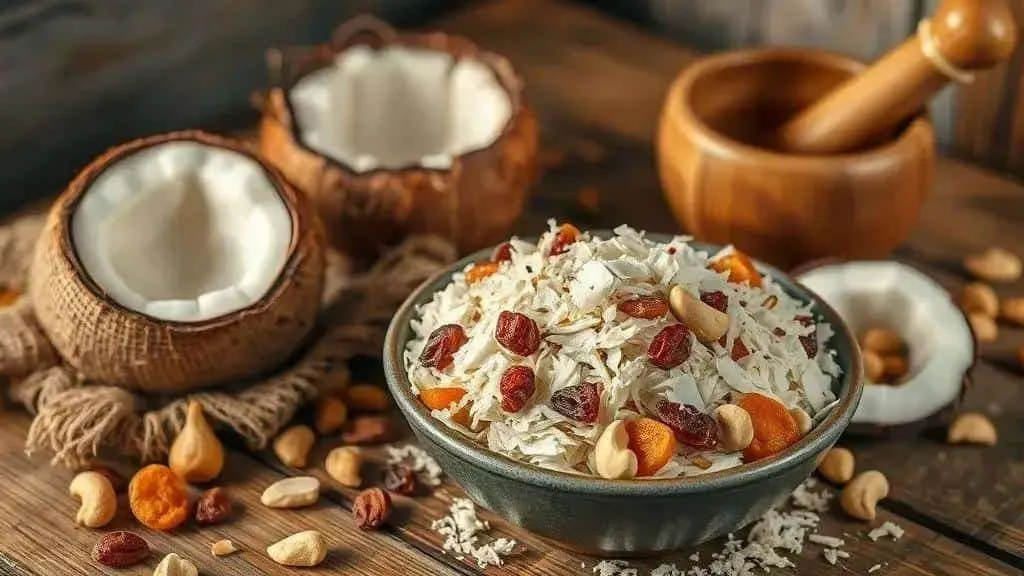
Farofa brings together ingredients and cooking traditions found across Brazil. Coconut, nuts and dried fruit make this version particularly suited to a festive table, without requiring a single origin story for every ingredient combination.
Origins and development
Cassava processing and flour-making have deep Indigenous roots in Brazil. Farofa developed around this versatile flour, with many household and regional variations. Dried fruit adds concentrated sweetness to festive recipes, but the exact history of this coconut-and-nut combination is not established here.
Cultural context
- Celebrations: dried fruit and nuts make a festive variation of a familiar Brazilian accompaniment.
- Regional variety: ingredients vary with local availability and family taste. Coconut, cashews, Brazil nuts and walnuts offer different possibilities rather than fixed rules for entire regions.
- Practical ingredients: drying fruit makes it convenient to keep and use in celebrations. Once mixed with cooked onion and fresh herbs, however, the finished dish becomes perishable.
A few interesting details
- Brazil nuts contain selenium, but their selenium content varies. Enjoy them as part of a varied diet rather than treating a portion of this recipe as a measured supplement.
- Desiccated coconut adds aroma with less water than fresh grated coconut, making it useful when you want a crumbly finish.
- A separately prepared sweet farofa can also be used as a contrasting topping for fruit or mild cheese.
- Toasting the flour and nuts separately gives more control over browning and helps keep distinct textures.
Family recipes and personal adjustments
Family recipes develop through small changes: citrus zest, a different nut or less added sugar. Experimenting and keeping notes helps you repeat the version your household enjoys, while retaining sensible cooking and storage practices.
Conclusion
Dried fruit farofa with coconut and nuts is a straightforward way to add a Brazilian touch to Christmas dinner. Small changes let you adjust its sweetness, richness and crunch.
Try a variation, taste before adding more salt or sugar, and note the adjustments you would like to repeat.
Thank you for reading. Follow our social channels for more recipes and seasonal ideas, and visit I Love Christmas to explore more festive cooking.
Dried fruit farofa with coconut and nuts: frequently asked questions
Which dried fruits work best in farofa?
Raisins, chopped dried apricots and dates work well. Cut larger fruits into small, evenly sized pieces to distribute their sweetness throughout the dish.
Can I make vegan farofa?
Yes. Replace the butter with coconut oil or olive oil. Add a little brown sugar if desired, or omit added sweeteners, and adjust dryness with small amounts of oil. Check additional ingredients are vegan and do not use honey.
How should I store farofa?
Cool promptly in shallow portions and refrigerate within 2 hours at 5°C or below. Use within 48 hours, or freeze promptly for up to about 3 months for quality. Thaw in the fridge and use within 24 hours. This onion-and-herb recipe is not suitable for days of room-temperature storage.
How do I keep the nuts crunchy?
Toast the nuts separately and fold them in at the end. Reheating a chilled portion in a pan can help restore texture, but heat until steaming hot throughout and reheat only once.
How much farofa should I serve per person?
Allow roughly 40–60 g per person as a side. A larger 80–100 g serving may suit a meal where farofa is a more substantial accompaniment; adjust to the other dishes and appetites.
Sources and Further Reading
- UK guidance: chilling, freezing and defrosting food
- IPHAN: traditional cassava flour knowledge and practices
- NHS: selenium and other minerals
- NHS: preparing food safely for young children