Brazilian escondidinho is a comforting pie of shredded beef hidden beneath creamy cassava mash and melted cheese. Learn how to prepare the salted beef, cook suitable food-grade cassava, assemble the layers and adapt the topping with potatoes. It makes a generous family dish for New Year’s Eve or a weekend meal.
This Brazilian salted beef and cassava pie combines a savoury filling with a soft, golden topping. The step-by-step guide includes preparation, serving ideas and alternatives for ingredients that may be harder to find in the UK.
Ingredients for Salted Beef and Cassava Pie
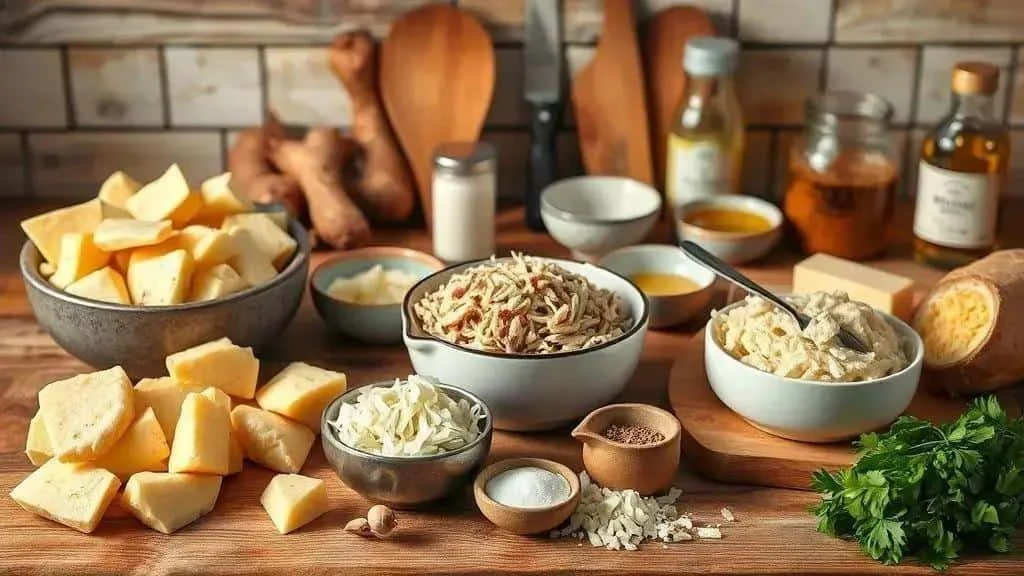
These ingredients make approximately six servings of escondidinho. The beef weight below is its cooked, desalted and shredded weight; the amount to buy will depend on the product and its cooking yield.
- 1.2 kg peeled cassava, weighed before cooking – use commercial sweet or table cassava sold for cooking, preferably packaged with preparation instructions. Do not use unidentified or bitter cassava. Alternatively, use 1.5 kg peeled potatoes for a softer-tasting mash.
- 600 g cooked, desalted and shredded carne seca – Brazilian salted dried beef. Properly prepared charque is another option, or use 600 g cooked shredded beef brisket for a readily available alternative.
- 2 tbsp butter – for the mash. Olive oil is a dairy-free alternative, but is not lower in energy spoon for spoon.
- Up to 200 ml milk – add gradually; the amount needed varies with the cassava. Unsweetened soya or oat drink can be used for a dairy-free version.
- 100 g grated mozzarella or queijo coalho – for the topping. Cheddar or Parmesan gives a different flavour.
- 1 medium onion, chopped.
- 3 garlic cloves, crushed, or adjust to taste.
- 2 tbsp oil or olive oil – for frying the onion and garlic. Clarified butter is another option if dairy is suitable.
- Chopped parsley or coriander, to taste – for the filling and garnish.
- Black pepper and salt, to taste – taste the cooked filling before adding salt, as the beef may already provide enough.
- Optional: ½ of a 240 ml cup of requeijão – a Brazilian creamy cheese spread, for a richer mash. Soft cream cheese or a smooth ricotta spread can be substituted.
- Optional: chopped fresh red chilli or mild biquinho peppers – for colour and a little heat.
Practical Substitutions and Preparation Tips
Desalting the beef: follow the packet instructions. Where soaking is specified, keep the meat covered with cold water in the fridge, typically for 12–24 hours, changing the water two or three times. Do not soak it on the worktop. A brief boil alone does not reliably replace the product’s preparation method.
Cooking cassava: follow the preparation and cooking instructions for the commercial table cassava you have bought. Peel fresh roots thoroughly, cook fully, discard the cooking water and remove the tough central fibres before mashing. Do not assume that an arbitrary boiling or pressure-cooking time makes an unknown variety safe.
Mash texture: add the milk a little at a time until spreadable. If the mash becomes too loose, stir in more cooked mashed cassava rather than adding all the milk automatically.
Assembly and browning: heat the oven to 200°C/180°C fan. Spread the beef in an ovenproof dish, cover with mash and finish with cheese. With freshly cooked, hot components, start checking after 10–15 minutes; chilled components need longer. The centre must be steaming hot, not merely the cheese browned.
Storage: cool promptly in shallow portions and refrigerate within one to two hours at 5°C or below. Use within 48 hours or freeze. Reheat only once; if already-cooked leftovers were reheated to make the pie, do not reheat them again. Small ramekins heat faster, but still need a thoroughly hot centre.
How to Make Salted Beef and Cassava Pie
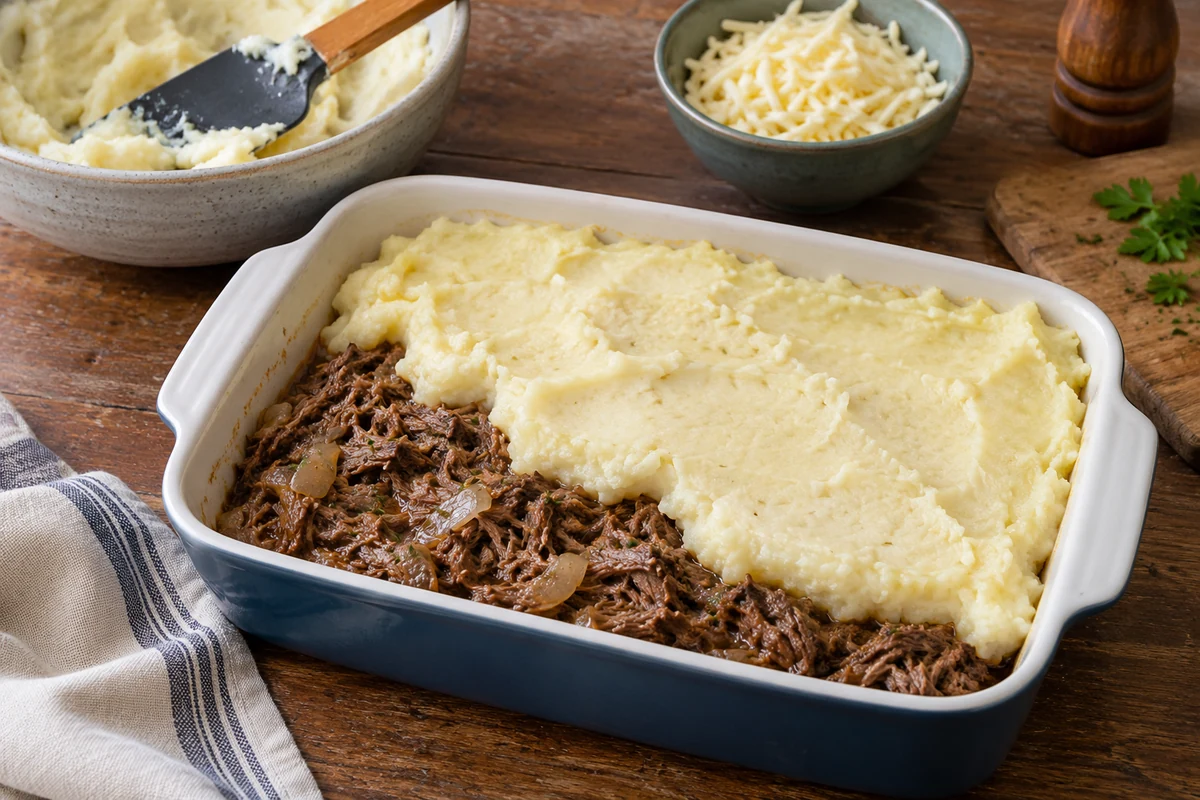
- Desalt and cook the beef: follow the packet’s preparation instructions, keeping any soaking meat refrigerated. Cook until tender enough to shred. A pressure cooker may take around 25–35 minutes, or longer for larger pieces; follow its instructions for liquid, fill level and pressure release. Weigh out 600 g of the cooked, shredded meat.
- Shred the beef: drain and pull apart with two forks rather than handling hot meat with bare hands. Keep a little cooking liquid if it is not excessively salty; otherwise use water to moisten the filling.
- Make the cassava mash: prepare and fully cook the 1.2 kg peeled commercial table cassava according to its instructions. Drain, discard the water and remove the central fibres. Mash while warm with 2 tbsp butter, then gradually add up to 200 ml milk until smooth and spreadable. Stir the optional requeijão into the mash if using.
- Cook the filling: heat 2 tbsp oil in a large frying pan. Soften the chopped onion, then add the garlic and cook briefly without burning. Stir in the shredded beef and black pepper. Add around 2 tbsp reserved cooking liquid or water if the mixture is dry.
- Adjust the seasoning: taste the cooked filling before adding salt, then stir in chopped parsley or coriander. If you prefer the optional creamy cheese in the filling instead of the mash, add it here rather than using it twice.
- Preheat the oven: set it to 200°C/180°C fan before assembling the pie.
- Assemble: lightly grease a medium ovenproof dish. Spread the beef filling evenly across the base, cover with cassava mash and smooth with a spatula. Scatter over the 100 g grated cheese.
- Bake and brown: bake until the centre is steaming hot and the top is golden. Start checking after 10–15 minutes if both layers were assembled hot; allow longer from chilled. A food thermometer should read at least 70°C for two minutes in the centre. If needed, finish under the grill for two or three minutes, watching closely.
- Serve and store: rest for five minutes before serving. Cool any suitable leftovers promptly, refrigerate within one to two hours and use within 48 hours. Reheat once until steaming hot throughout; oven time depends on the portion and its starting temperature.
Substitutions and Variations
- Potato topping: replace the cassava with 1.5 kg peeled potatoes, weighed before cooking. Boil, drain and mash, adding milk gradually for a softer topping.
- Cheese: mozzarella, coalho, cheddar and Parmesan give different flavours and browning. Choose a cheese labelled vegetarian if making a meat-free version.
- Dairy-free version: use olive oil, an unsweetened plant drink and a dairy-free grated cheese alternative. Omit the requeijão or replace it with a suitable dairy-free spread. Lactose-free dairy is not suitable for someone with a milk allergy.
- Vegetarian filling: replace the beef with drained young tinned jackfruit or prepared textured soya protein, well seasoned and cooked. Check the cheese for animal rennet; a vegan version also needs all the dairy substitutions above.
Tips for Beginners
- Watch the salt: prepare the salted beef in advance and taste the cooked filling before adding more seasoning.
- Keep the mash spreadable: pour in the milk gradually. A watery topping will not hold its shape well.
- Individual portions: start checking small ramekins after 8–12 minutes when filled with hot components. That is a guide to checking, not a guarantee that a chilled portion is fully heated.
Variations on Brazilian Escondidinho
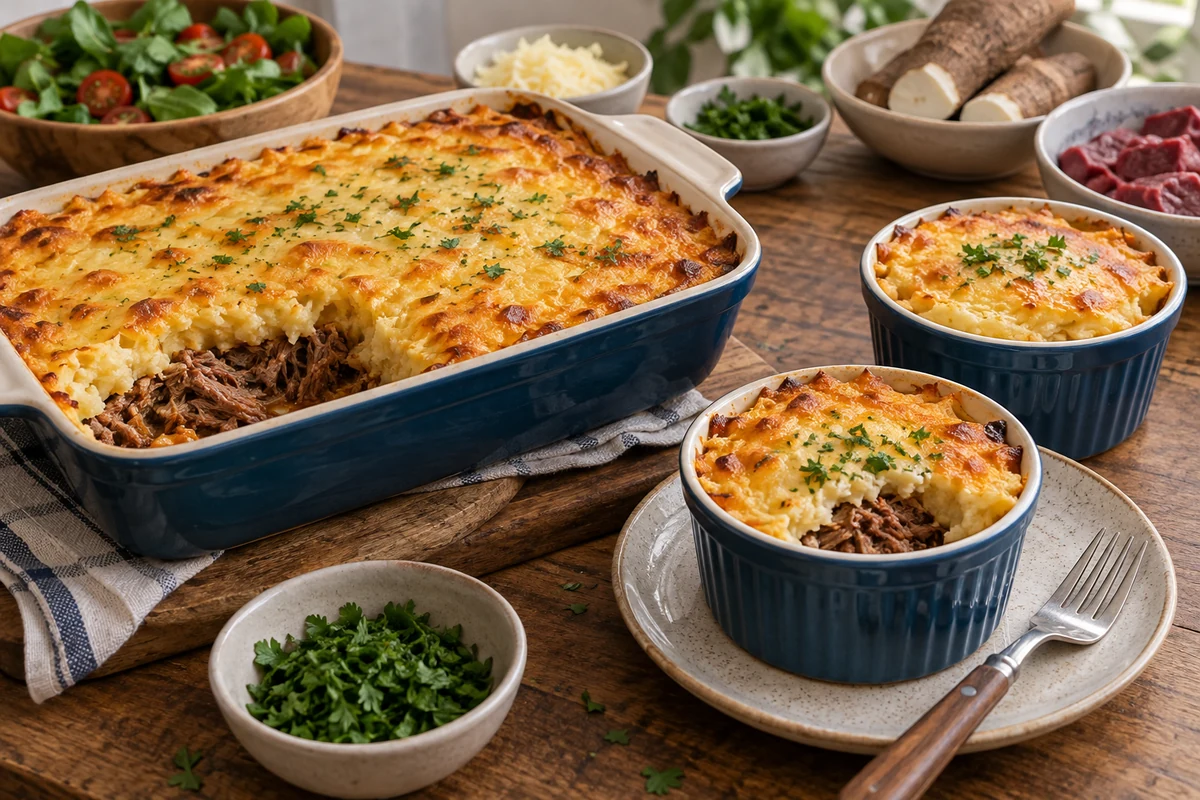
These variations keep the layered character of escondidinho while adapting it to different ingredients and preferences. Try a small portion first if you are changing several ingredients at once.
Potato Mash Instead of Cassava
Potato gives a softer, more familiar topping for UK cooks. It changes the flavour and texture; it is not automatically a lower-calorie dish.
- 1.5 kg peeled potatoes, weighed raw – boil, drain and mash. Start with 100–150 ml milk, adding only as much as needed, along with the butter in the main recipe.
An Extra-Creamy Cheese Variation
Brazilian Catupiry or requeijão can enrich either the mash or the filling. Plain soft cream cheese is an alternative with a different flavour.
- 150 g Catupiry or ½ of a 240 ml cup of requeijão – fold into the mash, or use a smaller amount, such as 2 tbsp, in the filling. Choose one approach rather than adding all these amounts.
Coalho or Parmesan Topping
Different cheeses change the crust: coalho gives a firmer finish, while Parmesan contributes a stronger savoury flavour and browns readily.
- 100–150 g grated coalho or Parmesan – scatter over the mash before baking, allowing for the cheese’s saltiness.
Vegetarian Jackfruit or Soya Filling
Young jackfruit provides a fibrous texture, while textured soya protein absorbs the seasoning. Neither tastes exactly like salted beef, so season the filling in its own right.
- 400 g drained young tinned jackfruit, shredded, or 200 g textured soya protein, weighed after hydration and preparation according to its packet. These make smaller fillings than the beef quantity; adjust the dish size or prepare more filling if needed.
Reducing Salt or Richness
Fresh cooked beef avoids the salt used to preserve carne seca. To reduce richness, use less added fat or cheese rather than assuming an oil or plant-drink swap will automatically lower the calories.
- 600 g cooked, shredded lean beef – season with onion and herbs, adding salt only as needed. A lower-fat milk or suitable unsweetened plant drink can be chosen after checking its label; olive oil still contributes energy.
Individual Ramekins
Ramekins make the pie easy to portion for a gathering. Their shorter heating time depends on size and whether the filling starts hot or chilled.
- Oven guide: at 200°C/180°C fan, begin checking hot-filled ramekins after 8–12 minutes, or a medium dish after 10–15 minutes. Continue until steaming hot throughout; chilled portions usually need longer.
A Little Chilli and Fresh Herbs
For more heat, add fresh red chilli or dried chilli flakes to the filling. Finish with chopped herbs just before serving.
- 1 chopped red chilli or ½ tsp chilli flakes – start with less if you prefer a milder dish.
Quick Tips for Trying Variations
- Taste the cooked filling before assembly so you can adjust the salt and herbs.
- Balance the textures: a soft mash works best with a moist filling that is not swimming in liquid.
- Test a small portion: try an unfamiliar substitution before making a full family-sized dish.
Assembling, Serving and Storing Escondidinho
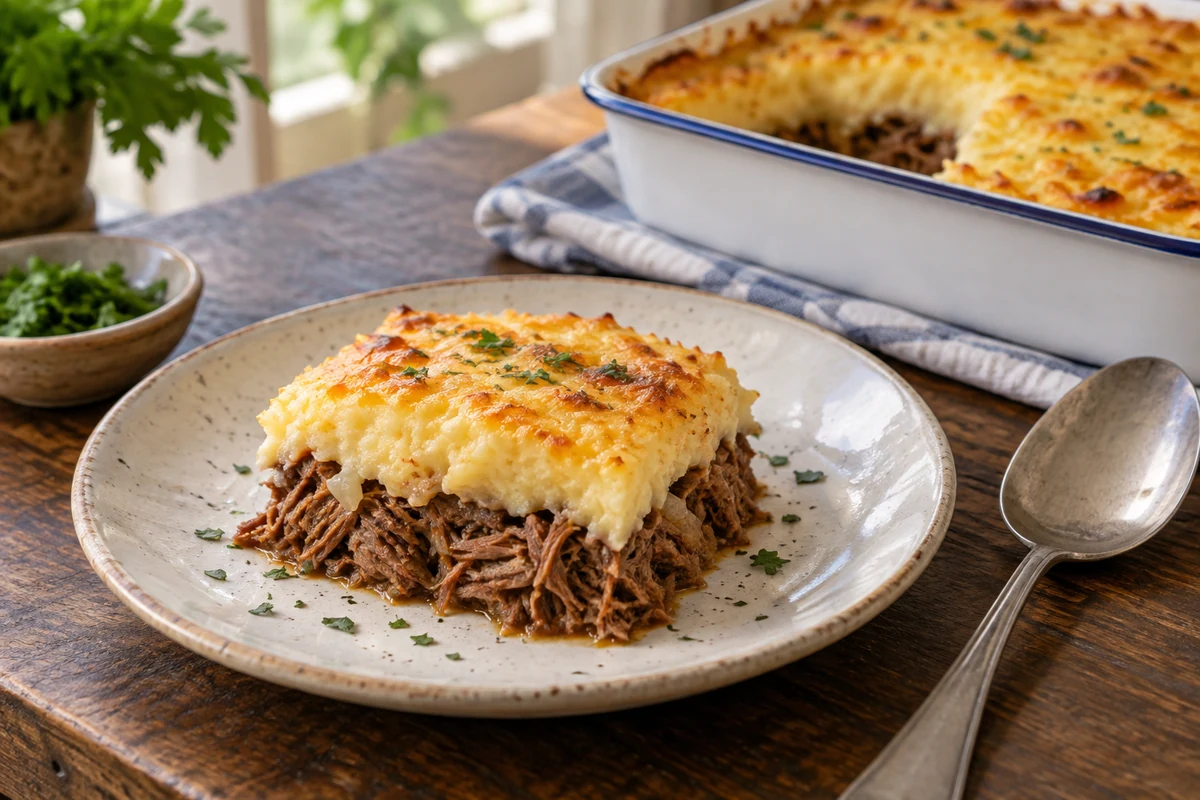
Careful assembly, serving and storage help the pie keep its texture and make it easier to prepare for guests.
Assembly
- Grease the dish lightly: use a little oil or butter on the base and sides.
- Spread the filling evenly: aim for an even layer, roughly 1.5–2 cm deep where the dish size allows, covering the base.
- Cover with mash: spread it gently with a spatula right to the edges, enclosing the filling beneath it.
- Finish with cheese: use the main recipe’s 100 g, or up to 150 g for the richer variation, without doubling the amount.
- Leave room in ramekins: fill to around three-quarters full so the filling has space to bubble.
Serving Suggestions
- Serve hot: the middle should be fully heated and the cheese gently bubbling before the short resting time.
- Side dishes: try a green salad, crunchy Brazilian farofa or plain rice, depending on how substantial you want the meal to be.
- Portion size: divide the finished pie into roughly six servings, adjusting for appetite and accompaniments rather than relying on a fixed portion weight.
- At the table: place the baking dish on a heatproof mat in the centre and serve with a large spoon.
Storage and Reheating
- Cool promptly: divide leftovers into shallow containers to help them cool, then cover and refrigerate within one to two hours. Do not leave a large pie on the worktop overnight.
- In the fridge: keep at 5°C or below and use within 48 hours. If the beef was already a stored leftover, its earlier storage time still counts; assembling the pie does not restart it.
- In the freezer: freeze suitable, cooled portions promptly and aim to use within three months for quality. Thaw in the fridge and use within 24 hours of complete defrosting. Only freeze portions that can still be reheated safely once.
- Oven reheating: cover loosely with foil and heat at 180°C/160°C fan until steaming hot throughout, removing the foil towards the end. Allow roughly 15–25 minutes for a small portion as an initial guide, and longer when needed; check the centre reaches 70°C for two minutes.
- Microwave reheating: use a suitable covered dish, follow the appliance’s guidance and pause to check and redistribute the food so there are no cold spots. Let it stand as instructed. Reheat only once and do not rely on a fixed one- or two-minute time for every portion.
Portions and Presentation
- Party ramekins: individual dishes simplify serving, provided they can all be heated evenly without overcrowding the oven.
- Garnishes: chopped parsley, chives or mild biquinho peppers add colour.
- Texture: serve with a spoon to enjoy the soft mash and moist shredded filling together.
Quick Tips
- Avoid excess liquid: reduce a watery filling in the pan before assembling.
- Check the salt: taste the cooked filling before adding any more.
- Preheat the oven: this helps the topping brown while the pie heats through.
- Rest briefly: wait five minutes after baking so the layers settle before serving.
About Escondidinho and Brazilian Salted Beef
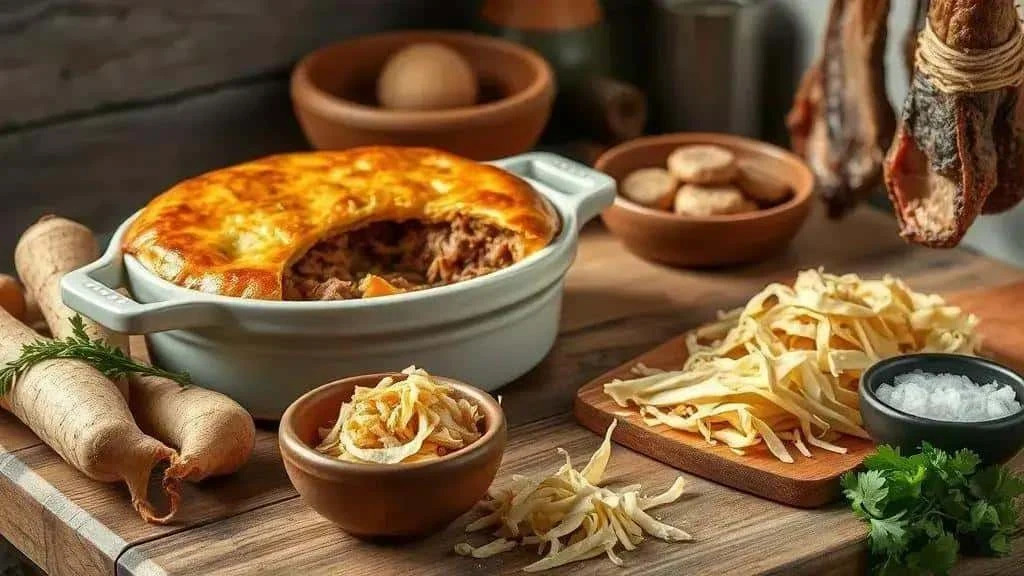
Escondidinho and carne seca bring together familiar Brazilian ingredients, with many household and regional variations.
Background
The combination of a mash topping and a savoury filling makes practical use of cassava and prepared beef. Rather than assigning the dish a single unverified inventor or date, it is more useful to understand it as part of Brazil’s varied home-cooking traditions.
Occasions and Variations
- Food for sharing: the large baking dish suits family lunches, celebrations and a Brazilian-style New Year’s Eve supper.
- Different ingredients: versions may use carne de sol, carne seca, local cheeses or creamy cheese spreads. These beef products are not interchangeable in their salting and storage requirements, so follow the instructions for the one you buy.
About Carne Seca
- Salted and dried beef: salting and drying are preservation methods, but do not assume every product is shelf-stable. Follow the packaging for storage, especially after opening, soaking or cooking.
- Desalting: soaking and changing the water, when specified by the producer, helps reduce excess salt. Keep soaking meat refrigerated and cook it as directed.
Kitchen Notes
- The name: escondidinho refers to the filling being ‘hidden’ beneath the mash.
- The texture: the appeal comes from soft mash against a moist, savoury filling.
- Using leftovers: cooked beef can work if it was cooled and stored safely and is still within its storage time. Heating that leftover beef in the pie counts as reheating it; do not reheat the finished pie a second time.
Quick Tips
- Salt balance: taste before assembly and remember that cheese adds salt too.
- Try different cheeses: each changes the aroma, richness and browned crust.
- Individual servings: ramekins give a neat presentation and make portions easy to distribute.
This salted beef and cassava escondidinho is a generous dish for a family meal or celebration. Start with the basic layers, then adjust the cheese, herbs and topping to suit your ingredients.
If you make it, share your variation and serving ideas. Browse our other recipes for more dishes to enjoy around the table.
Visit the I Love Christmas blog for festive recipes and celebration ideas.
Frequently Asked Questions About Escondidinho
How do I desalt carne seca?
Follow the producer’s instructions. If soaking is required, keep it covered with cold water in the fridge, commonly for 12–24 hours, changing the water two or three times. Cook as directed and taste the cooked meat before adding salt. A quick boil is not a universal substitute for proper preparation.
Can I use potatoes instead of cassava?
Yes. Use around 1.5 kg peeled potatoes, weighed before cooking. Boil, drain and mash with 2 tbsp butter or olive oil. Start with 100–150 ml milk and adjust gradually for a spreadable consistency.
How do I keep the topping from drying out?
Drain the cooked cassava well, remove its fibres and mash while warm. Add butter and milk gradually, cover the filling completely and scatter cheese on top. Cover loosely with foil if the topping browns before the centre is steaming hot, then uncover to finish.
How long can I store the pie and how should I reheat it?
Cool promptly and refrigerate within one to two hours at 5°C or below; use within 48 hours or freeze promptly for up to three months for best quality. Thaw in the fridge and use within 24 hours. Reheat once until steaming hot throughout. If reheated leftovers were used in making the pie, do not reheat them again.
Can I make a vegetarian version?
Yes. Use prepared young tinned jackfruit or hydrated textured soya protein, cooked with onion, garlic, cumin and coriander. Check that the cheese is vegetarian. For a vegan pie, also replace the butter, milk, cheese and any requeijão with suitable dairy-free alternatives.
Sources and Further Reading
- Embrapa: cassava cultivars
- Food Standards Australia New Zealand: cassava
- Food Standards Agency: chilling and storing food
- Food Standards Agency: cooking food safely