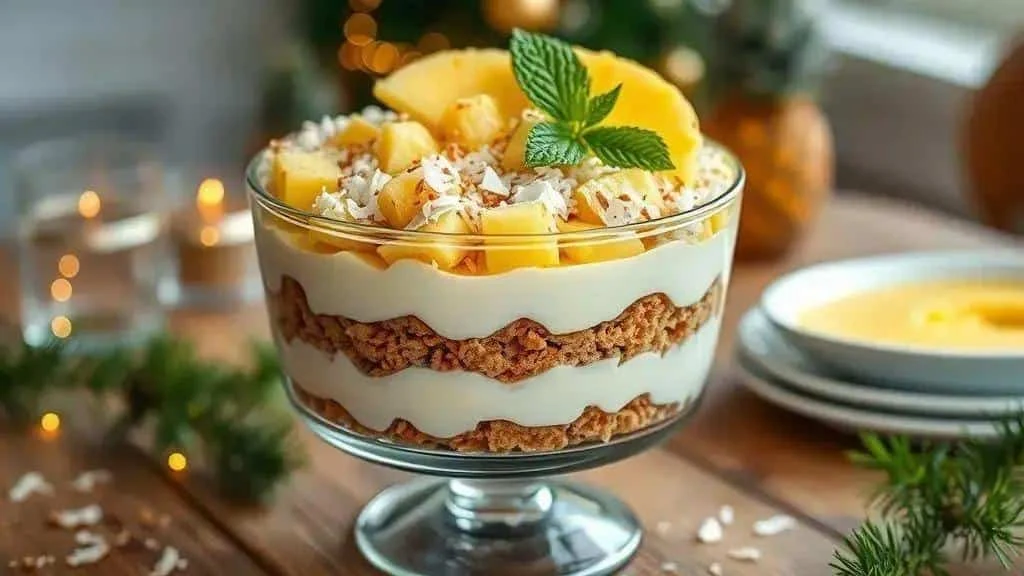
Pineapple and coconut pavê is a creamy Brazilian dessert layered with coconut custard, pineapple and biscuits. This version uses a biscuit-crumb base and cooked pineapple, and can be prepared the evening before a celebration. Chill for at least four hours, keep refrigerated and eat within 48 hours. Vegan and less-sweet variations are included below.
Pineapple and coconut pavê brings tropical flavour to a festive table, whether you are celebrating a Brazilian summer Christmas or looking for a chilled dessert in the UK. Follow the method below for creamy layers, practical preparation tips and alternative ingredients.
Ingredients for Pineapple and Coconut Pavê
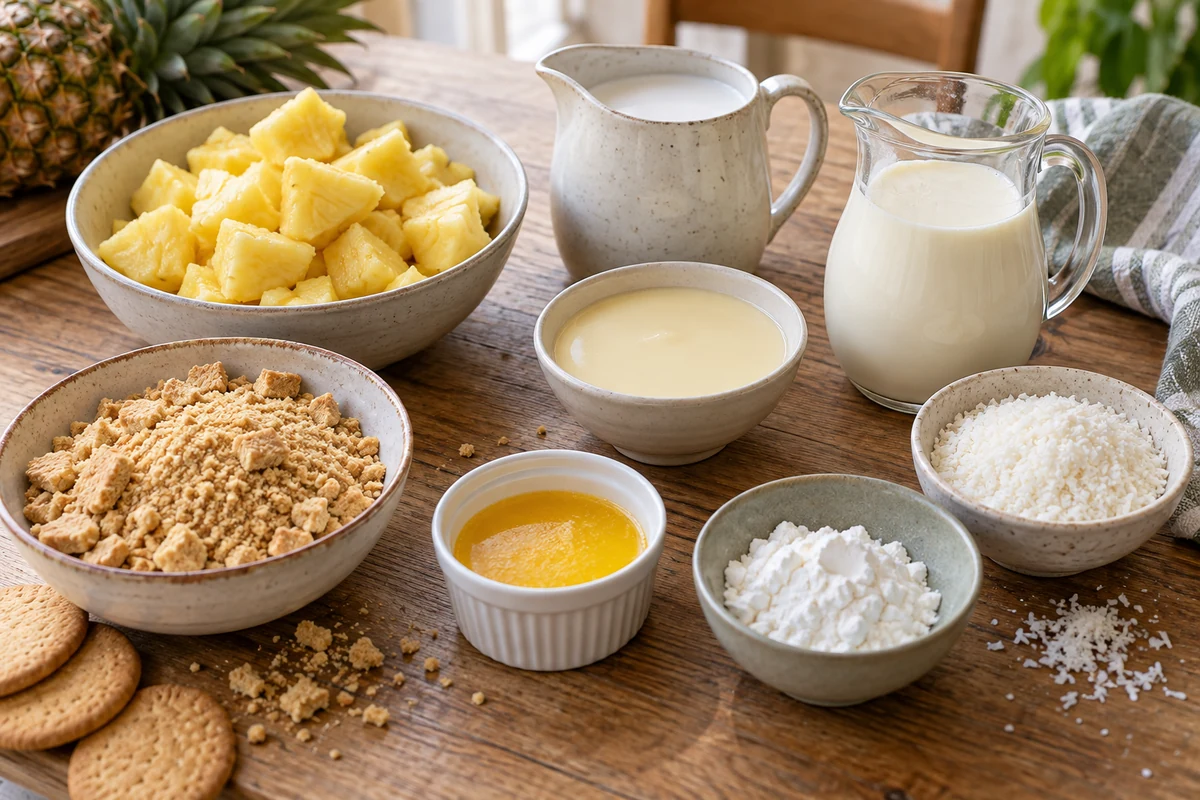
To make this pineapple and coconut pavê, gather the following ingredients. Cup measurements here mean a 240 ml measuring cup, filled without packing unless stated otherwise:
- 2 cups chopped fresh pineapple – or the same measured volume of well-drained tinned pineapple.
- 1 tin sweetened condensed milk, 395–397 g – provides sweetness and body. Reducing the quantity changes the texture as well as the sweetness.
- 400 ml coconut milk – stir well before measuring and reserve 120 ml of this quantity for the cornflour slurry. Use tinned coconut milk rather than a thin coconut drink for the intended creamy texture.
- 3 level tbsp cornflour – the fine white starch sold as cornflour in the UK. Check the label if you need it to be gluten-free; rice flour is not an identical one-for-one substitute.
- 200 ml single cream – a UK alternative to Brazilian table cream. Use a suitable plant-based pouring cream for the vegan variation.
- 2 cups crushed plain biscuits – Brazilian maisena biscuits, Maria biscuits or plain rich tea biscuits. Reserve about a third of the crumbs for an intermediate layer.
- 4 tbsp melted butter – add gradually to bind the base crumbs; you may not need all of it, depending on the biscuits. Coconut oil or suitable baking spread can be used for a plant-based version.
- 100 g grated or unsweetened desiccated coconut – reserve 2 tbsp for the topping and add the remainder to the custard.
- Up to 2 tbsp sugar – optional, according to the pineapple’s sweetness. Start with one tablespoon in the fruit and add the second only if needed.
- Juice of ½ lime – optional, to add a little tang to the pineapple.
- Lime zest or washed mint leaves – optional garnish.
Substitutions and Quick Tips
For a less-sweet version, omit the optional sugar first. Replacing some condensed milk with evaporated milk changes the custard’s consistency and has not been tested here. For a vegan pavê, replace condensed milk, cream, butter and biscuits with suitable plant-based products; lactose-free dairy is not vegan. Taste the fruit before adding sugar.
Assembly note: this method uses crushed biscuits, so there is no milk-dipping stage. A clear dish shows the layers well. Whole biscuits can be used in a separate variation, described below, but should not be mixed into the crumb-base instructions.
How to Make Pineapple and Coconut Pavê
- Prepare the pineapple: cut the fruit into small pieces, removing skin, eyes and tough core. Measure two cups and mix with up to 1 tbsp sugar and the optional lime juice. Keep the remaining sugar for a final taste adjustment.
- Cook and cool the fruit: place fresh pineapple in a small pan with 1 tbsp water. Simmer, stirring, until softened and excess juice has reduced, roughly 5–10 minutes depending on the fruit. Taste and use the remaining sugar only if needed. Cool promptly in a shallow container. Well-drained tinned pineapple can be used without this cooking step.
- Mix the coconut custard: whisk the cornflour into the reserved 120 ml cold coconut milk until smooth. Add the remaining 280 ml coconut milk and the condensed milk. No additional half-cup of dairy milk is required.
- Cook the custard: heat gently, stirring continuously and scraping the bottom, until thick and smooth. Let it bubble gently for about a minute while stirring so the starch cooks through. Remove from the heat.
- Add cream and coconut: stir in the single cream and the grated coconut, keeping the reserved 2 tbsp coconut for decoration. Transfer to a shallow bowl to cool promptly; refrigerate the custard and fruit within one to two hours of cooking.
- Prepare the biscuit base: reserve a third of the crumbs. Mix the rest with melted butter a little at a time until they resemble damp sand and hold together when pressed. Press into the base of a serving dish. Do not soak these crumbs in milk.
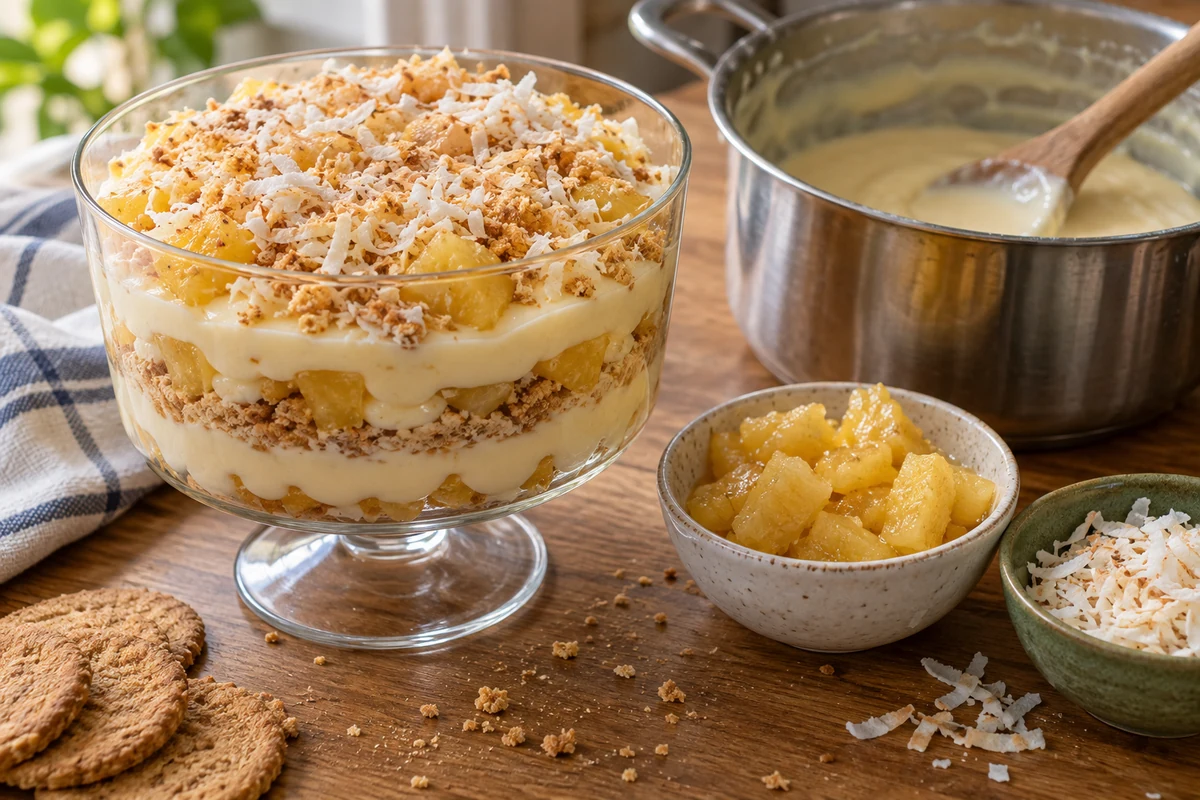
- Layer the pavê: once the fruit and custard are cool, spoon some custard over the crumb base, followed by drained pineapple. Add the reserved dry crumbs, more custard and fruit as space allows. Finish with custard, reserving a little fruit for decoration if wanted.
- Finish: scatter the reserved 2 tbsp coconut over the top, lightly toasted and cooled if preferred. Add the reserved pineapple and optional mint or lime zest just before serving.
- Chill: cover and refrigerate for at least four hours, preferably overnight, to let the layers settle. This is a spoonable dessert, not a firm cheesecake.
- Serve and store: serve cold and keep covered at 5 °C or below. Use within 48 hours of preparing the cooked components, or sooner if an ingredient requires it. Chilling overnight is included in that time.
Practical Tips
Avoid soggy layers: drain the pineapple thoroughly and use cooled custard. The crumb base gradually softens under the filling; for more contrast, reserve a few dry crumbs to add immediately before serving.
Substitutions: for the vegan version, check the condensed milk, cream, biscuits and base fat. To reduce sweetness, begin by omitting extra sugar. Halving the condensed milk is a separate recipe adjustment and will change the body of the custard.
Finishing touch: toast the topping coconut in a dry pan over moderate heat, stirring until lightly golden. It can burn quickly, so watch it and cool before sprinkling. Lime zest or mint adds freshness.
Vegan and Less-Sweet Pavê Variations
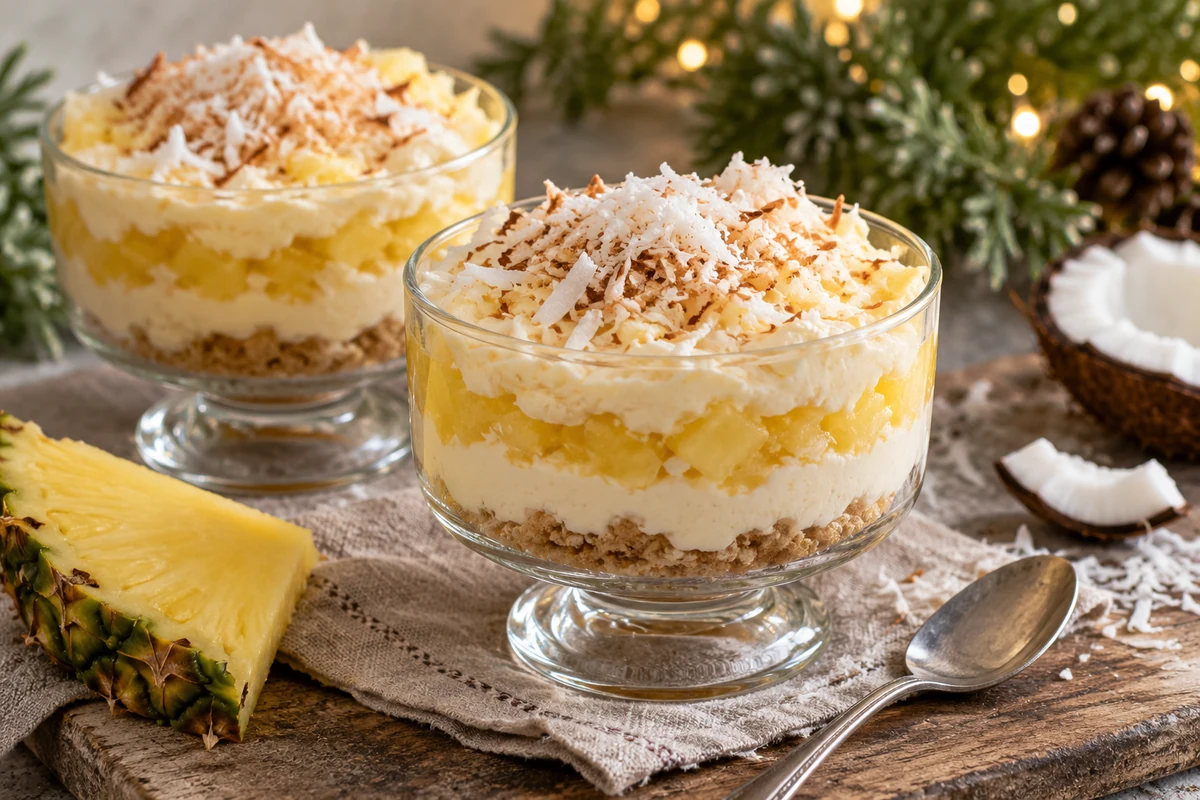
These ideas adapt pineapple and coconut pavê to different preferences. Alternative products behave differently, so their textures are not guaranteed to match the main recipe:
Vegan Version
Use plant-based ingredients throughout while retaining the pineapple and coconut flavours.
- 2 cups chopped pineapple – cook fresh fruit as above, or drain tinned fruit well; add lime to taste.
- About 395 g vegan condensed milk – choose a sweetened condensed product intended as a dairy replacement, not ordinary coconut or soya milk. Pack sizes differ, so weigh the amount.
- 400 ml coconut milk – stir thoroughly and reserve 120 ml for the slurry. Additives are not automatically a sign of poor quality; choose a product whose flavour and texture you like.
- 3 level tbsp cornflour – to thicken the custard.
- 200 ml plant-based pouring cream – use an unsweetened product suitable for cooking.
- 2 cups crushed vegan biscuits – check for all animal-derived ingredients, not just lactose and eggs.
- Up to 4 tbsp melted coconut oil – add gradually to the base crumbs instead of butter.
- 100 g grated or desiccated coconut – reserve 2 tbsp for the topping.
- Make the vegan custard: dissolve the cornflour in the reserved 120 ml coconut milk, then add the remaining coconut milk and vegan condensed milk. Heat while stirring until thick and gently bubbling, and cook for about one minute more.
- Add the cream: remove from the heat, stir in the plant-based cream and coconut, then cool promptly. Stirring in pouring cream adds richness, not the aeration of whipped cream.
- Assemble: prepare the crumb base with coconut oil and layer with cooled custard, drained pineapple and the reserved dry crumbs. No biscuit-dipping milk is needed for this method.
- Finish: sprinkle with the reserved coconut, lightly toasted and cooled if preferred.
Vegan tip: ripe pineapple may need no extra sugar. Chill for at least four hours and follow the same refrigeration and storage limits as the main recipe.
A Less-Sweet, Lighter Variation
The following are ingredient ideas rather than a tested low-sugar formula. The dessert still contains sugars and carbohydrates; it should not be described as sugar-free or automatically suitable for diabetes.
- 2 cups chopped pineapple – use ripe fruit, omit the optional sugar and drain excess juice after cooking.
- A reduced-sugar condensed-milk product, if available – follow its replacement instructions. Products labelled light, reduced fat or diet are not interchangeable, and using only 200–250 g in place of the full tin alters the recipe.
- 400 ml light coconut milk – can reduce richness but may make a softer custard. Skimmed milk is another different-tasting option; any coconut extract should be measured according to its label, not automatically by the tablespoon.
- 3 level tbsp cornflour – use the main recipe amount as a starting point; a changed dairy base may need testing for consistency.
- 200 ml reduced-fat pouring cream – plain yoghurt gives a tangier result and should be stirred into cooled custard. Neither option makes the mixture aerated unless separately whipped with a suitable product.
- 2 cups crushed plain biscuits with less sugar – compare labels; wholemeal or light biscuits are not necessarily low in sugar.
- A smaller amount of base fat, added gradually – less butter produces a more crumbly base. Yoghurt creates a soft, damp layer rather than acting as an identical butter substitute; loose crumbs are an alternative.
- 50–80 g coconut, if preferred – reducing it also changes flavour and texture. Reserve a little for decoration.
- Prepare the adjusted custard: use 120 ml of the measured 400 ml cold liquid for the slurry, then add the remainder and your chosen condensed-milk replacement. Cook and stir until thickened, following any product-specific guidance.
- Finish the filling: stir in the reduced-fat cream, or let the custard cool before adding yoghurt. Expect a different texture from the full-fat recipe.
- Assemble carefully: use well-drained fruit and biscuit crumbs without added soaking liquid. Portion glasses are useful if the lighter mixture is softer.
- Refrigerate: chill for at least four hours. Chilling helps the layers settle but cannot compensate for an unbalanced ingredient substitution.
Useful tips: taste before adding any sweetener, and follow its label if using one. Natural does not mean sugar-free. Do not automatically reduce cornflour because yoghurt has been added; first assess how your chosen ingredients behave in a small trial.
Assembly, Storage and Make-Ahead Tips
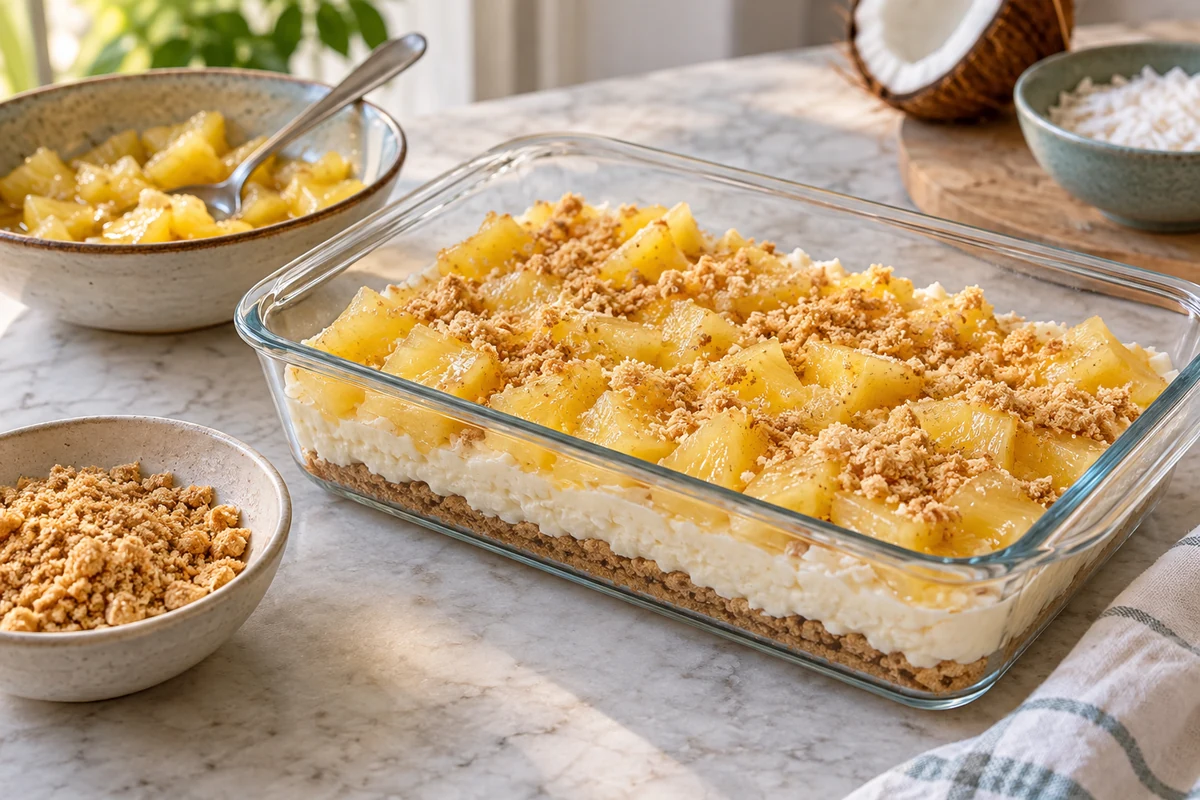
Quick tips: use a clear dish to show the layers. Cool the cooked components promptly before assembly and drain the pineapple so the crumbs do not become waterlogged.
Practical Assembly
- Base: press a thin layer of biscuit crumbs mixed with just enough melted butter into the dish. It will soften during refrigeration.
- Layers: alternate cooled coconut custard, drained pineapple and the remaining dry crumbs, finishing with custard.
- Whole-biscuit alternative: if choosing whole biscuits instead of the measured crumb method, omit the butter base. Dip each biscuit very briefly in a small extra amount of cold milk or plant-based milk, then layer it with the filling. This is a different assembly option, not an extra step for the crushed biscuits.
- Decoration: add reserved pineapple, coconut and optional mint shortly before serving for the freshest appearance.
- Setting time: refrigerate for at least four hours, ideally overnight. Keep it cold throughout.
Storage and Preparing Ahead
- Fridge: cover the dish and keep at 5 °C or below. Eat within 48 hours of making the custard and cooked fruit, or the shortest applicable ingredient limit. Assembly does not restart the clock.
- Freezing: the assembled dessert may become watery, so freezing is not recommended for the best texture. Cooked pineapple can be frozen separately; custard may split after thawing. If freezing components, do so promptly, aim to use within one month for quality, thaw in the fridge and use within 24 hours.
- Make it the evening before: prepare and assemble within the storage limits, then leave covered in the fridge overnight. Add dry topping crumbs and fresh garnish on the day.
Transport and Presentation
- Taking it to a celebration: use a secure container in an insulated cool bag with ice packs to keep it chilled, then refrigerate on arrival.
- Assembling at your destination: components can travel in separate sealed containers, all kept cold. Allow enough refrigerated time after assembly for the layers to settle; separating them does not extend their safe storage life.
- Serving: bring the pavê out just before serving. Offer small portions and keep the remainder refrigerated rather than leaving the whole dish on a warm buffet for an extended period.
Note: drain excess pineapple juice before layering. Adjust sweetness in the fruit while cooking, remembering that condensed milk and biscuits also contribute sugar.
Pineapple, Coconut and Brazilian Christmas Desserts
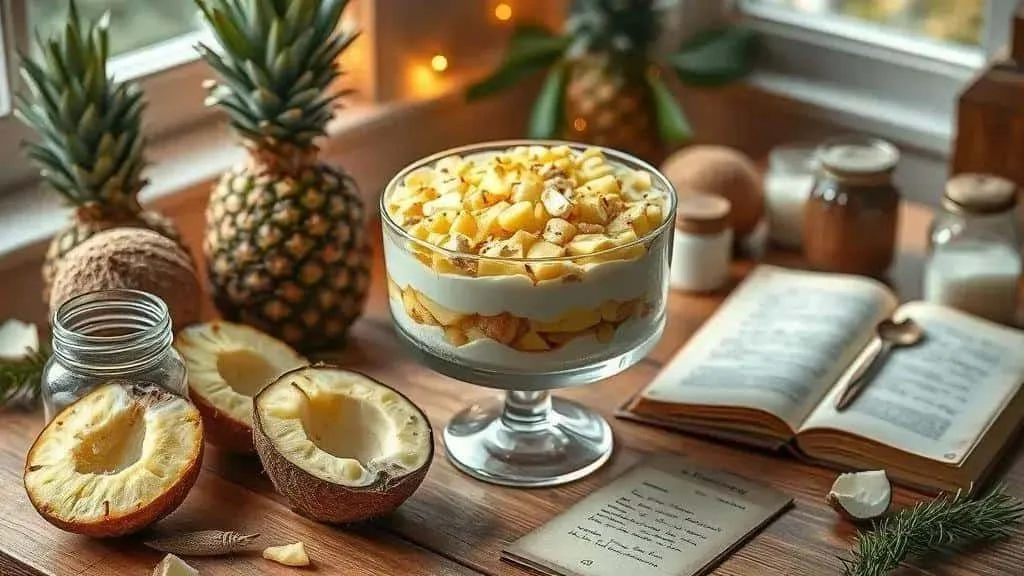
Pineapple and coconut work well together in a chilled dessert: the sweet-sharp fruit contrasts with the creamy coconut filling. That refreshing flavour combination is especially appealing at a summer celebration in Brazil.
Ingredients and Culinary Context
Pineapple originated in South America and has a long history of cultivation. Coconut is used widely in tropical cooking. Their combination with condensed milk and biscuits reflects the flexibility of modern home desserts, rather than a single documented origin for this particular pavê recipe.
Convenient ingredients such as condensed milk, tinned coconut milk and tinned pineapple make this dessert easier to prepare throughout the year. They do not make the finished custard shelf-stable: it still needs refrigeration.
A Christmas Dessert with Brazilian Flavour
Christmas falls in summer in Brazil, making chilled desserts a welcome choice. This pavê offers a different flavour from a British Christmas pudding, although it is still a rich, sweet dessert. Preparing it ahead can make serving guests simpler; family traditions and recipes vary.
A Few Interesting Details
- A once-luxurious fruit: pineapples were historically displayed in grand British houses as symbols of wealth. That history is separate from any claim about the origins of Brazilian Christmas pavê.
- Balancing sweetness: lime juice adds acidity and can make the fruit taste less cloying, but it does not remove sugar from the dessert.
- Family variations: some cooks may choose extra flavours or a cream-cheese filling. Treat additions such as alcohol or eggs as separate recipe changes requiring appropriate preparation, rather than dropping them into this method without adjustment.
- Contrasting textures: biscuit crumbs, smooth custard and juicy pineapple give each spoonful variety. Add a few dry crumbs just before serving if you want a little more crunch.
These practical qualities make pineapple and coconut pavê a useful option for a festive meal, whether your own family already makes it or you are trying it for the first time.
Ready to Serve
Pineapple and coconut pavê is a creamy, tropical dessert to share at Christmas or another celebration. Careful layering, well-drained fruit and sufficient chilling help produce a balanced spoonful.
Thank you for following the recipe. Try it at home and share a photo of your version if you would like to show us the result.
Find more festive recipes and ideas on the I Love Christmas blog. Enjoy your celebration!
Pineapple and Coconut Pavê FAQs
Can I use tinned pineapple instead of fresh?
Yes. Drain it thoroughly and use the same measured volume as the fresh fruit. Tinned pineapple does not need the fresh-fruit cooking step; excess juice or syrup can make the layers soggy.
How far ahead can I assemble the pavê?
The evening before is convenient, or allow at least four hours of chilling. Keep it refrigerated and use within 48 hours of preparing the cooked components, including the overnight chilling time.
How do I stop the biscuits becoming soggy?
In the main crumb-based method, do not soak the biscuits at all. Use cooled custard and thoroughly drained pineapple. If making the separate whole-biscuit variation, dip the biscuits only briefly rather than soaking them.
How can I make a vegan or less-sweet version?
For a vegan dessert, replace condensed milk, cream, butter and biscuits with suitable plant-based products. For less sweetness, start by omitting optional sugar. Reduced-sugar or lower-fat substitutions need label checks and may change the texture; the dessert is not automatically sugar-free or suitable for diabetes.
How should I store pavê, and how long does it keep?
Cover and refrigerate at 5 °C or below, and use within 48 hours of preparing the cooked components or sooner if an ingredient requires it. Freezing the assembled dessert can spoil its texture. If freezing components separately, thaw in the fridge and use within 24 hours.
Sources and Further Reading
- Food Standards Agency: chilling and storing food
- Food Standards Agency: cooking food safely
- Royal Botanic Gardens, Kew: pineapple
- National Trust: the house at Dunham Massey