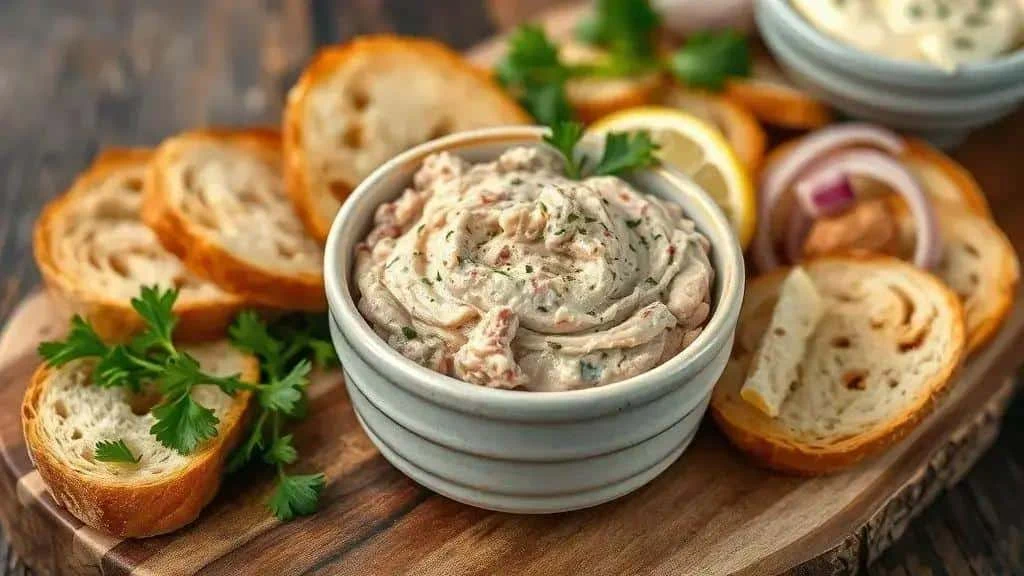
This creamy tuna pâté turns tinned tuna into a quick spread for toast, sandwiches and party snacks. Combine drained tuna, mayonnaise, optional cream cheese, onion, lemon and herbs, then chill. Explore flavour variations and a chickpea alternative, and keep the prepared spread refrigerated for no more than 48 hours, following any shorter ingredient instructions.
This creamy tuna pâté is a convenient spread for a snack, starter or informal festive meal. Follow the simple method, try a variation and check the storage advice before making it ahead.
Creamy Tuna Pâté Ingredients
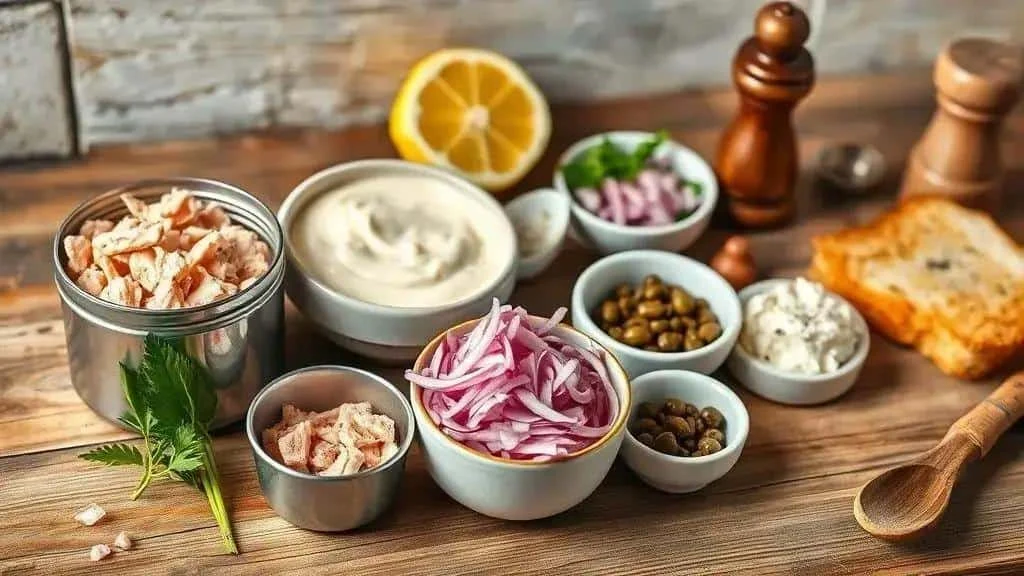
For this creamy tuna pâté, gather:
- 2 tins tuna, about 170 g net weight each before draining, well drained. Tin sizes and drained weights vary; these are not two 170 g portions of drained fish. Use tuna in spring water or oil as preferred.
- 4 tbsp ready-made mayonnaise made with pasteurised egg, adjusted to texture. Plain Greek yoghurt can replace some of it; compare labels if reducing fat is your aim.
- 2 tbsp cream cheese, optional, for extra creaminess. Brazilian requeijão is another option if available.
- 1 tbsp lemon juice, or start with ½ tbsp cider vinegar.
- 4 tbsp finely chopped red onion – spring onion gives a milder alternative.
- 2 tbsp chopped parsley or chives – coriander changes the flavour if preferred.
- 1 tsp Dijon mustard, optional – use another prepared mustard or omit.
- Salt to taste – start with a small pinch, as tuna and mayonnaise may already be salty.
- Freshly ground black pepper to taste.
- 1 tbsp chopped capers, optional, or 2 tbsp finely chopped gherkins.
- Sweet paprika, optional, to finish. Use smoked paprika specifically if you want a smoky flavour.
Substitutions and Practical Notes
Drain thoroughly: Use a sieve and press gently with a fork. Avoid pressing against a sharp tin lid.
A less rich version: Replace some mayonnaise with low-fat plain Greek yoghurt. Adding oil is optional and does not make the spread lower in calories.
Vegan alternative: Use mashed cooked chickpeas instead of tuna, vegan mayonnaise and a plant-based alternative to any cream cheese. Check all other ingredients too.
Yield: Expect enough for roughly 12–16 small pieces of toast, depending on their size and how thickly you spread it. The final volume varies with the drained tuna and additions; do not rely on a fixed 2–3 cup yield.
How to Make Creamy Tuna Pâté
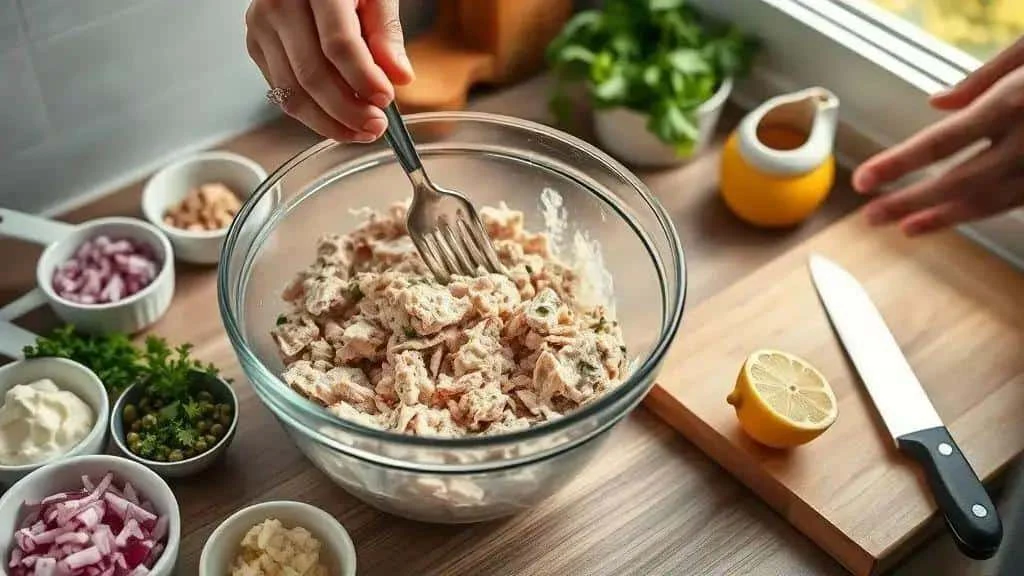
- Prepare your equipment: Use a clean bowl, spoon, fork, sieve, chopping board and knife.
- Drain the tuna: Open the tins carefully and tip into a sieve. Drain well to avoid a watery spread.
- Prepare the flavourings: Finely chop the onion and herbs, and measure the lemon juice.
- Flake the fish: Put the tuna in the bowl and break it into small flakes with a fork.
- Add the creamy ingredients: Mix in the mayonnaise and optional cream cheese. Start with the listed amounts and adjust gradually if needed.
- Add the flavourings: Fold in lemon juice, onion, herbs and optional mustard. Add either 1 tbsp capers or 2 tbsp chopped gherkins, if using.
- Season: Taste the freshly made mixture with a clean spoon, then add salt and pepper if needed. A little extra mayonnaise or cream cheese can soften excessive sharpness.
- Chill: Transfer to a covered container and refrigerate for at least 30 minutes before serving.
- Serve: Spread on small toast pieces, baguette slices or sandwich bread. Garnish with parsley, lemon or paprika. The batch should cover roughly 12–16 small toast pieces, depending on size and topping.
- Store: Keep covered at 5°C or below and use within 48 hours, or sooner if an ingredient requires it. Freezing may spoil the creamy texture.
Tuna Pâté Variations
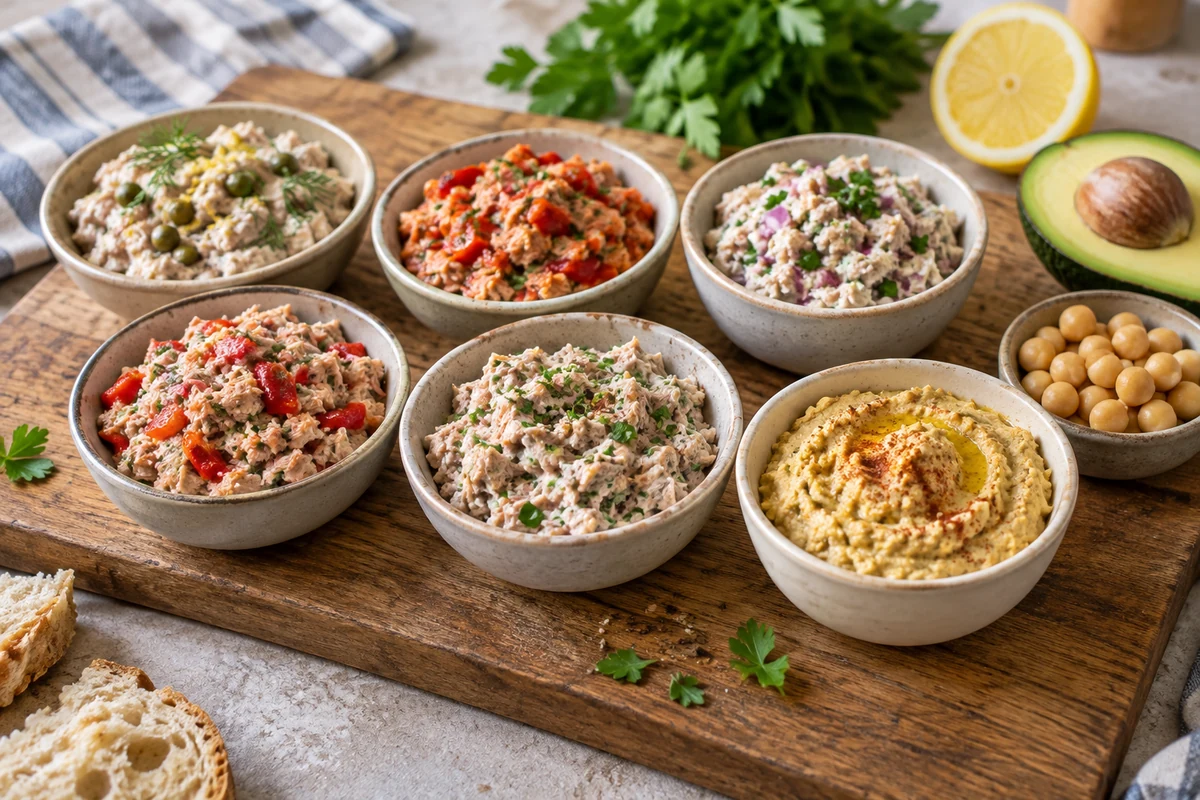
Adapt your tuna pâté with the following flavour combinations.
A Less Rich Version
Use tuna in spring water, replace half the mayonnaise with low-fat plain Greek yoghurt and reduce or omit the cream cheese. This can reduce fat compared with the full-fat ingredients, depending on the products. Add lemon and herbs to taste.
Mediterranean-Inspired
Add chopped olives, drained sun-dried tomatoes and a small drizzle of olive oil. Chives and oregano add aroma. Serve with ciabatta.
Spicy
Add a little finely chopped red chilli, chilli flakes or hot sauce. Balance with red onion and lemon and serve on thin, crisp toast.
With Crunchy Vegetables
Add finely grated carrot and finely chopped celery, adjusting the mayonnaise as needed. Celery is an allergen. For young children, adapt the texture and serving size to their age and ability.
Vegan Chickpea Alternative
Replace tuna with one 400 g tin of cooked chickpeas, drained and rinsed; 400 g is the tin’s net weight, not its drained yield. Mash and mix with vegan mayonnaise, lemon, onion and chives. Omit dairy cream cheese or use a plant-based alternative. Tahini is another option but contains sesame.
Avocado Variation
Replace some mayonnaise with ½ mashed avocado for a different creamy texture. Serve on cucumber or lettuce if you prefer less bread. This is not a calculated low-carbohydrate meal.
Smoky Variation
Add a pinch of smoked paprika to the tinned-tuna base and finish with capers. There is no need to add fish-oil supplements or an unspecified ‘smoked fish oil’. Seeded toast makes a crunchy accompaniment.
Serving on Toast and Bread
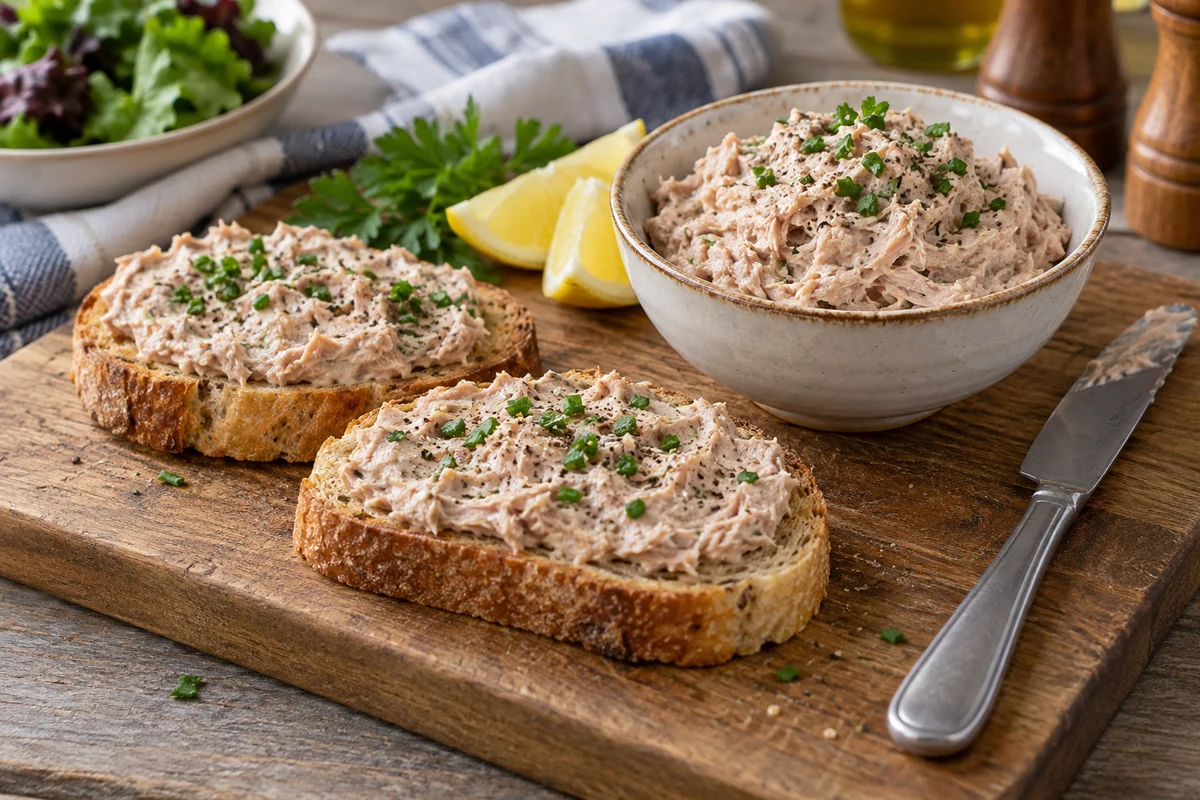
- Texture: Keep the spread creamy but firm enough to sit on toast. Drain the fish well and add mayonnaise gradually; chill before serving.
- Portions: Allow about 1–2 tbsp per toast, depending on size. For a buffet, estimate around 30–40 g per person as one of several snacks, then weigh your finished batch to plan numbers.
- Serving temperature: Serve chilled. For this recipe, use a cautious maximum of 2 hours out of refrigeration in total, including preparation and transport, and less in hot conditions.
Preparing the Bread
- Thin toast: Toast baguette or crusty bread slices until crisp.
- Soft bread: Sandwich bread or ciabatta works well; allow warmed bread to cool before adding chilled pâté.
- Wholegrain and gluten-free choices: Offer suitable crackers or bread. For coeliac guests, check the whole recipe and use separate utensils to avoid cross-contact.
Putting It Together
- Small serving bowls: Bring out a little at a time, keeping the rest refrigerated.
- Keep toast crisp: Spread a thin, even layer shortly before serving.
- Simple garnish: Use parsley, lemon zest or paprika.
Accompaniments
- Savoury additions: Capers, sliced olives, chopped gherkins and pickled red onion.
- Fresh contrast: Thin cucumber slices, rocket or chopped chives.
- Drinks: Iced tea or sparkling water works well; adults who choose alcohol might prefer dry sparkling wine or a light beer.
Parties and Transport
- Assemble on arrival: Carry the chilled pâté separately from the bread.
- Keep it cold: Use an insulated cool bag with frozen ice packs. Ordinary ice packs are sufficient; dry ice is unnecessary and requires specialist handling.
- Individual canapés: Prepare small batches shortly before serving and keep reserve ingredients chilled.
Presentation
Vary colours and textures: Use clean ceramic bowls, light and dark breads, and a few fresh herbs. Keep the food easy to reach without crowding the table.
Final Practical Tips
- Season carefully: Taste with a clean spoon only when the mixture has been freshly made or correctly stored within its safe time. Tasting is not a way to test suspect leftovers.
- After preparation: Refrigerate promptly and use within 48 hours or any shorter ingredient deadline. Discard food that has been mishandled even if it smells normal.
Storing Tuna Pâté
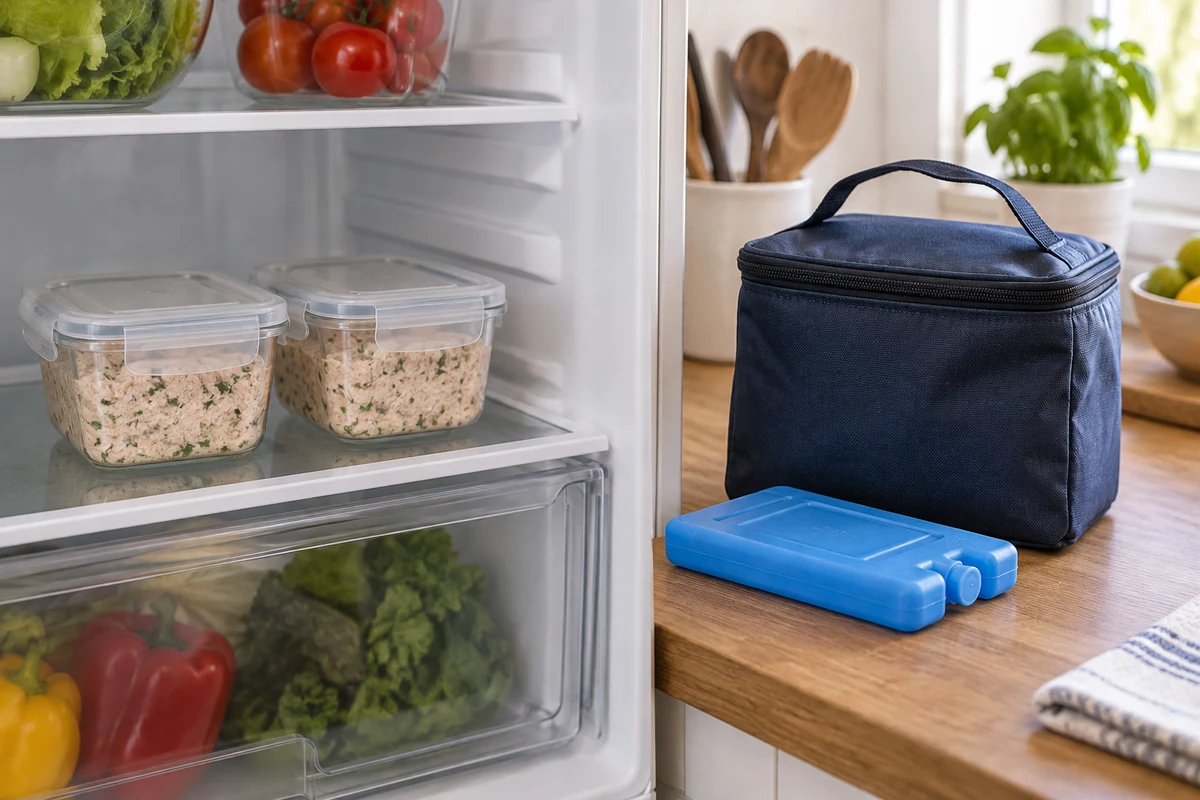
Store tuna pâté in clean, covered containers, label the preparation date and keep refrigerated. The earliest ingredient deadline still applies.
Suitable Containers
- Glass containers with lids: Useful for seeing the contents and keeping the spread covered.
- Food-grade plastic containers: Choose clean, undamaged containers intended for food storage.
- Small portions: Divide the batch so you can take out only what you need.
- Label: Record when the spread was prepared and when it must be used.
Temperature and Storage Time
- Refrigeration: Keep at 5°C or below. Limit time out of the fridge to a cautious 2 hours in total, less in warm conditions.
- Fridge storage: Use within 48 hours, or earlier if the tuna, mayonnaise or dairy packaging gives a shorter period after opening.
- Freezing: It is not ideal for texture because the mayonnaise or dairy may separate. If you choose to freeze it, do so promptly while fresh in a suitable container, use within about 1 month for quality, defrost in the fridge and use within 24 hours. Freezing does not make mishandled food safe.
Transport and Buffet Service
- Transport: Use an insulated bag with ice packs to keep the spread at 5°C or below.
- Buffet: Serve small amounts in a chilled bowl and replace with a clean bowl rather than topping up old portions. Discard anything left out beyond the cautious serving window.
- Assemble at the venue: Keep the spread and bread separate until needed.
Hygiene
- Clean utensils: Use a clean spoon to take out each portion.
- Avoid contamination: Do not dip partly eaten bread back into the bowl.
When to Discard It
- Unusual smell: Discard if it smells off, but remember that a normal smell does not prove safety.
- Mould or unusual discolouration: Discard the whole spread rather than scraping away the affected area.
- Texture: Sliminess or other unexpected changes are reasons to discard it. Do not taste suspect food to find out whether it is safe.
Quick Storage Reminders
- Use a clean spoon or spatula every time.
- Use older portions first while still within their safe storage period; keep dated containers easy to identify.
- If in doubt, discard rather than taking a risk.
Ingredient Substitutions and Dietary Alternatives
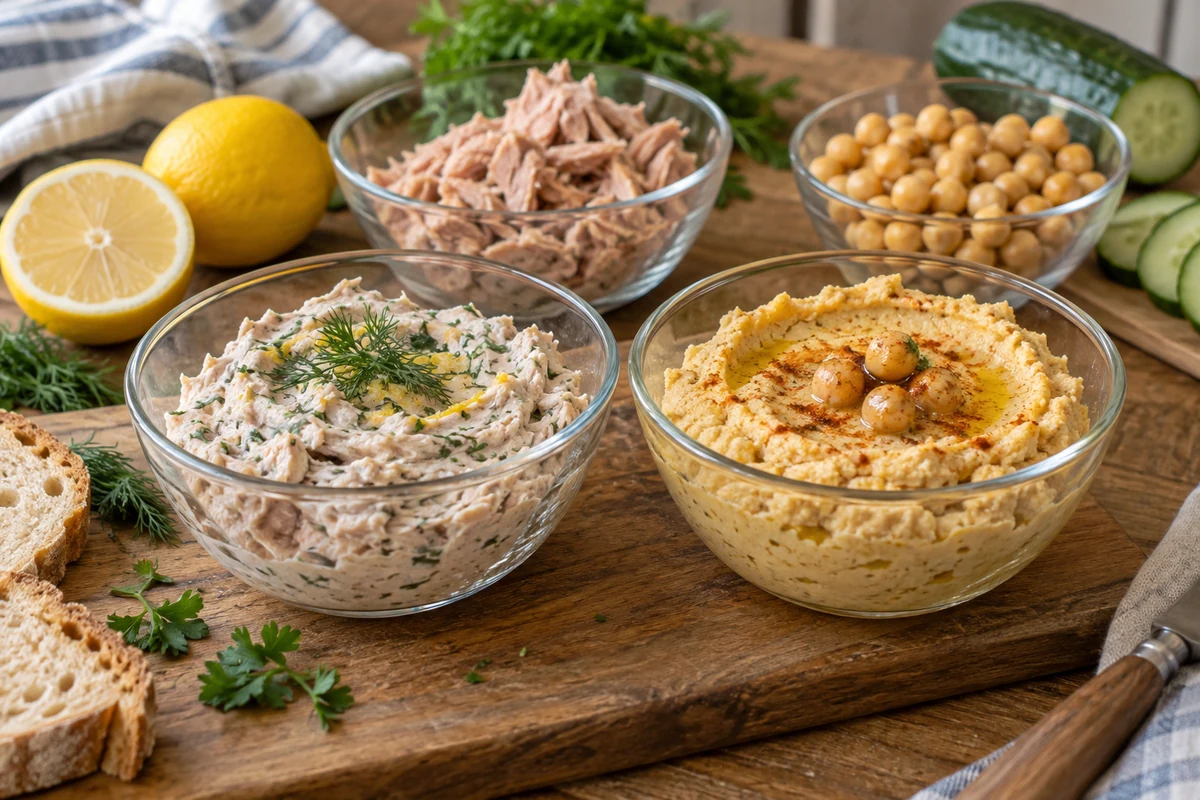
These substitutions and variations change the flavour and texture. Check labels and the needs of the person eating them; vegan, lactose-free and gluten-free mean different things.
A Less Rich Version
- Tuna: Use two tins of tuna in spring water, about 170 g net weight each before draining.
- Mayonnaise: Replace the 4 tbsp with 2 tbsp reduced-fat mayonnaise and 2 tbsp low-fat plain Greek yoghurt.
- Cream cheese: Use a reduced-fat product or omit the optional 2 tbsp.
- Flavour: Adjust lemon and herbs without automatically adding more oil or mayonnaise.
Vegan Version
- Tuna replacement: One 400 g tin cooked chickpeas, drained and rinsed, or 300 g firm tofu suitable for eating as supplied, crumbled. Follow tofu packet instructions if it requires cooking.
- Vegan mayonnaise: Use 4 tbsp, or try 2 tbsp tahini and 2 tbsp olive oil for a different texture. Tahini contains sesame and may need a little water or lemon to loosen.
- Creamy addition: Use 2 tbsp plain plant-based yoghurt or vegan cream cheese, if desired.
- Seasoning: Add 1 tbsp lemon juice, 4 tbsp finely chopped red onion, chives and salt to taste.
Serving with Less Bread
- Avocado option: Replace some mayonnaise with ½ mashed avocado for the two-tin batch. The nutritional result depends on the full recipe and portion size.
- To serve: Use cucumber slices or lettuce cups instead of bread, if preferred.
Lactose-Free and Gluten-Free Options
- Lactose-free: Omit ordinary cream cheese and yoghurt or use suitable alternatives. Lactose-free dairy still contains milk protein and is not suitable for a milk allergy. Check mayonnaise and all other labels.
- Gluten-free: Check condiments and other ingredients, serve with suitable bread or crackers and prevent cross-contact.
Adjusting Flavour and Texture
Drain thoroughly before mixing. Use a fork for a chunky texture or pulse briefly in a food processor for a smoother spread. If dry, add mayonnaise or a little oil gradually; avoid adding a full spoonful before checking.
Useful Proportions
- Tuna version: Two tins tuna, about 170 g net each before draining, 4 tbsp mayonnaise, optional 2 tbsp cream cheese, 1 tbsp lemon juice, 4 tbsp chopped red onion and 2 tbsp herbs.
- Chickpea version: One 400 g tin cooked chickpeas, drained and rinsed, 4 tbsp vegan mayonnaise or the tahini-and-oil alternative, 1 tbsp lemon juice, onion and herbs. Its yield and texture will differ from the tuna version.
Quick Tips
- Taste and adjust the freshly prepared mixture using a clean spoon, then refrigerate promptly.
- Texture: A food processor can smooth the chickpea version; a fork leaves more texture in either spread.
Tuna and Pâté: Useful Notes
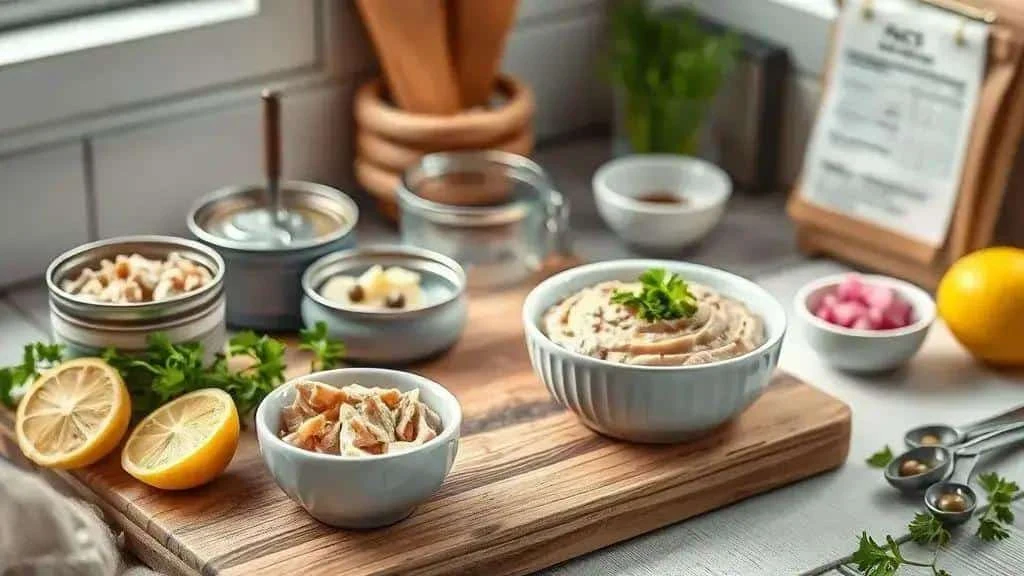
Tinned tuna is a convenient source of protein. It does not count as oily fish in UK dietary guidance, so this recipe should not be presented as a substitute for oily-fish intake or as a treatment for heart or brain health.
Nutritional Information
- Protein: Check the label for the amount per 100 g drained fish and multiply by the drained weight used. Tin net weight alone does not give an accurate protein figure.
- Fat: Tuna in oil and tuna in water differ, and mayonnaise also contributes fat. The finished spread’s nutrition cannot be inferred from the fish alone.
- Micronutrients: Tuna can contribute nutrients such as selenium and vitamin B12; exact amounts vary. No calculated nutrition per serving is supplied for this recipe.
Types of Tinned Tuna
Tinned tuna may be skipjack, yellowfin, albacore or another labelled species, packed in water, brine or oil. Draining changes the texture and amount of packing liquid in the spread.
Sourcing and Dietary Advice
- Fishing method: Check the species, catch area and method together. Pole-and-line can be a useful consideration, but no single method guarantees that every product is sustainable.
- Sourcing information: Consult the Marine Conservation Society’s Good Fish Guide and look for clear origin and certification details.
- Pregnancy and children: NHS advice is to avoid all pâté during pregnancy, including vegetable versions, because of listeria risk. Tuna intake guidance is a separate issue. For children, offer age-appropriate portions and textures, check allergies and follow current NHS fish guidance.
About This Style of Pâté
Here, tuna pâté means a simple chilled fish spread mixed at home, rather than a baked meat pâté or terrine. Tinned fish makes it quick to prepare without cooking raw fish.
Why Draining Matters
Draining prevents a watery spread. Removing excess packing liquid makes it easier to control the amount of mayonnaise and lemon.
Kitchen Notes
- Versatility: Use as a sandwich filling, toast topping or part of a salad plate.
- Texture: A fork leaves fish flakes; brief processing produces a smoother spread.
- Storage: Keep covered at 5°C or below and use within 48 hours or the shortest ingredient deadline.
Quick Serving Ideas
Add cucumber, finely grated carrot or fresh herbs for contrast. Adjust the seasoning with a clean spoon while the spread is fresh and correctly stored.
Enjoy Your Homemade Spread
Tuna pâté is a practical option for snacks and gatherings, made with a few familiar ingredients.
Try a variation, season to taste and follow the chilling guidance. Share your serving ideas if you make it.
Thank you for reading. Follow our social channels and visit the I Love Christmas blog for more recipes.
Tuna Pâté: Frequently Asked Questions
How long does tuna pâté keep in the fridge?
Keep it covered at 5°C or below and use within 48 hours, or sooner if an ingredient has a shorter deadline. Discard mishandled food even if it looks and smells normal.
Can I freeze tuna pâté?
It is not ideal because the creamy ingredients may separate. If necessary, freeze promptly while fresh, use within about 1 month for quality, thaw in the fridge and use within 24 hours. Do not freeze food that has already been kept too long or left warm.
How can I make it less rich?
Use tuna in spring water, replace some mayonnaise with low-fat plain Greek yoghurt and reduce or omit cream cheese. Compare product labels and add lemon and herbs to taste.
Which tinned tuna should I use?
Choose tuna in water or oil according to taste, drain it thoroughly and check the drained weight. For sourcing, look at the species, catch area and fishing method using a current seafood guide.
How can I stop the spread becoming watery?
Drain the tuna well and add lemon or vinegar gradually. Add mayonnaise or cream cheese a little at a time for binding; more cream alone will not fix a large amount of excess liquid.
Is tuna pâté suitable during pregnancy or for children?
NHS advice is to avoid all pâté during pregnancy, including vegetable pâté, due to listeria risk. For children, use suitable portions and textures, check fish, egg, milk and other allergens, and follow current NHS guidance on fish. Ask a healthcare professional about individual dietary needs.
Sources and Further Reading
- Food Standards Agency: chilling and storing food
- NHS: foods to avoid during pregnancy
- NHS: fish and shellfish
- Marine Conservation Society: Good Fish Guide
- NHS: food allergies