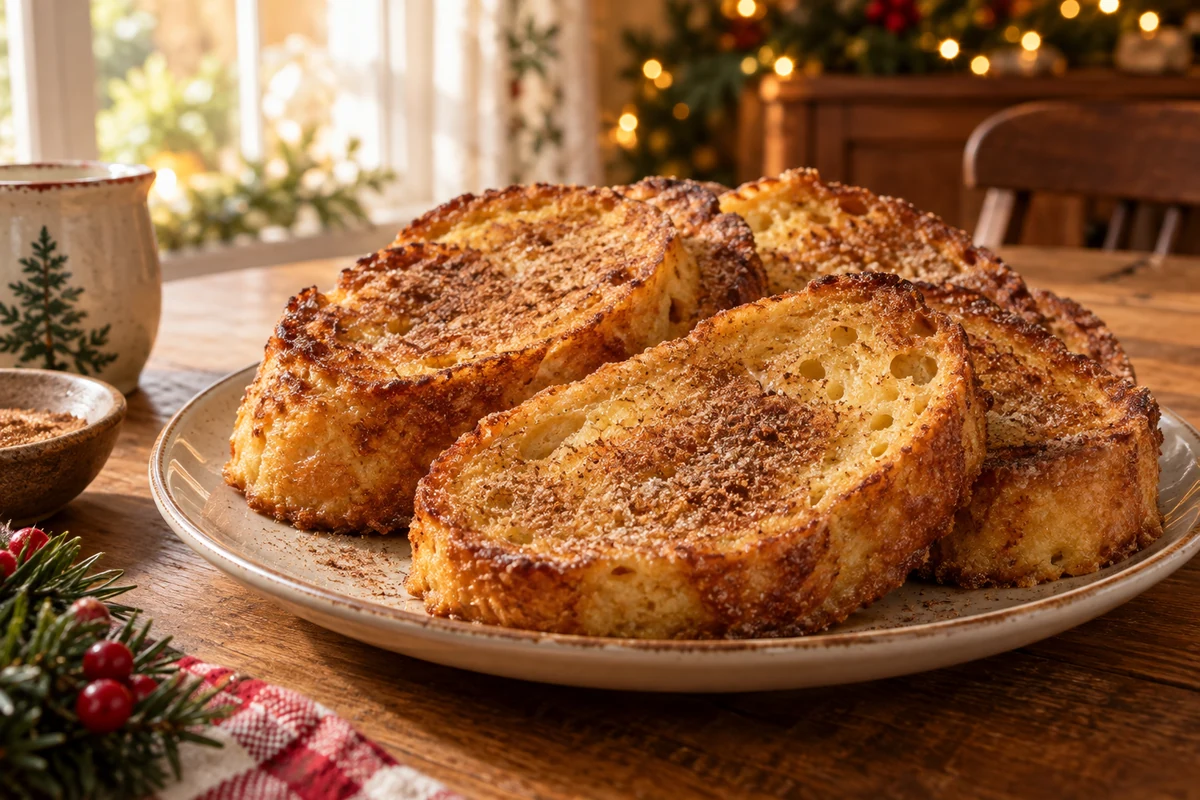
Oven-baked Christmas rabanada is a variation on the sweet French-toast-style dish enjoyed in Brazil. Day-old bread is soaked in milk, eggs and vanilla, then baked until golden and cooked through. It has a soft centre and a lightly crisp surface, without a pan of frying oil.
Oven-baked Christmas rabanada offers a practical way to prepare this festive bread dessert. The oven handles several slices at once, while careful soaking helps keep the bread intact and the centre pleasantly soft.
Ingredients for Oven-Baked Christmas Rabanada
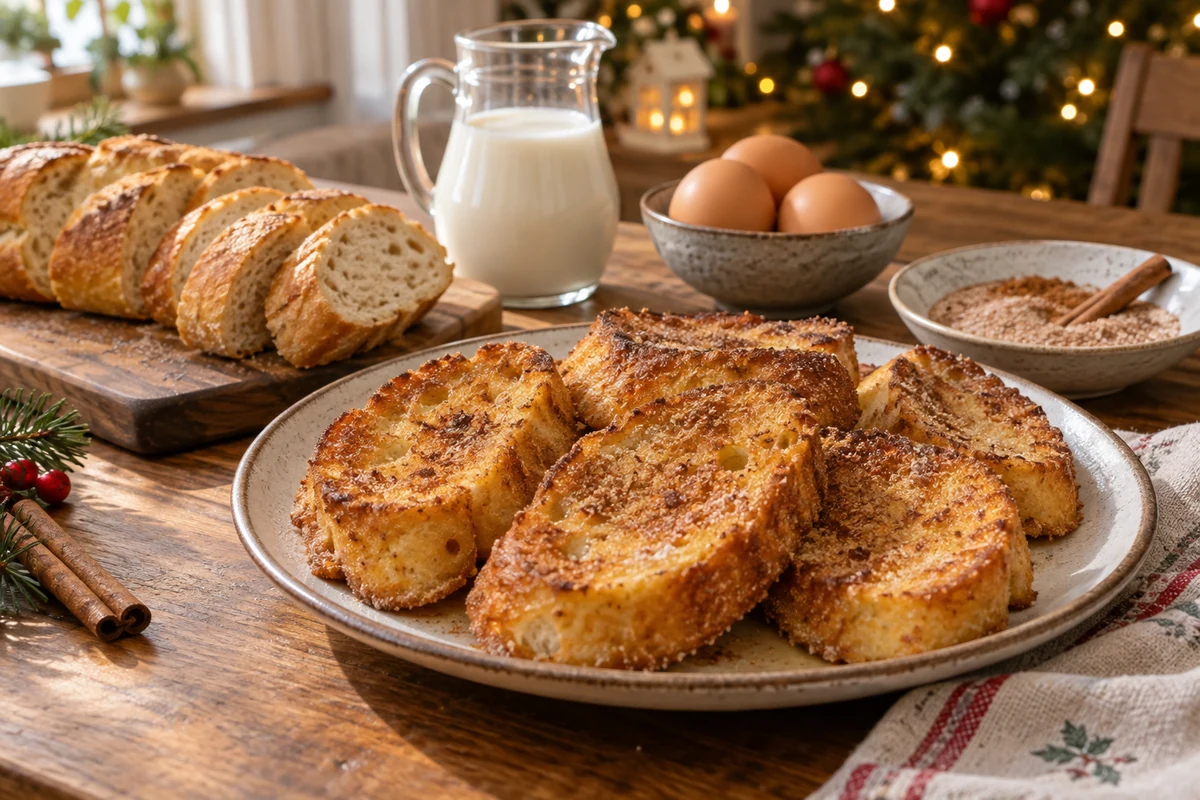
Gather these ingredients for oven-baked Christmas rabanada:
- 400–500 g crusty white bread or brioche — preferably day-old. A firm sliced loaf can also work; this weight is more than one small Brazilian bread roll.
- 500 ml whole milk — or a suitable unsweetened plant-based drink. Replacing milk alone does not make the recipe vegan because it also contains eggs and butter.
- 3 large eggs — for the soaking custard. Eggs are naturally gluten-free; replacing one with chickpea flour does not make wheat bread gluten-free.
- 100 g sugar — for the soaking mixture, matching the method below. Any sugar used for coating is additional. Coconut sugar is still sugar; sweeteners are not automatically interchangeable by weight.
- 1 teaspoon ground cinnamon — for the custard, with extra for finishing if desired. An optional ½ teaspoon nutmeg gives a different flavour.
- 1 teaspoon vanilla extract — or a little finely grated orange zest.
- A pinch of salt.
- 2 tablespoons melted butter — for brushing; a suitable plant-based baking fat or coconut oil is an alternative.
- Icing sugar for dusting — optional, additional to the measured sugar in the custard.
- Optional topping: up to ¼ cup condensed milk or honey for the batch — or maple syrup. These add sweetness; honey is unsuitable for children under one, and a vegan topping does not make the egg-based recipe vegan.
Ingredient and Texture Tips
Choose bread that is firm enough to absorb liquid without collapsing. You can use lower-fat milk or reduce the sugar to suit your taste, but the final nutritional value also depends on the bread, fat and toppings.
Soaking: start with a short dip and judge the bread. Very dry, thick slices may take 20–30 seconds per side, but soft brioche can fall apart in that time. Stop once moistened rather than saturated.
How to Make Oven-Baked Christmas Rabanada
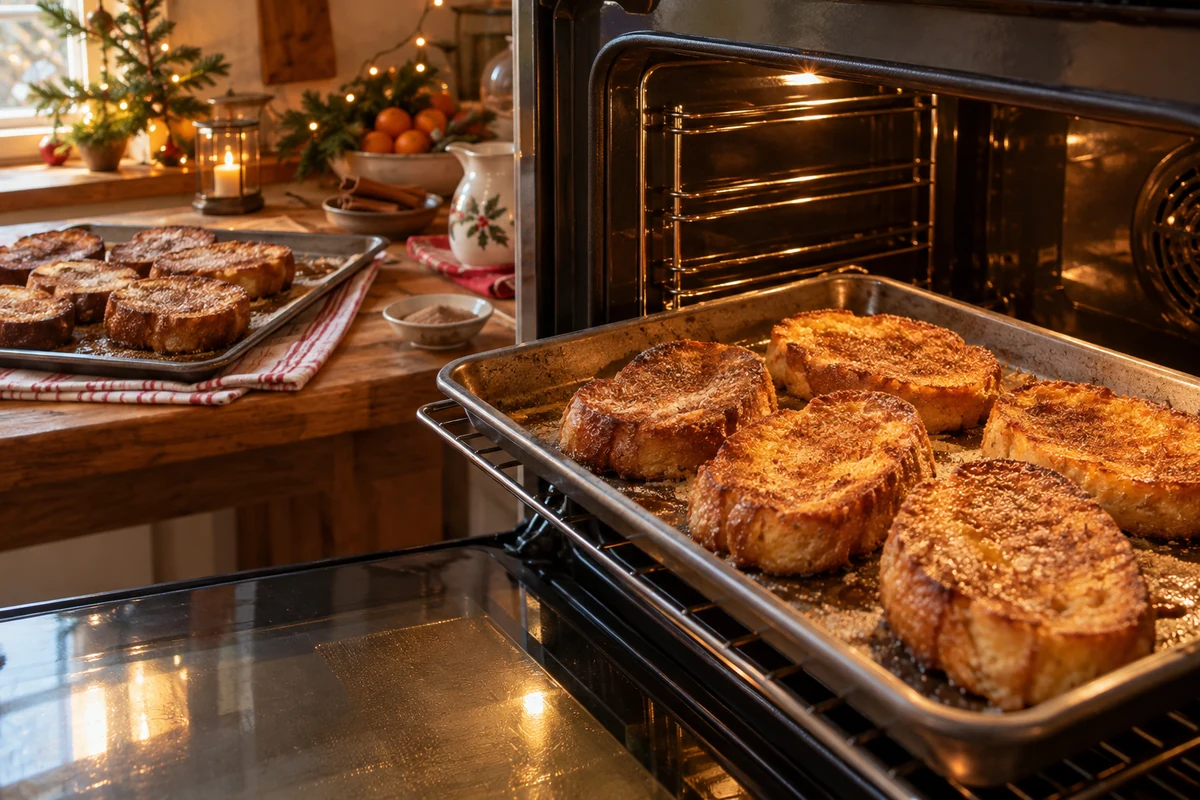
Method: bake the slices in a single layer, allowing enough time for the egg mixture in the centre to cook, not just for the surface to brown.
- Preheat: heat a conventional oven to 200°C with a shelf in the middle. Prepare a tray with suitable baking paper or a light coating of fat.
- Slice: cut the bread into even slices around 2–3 cm thick. Slightly dry bread usually holds together better than very fresh bread.
- Make the custard: whisk the 3 eggs with 500 ml milk, 100 g sugar, vanilla and salt until evenly mixed.
- Add cinnamon: whisk the teaspoon of cinnamon into the custard. If you want a cinnamon-sugar finish, prepare it separately using additional ingredients.
- Dip: soak each slice only until moistened, then let excess liquid drip back into the bowl. The suggested 20–30 seconds per side suits some very dry bread, but is too long for delicate slices.
- Brush: place the slices on the tray without overlapping and brush lightly with the melted butter or chosen fat.
- Bake and turn: start checking during the suggested 12–18-minute baking period, turning carefully partway through. Thick or heavily soaked bread can need longer; oven performance varies.
- Check the centre: the outside should be golden and the centre hot with the egg set, without wet raw custard. Continue baking as needed, loosely covering if the surface browns too quickly. A thermometer can confirm 70°C for two minutes or an equivalent safe cooking combination.
- Finish: add a little optional icing sugar and cinnamon, and serve warm with toppings on the side. Let portions cool to a suitable eating temperature for children.
- Store leftovers: cool promptly and refrigerate within two hours at 5°C or below. Use within 48 hours. When reheating at 180°C, 5–7 minutes is only an initial guide: continue until steaming hot throughout and reheat once only.
Quick Tips
Avoid saturating the bread or cutting very thin slices, which can dry out quickly. Brioche makes a rich, delicate version. An egg-free chickpea-flour coating behaves differently and needs its own tested method rather than a guaranteed one-for-one substitution.
Oven-Baked Rabanada Variations
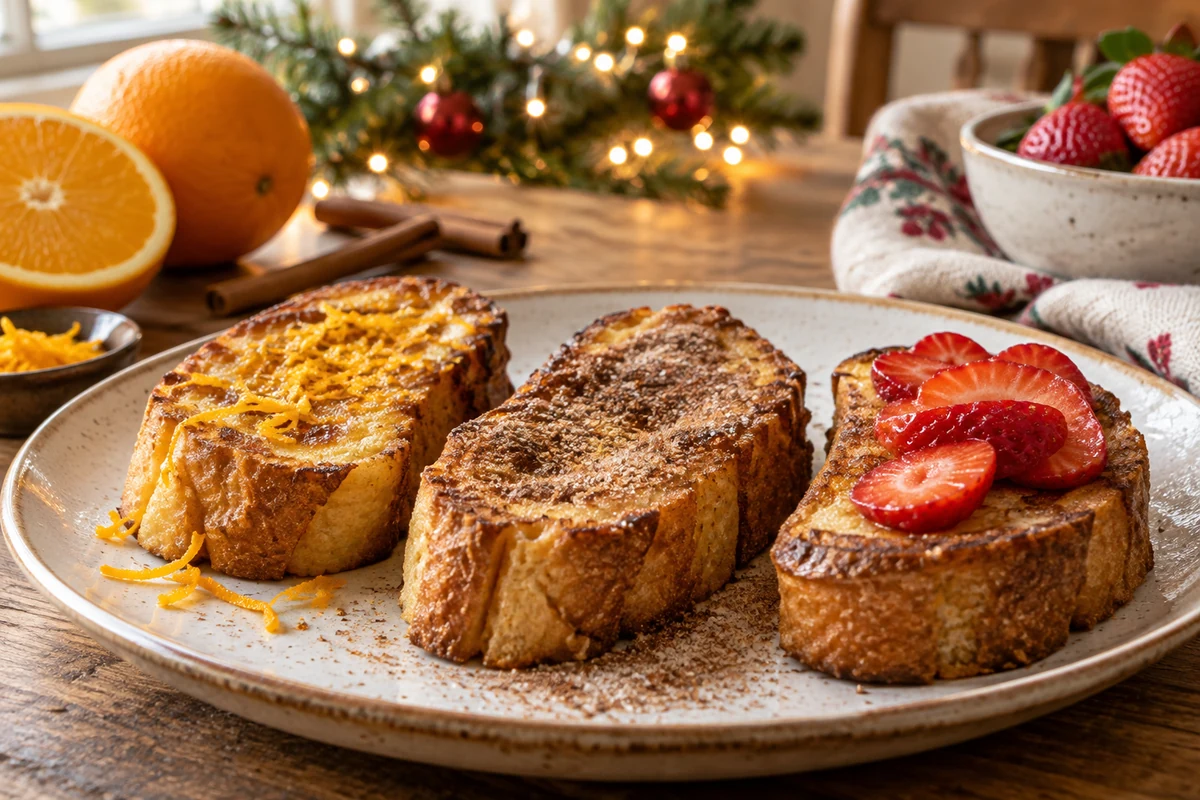
Try one of these variations on oven-baked Christmas rabanada, choosing toppings and ingredients to suit your guests.
- Cinnamon sugar: mix an additional 2 tablespoons sugar with 1 teaspoon cinnamon and sprinkle lightly over the warm slices. Use as much or as little as preferred.
- Condensed milk and orange: offer condensed milk separately with a little orange zest. The original suggests 2–3 tablespoons per portion, but a smaller drizzle may be enough alongside the sweet custard.
- Caramelised top: scatter a thin layer of granulated sugar over fully baked slices and brown briefly under a grill, watching continuously. Use a grill-safe tray and remove baking paper first; follow the appliance instructions and do not leave it unattended.
- Cream cheese and jam: a thick slice can hold a small pocket of filling, but the suggested 1–2 tablespoons cream cheese plus 1 tablespoon jam may be too much for a narrow slice. Avoid overfilling and bake until the centre is cooked. Serving the toppings separately is simpler.
- Vegan variation: use vegan bread, plant-based milk and a suitable fat, with an egg-free coating from a tested recipe. The original suggests replacing three eggs with 2 tablespoons chickpea flour and 60 ml water, but that ratio has not been validated here and needs thorough cooking. Maple syrup and berries are optional toppings.
- Wholemeal variation: choose firm wholemeal bread and adjust sweetness to taste. Banana purée changes both texture and sugar content; do not automatically label that version ‘no added sugar’. Check any sweetener’s baking directions, and choose nut toppings only when suitable for guests.
Practical Variation Tips
Soaking time: let bread texture guide you. The 20–30-second suggestion is not a minimum and can be too long for soft bread.
Oven setting: use 200°C conventional for the plain version. A filled version may benefit from a lower 180°C setting and longer cooking, but must be checked in the centre rather than given a fixed extension.
Toppings: offer fruit, a little syrup or cinnamon sugar. Honey, maple syrup and condensed milk all add sugar; whole nuts are unsuitable for children under five.
Reheating: an oven at 180°C can restore some crispness. Check after 5–7 minutes and continue until steaming hot throughout.
Serving Rabanada at a Christmas Gathering
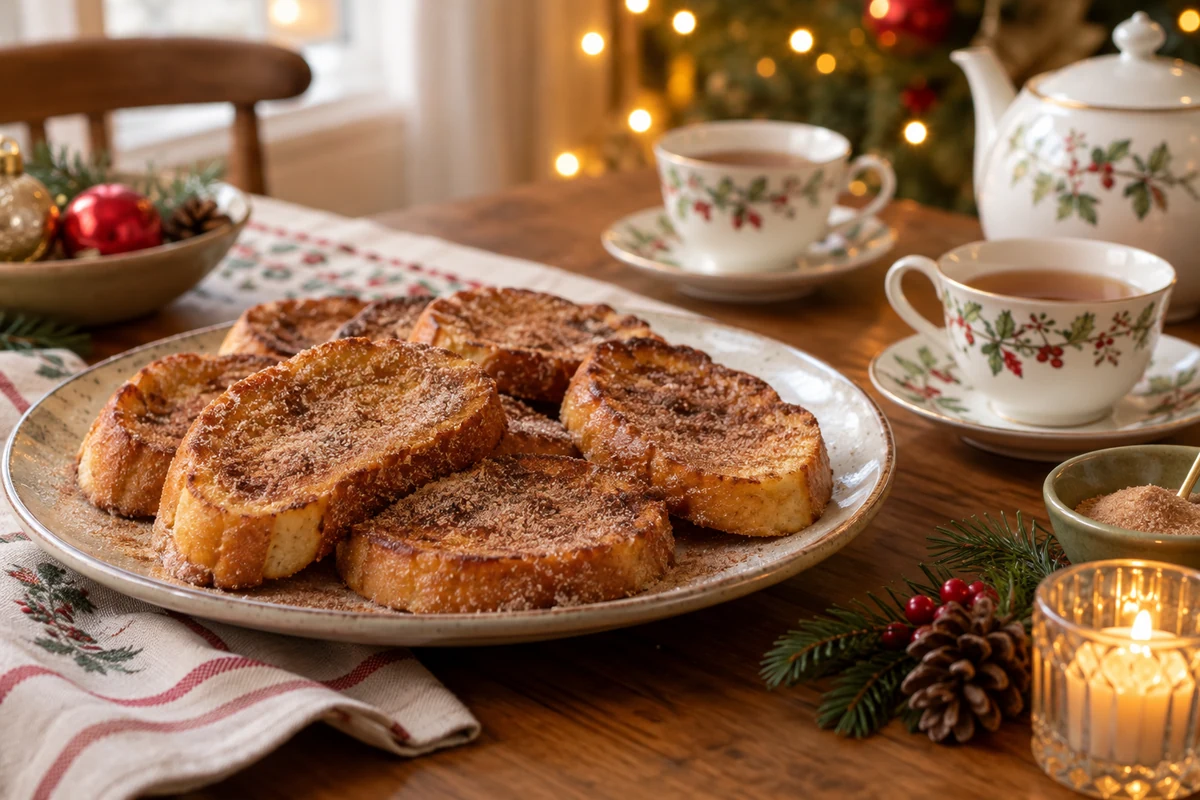
A little planning makes a Christmas meal easier to serve. Keep the dessert straightforward and give guests room to choose their portions and toppings.
Plan the Timing
Decide when the main meal and dessert will be served. Bake or reheat the rabanada close to dessert time rather than leaving it lukewarm through the whole meal.
Arrange the Table
Set aside space for main dishes, sides and dessert, with a clear route for guests and a safe area around the kitchen.
- Main dishes can sit on larger platters in an accessible position.
- Side dishes can be arranged in the order people are likely to serve them.
- Serving utensils should stay with their own dish, especially where allergens are involved.
Temperature and Reheating
A warm platter can help with immediate serving but is not reliable long-term hot holding. Reheat refrigerated baked rabanada until steaming hot throughout; the suggested 160–180°C for 5–7 minutes is only a starting guide.
Presentation and Finishing
Use a clean serving platter and add cinnamon sugar to the rabanada just before serving. Keep condensed milk, honey or maple syrup in separate bowls, with appropriate ingredient information available.
Drinks
Tea, coffee, water or an alcohol-free festive drink are simple choices. Adults who drink alcohol may prefer an optional small port or sparkling wine, according to taste.
Dietary Needs
Keep dietary alternatives separate and make their ingredients clear to guests. Use separate utensils and avoid cross-contact; an internal label that guests cannot see is not enough for someone choosing around an allergy.
Serving Checklist
- Portions: allow about 1–2 slices per person, depending on slice size and the rest of the menu.
- Reheating: warm once, thoroughly, and serve promptly.
- Preparation ahead: suitable cold accompaniments can be made the day before and kept refrigerated according to their ingredients.
- Convenience: put extra napkins and cutlery within easy reach.
Storing and Using Leftovers
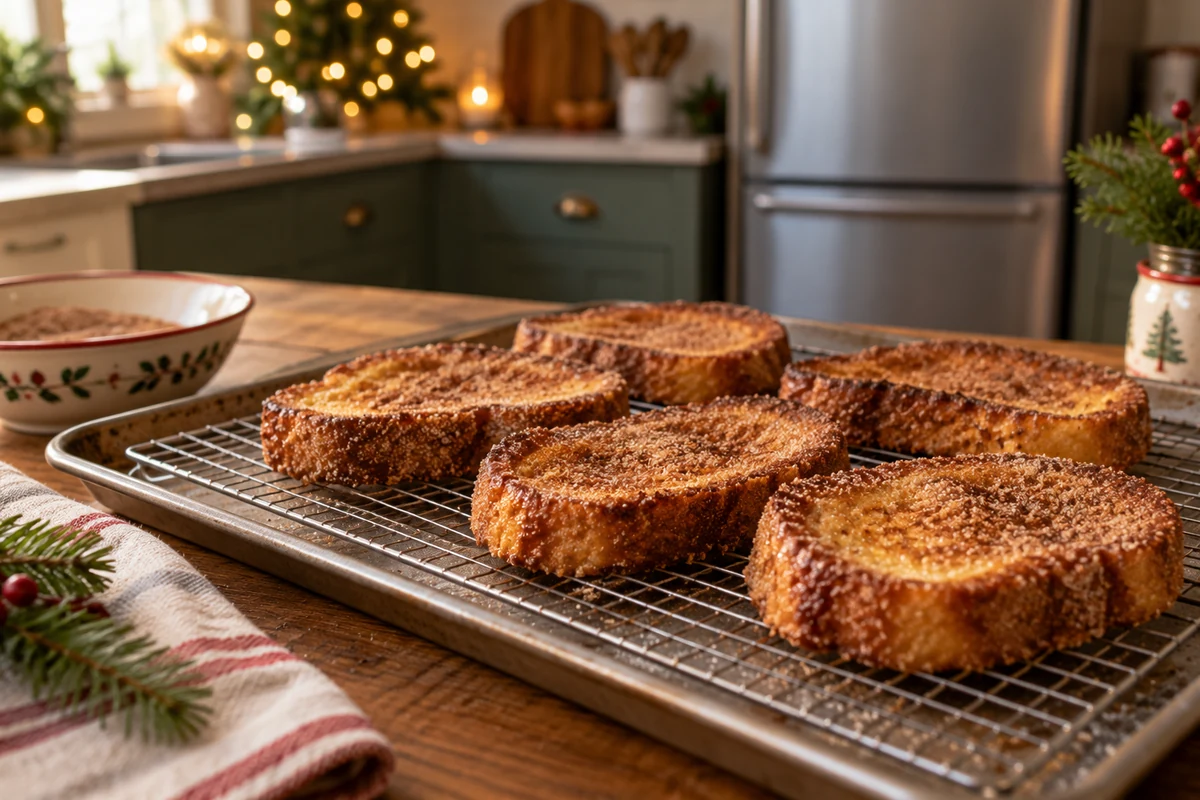
Good storage helps avoid waste. Refrigerate promptly and remember that turning leftovers into another dessert does not restart their storage time.
How to Store Rabanada
- Refrigerate for up to 48 hours: cool promptly and place in a covered container in a fridge at 5°C or below, within two hours of cooking.
- Freeze promptly: freeze cooled slices separately on a tray, then pack in a suitable freezer container or bag. A month is a practical quality target rather than a guarantee of unchanged texture.
- Limit room-temperature storage: do not leave this milk-and-egg dish out for more than two hours before chilling leftovers.
- Separate layers: use food-safe baking paper to prevent slices sticking together.
Reheating and Texture
- From the fridge: arrange slices on a tray and reheat at 160–180°C. Check after 5–7 minutes, continuing until steaming hot throughout rather than merely warm on the surface.
- After freezing: thaw fully in the fridge; thick slices may need overnight. Use within 24 hours of full defrosting. Reheat at 170–180°C, checking after 8–12 minutes and continuing as needed.
- Avoid a fixed from-frozen shortcut: 12–15 minutes is not a dependable cooking time for every frozen slice. Thaw in the fridge first unless following a method validated for its thickness and filling.
- Air fryer: 160–170°C can help crisp the surface. Check after 3–5 minutes and continue until the centre is steaming hot; follow the appliance guidance.
- Texture: a light brushing of fat is optional. A microwave tends to soften the surface; whichever method you use, reheat only once and check the centre.
Ideas for Leftovers
- Bread pudding: rabanada can be used in a suitable bread-pudding recipe. The original suggests 300 ml milk, 2 eggs and 2 tablespoons sugar but gives no weight of leftover bread, so it is not a complete dependable ratio. Use a tested recipe and cook its custard through.
- Cold dessert cups: layer properly chilled rabanada cubes with yoghurt and berries, adding a little optional honey for guests over one year old. Keep cold and use within the original leftovers’ storage limit.
- Toasted pieces: cut into cubes or strips and heat at around 160°C, beginning checks after 8–10 minutes. Make sure they are hot throughout before serving with ice cream or custard.
- Optional liqueur flavour: adults who choose alcohol can add a small amount of liqueur to a serving. There is no need to ignite it; leave out the original flambé suggestion for a simpler home presentation.
- Warm dessert pieces: reheat suitable leftovers thoroughly with a little butter and cinnamon, then serve with ice cream. Do not reheat portions that have already been reheated once.
Labels and Organisation
Label frozen portions with the dish, date and relevant allergens. Aim to use within a month for quality, thaw in the fridge and avoid repeatedly thawing and refreezing leftovers.
Storage reminder: refrigerate within two hours and use within 48 hours, or freeze promptly. After fridge defrosting, use within 24 hours. Reheat once until steaming hot throughout; making another dessert does not reset those limits.
Rabanada and Related Bread Dishes

Rabanada belongs to a wider family of dishes that soak and cook bread. French pain perdu and Spanish torrijas are related examples, with their own ingredients and serving traditions.
Background Notes
- Names: the Spanish word rebanada means a slice, but that resemblance alone does not establish a precise history for the Portuguese dish’s name.
- Using bread: day-old bread can be turned into a sweet dish rather than wasted. Only use bread that is still safe to eat, never mouldy bread.
- Christmas connections: rabanada is familiar at Christmas in Brazil and Portugal, although related dishes are served on other occasions elsewhere.
- Different traditions: Spanish torrijas are associated with Easter, while pain perdu can be enjoyed beyond the Christmas season. Similar ingredients do not make every version identical.
- Oven variations: baking offers another cooking method and can use less added oil, depending on how much fat and topping is added.
Rabanada in Brazil
Brazilian rabanada shares the Portuguese name and the Christmas association. Household versions vary, including those with condensed milk or orange zest; a precise route or date of introduction is not established here.
Flavour Variations
Fried, baked and filled versions can all be found in home cooking. Spices such as cinnamon and nutmeg, along with fruit or sweet toppings, give each version a different character.
A Practical Use for Day-Old Bread
The dish is a useful way to enjoy bread that has become a little dry, turning it into something suitable for a festive table.
Conclusion
Oven-baked Christmas rabanada is a practical alternative to frying. Choose firm bread, control the soak and bake until the centre is properly cooked. Add toppings to taste and refrigerate leftovers promptly.
For more seasonal recipes and ideas, explore the I Love Christmas blog. Share the bread and flavour variation you enjoyed most.
Happy Christmas, and enjoy your baking!
FAQ — Oven-Baked Christmas Rabanada
Can I make baked rabanada without eggs?
Yes, using a tested egg-free French toast or rabanada recipe. Chickpea flour and cornflour coatings behave differently from eggs; the original’s quick replacement ratios are not validated here. For a vegan dish, check the bread, milk, fat and toppings as well.
How can I stop the bread becoming soggy?
Use slightly dry, firm bread, start with a short dip and let excess liquid drain. Very dry slices may take 20–30 seconds per side, but soft bread needs much less. Bake in one layer without overlapping.
Which bread works best?
Firm crusty white bread or brioche works well. A firm sliced or wholemeal loaf is another option, with soaking time adjusted to its texture. For a gluten-free dish, use suitable gluten-free bread and check all other ingredients.
How should I store and reheat leftovers?
Refrigerate within two hours at 5°C or below and use within 48 hours, or freeze promptly. Thaw in the fridge and use within 24 hours of full defrosting. Reheat once in an oven or air fryer until steaming hot throughout; short suggested times are only starting points.
Can I make filled rabanada?
A thick slice can hold a small amount of cream cheese and jam, but avoid overfilling. It may need gentler, longer baking, and the centre must cook through. Serving the filling as a separate topping is an easier alternative.
Sources and Further Reading
- Visit Portugal: Christmas traditions
- Food Standards Agency: cooking food safely
- Food Standards Agency: chilling, freezing and defrosting food
- NHS: foods to avoid for babies and young children
- Spain.info: Easter sweets and torrijas