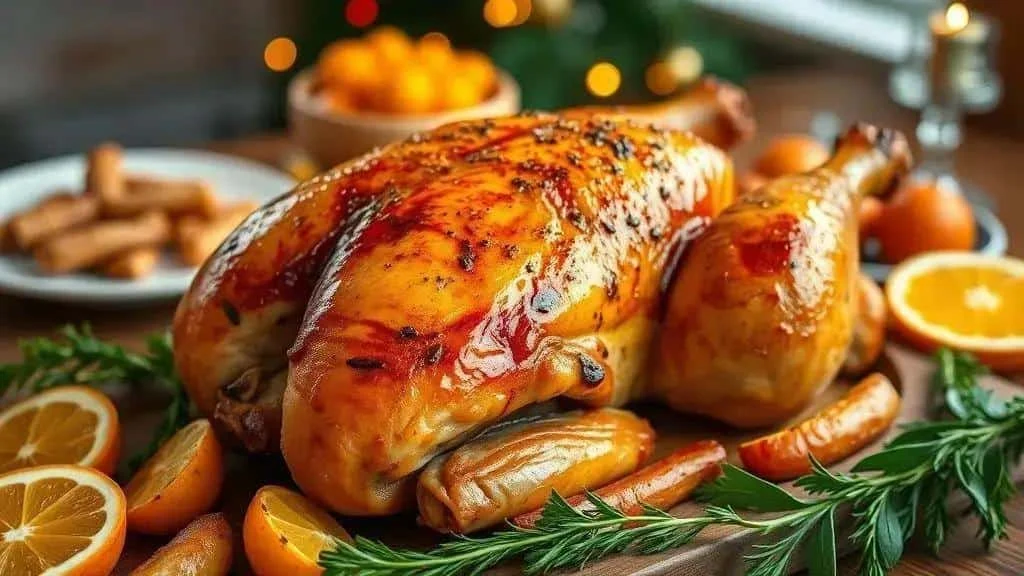
These Brazilian Chester chicken ideas include a traditional roast, fruit farofa served alongside, citrus glaze, herb butter, wine and prunes, a nut crust and breaded cooked chicken strips. Chester is a Brazilian branded chicken product, not a separate species or a turkey. Follow the specific bird’s packaging for thawing and roasting, and check it is thoroughly cooked.
Try these Brazilian Chester chicken recipes for a festive meal with savoury herbs, sweet fruit and colourful side dishes. The first two ideas have fuller preparation steps; the others offer flavour variations. If Chester is unavailable, use a suitable whole chicken and follow its own cooking instructions, adjusting ingredient quantities to its size.
Why Serve Chester Chicken at Christmas?
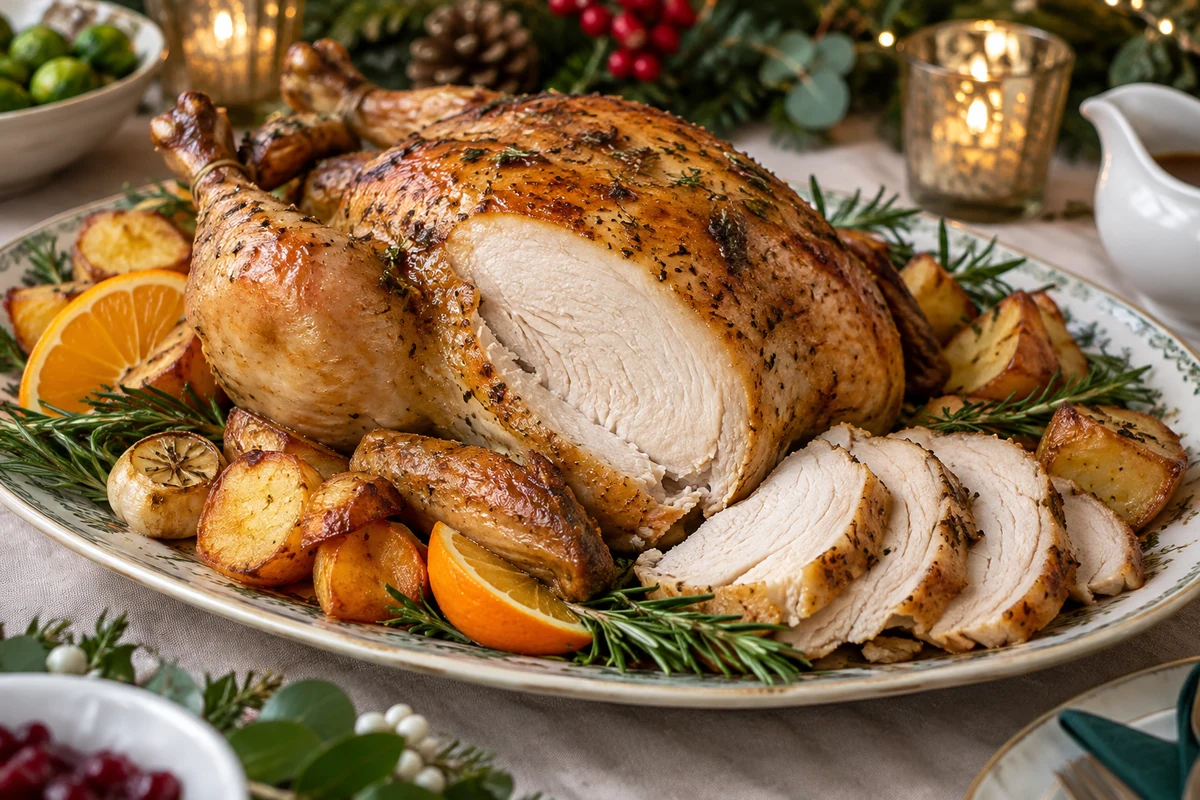
Chester is associated with Brazilian Christmas dinners. It is sold as seasoned chicken, so check the ingredients and added salt before applying extra seasoning. Availability and product specifications can differ between markets.
What It Brings to a Festive Meal
- Portion planning: a whole bird provides both breast and leg meat, but edible yield varies with size and carving; its total weight includes bones.
- Flexible flavours: garlic, herbs, fruit sauces and savoury accompaniments offer several serving styles.
- A juicy result: avoiding overcooking matters more than relying on fruit or marinade to keep the meat moist.
- Presentation: a whole golden roast makes an attractive centrepiece.
- Cooking time: plan around the weight and packaging instructions rather than assuming it will cook faster than another bird.
Choosing and Preparing the Bird
- Portions: use the pack’s serving guide and account for bones, appetites and side dishes. A rough allowance of 300–400 g raw whole-bird weight per person is only a planning estimate, not a guarantee of leftovers.
- Thawing: follow the pack and allow enough time for the bird to thaw fully in the fridge. A large bird can need longer than 24–48 hours.
- Flavourings: butter, garlic, herbs, orange juice and suitable stock work well. Wine is optional and cooking does not guarantee all alcohol is removed.
- Roasting: follow the bird’s labelled temperature and timing. The recipes below use 180°C conventional oven as a starting point where compatible with the pack; time alone is not a doneness test.
- Checking doneness: use a clean food thermometer in the thickest breast and thigh meat, avoiding bone. Check for 75°C for 30 seconds or 70°C for 2 minutes throughout.
- Resting: rest for 15–20 minutes, loosely covered, then carve and serve promptly.
Building a Brazilian-Inspired Christmas Menu
Chester chicken pairs with fruity farofa, citrus sauces, roast potatoes and festive rice. Farofa is a Brazilian toasted cassava-meal accompaniment; here it is cooked separately from the bird for more reliable cooking.
Budget and Practical Considerations
Compare local prices, the pack’s serving guide and the oven space available. Chester is not automatically cheaper or quicker than other poultry. Choose one flavour variation for a manageable meal rather than preparing several whole birds unnecessarily.
Before You Start: Buying, Thawing and Seasoning
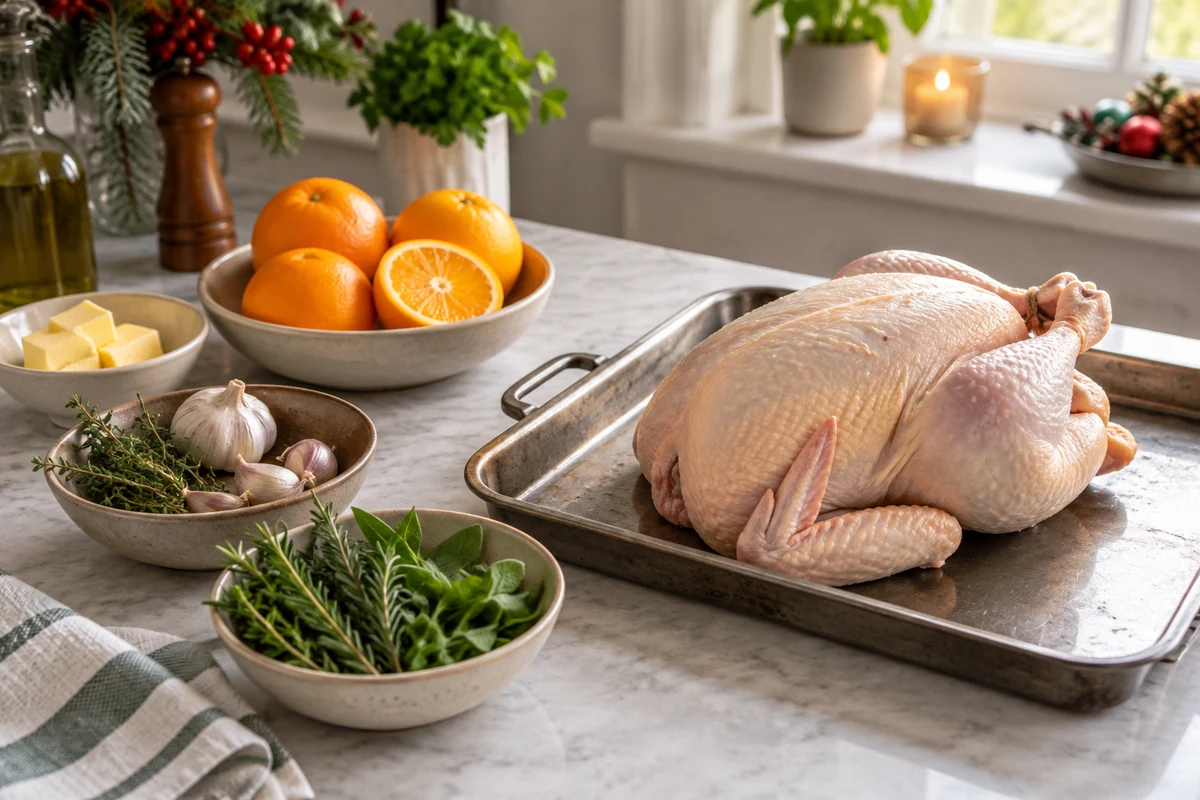
For a good Chester roast, plan safe thawing, check the existing seasoning and allow enough oven time. Keep raw poultry separate from ready-to-eat foods.
Choosing the Bird
- Weight: choose a size that fits your oven and guest list. The recipes use a 3–4 kg bird; a 300–400 g raw-weight allowance per person is approximate and includes bones.
- Packaging: buy from a reputable supplier, check the packaging is intact and keep the product at its labelled storage temperature.
- Dates and storage: follow the use-by date and freezing instructions. Do not choose an arbitrary extra shelf life or refreeze raw poultry that has already been thawed.
- Chilled or frozen: frozen poultry allows earlier shopping but needs planned thawing. Check whether a chilled product has previously been frozen.
Safe Thawing
- Plan ahead: follow the manufacturer’s thawing guidance. Do not assume a large bird will be ready after one day; it must be thawed all the way through before ordinary roasting.
- Contain drips: follow the packaging instructions and place the bird in a covered, leakproof container on the bottom shelf of the fridge.
- Keep it cold: maintain the fridge at 5°C or below throughout thawing.
- Check the centre: there should be no ice left inside the cavity or thick meat. Remove any giblet bag as directed and wash hands and equipment after contact with raw poultry.
- Do not rush thawing: use the fridge and the pack’s instructions rather than improvising a warm-water or worktop thaw. If it is still frozen inside, change the meal timing instead of roasting it partially thawed.
Seasoning Pantry: Example Quantities
- 150 g unsalted butter, softened; or up to 120 ml olive oil for a different texture. Use the quantities in your chosen recipe rather than adding every suggestion below.
- 6 garlic cloves, crushed; alternatively, about 1 tsp garlic powder, adjusted to the product’s strength.
- Juice of up to 2 oranges for marinades or sauces. Lemon gives a sharper flavour; add gradually rather than treating the juices as identical.
- Up to 2 tbsp mustard for flavour. Honey gives a sweeter alternative but is not an equivalent seasoning and can scorch.
- Fresh parsley, thyme or rosemary; have a few tablespoons of chopped herbs available and use the amount specified in the recipe.
- Salt and black pepper as needed. Chester is commonly pre-seasoned, so do not add salt according to a fixed spoon-per-kilogram rule.
A Simple Garlic and Herb Butter
- Soften the butter: put 150 g unsalted butter in a bowl.
- Add flavourings: mix in 6 crushed garlic cloves, 2 tbsp chopped herbs, 1 tbsp mustard and juice from ½ orange, adding the juice gradually.
- Season cautiously: add pepper and only as much salt as the bird’s existing seasoning allows. Mix before handling the raw poultry; do not taste a mixture that has touched raw meat.
- Apply: gently loosen the breast skin, spread some butter underneath and the remainder over the skin. Keep preparation brief and wash your hands afterwards.
Quick Safety Tips
- Thermometer: check thick breast and thigh meat away from bone for 75°C for 30 seconds or 70°C for 2 minutes. Clean the probe between checks.
- Stuffing: cook farofa and other stuffing separately, rather than inside the bird, so poultry and accompaniment can cook properly.
- Resting: allow 15–20 minutes before carving, then serve promptly.
- Brining: pre-seasoned Chester generally does not need another salty brine. For an unseasoned bird, use a tested brining recipe and keep it refrigerated; brining does not replace thorough cooking.
Seven Chester Chicken Ideas: A Quick Overview
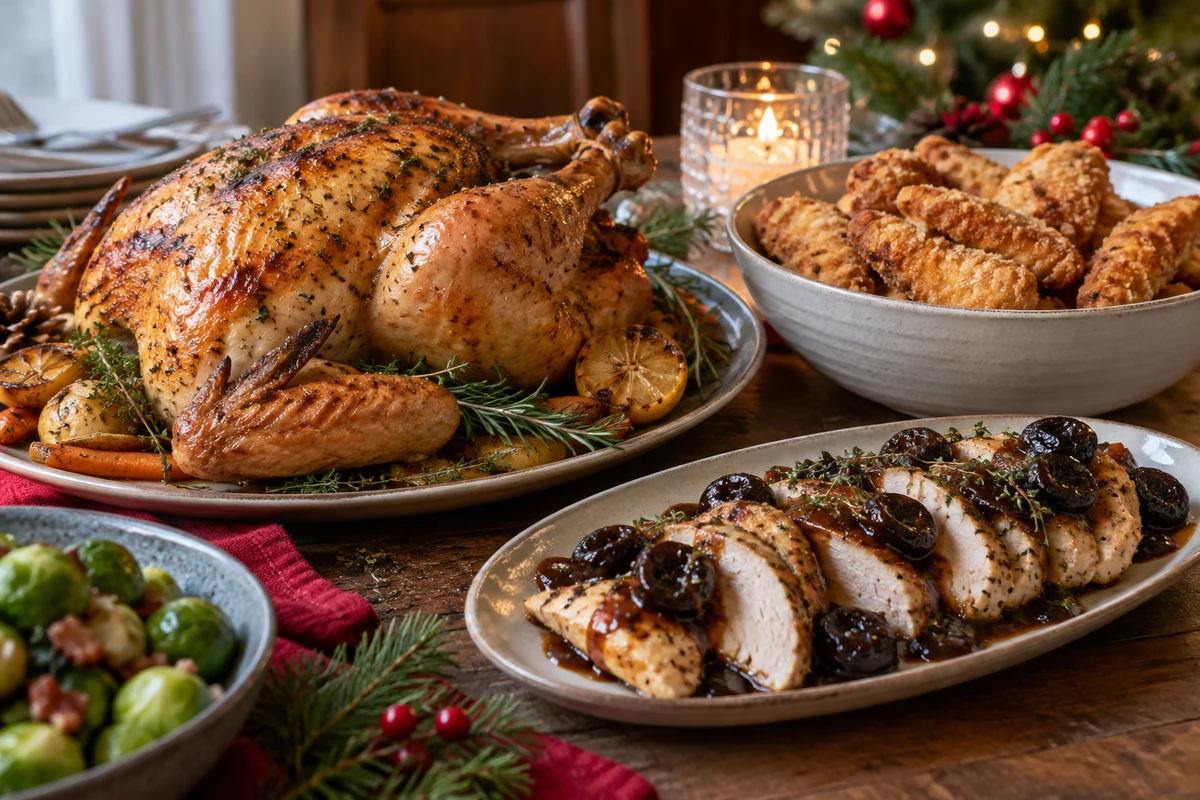
-
Traditional Roast Chester Chicken
- 1 Chester chicken, 3–4 kg, fully thawed, with any giblet bag removed; do not wash raw poultry.
- 150 g butter, softened.
- 6 garlic cloves, crushed.
- Juice of 1 orange for a citrus note.
- Salt and black pepper, allowing for any seasoning already in the bird.
- Preheat to the temperature specified on the pack; 180°C conventional is the recipe’s starting point where appropriate.
- Mix the butter with garlic, pepper, any needed salt and orange juice, adding the juice gradually.
- Spread under and over the breast skin.
- Roast according to the pack, covering loosely if browning too fast. Check thick breast and thigh meat reaches 75°C for 30 seconds or 70°C for 2 minutes.
- Rest for 15–20 minutes before carving.
Variation: add chopped herbs or finely grated lemon zest to the butter.
-
Chester Chicken with Fruit Farofa on the Side
- 1 Chester chicken, 3–4 kg, prepared and roasted according to its packaging.
- 300 g toasted Brazilian cassava meal for farofa, not tapioca starch.
- 100 g dried fruit, such as chopped apricots and raisins.
- 1 chopped apple, optional.
- 50 g butter and a little salt if needed for this simple version; the fuller recipe below uses additional ingredients and 100 g butter.
- Cook the farofa: melt the butter, soften the apple if using, add dried fruit and stir in the toasted cassava meal until evenly coated and hot.
- Keep it separate from the raw bird; do not pack it into the cavity.
- Roast the chicken with the cavity unfilled, seasoning only as needed.
- Serve together once the bird is thoroughly cooked and rested, with the hot farofa in a separate dish.
Variation: use dried cranberries or chopped nuts instead of some dried fruit, checking allergies.
-
Honey and Citrus Chester Chicken
- 1 Chester chicken, 3–4 kg.
- 100 ml honey; do not serve honey-containing food to children under 12 months.
- 100 ml orange juice.
- 2 tbsp mustard.
- Salt and pepper only as needed.
- Mix honey, orange juice and mustard. Reserve a clean portion for serving before any brush touches the poultry.
- Brush over the roasting bird towards the end of cooking, watching carefully because honey burns easily.
- Roast following the pack and verify safe internal temperature, not just golden skin.
- Finish with a little clean reserved glaze. Do not use glaze or a brush contaminated by raw poultry on cooked meat.
Variation: add orange zest. Wine is optional, but omit it where an alcohol-free meal is needed.
-
Garlic and Herb Butter Chester Chicken
- 1 Chester chicken, 3–4 kg.
- 150 g butter with 4 crushed garlic cloves.
- 2 tbsp fresh thyme leaves.
- 2 tbsp chopped parsley.
- Combine butter, garlic and herbs.
- Spread some under the breast skin and the remainder over the skin.
- Roast at the pack’s recommended temperature, checking the breast and thigh are thoroughly cooked.
- Rest for 15–20 minutes before carving.
Variation: use rosemary instead of thyme or add a little chilli if liked.
-
Chester Chicken with Red Wine and Prunes
- 1 Chester chicken, 3–4 kg.
- 200 g pitted prunes.
- 150 ml red wine, or grape juice for an alcohol-free alternative.
- 2 tbsp brown sugar, reduced if the juice is already sweet.
- Soak the prunes in the wine or juice for about 20 minutes, adding a little water only if needed.
- Simmer with the sugar until the fruit softens and the sauce thickens. Reserve a clean serving portion.
- Brush some sauce over the roasting chicken during the last part of cooking, watching for scorching and checking the meat’s final temperature.
- Serve the cooked, rested chicken with the separately reserved hot sauce.
Variation: use dried apricots instead of prunes. Cooking wine does not guarantee that all alcohol disappears.
-
Breaded Cooked Chicken Strips
- Safely cooled roast Chester chicken, cut into strips. Use only as much meat as the coating below will cover, rather than assuming it covers a whole bird.
- 2 eggs, beaten.
- 150 g breadcrumbs, seasoned as needed.
- Suitable cooking oil for frying.
- Prepare even strips from properly chilled cooked meat, keeping them refrigerated until needed.
- Coat in beaten egg, then breadcrumbs. Discard leftover coating that has contacted the egg and meat.
- Fry carefully until the coating is cooked and the centre is thoroughly hot: 75°C for 30 seconds or 70°C for 2 minutes. Golden crumbs alone are not enough.
- Drain on kitchen paper and serve promptly. This reheats the chicken, so do not reheat the strips again.
Variation: bake or air-fry with a little oil, following your appliance guidance and checking the same internal temperature.
-
Chester Chicken with a Honey and Nut Crust
- 1 Chester chicken, 3–4 kg.
- 200 g chopped nuts, such as macadamias or Brazil nuts.
- 100 g honey.
- 50 g butter.
- Mix the nuts with honey and melted butter.
- Add the crust towards the end of roasting, using about the final 25–30 minutes as a starting guide and watching closely.
- Brown carefully, shielding the top if it colours too quickly. The chicken must still reach a safe internal temperature.
- Rest before carving and serve the nut-coated portions only to guests for whom they are suitable.
Variation: use almonds or add a little chopped herb. Honey is unsuitable for under-ones and whole nuts for under-fives.
Recipe 1: Traditional Roast Chester Chicken Ingredients
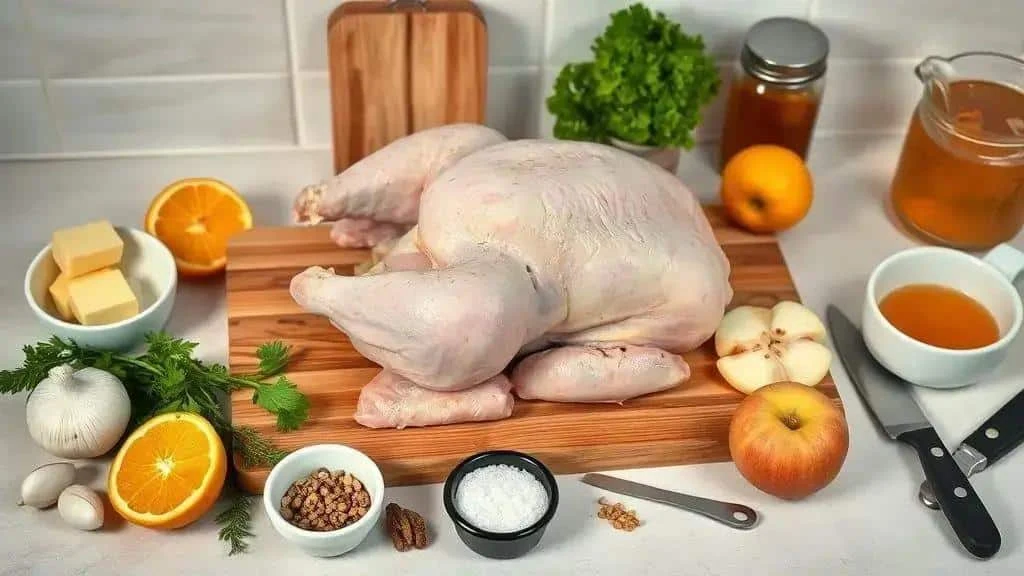
- 1 Chester chicken, 3–4 kg, fully thawed with giblets removed as instructed. A whole chicken or small turkey can take these flavourings, but use that bird’s own roasting guidance.
- 150 g unsalted butter, softened; alternatively, up to 120 ml olive oil, with a different result under the skin.
- 6 garlic cloves, crushed, or about 1 tsp garlic powder.
- About 100 ml orange juice, from roughly one orange. An alternative flavour is 50 ml white wine with 1 tbsp lemon juice, but this is not alcohol-free.
- 2 tbsp Dijon mustard. For a sweeter mustard-free flavour, try 1 tbsp honey with 1 tsp vinegar, checking dietary needs and watching for scorching.
- 2 tbsp chopped fresh parsley and thyme in total, or 2 tsp dried herbs.
- Salt only if needed. Check the pre-seasoned bird’s label rather than adding a fixed tablespoon or scaling salt by weight.
- Up to 1 tsp ground black pepper, to taste.
- 1 medium onion, quartered, for the roasting tin.
- 1 chopped apple or 100 g dried fruit, optional, to cook separately as an accompaniment rather than filling the cavity.
- 120 ml water or suitable chicken stock for the roasting tin; add small amounts of water later if the tin becomes dry.
Notes and Alternatives
- Flavoured butter: combine butter, garlic, herbs, mustard and orange juice before handling the raw bird.
- Quantities: for a different bird size, adjust flavourings as needed and follow the pack’s cooking instructions. Added salt is not automatically proportional to weight.
- Accompaniments: cook fruit and farofa separately so the cavity remains unfilled.
- Without butter: olive oil is an option, but check the seasoned chicken, mustard and stock for allergens too. Changing the butter alone does not establish allergy suitability.
Recipe 1: Traditional Roast Chester Chicken Method
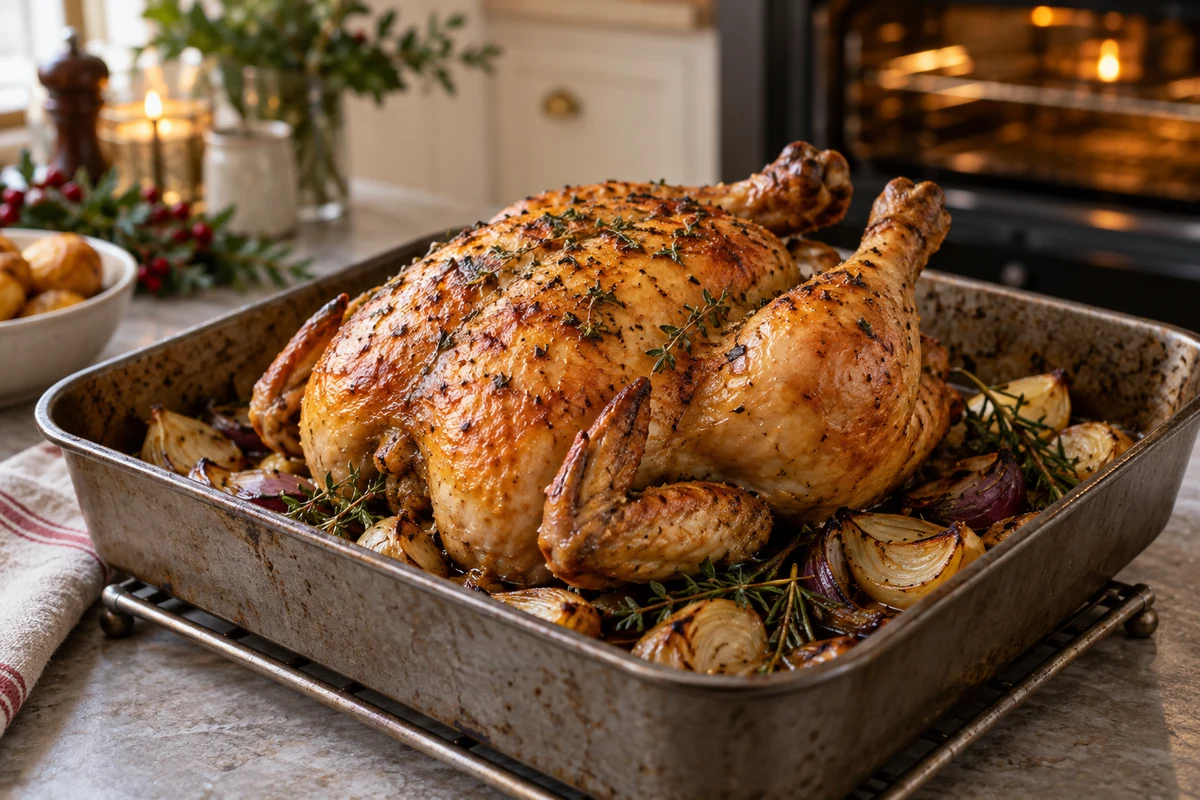
Follow these steps for traditional roast Chester chicken, using the manufacturer’s instructions for the specific bird as your roasting guide.
Step-by-Step Method
- Preheat: set the oven according to the pack, using 180°C conventional only where appropriate, and position a shelf with enough room for the bird.
- Mix the butter: combine 150 g softened butter, 6 crushed garlic cloves, 2 tbsp herbs and 2 tbsp Dijon mustard. Gradually mix in the approximately 100 ml orange juice.
- Prepare the bird: remove packaging and any giblet bag. Pat dry with disposable kitchen paper if needed, without washing. Add pepper and only any salt needed beyond the existing seasoning.
- Apply the butter: gently loosen the breast skin and spread some butter underneath, then spread the rest over the skin. Wash hands and clean contaminated surfaces afterwards.
- Keep the cavity empty: if using apple or dried fruit, cook it separately in a small covered ovenproof dish with a little water as needed until tender and hot.
- Set in the tin: place the bird over the quartered onion and pour 120 ml stock or water into the tin, not over the skin. Use oven-safe kitchen string only if required to keep the bird neatly shaped.
- Start roasting: follow the pack’s timing and covering instructions. If the skin colours too early, cover loosely with foil; do not use a blanket minutes-per-kilogram rule for every product.
- Brown the skin: uncover towards the end if needed. Use the existing pan juices for any basting rather than adding an unspecified extra glaze.
- Check thoroughly: probe thick breast and thigh meat, avoiding bone, and confirm 75°C for 30 seconds or 70°C for 2 minutes. Return to the oven if any checked area is undercooked.
- Rest and carve: rest loosely covered for 15–20 minutes, then remove any string, carve and serve promptly.
Tips During Cooking
- Basting: spoon over a little pan juice if desired, avoiding unnecessary repeated oven opening. Juices touched by raw poultry must be thoroughly cooked before serving as gravy.
- Crisper skin: a brief higher-temperature finish may help if permitted by the packaging. Watch constantly, particularly with sweet glazes, and do not let browning replace the centre-temperature check.
- Larger birds: use the manufacturer’s weight-specific instructions and allow extra time for checks and resting.
- Hygiene: do not wash raw poultry. Dispose of thawing liquid carefully, clean equipment and surfaces, and keep raw juices away from cooked food.
Recipe 2: Chester Chicken with Fruit Farofa Ingredients
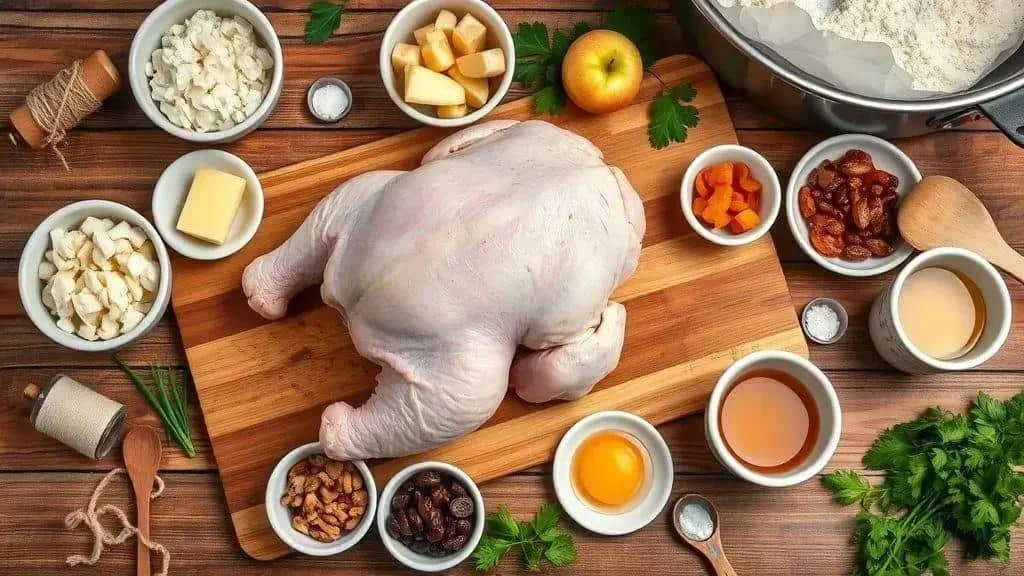
- 1 Chester chicken, 3–4 kg, fully thawed and prepared according to the pack. If using a different bird, follow its own roasting instructions.
- 300 g toasted Brazilian cassava meal, not tapioca starch. A half-cassava, half-breadcrumb mixture gives a different texture and introduces wheat unless suitable gluten-free crumbs are used.
- 100 g butter for the farofa, or about 80 ml olive oil. The bird may be roasted as directed on its pack without additional butter.
- 1 medium onion, finely chopped.
- 2 garlic cloves, crushed.
- 100 g chopped dried fruit, such as apricots and raisins, or dried cranberries and dates.
- 1 medium apple, peeled, cored and diced; a firm pear is an alternative.
- 80 g chopped nuts, such as Brazil nuts, walnuts, almonds or cashews; omit if unsuitable for your guests.
- 1 egg, optional, cooked fully into the farofa. For an egg-free farofa, omit it; a spoonful of oil does not provide the same binding.
- 2 tbsp chopped parsley and chives in total.
- Up to 1 tsp salt for the farofa, reduced according to the stock and any bacon used.
- Up to ½ tsp ground black pepper.
- 30 g chopped bacon, optional, cooked thoroughly. Smoked tofu is an alternative for the separate farofa; it does not make the poultry dish vegetarian.
- Up to 120 ml chicken or vegetable stock, added gradually only if the farofa needs moisture. Water is also suitable; keep extra water available for the roasting tin if the bird’s pack calls for it.
- A roasting tin and a separate pan or ovenproof dish for the farofa. The cavity will remain unfilled.
Notes and Alternatives
- Farofa quantity: this makes a generous side dish. Portion according to the other accompaniments rather than trying to fit it all inside the bird.
- Sweetness: adjust the dried fruit and apple to your preference.
- Texture: briefly stir the ready-toasted cassava meal in the pan to warm it and coat it with the fat, without burning it.
- Separate cooking: keeping farofa outside the cavity avoids slowing the cooking of the bird and makes the accompaniment easier to check.
- Vegan farofa only: use oil, suitable vegetable stock and smoked tofu instead of bacon, and omit the egg. Keep it separate from poultry and its utensils. Check soya and other allergens.
- Salt: bacon and prepared stock may provide enough. Taste only after the bacon and any egg are fully cooked.
Recipe 2: Chester Chicken with Fruit Farofa Method
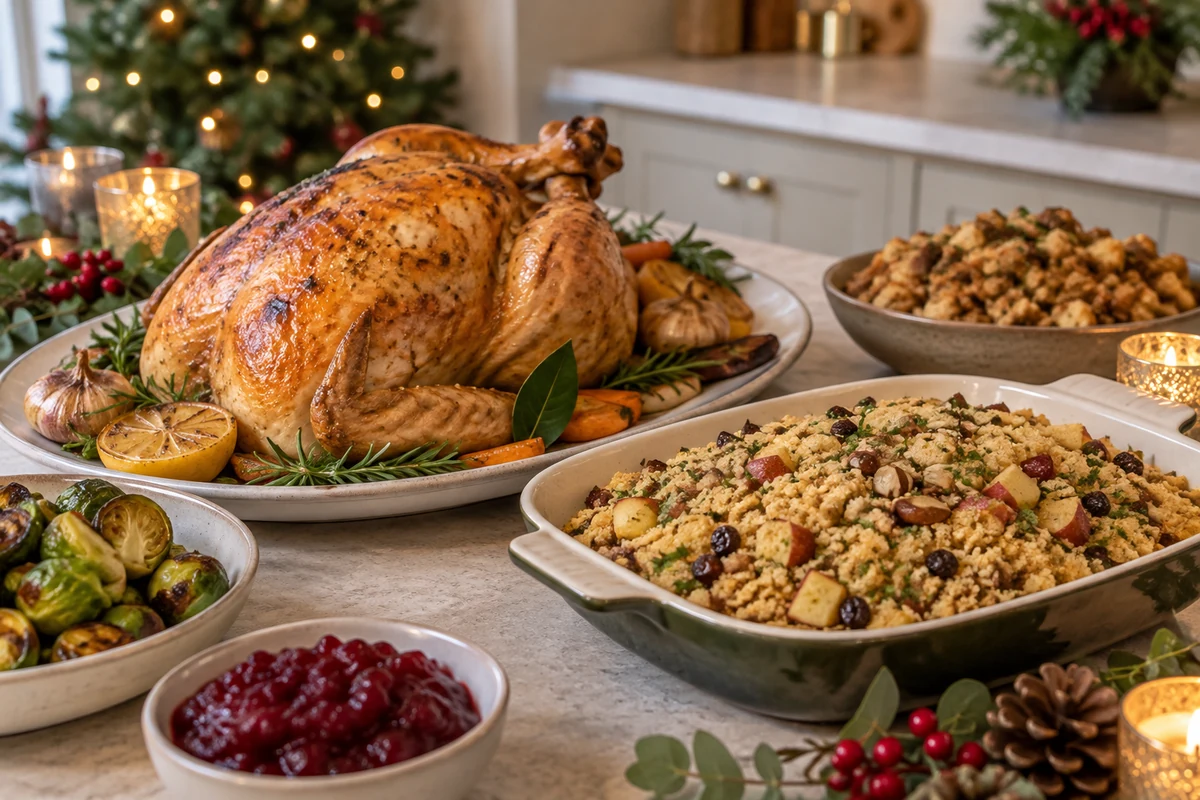
Step-by-Step Method
- Preheat: follow the bird’s packaging and prepare a suitable roasting tin. Keep the farofa separate throughout.
- Start the farofa: if using bacon, cook it thoroughly in the pan first. Add the 100 g butter or chosen oil, soften the chopped onion, then add the garlic and cook briefly without burning. Cook smoked tofu according to its pack if using instead.
- Add fruit and nuts: stir in 100 g dried fruit, the diced apple and 80 g chopped nuts. Cook until the apple starts to soften. If using the optional egg, push the mixture aside, scramble the egg in the pan until fully cooked, then combine.
- Add cassava meal: stir in 300 g toasted cassava meal and heat evenly for a few minutes. Add stock a little at a time, up to 120 ml, only if needed; it should remain crumbly, not wet.
- Season: add pepper, any needed salt and the parsley and chives. Serve hot, hold at 63°C or above, or cool promptly and refrigerate within 1–2 hours if making ahead.
- Prepare the chicken: keep refrigerated until preparation. Remove packaging and any giblets, do not wash, and follow the pack’s seasoning advice. Additional herb butter is optional and must be accounted for separately from the farofa’s 100 g.
- Leave the cavity empty: roast the bird without the farofa inside. There is no need to close a stuffed cavity.
- Place in the tin: follow the pack’s roasting setup. If adding liquid to prevent a dry tin, use a little water or extra stock; do not take it from the farofa allowance unless that portion was unused.
- Roast: use the pack’s temperature and timing for the bird’s weight. Cover loosely with foil if necessary to prevent excessive browning.
- Brown towards the end: uncover if needed and spoon over some pan juices. A separate honey glaze is optional, not an ingredient required by this farofa recipe.
- Check the food: probe thick breast and thigh meat away from bone for 75°C for 30 seconds or 70°C for 2 minutes. If reheating the farofa, heat it thoroughly to the same temperature-and-time standard.
- Rest and serve: rest the bird loosely covered for 15–20 minutes, remove any string, carve and serve with the hot farofa alongside.
Safety Precautions
- Cook separately: do not put farofa into the raw bird or let it contact raw poultry juices.
- Keep preparation clean: wash hands and clean surfaces and utensils after contact with raw poultry. Do not wash the bird itself.
- Use a thermometer: check the meat’s centre rather than judging only the colour of the skin; clean the probe between uses.
- Leftover farofa: cool promptly, refrigerate within 1–2 hours and use within 48 hours. Do not save uncooked mixtures contaminated by raw poultry as ready-to-eat leftovers. Reheat cooked farofa only once.
Quick Variations
- Fruit and fat: try dried cranberries or dates in place of some apricots and raisins, or olive oil instead of butter. Check all other ingredients for dietary suitability.
- Extra aroma: add a little orange zest. A tablespoon of wine is optional, but omit it when an alcohol-free dish is needed.
- Different bird sizes: follow the relevant pack instructions and check doneness rather than simply adding a fixed number of minutes.
- Presentation: serve all the farofa in a separate warm dish so guests can choose their portion.
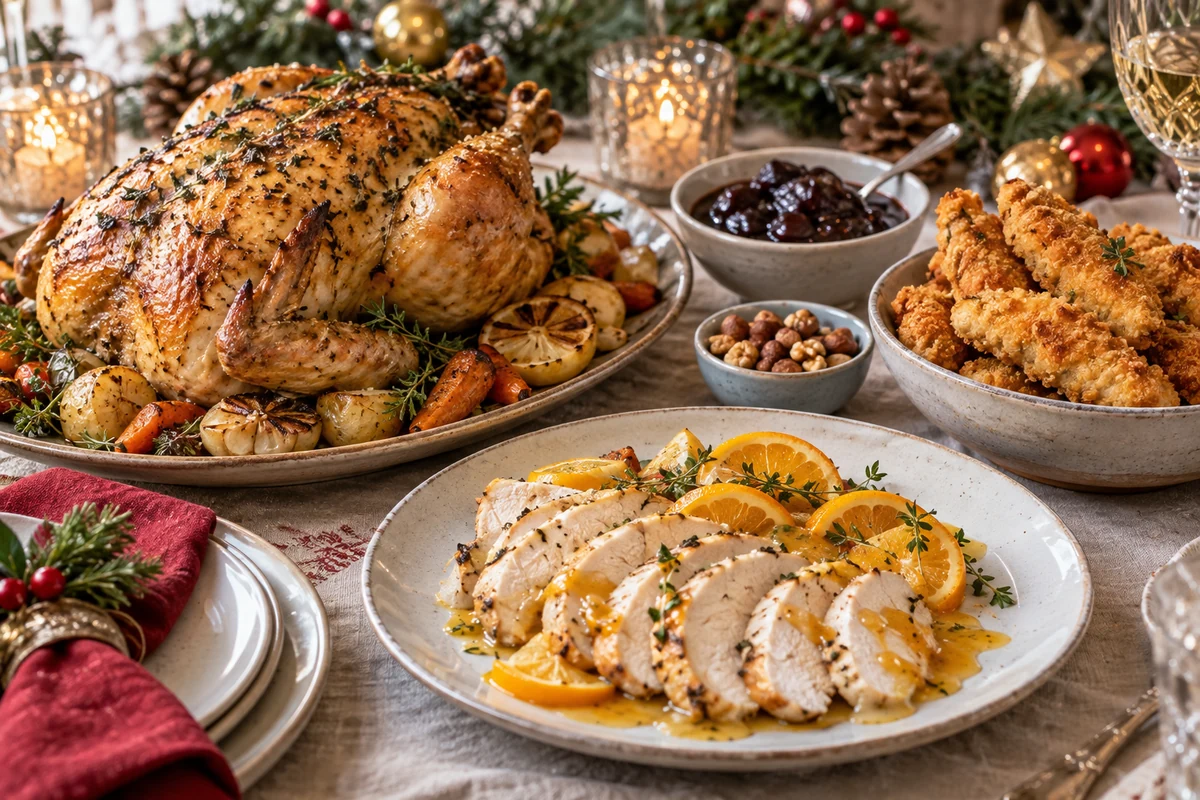
Ideas 3–7: Flavour Variations and Alternatives
-
Honey and Citrus Glaze
- 1 Chester chicken, 3–4 kg, roasted according to the pack and checked for safe doneness.
- 100 ml honey, or maple syrup for a different flavour.
- 100 ml orange juice, or mandarin juice.
- 2 tbsp mustard; alternatively, 1 tbsp balsamic vinegar gives a different, sharper glaze.
- Finely grated zest of 1 orange.
- Mix honey, juice, mustard and zest. Reserve a clean portion if serving sauce alongside.
- Brush over the bird towards the end of roasting, watching carefully for burning. Keep contaminated brushes away from the reserved serving sauce.
- Finish the sauce separately if you want it thicker. Do not remove all the roasting liquid and let the tin burn; pan juices must be thoroughly cooked before serving.
Alternative: diluted apricot jam gives a different fruit glaze. Honey, maple syrup, juice and jam all contribute sugars; this is not a sugar-free variation.
-
Garlic and Herb Butter Variation
- 150 g butter for a 3–4 kg bird, or up to 120 ml olive oil for a butter-free version.
- 4 crushed garlic cloves.
- 2 tbsp chopped rosemary and thyme in total, or 2 tsp dried herbs.
- Up to 1 tsp chilli flakes, optional, reduced to suit your guests.
- Combine butter, garlic, herbs and optional chilli before handling the bird.
- Spread beneath and over the breast skin.
- Roast as directed on the pack and check the centre temperature. Use only a brief, watched higher-temperature finish if needed for colour.
Alternatives: try sage instead of rosemary. Clarified butter changes the cooking characteristics but should not be assumed safe for a milk allergy.
-
Red Wine and Prune Variation
- 200 g pitted prunes for a 3–4 kg roast bird; dried apricots or dates give a different flavour.
- 150 ml red wine, or ready-to-drink grape juice if avoiding alcohol. Dilute concentrate according to its label before measuring.
- Up to 2 tbsp brown sugar, adjusted to the sweetness of the juice and fruit.
- Soak the prunes in the wine or juice for about 20 minutes.
- Simmer with the sugar until the fruit is tender and the sauce thickens, adding a little water if needed. Reserve a clean serving portion.
- Glaze the bird near the end of cooking, watching for burning, and confirm the chicken is fully cooked before resting and serving.
Alternatives: cider provides another fruity flavour but still contains alcohol unless specifically alcohol-free. A prepared fruit sauce can save time; check its ingredients and sweetness.
-
Breaded Chicken Strips Variation
- Safely cooled and refrigerated roast chicken, using the amount that the following coating covers.
- 2 beaten eggs.
- 150 g breadcrumbs or panko, seasoned as needed; check gluten-free requirements separately.
- Suitable frying oil, or a little oil for baking or air-frying.
- Cut the chilled chicken into even strips.
- Dip in the beaten eggs, then coat with crumbs, discarding unused contaminated coating.
- Cook until the egg coating is cooked and the chicken is thoroughly reheated to 75°C for 30 seconds or 70°C for 2 minutes. Golden colour is not enough.
Alternative methods: bake or air-fry following the appliance guidance and the same centre-temperature check. For an egg-free coating, use a tested suitable method; the chicken itself cannot become vegan through a coating swap.
-
Honey and Nut Crust Variation
- 200 g chopped nuts for a 3–4 kg bird, such as Brazil nuts, walnuts or almonds. An oat-based topping is a different recipe and not automatically allergen-free.
- 100 g honey, or maple syrup.
- 50 g butter to bind the crust; a suitable alternative fat changes its texture.
- Mix the nuts, honey and melted butter into a coarse paste.
- Apply during the final part of roasting, checking from about 25–30 minutes before the expected finish. Shield if it browns too quickly and still check the chicken’s centre temperature.
- Rest the fully cooked bird before carving so the crust settles.
Alternative flavours: add chopped herbs or use a milder honey. Nuts, grated cheese and herbs make a different savoury topping, introducing milk; avoid calling it sugar-free without checking all ingredients.
General Substitution Tips
- Butter-free: olive oil may replace butter, but check the bird’s seasoning, stock, sauces and toppings for any dietary restriction.
- Less sweetness: reduce or omit sweet glazes and use herbs and zest instead. Concentrated apple juice is not a sugar-free replacement for honey.
- Alcohol-free: choose suitable stock or ready-to-drink grape juice instead of wine. Use specifically alcohol-free ingredients where required.
- Roasting: all variations need a properly cooked centre. A dark crust or thick sauce can hide undercooked meat, so check with a clean thermometer.
- Make ahead: sauces and farofa can be prepared the day before, cooled promptly and refrigerated. Keep any glaze for serving separate from portions that contact raw poultry.
- Serving variety: offer a choice of separately prepared sauces with one roast if you want variety without cooking several birds.
Side Dishes, Plating and Roasting Tips
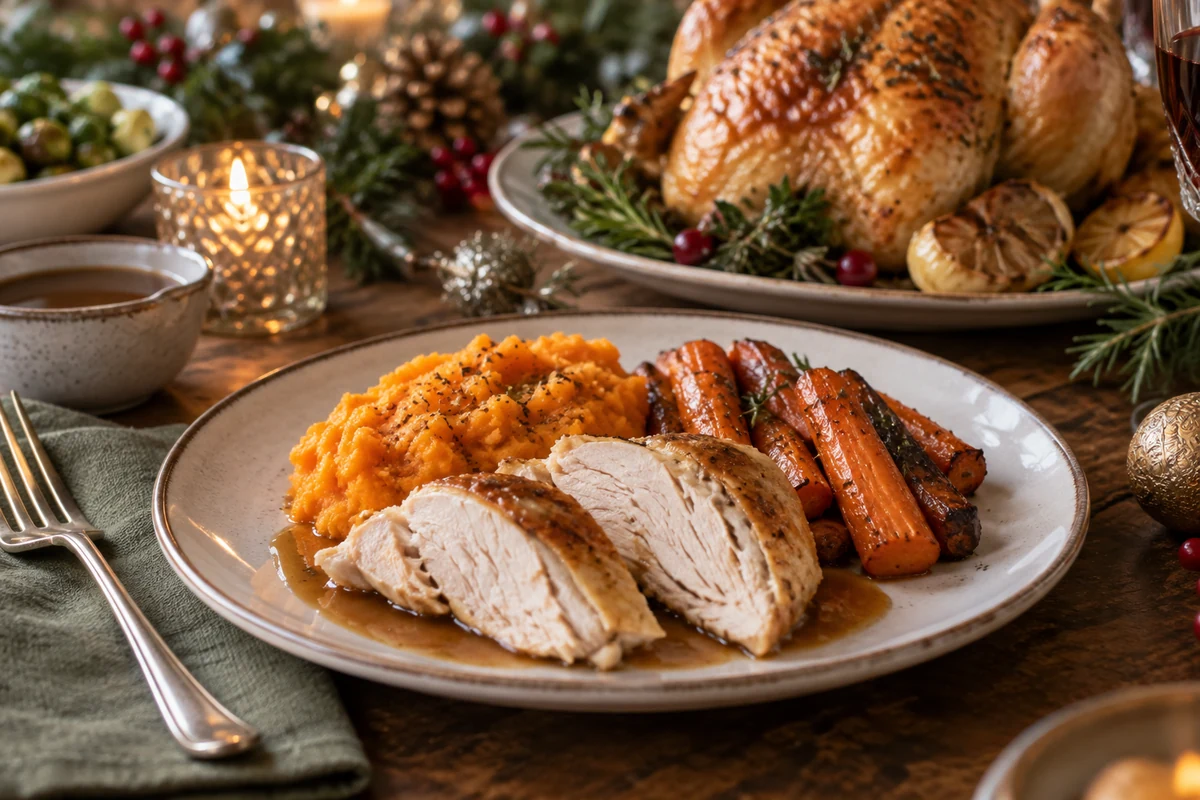
Accompaniment Ideas
- Fruit farofa: offer a small spoonful alongside the roast, adjusting the total to the number of other sides and guest preferences.
- Festive rice: cooked rice with raisins, suitable nuts and herbs adds a Brazilian touch. Use the rice pack’s dry serving guide rather than mixing up dry and cooked weights.
- Roast potatoes: around 200 g prepared raw potato per adult is a starting estimate when served as a side; adjust to appetites and other dishes.
- Potato or sweet potato mash: a small cooked portion of roughly 120–150 g can accompany the sweeter glazes; these are planning examples, not nutritional requirements.
- Roast vegetables: try carrots, broccoli and onion with a little olive oil and suitable seasoning.
- Gravy: allow a small jugful for the table; 50–80 ml per guest is an optional planning estimate. Thoroughly cook any pan juices that have contacted raw poultry.
- Fresh salad: washed leaves with a light dressing give a crisp contrast.
Roasting Guidance
- Temperature: follow the product’s packaging. The 180°C conventional temperature used in these ideas is not a replacement for specific manufacturer instructions.
- Time: use the pack’s weight-based timing and then check doneness. A fixed 40–50 minutes per kilogram is not reliable for every bird or oven.
- Farofa and stuffing: cook separately from the bird rather than adding an arbitrary extra time for a filled cavity.
- Foil and browning: follow the pack’s advice and cover loosely if the skin browns too early. Uncover near the end as needed, without assuming every bird follows the same schedule.
- Crisp skin: if using a brief hotter finish or grill, watch closely, especially with honey or sugar. Check the centre separately.
- Doneness: check thick breast and thigh meat away from bone for 75°C for 30 seconds or 70°C for 2 minutes; clean the thermometer between checks.
- Resting: rest for 15–20 minutes, loosely covered, before carving and serving promptly.
Plating the Meal
- Carve neatly: remove legs and thighs, then carve the breast into manageable slices, keeping cooked meat away from raw-poultry equipment.
- Serve promptly: coordinate hot sides with the rested bird. If holding food hot for service, maintain 63°C or above.
- Plan a varied plate: serve a portion of cooked meat with a starchy accompaniment and vegetables, adjusting portions to the individual rather than imposing a fixed amount.
- Offer sauce separately: let guests add gravy or glaze as they wish so the plate does not become soggy.
- Finish simply: add a little washed parsley or citrus zest where it matches the flavour of the roast.
Make-Ahead Preparation and Storage
- Prepare components: cook sauces and farofa the day before, cool promptly and refrigerate within 1–2 hours at 5°C or below.
- Reheat thoroughly: cover sliced meat with a little stock and heat until its centre reaches 75°C for 30 seconds or 70°C for 2 minutes. A fixed 10–15 minutes is not a guarantee; reheat only once.
- Leftovers: divide into shallow containers, cool quickly and refrigerate within 1–2 hours of cooking, not after a long service period. Use within 48 hours or freeze promptly.
- Buffet service: use equipment capable of holding hot food at 63°C or above and check with a thermometer. A warming dish is not a substitute for thorough reheating.
Simple Menu Pairings
- Citrus chicken: pair with sweet potato mash and rocket salad.
- Herb chicken: serve with roast vegetables and rice with nuts, where suitable.
- Chicken with farofa: add a fresh salad and a small amount of properly cooked gravy.
Final Checks
- Check more than one area: test thick breast and thigh meat, avoiding bone.
- Rest before carving: allow the planned resting time rather than slicing immediately.
- Schedule the meal: include thawing, preparation, cooking checks, resting and serving so you are not rushed into serving undercooked food.
Leftovers and Planning Food for Sale
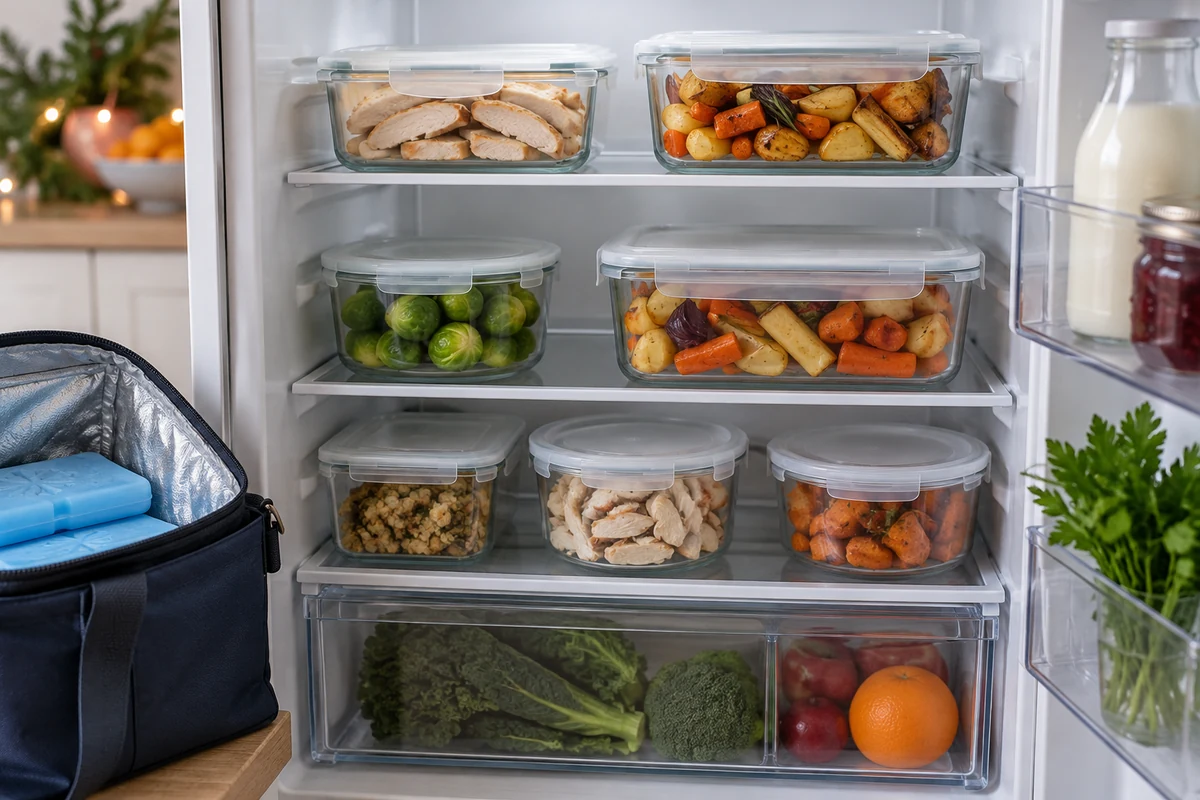
Safely stored Chester chicken can become another meal and reduce waste. Selling food requires a separate, controlled process; household party leftovers should not simply be repackaged for sale.
Storage Times and Temperatures
- Refrigeration: cool promptly, refrigerate within 1–2 hours and keep covered at 5°C or below. Use within 48 hours.
- Freezing: freeze safely cooled portions promptly in suitable packaging at about −18°C. Aim to use within 2–3 months for quality, rather than treating that as an exact safety expiry.
- Packaging: use intact, food-safe lidded containers or freezer bags, not containers with holes. Vacuum packing is not needed and introduces additional controls for commercial use.
- Labelling: record the contents, cooking date and freezing date so storage time can be tracked.
Thawing Leftovers
- Fridge: thaw covered portions in the fridge, allowing enough time for their size, then use within 24 hours of complete thawing.
- If using a microwave: use its defrost programme according to the instructions and immediately reheat the food thoroughly. Fridge thawing is the simpler planned option.
- Avoid the worktop: do not thaw poultry at room temperature or leave thawed portions waiting in a warm kitchen.
Safe Reheating
- Oven: cover sliced chicken with a little stock and heat in a suitable ovenproof dish. Check the centre reaches 75°C for 30 seconds or 70°C for 2 minutes rather than relying on a fixed short time.
- Microwave: stir or turn portions as appropriate, follow standing times and check the centre is thoroughly hot. Reheat only once, whichever method you choose.
- Pan: heat small pieces with a little stock, turning or stirring for even heating, and check the same temperature-and-time standard.
- Limit drying: add a little water or stock, but do not stop heating early just to keep the meat moist.
Ideas for Safely Stored Leftovers
- Chicken salad: serve safely chilled cooked chicken with washed leaves and citrus dressing, or add thoroughly reheated chicken just before eating.
- Festive risotto: add cooked chicken to freshly made risotto and heat it thoroughly. Cool any rice leftovers quickly, ideally within an hour, refrigerate and use within 24 hours; do not reheat again if the chicken has already been reheated.
- Sandwiches: combine safely chilled shredded chicken with suitable mayonnaise, washed rocket and cheese, keeping refrigerated until needed.
- Savoury pie: combine chicken with vegetables and sauce using a tested pie recipe. Yield depends on filling, pastry and tin size; check the filling is thoroughly hot.
- Chicken soup: use safely stored bones and meat for stock and soup, keeping within storage limits and heating thoroughly. Do not reuse food left out too long.
Portions for a Planned Food Business
- Portion sizes: weigh a complete sample meal with its sides and decide realistic individual and family servings. A single weight does not suit every menu or customer.
- Packaging: choose food-safe containers suited to hot or chilled delivery. Use an appropriate insulated system; ordinary packaging alone does not maintain safe temperature.
- Delivery temperature: plan to keep chilled meals at 5°C or below, or hot meals at 63°C or above, checking with a thermometer. Use frozen ice packs for chilled transport, not improvised dry ice.
- Customer information: provide accurate storage, use-by and reheating instructions plus required ingredient and allergen information. Requirements depend on how the food is packaged and sold.
- Pricing: include ingredients, packaging, labour, energy, delivery, fees and other business costs. A percentage added to cost is a markup, not the same percentage profit margin; calculate the selling price using your actual figures.
Business and Hygiene Requirements
- Hygiene: use clean premises and equipment, safe raw/cooked separation and documented temperature controls appropriate to the business.
- Registration: in the UK, register a new food business with the local authority at least 28 days before starting and follow the relevant food-safety requirements. Seek local guidance for your operation.
- Labelling: establish which rules apply to your sales format. Food prepacked for direct sale needs the food name and a full ingredients list with allergens emphasised; other formats have their own requirements.
Reducing Waste Responsibly
- Plan production: make measured batches and chill or freeze safely where appropriate. Do not reset shelf life simply by repackaging food.
- Offer complete meals: pair chicken with farofa, mash or vegetables, accounting for each component’s storage and allergens.
- Separate household leftovers from stock for sale: commercial pies or canapés should use ingredients handled within the business’s food-safety system, not untracked food from a party buffet.
Enjoy Your Festive Roast
Choose the Chester chicken flavouring that suits your table, follow the bird’s own instructions and plan the sides around it. A well-organised meal leaves time for checking, resting and serving without rushing.
Share these ideas with whoever is planning Christmas dinner, and let us know which flavour combination you choose.
Follow us on social media for more festive cooking ideas, and visit the I Love Christmas blog for further recipes and inspiration.
Enjoy the festive season and your Christmas meal!
Chester Chicken and Christmas Dinner: Frequently Asked Questions
How much Chester chicken should I allow per person?
Use the packaging’s serving guide and consider bones, appetites and side dishes. Around 300–400 g raw whole-bird weight per person is a rough planning estimate, not a guarantee of leftovers. Choose a bird that fits your oven and adjust seasoning to the actual product.
How do I thaw Chester chicken safely?
Follow the manufacturer’s instructions and thaw in a covered, leakproof container on the fridge’s bottom shelf at 5°C or below. Large birds can need longer than 24–48 hours. Check the cavity and thick meat are fully thawed; do not use the worktop or warm water to rush the process.
What oven temperature and cooking time should I use?
Follow the specific bird’s packaging. These flavour ideas use 180°C conventional only where compatible with those instructions; a fixed minutes-per-kilogram rule does not suit every product. Cook farofa separately and check the meat’s internal temperature before serving.
How can I tell when it is cooked?
Use a clean food thermometer in thick breast and thigh meat, avoiding bone. Confirm 75°C for 30 seconds or 70°C for 2 minutes throughout. A golden skin alone is not enough. Cook stuffing separately and heat it thoroughly too.
How should I store and reheat leftovers?
Cool quickly and refrigerate within 1–2 hours at 5°C or below, using within 48 hours, or freeze promptly. Thaw in the fridge and use within 24 hours of complete thawing. Reheat only once, checking the centre reaches 75°C for 30 seconds or 70°C for 2 minutes; add a little stock if needed to limit drying.
Can I sell prepared Chester chicken portions?
A food business can sell suitable prepared meals when it meets registration, hygiene, temperature and labelling requirements. In the UK, register with the local authority at least 28 days before starting. Plan production and delivery controls, provide the information required for the sales format and do not repackage untracked party leftovers for sale.
Sources and Further Reading
- UK Government: cooking food safely
- Food Standards Agency: chilling food
- Food Standards Agency: allergen guidance
- UK Government: Christmas food hygiene
- NHS: foods to avoid giving babies and young children
- Perdigao: traditional Chester chicken ingredients