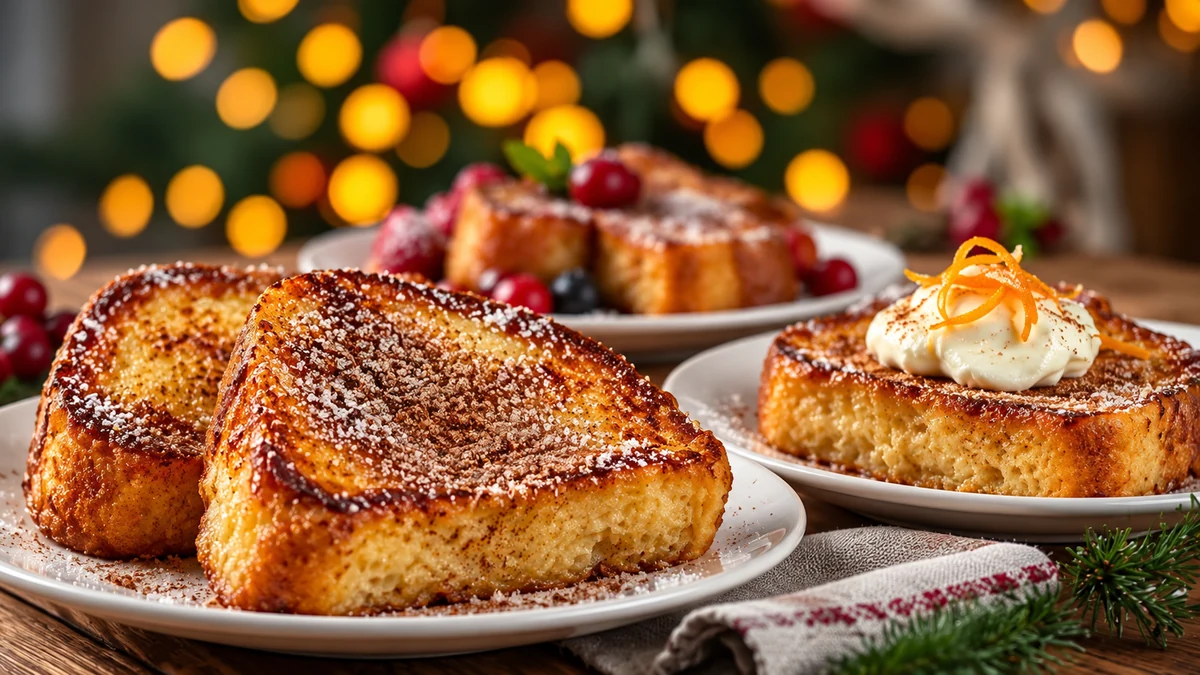
Gourmet Christmas rabanada brings a festive twist to the Portuguese and Brazilian relative of French toast. Explore seven ideas: classic brioche, panettone with wine sauce, citrus mascarpone, savoury brie, caramel and nuts, a plant-based option, and chocolate orange. Detailed methods cover the main egg-based versions, with topping suggestions and clearly identified variations to test separately.
Gourmet Christmas rabanada can be a lovely addition to a festive meal. These seven flavour ideas range from familiar cinnamon to creamy fillings and savoury combinations, with practical notes to help you choose.
Why serve gourmet rabanada at Christmas?
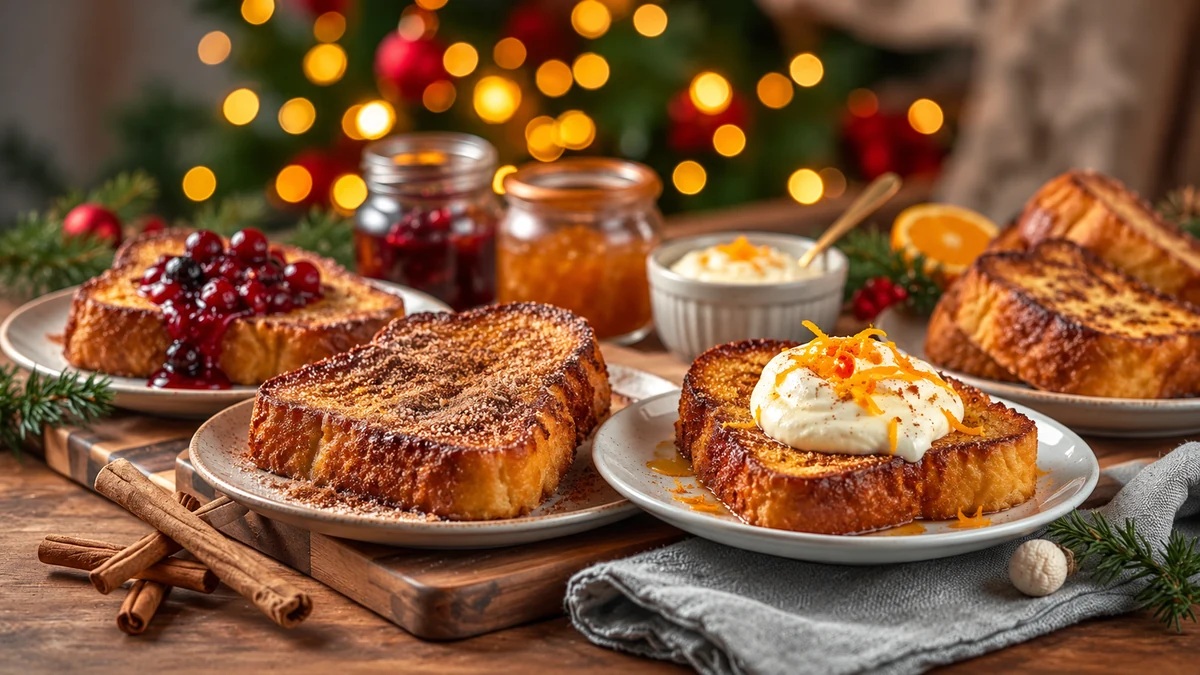
Gourmet rabanada combines rich flavour, attractive presentation and a familiar bread-based preparation that can be varied for the occasion.
Reasons to include it
- An attractive presentation can make a simple bread dessert a feature of the table.
- Sweet and savoury variations offer different flavour combinations.
- A crisp outside and soft, fully cooked centre provide a pleasing contrast.
- Brioche or panettone brings its own richness, fruit or spice flavours.
- Dietary adaptations are possible with a suitable recipe, but replacing one ingredient does not automatically make the whole dish vegan, milk-free or low in sugar.
Small touches that make a difference
Homemade sauces, washed fruit, creamy cheeses and citrus zest can change each serving. Individual portions also make it easier for guests to try different flavours, with coffee, tea or another drink of their choice.
Practical festive preparation tips
- Choose the bread: brioche, challah and panettone offer different textures and flavours. Check their ingredients for dietary requirements.
- Control soaking: moisten the bread without letting it collapse. The centre should cook through while remaining soft.
- Choose a cooking method: pan-frying gives a buttery crust; baking uses a different technique and cooking time. Check the centre, not just surface colour.
- Finish thoughtfully: use a little icing sugar, a suitable sauce or a spoonful of mascarpone rather than every topping at once.
- Plate: use warmed plates and add washed fruit, suitable nuts or culinary herbs for contrast.
- Prepare in stages: make sauces and creams ahead within their storage limits, and finish the bread close to serving time.
A familiar dessert with room for variation
Rabanada can recall family celebrations while leaving room for a new topping or filling. It does not need to follow a particular year’s trends to feel special.
How to use these seven rabanada ideas
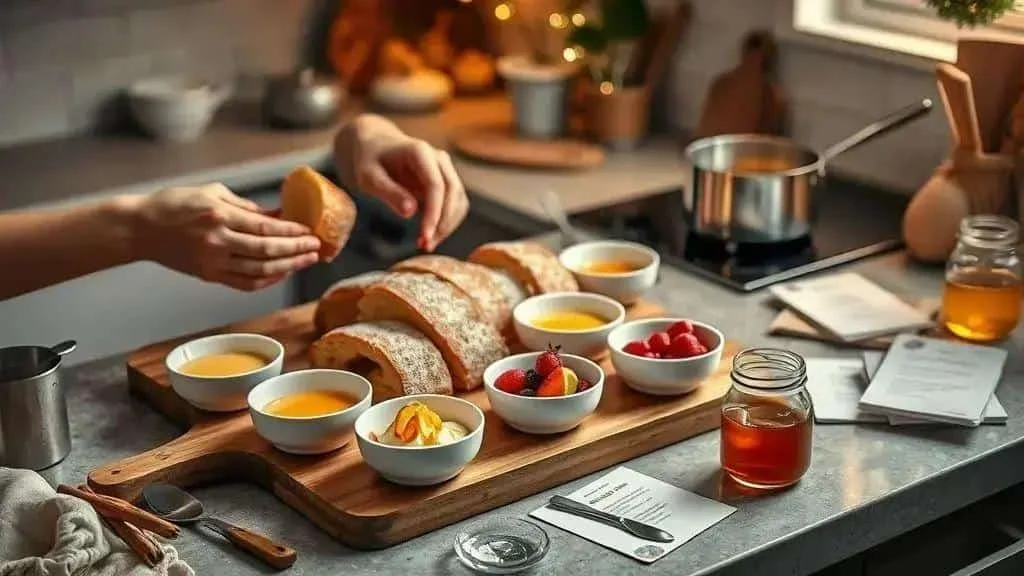
- Select a manageable menu: choose the versions you actually want to serve. For a larger tasting table, you could offer 3–4 main flavours and smaller variations, but there is no need to prepare all seven.
- Group ingredients: total shared ingredients such as milk, eggs and butter for the chosen recipes, avoiding double-counting repeated lists.
- Prepare your workspace: slice the bread, measure ingredients and organise toppings before cooking. Keep milk, egg mixtures and creams refrigerated until needed.
- Make suitable components ahead: sauces and compotes can often be prepared the previous day and chilled promptly; follow the shortest ingredient storage limit.
- Cook small batches: allow space for even cooking and test a first slice, adjusting the heat so the centre cooks before the surface burns.
- Choose frying or baking: decide which suits your equipment and guests. Baking does not automatically make every version lower in fat or calories.
- Use small servings: individual portions allow guests to sample different toppings.
- Plan service: coordinate cooking and finishing so the bread reaches the table promptly.
A quick preparation sequence
- Choose from the seven ideas – select familiar and more adventurous flavours that suit your guests.
- Shop from a combined list – include suitable bread and everything required for the chosen sauces and creams.
- The day before – prepare suitable sauces and creams, cool promptly and refrigerate. Use firm bread that is still safe to eat, never mouldy bread.
- On the day – slice bread and organise the cooking area. Mix the egg bath close to cooking, or keep it covered in the fridge until needed.
- Cook close to service – allow enough time for small batches and thorough cooking, then add toppings.
- Serve promptly – decorate and bring to the table while the bread is warm, checking serving temperature for children.
Equipment and alternatives
- A non-stick frying pan or griddle; alternative: an oven and greased baking tray, using the appropriate baking method.
- Mixing bowls and a whisk; alternative: a fork for simple mixtures, or an electric whisk for creams that need whipping.
- A spatula, tongs and kitchen paper for draining.
- A clean food thermometer is useful for checking the centre of egg-soaked or filled bread, particularly when adapting thickness or cooking method.
- Brioche and panettone work well; alternatives: challah or a firm sliced loaf, with soaking adjusted to the bread.
Presentation and timing
- Warmed plates help keep food pleasant to eat during immediate service; they are not controlled hot-holding equipment.
- A warm sauce can contrast with a safely chilled serving, but does not reheat the bread or make improperly stored food safe.
- Use washed fruit, suitable nuts and culinary herbs for colour and texture.
- If reheating chilled rabanada, heat once until steaming hot throughout, checking the centre rather than relying on a fixed 3–4 minutes. A centre temperature of 70°C for 2 minutes or 75°C for 30 seconds is a recognised safe cooking combination.
Seven gourmet rabanada flavour ideas
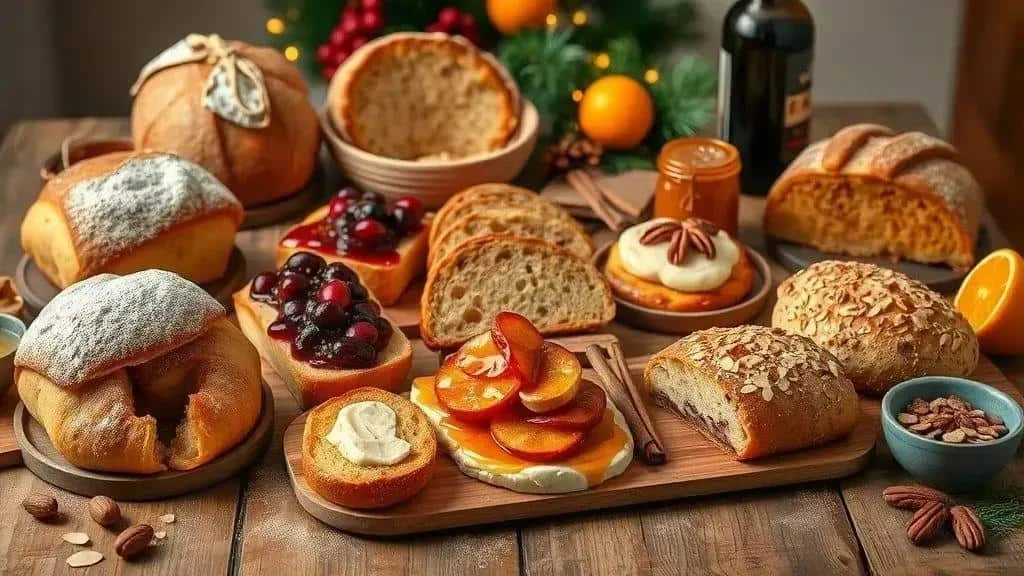
These seven ideas cover different flavour profiles. Full ingredient lists and methods are provided for several main versions; the caramel, chocolate-orange and plant-based ideas also appear as topping or adaptation suggestions.
Classic brioche rabanada
The appeal: a soft, fully cooked centre and golden crust, optionally served with properly prepared crème anglaise or vanilla sauce.
Panettone rabanada with wine sauce
The appeal: panettone brings fruit and festive flavour, with a reduced wine sauce for guests who consume alcohol. Reduction does not guarantee that all alcohol has gone.
Brioche with citrus mascarpone
The appeal: creamy mascarpone with orange or lemon zest contrasts with the warm bread. A fresh flavour is not the same as a low-calorie dessert.
Savoury brie and honey rabanada
The appeal: melted brie, a little honey and black pepper make a sweet-savoury starter. Honey is unsuitable for babies under one; brie needs special care for pregnant or vulnerable guests.
Caramel, spice and nut rabanada
The appeal: a crisp caramel or praline topping with cinnamon and toasted walnuts or pecans. Use a tested caramel method and handle hot sugar carefully.
Plant-based rabanada with almond drink and apple compote
The appeal: plant drink and apple compote offer an egg-free flavour direction, but use a tested egg-free bread-soaking recipe and vegan bread. Almond drink is unsuitable for someone with an almond allergy.
Chocolate-orange rabanada with toasted almonds
The appeal: dark chocolate, citrus zest and toasted flaked almonds create a rich dessert topping.
Choose variations that fit your menu, equipment and guests. Changes to bread, filling and egg substitutes can affect cooking and texture, so test unfamiliar combinations first.
Classic brioche rabanada ingredients: recipe 1

For classic brioche rabanada, gather the following:
- 8 slices brioche, approximately 2 cm thick – firm bread works best; challah or a dense sliced loaf is an alternative.
- 3 large eggs, beaten – the original’s aquafaba and flax substitutions are not equivalent tested replacements for three eggs. Use a separate tested vegan method if required.
- 240 ml whole milk – unsweetened oat or almond drink changes the flavour and is only one part of a dairy-free adaptation.
- 60 ml cream, optional – extra milk may replace this optional cream for a different richness.
- 50 g granulated sugar, approximately ¼ cup – for the egg mixture.
- 1 tablespoon vanilla extract – or the seeds of one vanilla pod.
- A pinch of salt
- 50 g unsalted butter for cooking – the method also uses 1 tablespoon neutral oil. Alternatively use a suitable cooking oil or plant-based fat; milk-free bread is also needed for a dairy-free version.
- ¼ cup sugar and 1 teaspoon ground cinnamon – mixed for coating after cooking, separate from the sugar in the egg bath.
- Icing sugar, optional – for a light dusting at serving time.
- Orange zest, optional – or up to 2 tablespoons of rum or orange liqueur for an adult variation. Use a little orange juice or suitable orange flavouring if alcohol is unwanted.
A note on the proportions
The base uses 3 eggs with 240 ml milk, plus an optional 60 ml cream: 80 ml liquid per egg without the cream, or 100 ml with it. Scale the complete chosen version consistently rather than applying one ratio to both.
Classic brioche rabanada method: recipe 1
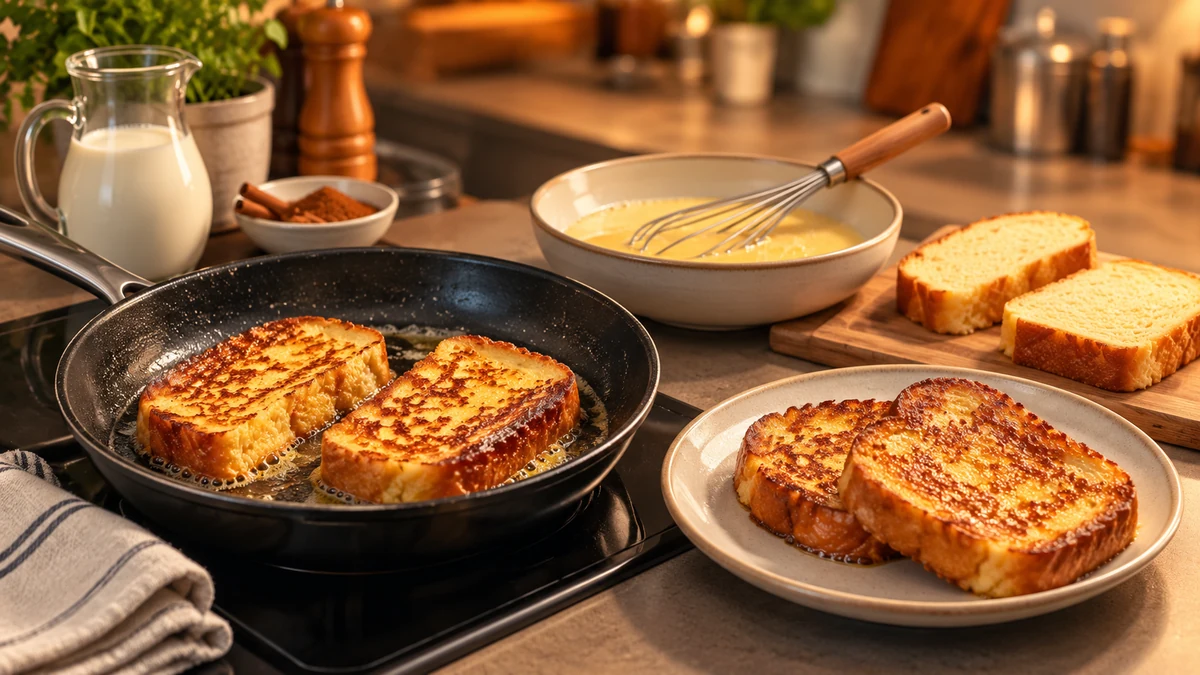
- Set up: arrange bowls, a whisk, tongs, draining paper and a wide frying pan. Measure the ingredients before starting.
- Mix the egg bath: beat the 3 eggs with 240 ml milk, optional 60 ml cream, 50 g sugar, vanilla and salt until combined. Add optional zest or flavouring if using.
- Check the bread: use approximately 2 cm slices. If very soft, leave the plain slices out briefly for 10–20 minutes to firm slightly before dipping.
- Dip carefully: start with about 3–6 seconds per side, adjusting to the bread’s absorbency. Moisten without saturating it until it breaks apart.
- Drain: let excess egg mixture drip off for about a minute. Use separate utensils and dishes for raw egg-soaked bread and cooked servings.
- Heat the pan: use a medium-low heat with 25 g of the butter and the tablespoon of neutral oil, reserving the remaining butter for later batches. Oil does not stop the milk solids in butter burning; lower the heat and replace burnt fat if necessary.
- Cook small batches: cook 2–3 slices at a time, initially allowing around 2–3 minutes per side. Turn gently and continue as needed until the egg-soaked centres are cooked throughout. Golden colour alone is insufficient; use the safe centre-temperature guidance above.
- Baked alternative: arrange dipped slices on a greased tray, brush with some melted butter and bake in a preheated oven at 180°C, turning halfway. The original 8–12 minute estimate is only a guide: thickness, filling and oven performance may require longer for fully cooked centres.
- Finish after cooking: coat lightly in the separate cinnamon sugar or add a chosen sauce. A spoonful of chilled mascarpone or compote can be added immediately before serving; honey must not be served to babies under one.
- Serve and store: serve promptly. Cool leftovers and refrigerate within 1–2 hours at 1–5°C; use within 48 hours or the shortest topping limit. Reheat only once until steaming hot throughout, not for a fixed few minutes regardless of the centre.
Quick finishing ideas
- Use orange zest for a festive aroma. A tablespoon of rum is an optional adult variation; do not assume cooking removes all the alcohol.
- Wine sauce suits panettone for guests who consume alcohol; use a grape-juice sauce when alcohol is unwanted.
- For a vegan version, use a tested egg-free method with vegan bread, plant drink, fat and toppings. Six tablespoons of aquafaba or one flax mixture should not be presented as a guaranteed replacement for this three-egg recipe.
Fillings and crusts for classic rabanada

The following fillings and toppings offer different flavours. Use small amounts and test a filled slice to check that it cooks through without leaking or burning.
Sweet fillings
- Citrus mascarpone: 200 g mascarpone, 2 tablespoons icing sugar, zest of 1 orange and 1 teaspoon vanilla extract. Alternative: cream cheese gives a tangier flavour; both contain milk.
- Dulce de leche with toasted nuts: 200 g firm dulce de leche, 50 g chopped toasted walnuts or pecans and an optional tablespoon of butter for toasting the nuts. This is not a complete praline formula because no caramel sugar is specified. Alternative: a suitable coconut sweet spread gives a different dairy-free filling.
- Berry compote: 200 g berries, 3 tablespoons sugar, juice of ½ lemon and an optional teaspoon of cornflour, mixed with a little cold liquid before cooking. Cook to a compote and cool; follow frozen-fruit pack instructions. Alternative: a prepared strawberry jam.
- Chocolate-orange ganache: 150 g dark chocolate, 100 ml cream, zest of 1 orange and 1 tablespoon honey. Gently heat the cream, pour over chopped chocolate, stir smooth and add zest and honey; cool before filling. Alternative: milk chocolate gives a sweeter, softer result. Honey is unsuitable for babies under one.
Savoury fillings
- Brie, honey and pepper: 150 g brie, 2 tablespoons honey and a pinch of black pepper. Alternative: Camembert. For pregnant guests, these mould-ripened soft cheeses should only be eaten cooked until steaming hot throughout; follow medical advice for other vulnerable guests.
- Herbed ricotta: 200 g pasteurised ricotta, 1 tablespoon olive oil, 1 tablespoon chopped parsley, chives or thyme, with salt and pepper to taste.
Crusts and textures
- Cinnamon sugar: mix ¼ cup sugar with 1 teaspoon ground cinnamon, then apply after cooking.
- Praline: use a safely prepared, fully cooled nut praline, broken into suitable pieces, as a finishing topping.
- Toasted almonds: add toasted flaked almonds after cooking so they do not burn in the pan.
- Cocoa coating: a little cocoa and sugar gives a chocolate finish after cooking.
- Savoury cheese crust: grated hard cheese with breadcrumbs suits an appetiser version. Parmesan normally uses animal rennet; choose a labelled vegetarian hard cheese when needed.
Adding fillings and crusts
- Cut a pocket carefully – use a stable board and make a small opening in the side without cutting right through the slice.
- Add a little filling – the original suggests 1–2 spoonfuls, but use only what the pocket comfortably holds and divide the listed filling across the slices.
- Close the edges – press gently. A little of the measured egg mixture can help the edges adhere; it must be cooked through with the bread.
- Dip into the egg mixture – start with about 3–6 seconds per side, adjusting to the bread without oversoaking.
- Choose the coating stage – a savoury breadcrumb-and-cheese coating may be applied before cooking. Add sugar, cocoa, toasted nuts or praline afterwards to avoid burning before the centre cooks.
- Cook gently – use controlled heat and cook the filling and egg-soaked centre thoroughly. A stuffed slice may take longer than plain bread; browning is not proof of doneness.
- Finish and serve – add an appropriate sweet or savoury topping just before serving.
Practical tips and substitutions
- A filled slice can be refrigerated for around 10 minutes before cooking to help it hold together, but this does not replace thorough cooking.
- Panettone is often delicate, so start with a shorter dip of around 2–4 seconds and adjust after testing a slice.
- Neutral oil changes the buttery flavour. A fully vegan version also needs suitable bread, egg-free soaking mixture and plant-based fillings; changing only the frying fat is insufficient.
- Test one slice before cooking the batch to judge absorbency, heat and centre doneness.
Brioche rabanada with citrus mascarpone: recipe 2

- 8 slices brioche, approximately 2 cm thick – firm challah or a dense sliced loaf is another option.
- 3 large eggs, beaten – use a separately tested egg-free method for a vegan adaptation.
- 300 ml whole milk – for soaking; a suitable plant drink changes only this ingredient, not the whole recipe’s dietary status.
- 50 g granulated sugar – approximately ¼ cup, for the egg mixture.
- A pinch of salt
- 50 g unsalted butter – for cooking in batches; a suitable cooking fat may be substituted.
- 200 g mascarpone – cream cheese is an alternative with a different flavour and consistency; add the listed cream gradually rather than adding extra cream twice.
- 50–70 g icing sugar – sweeten the topping to taste. Honey or maple syrup changes the texture and remains a source of sugar.
- 60 ml whipping cream – add gradually to the mascarpone; milk makes a thinner topping and is not equivalent for whipping.
- Zest of 1 orange – or lemon zest, from washed fruit.
- 1 teaspoon vanilla extract, optional
- ¼ cup sugar and 1 teaspoon cinnamon, optional – for coating after cooking, separate from the egg-bath sugar.
- Washed fresh fruit, optional – strawberries, raspberries or blueberries, or a safely prepared and cooled compote.
Preparing and finishing the recipe
Citrus mascarpone cream: gently mix 200 g mascarpone with 50–70 g icing sugar, the orange zest, optional vanilla and up to 60 ml cream until smooth. Keep chilled. For the bread, whisk the 3 eggs, 300 ml milk, 50 g sugar and salt, then dip and cook using recipe 1’s method with the listed butter, checking the centre is thoroughly cooked.
- Softer topping variation: 150 g mascarpone with 80 ml whipping cream gives a different texture. Whip gently; this is not necessarily lower in calories.
- Optional liqueur: add 1 tablespoon rum or orange liqueur only for guests who consume alcohol; it remains uncooked in this cream.
- Optional crunch: add a little toasted flaked almond or cooled walnut praline, checking allergies and suitability for children.
- Sauces: orange sauce, a wine sauce or a little honey can provide contrast. Choose an alcohol-free option when required and no honey for babies under one.
Practical tips
- Keep the cream refrigerated and add it to the cooked bread immediately before serving.
- For a less sweet taste, use less icing sugar in the topping and choose tart fruit.
- Divide the cream between the servings and finish with zest and fruit, rather than leaving a large bowl of dairy topping out throughout the meal.
Panettone rabanada with wine sauce: recipe 3
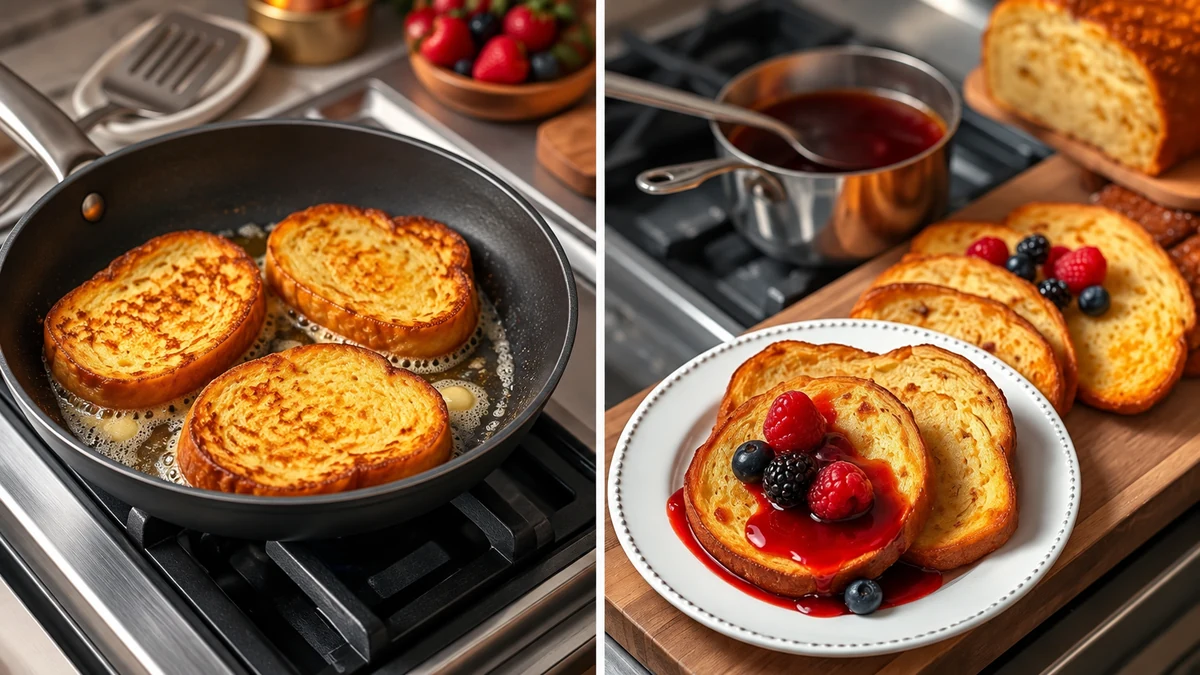
- Slice the panettone: cut 8 slices approximately 2 cm thick. Trim any excessively dark crust if needed.
- Mix the egg bath: whisk 3 large eggs with 200 ml milk and 1 tablespoon sugar until combined.
- Dip briefly: start with around 2–4 seconds per side because panettone can be delicate. Test the first slice and adjust.
- Drain: allow excess mixture to drip off for 30–60 seconds on a dish reserved for uncooked egg-soaked bread.
- Heat the pan: use 30 g butter and 1 tablespoon neutral oil over a controlled medium-low heat, dividing between batches if necessary. Oil does not prevent butter solids from burning.
- Cook in batches: cook 2–3 slices at a time, starting with approximately 1½–3 minutes per side and continuing until the centre is safely cooked. Lower the heat if the surface darkens too quickly.
- Make the sauce: gently simmer 250 ml dry red wine with 50 g sugar and 1 cinnamon stick until syrupy, approximately 8–12 minutes depending on the pan. An optional tablespoon of orange juice adds flavour. Remove the cinnamon stick; reduction does not guarantee an alcohol-free sauce.
- Optional extra caramel: the original suggests another 50 g sugar and 30 ml hot water for a richer sauce. This is separate from the wine sauce’s sugar and is unnecessary for the base version. Adding water to hot caramel can spit violently; use a tested caramel method and keep children away from the pan.
- Finish: divide the reduced sauce between the 8 slices and garnish with optional washed berries, zest or suitable chopped nuts. The final reduction may not yield the original’s suggested 2–3 tablespoons per slice, so portion what you have rather than assuming that yield.
- Serve or chill: serve promptly. For leftovers, cool and refrigerate within 1–2 hours without sauce, and use within 24 hours for this version. Reheat once until steaming hot through the centre before adding separately stored sauce.
Practical tips
- Very soft panettone: shorten the dipping time to prevent it collapsing.
- Check the centre: control the heat so the egg mixture cooks before the crust becomes too dark. Surface colour alone is not a reliable test.
- Alcohol-free sauce: replace wine with grape juice and simmer with cinnamon and orange peel, adjusting added sugar because juice is already sweet. Use no alcoholic liqueur in this version.
- Adult variation: a tablespoon of rum or orange liqueur added after cooking provides an alcoholic finish; label and serve it separately from alcohol-free portions.
- Crunch: add cinnamon sugar or suitable cooled nut praline after cooking, using only a modest amount.
- Individual portions: use small plates to make serving straightforward.
Savoury rabanada starters: recipe 4 and variations
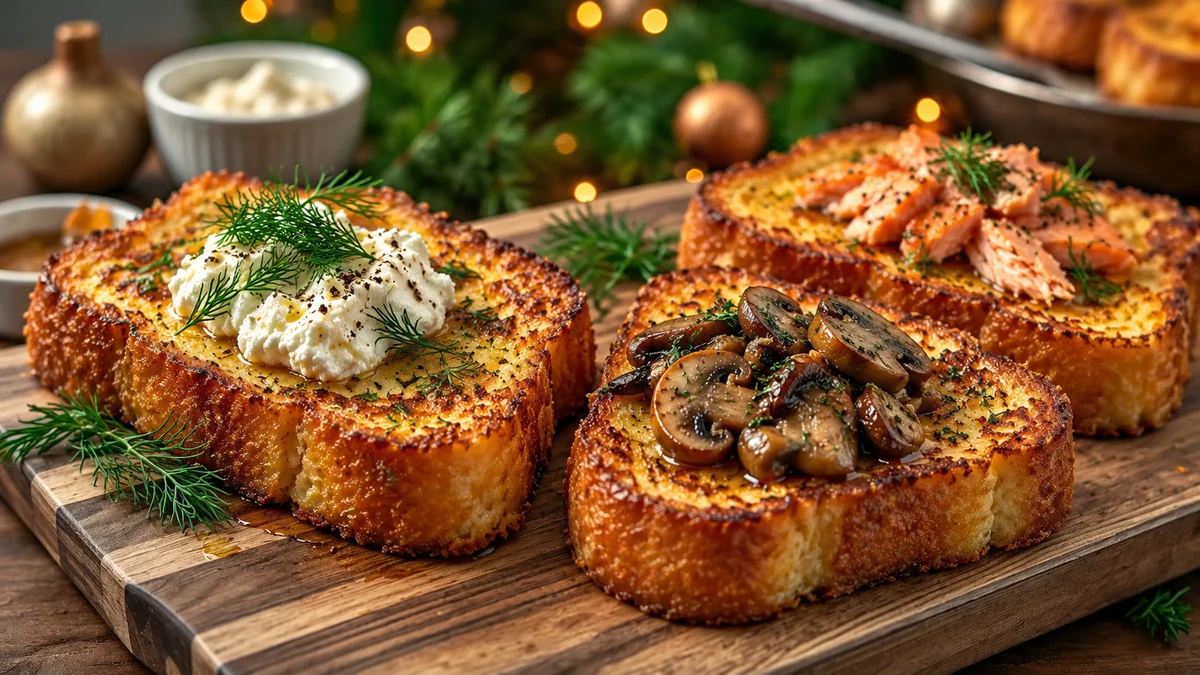
The following combinations turn rabanada into a savoury starter, with a basic brie version and alternative fillings.
Brie and honey rabanada ingredients
- 8 slices brioche or rustic bread, approximately 2 cm thick – choose firm slices that can hold a small filling.
- 3 large eggs, beaten
- 200 ml milk – plant drink is an alternative for this ingredient, but the brie and bread may still contain milk.
- Salt and black pepper to taste – allow for the cheese’s saltiness.
- 50 g butter – for cooking; a suitable cooking fat is an alternative.
- 150 g brie – thinly sliced and divided between the bread. Camembert is similar; Brazilian coalho, a firm grilling cheese, behaves differently and is not an identical substitute.
- 2 tablespoons honey in total – divide across the 8 servings. Maple syrup gives a different flavour; honey is unsuitable for babies under one.
- Washed rocket and ground black pepper, optional – to finish.
Savoury rabanada method
- Mix: whisk the eggs with milk and a little salt and pepper.
- Fill: carefully cut a small pocket in each slice and divide the 150 g brie between them without overfilling.
- Close gently: press the edges together; if needed, use a little of the measured egg mixture to help them adhere, then cook it thoroughly.
- Dip carefully: moisten each side briefly in the egg mixture, starting with around 3–5 seconds and adjusting to the bread.
- Drain: let excess liquid drip off for about 30 seconds.
- Heat the pan: melt 20–30 g of the butter over a controlled medium-low heat, keeping the remainder for later batches.
- Cook thoroughly: cook 2–3 slices at a time, initially allowing 2–3 minutes per side but extending as needed for a fully cooked centre. Softened brie alone is not enough: particularly for pregnant guests, the cheese must be steaming hot throughout.
- Finish: divide the 2 tablespoons honey evenly across all 8 slices, then add rocket and pepper if using. This corrects the original per-slice instruction, which would have required twice the listed honey.
Variation 1: herbed ricotta ingredients
- 200 g pasteurised ricotta – mashed.
- 1 tablespoon olive oil
- 1 tablespoon chopped culinary herbs – such as parsley, chives or thyme.
- Salt and pepper to taste
Herbed ricotta method
- Mix: combine ricotta, olive oil, herbs and seasoning.
- Fill and cook: divide the filling across the bread pockets, without overfilling, then follow the dipping and thorough cooking steps for the main savoury recipe.
Variation 2: smoked salmon and cream cheese ingredients
- 100 g smoked salmon – sliced; check its use-by date and storage instructions.
- 100 g pasteurised cream cheese – keep chilled until preparation rather than leaving it out for a long time.
- 1 teaspoon lemon zest and fresh dill to taste.
Smoked salmon filling method
- Fill: divide cream cheese, salmon and zest between the bread pockets.
- Dip and cook thoroughly: follow the egg-bath method and ensure the filling is steaming hot throughout. Do not shorten cooking simply because cheese leaks. Cold-smoked fish is unsuitable for pregnant or immunocompromised guests unless thoroughly cooked; follow individual medical advice.
- Finish: add washed dill and an optional small drizzle of olive oil, then serve promptly.
Plant-based filling idea: mushrooms and tahini
- 200 g sliced mushrooms – such as shiitake or button mushrooms.
- 1 tablespoon tahini mixed with 1 teaspoon lemon juice – tahini contains sesame.
- Olive oil, 1 chopped garlic clove and salt – for cooking.
Mushroom filling method
- Cook the mushrooms: heat a little olive oil, cook the chopped garlic gently and sauté the mushrooms until cooked and their released liquid has reduced.
- Add tahini: remove from the heat and stir in the tahini-lemon mixture.
- Use with a suitable base: this filling is plant-based, but a vegan rabanada also needs vegan bread and a tested egg-free soaking and cooking method. The source does not provide a reliable aquafaba-to-liquid formulation, so no universal replacement ratio is claimed here.
Finishing and serving ideas
- Texture: serve promptly after thorough cooking, while the filling is warm and the outside crisp.
- Contrast: a little honey or balsamic glaze can complement a savoury filling. Choose a suitable topping for each guest.
- Portions: cut cooked slices into triangles for smaller starter servings, checking they are not too hot to handle.
- Drinks: light wine, brut sparkling wine or wheat beer are optional adult pairings; water, tea or an appropriate alcohol-free drink work too.
- Prepare ahead: safely chill fillings and assemble close to cooking to avoid soggy bread.
Presentation, drinks and storage

A small amount of sauce, a contrasting garnish and careful timing can improve the finished plate without complicating the recipe.
Finishing touches
- Gloss: brush a little safely prepared sauce onto the cooked bread. Choose wine-free sauce for guests avoiding alcohol and avoid honey for babies under one.
- Temperature contrast: add chilled mascarpone, ice cream or Greek yoghurt immediately before serving warm rabanada. Keep the remaining dairy topping refrigerated.
- Crunch: toasted flaked almonds, finely chopped pistachios or praline add texture. Check allergies; whole nuts and hard brittle are unsuitable for young children.
- Herbs and zest: use small amounts of washed citrus zest, mint or culinary thyme so they complement rather than overwhelm the dish.
- Individual presentation: small plates are convenient for portions with different toppings.
Drink pairings
- Wine: brut sparkling wine, port or a lighter red may suit particular sweet versions, according to preference; alcoholic drinks are optional adult choices.
- Coffee and tea: espresso contrasts with a sweet topping, while citrus or herbal tea can accompany mascarpone versions.
- Alcohol-free choices: sparkling grape juice, a clearly labelled alcohol-free cider or water with orange zest provide alternatives. Check labels when complete alcohol avoidance matters.
- For savoury versions: sparkling wine, light rosé or wheat beer are optional pairings; unsweetened tea and water are equally valid choices.
Storage and reheating
- Short storage: for best texture, keep cooked rabanada without toppings in a covered container at 1–5°C and use within 24 hours. Cool and refrigerate within 1–2 hours; follow an earlier ingredient deadline if applicable.
- Keep components separate: refrigerate sauces, dairy creams and prepared fruit in separate covered containers. Their storage time starts when prepared, not when assembled.
- Reheat thoroughly: use an oven around 160°C as a starting setting, but allow enough time for the centre to be steaming hot throughout. A fixed 4–6 minutes is not reliable for every slice; check 70°C for 2 minutes or 75°C for 30 seconds at the centre.
- Microwave reheating: it can soften the crust and heat unevenly. Follow appliance guidance, allow standing time and check the centre; 15–20 seconds is not a dependable reheating instruction.
- Restore crispness: a brief finish in a pan can improve the crust as part of the same reheating process. Reheat only once, and never use reheating to rescue improperly stored food.
- Freeze suitable leftovers: cool cooked, unfilled and untopped slices promptly, pack and freeze, using within about a month for quality. Defrost in the fridge, use within 24 hours of complete defrosting and reheat thoroughly once. Filled versions and dairy toppings may not freeze well.
Serving organisation
- Set up a finishing area: have cooked bread, small portions of toppings and clean utensils ready. Keep spare perishable toppings chilled and bring out only what is needed.
- Test one serving: check the dipping time, cooking heat and centre doneness before preparing the rest.
- Save time safely: make suitable sauces and creams the day before, chill promptly and finish the bread near serving time.
Conclusion
Gourmet rabanada offers a way to vary a familiar festive dessert with different breads, fillings and toppings. Careful soaking and thorough cooking matter more than elaborate decoration.
Choose two or three ideas, prepare suitable components ahead and finish close to serving. Test untried adaptations first, especially changes to eggs, bread thickness or creamy fillings.
Thank you for reading. Follow our social pages for more festive ideas and visit the I Love Christmas blog for recipes and inspiration.
Gourmet Christmas rabanada FAQs
Can I prepare rabanada ahead for Christmas?
Yes. Prepare suitable sauces and creams the day before and refrigerate them promptly. Cool cooked rabanada within 1–2 hours, keep covered at 1–5°C and use within 24 hours for best texture. Reheat once until steaming hot throughout; a few fixed minutes is not a reliable guide for every slice.
How can I make a vegan version?
Use vegan bread, plant drink, cooking fat and toppings with a tested egg-free soaking recipe. Aquafaba and flax mixtures behave differently, so the original’s suggested quantities should not be assumed equivalent to three eggs. Standard brioche and panettone often contain eggs and milk.
Which bread works best?
Brioche, panettone and challah all offer rich flavour, but absorb liquid differently. Firm slices are easier to handle; very soft plain slices can stand briefly for 10–20 minutes before dipping. Never use mouldy bread.
How do I avoid soggy rabanada?
Start with a brief dip of around 2–6 seconds per side, depending on the bread, allow excess liquid to drip off and avoid pressing the slices during cooking. Test a first slice and cook the centre thoroughly rather than browning the outside too quickly.
Which drinks suit sweet and savoury versions?
Coffee or citrus and herbal teas accompany many sweet versions, while water or a suitable alcohol-free drink works with either. Wine, port or wheat beer are optional adult pairings, chosen to taste; alcohol is not needed to enjoy the dish.
Sources and Further Reading
- Food Standards Agency: chilling and storing food
- NHS: foods to avoid during pregnancy
- NHS: foods to avoid for babies and young children
- Food Standards Agency: cooking and reheating
- London Fire Brigade: deep-fat fryer safety
- NHS: listeriosis and higher-risk foods
- Food Standards Agency: hot holding food