Christmas party starters: choose a manageable variety, prepare suitable components ahead, estimate portions and check guests’ dietary needs. This guide includes detailed bruschetta and chicken vol-au-vent methods, five further starter ideas, and advice on crisp bases, chilled toppings and drinks.
Looking for Christmas party starters that are straightforward to serve? Explore seven ideas below, with detailed methods for festive bruschetta and creamy chicken vol-au-vents, plus variations to suit your gathering.
Why Choose Practical Christmas Party Starters?

Choosing practical Christmas party starters makes planning easier and leaves more time to enjoy your guests’ company. Simple recipes can still offer plenty of flavour.
The Main Advantages
- Time: suitable make-ahead components and quick assembly free you up to welcome guests.
- Less pressure: fewer complicated steps mean less to juggle before the meal.
- Easy serving: individual portions are convenient to offer and to pick up.
- Variety: combine hot and cold starters and choose suitable alternatives for dietary needs.
- Budget: familiar ingredients and thoughtful substitutions help control costs.
Choosing Your Starters
- Choose recipes whose components can safely be prepared the day before and finished just before serving.
- Finger food is useful when people will be standing or moving around the room.
- Balance crisp, creamy and sharp flavours rather than making every option similar.
- Ask about dietary requirements and include suitable vegetarian or gluten-free options where needed.
- Choose foods that keep their texture during a short serving period, but keep perishable toppings chilled until needed. Looking fresh does not prove food is safe.
- As a starting point, allow 3–5 small pieces per person before a main meal, adjusting for size and appetite.
Quick Examples
- Bruschetta: toasted bread topped with seasoned tomatoes and basil, assembled just before serving.
- Vol-au-vents: ready-made puff pastry cases with creamy chicken or a vegetarian filling.
- Cheese and grape skewers: a simple chilled option with contrasting colours and textures.
A manageable menu helps you serve food well while enjoying the celebration yourself.
Planning Portions and Preparing Ahead
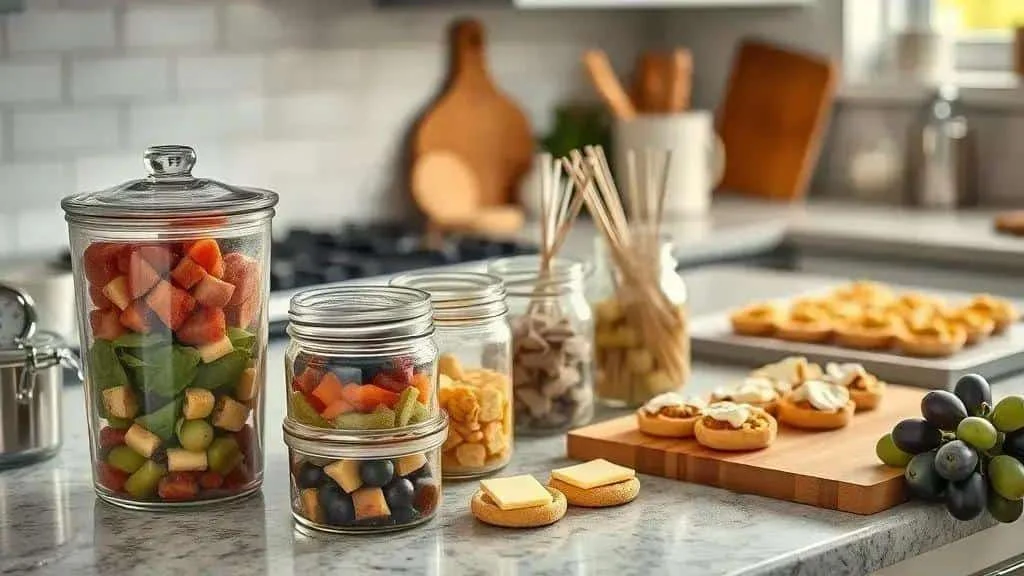
Planning portions and preparation helps your Christmas party starters reach the table in good condition without a last-minute rush.
Estimating Portions
- Small bites: allow roughly 4–6 pieces per person, such as small canapés or crostini, depending on the rest of the menu.
- More substantial starters: around 2–3 mini quiches or filled vol-au-vents may be enough before a meal.
- Boards or individual pots: estimate 80–120 g per person when several other options are available.
- Dips and spreads: estimate 50–70 g per person and offer a choice of accompaniments. Four to six accompaniments suit a larger spread; fewer may be sufficient for a small party.
- The whole menu: these are alternative planning guides, not quantities to add together automatically. Reduce starters before a substantial main course and allow more for a longer, snack-focused gathering.
A Shopping Example
- For 20 people, 100–120 small canapés would provide 5–6 each. Use your recipes’ actual yields to make the shopping list.
- A generous cheese and charcuterie spread for the same group might use 2.5–3 kg in total, but reduce this substantially if it accompanies those canapés and a main meal.
- The original example allows 8–10 baguettes for a bread-heavy spread. Baguette size varies considerably, so calculate the number of slices you need rather than buying that quantity for every menu.
A Preparation Schedule
- Three days before: decide the menu, write the shopping list and buy non-perishable ingredients.
- Up to two days before: prepare only fillings or spreads that can safely be chilled for that period. Cool cooked food promptly and refrigerate within 1–2 hours; use within 48 hours or any shorter ingredient limit.
- The day before: prepare suitable cheese, fruit and vegetables, then cover and refrigerate. Keep moist toppings separate from crisp bases.
- On the morning: bake pastry cases and toast bread where appropriate. Keep dairy-based sauces and other perishables refrigerated.
- Shortly before serving: add delicate leaves and herbs, arrange small platters and assemble the first batch. Keep cold starters in the fridge until they are needed; a cool room is not a substitute.
Storage and Reheating
- Refrigerating: store covered perishable components at 5°C or below. Use cooked leftovers within 48 hours, following shorter use-by or opened-pack instructions where applicable.
- Freezing: some unfilled pastry and cooked fillings freeze well, while watery toppings and some creamy mixtures lose texture. Follow the recipe or packet guidance rather than assuming every starter can be frozen for a month.
- Reheating: plain toast can be refreshed briefly in a moderate oven. Cooked fillings must become steaming hot throughout, not merely crisp on top, and should be reheated only once. Stir microwave-heated fillings and follow standing instructions.
- Transport and serving: carry chilled food in an insulated bag with ice packs, refrigerate on arrival and serve small batches. Keep time out of refrigeration as short as possible; the four-hour limit for cold buffet food is a maximum, not a preparation target.
Organisation and Allergens
- Label stored ingredients and keep preparation organised to reduce cross-contact. Make allergen information available to guests as well as to anyone preparing the food.
- Choose alternatives for the requirements guests actually have. Lactose-free is not the same as milk-free, and a vegetarian or vegan dish is not automatically free from other allergens.
- Use clean, separate utensils for allergen-sensitive portions, and check ingredients such as nuts, fish, shellfish, milk, eggs, wheat, sesame and soya.
Reducing Waste
- Put out a small first batch and replenish from safely chilled or hot-held reserves.
- Only reuse food that has remained safely stored and handled. Do not turn food left out too long on the buffet into next day’s sandwiches or salads.
- Guests can take suitable food home in clean containers if it can remain cold during transport and be refrigerated promptly. Explain its original preparation date and remaining storage time.
A Practical Checklist
- Confirm guest numbers and dietary requirements.
- Buy fresh ingredients close enough to the event to stay within their use-by dates.
- Prepare suitable fillings and spreads within their safe storage window, generally the day before or no more than 48 hours ahead for cooked leftovers.
- Bake or toast bases on the day where possible.
- Arrange platters and serving utensils so guests can move around easily.
Seven Starter Ideas for Your Party

- Festive bruschetta: toasted bread with seasoned tomatoes, basil and olive oil. The detailed recipe below is quick to assemble and colourful enough for a Christmas table.
- Chicken and creamy cheese vol-au-vents: crisp puff pastry cases with shredded chicken and Brazilian requeijão, or cream cheese. A detailed method follows below.
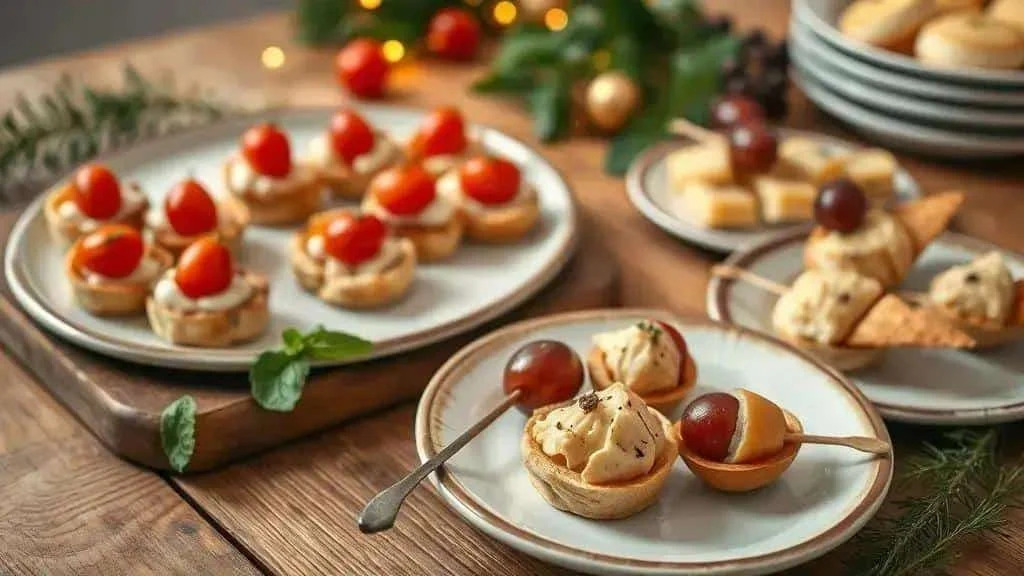
- Cheese, grape and ham skewers: a simple chilled combination of savoury and sweet ingredients. For young children, quarter grapes lengthways and serve without sharp skewers.
- Cheese and herb mini quiches: use a reliable mini-quiche recipe for individual portions that can be cooked ahead and reheated once. Choose vegetarian cheese if required.
- Smoked salmon and cream cheese crostini: thin toast with cream cheese and salmon. People who are pregnant or have weakened immunity should avoid ready-to-eat cold-smoked or cured fish unless cooked until steaming hot; older people should also consider this risk. Cucumber and ricotta offer a fish-free alternative.
- Olive spread with toast: choose a green or black olive spread and make it within its recipe’s storage guidance. Check whether it contains anchovies and offer suitable gluten-free toast if needed.
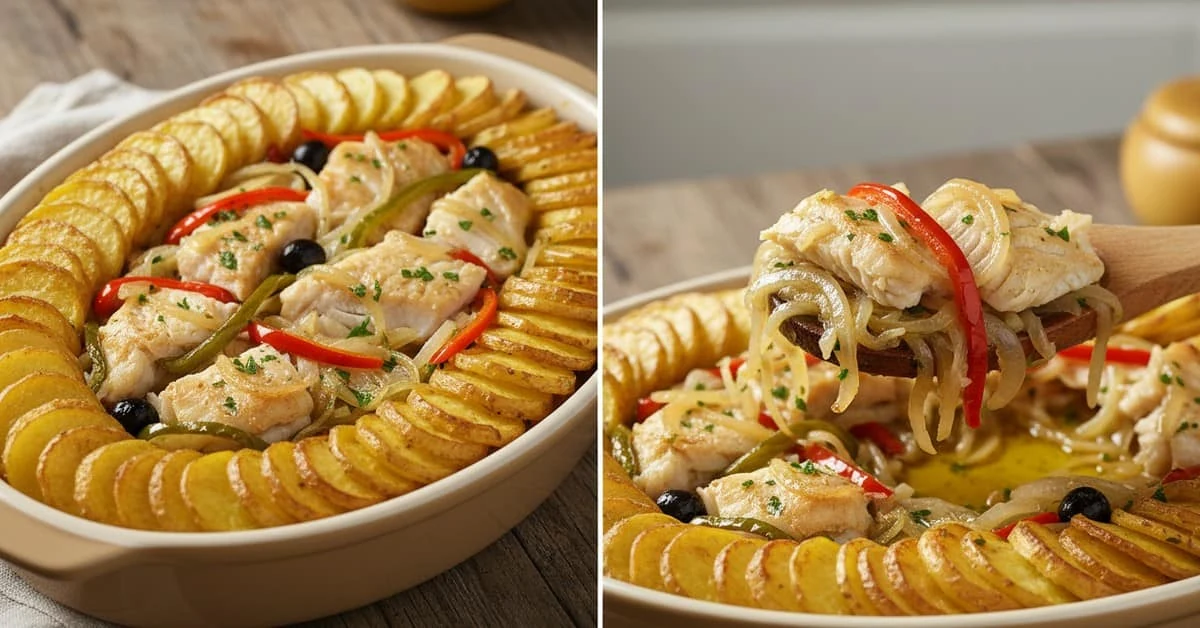
- Baked salt cod croquettes: use a complete recipe designed for baking, with properly desalted and cooked fish. These five additional ideas are suggestions rather than full recipes with tested quantities.
Balancing the Menu
- For a larger party, two cold and two hot options provide a useful contrast without requiring all seven ideas.
- Balance something sharp, such as bruschetta, with a creamy vol-au-vent, a savoury fish bite and a little fruit.
- Include suitable gluten-free or vegetarian alternatives according to your guests’ needs.
- As a rough guide, allow 3–5 small pieces per person before other food, or 6–8 for a more substantial starter spread. A long party without a main meal may need considerably more food.
Serving Suggestions
- Serve small batches and replenish gradually.
- Use different platters and stable stands to add interest to the table.
- Clearly identify relevant allergens, including nuts, fish and cereals containing gluten.
Easy Variations
- Replace the requeijão in the vol-au-vents with cream cheese for a different flavour and texture; this is not necessarily a lower-fat substitution.
- Replace smoked salmon with cucumber ribbons and ricotta for a fish-free version.
- For gluten-free mini quiches, use a suitable gluten-free pastry recipe or ready-made cases. Chickpea flour is not a direct replacement for wheat flour in every pastry recipe.
Recipe 1 Ingredients: Festive Bruschetta
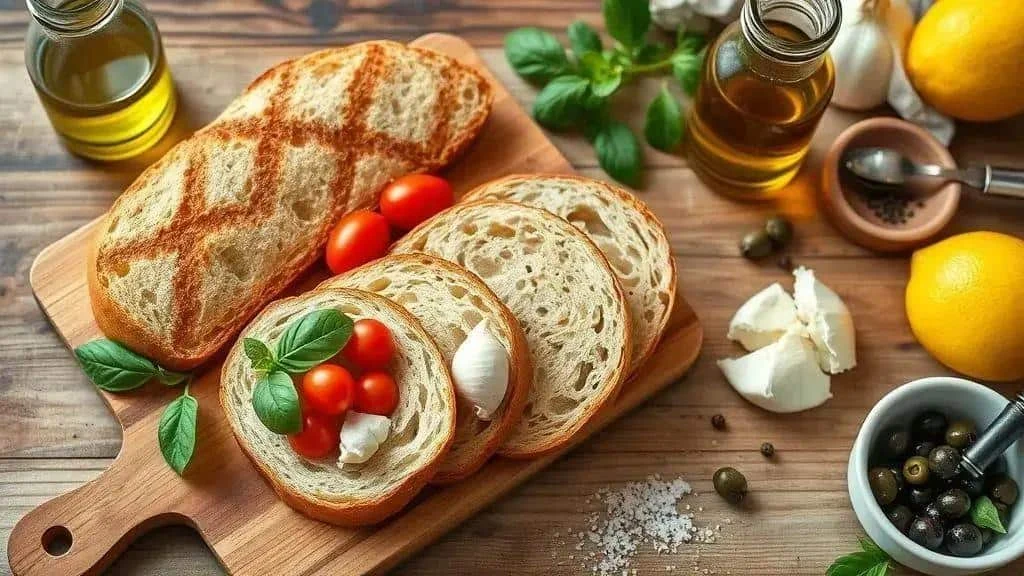
- 1 baguette, approximately 400 g – sliced for about 12–14 generous portions; the actual slice count depends on the loaf. Ciabatta or another crusty loaf also works.
- 400 g cherry tomatoes – halved; alternatively, use a similar quantity of ripe chopped plum tomatoes.
- 10–12 fresh basil leaves – torn, with some reserved for finishing.
- 3 tbsp extra virgin olive oil – divided between bread and tomatoes, plus a little extra to finish if desired.
- 1 garlic clove – halved for rubbing over the warm toast.
- 100 g buffalo mozzarella – torn; goat’s cheese, cream cheese or a suitable plant-based alternative will give a different finish.
- 1 tbsp balsamic vinegar – optional in the tomatoes, or use 1 tsp balsamic glaze to finish instead.
- 1 tbsp capers or chopped olives – optional.
- Salt – up to about ½ tsp, adjusted for the saltiness of any cheese, capers or olives.
- Freshly ground black pepper – to taste.
- Finely grated lemon zest – 1 tsp, optional.
Quick Tips
- Toast the bread at 200°C, or 180°C fan, for approximately 6–8 minutes until golden, checking it closely. Rub with garlic while still warm.
- Season the tomatoes shortly before assembly to keep the topping fresh and avoid excessive liquid.
- Assemble just before serving so the bread stays crisp.
- For a vegan version, use suitable plant-based mozzarella or marinated tofu and check the bread and other ingredients.
- For a gluten-free version, use suitable gluten-free bread and prevent contact with ordinary bread crumbs.
Recipe 1 Method: Festive Bruschetta
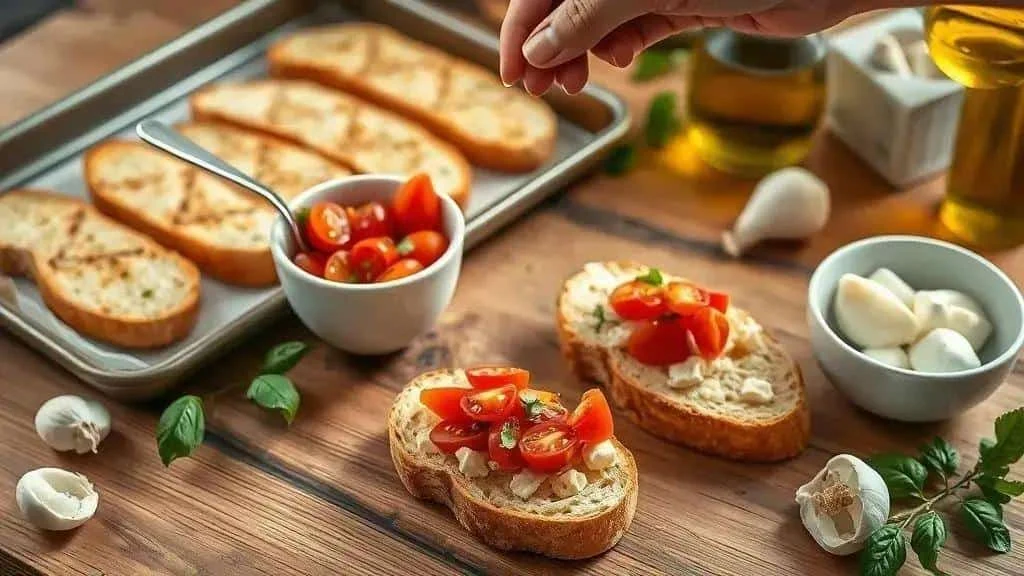
- Heat the oven and slice the bread: set the oven to 200°C, or 180°C fan. Cut the baguette into slices roughly 1.5 cm thick; portion size and slice count will depend on its shape.
- Brush and toast: use 1–2 tbsp of the measured 3 tbsp oil to brush the slices lightly. Arrange in one layer and bake for approximately 6–8 minutes, turning halfway, until golden and crisp.
- Rub with garlic: while the toast is warm, rub it lightly with the cut surfaces of the halved garlic clove.
- Mix the topping: combine the 400 g tomatoes with the remaining measured oil, salt to taste, pepper, optional balsamic vinegar and most of the basil. Add the optional capers or olives and lemon zest. Leave for 5–10 minutes while finishing the other components.
- Drain the cheese: tear the 100 g mozzarella into pieces and pat away excess moisture with clean kitchen paper.
- Assemble: spoon tomatoes onto each toast, leaving excess juice in the bowl, and add mozzarella. Finish with a little extra oil if wanted. If using balsamic glaze instead of vinegar, add it sparingly now.
- Finish with herbs: add the reserved basil and a little freshly ground pepper.
- Prepare components ahead: chop tomatoes up to a day ahead and keep covered in the fridge, but season near serving time. Keep the topping separate from the bread.
- Refresh plain toast: if needed, warm previously toasted bread briefly at 160–180°C, checking after 3–5 minutes, before adding the cold topping.
- Make substitutions: try goat’s cheese or cream cheese for a different texture, suitable gluten-free bread when required, or plant-based cheese or marinated tofu for a vegan version.
Practical Tips
- Assemble enough for the first small batch, then make more as needed.
- Choose ripe, flavourful tomatoes. They do not need extra water, which would make the toast soggy.
- Avoid adding too much loose liquid to each slice.
- Serve immediately after assembly for the best texture.
Recipe 1 Variations: Festive Bruschetta
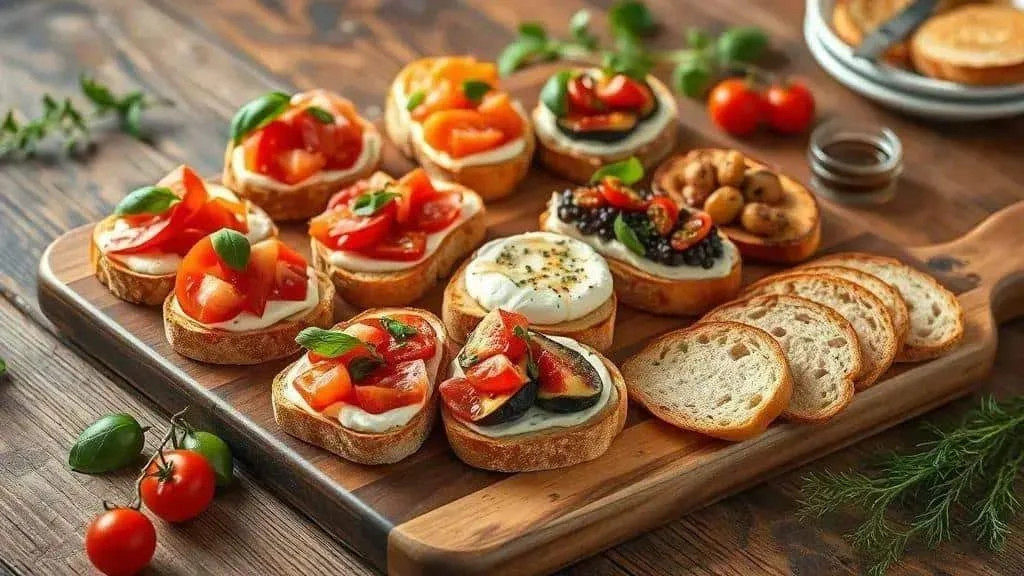
These variations on festive bruschetta offer different flavours and dietary options while keeping assembly straightforward.
- Tomato, basil and goat’s cheese: keep the tomatoes and basil, replacing mozzarella with goat’s cheese for a stronger flavour.
- Smoked salmon and cream cheese: spread about 1 tbsp cream cheese on each slice and add 15–20 g salmon. Follow the higher-risk advice above for cold-smoked fish, or use cucumber and ricotta instead.
- Fig, honey and goat’s cheese: top each toast with ½ sliced fig, about 10 g goat’s cheese and a little honey, or use balsamic glaze for a sharper finish. Do not give honey to children under one year old.
- Roasted pepper and houmous: spread about 1 tbsp houmous on each slice and add roasted red pepper strips. Check the bread and spread for a vegan version, and remember that houmous often contains sesame.
- Olive and herb tapenade: use about 1 tbsp green or black olive tapenade and chopped parsley. Check for anchovies if serving vegetarians. A little cream cheese changes the texture but adds milk as an allergen.
- Mozzarella, sun-dried tomato and rocket: add 1–2 pieces of sun-dried tomato, a slice of mozzarella and rocket; use microgreens for a different finish.
- Warm caprese: briefly melt mozzarella on the toast in the oven, then add basil and a few drops of balsamic glaze.
- Gluten-free: use suitable sliced gluten-free bread, checking it frequently during toasting because products vary.
- Less added oil: brush sparingly or use an oil spray, and choose a cheese that suits your preferences. Compare product labels rather than assuming every alternative is lower in fat.
- Assemble-your-own: offer small bowls of toppings separately to keep the bread crisp. Keep perishable reserves chilled and provide separate serving spoons.
Useful Substitutions
- Buffalo mozzarella → goat’s cheese, cream cheese or suitable plant-based mozzarella.
- Fresh tomatoes → roasted tomatoes for a more concentrated flavour.
- Extra virgin olive oil → a suitable neutral cooking oil if you prefer a milder flavour.
- Honey → balsamic glaze or agave syrup. A fully vegan version also needs a suitable cheese alternative and bread.
Presentation Tips
- Use clean serving boards and stable stands at different heights.
- Add fresh herbs immediately before serving.
- Make allergen information clear, for example fish, milk or wheat, when offering different toppings.
- Serve in small rounds, assembling fresh bruschetta as the first batch is eaten.
Recipe 2 Ingredients: Creamy Chicken Vol-au-Vents

- 20 ready-baked vol-au-vent cases – filling capacity varies with size. If using raw or frozen unbaked cases, bake fully according to their instructions first.
- 500 g fully cooked shredded chicken – freshly cooked or safely refrigerated leftovers still within their storage limit. A vegan filling requires the other substitutions below too.
- 200 g Brazilian creamy requeijão – a spreadable cheese; cream cheese, blended ricotta or a suitable plant-based spread give different textures.
- 1 medium onion – finely chopped.
- 2 garlic cloves – finely chopped or crushed.
- Up to 200 ml cream – add gradually to control the consistency; a suitable oat or soya alternative can replace it.
- Up to 100 ml chicken stock in total – homemade or prepared from a cube; use vegetable stock for a meat-free filling.
- 2 tbsp olive oil or butter – for cooking the onion.
- 50 g grated Parmesan, optional – to stir into the filling. Use a suitable vegetarian cheese if needed; nutritional yeast gives a different dairy-free finish.
- Salt and black pepper – to taste, using about ½ tsp salt and ¼ tsp pepper only as a starting guide; stock and cheese may already be salty.
- 2 tbsp chopped parsley or mixed parsley and spring onion – to finish.
- Juice of ½ lemon, optional – added to taste.
Substitutions and Notes
- Chicken: use safely cooked roast or poached chicken, or turkey. For a plant-based filling, choose prepared shredded jackfruit or a suitable meat alternative and follow its cooking instructions.
- Requeijão: cream cheese gives a similarly creamy result; blended ricotta changes the texture and may need a different amount of liquid.
- Cream: add only enough for a thick filling. Plant-based cream can be used, but a vegan dish also needs suitable pastry, fat, stock and cheese alternatives.
- Pastry: ready-baked cases save time. Raw pastry needs its full baking time and method, not just the brief warming used for ready-baked cases.
Preparation and Storage Tips
- Keep perishable filling ingredients refrigerated until cooking, and keep the pastry separate until serving.
- When using cooked chilled chicken or a chilled filling, heat it until steaming hot throughout, not just lukewarm. Reheat only once.
- Ready-baked cases may be refreshed at about 180°C, or 160°C fan, for roughly 5–8 minutes, but follow their packet instructions. This is not enough to cook raw pastry.
- Fill the cases shortly before serving because creamy fillings gradually soften them.
Recipe 2 Method: Creamy Chicken Vol-au-Vents
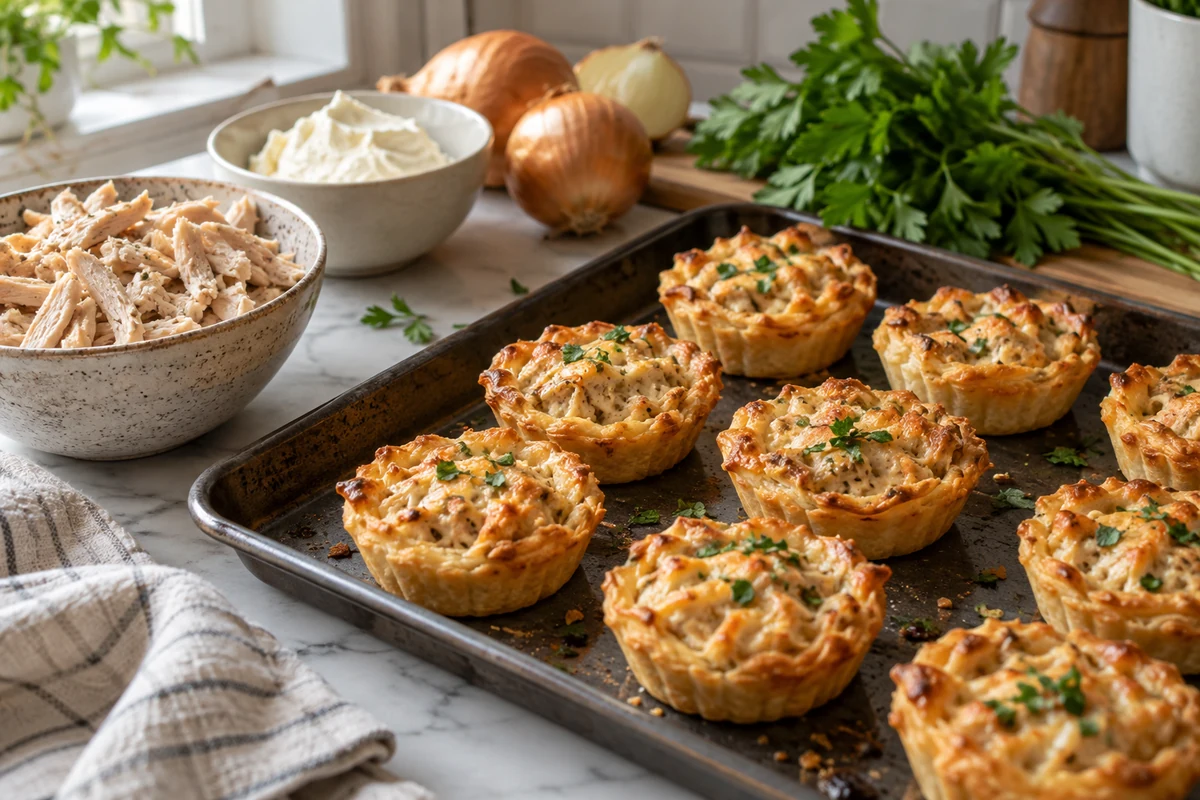
- Prepare the ingredients: measure the cooked chicken, requeijão or cream cheese, cream, stock, onion, garlic, oil or butter and optional Parmesan. Keep the chopped herbs and optional lemon ready for finishing.
- Prepare the cases: warm the 20 ready-baked cases according to their packet, for example around 5–8 minutes at 180°C, or 160°C fan. Bake raw cases fully as directed before adding any filling.
- Soften the onion: heat the 2 tbsp oil or butter in a pan over a medium heat. Cook the chopped onion for approximately 3–4 minutes, stirring, until softened.
- Add the garlic: stir in the 2 garlic cloves and cook for 30–60 seconds without letting them burn.
- Add the chicken: stir in the 500 g cooked shredded chicken for 1–2 minutes to combine. This brief step alone is not sufficient reheating; continue with the sauce.
- Make the sauce: reduce the heat and stir in the 200 g creamy cheese. Add the cream gradually, up to the measured 200 ml, stopping before the filling becomes runny. Loosen with a little of the measured stock only if needed.
- Finish heating and seasoning: use no more than the measured 100 ml stock in total. Stir in the optional 50 g Parmesan and heat the entire filling until steaming hot, stirring well; a food thermometer can confirm 75°C for 30 seconds or 70°C for two minutes. Then check the seasoning.
- Add herbs and lemon: remove from the heat and stir in the 2 tbsp chopped herbs. Add the optional lemon juice gradually to taste.
- Keep the filling ready to serve: allow the most vigorous steam to subside briefly while arranging the cases, then fill them while the mixture is still hot. Do not cool and reheat it again.
- Fill the cases: spoon in enough filling without overflowing, roughly 1–2 tbsp for small cases. Actual yield depends on case size, and this amount of filling may exceed 20 small cases. Finish with the herbs already measured for the recipe.
- Serve promptly: combine hot filling with freshly warmed cases and serve. Avoid a second reheating cycle merely to crisp the assembled vol-au-vents.
- Plan ahead safely: if making the complete filling ahead from freshly cooked chicken, cool and refrigerate within 1–2 hours, then reheat once when serving. Use within 48 hours of the chicken’s original cooking, or sooner if another ingredient requires it. Do not reheat leftover chicken into a filling, chill it, then reheat it again.
Practical Tips
- Consistency: the filling should hold its shape on a spoon. Add stock a little at a time rather than automatically using all of it.
- Portions: allow around two per person before other dishes, or 3–4 as part of a larger starter spread, depending on size.
- Without dairy: choose suitable plant-based cheese and cream, use oil instead of butter, omit Parmesan and check the pastry and other ingredients. Lactose-free dairy products still contain milk proteins.
- Crisp pastry: use a thick filling and assemble just before serving rather than letting filled cases stand for a long time.
Quick Substitutions
- Chicken: safely cooked shredded turkey, or prepared jackfruit or soya pieces for a plant-based alternative.
- Requeijão: cream cheese, blended ricotta or a suitable plant-based spread, adjusting the liquid for the product used.
- Cream: a suitable oat or soya cream alternative for a dairy-free filling, with all other dairy ingredients replaced too.
Storage
- Filling: refrigerate promptly in a covered container at 5°C or below. Keep within 48 hours of the chicken’s original cooking and any shorter ingredient limit. Making a new dish does not restart that clock; reheat only once.
- Unfilled cases: follow the packet’s storage guidance and keep dry and covered. Refresh briefly in the oven if the instructions allow it.
Recipe 2 Variations: Chicken Vol-au-Vents

These variations on chicken vol-au-vents change the flavour or suit different dietary needs. Treat them as filling ideas and adjust liquid carefully to keep the pastry crisp.
- Simple creamy chicken: combine 500 g cooked shredded chicken with 200 g creamy cheese and up to 100 ml stock, omitting the cream for this simpler version. Heat thoroughly and finish with parsley.
- Mushroom and herb: replace half the chicken with 200 g sliced mushrooms, cooking them thoroughly with the onion and garlic until excess moisture evaporates. Start with only 100 ml cream and adjust as needed.
- Cheese and crisp bacon: cook 50 g chopped bacon thoroughly before adding it, with the optional 50 g Parmesan from the base recipe. Omit bacon for a pork-free version and check the stock.
- Spinach and ricotta: for a vegetarian version, replace the chicken with 200 g cooked, well-drained spinach and 150 g ricotta. Use vegetable stock and vegetarian cheese rather than standard Parmesan, and adjust the sauce quantity.
- Lemon chicken: add finely grated lemon zest and around 1 tbsp lemon juice to taste for a fresh finish.
- Paprika and chilli: add ½ tsp smoked paprika and a little finely chopped chilli, adjusting the heat for your guests.
- Seafood: replace the chicken with 300 g prawns and squid, cooking them fully before combining with the sauce. Follow their packet guidance and identify the crustacean and mollusc allergens.
- Vegan: try 300–400 g prepared shredded jackfruit or hydrated soya pieces, 200 g plant-based cream cheese and plant-based cream added gradually. Use vegan pastry, oil, vegetable stock and no Parmesan or egg wash, and cook the protein alternative as directed.
- Mini party cases: smaller cases may hold about 1 tbsp filling each; allow 3–4 per person as part of a mixed spread and calculate the yield from the cases you buy.
- A thicker filling: if necessary, mix up to 1 tbsp cornflour with a little cold liquid before adding gradually to the simmering sauce. Cook it through until thickened; do not stir raw cornflour into a finished cold filling.
Quick Substitutions
- Requeijão: cream cheese, blended ricotta or a suitable plant-based spread.
- Cream: a suitable oat or soya alternative, checking its allergens.
- Chicken: cooked turkey, prepared jackfruit or textured vegetable protein.
- Cases: ready-baked vol-au-vents or correctly shaped and fully baked puff pastry cases. Use a product specifically labelled gluten-free when required.
Assembly and Serving
- Fill shortly before serving to preserve crispness. Keeping cases and filling separate is more effective than reheating already assembled starters repeatedly.
- Watch the consistency: the filling should be creamy rather than liquid. Use stock sparingly and cook any starch thickener fully.
- Garnish: use herbs, lemon zest or a little suitable cheese for colour and flavour.
- Portions: start with two per person alongside other dishes, or 3–4 in a more substantial starter spread, adjusting for case size.
- Oven-baked options: pastry cases and baking-suitable croquettes can simplify serving by avoiding last-minute deep-frying. Baking alone does not determine a dish’s nutritional value.
Final Serving and Drinks Tips
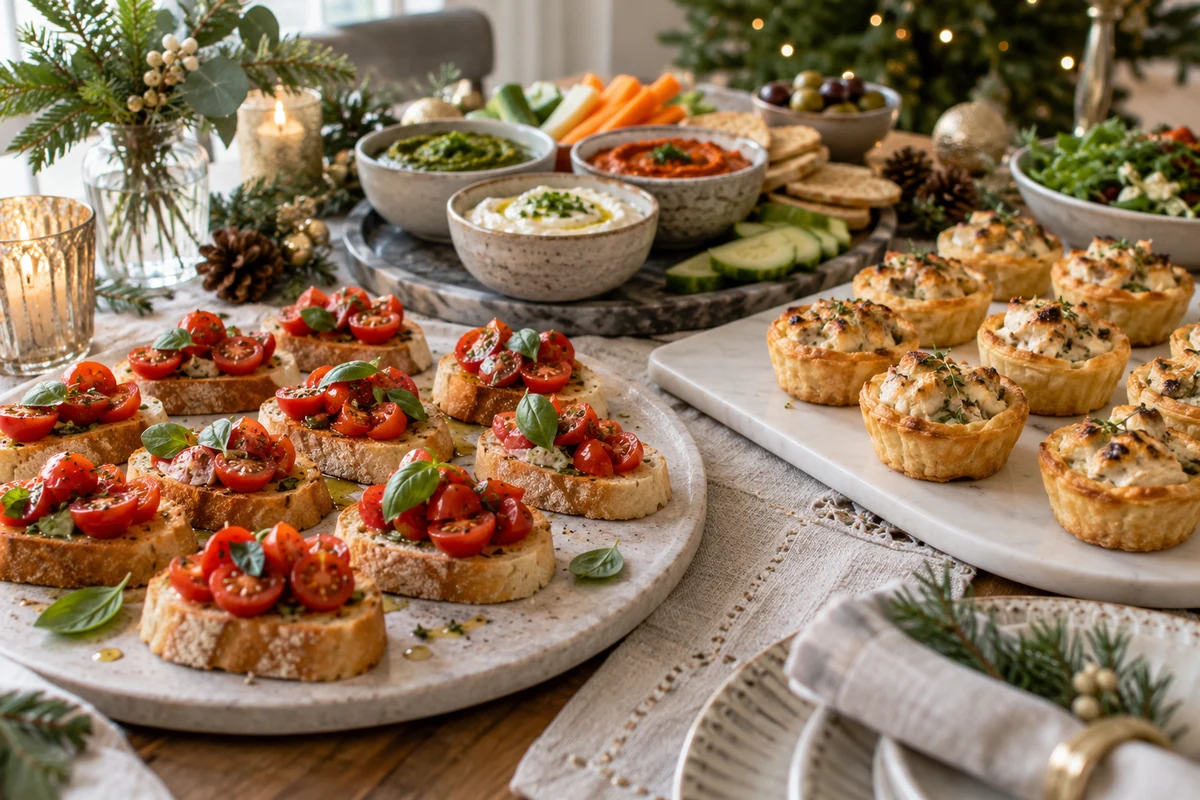
These practical serving tips help guests move around comfortably: provide small plates, suitable cutlery and accessible napkins, and use stable serving stands where useful.
Temperature and Timing
- Cold starters: keep refrigerated until needed, then serve small batches. An ice-supported tray can help maintain temperature but does not remove the need to monitor time and temperature.
- Hot starters: heat cooked fillings until steaming hot throughout and reheat only once. Serve promptly, or hot-hold safely at 63°C or above; a crisp surface alone does not show that the centre is hot enough.
- Sequence: offer fresh, sharp bites such as bruschetta before richer vol-au-vents or mini quiches if serving in rounds.
Portions and Presentation
- Allow roughly 3–5 small pieces before a meal, or 6–8 for a larger starter spread. Adjust for size, event length and whether more food will follow.
- Use several small platters rather than one crowded tray.
- Add interest with stable boards or stands and edible herbs such as basil or parsley.
- Keep sauces and spreads in separate bowls with their own spoons so crisp bases do not become wet.
Drinks Pairings
- Sparkling wine or prosecco: an option for adults who drink alcohol, alongside bruschetta or savoury skewers.
- Light white wine: sauvignon blanc or pinot grigio can accompany creamy starters or fish.
- Rosé: another possible pairing for mini quiches, cheese boards or bruschetta.
- Lager or pilsner: can accompany baked cod bites and other savoury snacks.
- Alcohol-free choices: offer sparkling water with lemon, diluted fruit juice or chilled fruit and herbal infusions as equally visible options.
Allergen Information
- Give guests clear information about relevant allergens, such as fish, nuts, wheat and milk. Use milk rather than lactose as the allergen label: lactose intolerance and milk allergy are different.
- Use separate clean utensils and suitable preparation practices for special portions. A vegetarian label does not make a dish safe for someone with an allergy.
Layout and Flow
- Position the starter table where people can reach it without blocking the main walkway.
- Replenish gradually from properly stored reserves rather than placing everything out at once.
- Provide small tongs and serving spoons for a self-service spread.
Finishing Touches
- A little olive oil, citrus zest or balsamic glaze can finish a suitable starter without drenching it.
- Add a few salt flakes only where needed; cheese, olives, ham and stock may already provide enough salt.
- Use edible herbs and fruit for colour. For young children, quarter grapes lengthways and remove sharp skewers.
- Small individual cups can make dips or other suitable starters easier to eat while standing.
Final Practical Checks
- Try the presentation in advance and check that the planned portions suit your guests.
- Keep a small reserve of suitable cheese, fruit or crackers available, with perishable items refrigerated until needed.
- Use lighting that makes the food easy to see without warming chilled dishes.
Enjoy Your Gathering
Thank you for exploring these Christmas party starter ideas. A manageable menu and a little preparation can leave more time to enjoy your guests’ company.
Explore our social channels for more food inspiration and ways to vary your festive menu.
Visit I Love Christmas for more seasonal ideas, menus and practical tips. Thank you for reading, and have a lovely celebration!
FAQ: Christmas Party Starters
How many starters should I allow per guest?
As a rough guide, allow 4–6 small bites or 2–3 more substantial pieces before other food. A board might provide 80–120 g per person alongside other options. These are alternative guides, not quantities to add together automatically; adjust for the event length and main meal.
Can I prepare starters ahead?
Yes, where the recipe and ingredients allow. Prepare suitable cooked fillings within 48 hours of serving, cool and refrigerate promptly, and follow shorter ingredient limits. Reheat only once. Keep moist fillings separate from pastry or toast until serving.
How can I keep starters crisp?
Assemble a small first batch and replenish freshly. Refresh plain toast or pastry according to its instructions before filling, keep wet toppings separate and drain excess liquid. Cooked chilled fillings still need thorough reheating, not just a briefly warmed surface.
What should I offer guests with dietary requirements?
Ask what they need, then choose suitable recipes and check every ingredient. Options include gluten-free bread, plant-based cheese and prepared jackfruit or soya fillings. Prevent allergen cross-contact and clearly identify relevant allergens; vegan and gluten-free are different requirements.
How should I store leftover starters?
Keep only food that has remained safely handled and stored. Refrigerate cooked food within 1–2 hours and use within 48 hours of its original cooking, or any shorter ingredient limit. Do not reheat more than once or reuse buffet food left out too long. Freeze only components suitable for freezing, following their recipe or packet guidance.
Sources and Further Reading
- Food Standards Agency: cooking food safely
- Food Standards Agency: chilling food safely
- Food Standards Agency: allergen guidance
- Food Standards Agency: cold-smoked fish advice for higher-risk consumers