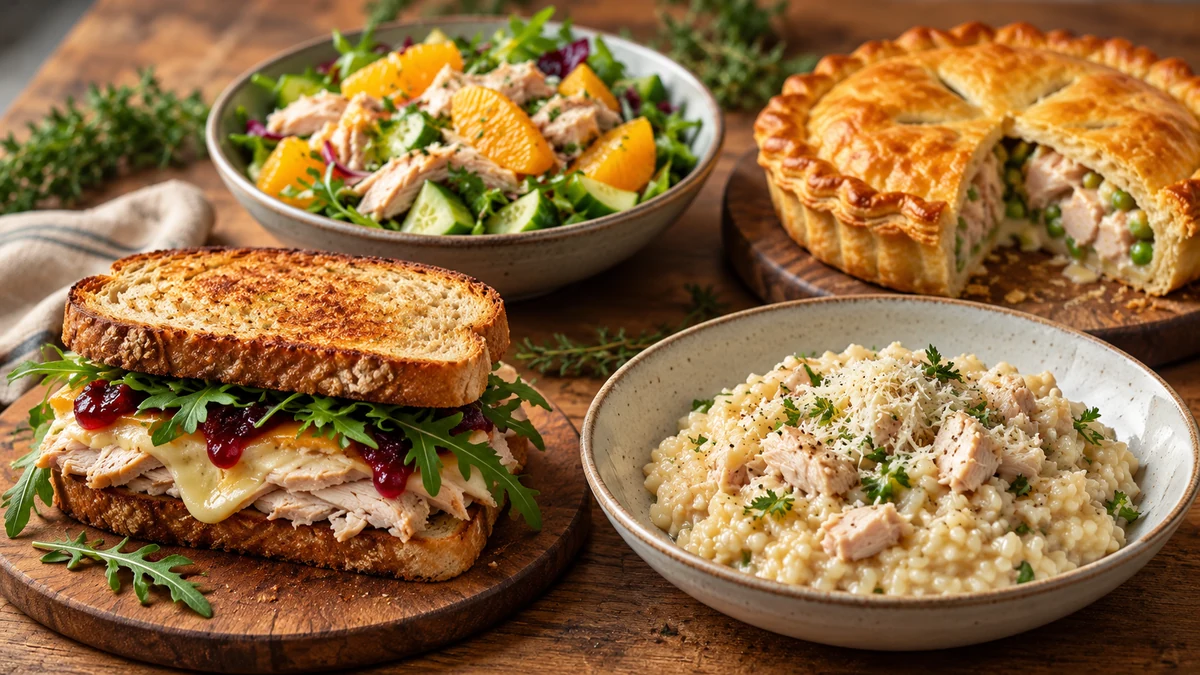
Use safely stored Christmas turkey leftovers in toasted sandwiches, citrus-dressed salad, savoury pie or creamy risotto. Portion and chill the meat promptly, use within 48 hours or freeze in time, and reheat only once. A safely stored carcass can also make stock for another meal.
Looking for leftover Christmas turkey ideas? These four dishes also work with roast chicken, including the Brazilian festive chicken sold as Chester. They offer different flavours and textures while making good use of food already in the fridge.
Why use leftover turkey or roast chicken?
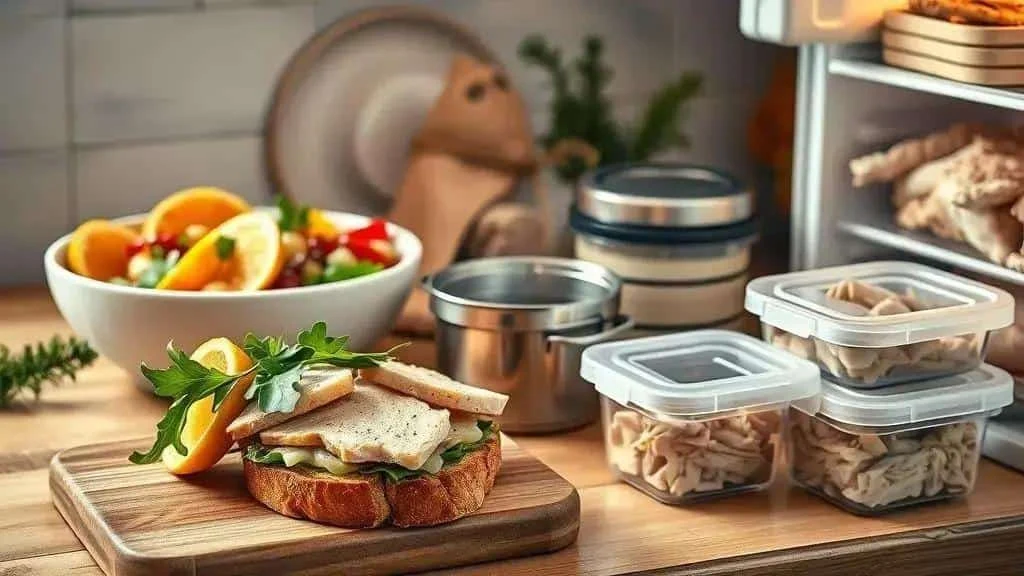
Using leftovers can save money, reduce waste and add variety to the meals after Christmas. The important starting point is meat that was cooked thoroughly and cooled and stored safely.
Practical benefits
- Lower costs: use the cooked meat you already have, freezing suitable portions promptly if you will not use them within their chilled storage limit.
- Less waste: make use of smaller pieces that would otherwise be overlooked.
- Variety: sandwiches, salads, pies and risottos turn the same roast into different meals.
- Convenience: cooked, portioned meat reduces preparation time on busy days.
- Using the carcass: safely stored bones and trimmings can provide a flavourful stock for soups and sauces.
Making leftovers work for your routine
- Meal planning: portion the meat into covered containers and choose vegetables, grains and sauces to accompany it.
- Budget-friendly meals: combine the turkey with seasonal vegetables and cupboard ingredients you already have.
- More variety on the plate: vegetables and grains add different flavours and textures; adjust portions to your household rather than treating these recipes as a prescribed meal plan.
Chilling, freezing and reheating
- Cool promptly: divide leftovers into shallow containers and refrigerate within 1–2 hours of cooking. Do not leave a large carcass out for hours to cool.
- Fridge storage: keep at 0–5°C and use within 48 hours of the original cooking, or freeze before that limit. Adding sauce or making a new dish does not restart the clock.
- Freezing: freeze promptly in suitable containers or bags. Around 2–3 months is a useful quality target for frozen cooked poultry, rather than a safety guarantee. Thaw in the fridge and use within 24 hours of full defrosting.
- Reheat once: heat until steaming hot throughout, not just warm at the edges. A clean probe can check 75°C for 30 seconds or 70°C for 2 minutes. Do not plan a second reheating of a dish made with already reheated leftovers.
- Stock: simmer a safely stored carcass and trimmings with water for 1–2 hours, strain carefully, cool promptly in smaller containers and refrigerate or freeze. Boiling cannot rescue a carcass that has been left out too long.
Portion first: take out only what you need for each meal and keep the rest chilled or frozen.
1. A toasted turkey sandwich with cranberry and cheese
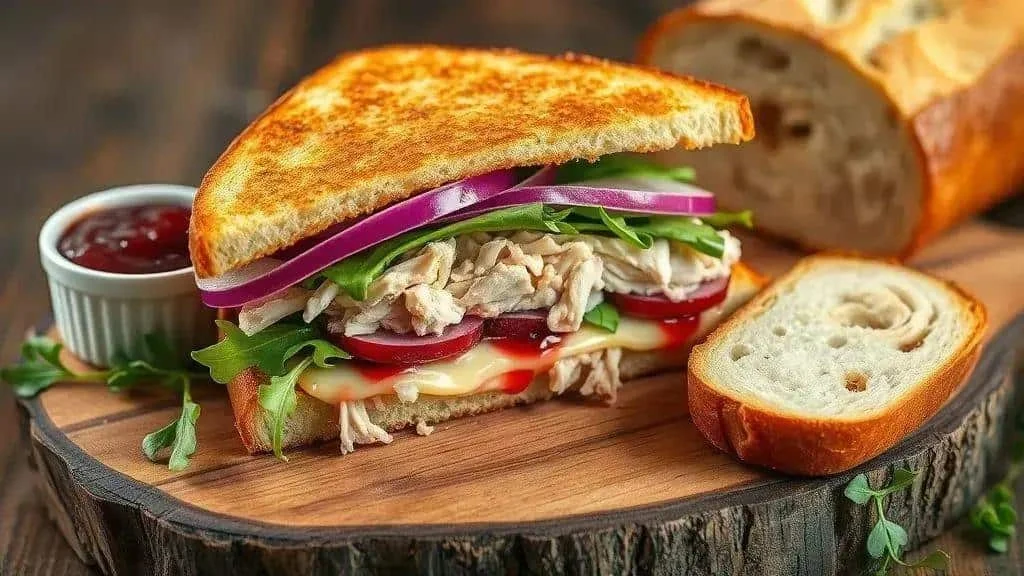
A toasted turkey sandwich is a straightforward way to use sliced or shredded roast meat. Cranberry sauce, cheese and crisp leaves give it a festive flavour with little extra preparation.
Turkey sandwich ingredients
- 200 g cooked turkey, shredded or sliced – safely stored leftovers. Add 1 tbsp stock or water if needed to moisten it during reheating.
- 4 slices bread – such as ciabatta, sourdough or wholemeal.
- 2 slices mozzarella or provolone – or a suitable plant-based alternative. Changing the cheese alone does not make a turkey sandwich vegan.
- 1 tbsp butter or suitable margarine – to toast the bread; olive oil is an alternative.
- 2 tbsp cranberry sauce – or apricot jam or sweet mustard.
- 1 tbsp mayonnaise – or plain Greek yoghurt.
- Rocket or lettuce – washed and dried.
- ¼ red onion, very thinly sliced – optional.
- Salt and pepper – to taste, allowing for the turkey’s existing seasoning.
Making the turkey sandwich
- Reheat the turkey: put it in a pan with a little stock or water and heat until steaming hot throughout, stirring or turning to distribute the heat. A minute or two until merely warm is not sufficient. Use meat that has not already been reheated.
- Prepare the bread: spread butter on the outer faces and toast in a medium-hot pan or on a griddle until lightly golden, usually around 1–2 minutes per side.
- Add the sauces: for each sandwich, spread ½ tbsp mayonnaise on one inner face and 1 tbsp cranberry sauce on the other.
- Add the filling: place a slice of cheese on the mayonnaise, add half the freshly reheated turkey and some optional onion, then close the sandwich.
- Melt the cheese: return immediately to a low-to-medium pan, cover briefly and press lightly until the cheese melts. A sandwich toaster also works. This completes the same continuous heating and serving process; do not chill and reheat it again.
- Add the leaves: open carefully, tuck in rocket or lettuce and add black pepper if wanted.
- Serve: cut diagonally and eat promptly, with salad or homemade crisps if desired.
Sandwich variations
- Italian-inspired: use provolone, sun-dried tomatoes and a little olive oil.
- Wasabi or sesame: flavour the mayonnaise with a little wasabi or tahini and add cucumber. Check sesame and other allergens.
- Wholemeal and yoghurt: use wholemeal bread, Greek yoghurt and a cheese of your choice; nutritional differences depend on the products and portions.
- Mini sliders: use small rolls for smaller servings, following the same reheating precautions.
- Creamy filling: add 2 tbsp white sauce to the turkey before reheating it thoroughly, then serve in the toasted bread.
Storage and preparation tips
- Freeze in portions: pack safely cooled shredded turkey into freezer bags promptly, label with the date and thaw in the fridge when needed.
- Microwave option: cover with a suitable vented microwave lid, add a little liquid and heat in stages, stirring or turning and checking the centre. Power, quantity and thickness vary, so a fixed 30–60 seconds cannot guarantee thorough reheating.
- Change the flavour: try different breads, cheeses and fruit sauces while keeping the same basic assembly.
Turkey sandwich ingredients
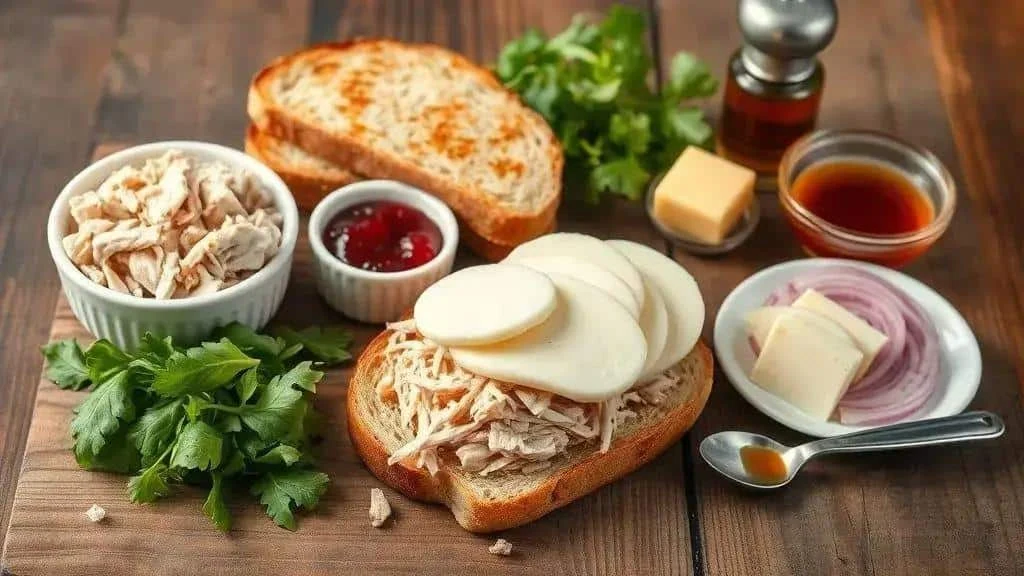
For two generous turkey sandwiches, gather the following:
- 200 g cooked turkey, sliced or shredded – safely stored; moisten with a little stock or water if needed.
- 4 slices bread – ciabatta, sourdough or wholemeal, as preferred.
- 2 slices mozzarella or provolone – or a suitable plant-based cheese alternative.
- 1 tbsp butter – or olive oil, for the outside of the bread.
- 2 tbsp cranberry sauce – or apricot jam or sweet mustard.
- 1 tbsp mayonnaise – plain Greek yoghurt or vegan mayonnaise are alternatives, although the turkey still makes the sandwich non-vegan.
- 30–40 g rocket or lettuce – or baby spinach, washed and dried.
- ¼ red onion – thinly sliced, optional; pickled onion also works.
- Salt and black pepper – to taste.
- 1 tbsp chicken stock or water – optional, for moistening the meat, with a little more if necessary.
Practical substitutions
- Bread: choose wholemeal for a different flavour or small rolls for sliders.
- Cheese: provolone gives a stronger flavour; Brazilian queijo prato or another mild melting cheese gives a milder filling.
- Sauces: swap cranberry for apricot jam or sweet mustard, or mix a little chilli into the mayonnaise.
- Meat: safely stored shredded roast chicken or thinly sliced roast beef can replace turkey, following the appropriate storage and reheating guidance.
Portion guide
Yield: 200 g turkey makes two generously filled sandwiches. Adjust the other ingredients proportionately for appetite and bread size.
Making the turkey sandwich
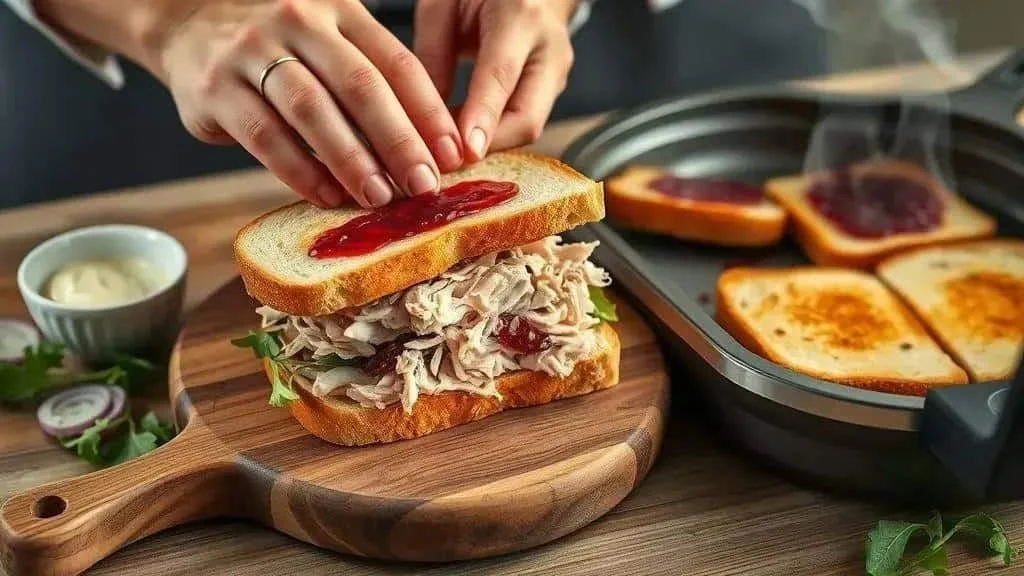
- Get ready: allow two bread slices, about 100 g turkey and one cheese slice per sandwich. Have the sauces, leaves and onion ready, and heat a pan or sandwich toaster so the hot filling can be served promptly.
- Moisten and reheat: put the turkey in a pan with the optional stock or water. Stir or turn until steaming hot throughout, adding a little more liquid if it is drying out. Do not stop when it is only lukewarm.
- Toast the bread: lightly toast the inner faces if desired, then butter or oil the outer faces with the measured amount.
- Assemble: spread ½ tbsp mayonnaise on one inner face and 1 tbsp cranberry sauce on the other. Add cheese, freshly reheated turkey and optional onion. Keep the leaves aside until the final heating is finished.
- Finish in the pan: close the sandwich and toast over a low-to-medium heat, pressing lightly. Turn as needed until the bread is golden and the cheese melts; a sandwich toaster may take around 3–4 minutes. Serve as part of the same continuous heating process.
- Oven alternative: for several sandwiches, put them on a tray in an oven preheated to 180°C. Around 6–8 minutes may brown the bread and melt the cheese when the filling is already hot; this is not a guaranteed reheating time for cold turkey.
- Rest briefly and cut: let the sandwich settle for 30–60 seconds, add the leaves and cut diagonally.
- Serve: offer with salad or homemade crisps. Wholemeal bread and yoghurt are optional flavour and texture variations.
- Store components separately: keep the original cooked turkey chilled for no more than 48 hours, or freeze promptly. Make only the hot sandwiches needed now: once their leftover filling has been reheated, do not save them for another reheating.
Useful tips
- Avoid dryness: use a little stock or water and cover where appropriate while reheating thoroughly.
- Balance flavours: fruit sauce contrasts with salty cheese and meat; add it to taste.
- Add crunch: thin apple slices, pickled onion or gherkins make useful additions.
Sandwich variations
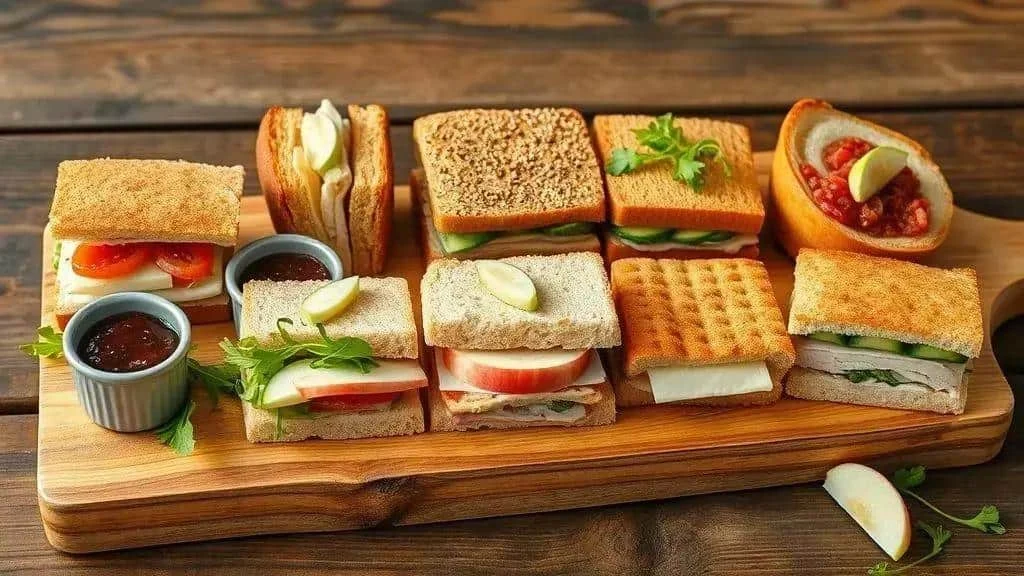
- Italian-inspired: melted provolone, sun-dried tomatoes, a little olive oil and rocket work well in ciabatta or focaccia.
- Sesame or wasabi: combine flavoured mayonnaise with cucumber and pickled carrot for a crisp, tangy variation.
- Apple and yoghurt: try wholemeal bread, Greek yoghurt, thin green apple slices and salad leaves.
- Mini sliders: fill small rolls with turkey, melted cheese and a little apricot jam for informal gatherings.
- Creamy turkey: mix shredded turkey with white sauce or Brazilian requeijão-style cheese spread and chives, reheat thoroughly once and serve in toast.
- Tex-Mex-inspired: add avocado, pico de gallo, cheddar and a squeeze of lime.
- Vegan alternative: replace turkey with sautéed mushrooms and use vegan cheese, spread and mayonnaise. Check the bread and sauces as well, including any honey in sweet mustard.
Choosing a variation
- Flavour balance: combine sweet, savoury and sharp elements, such as fruit sauce, cheese and rocket.
- Texture: apple or pickles contrast with the soft filling.
- Convenience: keep sauces and fillings ready in the fridge and assemble only what you plan to eat.
- Presentation: diagonal cuts and a colourful side make a simple sandwich inviting.
2. Turkey salad with citrus dressing
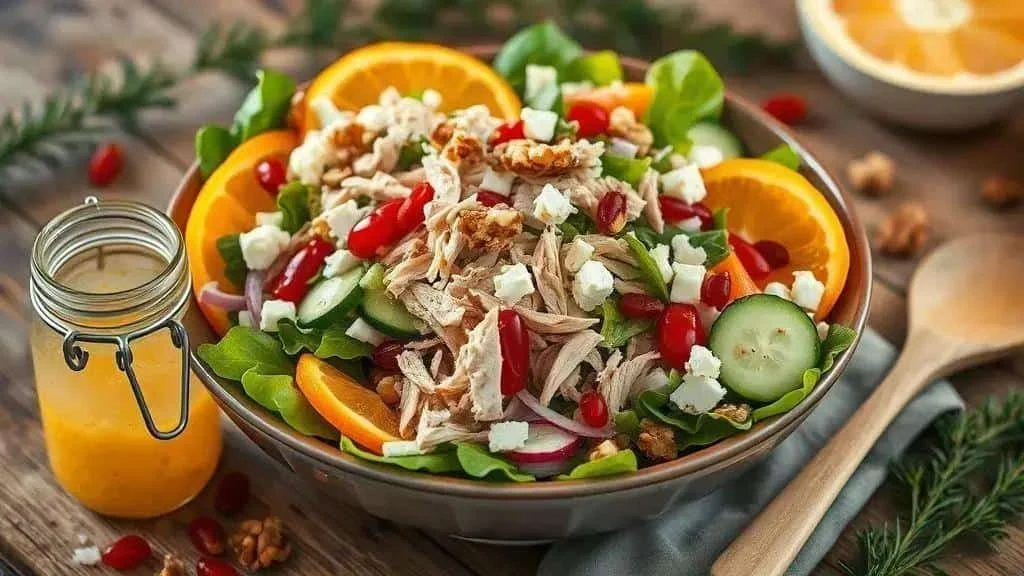
A turkey salad with citrus dressing combines roast meat with crisp vegetables, orange and a tangy dressing. It makes a different meal from the original Christmas roast.
Ingredients
- 300 g cooked shredded turkey – safely chilled; cooked chicken is an alternative.
- 150 g mixed leaves – rocket, lettuce and baby spinach, washed and dried.
- 12–15 cherry tomatoes – halved; grape tomatoes also work.
- 1 orange – segmented, with seeds and membranes removed; use a mandarin or tangerine if preferred.
- ¼ cucumber – sliced into half-moons; radish offers extra crunch.
- ¼ red onion – thinly sliced, optional; spring onion is another choice.
- 50 g feta or goat’s cheese – crumbled, or another suitable fresh cheese. Avoid uncooked mould-ripened cheese for pregnant guests.
- 30 g walnuts, pecans or almonds – toasted and chopped. Check allergies and adapt the texture for young children.
- 2 tbsp pomegranate seeds – optional.
- Salt and black pepper – to taste.
Citrus dressing
- 3 tbsp fresh orange juice – squeeze a separate orange or have extra juice available; the whole orange above is for the salad.
- 1 tbsp lemon juice.
- 1 tsp honey or maple syrup – or sugar to taste. Do not use honey in portions for babies under one.
- 1 tsp Dijon mustard – or another mustard to taste.
- 4 tbsp olive oil.
- Salt and pepper – to taste.
Method
- Prepare the turkey: use safely stored cooked turkey straight from the fridge and separate the pieces with clean forks. There is no need to warm it briefly and cool it again for this cold salad.
- Arrange the leaves: put the washed, well-dried leaves in a large bowl.
- Add fruit and vegetables: scatter over the tomatoes, orange segments, cucumber and optional onion.
- Make the dressing: put the juices, sweetener, mustard, oil and seasoning in a clean lidded jar and shake to combine.
- Dress the turkey: toss the meat with about 1 tbsp dressing to moisten it.
- Assemble: add the turkey to the vegetables, then drizzle over as much remaining dressing as wanted, starting with a little.
- Finish: scatter with cheese, chopped nuts and optional pomegranate seeds.
- Serve promptly: toss gently just before eating. Keep ingredients chilled and the dressing separate if assembling later; citrus does not preserve the turkey at room temperature.
Quick variations
- Vegan: replace turkey with cooked chickpeas and cheese with prepared tofu; use maple syrup rather than honey and check the remaining ingredients.
- Creamier dressing: a little plain yoghurt adds tang and creaminess. It serves a different purpose from honey, so do not treat the swap as a guaranteed calorie reduction.
- With grains: add cooked, safely cooled quinoa or barley for a more substantial salad; barley contains gluten.
Storage tips
- Keep dressing separate: refrigerate in a clean closed container and use within 48 hours, or sooner if a dairy addition requires it.
- Keep leaves crisp: store washed leaves and toppings separately in the fridge and combine near serving time.
- Using any surplus: only retain salad that has stayed safely chilled and remains within the turkey’s original storage limit. Do not automatically keep buffet leftovers for the next day.
3. Savoury turkey pie and 4. Creamy turkey risotto
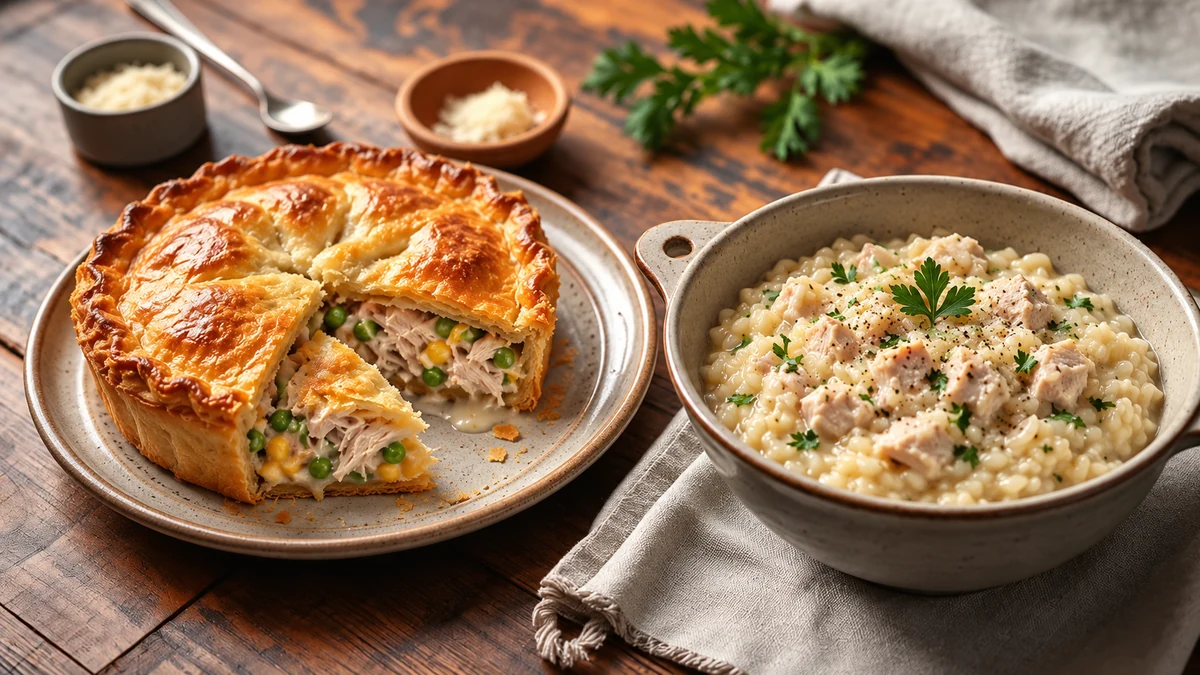
Two further ways to use leftover turkey are a savoury pie and a creamy risotto. Both reheat the cooked meat, so make only what you intend to eat at that sitting.
Savoury pie ingredients
- 300 g cooked shredded turkey – boneless, safely chilled and not previously reheated; chicken also works.
- Ready-made pie pastry or puff pastry – enough to line and cover the chosen small pie dish. Pack and sheet sizes vary: check coverage before starting, rather than assuming one sheet makes both base and lid.
- 1 small onion – chopped; use 1 tbsp oil or butter for cooking it.
- 1 garlic clove – crushed.
- 120 ml white sauce – or a suitable requeijão-style cooking cheese spread.
- 60 g sweetcorn – optional, cooked or ready to eat and drained.
- 60 g peas – optional, cooked and cooled according to the packet.
- 2 eggs – one for the filling and one for brushing the pastry.
- Salt and pepper – to taste.
- Parsley and chives – chopped, to taste.
- Grated cheese – optional, to scatter over.
Making the savoury pie
- Cook the vegetables: heat 1 tbsp oil or butter, soften the onion until translucent and stir in garlic for about 30 seconds.
- Keep the turkey chilled for now: unlike a filling cooked and cooled before baking, this method adds the cold turkey after the vegetable base has cooled, so it is reheated once in the oven.
- Add the sauce: combine the onion mixture, white sauce, prepared sweetcorn and peas. Season, then cool this base promptly before adding the remaining ingredients.
- Finish the filling: stir the cold turkey, one beaten egg and herbs into the cooled base. Do not taste after adding raw egg; assemble and bake promptly.
- Assemble: line the pie dish with pastry, add the filling and cover with a pastry lid. Seal the edges and cut steam vents, following any pastry packet instructions.
- Brush and bake: brush with the other beaten egg and bake in an oven preheated to 200°C, or as the pastry packet directs. Start checking around 25–35 minutes, but continue until the pastry is cooked and the filling is steaming hot throughout, reaching 75°C for 30 seconds or 70°C for 2 minutes. A golden top alone is not enough.
- Rest and serve: allow about five minutes before cutting and eat promptly. Because this pie reheats leftover meat, do not plan to cool it and reheat it a second time.
Creamy risotto ingredients
- 200 g Arborio rice.
- 250–300 g cooked turkey – diced or shredded, safely chilled and not previously reheated.
- ½ onion – finely chopped.
- 1 garlic clove – crushed.
- 120 ml dry white wine – optional; use extra stock if avoiding alcohol, as cooking does not guarantee complete removal.
- About 1 litre vegetable or chicken stock – kept hot; the amount absorbed will vary.
- 2 tbsp butter – or olive oil.
- 50–80 g grated Parmesan – to taste.
- Salt and pepper – to taste, allowing for the stock and cheese.
- Fresh parsley or thyme – to finish.
Making the risotto
- Soften the onion: heat 1 tbsp butter or oil, cook the onion until translucent and stir in garlic for about 30 seconds.
- Add the rice: stir for about one minute to coat the grains.
- Add wine or stock: stir in the wine, if using, and allow most of the liquid to reduce before continuing. This does not make the dish alcohol-free.
- Add hot stock gradually: stir in a ladleful at a time, adding more as it is absorbed without letting the pan dry out. The rice may take around 15–18 minutes or longer; follow the packet as a guide and check for tender grains with a slight bite.
- Add the turkey: stir in the cold cooked meat with enough time for it to become steaming hot throughout before the rice finishes. Continue heating and stirring, checking the meat reaches the reheating temperature above. Do not simply warm it at the last moment.
- Finish: once the rice is cooked and turkey thoroughly reheated, take off the heat and stir in the remaining 1 tbsp butter and the Parmesan. Add a little hot stock if needed for a flowing consistency and adjust seasoning.
- Serve immediately: scatter with herbs and add a few drops of oil if desired. Serve hot while the texture is still loose and creamy.
Planning quantities and avoiding waste
- Turkey quantities: the pie uses 300 g and the risotto 250–300 g, so making both needs 550–600 g, not 500 g. Servings depend on appetite, pie size and accompanying dishes; two meals for four are not guaranteed.
- Pie texture: keep the filling thick and cool before it touches the pastry. Do not add excess liquid that will soak the base.
- Variations: use suitable cooked vegetables in the pie or cook mushrooms with the risotto base, keeping storage and reheating limits in mind.
- Freeze the original leftovers instead: portion and freeze the roast meat promptly before making these dishes. Thaw in the fridge, then use it for one freshly cooked meal. Do not plan repeated reheating by freezing the finished leftover-turkey pie or risotto.
- Reheating limits: the pie and risotto already reheat cooked turkey. Make an appropriate quantity and serve once; a brief oven or pan warming later is not an alternative to this precaution.
Make the most of your Christmas roast
Safely stored turkey or roast chicken can provide several different dishes with less waste and less shopping.
Try a toasted sandwich, citrus salad, savoury pie or risotto, adapting flavours to your taste and quantities to what you will eat.
Share your photos and favourite combinations on our social channels. Thank you for reading.
Visit the I Love Christmas blog for more recipes and festive ideas.
FAQs: using leftover Christmas turkey
How long can cooked turkey stay in the fridge?
Cool it promptly, refrigerate at 0–5°C within 1–2 hours and use within 48 hours of cooking, or freeze before that limit. Do not freeze old leftovers to make them safe again, and discard meat whose storage history is uncertain.
Can I freeze the leftovers, and for how long?
Yes, freeze safely cooled original leftovers promptly in labelled portions. Around 2–3 months is a quality guide, not a guarantee of safety. Thaw in the fridge and use within 24 hours of full defrosting, reheating once if serving hot.
How can I reheat turkey without drying it out?
Add a little stock or water and cover where suitable. Stir or turn to heat evenly and check it is steaming hot throughout; microwave time varies with the appliance and portion. Reheat only once, using a clean probe if needed to confirm 75°C for 30 seconds or 70°C for 2 minutes.
Which dishes work well with leftover turkey?
Toasted sandwiches, cold salads with citrus dressing, savoury pies and creamy risottos all use sliced or shredded turkey. Cold salad needs no brief warming first; hot dishes must thoroughly reheat the meat once.
Can I use the bones and carcass?
Yes, if they were cooled and stored safely. Simmer with water, onion, carrot and herbs for 1–2 hours, strain carefully, then cool promptly in smaller containers and refrigerate or freeze. Stock-making cannot rescue a carcass that has been stored unsafely.
Sources and Further Reading
- Food Standards Agency: cooking and reheating
- Food Standards Agency: chilling, freezing and defrosting
- NHS: foods to avoid for babies and young children
- NHS: foods to avoid in pregnancy