New Year’s Eve celebrations range from harbour fireworks and street gatherings to dinners, performances and religious observances. Compare the atmosphere, access arrangements and cost before choosing. Programmes, ticket rules and transport change each year, so use the organiser’s current information rather than treating this guide as a confirmed event schedule.
New Year’s Eve around the world offers plenty of possibilities, but a famous celebration is not automatically the right one for every traveller. Here are cities and formats to consider, with ways to plan for crowds, comfort and local customs.
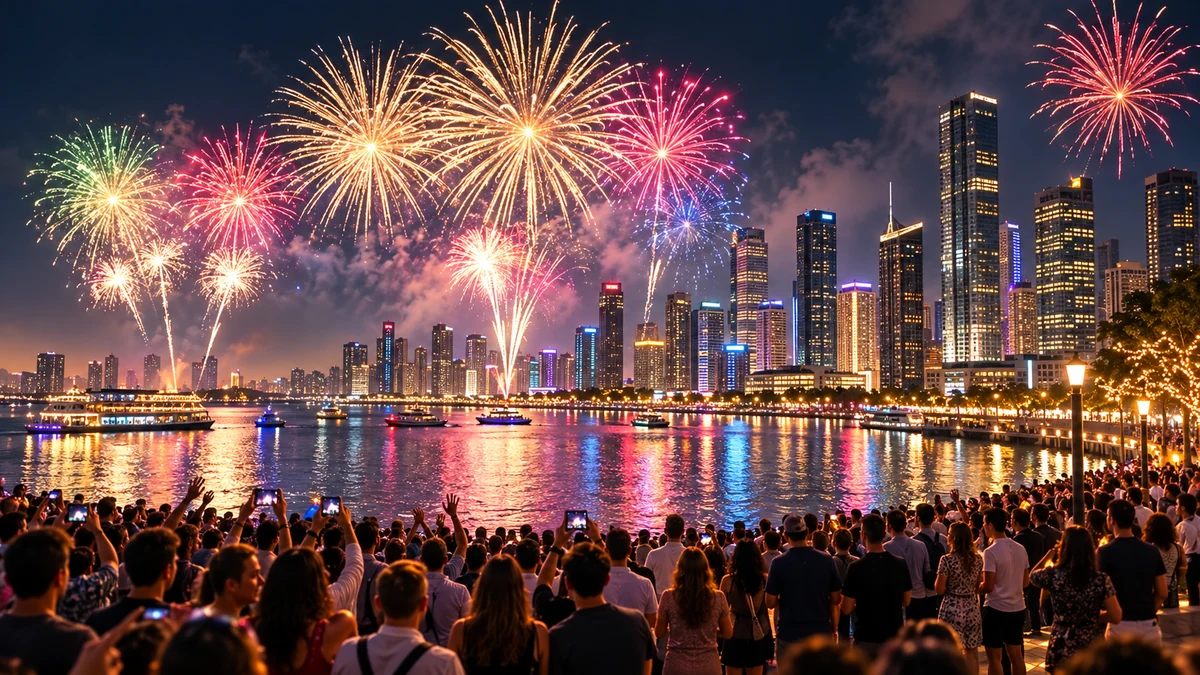
Illustrations in this article are conceptual images, not documentary photographs or evidence of a particular historical event, destination, venue or access route.
Cities to consider for a New Year trip
These cities are known for different styles of celebration. Check the programme for your intended date before booking, including whether an event is actually taking place and how admission works.
Rio de Janeiro, Brazil
New Year’s Eve in Copacabana is known for beach crowds, music and fireworks. December is summer in Brazil, so plan for heat as well as the late night. The city’s published operational plans include extensive road and transport changes; use the edition for your travel year.
- Viewing: choose an authorised area with suitable access and exits. There is no single best position for every visitor, especially near the busiest hotels and stages.
- Transport: check MetrôRio and city announcements for special tickets, station access and return services; do not assume normal arrangements apply.
- Personal planning: keep valuables discreet and agree a meeting point outside the densest crowd.
Sydney, Australia
Sydney’s harbour celebrations are associated with the Harbour Bridge and Opera House. Official viewing locations differ in price, capacity and sightlines. A cruise is another option, but it does not automatically guarantee an unobstructed view.
- Tickets: some vantage points are free, others ticketed. Check the official map for admission, accessible viewing, toilets and restrictions. Source: City of Sydney — New Year’s Eve guide
- Arrival: follow the site’s opening time and rules. Bring permitted supplies, prepare for a long wait and check whether leaving means losing access.
New York, USA: Times Square
The countdown in Times Square centres on the midnight ball drop. Public outdoor viewing is free and first come, first served; private venue parties are separate. The organiser warns that there are no portable public toilets for the celebration and that leaving a viewing area means you cannot return to your spot. Source: Times Square Alliance — New Year’s Eve FAQ
- Consider carefully: security checks, winter weather and hours of standing may make this unsuitable for some visitors. Check the current accessibility arrangements before deciding.
- Alternative: watch the official webcast or choose a separately booked indoor event. Do not assume a restaurant reservation includes street viewing access.
London, United Kingdom
London’s official New Year’s Eve fireworks near the Thames and London Eye require a ticket. Follow City Hall’s current ticket information and buy through its authorised source; sale dates and viewing-zone details vary by edition. Source: Mayor of London — New Year’s Eve
- Transport: check TfL’s holiday service information, station restrictions and your route home rather than assuming the usual timetable.
- Weather: prepare for cold, rain and a long outdoor wait, within the event’s bag and item rules.
Dubai, United Arab Emirates
Dubai is known for New Year displays around the Burj Khalifa and other landmarks. Viewing access and road closures vary. Paid packages and restaurant bookings have different terms; a “VIP” label alone does not promise a better or unobstructed view.
- Reservations: ask a venue to confirm the actual viewing area, access route, inclusions and cancellation terms in writing.
- Local expectations: check current visitor guidance, local rules and the venue’s dress code before travelling.
Tokyo, Japan
Tokyo offers private events as well as New Year religious observances. Do not assume there is a public countdown at Shibuya: the city has cancelled that event in recent years. A visit to a temple such as Zōjōji or a shrine such as Meiji Jingū has a different purpose and may still involve substantial crowds; check its own arrangements. Source: Shibuya City — cancellation of the 2024 countdown
- Tradition: hatsumōde is the first shrine or temple visit of the year. It may take place after midnight or later in the New Year, and visitors should respect worshippers and site rules.
- Transport: check each railway operator’s year-end timetable; overnight services are not guaranteed on every line.
Planning points for every city
- Book thoughtfully: popular accommodation and events can sell out, but confirm the programme and refund terms before committing.
- Documents and cover: check destination-specific entry rules and suitable travel insurance, keeping required documents and emergency details accessible.
- Communication: agree where and when to meet and save essential details offline in case mobile networks are busy.
Street celebrations and fireworks
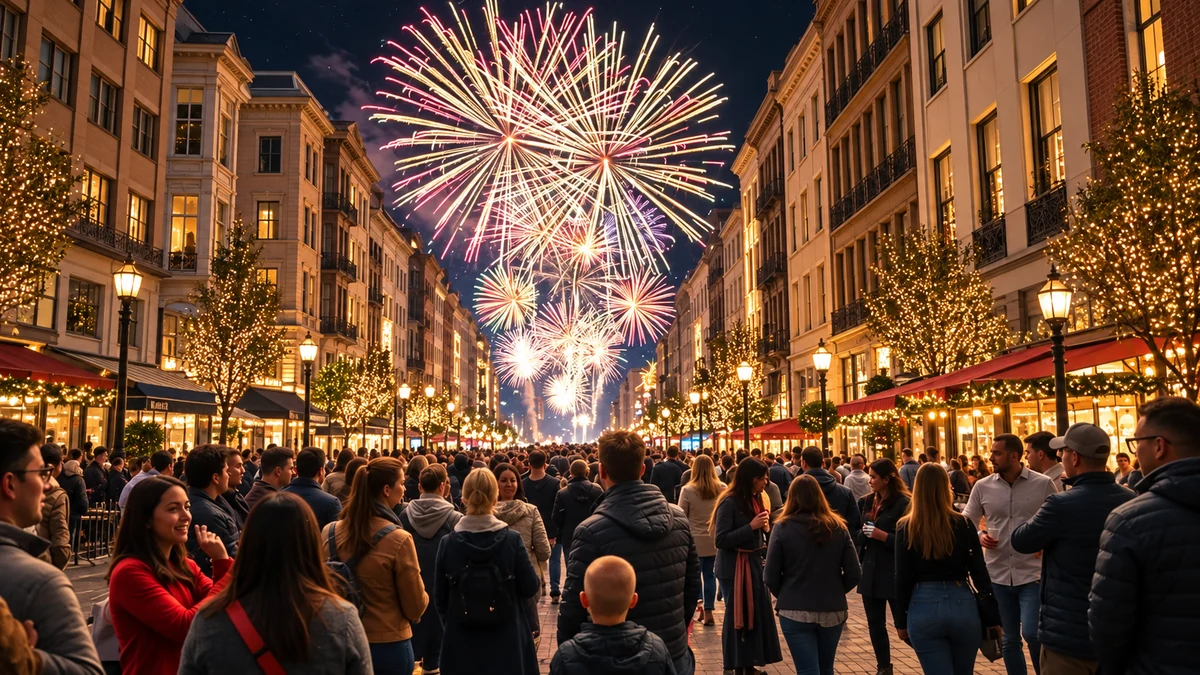
Large public celebrations can be memorable, but crowd size, noise and waiting time matter as much as the spectacle. Choose an event that suits the people travelling with you.
Finding an appropriate public celebration
Look at the organiser’s published programme and access map. A beach, bridge or waterfront that appears open on an ordinary day may be restricted, ticketed or closed on New Year’s Eve.
- Beaches: check the authorised viewing area, crowd arrangements and facilities. Do not assume there will be space to sit or that entering the water is safe.
- Squares and streets: facilities vary; confirm toilets, food arrangements and accessible routes in advance.
- Harbours and riversides: these may offer reflections of the display, but barriers and water-edge restrictions must be respected.
Choosing a viewing position
Use an authorised public location and follow entry instructions. Avoid climbing structures or seeking unofficial high points. Keep clear of exits, emergency lanes and all fireworks exclusion zones.
- Rooftops and restaurants: confirm that the ticket includes the advertised viewing area and whether the view is obstructed.
- Organised viewing areas: check access controls, capacity and assistance arrangements; official designation does not remove every risk.
- Waterfront views: enjoy them from a permitted position behind barriers, without approaching an unprotected edge for a photograph.
Safety and essential rules
Follow organisers’ and local authorities’ instructions. Respect signs, barriers and pyrotechnic exclusion zones. Leave fireworks to the organised display rather than bringing your own to a crowd.
- Identification: carry what local rules require and keep emergency contacts available offline.
- Exclusion zones: never enter restricted fireworks launch or fallout areas.
- Your group: agree how children will be supervised and discuss support needs with older or disabled companions without assuming everyone needs the same help.
- Belongings: keep bags closed and valuables discreet. No particular bag design can guarantee protection from theft.
Practical ways to prepare
Plan transport and a meeting point. Bring permitted water, weather protection and a charged phone. Check food availability rather than assuming every official area has vendors or that buying there guarantees food safety.
- Arrival time: follow the organiser’s advice and prepare for the expected wait; arriving early does not guarantee admission after capacity is reached.
- Meeting points: choose a clear place and time in case the group becomes separated.
- Payments: check whether the event is cashless and keep a suitable backup payment method.
- Leaving: identify permitted exit routes and transport options before the event starts.
Responsible behaviour and waste
Respect shared spaces and take litter to the designated bins or home with you. Consider noise-sensitive companions and local wildlife when choosing an event.
- Leave no litter: bring a small bag if permitted and dispose of it appropriately.
- Lower-noise options: consider a light display or an indoor celebration if fireworks would be uncomfortable. Do not assume a display is environmentally harmless because it is advertised as “green”.
- Local respect: observe the rules and customs of the place you are visiting.
Photographing the evening
A few simple camera choices can help, but avoid blocking routes or concentrating on the screen when moving through a crowd.
- Phone: try night mode and hold the device steadily from your permitted viewing position.
- Camera: ISO 100–200, around f/8 and a one-to-four-second exposure are possible starting points for light trails, not universal settings. Adjust to the display and only use a support where allowed.
- Composition: include the skyline or silhouettes for scale, respecting other visitors’ privacy.
- Equipment: protect it from rain, sand and splashes, and check bag or tripod restrictions.
Themed parties, performances and cruises
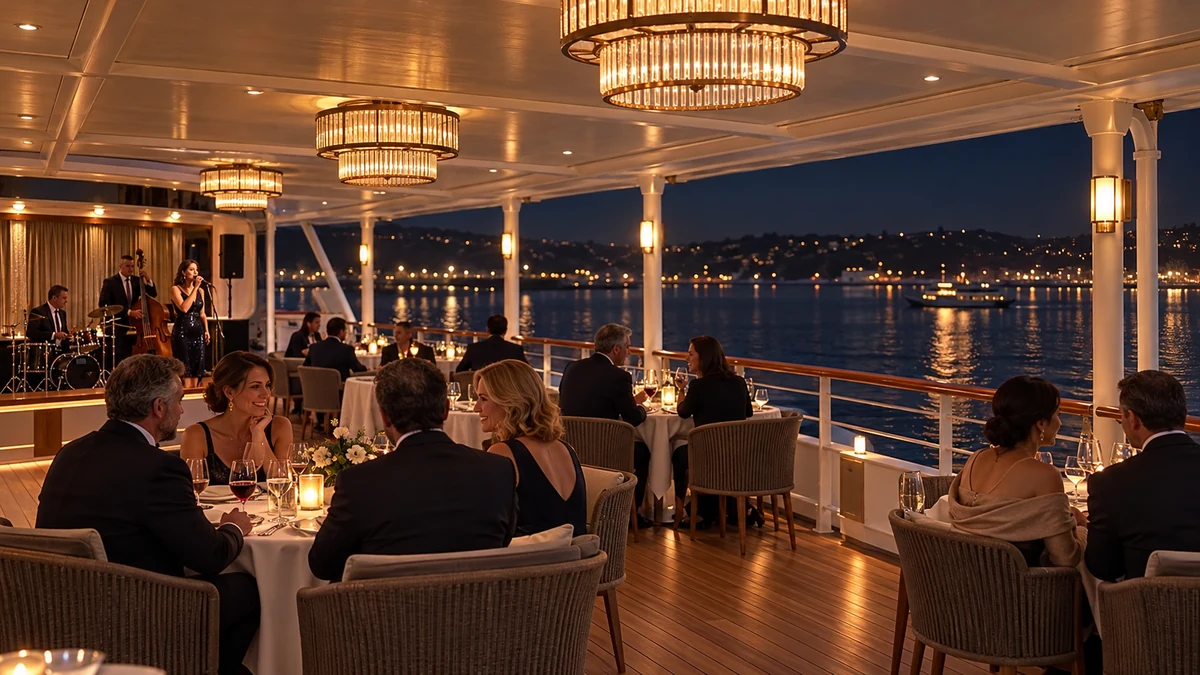
Private events offer a different setting, but their inclusions vary widely. Compare the actual programme and access arrangements rather than relying on promotional descriptions.
Event types and what to check
Performances and themed parties may include live music or decorated spaces. New Year cruises range from short harbour trips to overnight sailings; confirm the route, duration and whether fireworks viewing is part of the plan.
- Private parties: check capacity, seating, age restrictions and what admission includes.
- Larger festivals: compare the current line-up, facilities, running times and access between stages.
- Overnight cruises: confirm the cabin, dining arrangements and programme; short sightseeing cruises may include none of these.
Understanding premium packages
“VIP” is a marketing term, not a standard list of benefits. Ask which of the following are actually included.
- Entry arrangements: a dedicated queue or reserved area may be offered, but security checks and waiting can still apply.
- Food and drinks: confirm the menu, service times, alcohol-free choices and dietary arrangements.
- Assistance: check whether a named host or support team will be available and what help they provide.
- Extras: lounges, tours or artist appearances should be treated as included only when specifically confirmed.
Dress codes and preparation
Read the invitation or venue guidance. Formal clothing may be requested for a gala, while other events are relaxed. Do not assume every cruise or themed party has the same requirements.
- Clothes: choose something comfortable that meets the stated code and suits the temperature.
- Footwear: plan for standing or walking; on boats, follow the operator’s advice and choose stable footwear with suitable grip.
- Behaviour: respect reserved areas and follow staff instructions.
Booking and comparing value
Popular events can sell out early. Compare the full cost, check the organiser’s identity and read recent independent feedback before paying.
- Advance booking: it may give more choice, but does not guarantee the lowest price.
- Packages: compare bundled transport or parking with separate options, including fees and practical access restrictions.
- Cancellation: read deadlines, refund exclusions and what happens if weather affects the event.
During the event
Keep essential details and supplies accessible, and know how your group will get home.
- Arrival: follow the stated boarding or admission time rather than assuming arriving first gives a better seat or view.
- Useful items: required identification, payment method, phone charger and personal medication, subject to event rules.
- Food and drink: keep water available and ask about ingredients and safe food handling where relevant. Use a transport plan that does not depend on drinking and driving.
Accessibility and additional needs
Ask specific questions before booking. For boats, confirm boarding access as well as facilities once aboard.
- Mobility: check step-free routes, lifts, seats and accessible toilets rather than relying on a general accessibility label.
- Emergencies: locate staff, first-aid points and exits, and follow crew instructions on a vessel.
- Group support: agree supervision for children and any requested assistance for adults. Offer alcohol-free choices without pressure.
Planning the trip: budget and reservations

Decide what matters most: the destination, the kind of celebration and the total you can comfortably spend. Include the days around New Year’s Eve, when closures or limited transport may affect plans.
Building a realistic budget
List actual estimates rather than applying fixed percentages to every destination. A simple spreadsheet can help you compare the full cost.
- Transport: include flights or trains, baggage, airport transfers and the journey back from the event.
- Accommodation: allow for the number of nights, taxes and any minimum-stay requirement.
- Tickets: include admission, booking fees and any separately charged extras.
- Food and other costs: include meals, insurance and a contingency for unexpected changes.
When and where to book
Start researching early enough to compare options and confirm the event. There is no reliable universal booking window that guarantees the cheapest fare.
- International travel: compare dates and total fares, including baggage and change fees, well before your intended trip.
- Domestic travel: check holiday demand, engineering work and service announcements before choosing tickets.
- Hotels and cruises: compare availability and written cancellation terms; “free cancellation” may have a deadline or other conditions.
- Event tickets: buy from the organiser or a seller explicitly authorised by them.
Documents, insurance and booking terms
Check official destination guidance and your bookings together so that dates, names and requirements match.
- Passport: check the validity rules for your nationality and destination; a six-month rule does not apply universally. Source: UK Government — foreign travel checklist
- Entry permission: confirm whether you need a visa, electronic authorisation or other documentation, including for transit.
- Travel insurance: choose suitable cover and read limits and exclusions. Medical care, cancellation and baggage cover vary; disclose relevant conditions as required by the insurer.
- Booking policies: read refund, cancellation and date-change rules before payment.
Ways to compare costs
A few comparisons may identify savings, but evaluate the whole journey and your comfort rather than price alone.
- Flexible dates: compare nearby arrival and departure dates, allowing for extra accommodation costs.
- Packages: compare combined flight-and-hotel offers with separate bookings on equivalent terms.
- Points: check availability, taxes and fees before assuming a loyalty redemption offers good value.
- Accommodation choices: compare guesthouses, apartments and hotels, including location, transport, cleaning fees and cancellation terms.
Practical arrangements before departure
Plan the journey from arrival to the event and back, including what happens if a service is delayed.
- Airport transfer: check public transport hours or book an appropriate transfer, confirming holiday and late-night charges.
- Check-in: use online check-in where available, while allowing time for required document checks and baggage.
- Meals: book popular dinners where necessary and confirm the time and access route.
- Connectivity: compare roaming, local SIM or eSIM options and save key information offline.
A practical packing checklist
- Documents: required originals, entry permissions and secure backup copies. A digital copy does not replace a passport or other required original.
- Payments: a suitable card and backup method, with modest local cash where useful.
- Health: personal medication, insurance details and any destination-required health documentation.
- Equipment: a compatible plug adaptor and permitted charger or power bank; check airline battery restrictions.
- Clothing: weather-appropriate layers, comfortable footwear and any event-specific items.
Local New Year traditions
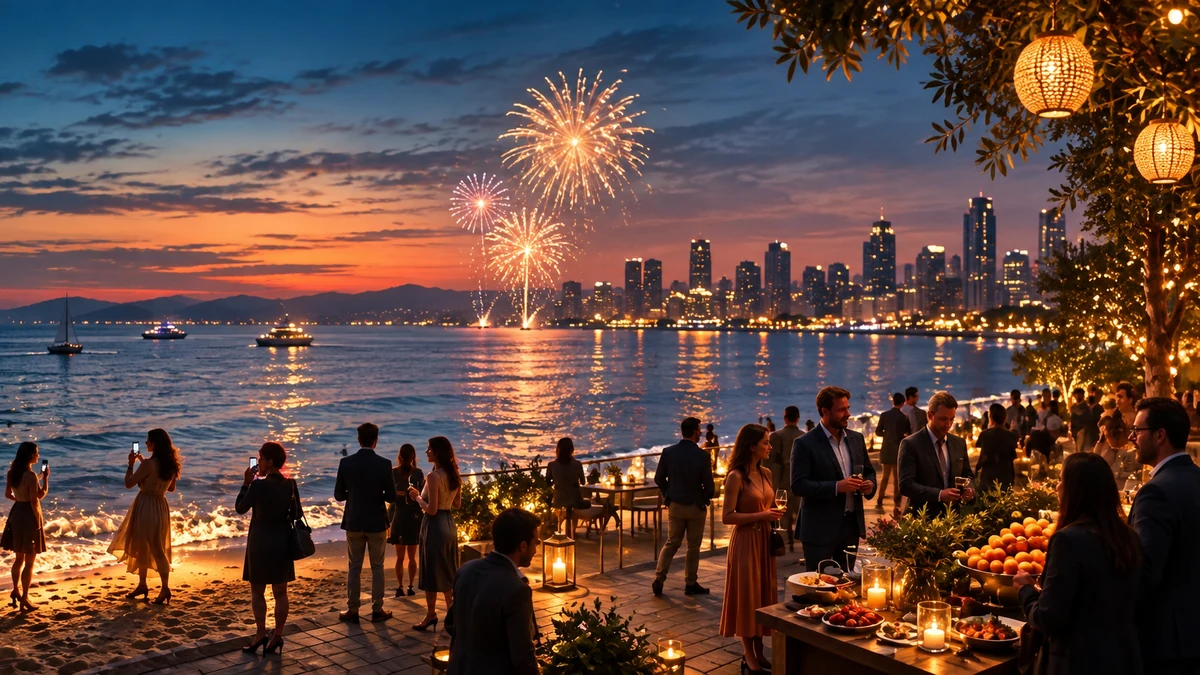
Customs differ between households and regions as well as countries. These examples describe cultural beliefs and celebrations, not promises of luck or instructions that every visitor should copy.
Symbols of good fortune
- Spain: twelve grapes are associated with the midnight chimes and months ahead. Avoid an eating race; a non-food adaptation is sensible for children or anyone at risk of choking.
- Italy: red underwear is one familiar New Year good-luck custom, alongside foods such as lentils. Participation is entirely personal.
- The Philippines: round fruits and polka-dot clothing feature in some households’ celebrations as symbols of abundance, rather than guarantees of wealth.
Food and its meanings
Sharing a traditional dish can express hopes for the coming year. Ask about local and family meanings rather than assuming a single national rule.
- Brazil and Italy: lentils are associated with abundance in many New Year celebrations, with recipes varying by household.
- Germany: small marzipan pigs are a recognised good-luck gift around New Year. Check nut allergies before offering them.
- Greece: vasilopita, St Basil’s cake or bread, traditionally contains a lucky coin, not a bean. For a home adaptation, keep the coin outside the food and choose a symbolic winner separately to avoid a choking or injury hazard. Source: Visit Greece — St Basil’s cake
Public celebrations, bells and visits
Sounds, gatherings and first visits have different meanings in different traditions. Observe respectfully and follow local arrangements.
- Japan: the Buddhist New Year’s Eve bell custom, joya no kane, involves 108 strikes at participating temples. Public participation and timing vary by temple. Source: Kiyomizu-dera — New Year’s Eve bells
- Scotland: Hogmanay traditions include first-footing, visiting after midnight with symbolic gifts such as shortbread or coal. Arrange visits with the hosts rather than treating it as permission to call uninvited. Source: VisitScotland — Hogmanay
- Brazilian coastal celebrations: seven waves and wishes are familiar customs, with Afro-Brazilian religious connections deserving respect. Do not enter unsafe water; a reflection on dry land is a suitable alternative.
Other symbolic customs
- Ecuador: año viejo effigies symbolise leaving the old year behind. Observe authorised local celebrations rather than attempting an improvised burning activity.
- Denmark: the royal New Year address and kransekage are recognised parts of celebrations. Accounts of plate-smashing should not be taken as a reason to break crockery at someone else’s home. Source: VisitDenmark — New Year’s Eve
- Colombia and other Latin American communities: carrying an empty suitcase can express a wish to travel. A seated version with a bag or travel photograph works without a late-night dash outdoors.
Taking part respectfully
If you would like to join a custom, ask first and follow the hosts’ guidance. Avoid activities that create litter, fire risks or disturbance. Watching can be just as meaningful as participating.
Safety, clothing and etiquette
The right preparation depends on the event, weather and group. Use the organiser’s instructions alongside these general planning points.
Personal safety
- Keep valuables discreet: avoid displaying expensive jewellery or leaving devices unattended.
- Money and documents: keep secure backups and an appropriate emergency payment option, while carrying required originals when needed.
- Meeting points: agree a location and time in case phones fail or the group separates.
- Routes: use authorised, well-lit routes and follow staff directions rather than taking isolated shortcuts.
Looking after belongings
- Bags: choose a closed bag within the event’s size limits and keep it under your control.
- Wallets: avoid an exposed back pocket and keep payment items secure.
- Devices: keep a record of useful identifying details and enable appropriate security features before travelling.
What to wear
Match clothing to the actual weather and event. A beach celebration in Brazil and a winter waterfront in London require very different preparation.
- Warm-weather beaches: choose suitable light clothing and secure footwear, with sun protection if arriving during daylight. Keep shoes on where litter or sharp objects may be present.
- Outdoor streets and squares: use layers and footwear suitable for the forecast and expected standing time.
- Formal events and cruises: check the stated dress code rather than assuming formalwear is required everywhere.
- Themes and customs: follow any agreed theme comfortably and learn about local expectations in advance.
Etiquette
- Shared space: do not push, jump queues or block reserved and accessible areas.
- Photographs: ask before taking close-up pictures of people and respect restrictions in religious or private spaces.
- Getting home: arrange transport that does not depend on someone drinking and driving. Alcohol-free drinks should be readily available.
- Cultural interactions: observe, listen and ask politely when unsure.
Children, older companions and emergencies
- Children: agree supervision and a lost-child plan, with an appropriate emergency contact kept discreetly on the child.
- Comfort: discuss seating, toilets, noise and waiting time with companions before choosing a venue.
- Emergency plan: identify exits, first-aid points and event staff, and follow their instructions if something changes.
Essentials for the evening
- Documents: required identification, insurance information and emergency contacts.
- Phone: a charged device and a permitted power bank if useful.
- Personal supplies: medication and basic hygiene items that meet entry rules.
- Other items: a suitable backup payment method, weather protection and a small litter bag if permitted.
Choose the celebration that fits your interests and comfort. These practical planning ideas are a starting point; confirm the current programme, ticket conditions and transport before setting off.
Thank you for reading! Follow our social updates and visit the I Love Christmas blog for more celebrations and traditions.
Share your experiences in the comments, and enjoy welcoming the New Year in a way that suits you.
New Year travel: frequently asked questions
How should I buy tickets for popular celebrations?
Use the organiser or an explicitly authorised seller, and check the event date, viewing area and refund terms. Some public celebrations are free, while others require tickets; early booking does not guarantee the lowest price.
What should I consider at street parties and fireworks displays?
Check crowd arrangements, toilets, accessibility and the route home. Keep belongings secure, agree meeting points and respect all barriers and fireworks exclusion zones.
What should I wear?
Follow the event’s dress code and actual weather forecast. Prepare for the expected time outdoors and choose comfortable, stable footwear. Beach and cruise events do not all have the same requirements.
Should I arrange travel insurance for a New Year trip abroad?
Choose appropriate cover before travelling and read the policy carefully. Benefits, limits and exclusions vary; do not assume every cancellation, medical cost or baggage problem is covered.
How can I join local traditions respectfully?
Learn about their meaning, ask hosts or organisers before participating and follow their guidance. Avoid creating litter, fire risks or disturbance, and remember that observing is also a valid choice.
What essentials should I take to the celebration?
Required identification, a suitable payment method, a charged phone, personal medication and weather-appropriate clothing. Check the event’s bag and item restrictions and plan for children’s or companions’ specific needs.
Sources and Further Reading
- Times Square Alliance — New Year’s Eve FAQ
- City of Sydney — New Year’s Eve guide
- Mayor of London — New Year’s Eve
- Shibuya City — cancellation of the 2024 countdown
- GO TOKYO — New Year shrine visits
- Visit Dubai — New Year’s Eve ideas
- Rio City Hall — arrangements for New Year 2026
- UK Government — foreign travel checklist
- Visit Greece — St Basil’s cake
- Kiyomizu-dera — New Year’s Eve bells
- VisitScotland — Hogmanay
- VisitDenmark — New Year’s Eve
- Goethe-Institut — marzipan traditions
- Spain.info — New Year’s Eve
- Italia.it — New Year traditions
- Ecuador Travel — Christmas and New Year traditions
- National Hispanic Cultural Center — New Year traditions
- GMA News — polka dots at New Year in the Philippines