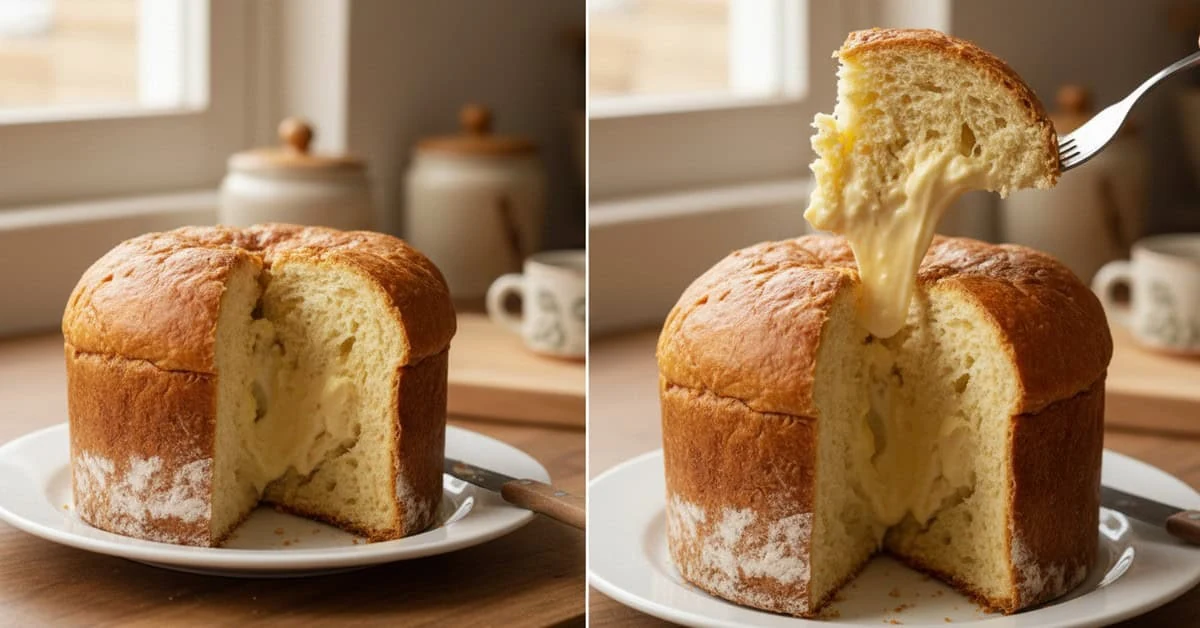
Savoury panettone combines a lightly sweetened yeast dough with a chicken and cheese filling. This Brazilian-style festive bread also works with spinach or mushrooms. Keep the filling fairly dry, seal the dough carefully and bake until both the bread and its centre are cooked through.
This savoury panettone makes a generous addition to a Christmas buffet or a small gathering. It is an enriched, filled bread rather than the familiar fruit panettone. The steps below cover the dough, filling, shaping and serving, with alternatives for different tastes.
Ingredients for filled savoury panettone
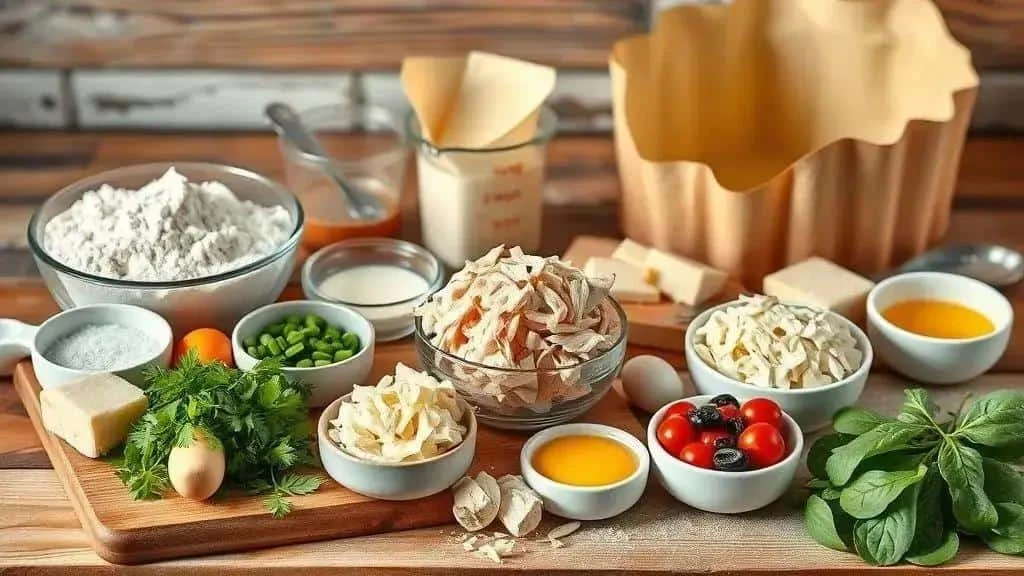
For this filled savoury panettone, weigh the ingredients and prepare two suitable ovenproof bread tins or panettone moulds. The dough and chicken filling together weigh considerably more than 1 kg before baking, so divide them between two loaves rather than overfilling one small mould. Leave plenty of room for expansion.
For the dough
- 450 g strong white bread flour, plus a little for shaping.
- 10 g salt, to season the dough.
- 50 g caster sugar, for a lightly sweetened dough and a golden crust.
- 10 g dried yeast or 30 g fresh yeast. Follow the packet instructions for activation; fast-action yeast can usually be mixed with the flour.
- 200 ml lukewarm milk, not hot. Unsweetened oat drink is an alternative for the dough, but does not make the whole recipe dairy-free.
- 2 eggs, lightly beaten.
- 80 g unsalted butter, softened. Oil changes the dough’s consistency and is not an identical replacement.
- 50 g grated Parmesan, optional. Use a vegetarian hard cheese for a vegetarian version.
- 1 tbsp olive oil, for greasing, plus a little extra for cooking the filling.
For the chicken and cheese filling
- 300 g cooked, shredded chicken, properly cooked and safely chilled if prepared ahead.
- 200 g full-fat cream cheese. Well-drained, mashed ricotta gives a different, less smooth filling.
- 50 g grated mozzarella, preferably the lower-moisture variety sold for cooking.
- 1 garlic clove, finely chopped.
- ½ medium onion, finely chopped.
- 1 tbsp chopped parsley and chives.
- Salt and freshly ground black pepper, to taste.
Alternative fillings
- Ham and cheese: 150 g chopped cooked ham and 150 g grated mozzarella.
- Spinach and ricotta: 200 g cooked spinach, thoroughly squeezed dry, and 200 g mashed ricotta.
- Sun-dried tomatoes and olives: 100 g drained, chopped sun-dried tomatoes and 50 g chopped black olives.
- Mushroom filling: 150 g mushrooms, sautéed until their released liquid has evaporated, and 100 g cream cheese.
To finish
- 1 egg yolk, beaten with a little water for brushing. Olive oil is an alternative glaze, but the dough still contains eggs.
- Sesame seeds or linseed, optional.
Ingredient notes and substitutions
- Milk: lactose-free milk can replace ordinary milk, but check the butter and every cheese too if lactose is a concern. Lactose-free dairy is not suitable for a milk allergy.
- Butter: a suitable baking alternative changes the texture. A vegan version also requires an egg-free dough and entirely plant-based filling; changing the butter alone is not enough.
- Cheese: lower-moisture mozzarella melts well without adding as much water as fresh mozzarella in brine.
- Protein: well-drained tinned tuna can replace chicken for a different filling.
Preparation tip: group the ingredients for the dough, filling and glaze before starting.
How to make filled savoury panettone
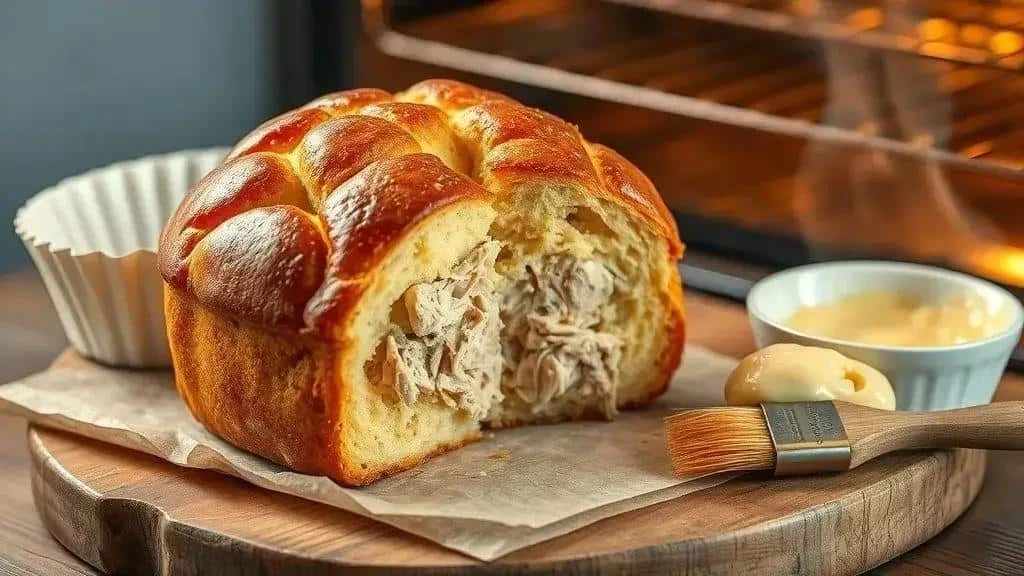
Prepare the filled savoury panettone in stages. Rising and baking times are guides: dough temperature, mould size and your oven all affect them.
- Prepare the yeast: if your dried yeast needs activating, mix it with 50 ml of the measured lukewarm milk and 1 tsp of the measured sugar. Leave for 5–10 minutes, or follow its packet instructions. Mix fast-action yeast into the flour if directed.
- Combine the dry ingredients: mix 450 g flour, 10 g salt and the remaining sugar in a large bowl. Add the optional grated hard cheese.
- Add the eggs and milk: make a well, then add the beaten eggs, prepared yeast and remaining milk. Mix to a soft dough; hold back a little milk initially if your eggs are large, adding it as needed.
- Work in the butter: add the softened butter gradually and knead until the dough is smooth and elastic. Allow roughly 10–15 minutes by hand or 6–8 minutes with a dough hook, checking the dough rather than relying only on time.
- First rise: shape into a ball and place in a lightly oiled bowl. Cover and leave somewhere comfortably warm until doubled, usually 1–1½ hours but sometimes longer.
-
Prepare the filling
Chicken and cheese: soften the onion and garlic in a little oil, then cool them promptly. Mix with the cooked chicken, cream cheese, mozzarella, parsley and chives; season lightly. Keep covered in the fridge until shaping. Avoid repeatedly heating and cooling cooked chicken.
- Divide and roll: gently deflate the risen dough on a lightly floured surface and divide it in two. Roll each portion into a thick disc large enough to enclose half the filling without stretching thin.
-
Fill and seal the loaves
Add the filling: divide the cold filling between the centres of the two discs, leaving a clear border. Bring the dough edges together, pinch firmly and place each loaf seam-side down in its prepared tin or mould.
- Second rise: cover loosely and leave until visibly puffed, approximately 40–60 minutes. Keep this stage short with perishable fillings; do not leave filled loaves rising overnight on the worktop. Include preparation time when tracking how long the filling has been out of the fridge.
- Glaze and decorate: brush with the beaten egg yolk and sprinkle with seeds, a little grated cheese or herbs if using.
- Bake: preheat the oven to 180°C conventional or 160°C fan. Begin checking after 35–45 minutes; deep moulds may need longer. Loosely cover with foil if the tops brown before the centres are ready.
- Check the centre: the bread must be baked through, not doughy, and the filling piping hot throughout. A clean food thermometer should show at least 75°C for 30 seconds in the coldest part of the filling. A skewer alone cannot establish that a chicken filling is safely heated.
- Rest and slice: leave in the tins for about 10 minutes, then transfer carefully to a rack. Let the filling settle before cutting, while keeping any portions for storage on track to be refrigerated within two hours of baking.
- Serve safely: serve freshly baked slices warm, taking care with the hot filling. If previously cooked chicken was used, baking is its reheating step; do not reheat those leftovers again. Cool and chill them promptly, then eat cold within 48 hours.
- For beginners: use a scale, keep the milk lukewarm rather than hot and watch how the dough rises. Never taste raw dough containing flour and eggs.
Choosing and preparing different fillings
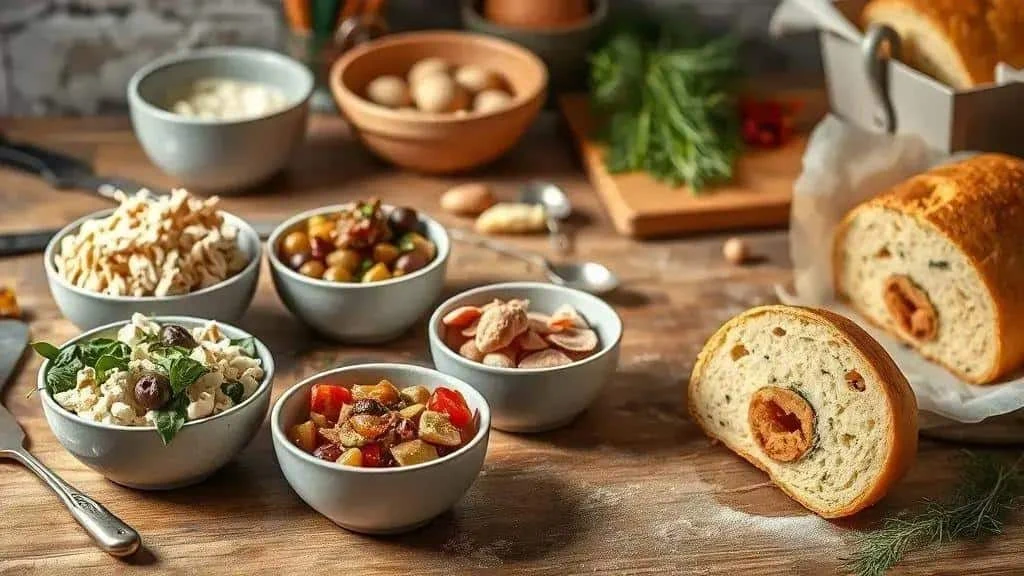
Choose a filling that holds together without leaking liquid. A balance of cheese, herbs and well-drained vegetables is easier to seal inside the dough.
Filling ideas
- Creamy chicken: 300 g cooked shredded chicken, 150–200 g cream cheese, ½ softened onion, parsley and pepper. Chill until needed.
- Spinach and ricotta: 200 g cooked, thoroughly drained spinach, 200 g mashed ricotta and a little grated nutmeg.
- Ham and cheese: 150 g chopped cooked ham and 150 g grated mozzarella. Add a small spoonful of cream only if needed to bind; avoid a wet filling.
- Sautéed mushrooms: 200 g mixed mushrooms cooked with a garlic clove, then cooled and combined with 100 g cream cheese and herbs.
- Sun-dried tomatoes and olives: 100 g drained, chopped sun-dried tomatoes, 50 g sliced olives and 100 g cheese of your choice.
- Tuna: two drained tins of tuna, a little chopped red onion and up to 3 tbsp Greek yoghurt or mayonnaise, using only enough to bind.
- Plant-based filling: 200 g chopped roasted vegetables and 150 g houmous or smooth tofu. Use with a separately tested vegan bread dough if the whole loaf must be vegan.
Preparing a creamy filling
- Cook the aromatics: soften the onion and garlic in a little oil without allowing the garlic to burn.
- Cook vegetables properly: sauté mushrooms or vegetables until excess liquid has evaporated. Chicken must already be fully cooked; do not put raw poultry into the bread filling.
- Bind the mixture: after promptly cooling the cooked ingredients, fold in cream cheese, ricotta or houmous. Start with a smaller quantity and stop when the mixture holds together.
- Season lightly: add pepper, herbs and a little lemon juice if wanted. Taste only ingredients that are already safe to eat, before they touch raw dough.
- Chill before shaping: spread freshly cooked filling ingredients in a shallow container so they cool quickly, then refrigerate. Do not leave them out for hours waiting to become completely cold.
Assembly and storage tips
- Divide the filling: share the main chicken mixture between the two loaves. If a dough portion will not close comfortably, use less filling and refrigerate the remainder separately rather than forcing it in.
- Remove excess moisture: squeeze spinach well and drain tomatoes, olives and tinned ingredients before mixing.
- Seal firmly: pinch the dough edges together and put the seam underneath so the filling is less likely to escape.
- Taste before assembly: check the chilled, ready-to-eat filling’s seasoning before it comes into contact with raw dough.
- Freezing fillings: freeze suitable freshly prepared fillings in small portions. Dairy mixtures may separate after thawing. Defrost in the fridge and use within 24 hours; freezing does not reset a filling that has already been stored too long.
- Reheating: where a loaf is suitable for reheating, heat portions until piping hot throughout, not merely warm on the surface. Do not reheat a chicken-filled loaf again if baking already reheated cooked chicken.
- Portions: offer small slices for a buffet, cutting larger slices into manageable pieces. The amount needed depends on the rest of the meal.
Simple swaps: drained ricotta can replace cream cheese, olive oil can be used for sautéing, and drained tinned tuna offers an alternative to chicken.
Savoury panettone variations: meat and vegetarian fillings

Meat and fish fillings
Creamy chicken
- 300 g cooked, shredded chicken, properly cooked and safely chilled if prepared ahead.
- 150–200 g cream cheese, or well-drained mashed ricotta for a different texture.
- 50 g grated mozzarella, to add a little stretch when freshly baked.
- ½ chopped onion and 1 garlic clove, softened in a little olive oil and cooled before mixing.
- Parsley and chives, chopped and added to taste.
Ham, cheese and herbs
- 150 g cooked ham, cut into small pieces.
- 150 g grated mozzarella or another mild melting cheese.
- 1 tbsp cream, optional, if needed to bind the mixture.
- Fresh oregano or thyme, about 1 tbsp chopped, or less to taste.
Calabresa sausage and caramelised onion
- 200 g Brazilian calabresa sausage, chopped and cooked according to its packaging, then drained of excess fat. A suitable smoked sausage can be used instead; do not assume every smoked sausage is ready to eat.
- 1 medium onion, sliced and slowly softened. A little sugar is optional rather than essential for caramelisation.
- 50–80 g mozzarella or queijo coalho, a Brazilian firm cheese, if available.
Tuna and herbs
- 2 tins of tuna, thoroughly drained. Check tin sizes and use only enough filling for the dough to close easily.
- Up to 3 tbsp mayonnaise or Greek yoghurt, added gradually to bind without making the filling wet.
- Chives and a little lemon juice, to taste.
Vegetarian fillings
Spinach and ricotta
- 200 g cooked spinach, squeezed thoroughly to remove excess water.
- 200 g ricotta, drained and mashed, or cream cheese for a smoother filling. Check that all cheeses used are suitable for vegetarians.
- Nutmeg and salt, to taste.
Sautéed mushrooms and goat’s cheese
- 200 g mixed mushrooms, sautéed in olive oil with a garlic clove until their liquid has evaporated.
- 100–150 g soft goat’s cheese, or plain cream cheese if preferred.
- Thyme or parsley, about 1 tbsp chopped, adjusting to taste.
Sun-dried tomatoes, olives and rocket
- 100 g chopped sun-dried tomatoes, drained, or soaked and drained if using dry-packed tomatoes.
- 50 g sliced black olives, pitted.
- A handful of fresh rocket, served alongside the baked bread rather than sealed into a wet filling.
Plant-based filling: roasted vegetables and houmous
- 200 g roasted courgette, aubergine and pepper, chopped and drained of excess liquid.
- 150 g houmous or smooth tofu, for binding. Tahini is much more concentrated and is not an equivalent replacement by weight.
- Herbs and black pepper, to taste. Pair with an appropriate vegan dough if required.
Tips for adapting fillings
- Avoid excess liquid: drain vegetables thoroughly so they do not leave a damp layer inside the bread.
- Do not overfill: the alternative mixtures vary in volume. Divide between the dough portions and stop before the dough becomes difficult to seal; store any spare filling separately.
- Use chilled filling: take it from the fridge shortly before shaping rather than leaving perishable ingredients on the worktop during the first rise.
- Close the seam: press the edges firmly together so the loaf remains closed as it rises and bakes.
- Check the flavour: taste the safe, ready-to-eat filling before assembly. Add lemon juice sparingly to balance rich cheese without making the mixture watery.
- Dietary swaps: replacing one cheese does not make the complete loaf vegan or dairy-free. Check the dough, filling and glaze, including eggs, butter and any hard cheese.
Slicing and presenting savoury panettone

- Slice carefully: use a large serrated knife once the filling has settled. Slices about 1.5–2 cm thick can be cut into smaller buffet portions.
- Serving temperature: serve freshly baked bread warm, or properly chilled leftovers cold. Do not leave filled bread at room temperature throughout a long party.
- Allow for the menu: one or two small slices may be enough alongside other starters; offer more if the bread is a substantial part of the meal.
Arrange the serving platter
- Choose the base: use a clean serving board, rectangular plate or pale platter that shows the filling clearly.
- Arrange the slices: place in short rows or a fan, grouping each filling separately.
- Add small bowls: mustard, chutney or pesto can be served alongside, with their allergens identified.
- Provide small forks: use buffet forks or food-safe picks for bite-sized pieces, keeping sharp picks away from young children.
- Garnish: finish with chopped parsley, chives or a little grated cheese.
- Add contrast: offer fresh salad or crisp vegetables. Keep nuts separate and clearly labelled if serving them.
Ideas for a party buffet
- Offer variety: combine the bread with a small cheese platter, salads or other starters rather than filling the table with several very similar dishes.
- Use safe stands: a stable cake stand or raised platter adds height without making serving awkward.
- Label fillings: clearly identify ingredients and relevant allergens so guests do not have to guess.
- Leave room to serve: space out platters and utensils so guests can reach each dish easily.
Transport and holding
- Pack carefully: put chilled slices in shallow, covered food containers, with baking parchment between layers if needed.
- Keep refrigerated: store filled bread at 5°C or below until needed. Put out small batches and replenish from the fridge rather than displaying everything at once.
- Heating at the venue: only reheat portions that have not already been reheated, and heat them thoroughly. Bread baked with previously cooked chicken should be served freshly baked or chilled afterwards, without another reheating.
- Freezing: cooked, promptly cooled portions can be frozen in suitable packaging. Freezing raw dough with a perishable filling complicates thawing and proving, so it is not the recommended make-ahead method here.
Finishing touches
- Clean utensils: provide tongs, a serving knife and napkins, keeping utensils for different fillings separate.
- Presentation: wipe the platter edges and leave enough space for guests to lift a slice without touching the others.
- Drinks: offer sparkling water or iced tea as well as any adult wine or beer pairings.
- Final garnish: a few fresh herbs are enough. Mention sesame if you have added it to the crust.
Storing, reheating and transporting savoury panettone
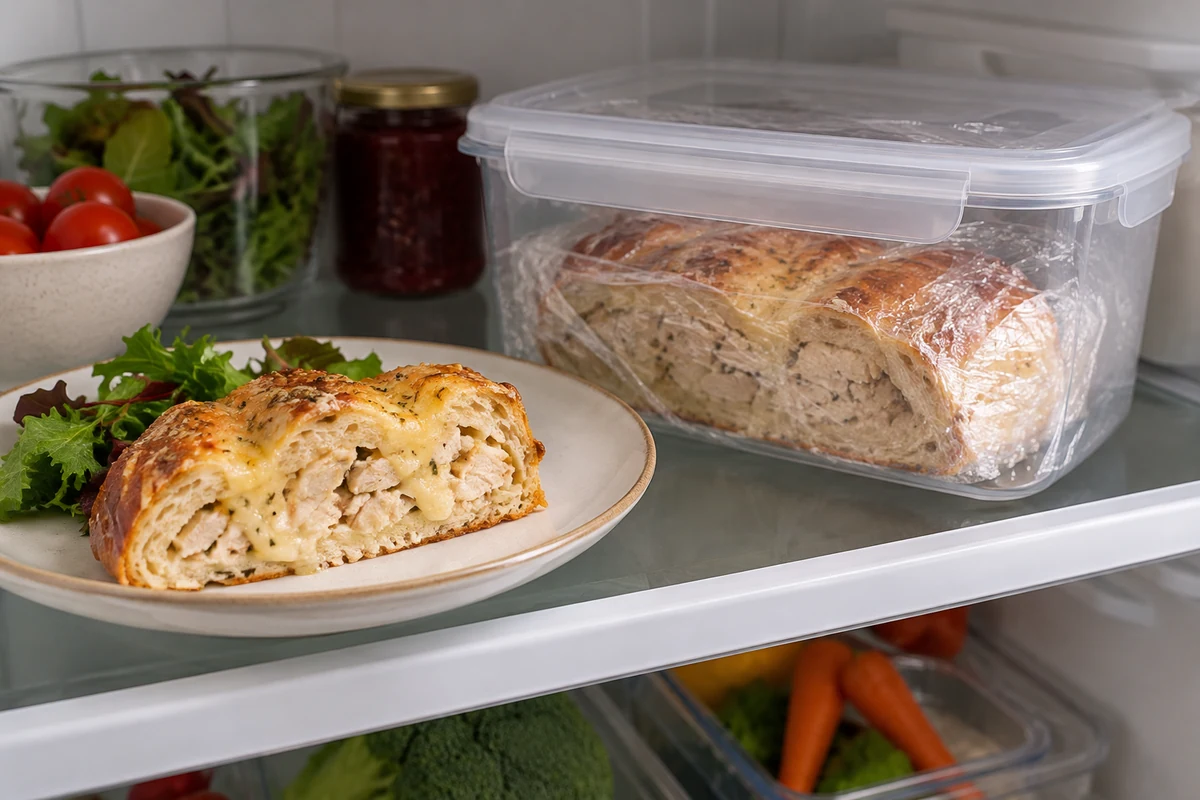
Treat this filled bread as a perishable cooked dish, not as a plain loaf that can sit in a bread bin for several days.
Storage
- Refrigeration: cool promptly and refrigerate at 5°C or below within two hours. Eat within 48 hours or freeze; use an earlier deadline if an ingredient was already close to the end of its safe storage time.
- Room temperature: keep time out of refrigeration as short as possible. This is not a bread to leave on the table for six hours, particularly with chicken, fish or soft cheese inside.
- Freezing: wrap cooled portions well and place in a freezer bag or airtight container. Aim to use within two months for quality. Thaw in the fridge and eat within 24 hours of full defrosting.
- Packaging: protect cut surfaces with suitable food wrap, then place in a covered container to limit drying and odour transfer.
- Moisture control: thoroughly drain vegetables before making the filling. Do not seal a steaming hot loaf tightly and leave it cooling slowly on the worktop.
Reheating suitable portions
- First check: only reheat food once. Baking a loaf filled with previously cooked chicken counts as that chicken’s reheating, so its leftovers should be eaten cold after safe chilling, not warmed again.
- Oven: for portions suitable for reheating, use a moderate oven and cover loosely with foil if the crust is browning. Small portions heat more evenly than a whole filled loaf; continue until the centre is piping hot.
- Sandwich toaster: a browned surface is not proof of a hot filling. Use only if the appliance can heat the portion thoroughly, and check the centre.
- Microwave: use a microwave-safe plate, turn portions as needed and allow the recommended standing time. Check several places for cold spots; a fixed few seconds is not a reliable safety instruction.
- Temperature check: a clean food thermometer can confirm that the coldest part reaches 75°C for 30 seconds, or another equivalent safe time–temperature combination.
- Heat only what you need: smaller portions reduce repeated heating and help protect the bread’s texture. Do not return reheated leftovers to storage for another reheating.
Transport
- Short journeys: carry chilled filled bread in an insulated bag with ice packs, even on a relatively short trip. Keep the containers upright and closed.
- Longer journeys or warm weather: use a well-insulated cool box with enough frozen packs to maintain refrigerator temperature, and refrigerate on arrival.
- Stop containers moving: use a non-slip liner or clean packing around sealed containers, with parchment between slices if necessary.
- Avoid crushing: use shallow, rigid containers rather than stacking soft loaves under heavy dishes.
- Plan ahead: check that the venue has refrigeration. Keep food in the cool box until it can go straight into a fridge or onto a small serving platter.
Practical food-safety reminders
- Do not taste-test safety: harmful bacteria need not change a food’s smell or appearance. Discard food if its storage history is unsafe or uncertain; tasting it cannot resolve that uncertainty.
- Leftovers: refrigerate promptly and follow the 48-hour limit. Food left out for an unsafe period is not made safe simply by chilling it later or promising to eat it the next day.
- Date the container: record preparation and freezing dates and note whether the filling has already been reheated.
Drink pairings and portion planning

- Creamy chicken: adults might enjoy a dry sparkling wine, a light Sauvignon Blanc or lager. Sparkling water with lemon is a simple alcohol-free choice.
- Ham and cheese: try a dry rosé, light Pinot Noir or pilsner for adults, or chilled apple juice diluted with sparkling water.
- Calabresa and caramelised onion: an amber ale or fruity red wine can suit the rich filling. Grape juice offers an alcohol-free alternative.
- Spinach and ricotta: an unoaked Chardonnay or fresh rosé is one option for adults; lemon iced tea works well too.
- Mushrooms and goat’s cheese: consider Chenin Blanc or wheat beer for adults, or sparkling water with fresh herbs.
- Sun-dried tomatoes and olives: a light red, rosé or saison can complement the savoury filling. For an alcohol-free choice, serve a clearly labelled alcohol-free drink rather than assuming fermented drinks contain no alcohol.
- Plant-based filling: a lemon-and-herb mocktail is a refreshing match. Check beverage suitability if catering for strict vegan diets.
How much to serve
- As a starter: allow roughly one or two small slices alongside other dishes, adjusting for appetite and slice size.
- As a larger part of the meal: offer more bread if there are few other dishes. Do not use the same allowance for a light canapé and a main buffet item.
- Slice weight: a portion might weigh around 60–80 g, but weigh a sample from your own loaf for a useful estimate.
- Planning example: 30 guests having two slices each need 60 slices. Divide that by the actual number of slices you get from each loaf rather than assuming every mould gives the same yield.
Pairing and serving tips
- Offer a choice: always provide appealing alcohol-free drinks, whether or not you also serve wine or beer.
- Drink temperatures: serve whites and sparkling wines chilled, lighter reds slightly cool and beer according to its style. These are flavour preferences, not rigid rules.
- Accompaniments: small bowls of chutney, Dijon mustard and pickles add contrast without changing the loaf itself.
- Identify allergens: check every ingredient for wheat, milk, eggs, fish, sesame, nuts and other relevant allergens. Milk allergy and lactose intolerance are different; do not label dairy as safe merely because it is lactose-free.
- Arrange by filling: group slices on separate platters with clear labels and separate serving utensils.
- Check the pairing: taste a freshly prepared, safely handled slice with your chosen drink to decide which accompaniments you prefer.
Final thoughts
Filled savoury panettone offers a festive alternative to ordinary buffet bread. A well-developed dough, a filling without excess liquid and careful storage matter more than elaborate decoration. Choose one filling to begin with and note how it works in your own tins and oven.
Thank you for reading. Visit I Love Christmas for more festive recipes and ideas, and follow our social channels for inspiration.
If you make the bread, share which filling you chose and how you served it. Your experience can help other readers plan their own Christmas table.
Filled savoury panettone: frequently asked questions
How should I store filled savoury panettone after baking?
Cool promptly and refrigerate at 5°C or below within two hours. Eat within 48 hours or freeze. Do not keep chicken, fish or soft-cheese-filled bread on the worktop for six hours.
Can I freeze the filled bread?
Yes, freeze promptly cooled cooked portions in suitable airtight packaging. Aim to use within two months for quality. Thaw in the fridge and eat within 24 hours; freezing does not make an improperly stored filling safe.
How can I reheat it without drying the bread?
Only reheat food once. If baking already reheated cooked chicken in the filling, eat safely chilled leftovers cold instead. For portions that are suitable for reheating, heat in a moderate oven, loosely covered if needed, until piping hot throughout; time depends on portion size.
Which fillings are least likely to make the dough soggy?
Use well-drained ingredients bound with a modest amount of cream cheese or ricotta. Squeeze cooked spinach dry, cook away mushroom liquid and drain tuna thoroughly before mixing.
How many slices should I allow per guest?
One or two small slices can work alongside other starters; allow more if the bread forms a larger part of the meal. Check the weight and number of slices from your own loaf before calculating a large batch.
Can I prepare the filling ahead?
Yes, prepare it the day before, cool any cooked ingredients promptly and refrigerate covered at 5°C or below. Use within 48 hours of preparation, or sooner if an ingredient requires it. Keep it chilled until shaping and avoid repeated reheating.
Sources and Further Reading
- Food Standards Agency: cooking and reheating food
- Food Standards Agency: chilling, freezing and defrosting