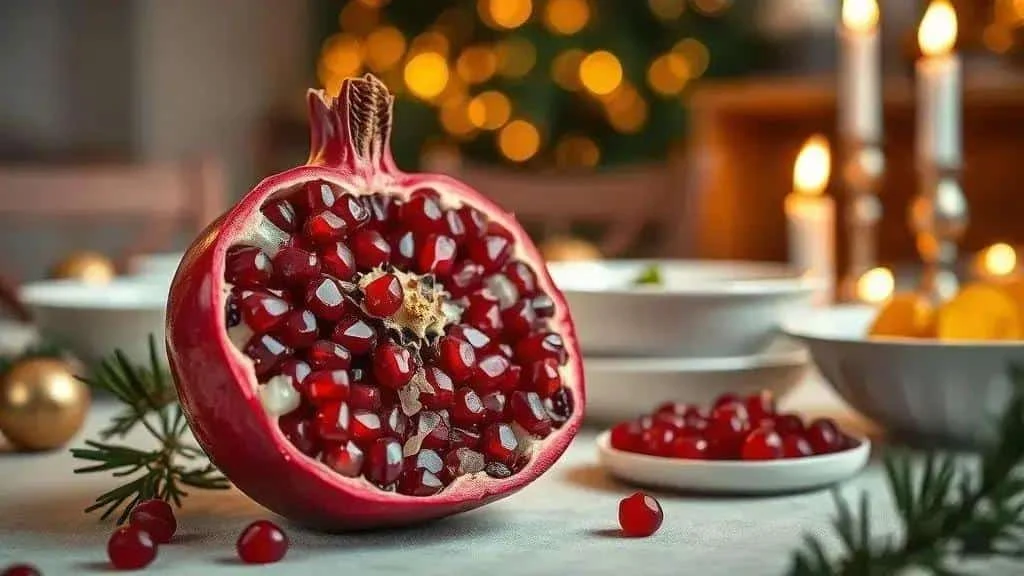
Pomegranates at New Year can symbolise abundance, renewal and hopes for prosperity. Displaying the fruit or serving its juicy seeds is a way to express those wishes, not a proven means of attracting wealth. Keep edible fruit separate from decorations and follow appropriate food-storage and preparation guidance.
Have you seen pomegranates at New Year displayed on a table or included in a family custom? This guide explores the symbolism alongside practical recipes and decorating ideas, without treating a tradition as a promise of good fortune.
Illustrations in this article are conceptual images, not documentary photographs or evidence of a particular historical event, destination, venue or access route.
Pomegranates in popular culture: origins and symbolism
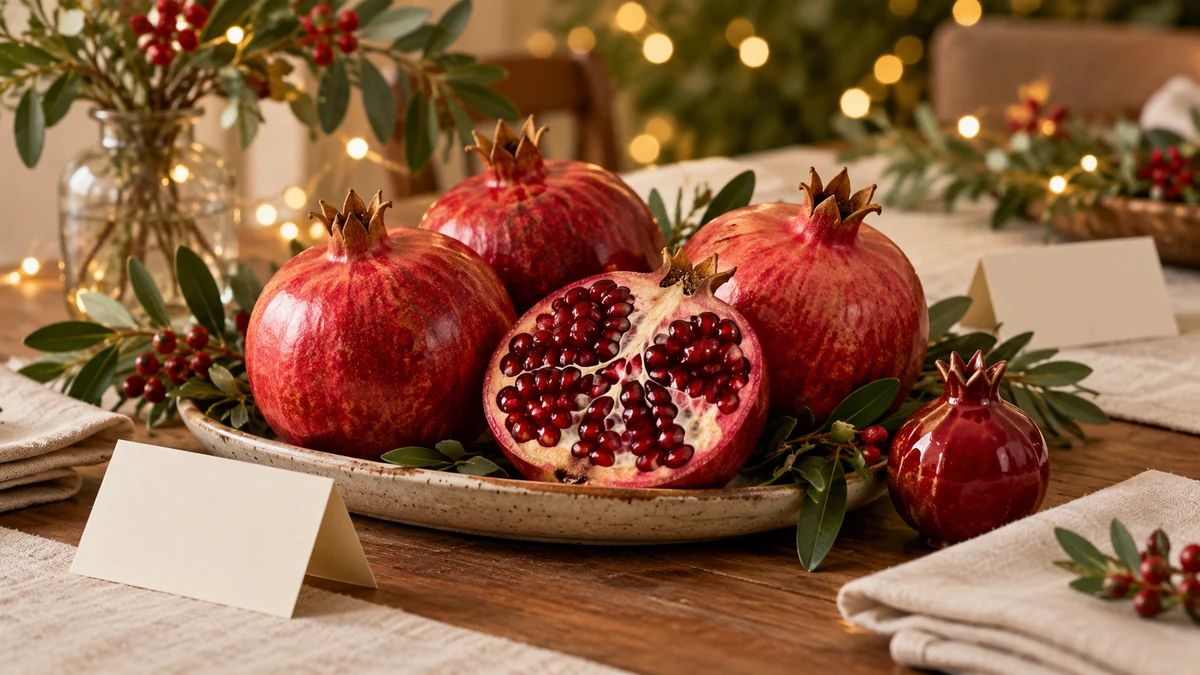
The pomegranate has a long history as both a food and a symbol. Its many jewel-like arils—the juicy coverings around the seeds—make it an appealing image of abundance and continuity.
The symbolism of the seeds
Numerous seeds inside one fruit lend themselves to ideas of fertility, plenty and family life. These are cultural interpretations rather than predictions about money, children or anyone’s future.
Cultural and seasonal traditions
A documented example is the Greek New Year custom of breaking a pomegranate at the doorstep, described by Greece’s official tourism organisation. Customs vary between communities and households; there is no single ritual followed by everyone. Source: Visit Greece: Christmas and New Year traditions
Pomegranates in everyday celebrations can appear in food, decorative objects and family customs. Placing one on a table can express a personal wish for togetherness without claiming that the fruit changes events.
Regional and family variations
Some households eat the fruit, some display it and others use a decorative pomegranate. Treat the particular practices you encounter as local or family traditions rather than universal rules.
Learning about these differences can make a simple seasonal custom more meaningful, especially when people explain what it means to them.
Simple ways to include pomegranates at New Year
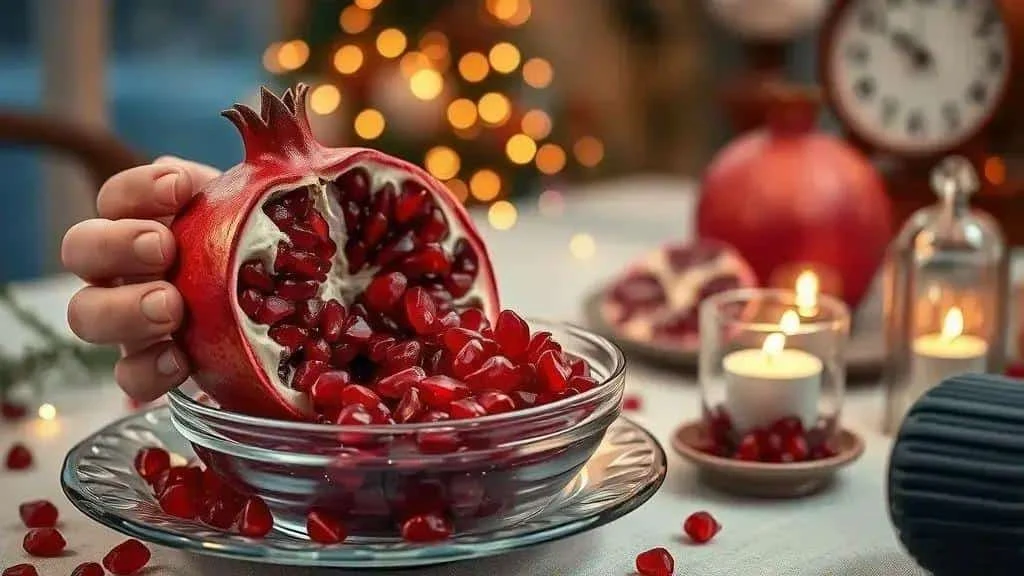
You can use the fruit as a symbol without a complicated ceremony. The following are optional ideas for your own gathering, not instructions required by a particular religion or culture.
Practical ideas
- Display a whole pomegranate: place it on a clean dish on the main table or another stable surface away from a walkway, as a symbol of plenty.
- Open a pomegranate around midnight: an adult can prepare it safely in the kitchen and bring the arils to the table. Counting seeds can be a personal activity, but cannot predict good fortune.
- Share a small serving: offer the prepared fruit to guests for whom it is suitable, as a gesture of welcome rather than a way to attract supernatural benefits.
- Add it to the meal: use arils in salads or desserts, or pomegranate juice in an alcohol-free festive drink.
- Keep a symbolic reminder: choose a paper or ceramic pomegranate for a lasting keepsake. Do not keep fresh fruit or damp seeds in a fabric bag throughout the year, where they can spoil.
Handling and safety
- Wash the fruit: rinse it under running water before cutting and use clean hands, tools and surfaces.
- Protect surfaces: use a stable chopping board and an apron; pomegranate juice can stain.
- Children: choose a texture appropriate to the child’s eating stage and supervise them seated while eating. Mixing whole seeds into soft food does not remove a choking risk; use a suitable smooth alternative if needed.
- Allergies and medicines: ask guests about food allergies. Anyone concerned about a medicine or supplement interaction should consult a pharmacist or clinician, particularly before using extracts or concentrated products.
- Lighting: use suitable LED candles with secure battery compartments for a flame-free display, keeping batteries away from children.
- Cultural respect: learn how a custom is understood by the people who practise it, and describe your own adaptation honestly.
A simple presentation: serve edible arils in a clean food-safe bowl and keep a cloth ready for spills. Use a non-breakable bowl where children may knock it over.
Seeds as symbols of prosperity, abundance and affection
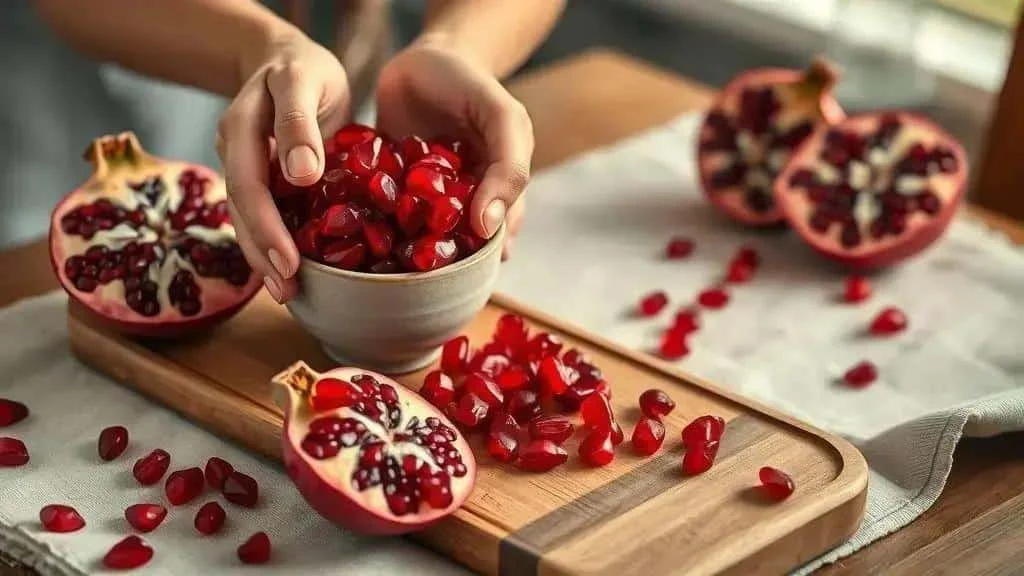
Pomegranate seeds are often interpreted as symbols of prosperity, abundance and affection. Their colour and number make these easy associations, but the meaning depends on the person or tradition.
Prosperity as a symbolic intention
Some popular customs involve counting or keeping a particular number of seeds. There is no universal number or evidence that this changes financial outcomes. If the activity appeals to you, use it as a reminder of a practical goal and choose a non-perishable keepsake instead of storing damp fruit.
Abundance at the table
Adding arils to a salad or dessert brings colour to the meal. Their bright appearance can support a festive theme without needing a claim about luck.
Affection and family connections
Sharing prepared fruit can be a simple gesture of hospitality. Ask guests what their own seasonal foods mean to them rather than assigning one interpretation to everyone.
A thoughtful interpretation
Treat the symbolism as a prompt, not a certainty. Pair your hopes with practical choices, such as planning a household budget or making time for relationships. The custom can be meaningful without promising a particular result.
Pomegranate recipes for a festive meal
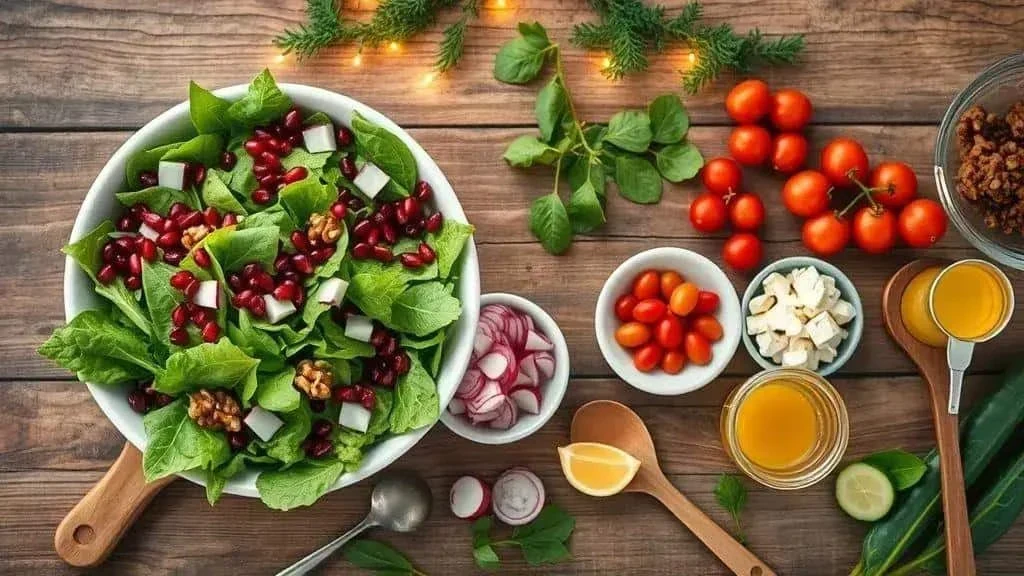
Pomegranate adds colour and a sweet-sharp flavour to salads, sauces and desserts. Try these salads, sauces and desserts as part of your festive meal.
Rocket, pomegranate and goat’s cheese salad
Peppery rocket contrasts with the juicy fruit and creamy cheese in this quick salad.
- 100 g rocket, washed and dried.
- 1 medium pomegranate, arils removed; the amount obtained varies with the fruit.
- 80 g goat’s cheese, crumbled, or feta if preferred.
- 50 g walnuts or other suitable nuts, toasted and chopped, optional.
- 3 tbsp extra virgin olive oil.
- 1 tbsp balsamic vinegar, or lemon juice.
- Salt and pepper, to taste.
- Combine: put the rocket and pomegranate arils in a salad bowl.
- Add the cheese: scatter it over the leaves.
- Dress: mix the oil, vinegar and seasoning, then drizzle over the salad.
- Finish: add the optional nuts and serve promptly. Omit nuts for guests who cannot eat them and adapt the whole salad for young children rather than serving it unchanged.
Roast chicken pieces with pomegranate glaze
A pomegranate reduction makes a glossy sweet-sharp sauce. Use chicken pieces for this recipe; a whole bird needs a different cooking method and timing.
- 1.2 kg chicken thighs or drumsticks, rather than a whole chicken.
- 200 ml pomegranate juice, bottled or freshly prepared.
- 2 tbsp honey, or maple syrup.
- 1 tbsp balsamic vinegar.
- 2 garlic cloves, chopped.
- Salt, pepper and rosemary or thyme, to taste.
- Season: add the garlic, herbs and seasoning to the chicken and leave it covered in the fridge for 30 minutes. Do not wash raw chicken; keep it and its utensils separate from ready-to-eat food.
- Roast: preheat the oven to 200°C conventional, or use the equivalent setting recommended for your oven. Arrange the pieces in a roasting tin. Allow roughly 35–45 minutes as a guide: cook until the thickest part reaches 75°C for at least 30 seconds, checking with a clean probe away from bone. Allow longer where needed; browned skin is not proof of safe cooking. Source: Food Standards Agency: cooking temperatures and leftovers
- Make the reduction: simmer the juice, honey or syrup and vinegar in a small pan until syrupy, approximately 8–12 minutes depending on the pan and heat.
- Glaze: reserve a clean portion of sauce for serving before brushing any onto the chicken. Brush the roasting pieces towards the end of cooking and return them to the oven, watching for scorching and checking the final temperature.
- Serve: spoon over the reserved sauce using a clean utensil. Do not serve sauce contaminated by a brush that touched undercooked chicken unless it has been thoroughly cooked separately.
Pomegranate dressing for salads or cooked meat
This is a fresh dressing, separate from the cooked chicken glaze.
- 100 ml pomegranate juice.
- 2 tbsp extra virgin olive oil.
- 1 tbsp honey or maple syrup.
- 1 tsp Dijon mustard, optional.
- Salt and pepper, to taste.
- Combine: put the juice, oil, honey or syrup and optional mustard in a clean bowl or jar.
- Mix: whisk, or close the jar securely and shake until combined.
- Taste and chill: adjust the seasoning and refrigerate promptly in a covered container. Make a small amount for the meal and use any leftovers within 48 hours, or sooner if an ingredient’s instructions require it.
Yoghurt with pomegranate and honey
A straightforward fresh dessert to finish the meal.
- 400 g plain yoghurt; Greek-style yoghurt gives a thicker texture.
- 1 medium pomegranate, arils removed.
- 2 tbsp honey, or to taste; do not give honey to babies under one. Source: NHS: foods and drinks to avoid for babies
- Granola or almonds, optional, where suitable for the diners.
- Layer: divide some yoghurt between bowls, then add pomegranate and a little honey.
- Repeat: add another layer and finish with the optional topping. Adapt textures for children and omit unsuitable nuts or hard pieces.
- Serve: serve promptly, keeping yoghurt chilled until assembly.
Substitutions and storage
- Juice: bottled pomegranate juice without added sugar can be used when fresh fruit is unavailable. Check the label and storage instructions.
- Prepared arils: keep them covered in the fridge and use promptly; for this meal, plan to use them within 48 hours. Follow any shorter use-by date on prepared fruit.
- Sweetness: taste the juice before adjusting the honey or vinegar in a sauce.
- Plant-based options: maple or agave syrup can replace honey. A fully vegan dish also needs suitable alternatives to any dairy or other animal ingredients.
Pomegranate decorations and keepsakes
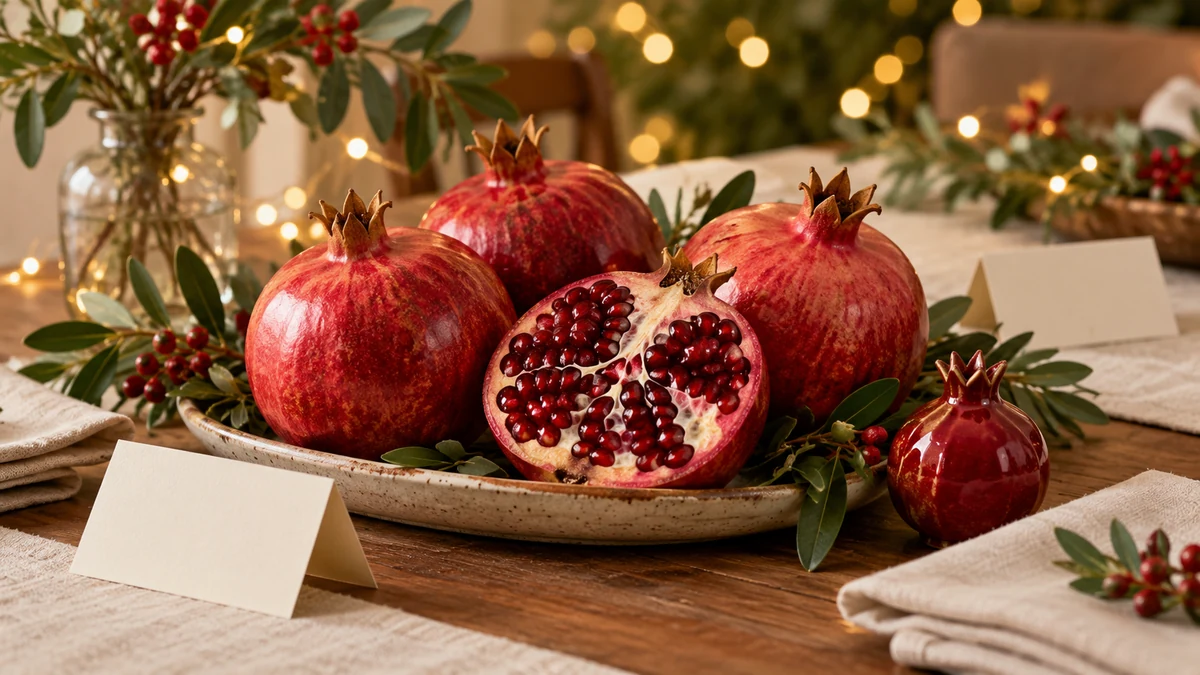
The fruit’s colour makes a striking seasonal theme. Keep edible ingredients separate from craft supplies and use non-perishable substitutes for decorations you want to keep.
A centrepiece with whole pomegranates
Gather fresh whole pomegranates, a stable tray, suitable greenery, ribbon and LED candles with secure battery compartments. Keep decorative foliage separate from food you intend to eat.
- Arrange the base: set the tray where it will not obstruct serving or conversation, then add a little greenery.
- Add the fruit: arrange three to five whole pomegranates without making the display unstable.
- Add light: position suitable LED candles according to their instructions, keeping batteries inaccessible to children.
- Finish: add a loose ribbon if desired, without glue or paint on fruit intended for eating.
Small pomegranate-themed keepsake bags
Use small reusable fabric bags, a paper pomegranate or written wish, a small card and ribbon. These replace fresh or partly dried seeds, which are unsuitable for long-term storage in a bag.
- Prepare the symbol: draw or cut out a paper pomegranate. Leaving fresh arils on kitchen paper for a few hours is not a reliable preservation method.
- Fill the bag: add the paper symbol and a short wish, keeping any small decorations away from young children.
- Personalise: attach a card with a message and tie the bag with ribbon.
A decorative bowl beside an LED light
Use a stable transparent bowl, a few arils and water for a temporary display, with an LED candle placed separately beside it. Do not put ordinary battery lights into water.
- Arrange: place the arils in the bowl, keeping this decorative portion separate from food.
- Add water: cover the arils, then set the bowl on a waterproof tray away from children and electrical items.
- Add the light separately: use the LED candle on a dry surface nearby. Clear away the decorative fruit and water after the event rather than keeping them for days.
Napkin and place-setting decorations
Gather reusable napkin rings, ribbon and a paper pomegranate shape. Avoid attaching cut fruit, which can stain fabric and spoil.
- Prepare: cut or draw a simple paper fruit shape using suitable craft materials.
- Attach: tie it to the ring with ribbon or string. Keep craft adhesives away from food-contact surfaces.
- Place: set the ring around a clean napkin for a simple themed setting.
Keeping decorations practical
- Avoid spoilage: clear cut-fruit displays after the gathering and check whole fruit regularly. Use a non-perishable ornament for anything meant to last.
- Protect surfaces: use trays or waterproof bases to catch juice and water.
- Children and pets: keep small craft parts, loose seeds and batteries out of reach.
- Reduce waste: reuse ribbon and containers. Only eat fruit that has remained food-safe and uncontaminated by decorative materials; do not repurpose a glued, painted or poorly stored display as food.
Keep the design simple: natural colours and a little warm light can complement the fruit without crowding the table.
Food and household precautions
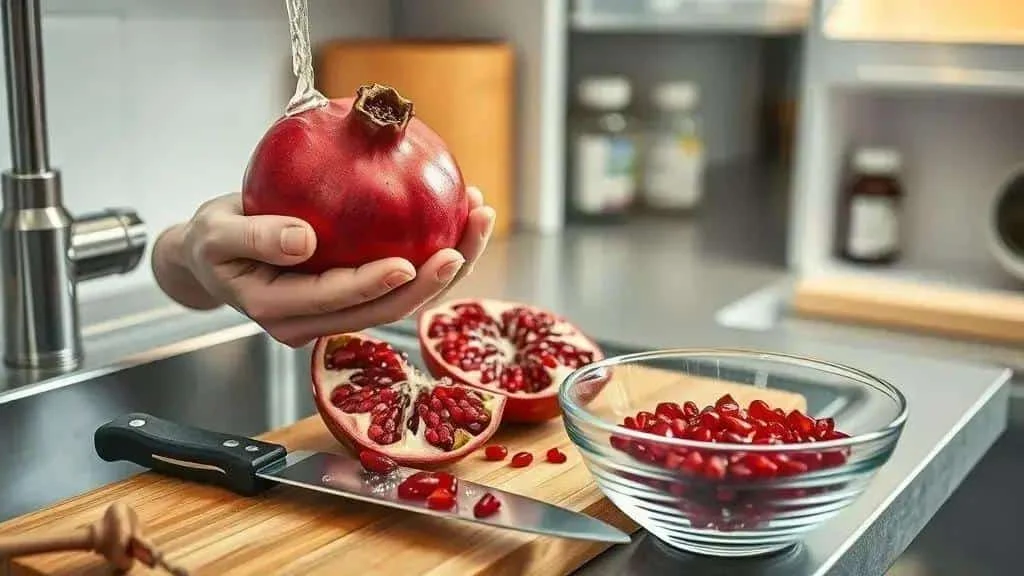
Symbolic use does not change the ordinary precautions needed for fruit, medicines, allergies and household decorations.
Washing and preparation
- Rinse first: wash the whole fruit under running water and dry it before cutting with clean utensils.
- Use a stable board: protect clothes and worktops from juice and keep children away from sharp tools.
- Store appropriately: refrigerate prepared arils in a covered food-safe container and use them promptly. Follow supplier instructions for whole or packaged fruit.
Children and choking precautions
Choose food textures for the child’s stage of development and keep them seated while eating. Supervise closely, but remember that supervision does not make an unsuitable food safe. A smooth, appropriately prepared alternative is preferable to whole seeds when those cannot be managed safely.
Allergies
- Possible reactions: stop eating the food if symptoms develop and seek appropriate medical advice. For breathing difficulty, sudden throat or tongue swelling, collapse or suspected anaphylaxis, call 999 immediately and follow the person’s prescribed emergency plan. Source: NHS: anaphylaxis
- Known or suspected allergy: do not test a small portion at home to see whether a reaction occurs. Ask a qualified clinician for advice and offer a suitable alternative.
Medicines and health concerns
If you take medicines, ask your pharmacist or clinician whether pomegranate products are suitable for you, especially extracts or concentrated supplements. Do not assume a clinically important interaction with every medicine, and do not change prescribed treatment because of a seasonal food custom. Source: NCCIH: pomegranate safety
Spoilage, spills and decorations
- Keep food separate from displays: refrigerate prepared fruit promptly and discard anything spoiled or contaminated. Appearance and smell alone do not prove that food stored incorrectly is safe.
- Juice stains: blot spills promptly and follow the care instructions for the surface or fabric. Test a suitable cleaner in an inconspicuous place rather than applying vinegar or another product indiscriminately.
- Decorative lighting: prefer suitable LED lights, keep their battery compartments secure and leave electrical items dry and clear of obstructions.
Tell guests what is being served: provide ingredient information and discuss any dietary needs beforehand. Keep edible arils clearly separate from craft and display materials.
Bringing the tradition into your celebration
Pomegranates can represent wishes for abundance and connection at New Year. Their meaning is symbolic: eating or displaying them does not guarantee prosperity.
Choose a simple custom that suits your household, whether sharing the fruit, preparing a recipe or keeping a paper reminder of your hopes.
Use the same care you would with any food or decoration, especially around children and guests with allergies.
Thank you for reading. Follow us for more seasonal ideas and visit the I Love Christmas blog for further inspiration.
FAQ: pomegranates at New Year
What does the pomegranate symbolise at New Year?
It can represent abundance, renewal and hopes for prosperity or family connection. Meanings vary between traditions and households; the fruit does not guarantee wealth or good luck.
How can I include it simply?
Display a whole fruit on a clean tray or serve prepared arils in a suitable salad or dessert. Use a paper or ceramic version for a keepsake that will last.
What should I consider when serving it to children?
Match the texture to the child’s eating stage and supervise them seated. Whole seeds may be unsuitable, and mixing them into soft food does not remove the risk. Offer an appropriate smooth alternative where needed.
Can pomegranate cause allergies or affect medicines?
Allergic reactions are possible. Ask a pharmacist or clinician about any concern involving medicines, extracts or supplements, rather than testing a suspected allergy or changing treatment yourself.
How should I store prepared pomegranate?
Keep edible arils covered in the fridge and use promptly, following any use-by instructions. Do not treat a few hours of air-drying as preservation, and do not keep damp seeds in fabric gift bags.
Sources and Further Reading
- Visit Greece: Christmas and New Year traditions
- Food Standards Agency: cooking temperatures and leftovers
- NHS: anaphylaxis
- NCCIH: pomegranate safety
- NHS: foods and drinks to avoid for babies